
The lobby of the Ramova Theatre.
I’m currently on a road trip to photograph some more abandoned theaters. Day 1 was spent revisiting the Ramova Theatre in Chicago.
The Ramova Theatre opened on August 21, 1929, and closed in the mid 1980s.
The lobby of the Ramova Theatre.
I’m currently on a road trip to photograph some more abandoned theaters. Day 1 was spent revisiting the Ramova Theatre in Chicago.
The Ramova Theatre opened on August 21, 1929, and closed in the mid 1980s.

The two Vincent Maragliotti murals on either side of the stage have been removed for restoration.
The Victory Theatre opened on December 31, 1920 in Holyoke, Massachusetts. The 1,680 seat theater was built by Mowll & Rand, an architecture firm based out of Boston. The firm was also known for the design of the Calvin Theatre in Northampton, Massachusetts. The Victory was commissioned by the brothers Samuel and Nathan Goldstein of Western Massachusetts Theatres Incorporated.
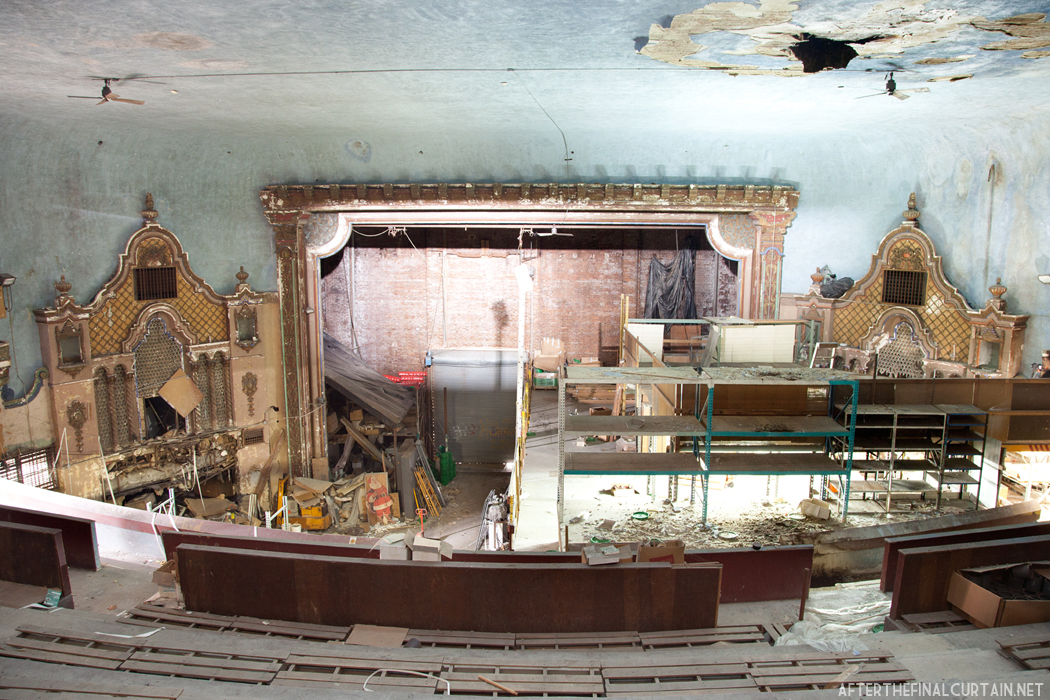
View of the Paramount Theatre from the balcony.
The Paramount Theatre opened as the Broadway Theatre in Long Branch, New Jersey on August 1, 1912. The project was commissioned by theater magnate Walter Reade on the site of an old Episcopal church. The 1,772 seat Broadway began showing plays and vaudeville performances before transitioning over to film.
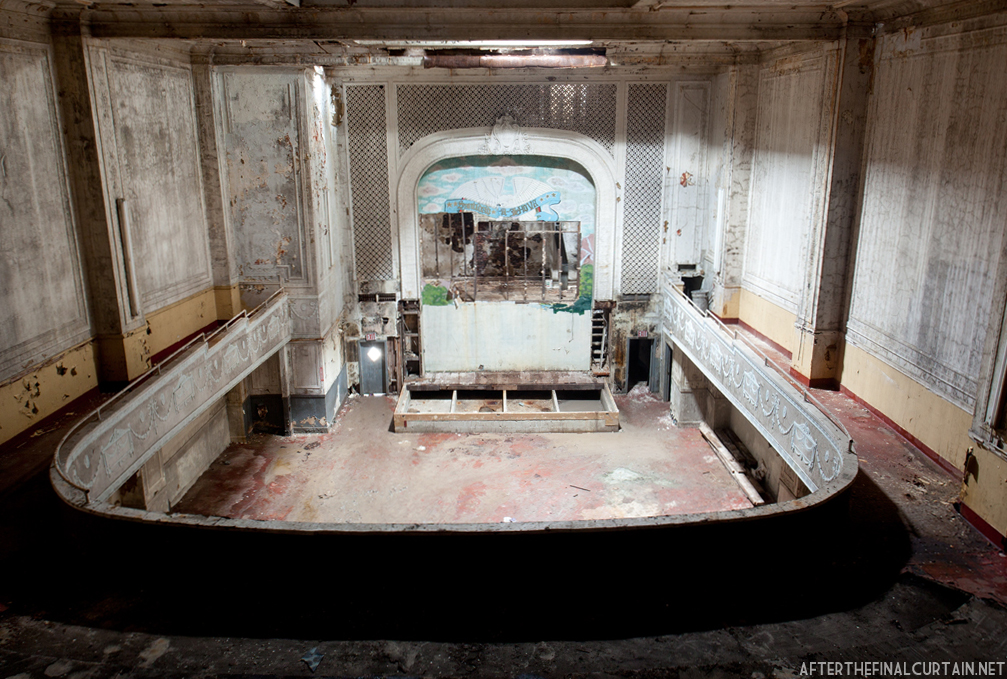
View of the auditorium from the projector room
The Bijou Theatre (later the Charles Theatre) opened in the fall of 1926. Architect Eugene DeRosa was commissioned by the Delancey-Clinton Realty Company to build the Bijou at 12th Street and Avenue B in Manhattan’s Lower East Side. The theater had 600 seats, 502 on the main floor and 98 in the balcony.
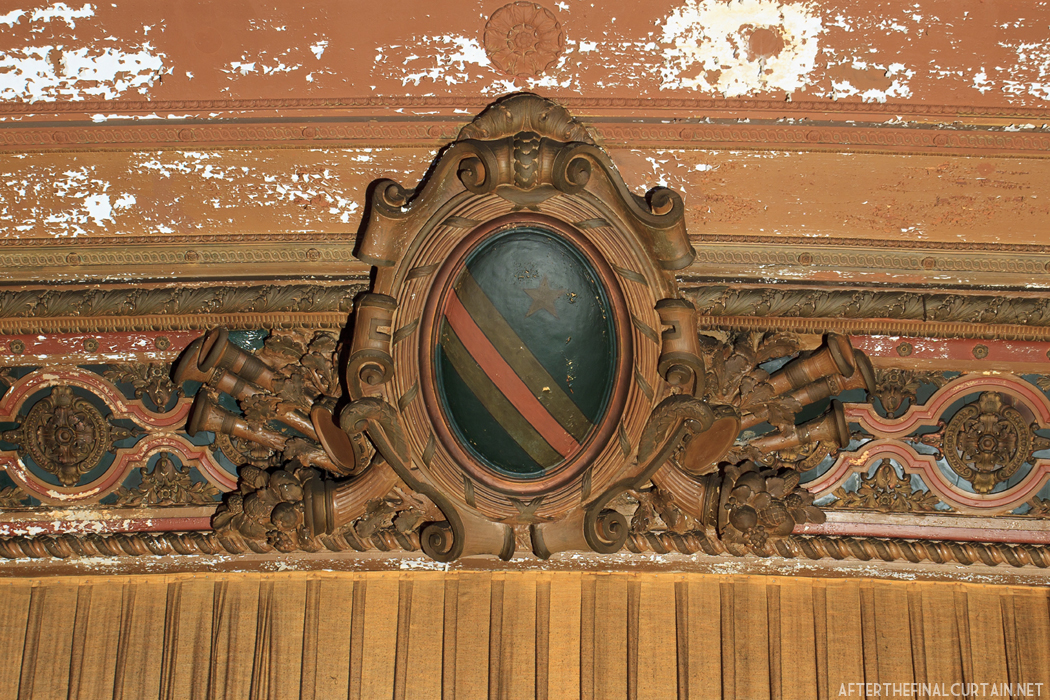
The top of the Ridgewood Theatre’s proscenium arch.
The Ridgewood Theatre opened on December 23, 1916. Located in the Ridgewood neighborhood in Queens, New York, the 2,500 seat theater was built by the Levy Brothers Real Estate firm. The Ridgewood was designed by famed theater architect Thomas W. Lamb, who is known for the design of many New York area theaters. The Ridgewood was modeled after the now demolished Mark Strand Theatre, which was the first ever motion picture palace.
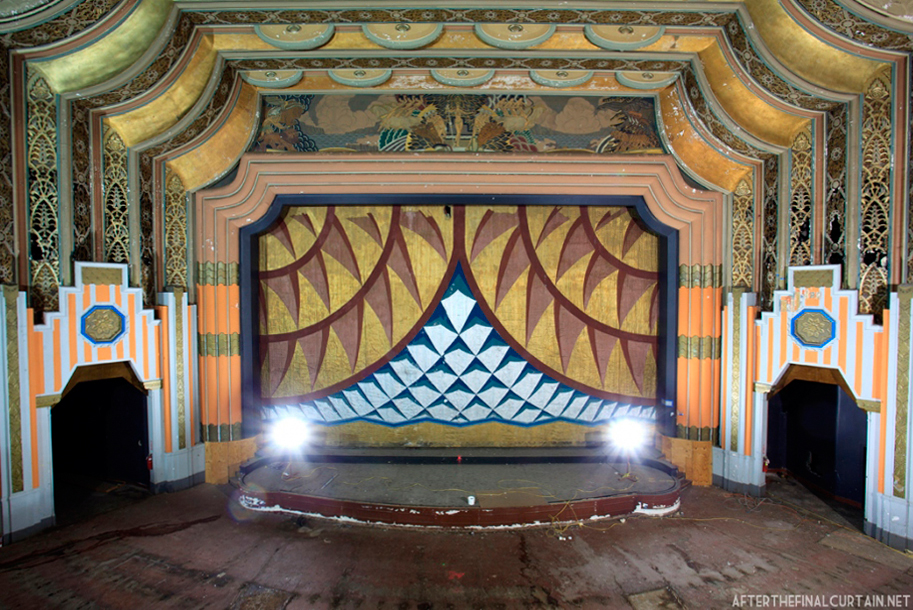
The Boyd Theatre's proscenium arch.
After photographing the Boyd Theater I learned a little bit about the Friends of the Boyd. I had a lot of questions, and luckily the group’s president and chairman Howard B. Haas was available to answer them. Below are his responses to several questions about the history of the Friends, his own personal experiences with the theater and some of his hopes for the future.
The Boyd is one of the 22 theaters in my new book “After the Final Curtain: The Fall of the American Movie Theater.” Find out more here.

View of the auditorium from the side of the balcony.
The Boyd Theatre, Philadelphia, Pennsylvania‘s only art deco movie palace, opened on Christmas Day in 1928. Located in Philadelphia’s Center City neighborhood, the 2,450 seat theater was commissioned by Alexander Boyd and built by Hoffman-Henon, a Philadelphia architecture firm also known for the construction of the nearby Prince Music Theatre. One of the companies commissioned for the Boyd’s interior decoration was the Rambusch Company, who later decorated the Loew’s Kings Theatre.
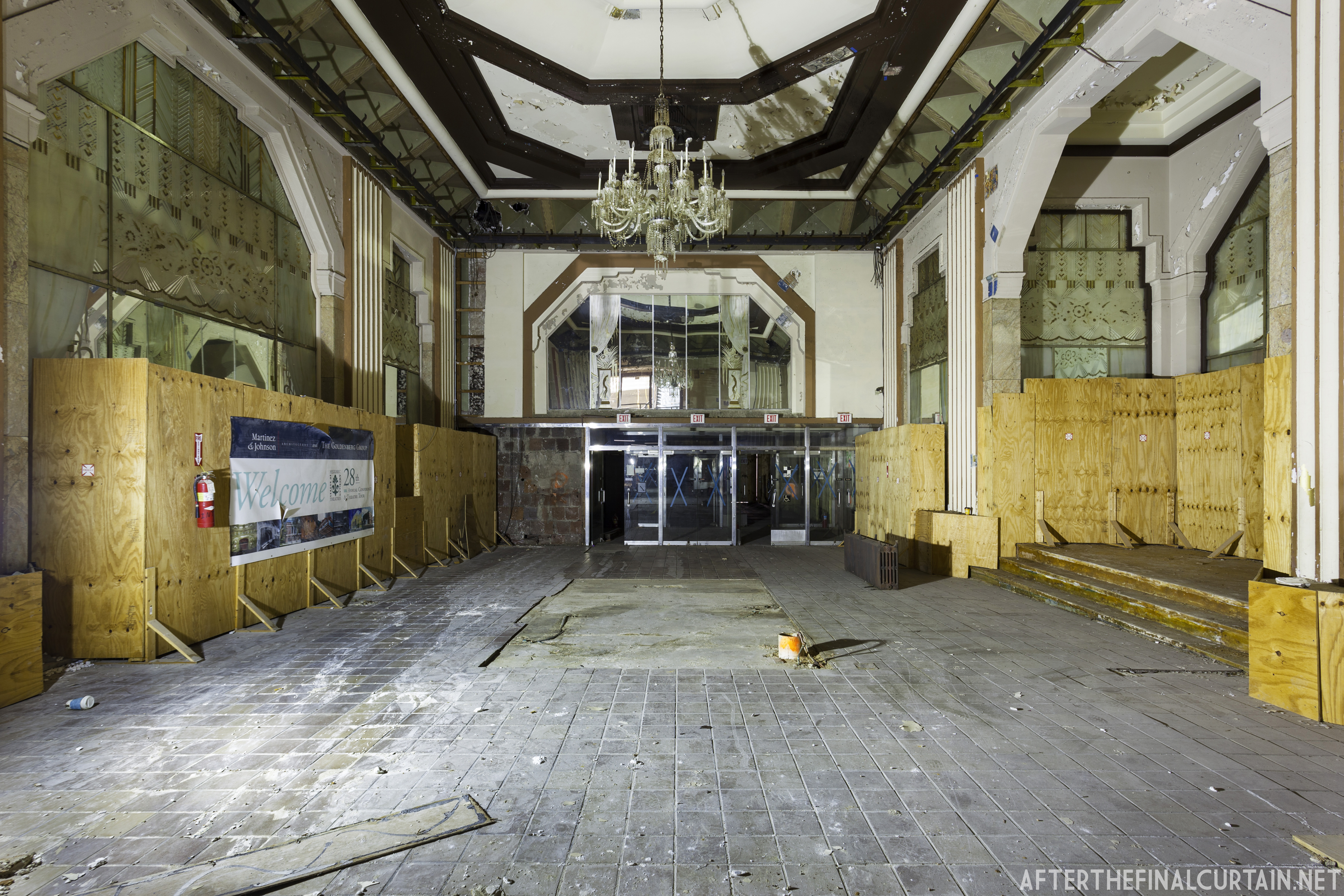
View of the lobby from the main level.
Unlike many theaters built in the 1920’s, the Boyd was originally intended to be a movie theater and, although there were backstage dressing rooms, did not feature vaudeville shows. According to the opening day brochure the Boyd was dedicated to women’s progress throughout history. This appreciation for women is referenced throughout the theater, especially in several murals, one of which shows an Amazonian queen fighting African and Asian armies.
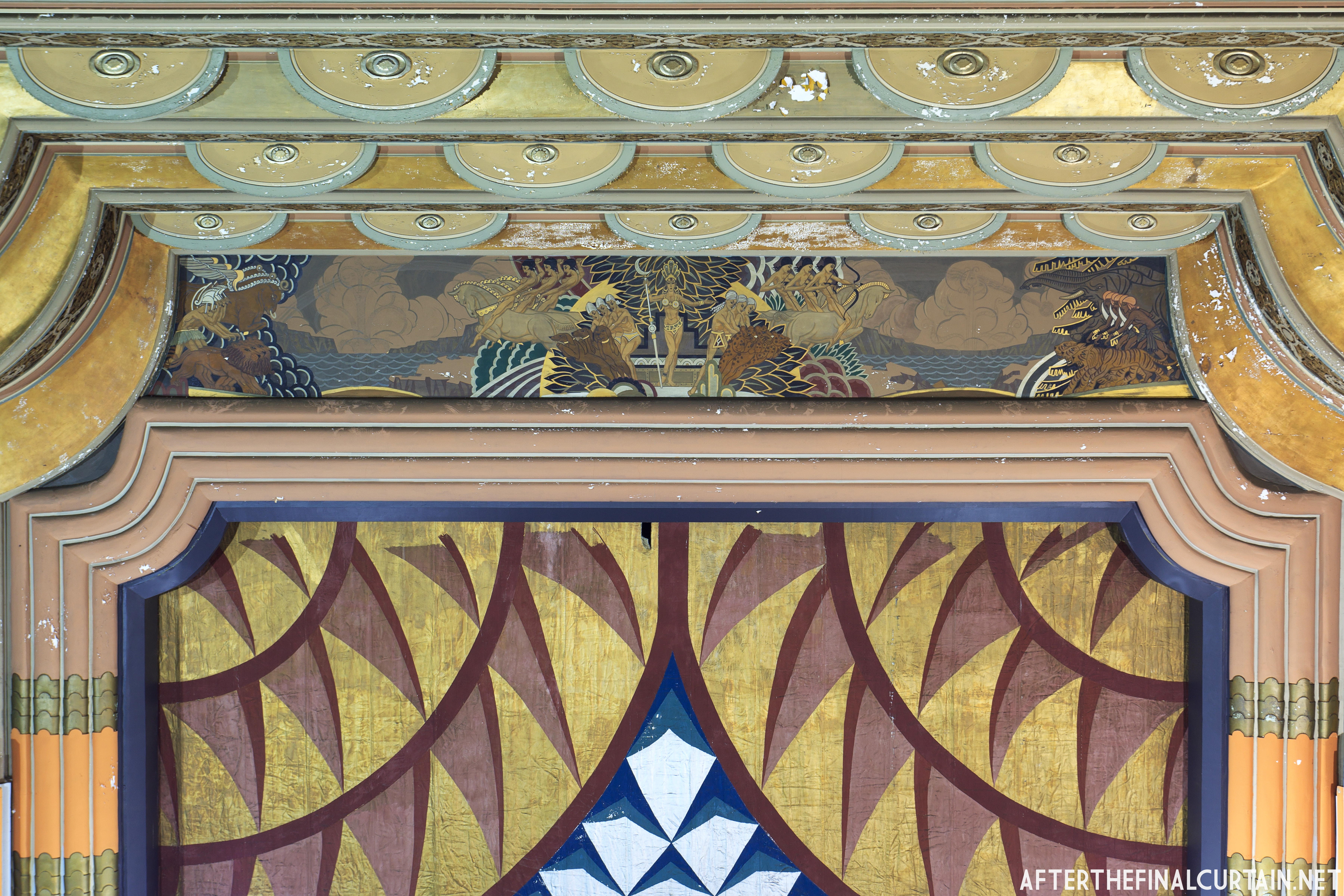
The proscenium arch.
Alexander Boyd sold the theater to the Stanley Warner company, which ran many of downtown Philadelphia’s theaters, after the construction was completed. Shortly after the Boyd changed hands a Kimball theater organ was installed. It remained in the theater until 1969, when it was removed it was the last theater organ in a downtown Philadelphia theater. Various movie premieres were held at the theater over the years, including “Rocky III,” and “Philadelphia.” At the premiere of “Philadelphia” actor Tom Hanks is said to have remarked “Oh, a real movie theater!” when entering the Boyd.
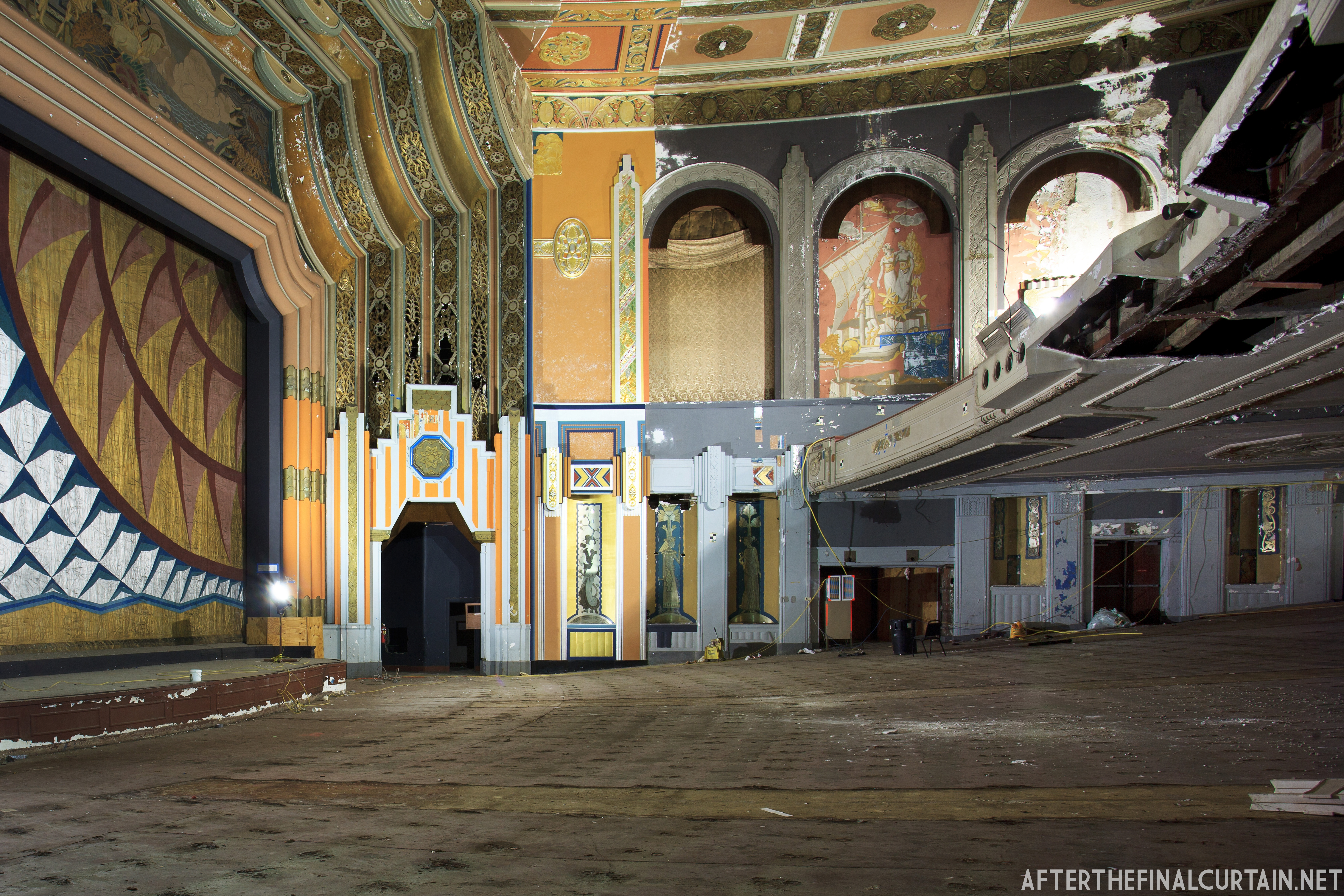
View of the auditorium from the side of the orchestra level.
After being sold in 1971, the Boyd was renamed the SamEric by it’s new owners, the Sameric Corporation. They renovated the theater and eventually added three additional auditoriums next to the original, which was renamed again as SamEric 4. The theater closed and was slated for demolition in 2002 before a group of concerned citizens formed the “Committee to Save the SamEric” (which later became “Friends of the Boyd”) to save the theater from demolition. In the following ten years several attempts were made to restore the theater, without success.
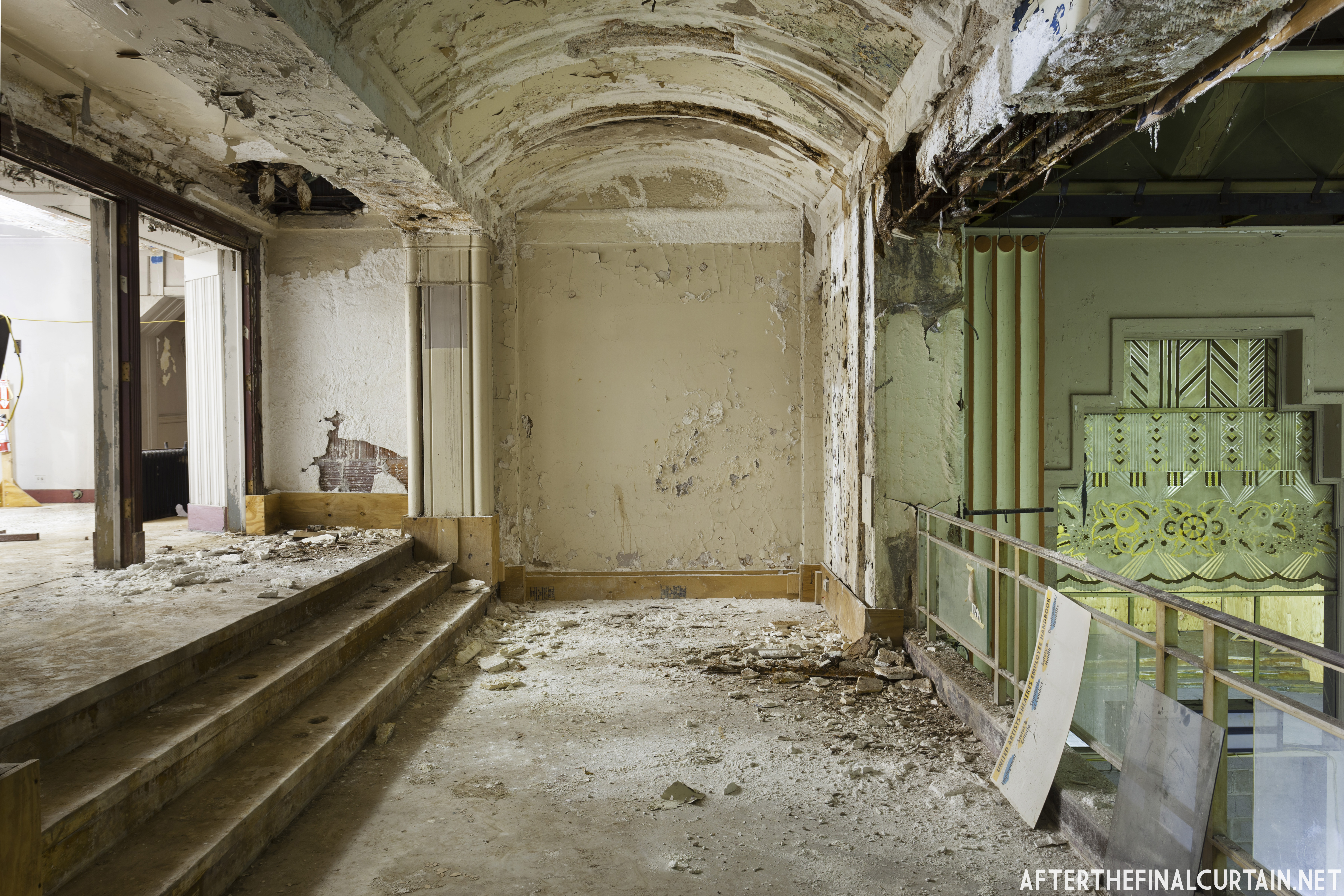
In 2013, Florida theater chain iPic agreed to lease the building from developer Neal Rodin. iPic planned to restore the facade, and gut the interior of the theater to build an eight screen theater as well as a restaurant. Since the Boyd was listed on the National Register of Historic Places the Philadelphia Historical Commission met to vote to approve iPic’s plans. On March 14, 2014, after hearing the opinions of many Philadelphians for and against the demolition, the Commission voted to approve the plans. However, iPic’s plans fell through and in December 2014 Pearl Properties bought the property for $4.5 million. Pearl began demolition of the auditorium on March 14, 2015. Tatel, a Spanish restaurant, is opening in the former lobby and foyer of the Boyd. The Harper, a 27 story apartment tower, was built in place of the demolished auditorium. The Friends of the Boyd saved a number of artifacts from the Boyd before it was demolished, and have donated them to other theaters, including the Lansdowne Theatre in Lansdowne, PA.
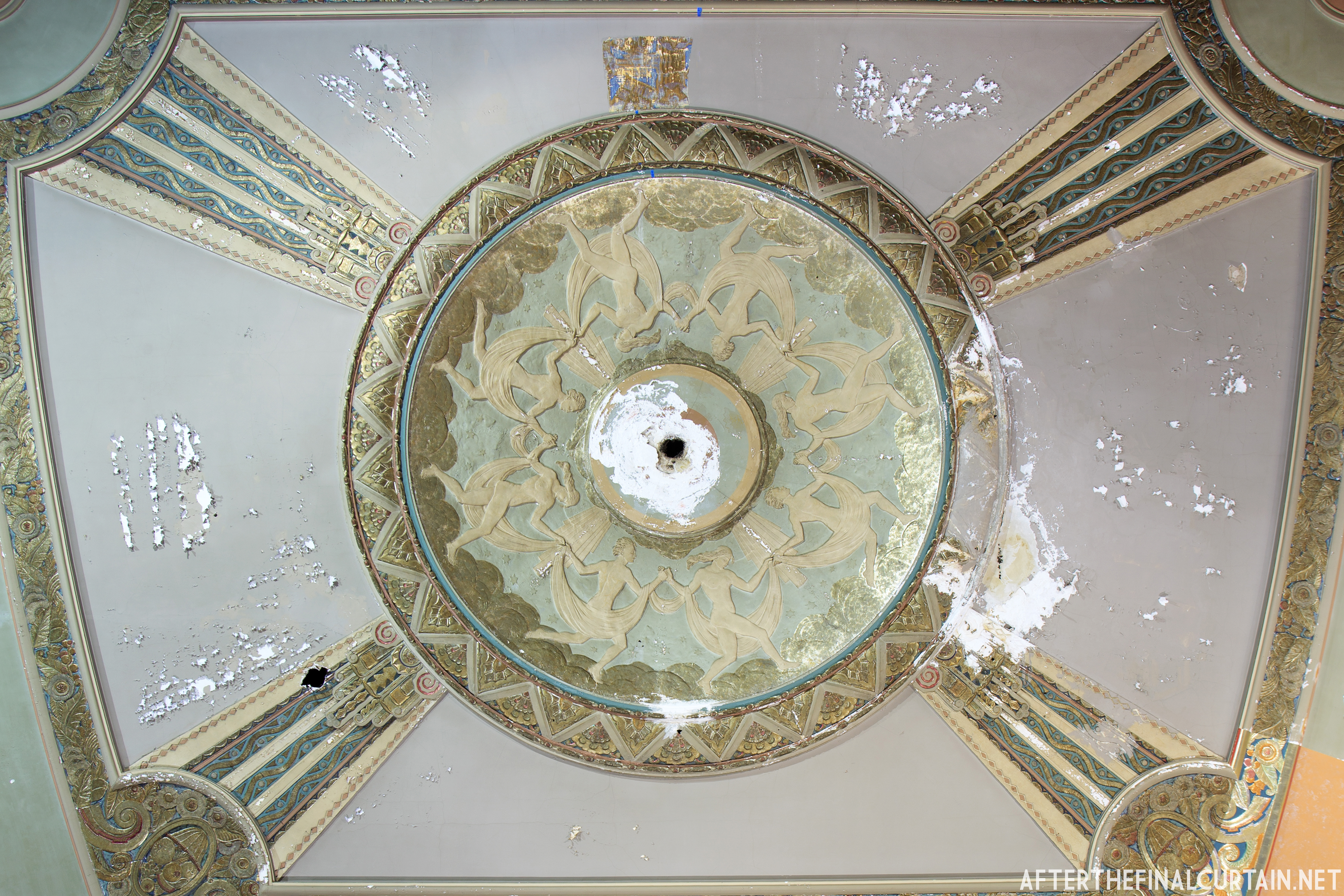
The auditorium ceiling.
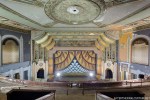

View from the balcony of the RKO Hamilton Theatre
Moss and Brill’s Hamilton Theatre opened on January 23, 1913 in Manhattan’s Hamilton Heights neighborhood. The theater was commissioned by vaudeville operator Benjamin S. Moss and theater developer Solomon Brill and designed by the prolific Thomas W. Lamb, known for the architecture of many of the Hamilton’s contemporaries. Lamb designed the Hamilton in the Renaissance Revival style, incorporating a terracotta façade.
The Poli is one of the 22 theaters in my new book “After the Final Curtain: The Fall of the American Movie Theater.” Find out more here.
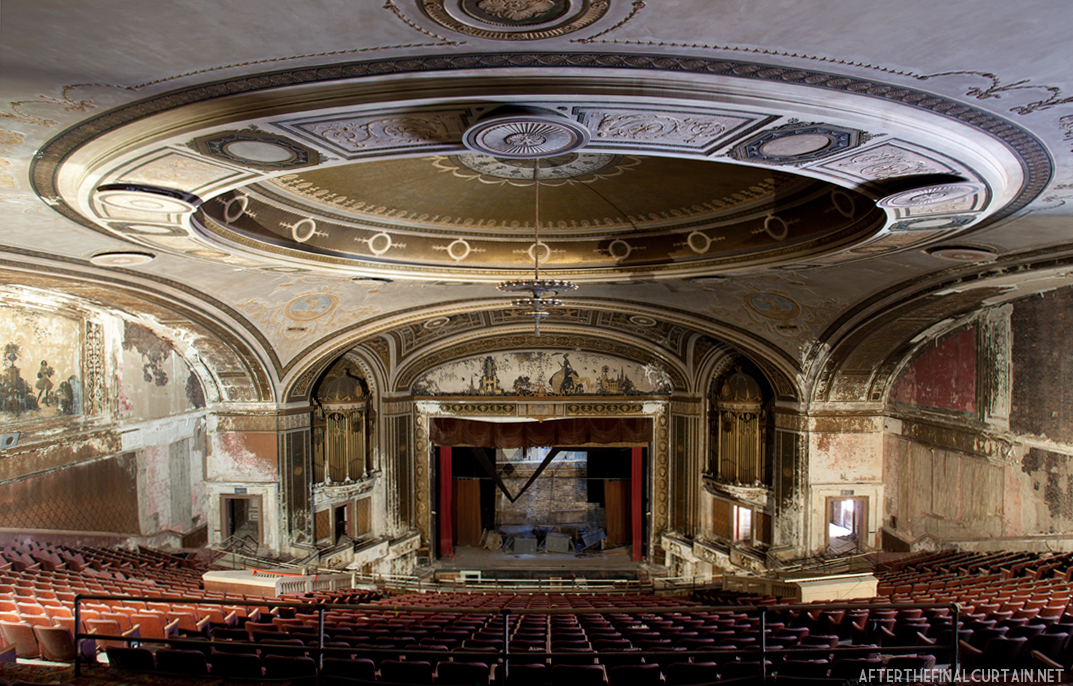
View of the Loew’s Palace Theatre from the balcony.
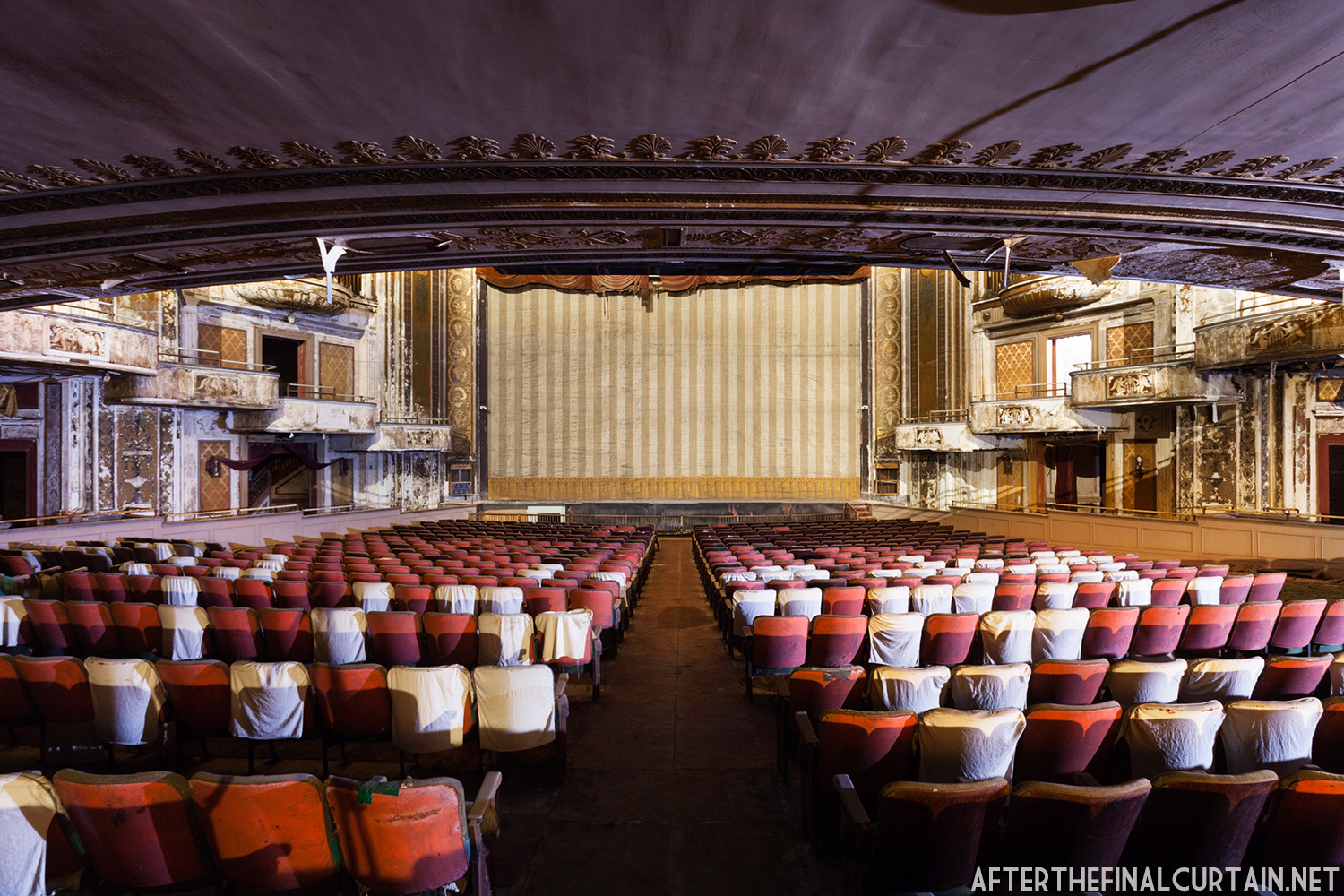
View of the stage from the main level of the auditorium.
The Paramount is one of the 22 theaters in my new book “After the Final Curtain: The Fall of the American Movie Theater.” Find out more here.

View of the Paramount Theatre from the balcony.
The Paramount Theatre opened on October 11, 1886 as H.C. Miner’s Newark Theatre. It was originally a vaudeville house managed by Hyde & Behman Amusement Co., a Brooklyn based theater Management Company. After H.C. Miner’s death in 1900, his surviving relatives retained ownership of the theater for several years until its sale in 1916 to Edward Spiegel, the owner of the nearby Strand Theatre. Spiegel also purchased the building next to the theater with the intent to use the space to expand the theater. To accomplish this he hired famed theater architect Thomas W. Lamb to do the alterations.
 After the Final Curtain