The Kenosha Theatre opened on September 1st, 1927. It was designed by Larry P. Larson, an architect from the mid-western United States. The theater cost $750,000 ($10,220,301 when adjusted for inflation) and was financed by United Studios of Chicago. It was commissioned by Carl Laemmle, a Wisconsin native and one of the founders of Universal Studios. The 2300-seat theater was built to resemble the Alcazar castle in Segovia, Spain, which is rumored to be the inspiration behind Cinderella’s Castle at Walt Disney World.

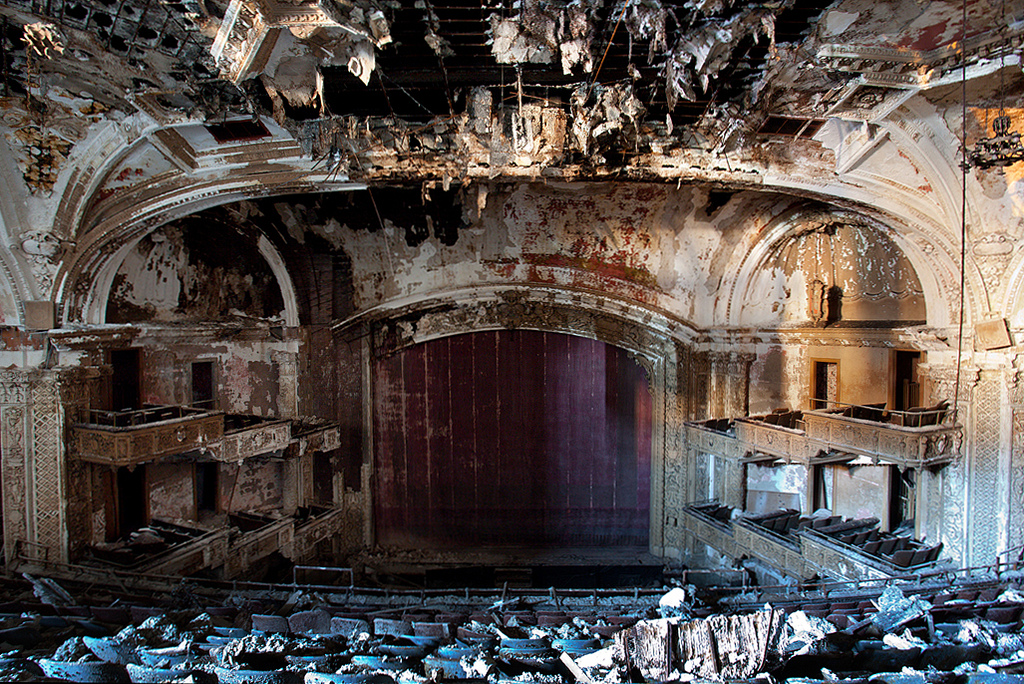
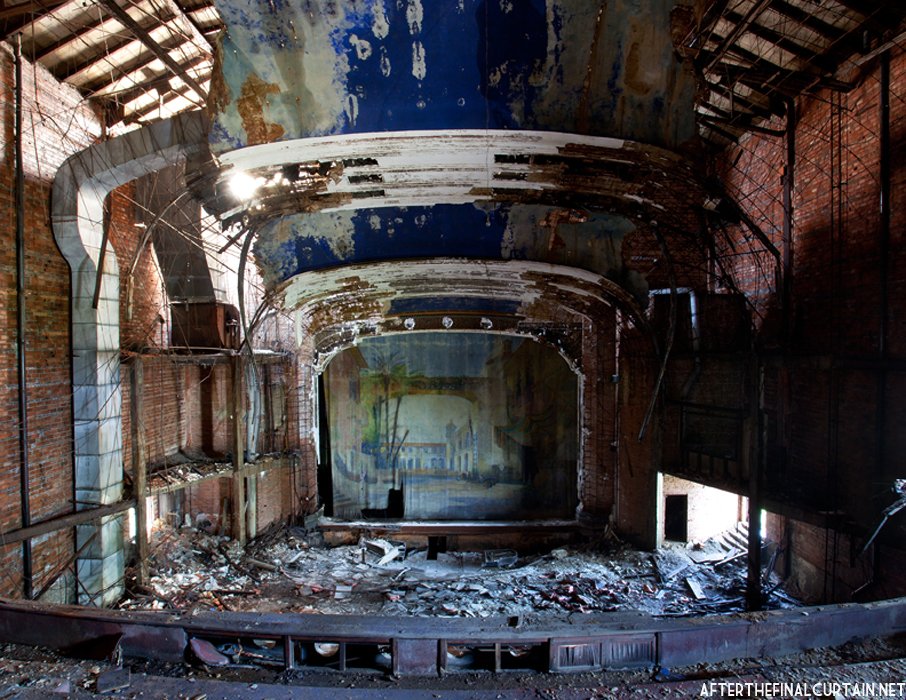
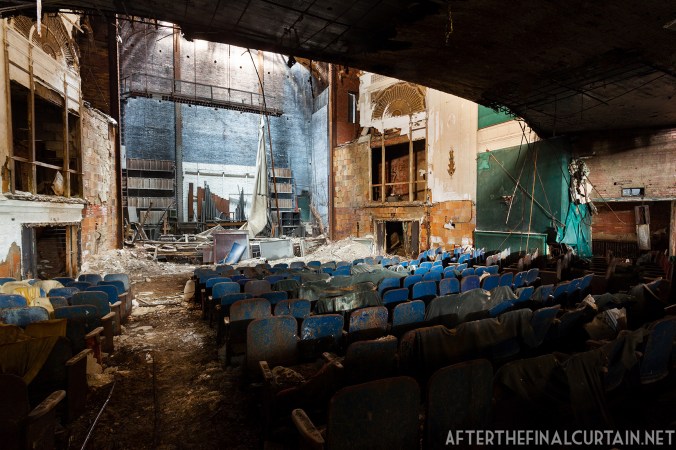
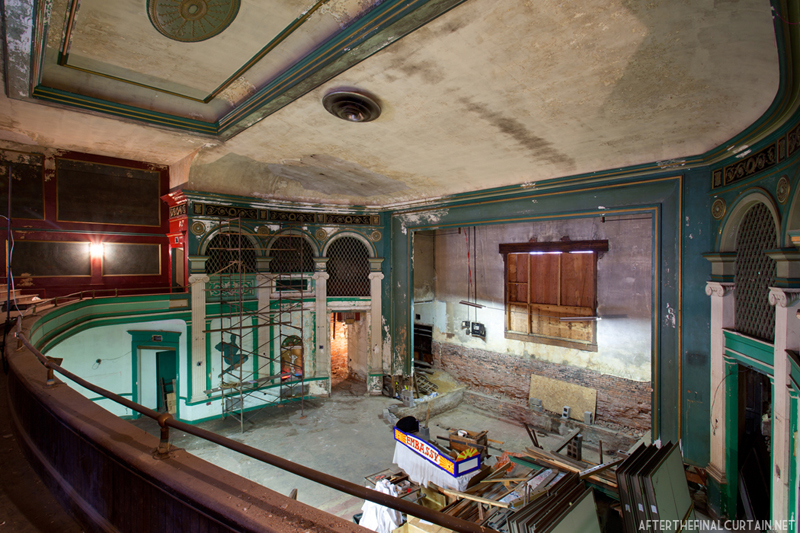
Much of the blue ceiling was destroyed when the roof was replaced in the mid-1990s.
An atmospheric theater, the auditorium ceiling was painted a dark navy blue and covered with lights that were meant to look like stars. This gave patrons the illusion that they were sitting in a courtyard under the night sky while watching a film. Larson took it a step further than most of his contemporaries when it came to the layout of the ‘stars’ and arranged them with data from the department of astronomy at the University of Wisconsin.
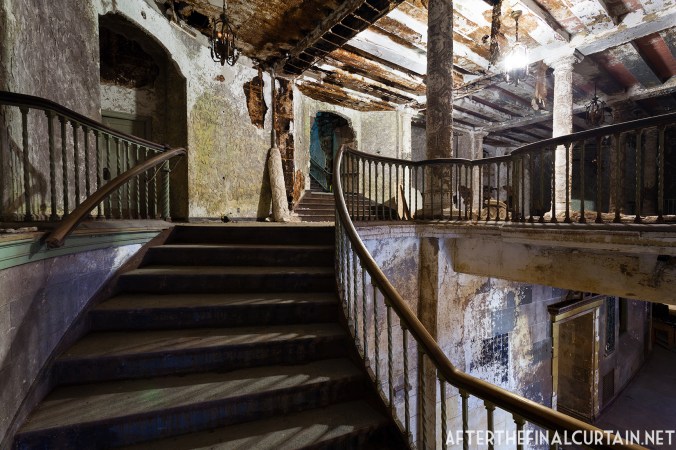
Lobby staircase leading to the balcony.
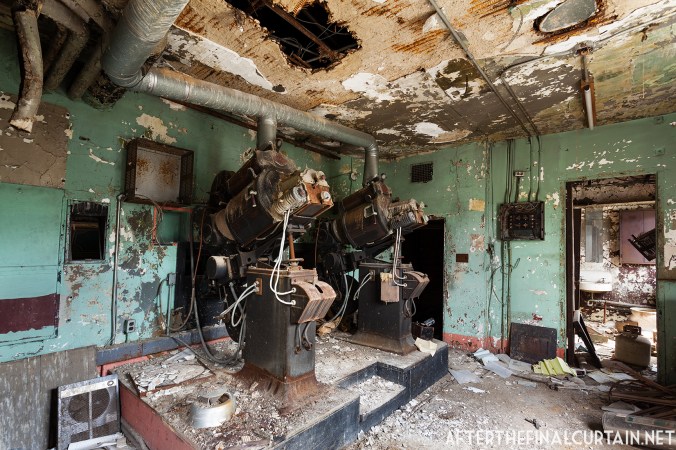
Like many early 20th century theaters, the Kenosha opened as a vaudeville and silent film house. The opening program included a vaudeville act called “Dear Little Rebel” and a silent film, “The Irresistible Lover”. The Kenosha began showing ‘talking pictures’ when a Vitaphone system was installed in February 1927. Vitaphone was the only commercially successful sound-on-disc system for showing motion pictures with sound. The sound was on phonograph or vinyl records and was synced to the film by special turntables attached to the projectors. Like other theaters of this era, the Kenosha often held contests and giveaways to encourage customers to return. In July of 1928 the theater offered free airplane flights to its patrons. You could sign up to take a free flight with a licensed pilot as long as you saw a film at the theater.
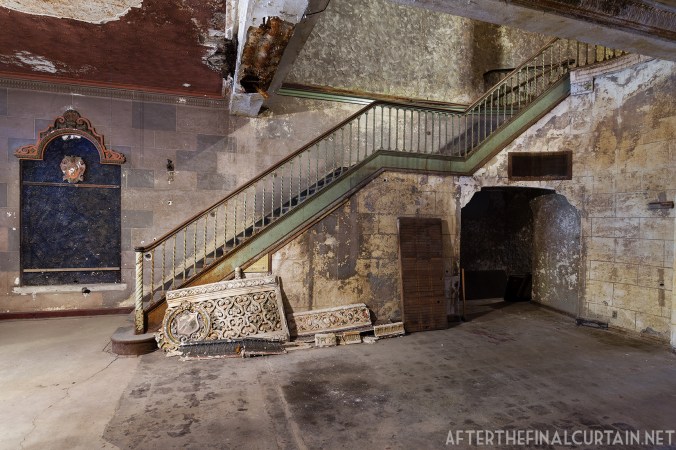
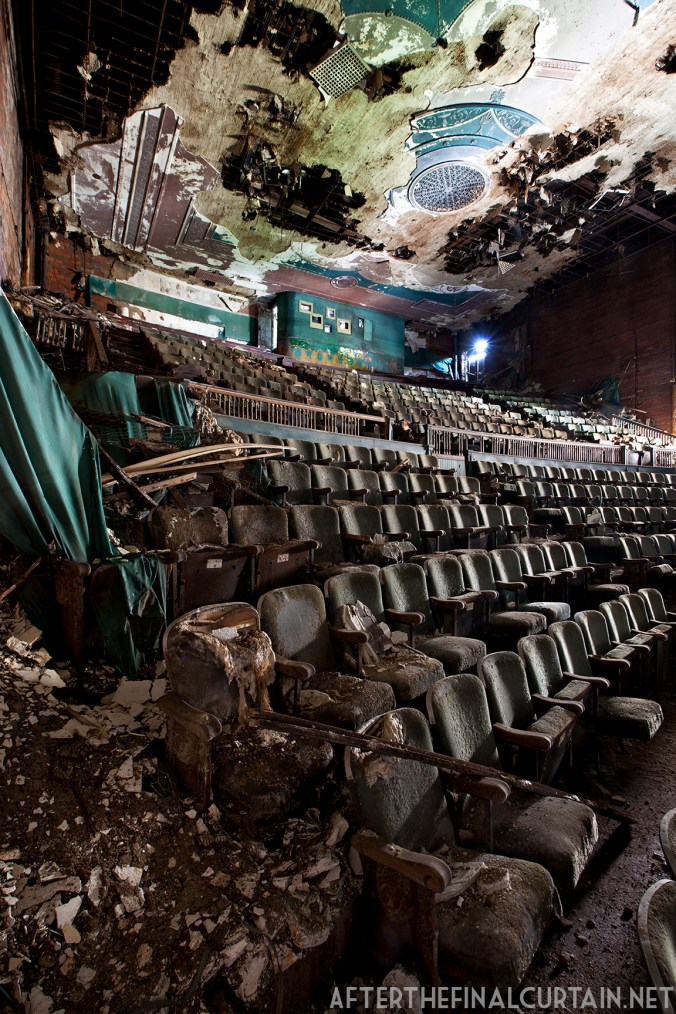
Some fallen pieces of plaster are being stored in the theater’s lobby so they can be used in the eventual restoration.
On December 18, 1928 eight men broke into the Kenosha Theatre, tied up the night watchman and cracked open the safe in the office, stealing $1,022 in cash and $720 in gift-ticket books. Alexander Dotz, the night watchman, confessed the following day that the robbery was an ‘inside job’ and that he planned the heist with his co-conspirators at a roadhouse the day before took place. He also revealed that his brother, a police officer, who had watched the robbery from the balcony, was planning on arresting the men but chickened out at the last minute. Both brothers testified in court that they had been forced to participate in the robbery due to repeated threats from the ringleader, Angelo Tarello. The Dotz Brothers were each sentenced to 16-20 years in the Green Bay Reformatory.

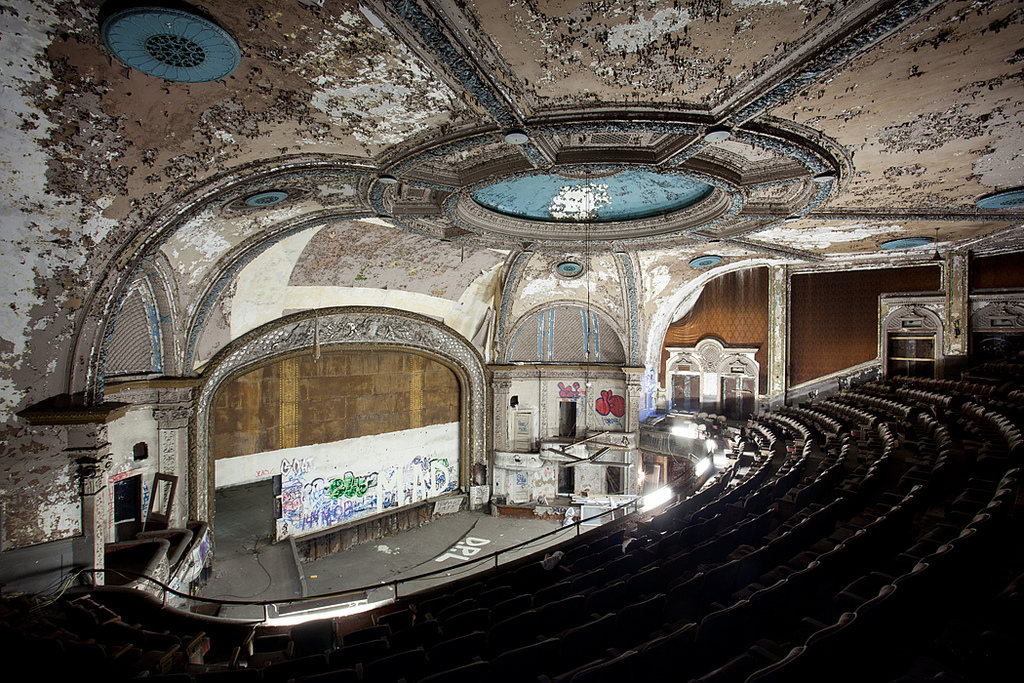
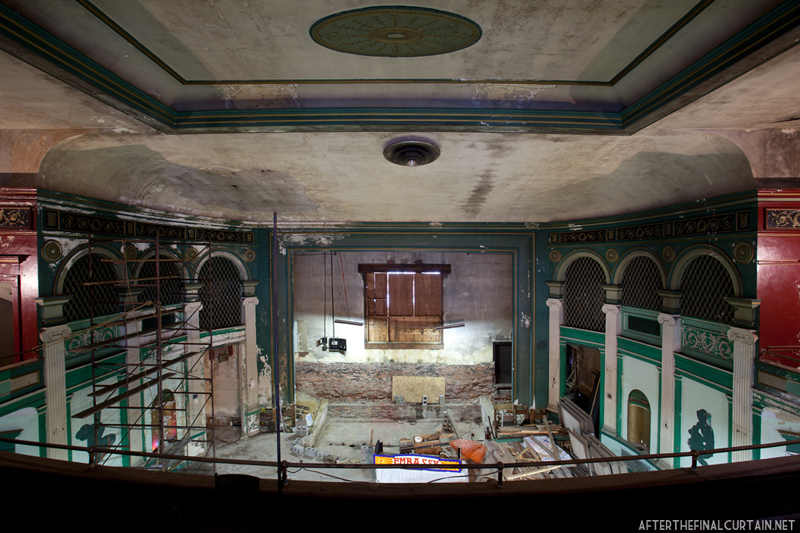
View of the auditorium from the rear of the balcony.
Warner Bros, who took over the theater in 1929, closed the Kenosha Theatre in March of 1933 along with six other theaters in the area. Sol J. Hankin, general manager for Warner Bros is quoted as saying, “We may keep the theaters closed for a year, maybe less, maybe more, maybe forever. General economic conditions are the chief cause for their closing, but I can say that we do not believe there was the proper amount of cooperation from union labor”. Hankin cited that motion picture operators refused a reduction in salary that other theater employees had received. The Kenosha was reopened the following year after it was acquired by Standard Theatres, Inc.

A close up of the theater’s proscenium arch.
Many Hollywood stars performed live at the Kenosha, including Frank Sinatra, Bing Crosby, Nat King Cole, Lawrence Welk and the Three Stooges. It closed on April 21, 1963, 36 years after it opened. Standard Theatres Inc. sold the theater with a stipulation in the deed that it could not be used as a theater for 30 years. Standard also owned the Lake Theatre in Kenosha and did not want competition. It was later used as a warehouse and a flea market before being closed permanently. Due to years of neglect, the roof leaked badly and much of the interior was damaged by the water exposure.
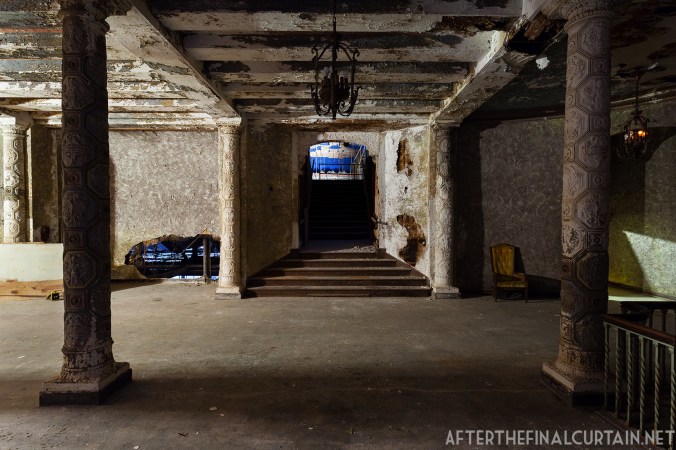
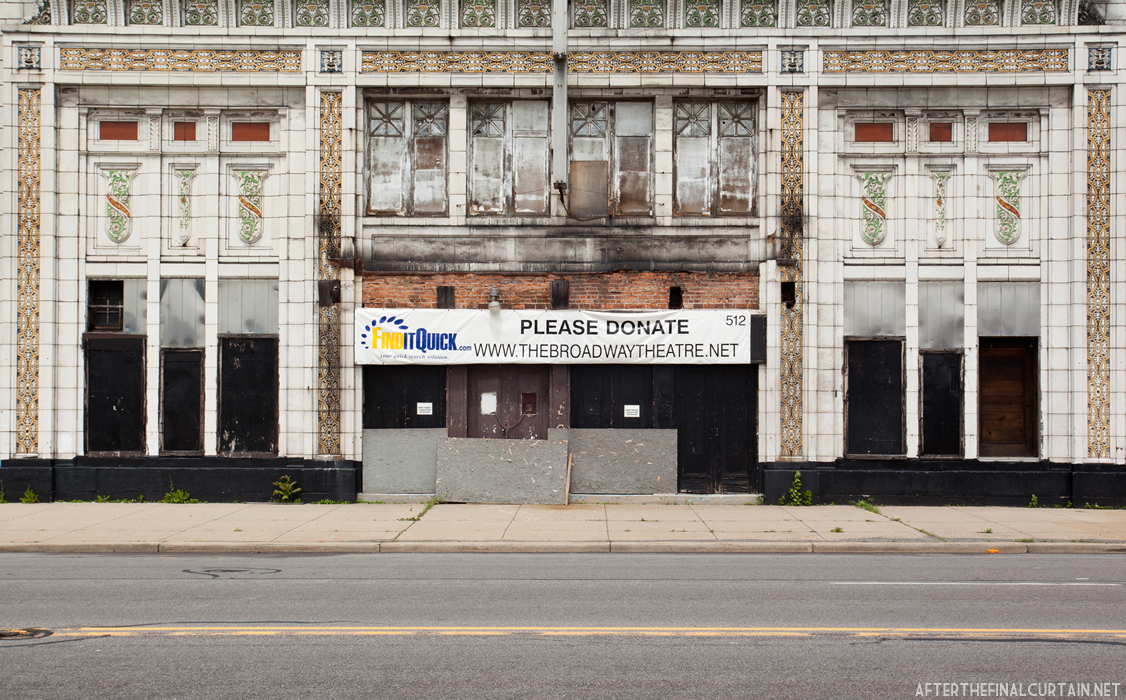
In 1983 the theater was purchased by Kenosha Theatre Development. The group repaired the storefronts and the apartments attached to the building to help generate funds towards restoration of the theater. In the mid-1990s a new roof was installed. This had the unfortunate effect of destroying most of the ‘starlit’ ceiling, but it was necessary to prevent further water damage. Debris from the roof covered the main floor and it took volunteers three years to remove it all. It’s estimated that the theater will cost $24 million to restore.
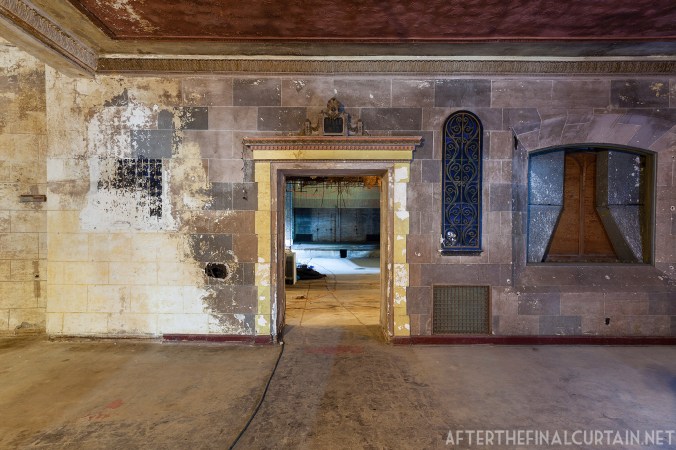
Entryway to the auditorium from the lobby.

Auditorium, Kenosha Theatre – Kenosha, WI

A close up of some of the lobby details.







 After the Final Curtain