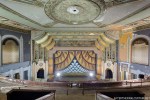
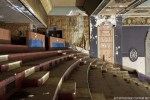
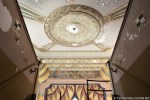
Loew’s Majestic Theatre
The Boyd Theatre
The Boyd is one of the 22 theaters in my new book “After the Final Curtain: The Fall of the American Movie Theater.” Find out more here.
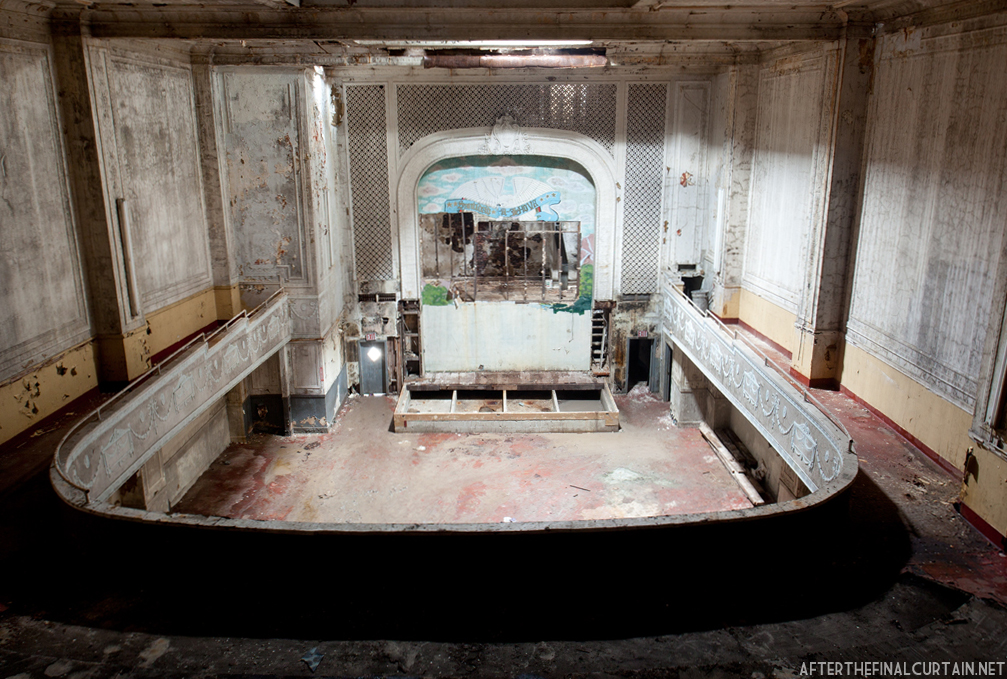
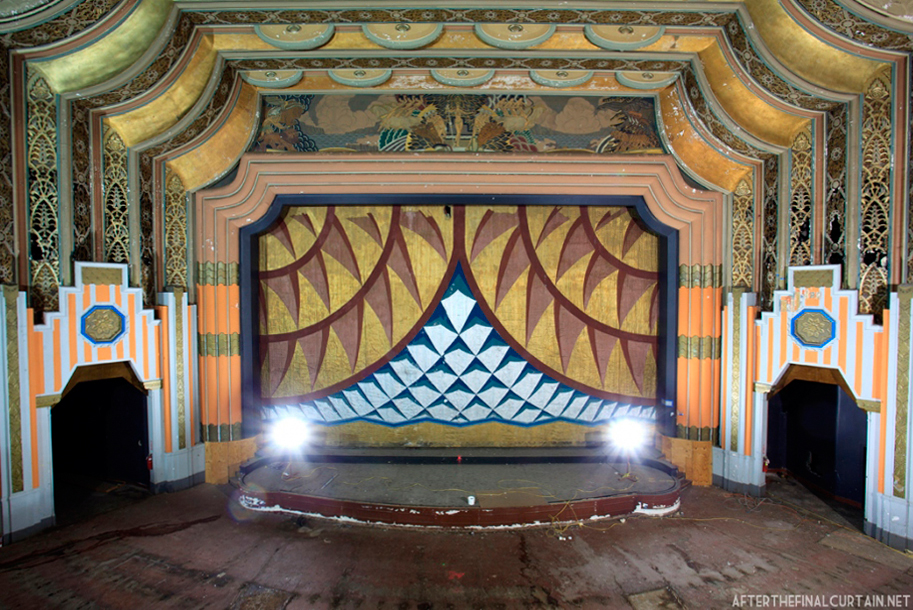
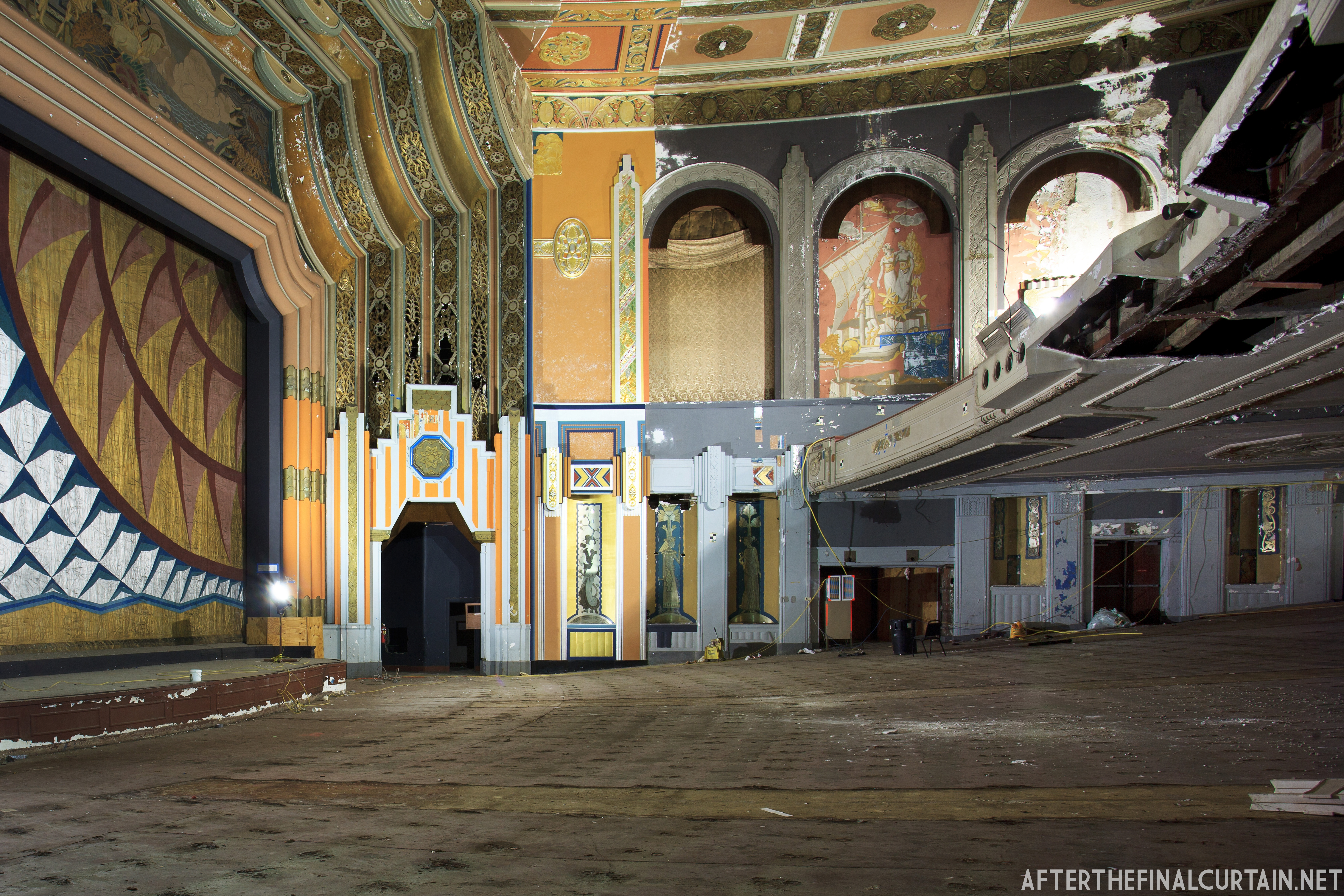
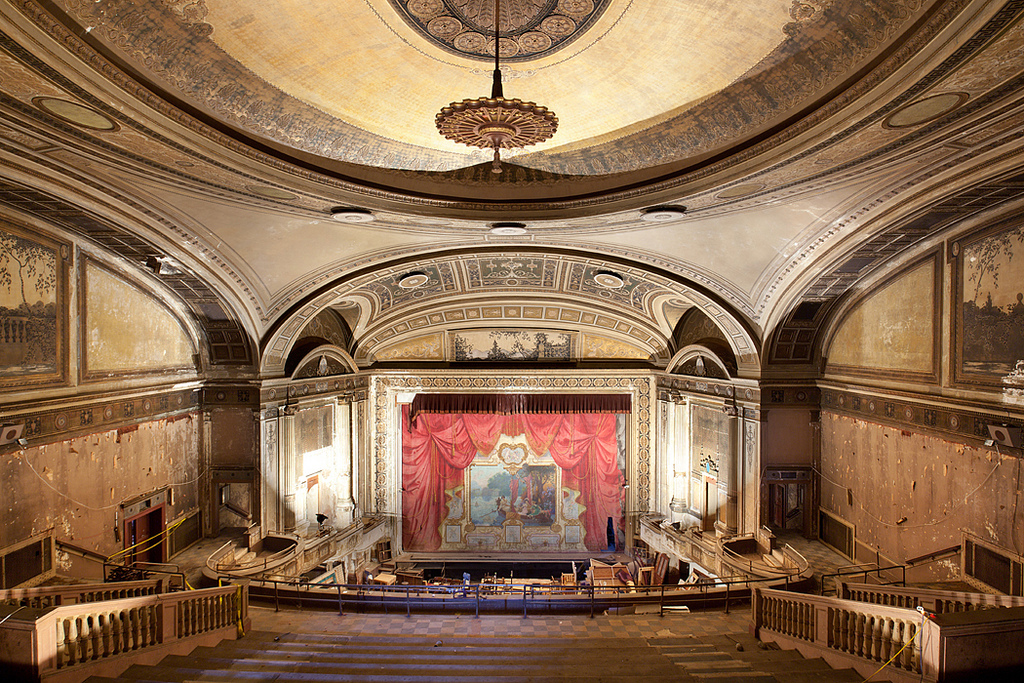
The Boyd Theatre, Philadelphia, Pennsylvania‘s only art deco movie palace, opened on Christmas Day in 1928. Located in Philadelphia’s Center City neighborhood, the 2,450 seat theater was commissioned by Alexander Boyd and built by Hoffman-Henon, a Philadelphia architecture firm also known for the construction of the nearby Prince Music Theatre. One of the companies commissioned for the Boyd’s interior decoration was the Rambusch Company, who later decorated the Loew’s Kings Theatre.
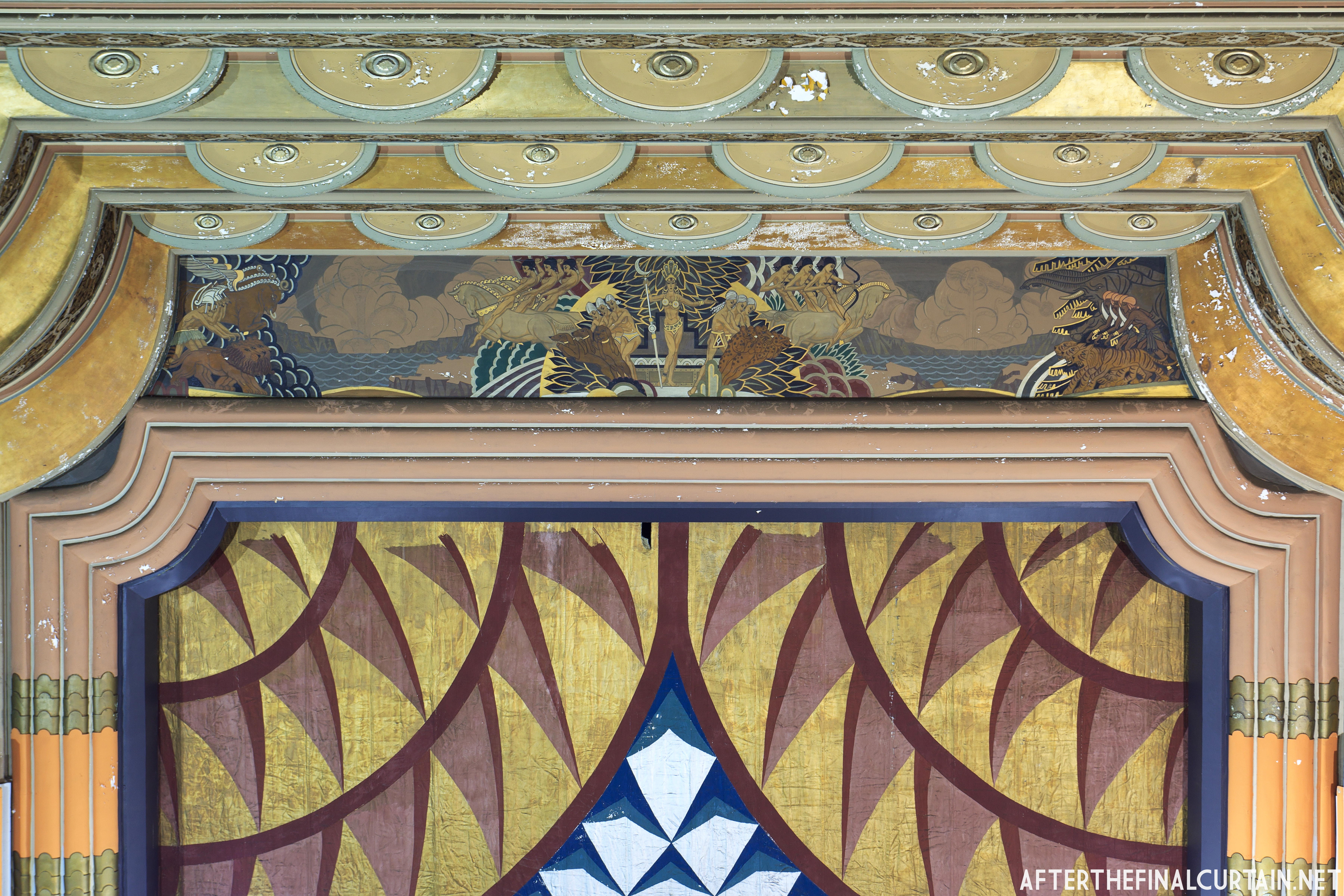
Unlike many theaters built in the 1920’s, the Boyd was originally intended to be a movie theater and, although there were backstage dressing rooms, did not feature vaudeville shows. According to the opening day brochure the Boyd was dedicated to women’s progress throughout history. This appreciation for women is referenced throughout the theater, especially in several murals, one of which shows an Amazonian queen fighting African and Asian armies.
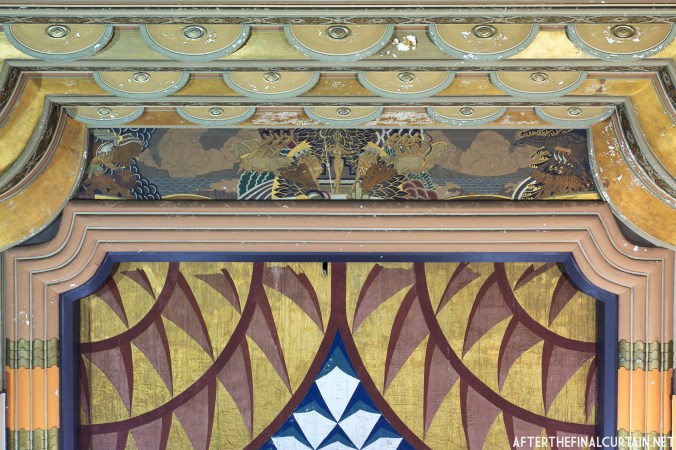
Alexander Boyd sold the theater to the Stanley Warner company, which ran many of downtown Philadelphia’s theaters, after the construction was completed. Shortly after the Boyd changed hands a Kimball theater organ was installed. It remained in the theater until 1969, when it was removed it was the last theater organ in a downtown Philadelphia theater. Various movie premieres were held at the theater over the years, including “Rocky III,” and “Philadelphia.” At the premiere of “Philadelphia” actor Tom Hanks is said to have remarked “Oh, a real movie theater!” when entering the Boyd.
After being sold in 1971, the Boyd was renamed the SamEric by it’s new owners, the Sameric Corporation. They renovated the theater and eventually added three additional auditoriums next to the original, which was renamed again as SamEric 4. The theater closed and was slated for demolition in 2002 before a group of concerned citizens formed the “Committee to Save the SamEric” (which later became “Friends of the Boyd”) to save the theater from demolition. In the following ten years several attempts were made to restore the theater, without success.
In 2013, Florida theater chain iPic agreed to lease the building from developer Neal Rodin. iPic planned to restore the facade, and gut the interior of the theater to build an eight screen theater as well as a restaurant. Since the Boyd was listed on the National Register of Historic Places the Philadelphia Historical Commission met to vote to approve iPic’s plans. On March 14, 2014, after hearing the opinions of many Philadelphians for and against the demolition, the Commission voted to approve the plans. However, iPic’s plans fell through and in December 2014 Pearl Properties bought the property for $4.5 million. Pearl began demolition of the auditorium on March 14, 2015. Tatel, a Spanish restaurant, is opening in the former lobby and foyer of the Boyd. The Harper, a 27 story apartment tower, was built in place of the demolished auditorium. The Friends of the Boyd saved a number of artifacts from the Boyd before it was demolished, and have donated them to other theaters, including the Lansdowne Theatre in Lansdowne, PA.
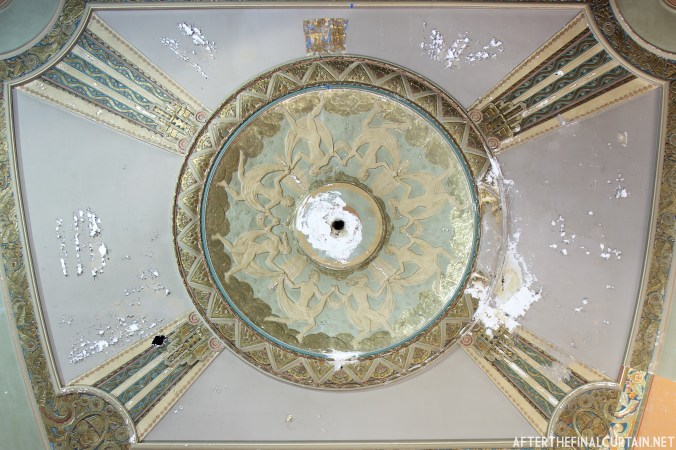
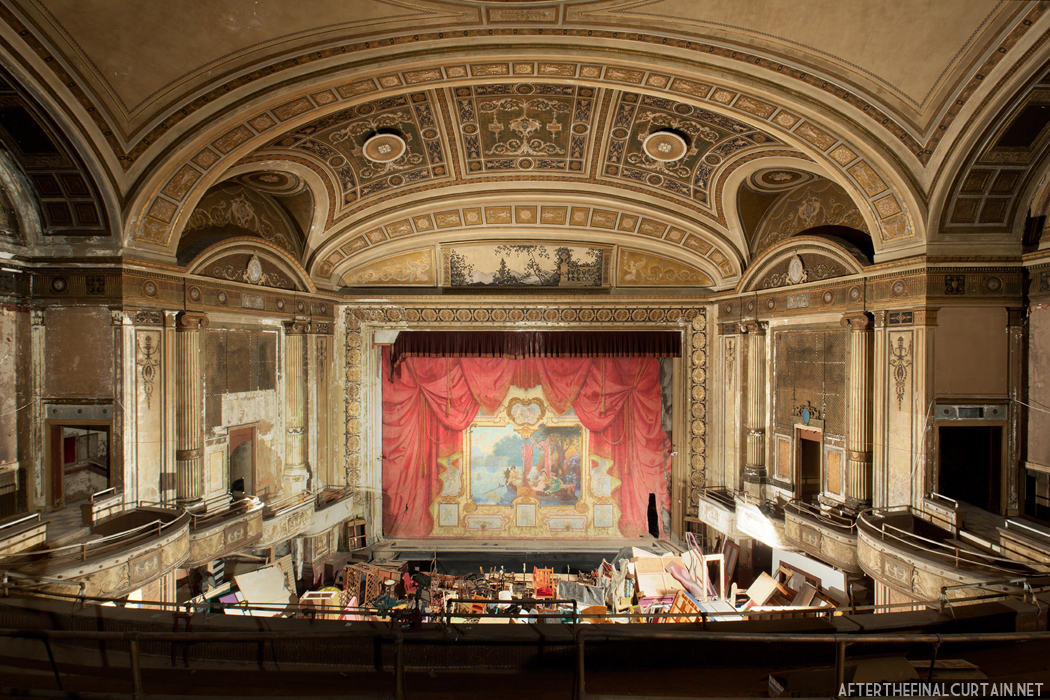
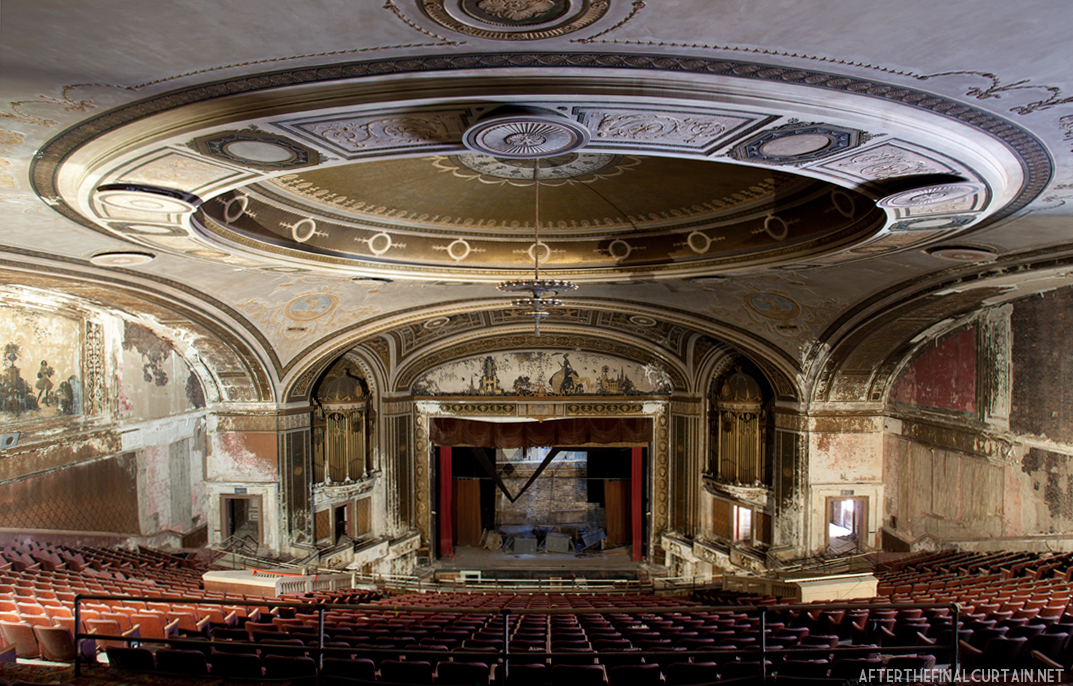
- View of the auditorium from the center of the balcony.
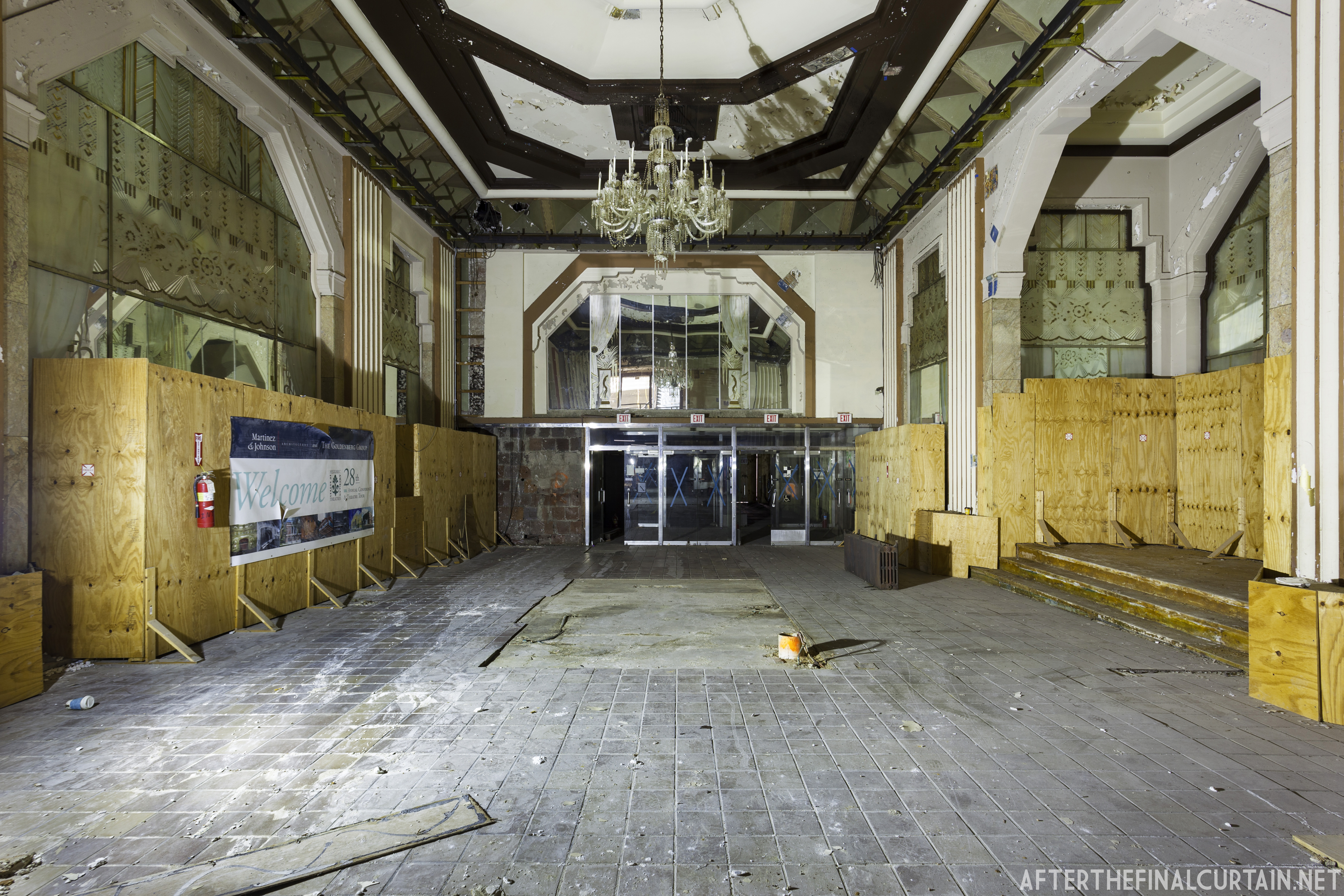
- The theater was cleaned out shortly after it closed.
The RKO Hamilton Theatre
Moss and Brill’s Hamilton Theatre opened on January 23, 1913 in Manhattan’s Hamilton Heights neighborhood. The theater was commissioned by vaudeville operator Benjamin S. Moss and theater developer Solomon Brill and designed by the prolific Thomas W. Lamb, known for the architecture of many of the Hamilton’s contemporaries. Lamb designed the Hamilton in the Renaissance Revival style, incorporating a terracotta façade.
Loew’s Poli Theatre
The Poli is one of the 22 theaters in my new book “After the Final Curtain: The Fall of the American Movie Theater.” Find out more here.
Popcorn Palaces
I’m pleased to announce that I’ve joined the creative team of Popcorn Palaces, an upcoming documentary that will cover the rise, fall and rebirth of some of America’s greatest theaters!
“Once upon a time, the theatre in which you saw a movie could be just as special as the movie itself. The theatres that America built in the 20s and 30s were extravagant, exotic fantasies designed to transport the audience into another world. The show started on the sidewalk the moment you saw the theatre’s towering sign, outlined in thousands of flashing, chasing lights, spelling out the words PARAMOUNT or FOX or LOEW’S. You had found your way to an acre of seats in a garden of dreams. “Popcorn Palaces” will not only be a celebration of America’s moviegoing legacy, it will also be the story of how theatres today are striving to develop new audiences. Long before there was a multiplex or HBO or Netflix, the ritual of going to the movies provided us with a gateway to a new and deeper understanding of ourselves and our world. Today theatres are priceless resources that are bringing new vitality and civic pride to our cities. Far from seeing themselves as a club for the aged, historic theatres have made educational outreach programs central to their mission. Theatres are part of our past. They are also a vital part of our future.”
Please check out the Popcorn Palaces website at: www.popcornpalaces.com and be sure to like them on Facebook: https://www.facebook.com/popcornpalaces
Unfortunately, due to the death of Wally Coberg, the mind behind Popcorn Palaces, in 2011 the project was cancelled.
The Newark Paramount Theatre
The Paramount is one of the 22 theaters in my new book “After the Final Curtain: The Fall of the American Movie Theater.” Find out more here.
The Paramount Theatre opened on October 11, 1886 as H.C. Miner’s Newark Theatre. It was originally a vaudeville house managed by Hyde & Behman Amusement Co., a Brooklyn based theater Management Company. After H.C. Miner’s death in 1900, his surviving relatives retained ownership of the theater for several years until its sale in 1916 to Edward Spiegel, the owner of the nearby Strand Theatre. Spiegel also purchased the building next to the theater with the intent to use the space to expand the theater. To accomplish this he hired famed theater architect Thomas W. Lamb to do the alterations.
For a sneak preview of upcoming blog posts as well as outtake images from previous posts be sure to “like” After the Final Curtain on Facebook.
The Palace Theatre
The Palace Theatre opened on November 26, 1925 in Gary, Indiana. The 3,000-seat atmospheric theater was designed by John Eberson, a renowned architect known for the design of the Paramount Theatre in nearby Anderson, Indiana. Continue reading
The Paramount Theatre – Youngstown, Ohio
The Paramount is one of the 22 theaters in my new book “After the Final Curtain: The Fall of the American Movie Theater.” Find out more here.

The Liberty Theatre opened on February 11, 1918 in Youngstown, Ohio. It was designed by architect C. Howard Crane, later known for designing the Fox Theatre in Detroit, Michigan. The 1,800 seat Liberty opened as a vaudeville theater, and was managed by C.W. Diebel. Diebel’s father had built a theater on the same lot as the Liberty, but it was demolished to make way for what would become the Paramount Theatre. According to an account in the Motion Picture News, the theater cost $500,000 to build (or $8.8 million when adjusted for inflation.)

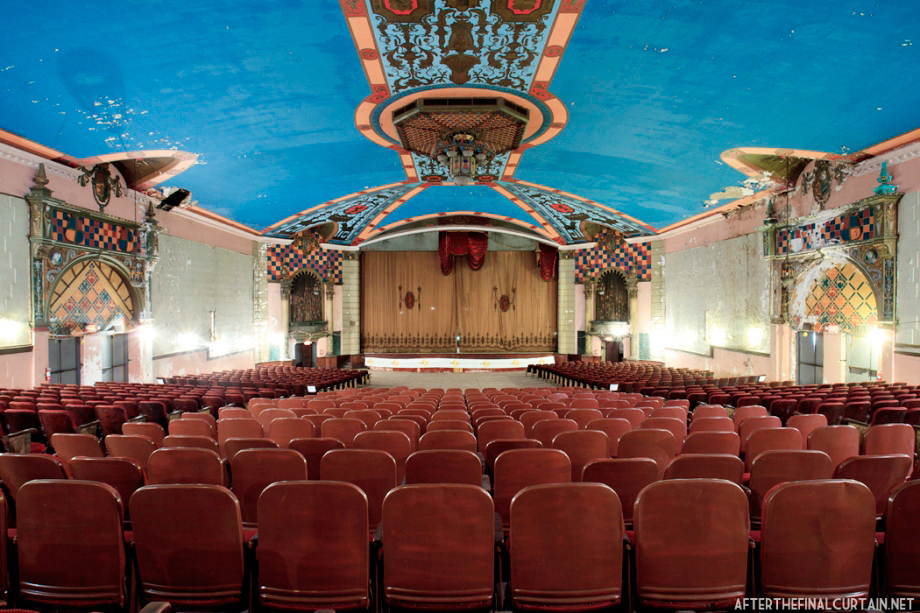
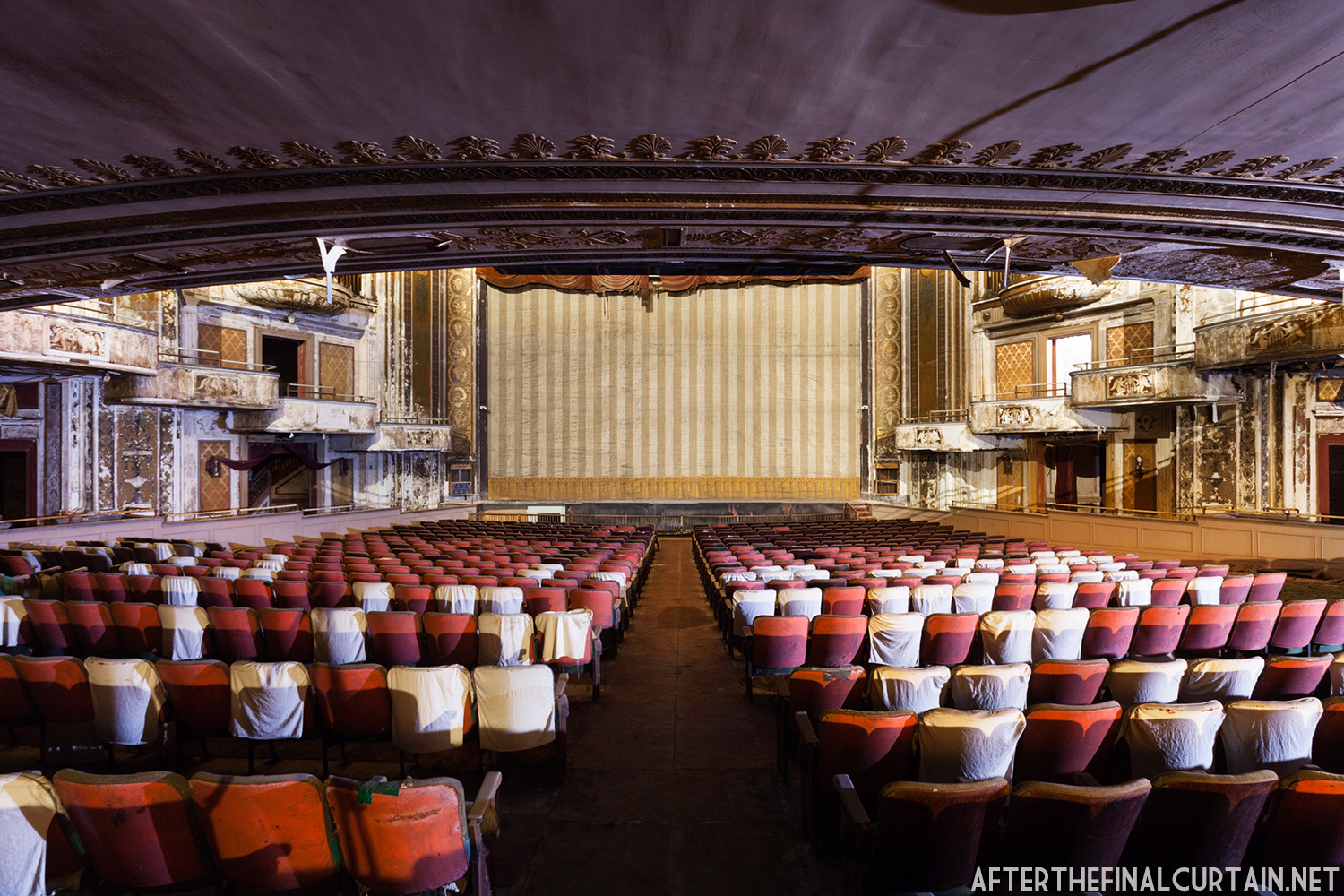
The main level of the Paramount Theatre.
The exterior of the building was constructed with white glazed terra cotta, and the interior was decorated in the Adamesque style. Due to the Liberty’s wartime construction, it was very difficult to get the steel required for the framework. In 1929 the Liberty was purchased by Paramount Pictures and renamed the Paramount Theatre. Paramount Pictures spent $200,000 modernizing the building and installing a sound system so the theater could show sound films (or ”talkies”). The Paramount thrived for more than 50 years before closing in 1976. The theater reopened for two days in late 1984 to host “Youngstown Sheet & Tube Co. Steel Mill Movie Day.” People were given a short brief on the current state of the steel industry, a tour of the theater, and shown a film about the mill.

In April 2006 Grande Venues, Inc. purchased the Paramount. They planned to reuse it by adding a dance hall on the main floor and a one- or two-screen movie theater in the balcony. However, the restoration plans were never applied and the building was purchased by the city of Youngstown in 2011.

The Paramount Project, a group working to reuse the building in some capacity, wanted to save the facade for a small restaurant, and construct an amphitheater where the auditorium was located. However, two separate studies found that if the walls of the theater were removed, the facade would likely collapse. It would cost between 1.3 and 1.6 million dollars to shore the facade enough to survive the demolition. Due to the cost, the Paramount Project walked away from the building and in July 2013 it was demolished. The city turned the space into a parking lot.


The organ pipes were stored on the stage after the theater closed. They disappeared shortly before demolition.


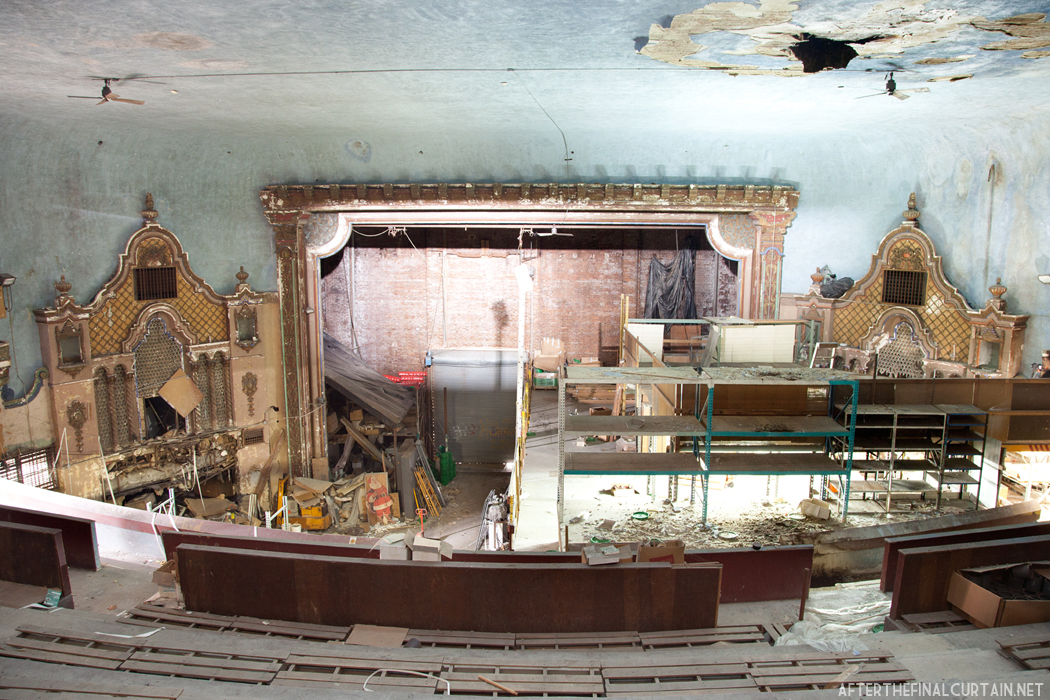
View of the auditorium from the balcony.