Q&A with Howard B. Haas, President of Friends of the Boyd

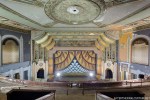
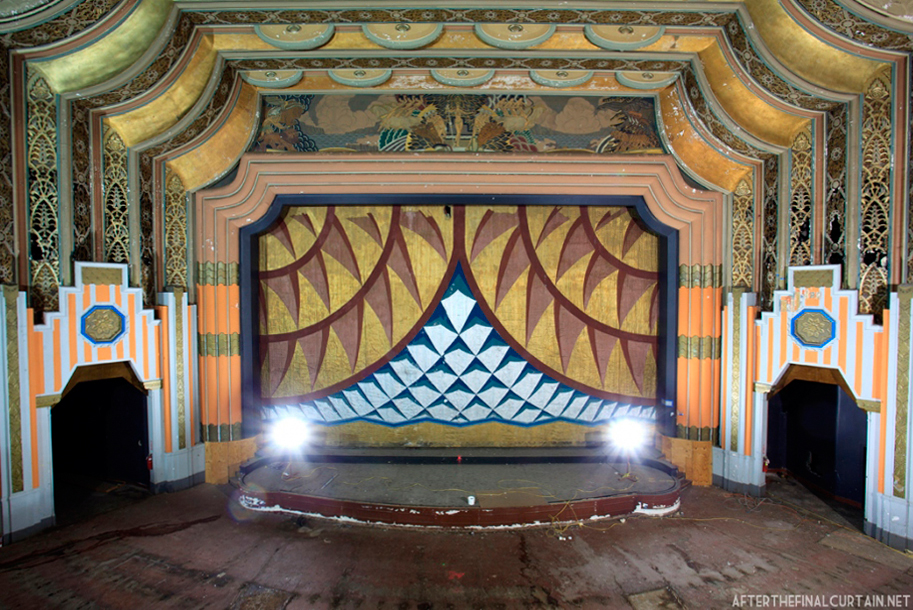
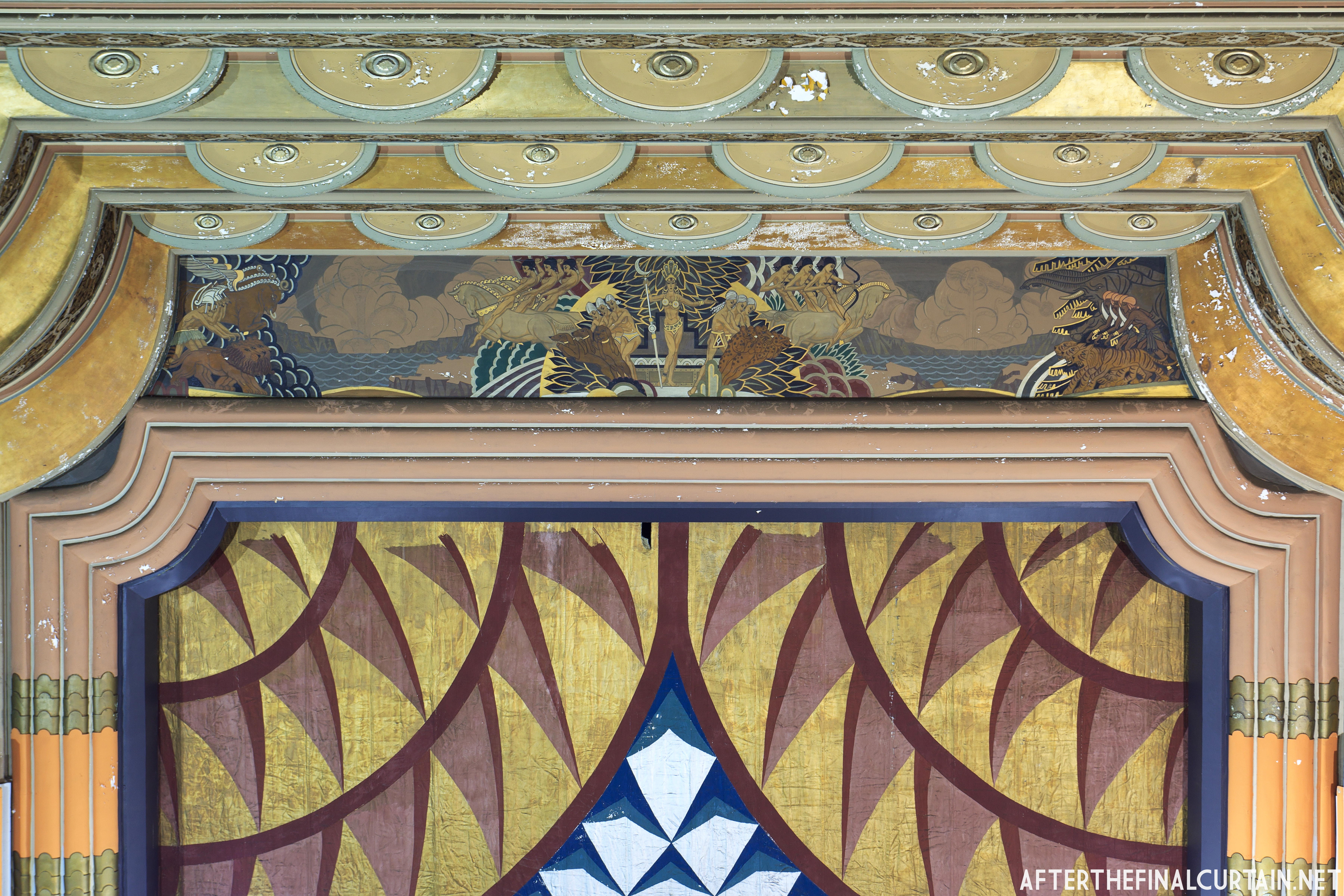
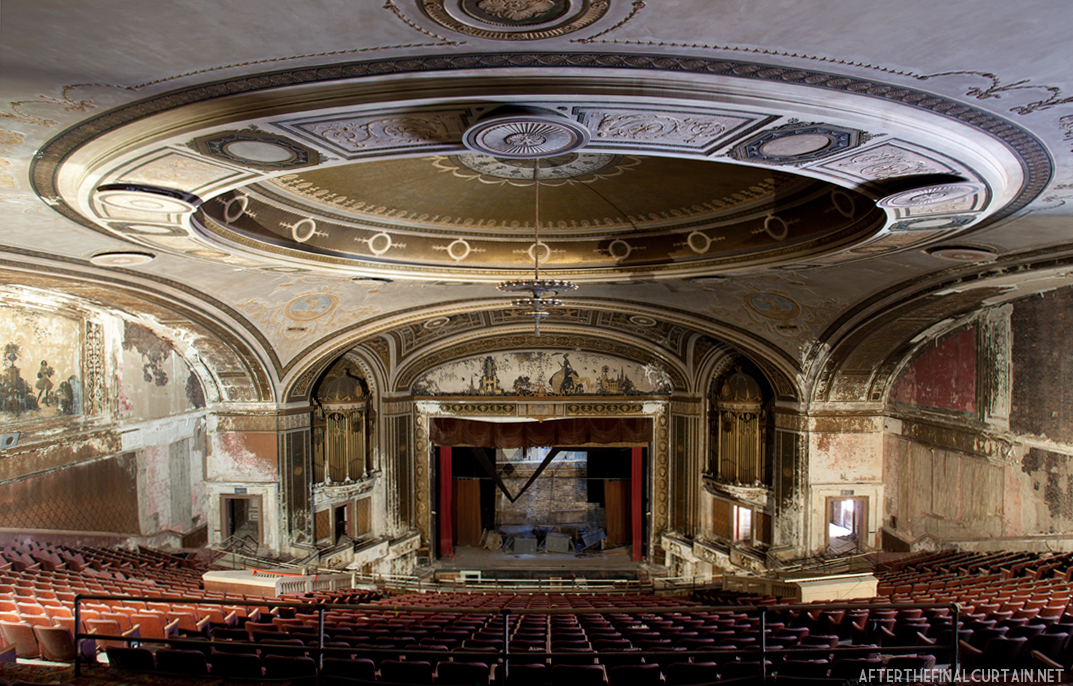
The Boyd Theatre's proscenium arch.

After photographing the Boyd Theater I learned a little bit about the Friends of the Boyd.  I had a lot of questions, and luckily the group’s president and chairman Howard B. Haas was available to answer them.  Below are his responses to several questions about the history of the Friends, his own personal experiences with the theater and some of his hopes for the future.

Continue reading

The Lansdowne Theatre

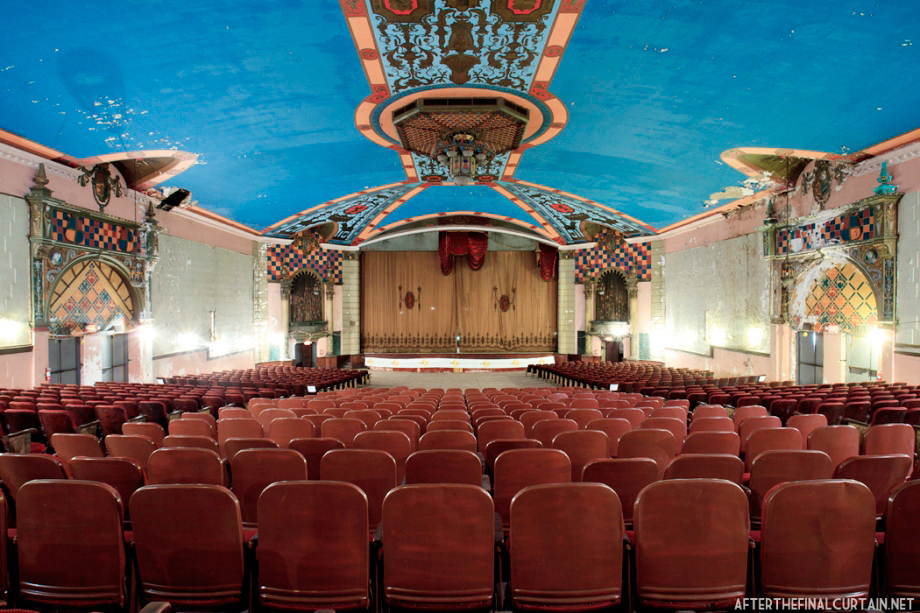
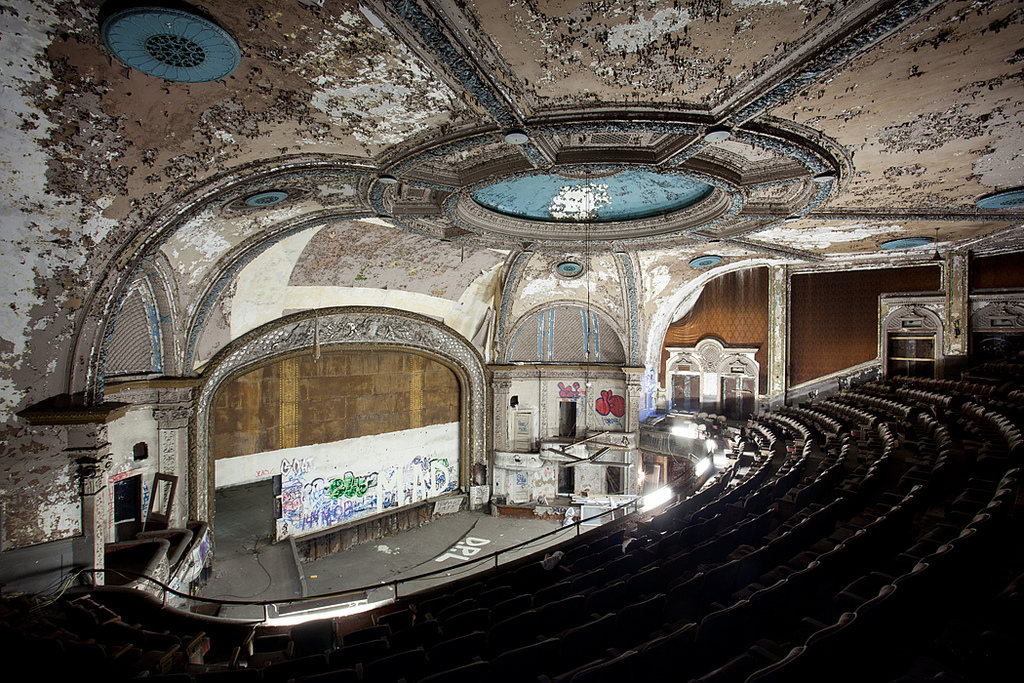
Lansdowne theater auditorium

The Lansdowne Theatre auditorium.

The Lansdowne Theatre opened on June 7, 1927 in Lansdowne, Pennsylvania (a suburb of Philadelphia). The 1,381 seat theater was designed by William H. Lee, a Philadelphia based architect known for the recently renovated Queen Theatre in Wilmington, Delaware.

Loew’s Majestic Theatre

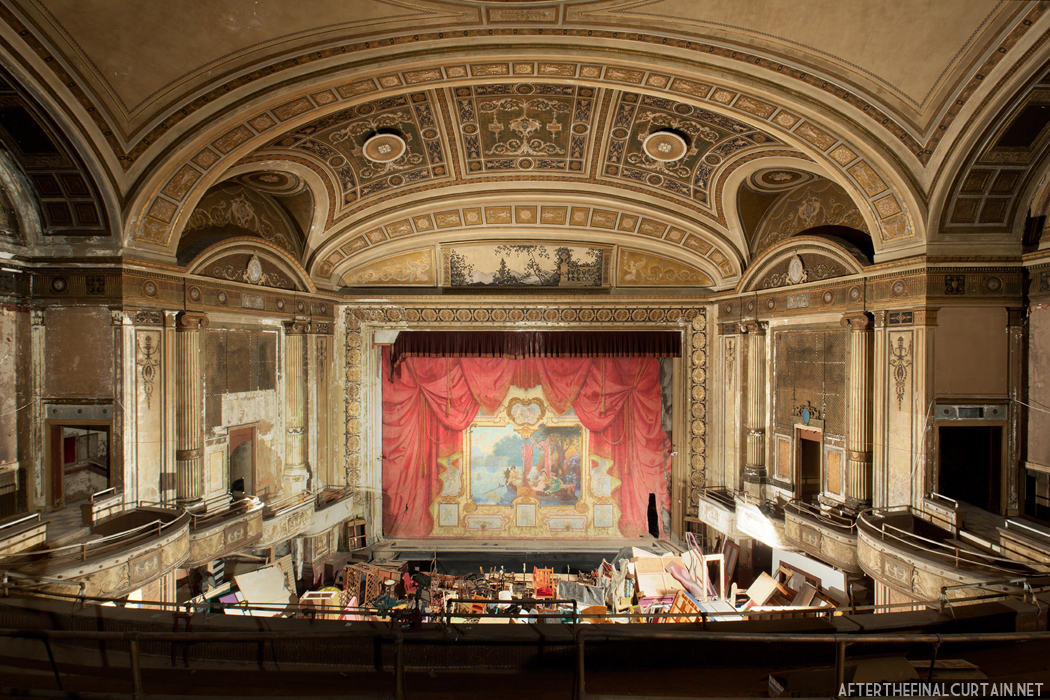
View of the Majestic Theatre from the front of the balcony.

The Loew’s Majestic Theatre opened on November 4, 1922 in Bridgeport, Connecticut. It was designed by architect Thomas W. Lamb (who also designed the other theater in the complex, the Loew’s Palace Theatre, and many other theaters at the time) for theater mogul Sylvester Z. Poli, who also owned the nearby Palace Theatre in Waterbury, Connecticut.

The Boyd Theatre

The Boyd is one of the 22 theaters in my new book “After the Final Curtain: The Fall of the American Movie Theater.” Find out more here.

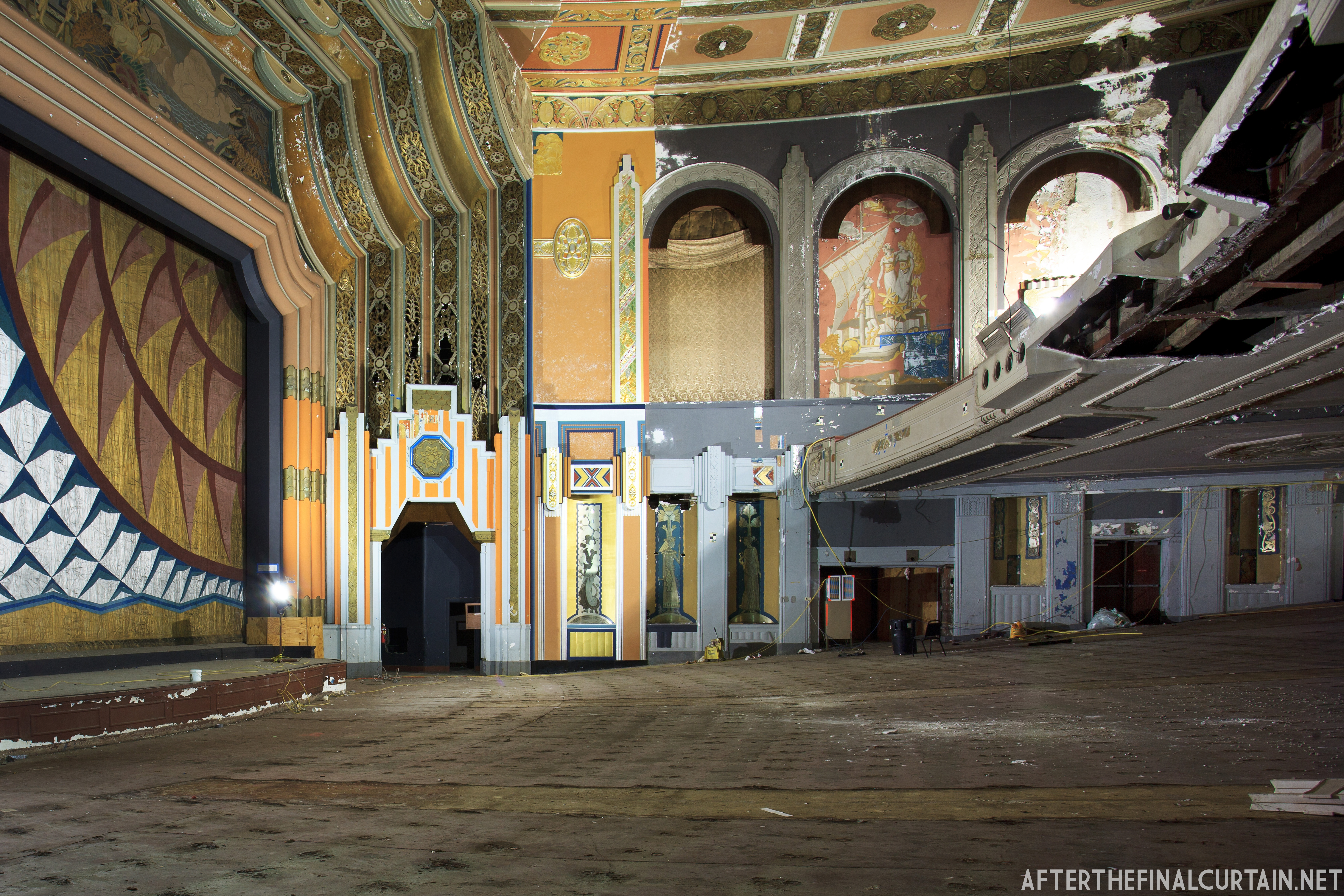
View of the auditorium from the side of the balcony.

The Boyd Theatre, Philadelphia, Pennsylvania‘s only art deco movie palace, opened on Christmas Day in 1928. Located in Philadelphia’s Center City neighborhood, the 2,450 seat theater was commissioned by Alexander Boyd and built by Hoffman-Henon, a Philadelphia architecture firm also known for the construction of the nearby Prince Music Theatre. One of the companies commissioned for the Boyd’s interior decoration was the Rambusch Company, who later decorated the Loew’s Kings Theatre.

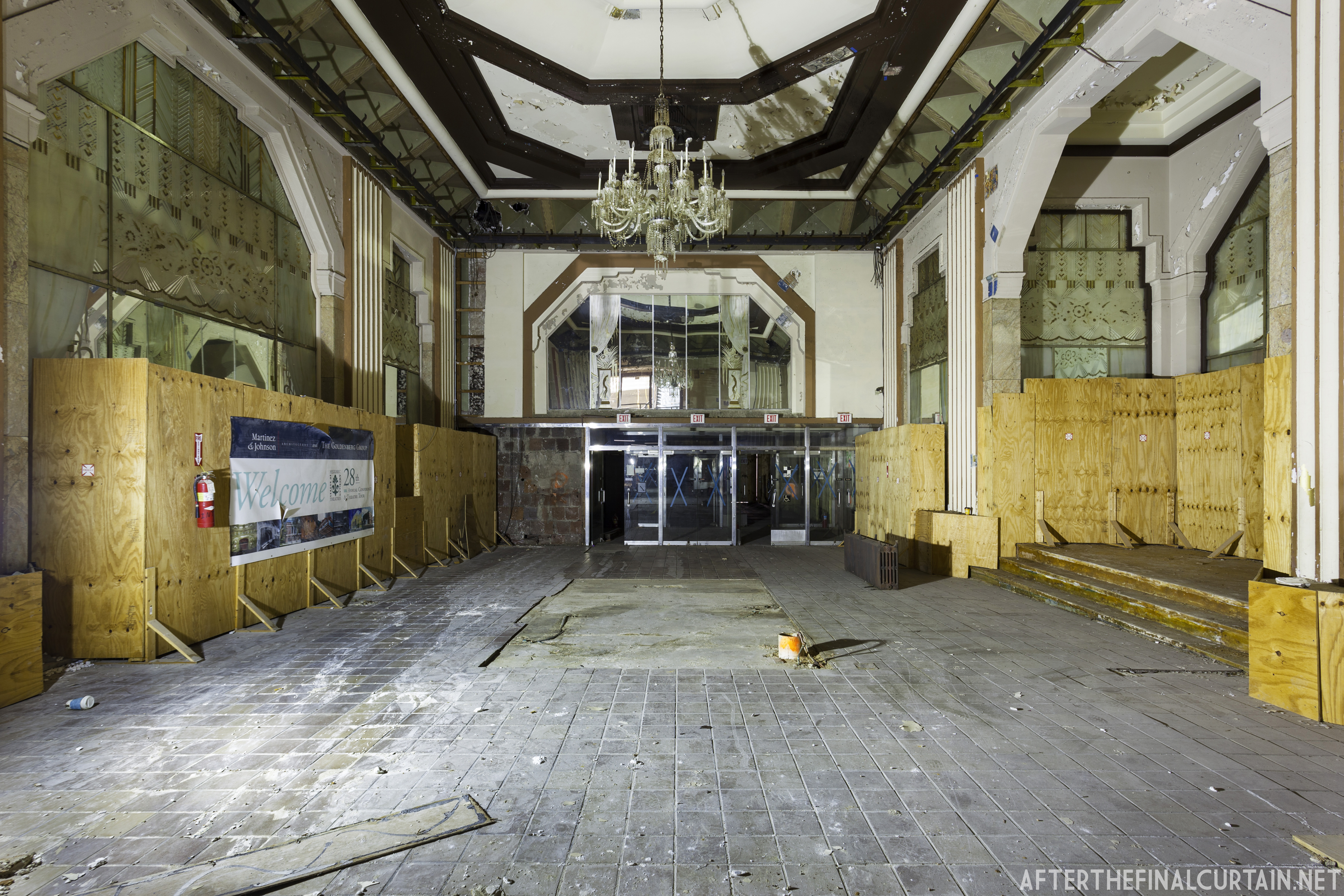
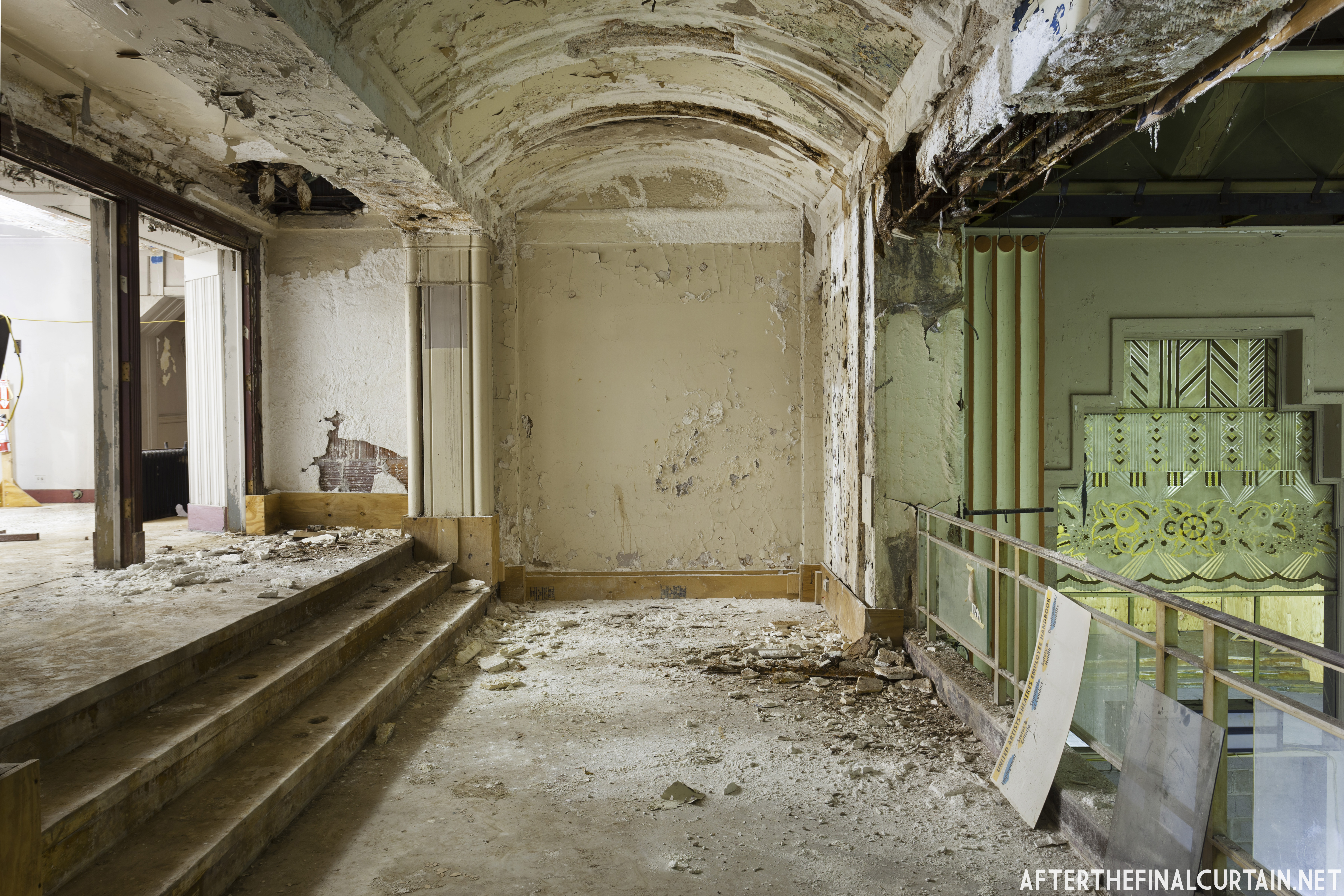
View of the lobby from the main level.

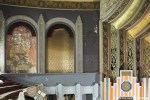
Unlike many theaters built in the 1920’s, the Boyd was originally intended to be a movie theater and, although there were backstage dressing rooms, did not feature vaudeville shows. According to the opening day brochure the Boyd was dedicated to women’s progress throughout history.  This appreciation for women is referenced throughout the theater, especially in several murals, one of which shows an Amazonian queen fighting African and Asian armies.
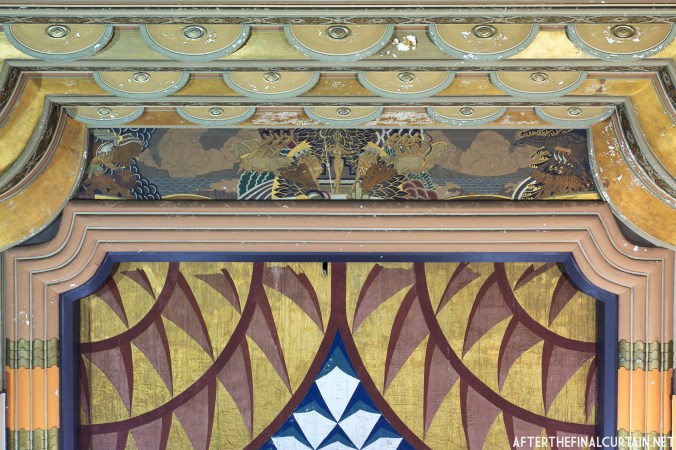
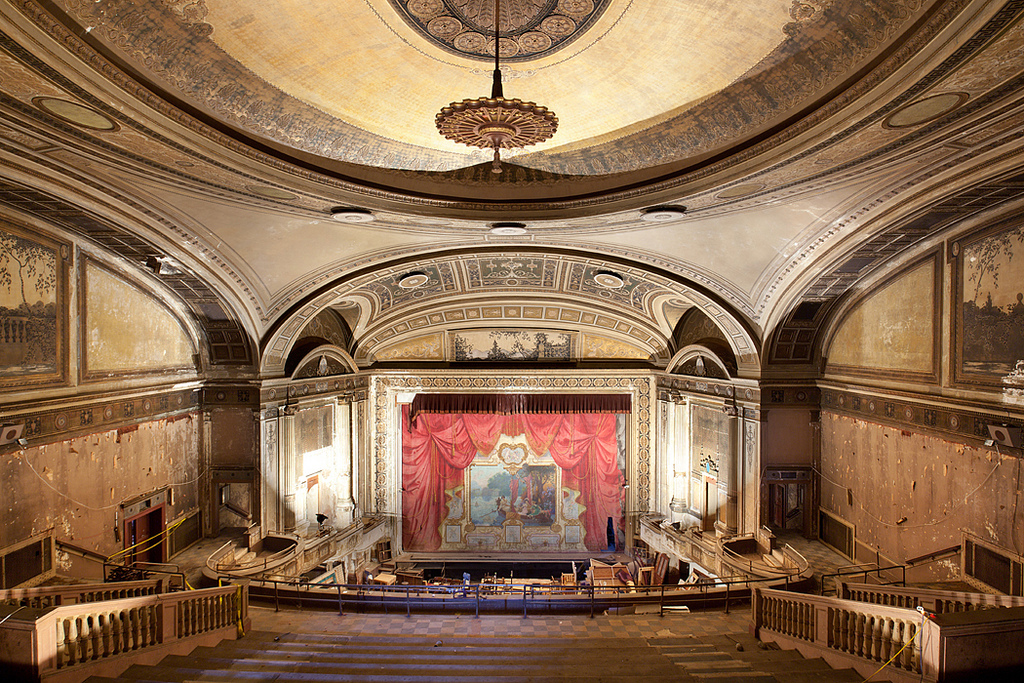
The proscenium arch.

Alexander Boyd sold the theater to the Stanley Warner company, which ran many of downtown Philadelphia’s theaters, after the construction was completed.  Shortly after the Boyd changed hands a Kimball theater organ was installed. It remained in the theater until 1969, when it was removed it was the last theater organ in a downtown Philadelphia theater. Various movie premieres were held at the theater over the years, including “Rocky III,” and “Philadelphia.” At the premiere of “Philadelphia” actor Tom Hanks is said to have remarked “Oh, a real movie theater!” when entering the Boyd.

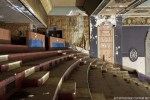
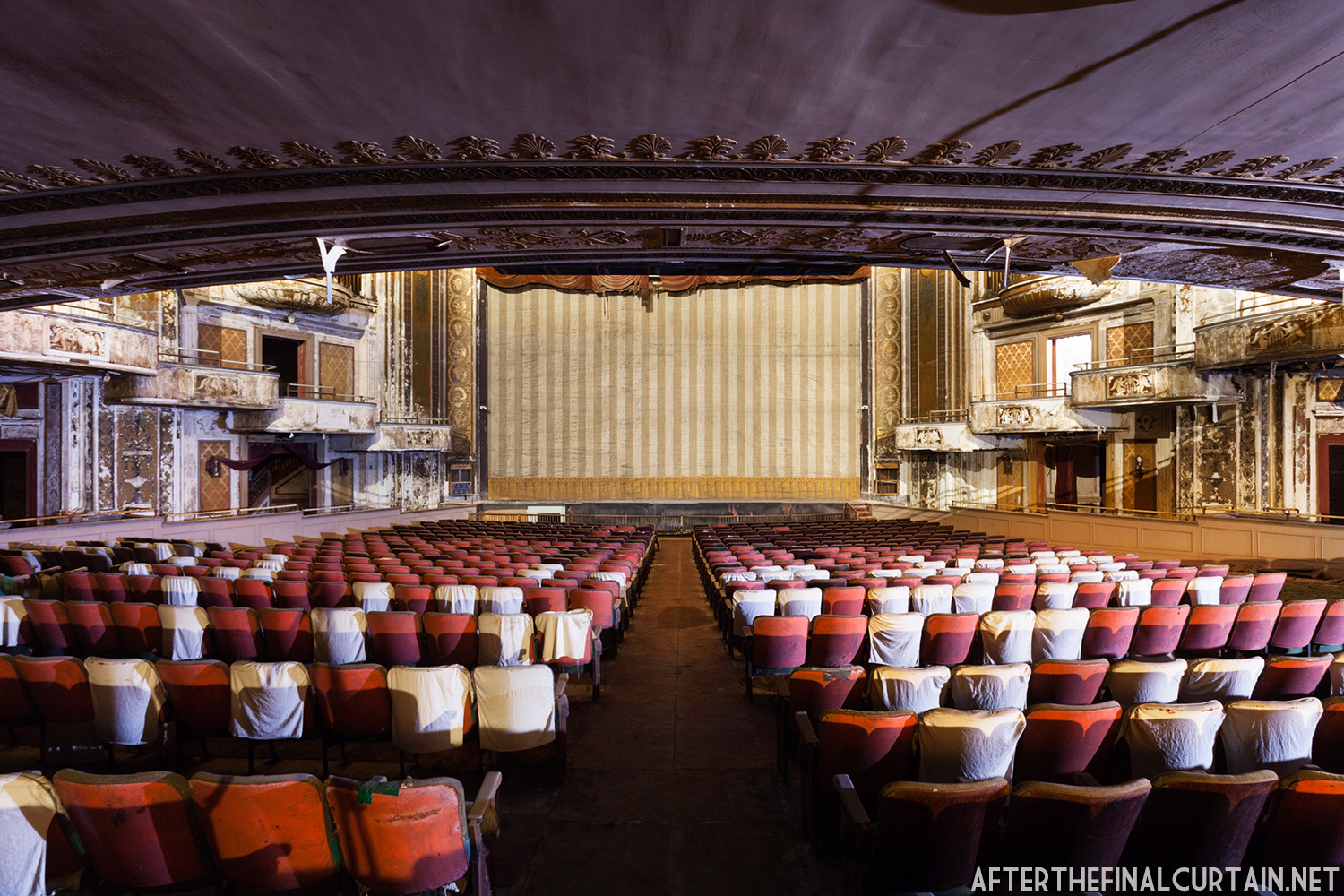
View of the auditorium from the side of the orchestra level.

After being sold in 1971, the Boyd was renamed the SamEric by it’s new owners, the Sameric Corporation. They renovated the theater and eventually added three additional auditoriums next to the original, which was renamed again as SamEric 4. The theater closed and was slated for demolition in 2002 before a group of concerned citizens formed the “Committee to Save the SamEric” (which later became “Friends of the Boyd”) to save the theater from demolition. In the following ten years several attempts were made to restore the theater, without success.

In 2013, Florida theater chain iPic agreed to lease the building from developer Neal Rodin. iPic planned to restore the facade, and gut the interior of the theater to build an eight screen theater as well as a restaurant. Since the Boyd was listed on the National Register of Historic Places the Philadelphia Historical Commission met to vote to approve iPic’s plans. On March 14, 2014, after hearing the opinions of many Philadelphians for and against the demolition, the Commission voted to approve the plans. However, iPic’s plans fell through and in December 2014 Pearl Properties bought the property for $4.5 million. Pearl began demolition of the auditorium on March 14, 2015.  Tatel, a Spanish restaurant, is opening in the former lobby and foyer of the Boyd.  The Harper, a 27 story apartment tower, was built in place of the demolished auditorium. The Friends of the Boyd saved a number of artifacts from the Boyd before it was demolished, and have donated them to other theaters, including the Lansdowne Theatre in Lansdowne, PA.
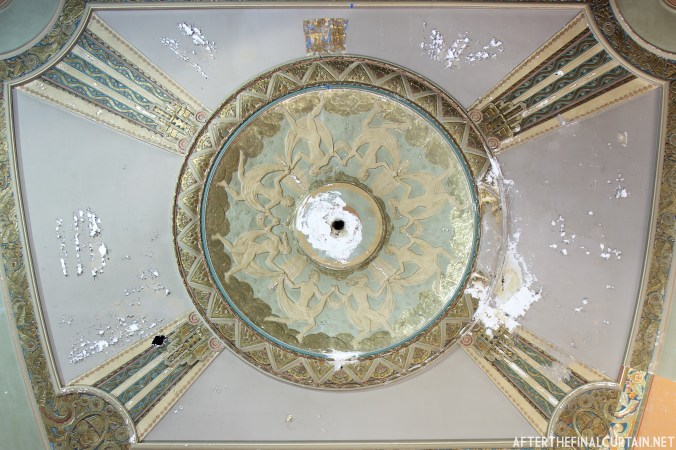
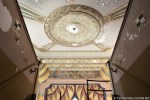
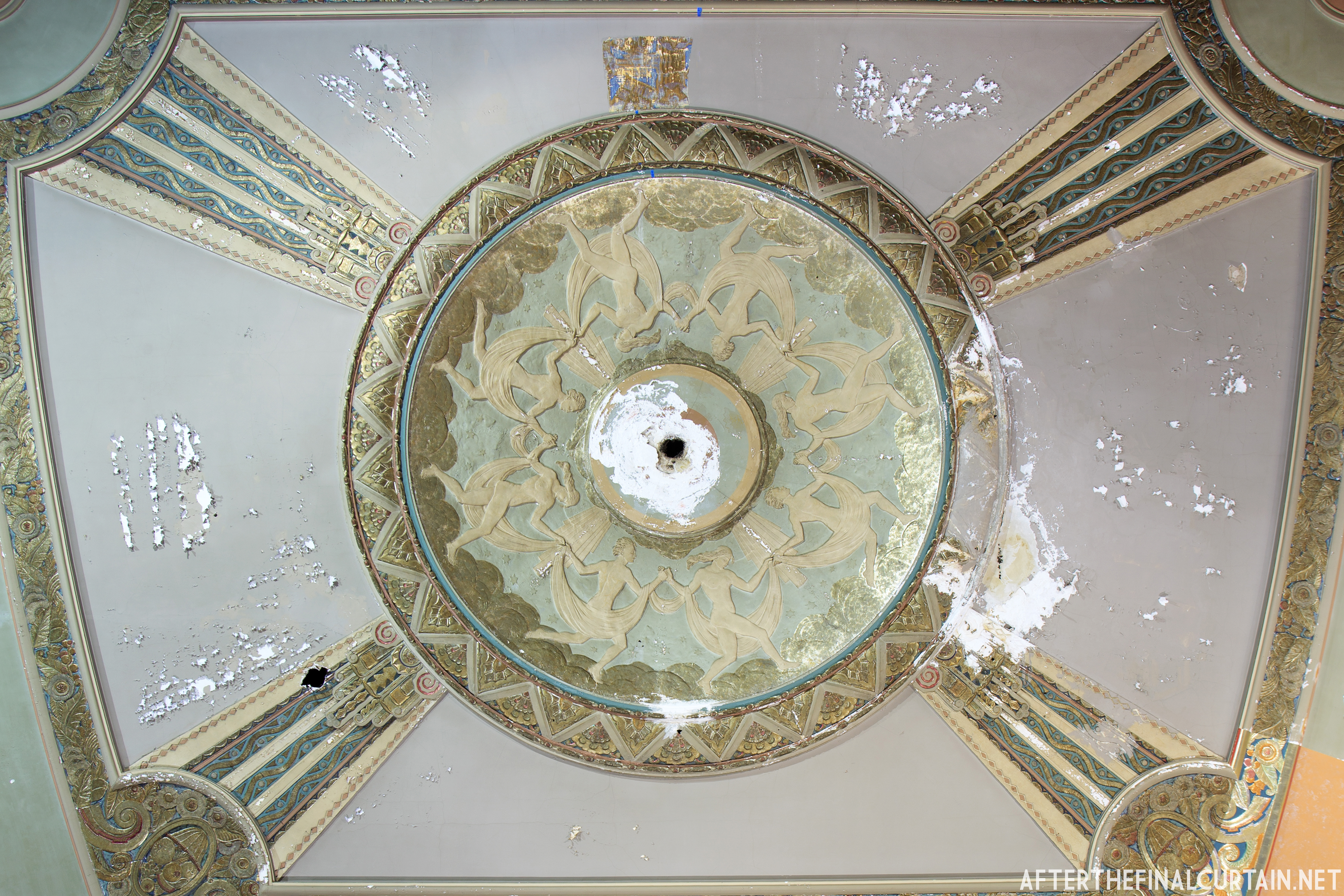
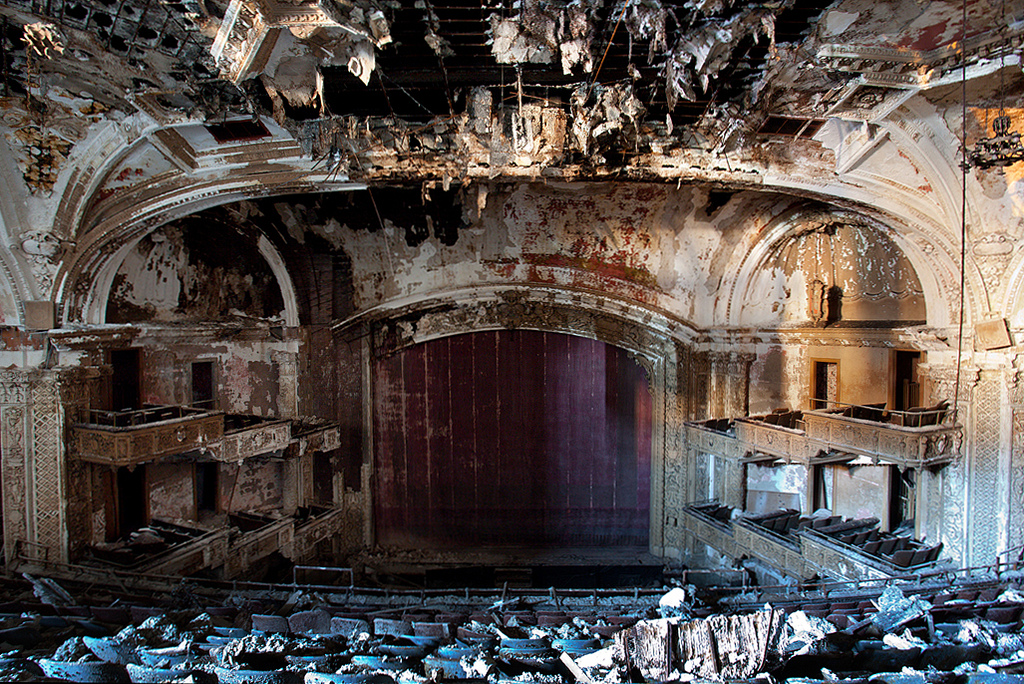
The auditorium ceiling.

The RKO Hamilton Theatre

View from the balcony of the RKO Hamilton Theatre

Moss and Brill’s Hamilton Theatre opened on January 23, 1913 in Manhattan’s Hamilton Heights neighborhood. The theater was commissioned by vaudeville operator Benjamin S. Moss and theater developer Solomon Brill and designed by the prolific Thomas W. Lamb, known for the architecture of many of the Hamilton’s contemporaries.   Lamb designed the Hamilton in the Renaissance Revival style, incorporating a terracotta façade.

Continue reading

Loew’s Poli Theatre

The Poli is one of the 22 theaters in my new book “After the Final Curtain: The Fall of the American Movie Theater.” Find out more here.

View of the Loew’s Palace Theatre from the balcony.

The Loew’s Poli Theatre opened as Poli’s Palace Theatre on September 4, 1922 in Bridgeport, Connecticut. It was designed by architect Thomas W. Lamb (whose work can be seen in my posts on the Newark Paramount Theatre and the RKO Keith’s Theatre) for theater mogul Sylvester Z. Poli, who also owned the nearby Palace Theatre in Waterbury, Connecticut. The 3,642 seat Loew’s Poli Theatre was the biggest movie theater in Connecticut, and remains the largest of Bridgeport’s theaters. Its sister theater which is located next to the Palace in the same building, the Majestic, opened two months later. The walls of the Palace are covered with frescoes of formal Italian gardens painted by Hans Lehman.
View of the stage from the main level of the auditorium.

View of the stage from the main level of the auditorium.

Popcorn Palaces

Loew’s Majestic Theatre Bridgeport, CT

I’m pleased to announce that I’ve joined the creative team of Popcorn Palaces, an upcoming documentary that will cover the rise, fall and rebirth of some of America’s greatest theaters!

“Once upon a time, the theatre in which you saw a movie could be just as special as the movie itself. The theatres that America built in the 20s and 30s were extravagant, exotic fantasies designed to transport the audience into another world. The show started on the sidewalk the moment you saw the theatre’s towering sign, outlined in thousands of flashing, chasing lights, spelling out the words PARAMOUNT or FOX or LOEW’S. You had found your way to an acre of seats in a garden of dreams. “Popcorn Palaces” will not only be a celebration of America’s moviegoing legacy, it will also be the story of how theatres today are striving to develop new audiences. Long before there was a multiplex or HBO or Netflix, the ritual of going to the movies provided us with a gateway to a new and deeper understanding of ourselves and our world. Today theatres are priceless resources that are bringing new vitality and civic pride to our cities. Far from seeing themselves as a club for the aged, historic theatres have made educational outreach programs central to their mission. Theatres are part of our past. They are also a vital part of our future.”

Please check out the Popcorn Palaces website at: www.popcornpalaces.com and be sure to like them on Facebook: https://www.facebook.com/popcornpalaces

Unfortunately, due to the death of Wally Coberg, the mind behind Popcorn Palaces, in 2011 the project was cancelled.

The Newark Paramount Theatre

The Paramount is one of the 22 theaters in my new book “After the Final Curtain: The Fall of the American Movie Theater.” Find out more here.

View of the Paramount Theatre from the balcony.

The Paramount Theatre opened on October 11, 1886 as H.C. Miner’s Newark Theatre. It was originally a vaudeville house managed by Hyde & Behman Amusement Co., a Brooklyn based theater Management Company. After H.C. Miner’s death in 1900, his surviving relatives retained ownership of the theater for several years until its sale in 1916 to Edward Spiegel, the owner of the nearby Strand Theatre. Spiegel also purchased the building next to the theater with the intent to use the space to expand the theater. To accomplish this he hired famed theater architect Thomas W. Lamb to do the alterations.

Continue reading

Facebook

Adams Theatre Newark, NJ

RKO Hamilton Theatre New York, NY

For a sneak preview of upcoming blog posts as well as outtake images from previous posts be sure to “like” After the Final Curtain on Facebook.

https://www.facebook.com/Afterthefinalcurtain

The Palace Theatre

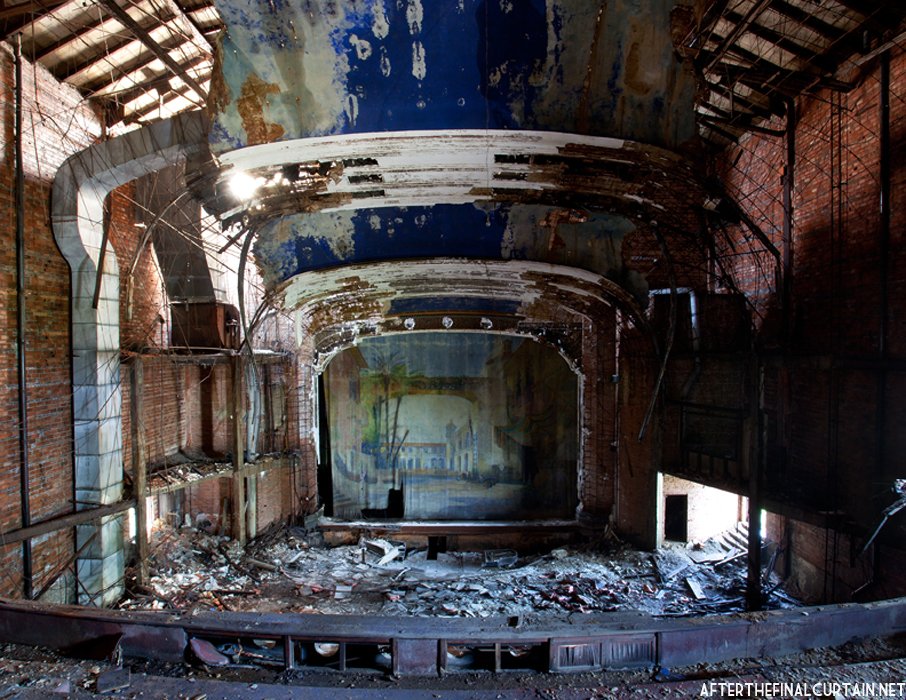
The fresco on the curtain is of a spanish villa.

The Palace Theatre opened on November 26, 1925 in Gary, Indiana.  The 3,000-seat atmospheric theater was designed by John Eberson, a renowned architect known for the design of the Paramount Theatre in nearby Anderson, Indiana. Continue reading