The Glove Theatre – Gloversville, NY

This was originally posted on After the Final Curtain’s Patreon in December 2024. For expanded early posts, as well as video walkthroughs and other exclusive content, you can become a patron at: https://www.patreon.com/afterthefinalcurtain
The Glove Theatre opened on October 9, 1914, as an 800-seat venue for live performances, vaudeville, and community events. Designed by architect Linn Kinne in the Classical Revival style, it quickly became a cultural hub in Gloversville, New York. Early years featured notable acts such as John Philip Sousa and Ethel Barrymore in “The Second Mrs. Tanqueray.” In 1920, the Schine brothers purchased the theater, making it the flagship of Schine Enterprises, which grew to operate over 150 theaters. By 1928, the Glove was among the first in the nation equipped with sound, showcasing its innovative edge.
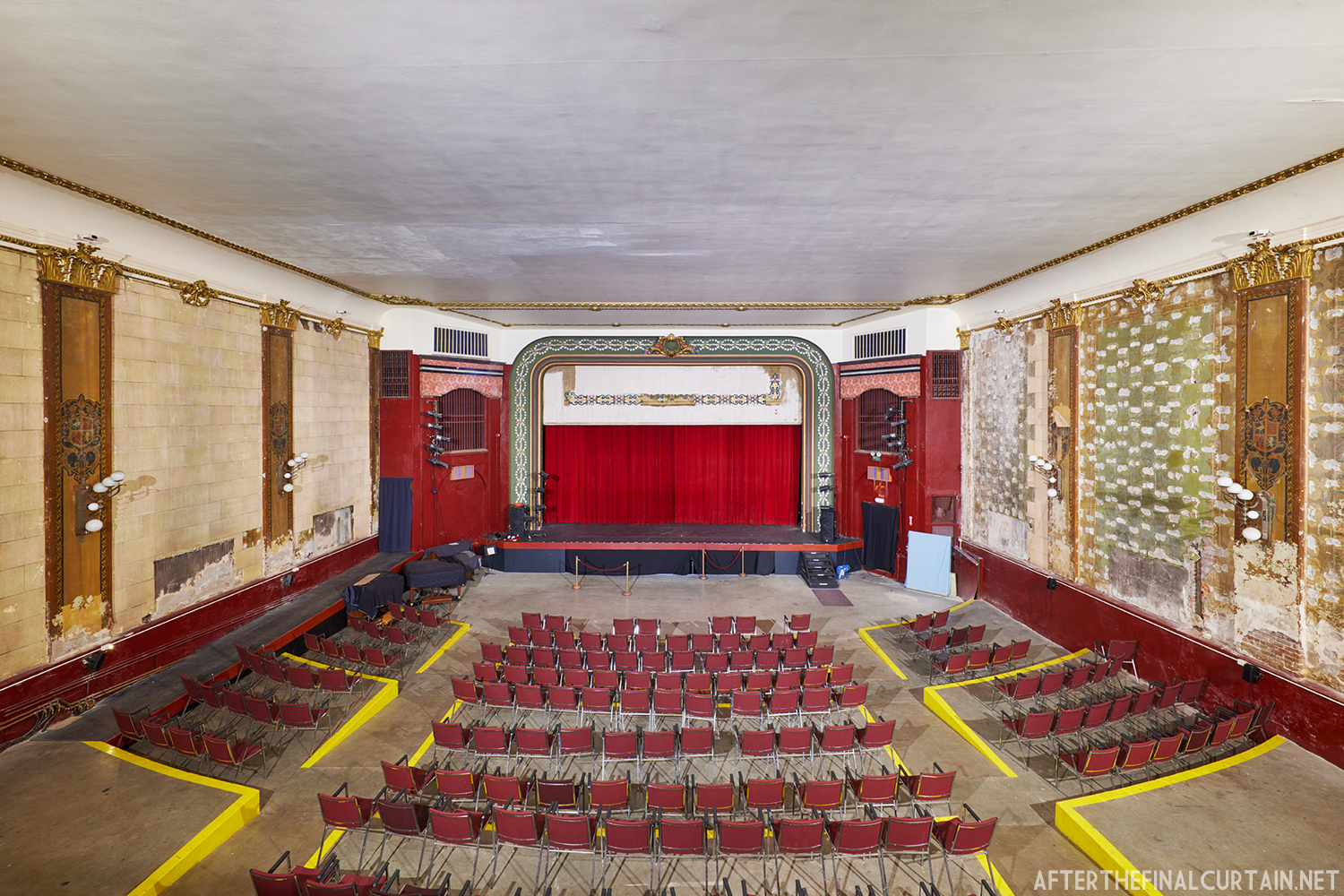
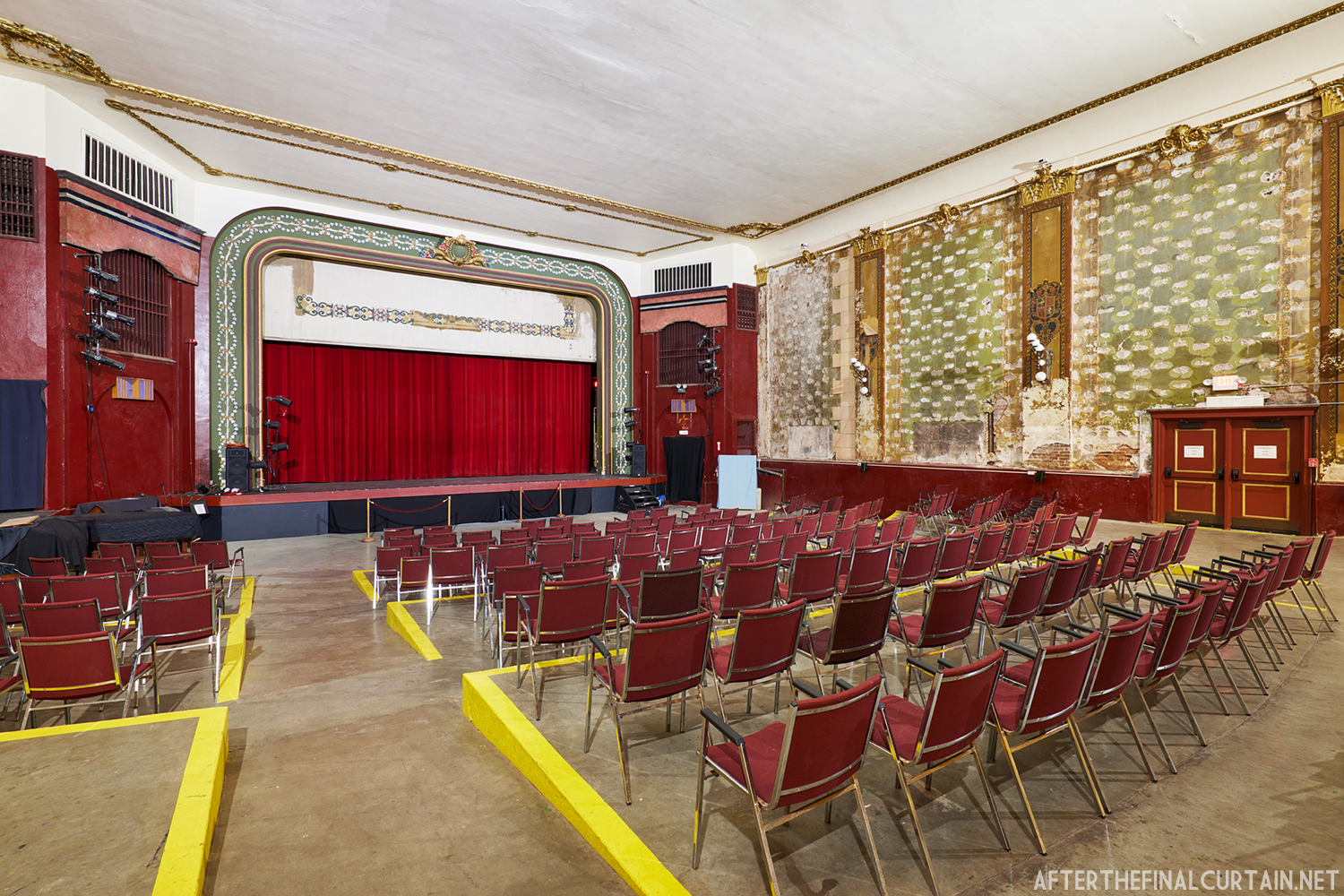
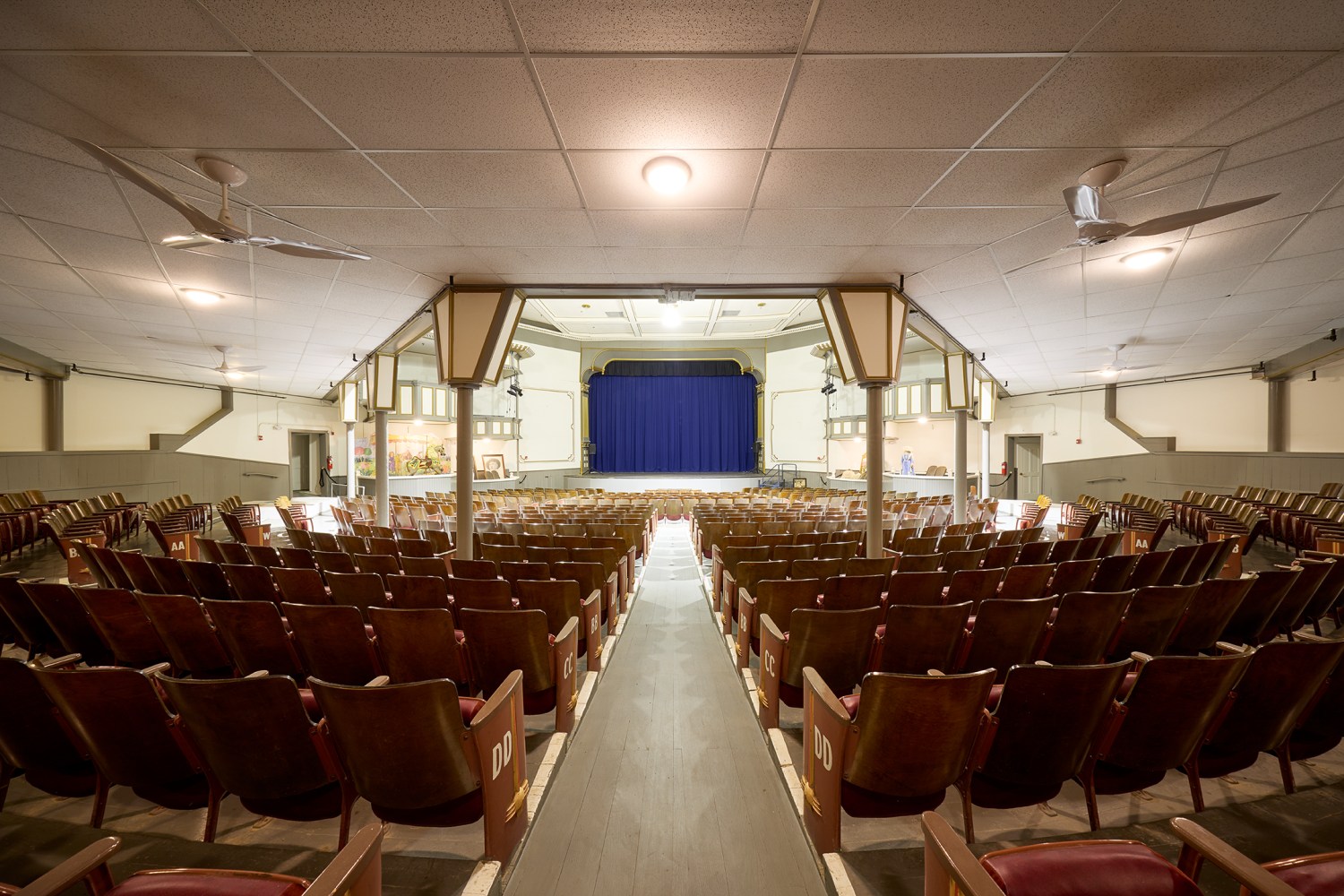
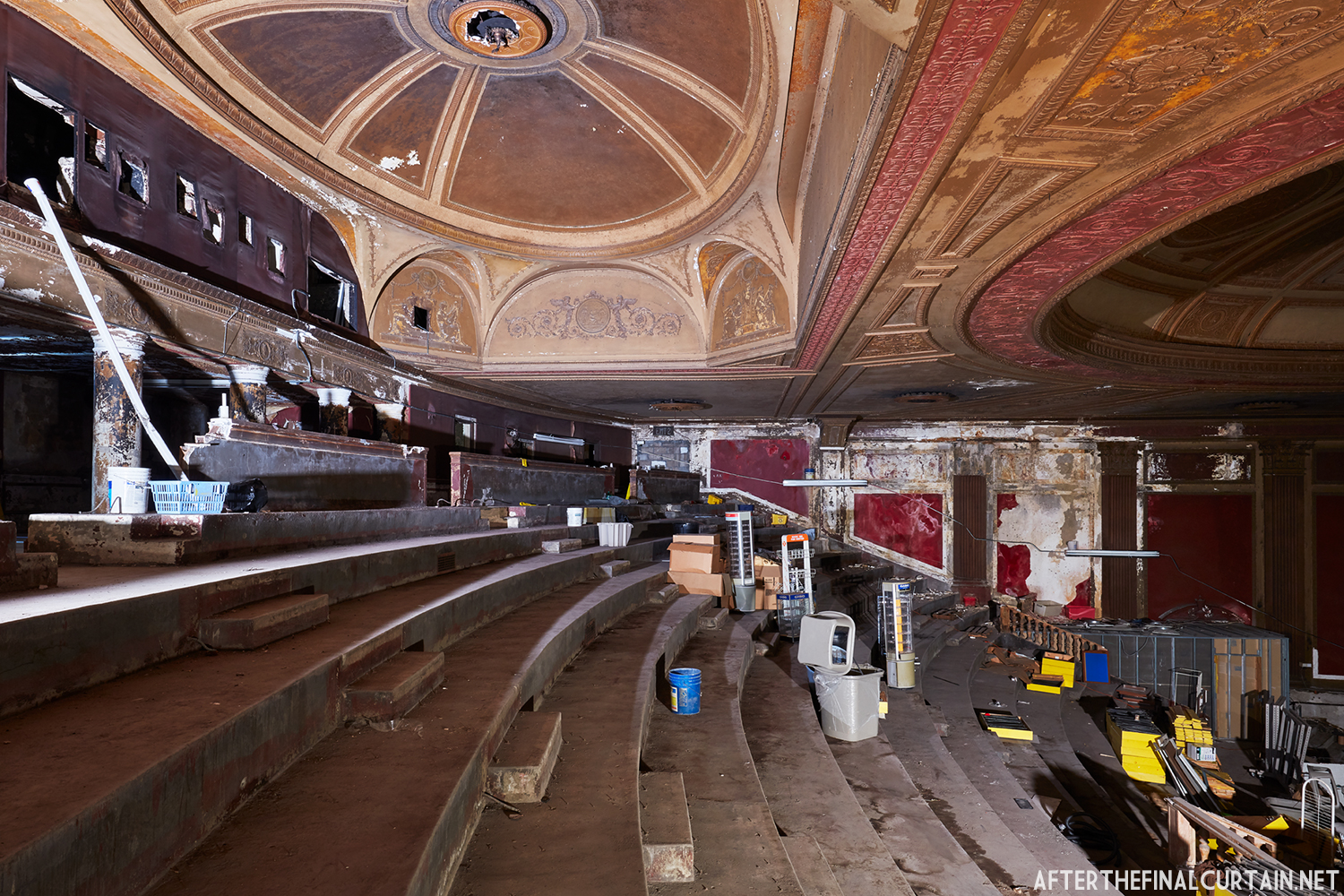
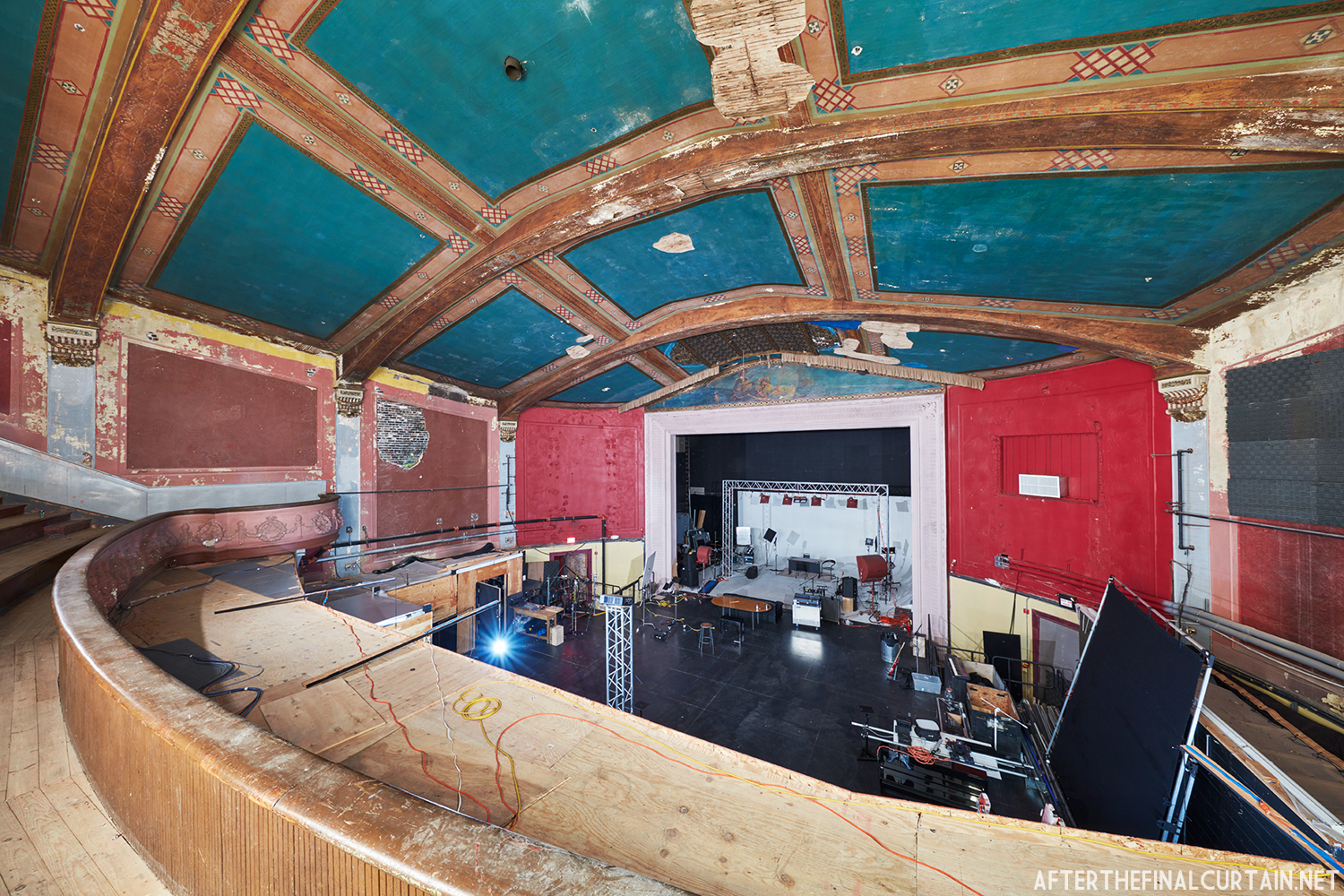
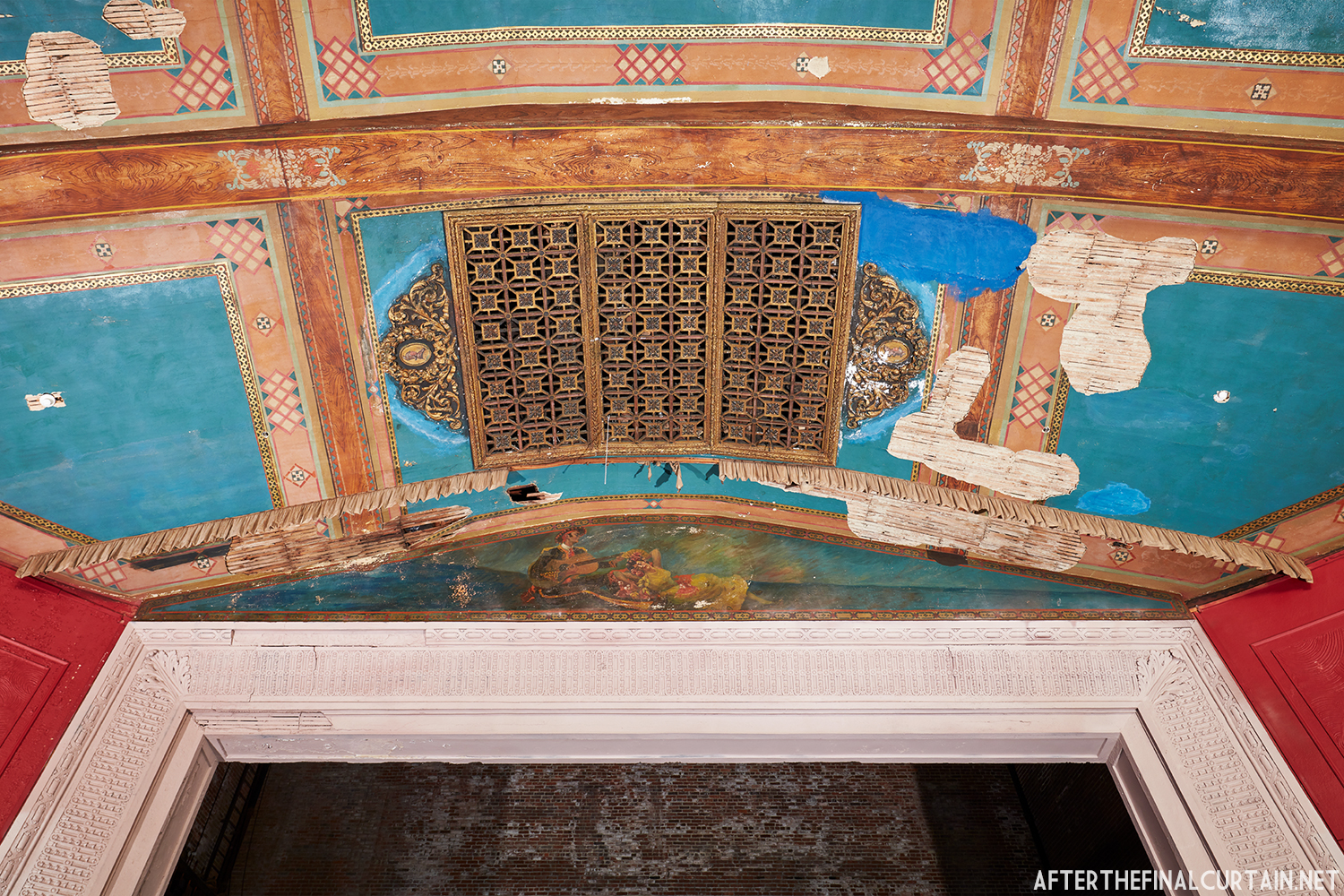
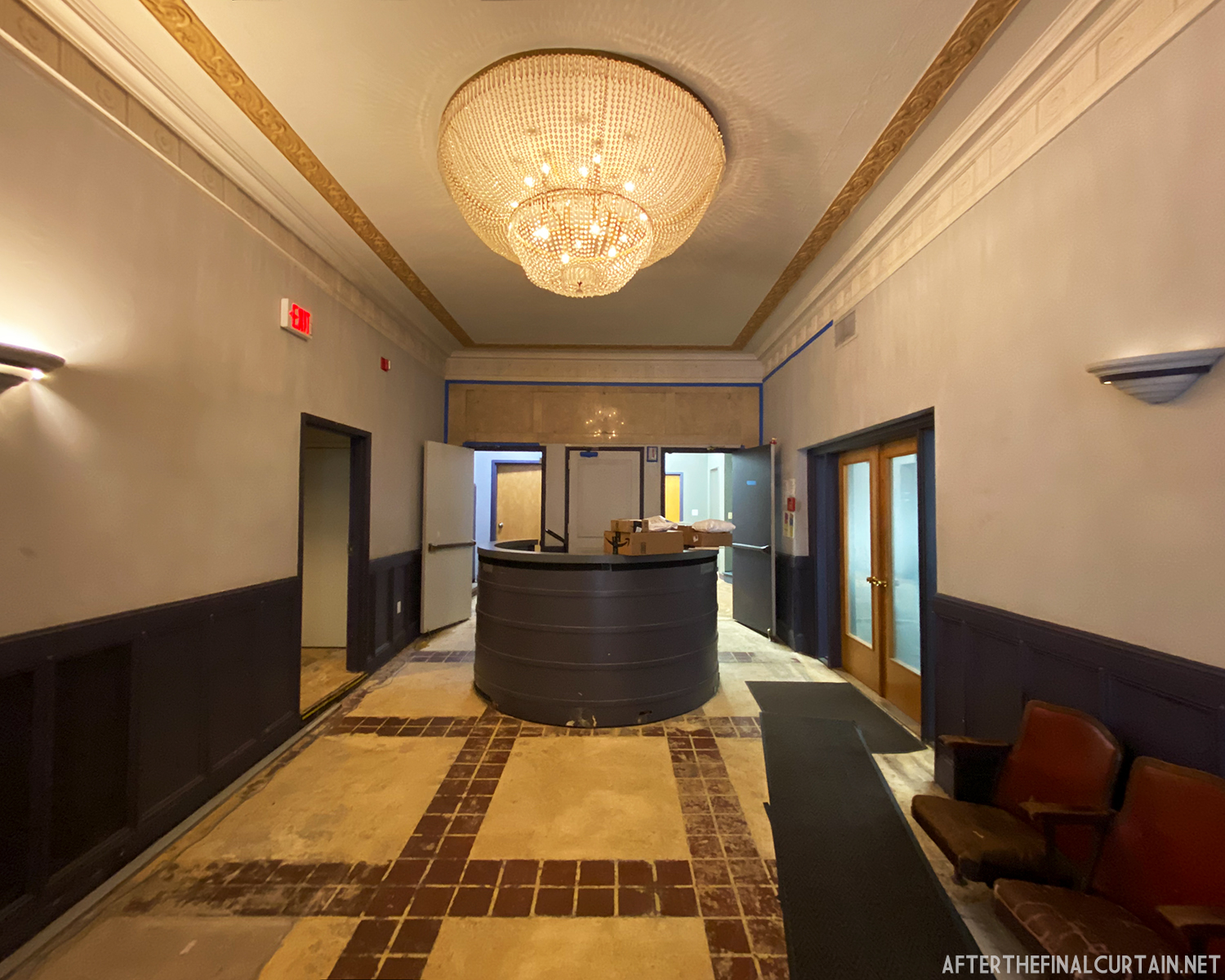
The Glove Theatre auditorium from the balcony.

View of the auditorium from the balcony.

A major Art Deco renovation in 1939 modernized the theater, including the addition of its iconic marquee. During this era, the Glove continued hosting renowned acts, including Irene Dunne, Charles Laughton, Charles Coburn, and Sally Rand. It also featured Ziegfeld Follies performers and major events like the premiere of “Drums Along the Mohawk” in 1939.
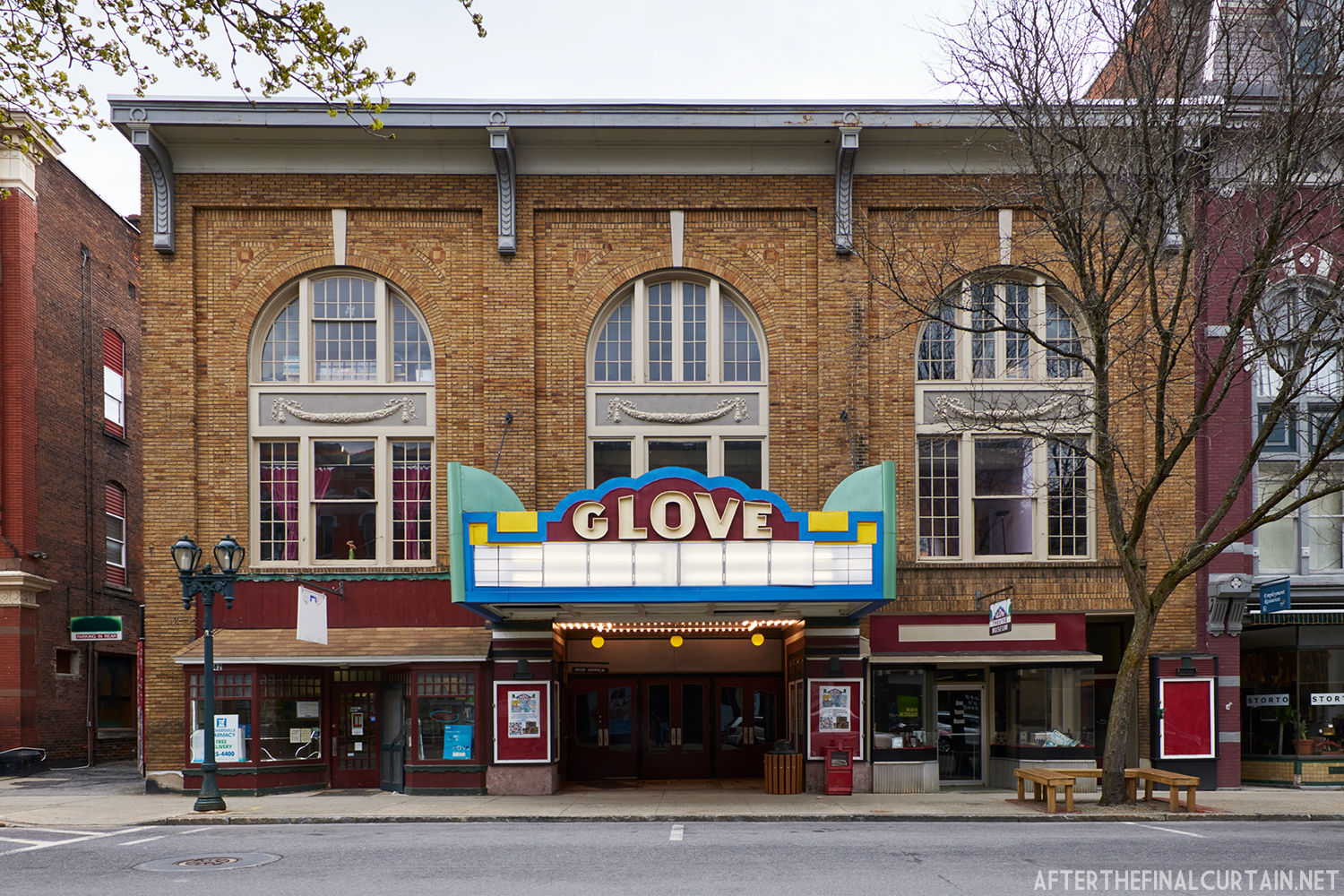
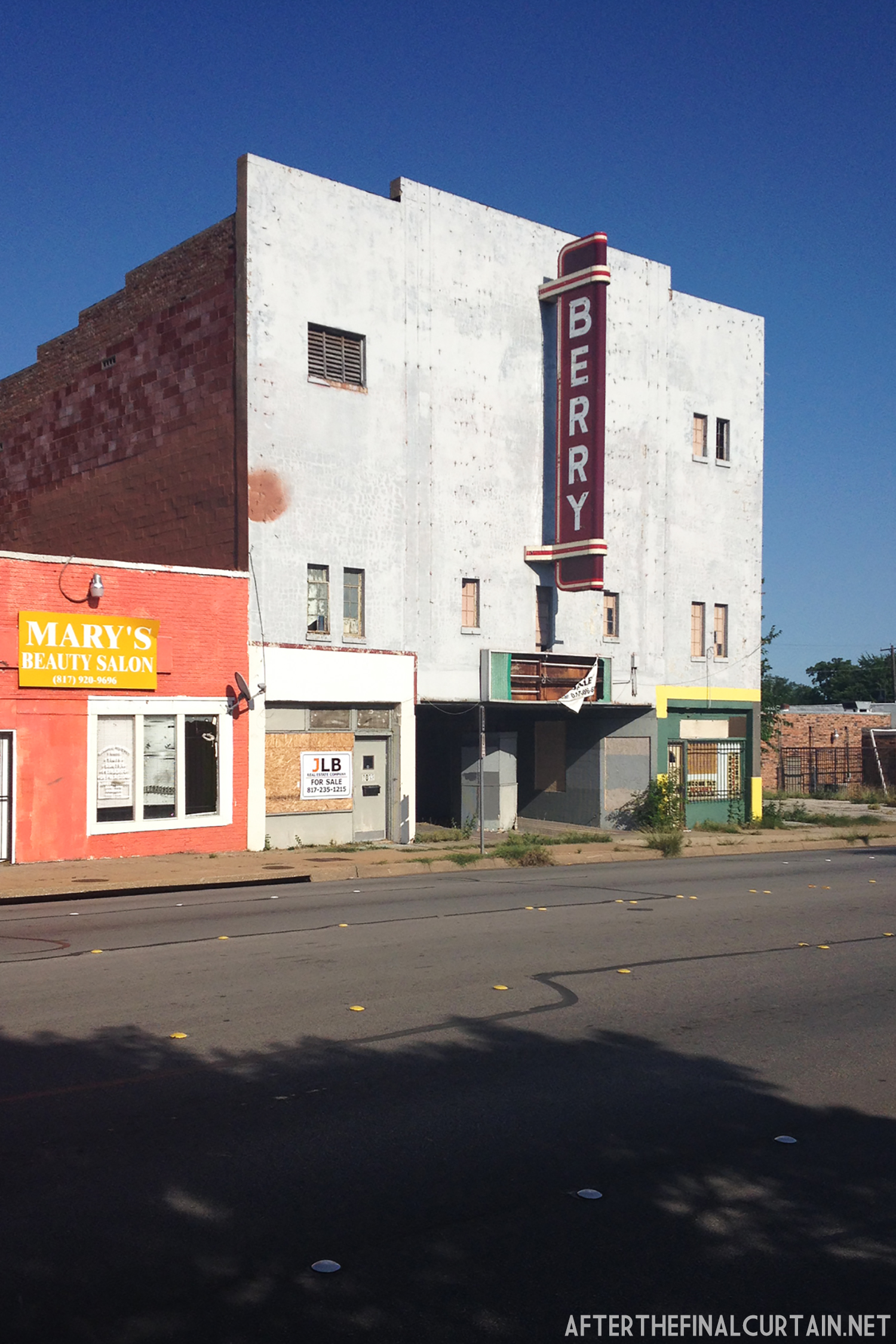
The exterior of the Glove theater in Gloversville, New York

The exterior of the theater.

Throughout the Great Depression and World War II, the theater remained a central community venue, offering newsreels, bond drives, and live entertainment while training veterans to manage theaters in the Schine chain.
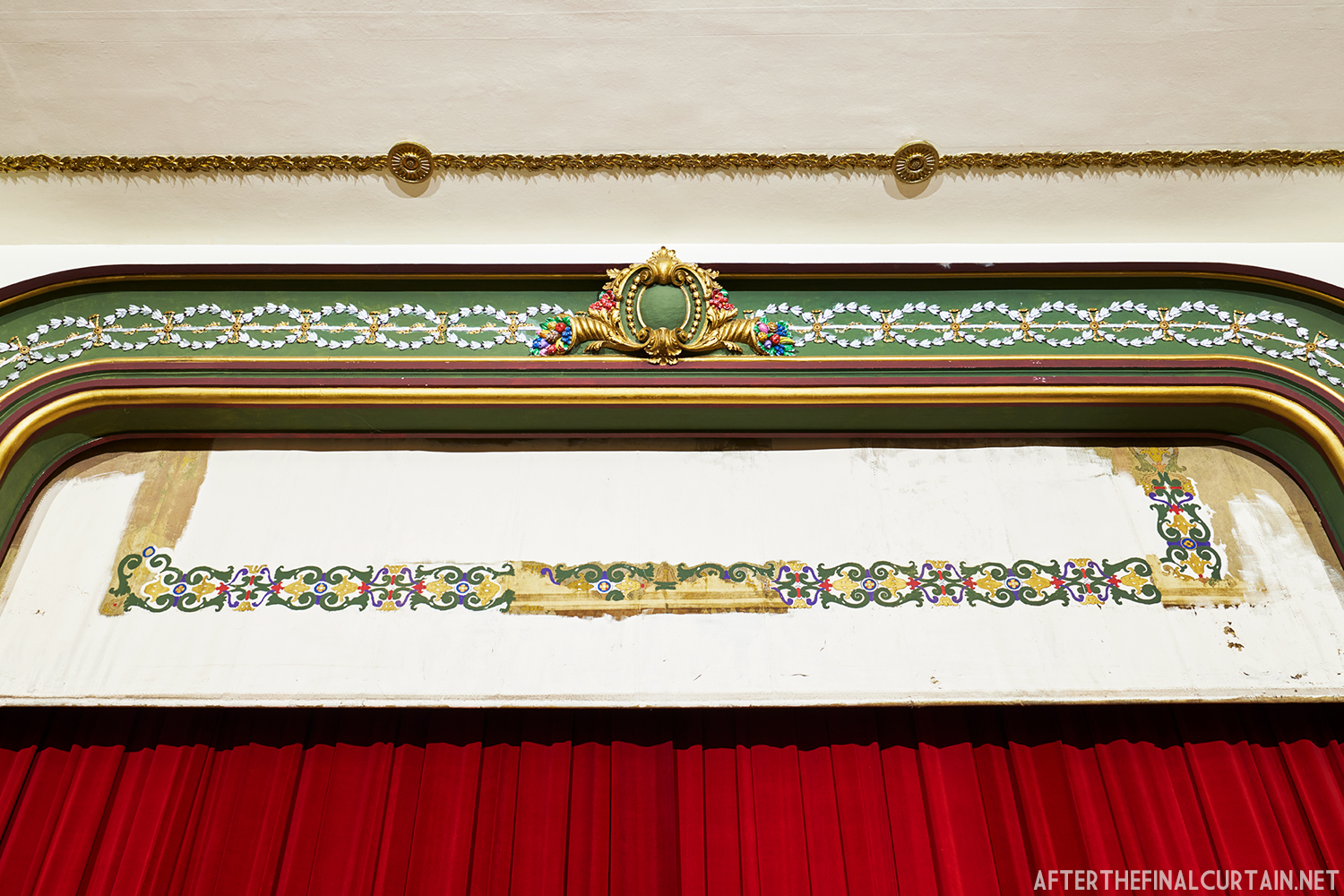
The Glove’s prominence waned by the 1960s as economic shifts affected the region. Despite hosting memorable performances by acts like Tony Randall and Buddy Jewell, the theater closed in 1971, marking the end of regular operations. For over two decades, the building stood vacant, with occasional screenings and events. By 1995, the theater faced demolition, but community members rallied to save it, forming the Gloversville Theatre Corporation.
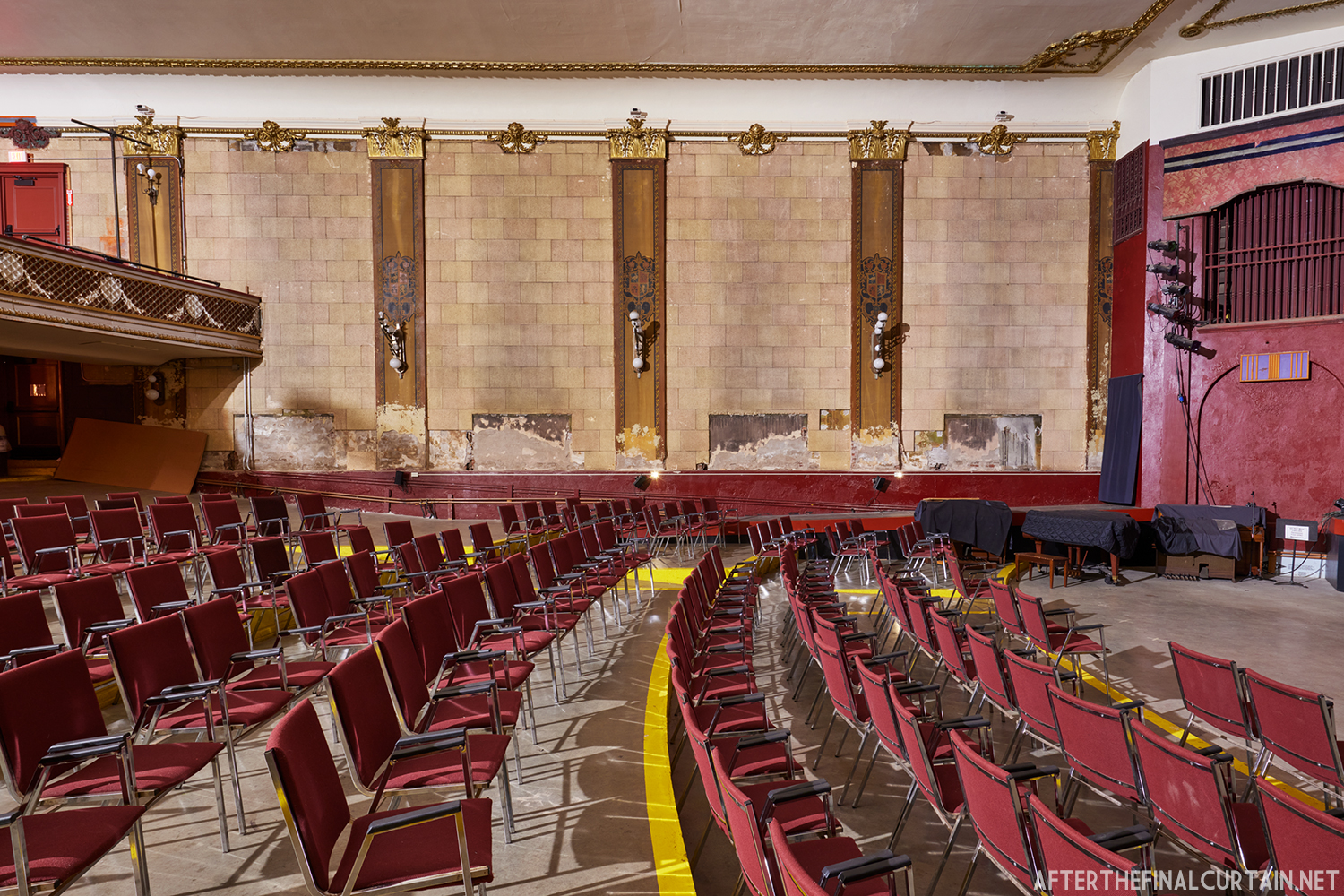
It reopened in 1997 with a grand event, The Phantom of the Glove, featuring local performers and community participation. In the 2000s, the theater hosted a mix of productions, including musicals, concerts, and youth programming. Performances included Alex Torres & His Latin Orchestra, the Wynotte Sisters, the Caroga Arts Collective, and Quintocracy. The Glove also featured unique acts like Zippy the Chimp, Leo the Lion (of MGM fame), and the NoLaNauts. The venue evolved into a community hub, offering affordable and creative programming for families and local artists.
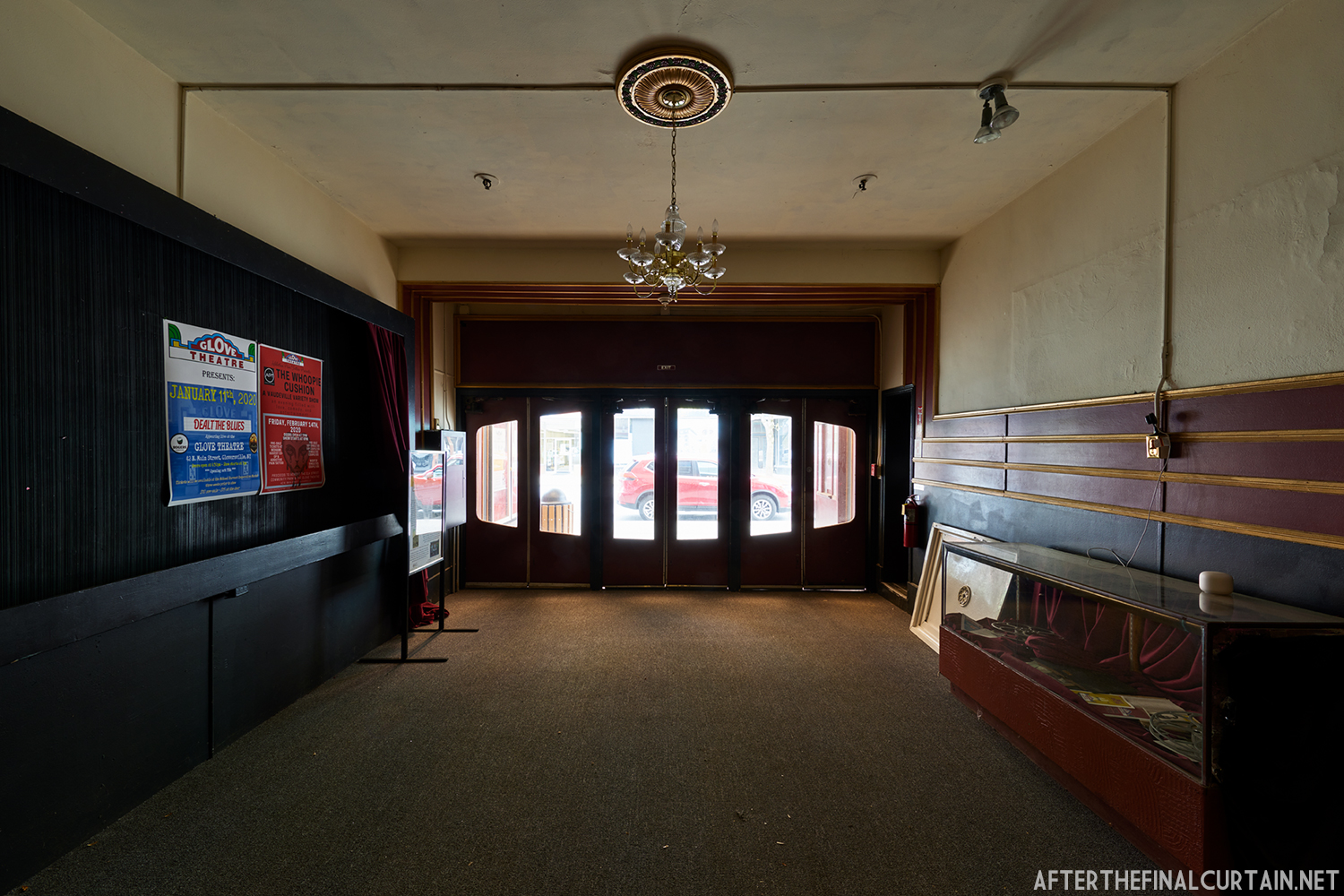
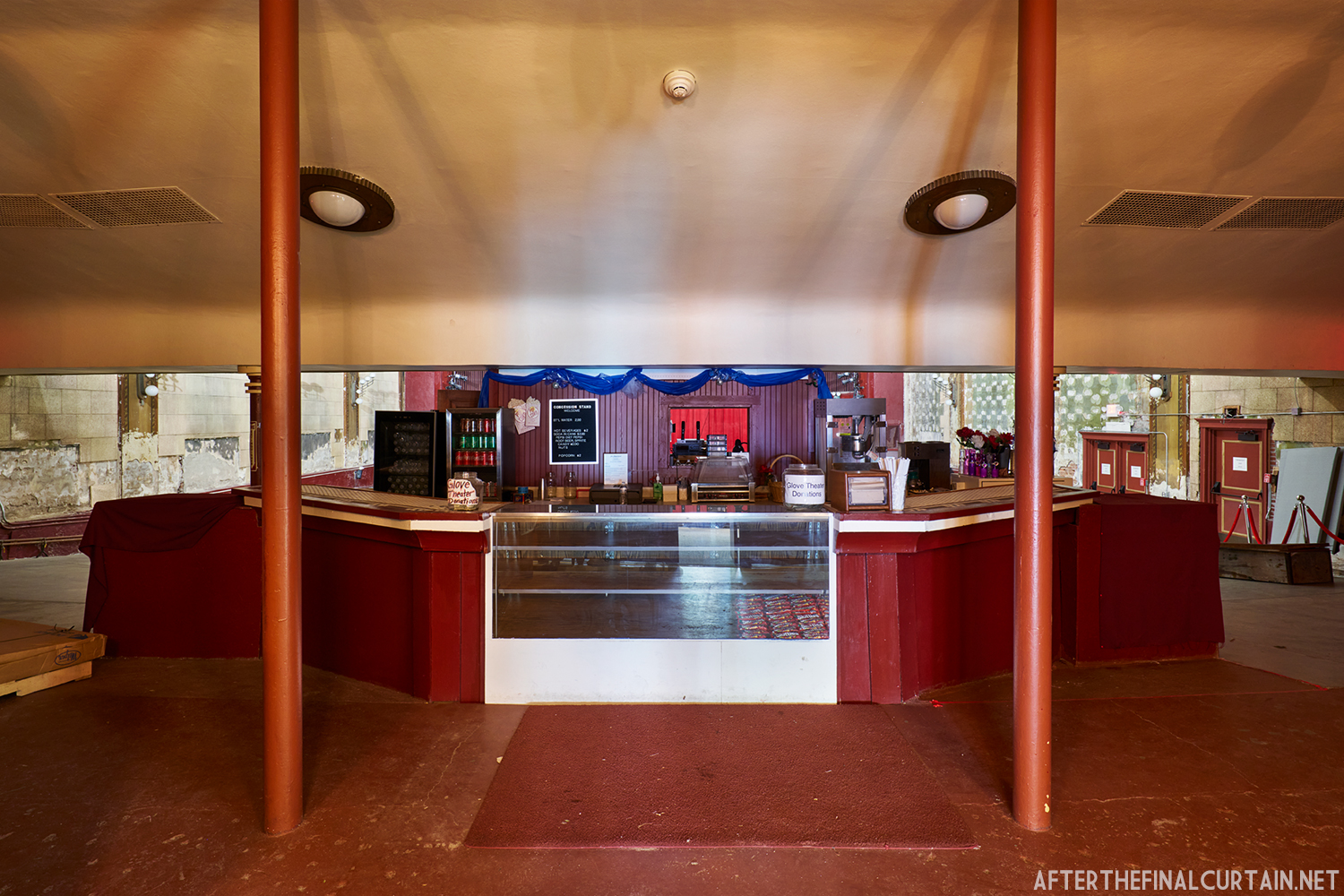
Recent revitalization efforts have reinvigorated the theater. In 2022 and 2023, the Glove received nearly $4 million in grants from New York State to support renovations and expand programming. Weekly movie screenings, vaudeville shows, and live performances have become regular events. Today, the Glove continues to honor its legacy of hosting world-class entertainment while serving as a cultural and historic landmark in Gloversville.

The Glove’s website is: https://www.theglovetheatre.com/
The Berry (White) Theatre – Fort Worth, Texas

This was originally posted on After the Final Curtain’s Patreon in January 2025. For expanded early posts, as well as video walkthroughs and other exclusive content, you can become a patron at: https://www.patreon.com/afterthefinalcurtain

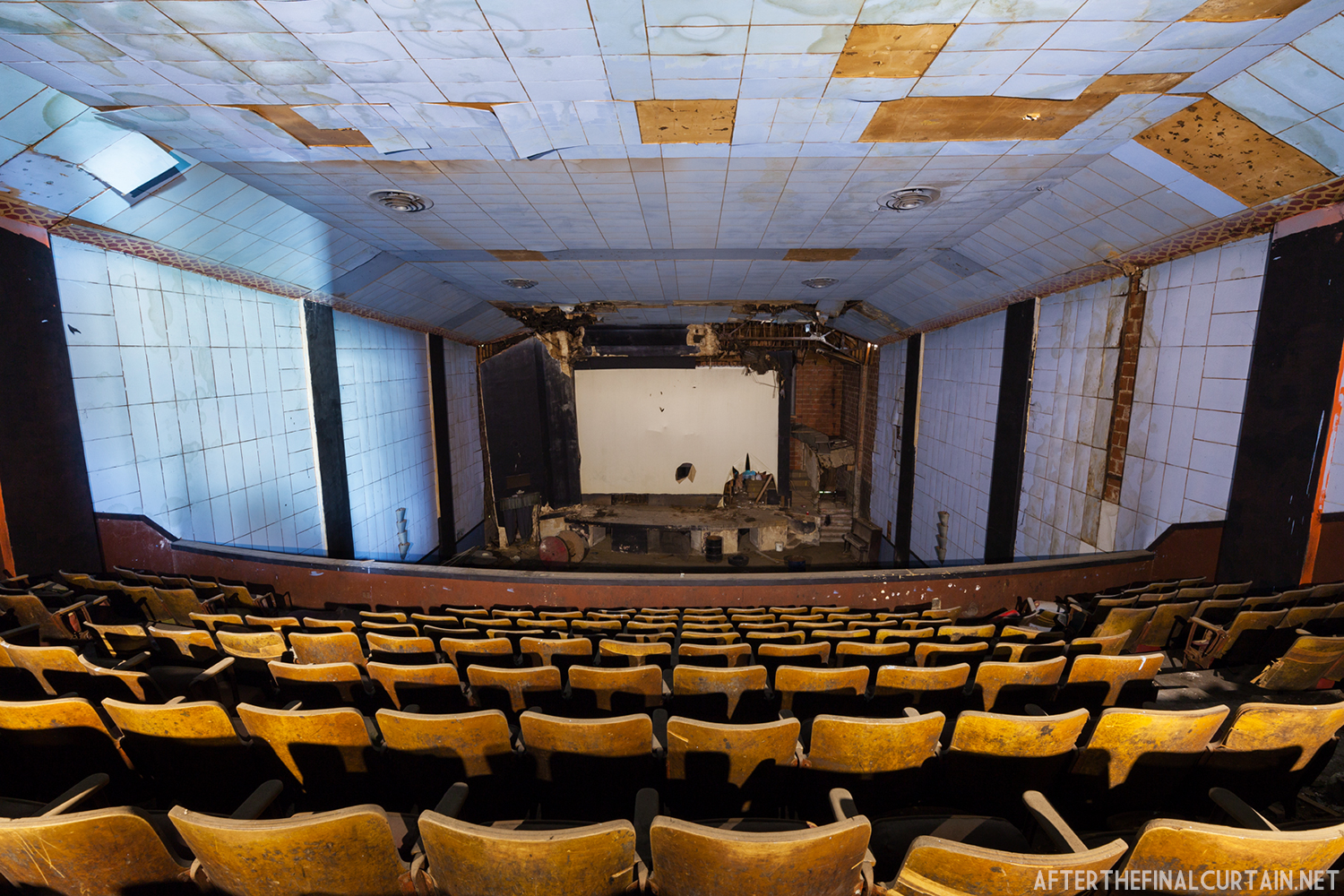
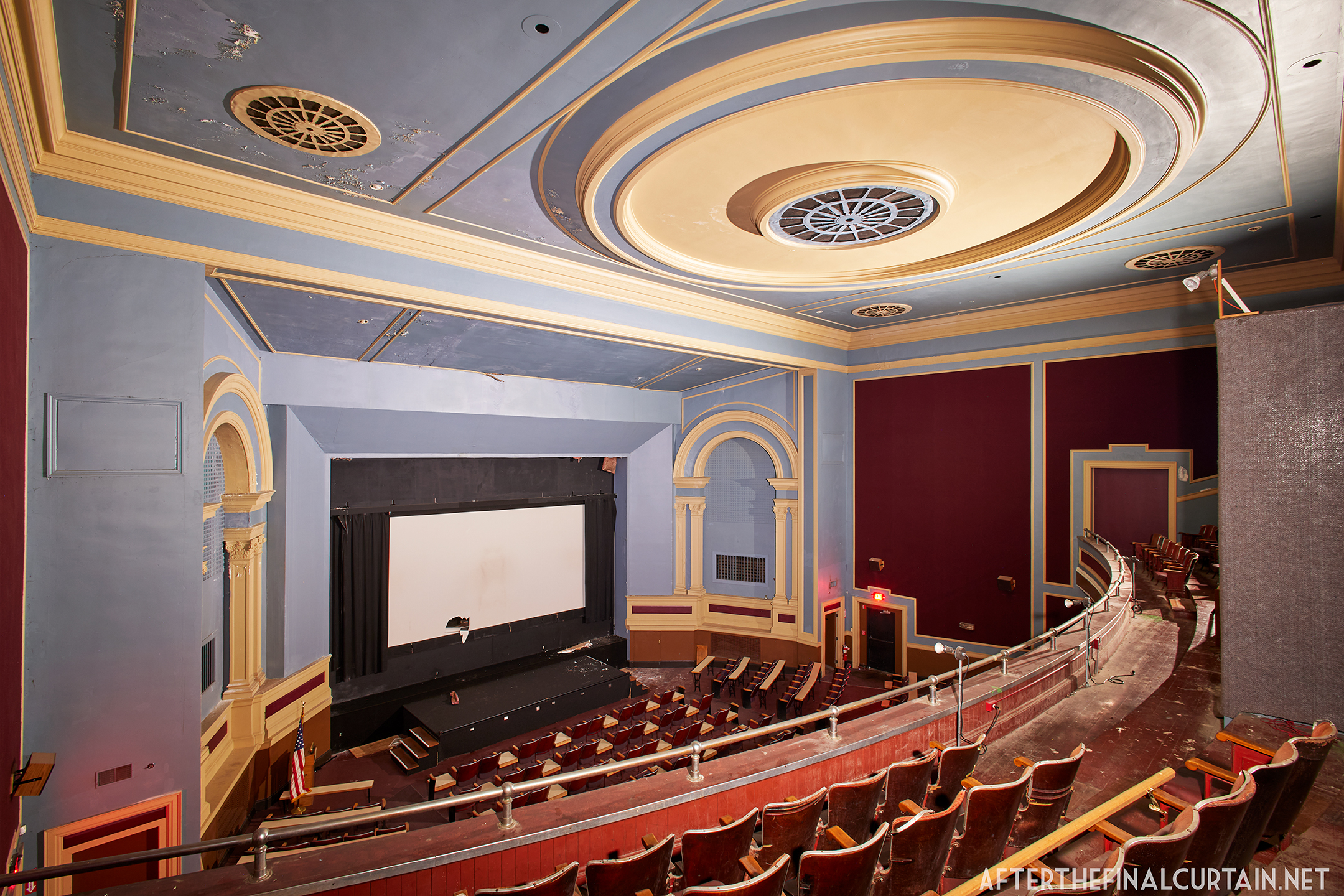
Auditorium, Berry Theatre Fort Worth, Texas

The interior of the auditorium was gutted a few years before the building was demolished.

The Berry Theater, originally known as the White Theater after its owner, M.S. White, was located in Fort Worth, Texas at the intersection of W. Berry and Hemphill Streets. The 682 seat theater officially opened its doors on April 3, 1940.

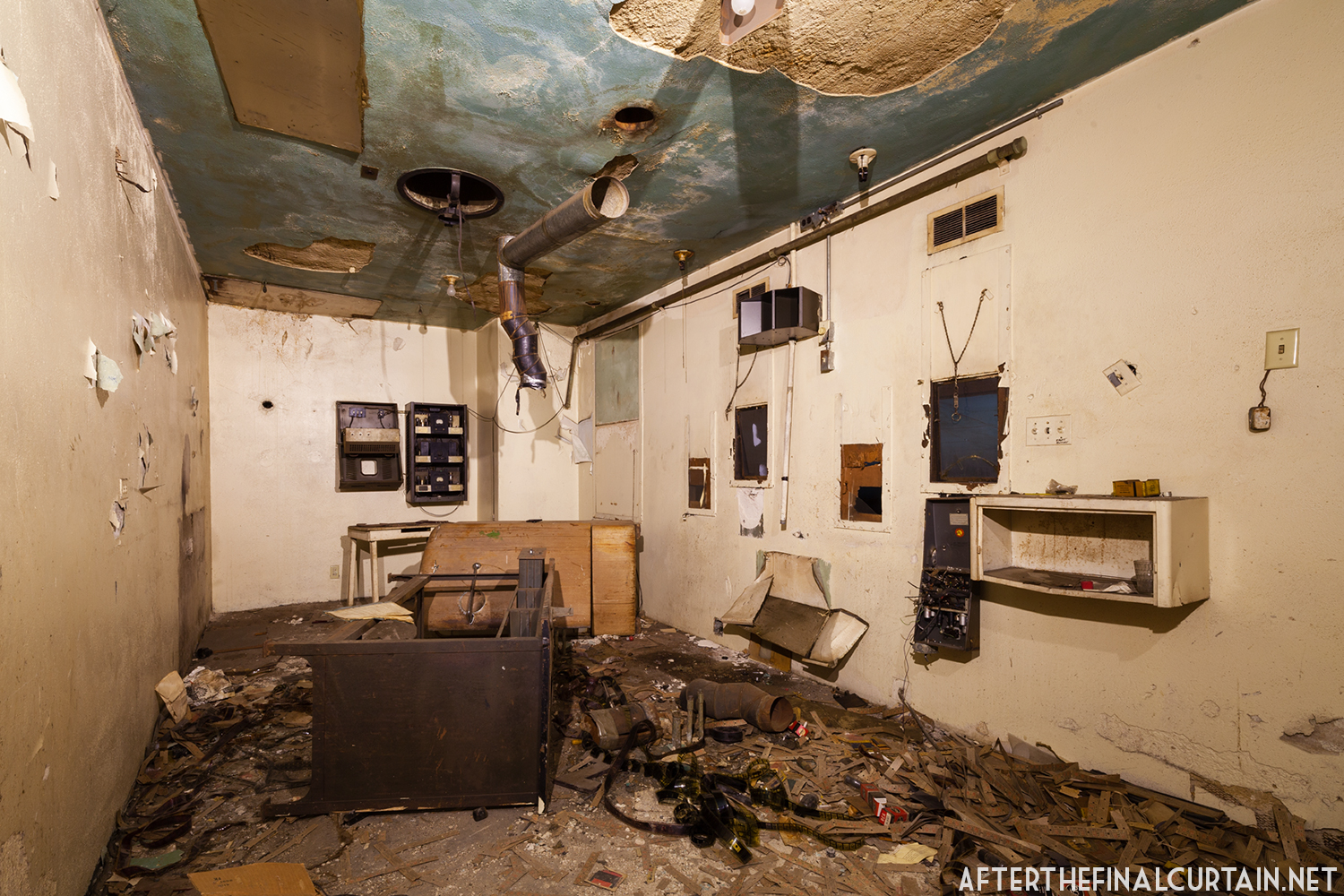
Empty projection room, Berry Theatre Fort Worth, Texas

The projection room was largely stripped of equipment.

The building’s design featured a three-story facade that tapered down to a two-story stage house. The theater included a balcony and a distinctive exterior, with the first floor clad in burgundy ceramic tiles and a freestanding box office. The upper levels of the facade were painted stucco, accented with neon lighting that outlined and highlighted its architectural details.

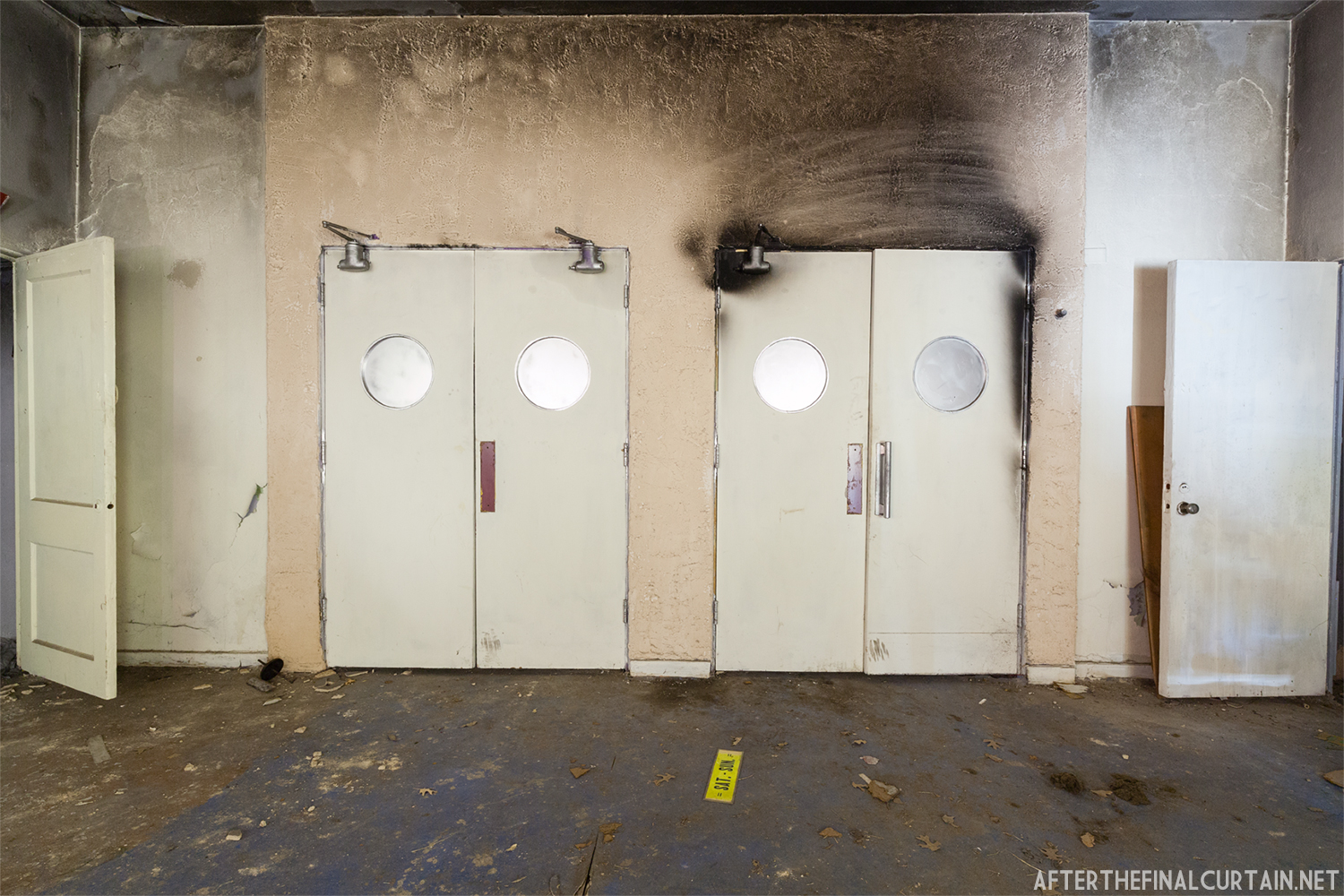
Doors, Berry Theatre Fort Worth Texas

The doors that lead into the auditorium from the lobby.

After decades of vacancy, a commercial demolition permit for the building was issued on July 18, 2023. Demolition began shortly after 9 a.m. on Saturday, July 22, 2023. The site is now a vacant lot.

The exterior of the theater.

Strand Theatre – Clinton, MA

This was originally posted on After the Final Curtain’s Patreon. For expanded early posts, as well as video walkthroughs and other exclusive content, you can become a patron at: https://www.patreon.com/afterthefinalcurtain

View of the auditorium from the orchestra level.

The Strand Theatre opened in downtown Clinton, Massachusetts, on Labor Day weekend in 1924, built to replace a section of High Street that had been destroyed by fire. Originally named the Philbin Theater, it hosted vaudeville acts, live performances, and silent films before transitioning to talkies in 1929. A naming contest soon after its opening led to the name that would stay with it for nearly a century. For decades, the Strand remained a key part of Clinton’s entertainment scene, offering a mix of live shows and films while competing with other theaters in town.  

By the late 1970s, changing entertainment trends and declining attendance forced the Strand to close, leaving its doors shuttered for almost twenty years. In 1995, a full-scale renovation transformed the space into a cinema draft house, allowing audiences to watch second-run and classic films while enjoying food and drinks. Some seating was removed to accommodate small tables, but much of the historic charm remained intact. Open six nights a week, the Strand once again became a popular fixture in downtown Clinton, offering an alternative to larger, corporate-owned theaters. The MGM Theatre Report from 1941 documented its original layout of 1,112 seats—715 in the orchestra and 397 in the balcony—confirming its place as a major venue in the area.  

View of the auditorium from the side of balcony.

The COVID-19 pandemic forced the Strand to close in March 2020, and although it reopened in May 2021, attendance never fully recovered. On December 31 of that year, it held its final film screening before closing once again, leaving a significant gap in Clinton’s downtown. Determined to revive the theater, town officials secured $100,000 in state American Rescue Plan Act (ARPA) funds and set aside an additional $300,000 in local ARPA funding. However, in order for the funding to be used, a new owner must be willing to invest an equal amount. Another $70,000 from the Local Rapid Recovery Plan has been allocated to restore the Strand’s iconic marquee, which has long served as a visual anchor on High Street.  

The effort to restore the Strand aligns with Clinton’s larger downtown revitalization project, which has included $4.5 million in infrastructure improvements such as new sidewalks, streetlights, and pedestrian-friendly spaces. Town officials believe the theater could play a key role in attracting visitors to the area, not just as a movie house, but as a multi-use entertainment venue. A retractable screen could allow for concerts, comedy shows, or theatrical performances, making the space more adaptable to modern audiences. A stage already exists behind the movie screen but remains inaccessible in its current configuration. The building is currently for sale.

Some of the original seats remain in the balcony.
Not much remains in the projection booth.

Behind the Curtain: What’s Coming in 2025

Auditorium, Elitch Theatre – Denver, Colorado.

Happy 2025!

As we step into 2025, I’m excited to share what’s on the horizon for After the Final Curtain.

Workshops in 2025

This year, I’m introducing destination workshops designed for those who share a passion for photographing and preserving historic spaces. While I’ll still host a few local sessions, the focus will be on two major events: one in late spring/early summer and another in the fall. Each workshop will take place at multiple locations, giving us a chance to capture and celebrate the beauty of historic theaters in different settings. Whether you’re a seasoned photographer or just starting out, these workshops will be a fantastic opportunity to refine your skills and immerse yourself in these architectural gems.

Patreon: Exclusive Content for Theater Enthusiasts

For those who want even more, my Patreon page is the place to be. Many of my 2025 posts are already available there, including expanded features, behind-the-scenes insights, and video walkthroughs of historic theaters. Patreon also gives you early access to new content and a closer look at my creative process. If you’re as captivated by historic theaters as I am, I’d love to have you join the community! You can sign up here: https://www.patreon.com/afterthefinalcurtain.

Monthly Posts on After the Final Curtain

I’ve been hard at work finishing up my posts for 2025 and am already scheduled through August—just a few months left to go! Here on the main site, I’ll continue to share one post a month. These will highlight the history, beauty, and stories behind some of the most incredible theaters I’ve visited. Whether you’re following along here or on Patreon, there’s plenty to look forward to.

Thank you for your continued support and shared passion for historic theaters and photography. I’m so grateful to have this community and can’t wait the next year brings.

Here’s to another year of preserving and celebrating these remarkable spaces!

Spring and Summer Photo Workshops 2024

Fox West Theatre in Trinidad, Colorado

I’m excited to finally announce the first round of Photography Workshops for 2024. As I’ve said elsewhere – this will be my last year doing workshops in their current form.


Strand Theatre – Clinton, MA

Strand Theatre

Location: Clinton, MA

Date: April 27, 2024

The Theatre: The Strand Theatre opened in 1924, in Clinton, Massachusetts. It closed in 2021 after years as a dinner theater.

Cost: $80.00

Tickets: https://www.mlambrosphotography.com/workshops/strand-theatre-workshop-clinton

Olympia Theatre Worcester, MA

Olympia (Art) Theatre

Location: Worcester, MA

Date/Time:
May 11, 2024

The Theatre: The Art Theatre opened in 1891 as Lothrop’s Opera House and is the oldest surviving theater in Worcester, MA. It went through a number of names including; The Olympia Theater, Lynch’s Pleasant Theater, Fine Arts Theater, and finally the New Art Cinema. It closed in 2006.

Cost: $80.00

Tickets: https://www.mlambrosphotography.com/workshops/arttheatreworkshop2024

Fox West Theatre

Location: Trinidad, Colorado

Date: June 22, 2024

The Theatre: The Fox Theatre in Trinidad, Colorado made its grand debut on March 16, 1908, showcasing the stage play “The Bondman.” Over the years, it served as a versatile venue for a variety of performances including stage shows, vaudeville acts, opera, and silent films. It closed in 2013, making it one of the longest running single screen theaters in the country.

Cost: $160.00

Tickets: https://www.mlambrosphotography.com/workshops/foxwestworkshop1021

Opera House, Hotel and Tunnels Workshop

Location: Trinidad, Colorado

Date/Time: June 23, 2024

The Opera House:
In 1882, Trinidad’s inaugural opera house emerged amidst much celebration courtesy of the Jaffa brothers—Sam, Sol, and Henry. For twenty-four years, it resonated with the melodies of plays, brass bands, and the rhetoric of public speakers before its curtains closed in 1906. Responding to the town’s pragmatic ethos, the auditorium morphed into an office block and an extension of the neighboring Wight Hotel.

Resilience characterized its trajectory as the edifice endured a 5.3-magnitude earthquake in 2011, sustaining significant damage. Despite expert voices advocating for its demise, the community united in a bid to salvage and restore their historic gem.

We will also have access to an old hotel building downtown as well as some tunnels that run underneath the city.

Cost: $120.00

Tickets: https://www.mlambrosphotography.com/workshops/trinidadoperahouse

Strand Theatre

Location: Boston, MA

Date/Time: June 30, 2024

The Theatre: The Strand Theatre opened on November 11, 1918, in the Dorchester neighborhood of Boston, Massachusetts. It was designed by Boston architectural firm Funk and Wilcox, who also designed the nearby Franklin Park Theatre. It is currently used for live events.

Cost: $75.00

Tickets: https://www.mlambrosphotography.com/workshops/strand-theatre-workshop-boston-ma826

As always – I have some other workshops planned for later this year. If there are any you’d like me to revisit or suggested locations – let me know!

RKO Madison Theatre – Queens, NY

This was originally posted on After the Final Curtain’s Patreon in May 2023. For expanded early posts, as well as video walkthroughs and other exclusive content, you can become a patron at: https://www.patreon.com/afterthefinalcurtain

View from the balcony of the RKO Madison Theatre.

It’s not uncommon to see buildings in New York City with a mismatched facade, especially in neighborhoods where space is at a premium. But if you’re like me, and you’re interested in the history of the city, you might wonder what that building used to be. And in the case of this particular building, it has quite a history. The building at the corner of Myrtle and Wykoff Avenue used to be the RKO Madison Theatre, which opened on November 24, 1927.

The Madison Theatre, as it was originally known, is situated on the border of Brooklyn and Queens, was constructed by B.S. Moss, a subsidiary of Keith-Albee. Moss’s original plan was to name the theater Beacon, but he was eventually persuaded to change the name to Madison, as a tribute to James Madison, the fourth President of the United States, and Madison Street, which was situated nearby. The architect in charge of the design was Eugene DeRosa, who had previously worked on the Colony Theatre in Manhattan. DeRosa employed an Italian Renaissance style, with a classical Greek facade made of white marble. The theater’s slogan around the time of its opening was “Bringing Broadway to Brooklyn.”

A close up of the theater’s dome.

It boasted a seating capacity of 2,760, which was significantly larger than Moss’ earlier venture, the Colony. The Grand Foyer spanned two stories and was accentuated with a vaulted ceiling that sported crystal chandeliers. The walls of the foyer were crafted from colored marble, with bronze borders that added a touch of class. A white marble staircase led patrons to the mezzanine promenade, which featured a lounge area and restrooms. The auditorium was large and included a balcony with a loge section at the front. Its ceiling, from the center of the dome, featured a three-tiered crystal chandelier, and the colored lights within the dome’s cove allowed for an ever-changing ambiance. The orchestra pit was situated at the front of the stage and had three separate elevators, one each for the orchestra, piano, and Wurlitzer organ, which was an unprecedented luxury for a neighborhood theatre. Much of the Madison’s grandeur was due to Moss’ intention to outdo the competition of the nearby Fox Ridgewood, which had been the area’s dominant theatre since 1913.

Much of the theater’s lobby still exists, but it has been completely walled off.

Houdini’s brother, Theo Hardeen, had his stage show at the Madison Theatre on May 30th, 1945. Thirteen days later, on June 12, 1945, Theo Hardeen passed away at the age of 69 from esophagus cancer. The RKO Madison Theatre was a popular venue in Ridgewood for decades. However, it became a Grindhouse, which was a theater that mostly showed b-grade horror or exploitation films, in the 1970s and eventually closed right after Halloween in 1977. The last film it showed was a twin-bill horror flick. The building was then converted for retail use in 1978 and has since housed several stores, including Consumers, Busy Bee, Odd Lot, and now Liberty Department Store.

The projection booth has been stripped bare of all equipment.

Palace Theatre – Norwalk, CT

View from the side of the balcony.

The 1,149 seat Palace Theatre originally opened on December 21, 1914, in Norwalk, CT. It was known as “the theater you play before you play the Palace in New York.” Many famous vaudeville acts performed at the Palace over the years, such as Harry Houdini, W.C Fields, Mae West, and Enrico Caruso. It’s rumored to have been one of the final places Houdini played before his death in 1926.

A close up of the theater’s proscenium arch.

The Palace closed as a movie theater for the last time on August 28, 1966. It stayed closed until Russell Fratto purchased it in 1975. Fratto intended on turning the theater into a performing arts center and home for the ballet company he founded. Fratto could reopen it for the 1980-81 season but because of a recession, it closed again after that season.

The lobby is currently used as receptionist area for the building.

It was leased to the Palace Production Center (PPC) in 1983. PPC updated the electrical and HVAC systems and turned the auditorium into a sound stage. PPC purchased the building in 1985 and has operated the building ever since. It’s used for photoshoots, video shoots, and feature film productions.

United Palace (Loew’s 175th Street Theatre)

This theater is not abandoned, but I had the chance to shoot it a few years ago, and I wanted to share the images with everyone.

View of the auditorium from the side of the balcony

The United Palace originally opened on February 22, 1930 as the Loew’s 175th Street Theatre. Located in the the Washington Heights neighborhood of Manhattan, the building takes up an entire city block and was designed by famed theater architect Thomas W. Lamb. (Lamb’s work can also be seen in my posts on the RKO Hamilton Theatre also in Washington Heights, and the RKO Keith’s Theatre in Flushing, Queens.) The interior decor was designed by Harold Rambusch of the Rambusch Company, who did some of the interior work on the Kings Theatre in Brooklyn, the Boyd Theatre in Philadelphia and many others across the country. The theater was estimated to cost $1.25M to build in 1928 or $18.4M when adjusted for inflation. It was the first theater in Washington Heights designed specifically for talking pictures.

David W. Dunlap of the New York Times described the theater’s architectural style as “Byzantine-Romanesque-Indo-Hindu-Sino-Moorish-Persian-Eclectic-Rococo-Deco”

The 3,000 seat United Palace was the fifth and last of the theaters that became known as the “Loew’s Wonder Theatres.”  The wonder theater concept was originally developed by the Balaban and Katz Theater Corporation of Chicago to bring large movie palaces to smaller urban neighborhoods. Loew’s acquired three of Paramount’s planned wonder theaters (the Kings and Pitkin in Brooklyn and the Valencia in Queens) in a deal with the company in 1927. Each of the Loew’s Wonder Theatres originally had identical Robert Morton “Wonder” organs built specifically for them.

View of the lobby from the lobby mezzanine.

The opening day program consisted of a showing of “Their Own Desire” starring Norma Shearer and a stage show from the Capitol Theatre on Broadway.  Over the years many stars made appearances at the theater, including Judy Garland, Roy Rogers, Dale Evans and Joan Crawford. Loew’s closed the theater in March 1969, and later that year sold it to Rev. Frederick J. Eikerenkotter II, a television evangelist, for $600,000. Rev. Ike, as he was known, turned the theater into the headquarters of his church, now called the United Palace of Spiritual Arts, often hosting his television program from the stage, and renamed the theater the United Palace.

The United Palace was the only one of the Wonder Theatres that retained its original organ. The console can be seen at the lower right side of this photo.

In 2007, the theater became a concert venue and hosted acts such as Modest Mouse, Arcade Fire, Beck and Neil Young. Xavier Eikerenkotter, Rev. Ike’s son, created a non-profit called the United Palace of Cultural Arts to turn the theater into a performing and community arts center in 2012. One year later, the United Palace held a crowdfunding campaign to purchase a 50-foot screen. The campaign was a success, and the first movie screened in the theater in over 40 years was “Casablanca” on November 17, 2013. In 2016, Lin-Manuel Miranda donated $100,000 for a new state-of-the-art digital projector that launched the campaign “Reawaken Wonder at a Timeless Movie Palace,” to raise funds for cinema-quality audio. The United Palace has also been used as a filming location for television and motion pictures in recent years. Upcoming events and more information can be found on the theater’s website at: UnitedPalace.org

The organ was removed from the building by the New York Theatre Organ Society to undergo repairs in 2017.

This slideshow requires JavaScript.

After the Final Curtain 7 Year Anniversary Giveaway

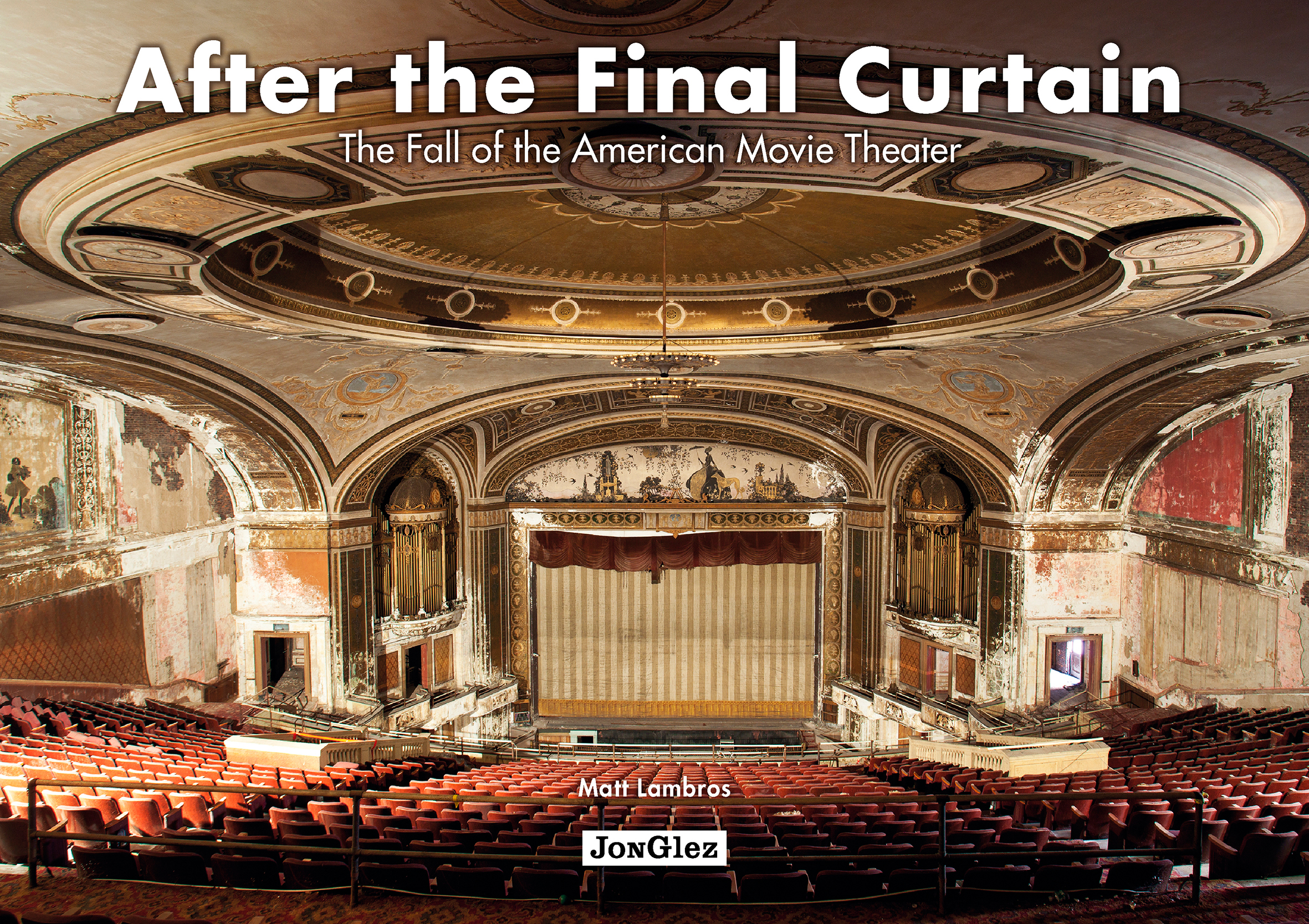
Cover for After the Final Curtain; the Fall of the American Movie Theater.

I had been photographing forgotten theaters for a few years before I launched this site, but we just passed the 7 year anniversary of my first post. So to celebrate I’m giving away two signed copies of my first book, After the Final Curtain: The Fall of the American Movie Theater. 

To enter just follow my twitter account: https://twitter.com/MattLambros and retweet any image I tweet during the next week.

If you don’t have a twitter account, just comment on this post to enter. Good Luck!

2018

aftc2018

Happy New Year Everyone!

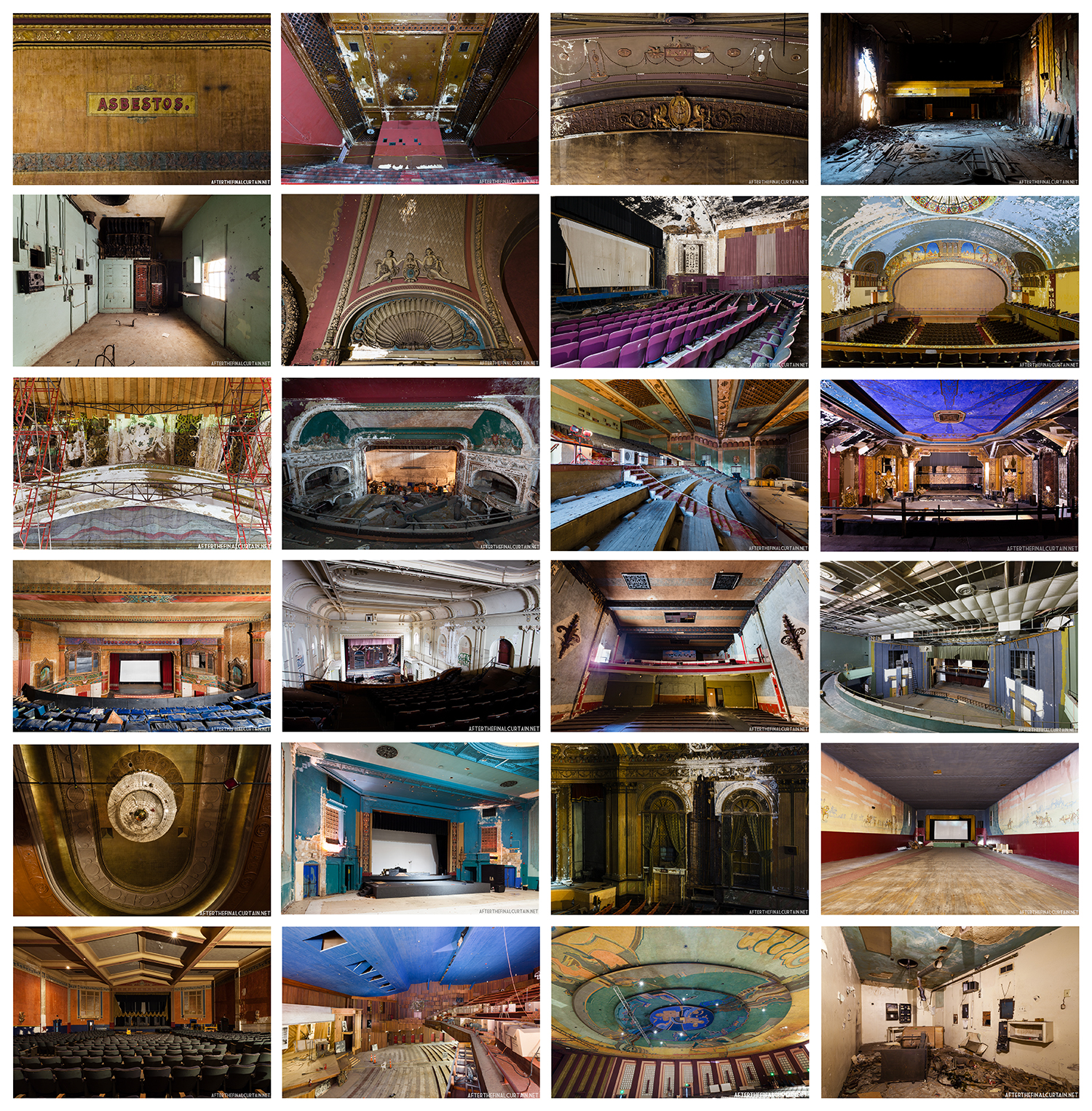
This year will mark the 7th anniversary of the After the Final Curtain, and with that I’m going to do something a bit different. AFtC will be going weekly in 2018! I’ve been photographing theaters much faster than I’ve been posting them, and as you can see by the image above I’ve got quite a backlog. There will be at least one new theater post a month as well as interviews, videos, updates of old blog posts, and more.

Look for the first post (The Fitchburg Theatre in Fitchburg, Massachusetts) this Thursday.