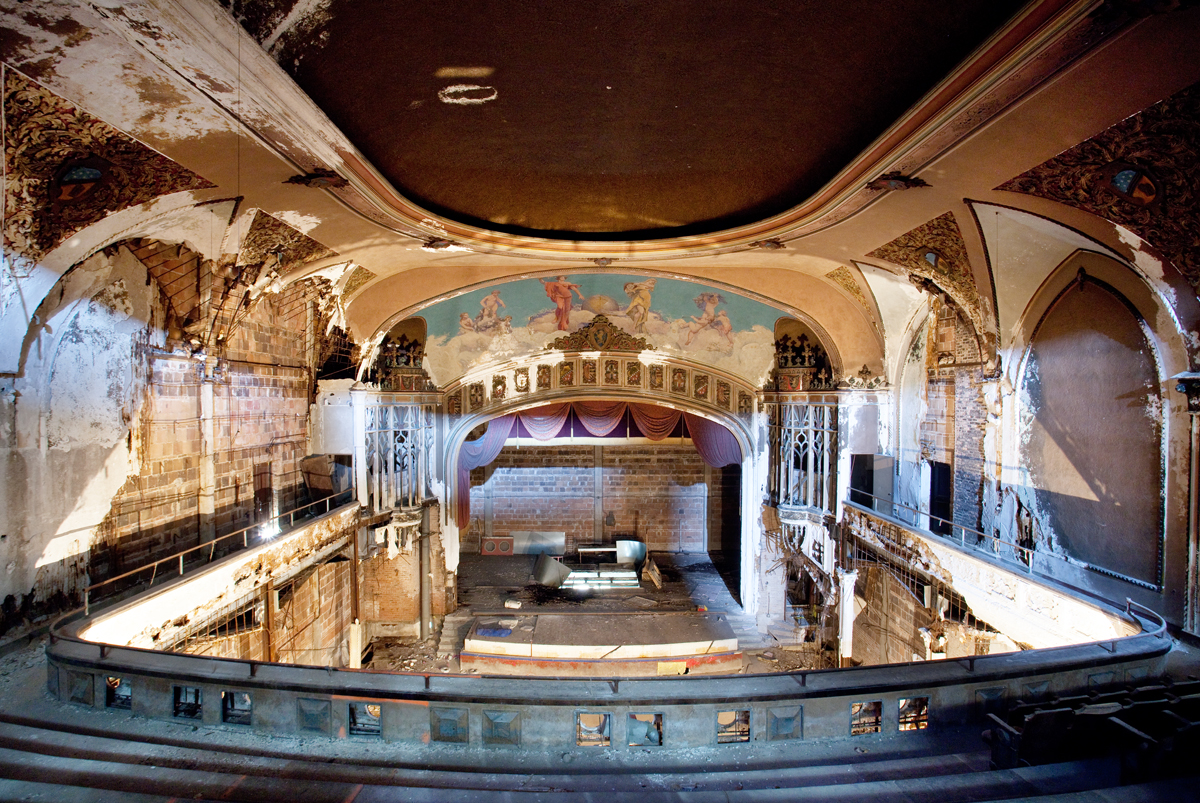
The Uptown Theatre opened as the Majestic Theatre on May 2, 1928 in Racine, Wisconsin. The 1,300 seat theater was designed by local architect B. Wade Denham for owner Ernst Klinkert. The interior was designed in the Gothic style — as many theaters at the time were in the Adamesque style, Gothic, a style usually used in churches, was an unusual choice. Denham was praised for using a hillside location to achieve full stage visibility from any seat in the auditorium. In addition to the theater itself, the building also had eight apartments to house the actors when the theater was showing plays and musicals. The Majestic closed in 1930, two years after it opened.
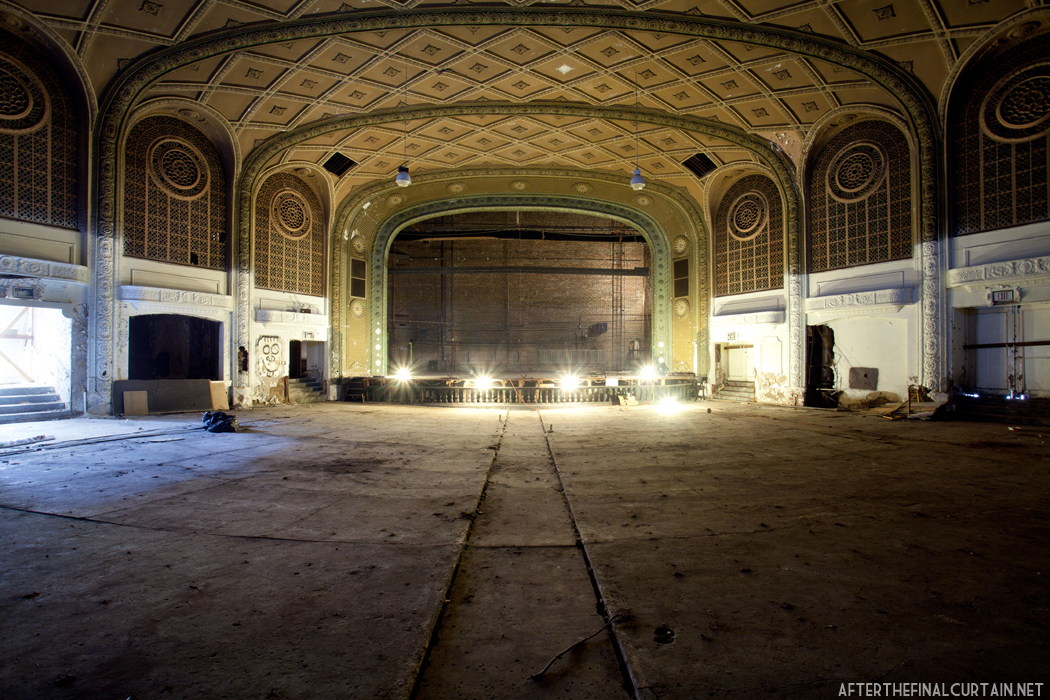
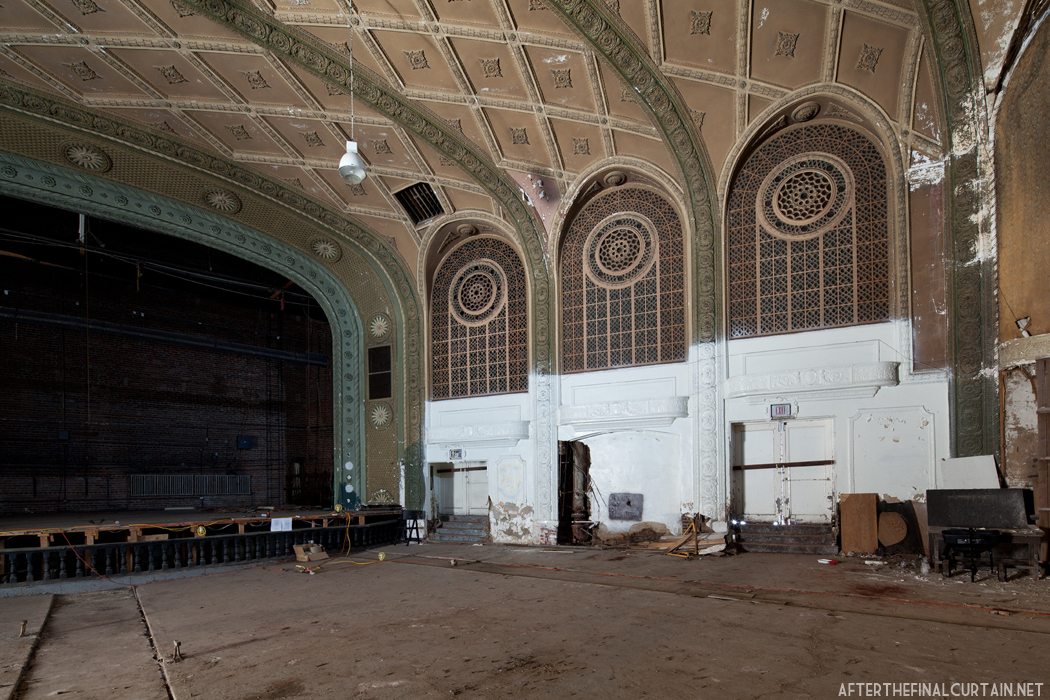
View of the stage from the main level of the auditorium.
I recently spoke with Patrick Colvin of the Friends of the Historic Variety Theatre. The Friends of the Historic Variety Theatre own and are restoring the Variety Theatre in Cleveland, Ohio.
1. Who are the Friends of the Historic Variety Theatre?
“The Friends of The Historic Variety Theatre are a group of local, concerned residents, business people and experts in historic properties.”
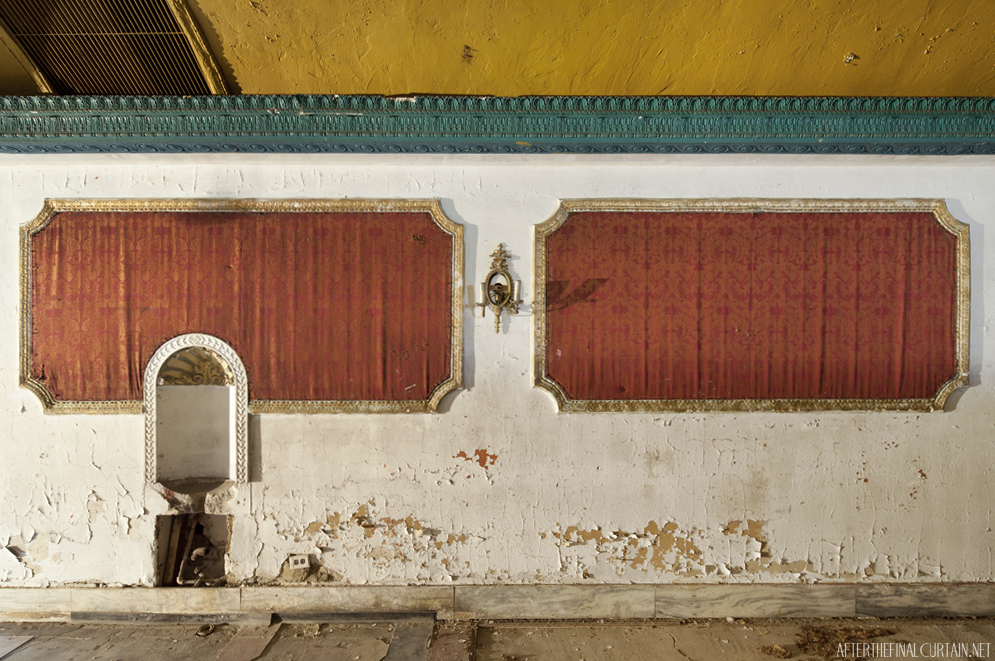
A broken water fountain in the back of the auditorium.
2. How did you get involved with the restoration of the Variety Theatre?
“As Westown Board of Directors Vice-President at the time, and area resident- in 2007 not long after the Variety Board was formed- I was asked to take a position for outgoing board member Chad Dasher (Westown’s Executive Director) to report activities and updates back to Westown’s Board, in addition to the fact that I’m a BIG historic building preservation buff.”
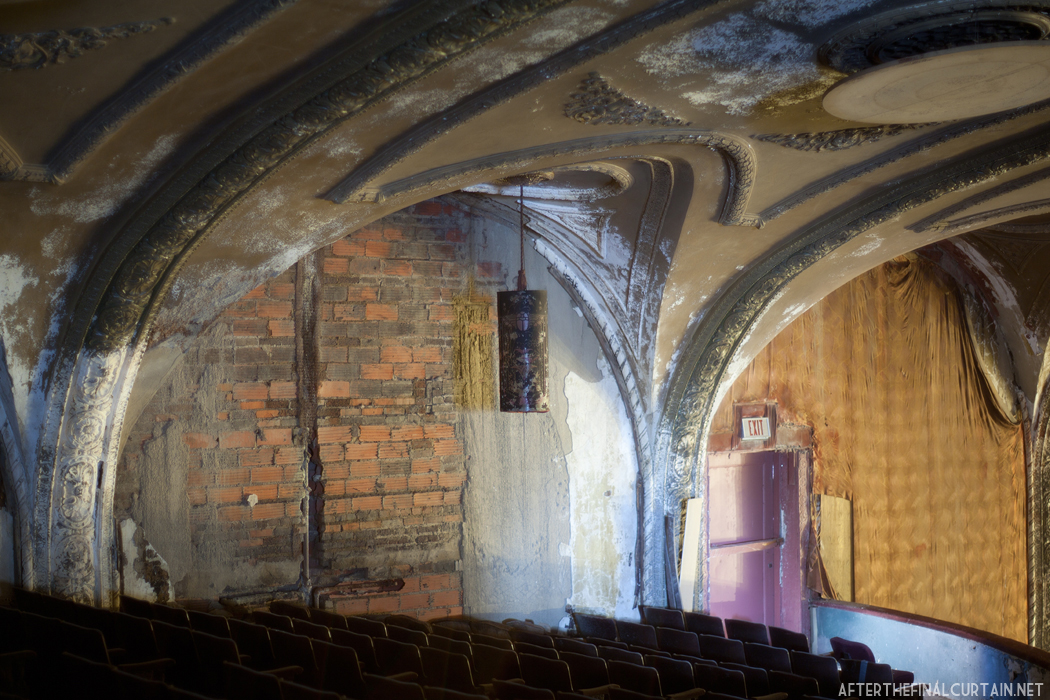
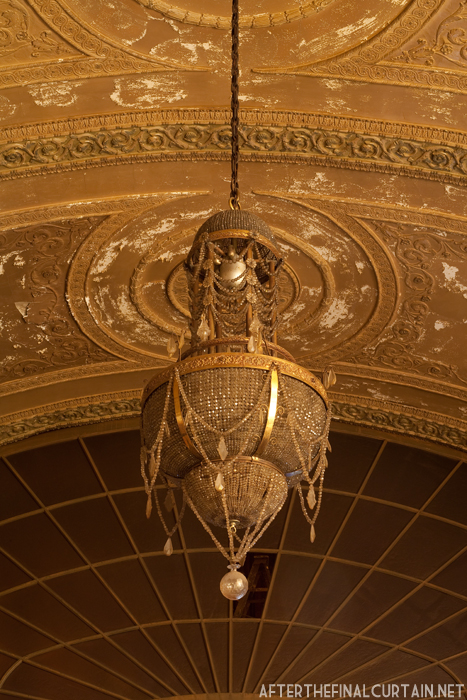
One of two light fixtures that remain hanging on the balcony level of the theater.
3. Why is it important that the theater be renovated?
“The building complex is a classic example of 20th century neighborhood investment. A “city within a city” if you will. As an “Economic Engine” this complex of Theatre, apartments and storefronts can be the center of neighborhood redevelopment- bringing back the area with economic activity and vitality and just like the spokes of a wheel- spurring additional investment in the area.
The beauty of the original space just simply must not be lost and could never be replicated in this day.”
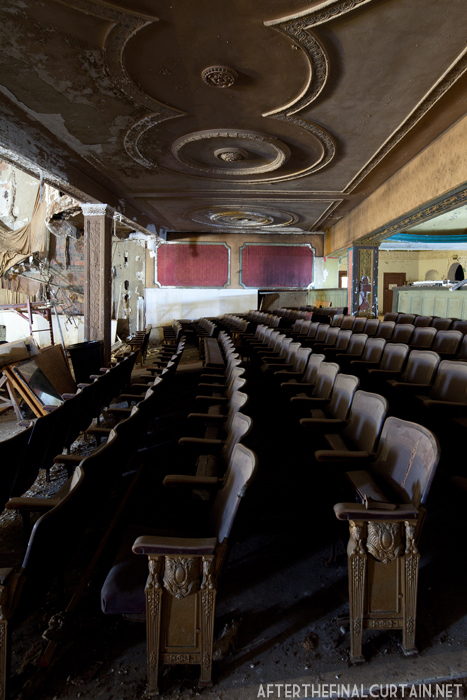
Some of the original seats remain on the main level of the auditorium.
4. How are the Friends of the Historic Variety Theatre raising money for the restoration of the building?
“Currently, through small fundraisers and continuing awareness campaigns-several “pop up” events bringing people, residents and local merchants and artists together to see what great potential the neighborhood has. Additionally, we continue to have interest into “ghost hunts” by local and state groups wanting to tour the space and have developed a “tour fee” structure to help pay re-curring bills in the short term as we work out the final financing package with the bank to settle the financial difficulties we’ve encountered-as we work to gain “clear title”.
Once resolved- we can push for the larger fundraising drives needed to push the project to completion.”
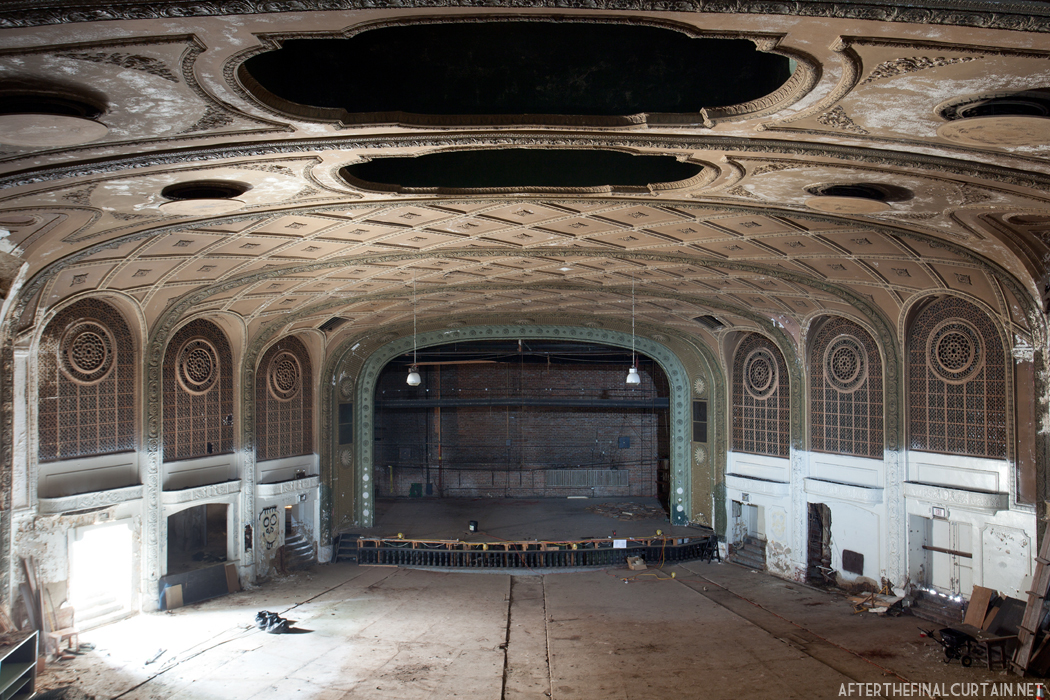
View of the auditorium from the balcony.
5. What is your favorite personal memory about the theater?
“While I came into the Variety’s life in it’s later years- I remember the throngs of people who would come for a movie or a live show-to relax and enjoy the beauty of “The Lady on Lorain”.
It is perennial and cross-generational. The Variety is a GEM and crown jewel of this neighborhood and while she’s a bit tarnished- she will shine again. I remember those crowds and I continue to want to be part of the solution and help restore the beauty and granduer of this wonderful palace of entertainment for all to enjoy.”
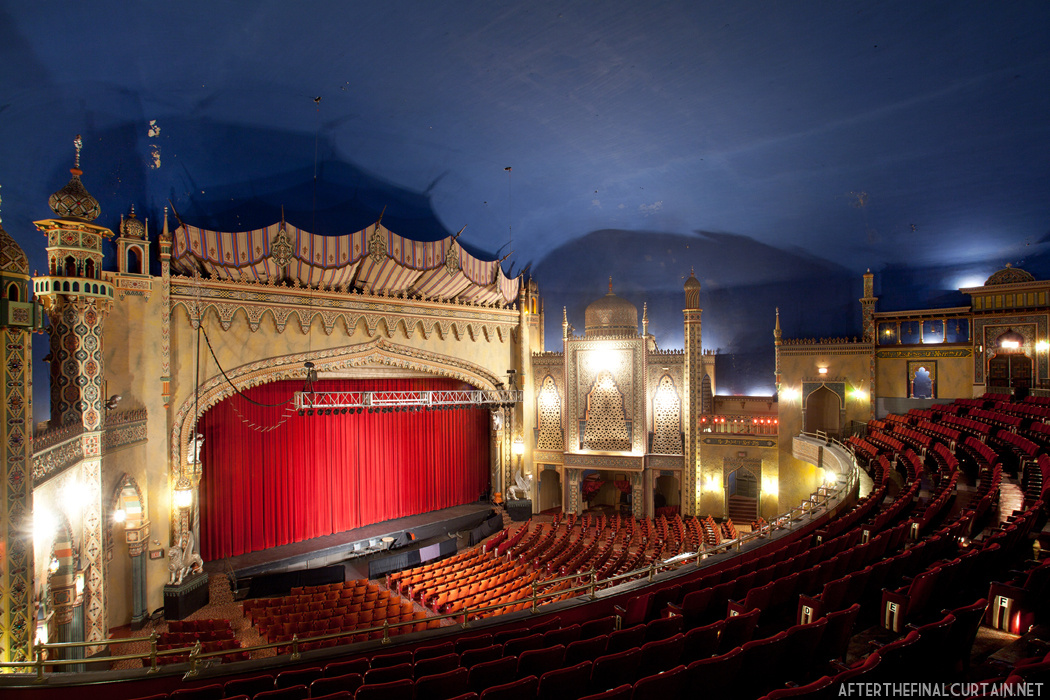
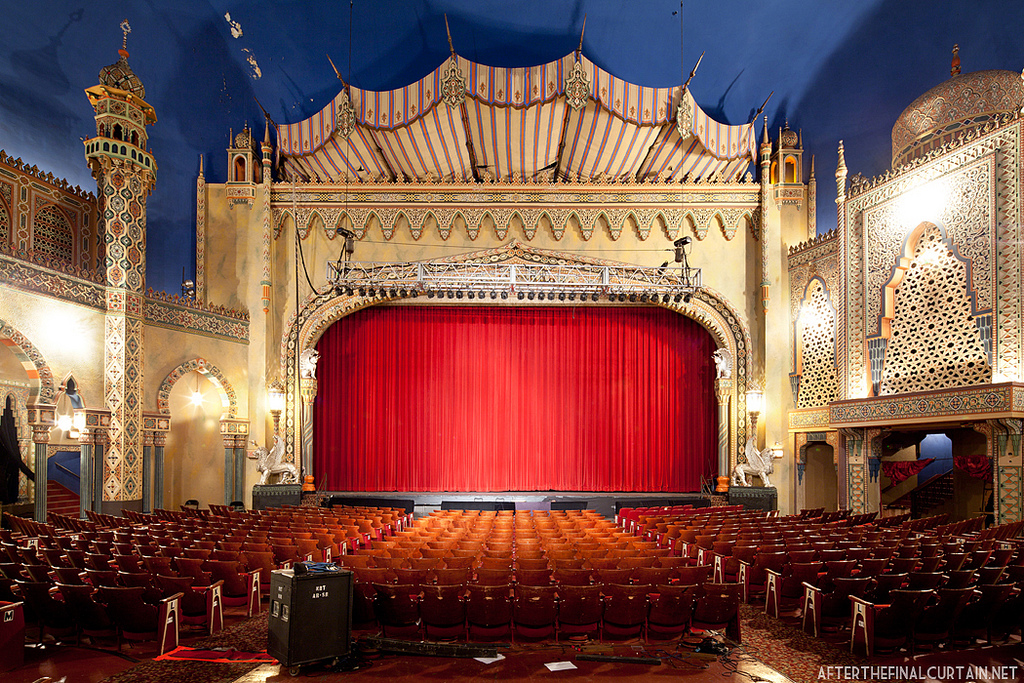
The Avalon Theatre opened on August 29, 1927 in Chicago, IL. The 2,250 seat theater was designed by noted theater architect John Eberson, who is also known for the Loew’s 46th Street Theatre in Brooklyn, NY. The design of the interior was inspired by a Persian incense burner Eberson found while shopping in the French Quarter of New Orleans.
Thank you to everyone who came out to the lecture on Saturday night! I’ll be giving another lecture for the Woodbury Historical Society on September 23rd. It will be held at the Woodbury Senior Center in Highland Mills, NY from 2-4pm.
I’m happy to announce that the Avalon/New Regal Theatre has won the poll (by an overwhelming majority) and will be the next post on After the Final Curtain. Keep an eye out for it next week!
I’m currently running a poll for my next blog post on the After the Final Curtain Facebook page. The theater that receives the most likes will be the next post on AtFC. Click here to cast your vote!
The Shore is one of the 22 theaters in my new book “After the Final Curtain: The Fall of the American Movie Theater.” Find out more here.
View of the auditorium from the balcony.
The Shore Theatre opened as the Loew’s Coney Island Theatre on June 17, 1925 in Brooklyn, New York. The 2,387 seat theater was built by the Chanin Construction Company, which was also known for the construction of the now demolished Roxy Theatre in Manhattan. Before opening, the theater was leased to the Loew’s theater chain for an annual cost of $150,000. The Shore was designed in a Renaissance revival style by the Reilly & Hall architecture firm, who were proteges of famed theater architect Thomas W. Lamb. Reilly & Hall included a nautical theme in the theater’s design, due to the building’s proximity to the ocean. According to an article in theNew York Times, construction of the theater cost over $2,000,000, ( $27,000,000 when adjusted for inflation.) The cost of construction was quite high for a theater of the Coney Island’s size, and that was due to the ground beneath the building being largely made up of sand.
View of the auditorium from the side of the balcony.
The Shore opening was presided over by Loew’s theater chain founder Marcus Loew, and included many of that era’s stars of stage and screen. Some of the many celebrities at the opening included; Johnny Hines, Barbara LaMarr,Mae Busch, Virginia Lee Corbin, and Teddy Sampson. Nine bands from various nightclubs around the city performed and the opening feature was the movie “The Sporting Venus” starring silent film star Blanche Sweet. According to an account by the Brooklyn Citizen, the crowd at the opening was so large it had to be cordoned by police. The theater was designed to be a combination house, showing both vaudeville and motion pictures, but eventually largely phased out the vaudeville performances, only bringing them back on special occasions.
A water fountain in the theater’s lobby.
On February 15, 1941, David Dolinsky, the manager of the Loew’s Coney Island, was being escorted to a local bank to deposit the day’s receipts by NYPD officer Leon Fox. A car pulled up alongside them and opened fire killing Fox. The robbers were eventually caught and sentenced to death, but the sentence was overturned after they appealed to the United States Supreme Court.
Much of the proscenium arch has collapsed due to leaks in the roof.
Evro Theatre Corporation acquired the theater from Loew’s Inc. in September 1964. Sam Kantor, the president of Evro, had worked for Brandt Theatres for almost 30 years, and continued to do so with his new company. Brandt handled the booking and advertising for the theater, which was renamed Brandt’s Shore Theatre. A little over a year later on January 1, 1966 the Brandt Co. switched the theater to a live performance venue beginning with a production of “Let’s Dance.” They attempted to appeal to Brooklyn’s large Jewish population by presenting stage shows such as “Bagels & Yox.” but that failed to catch on. On May 16, 1966, the Shore joined Leroy Griffith’s burlesque circuit with a show titled “Stars ‘n’ Strips Forever.” The burlesque shows were eventually phased out and the theater resumed showing motion pictures.
The orchestra level was used to store kitchen equipment.
By the early 1970’s, the Shore had turned to exploitation and eventually adult films. The theater closed permanently in March of 1973. Horace Bullard, owner of the Kansas Fried Chicken chain, purchased the building in 1978, and began to convert it into a casino. The seats on the main level were removed and the main floor was leveled before the state decided not to allow gambling on Coney Island. The Shore Theatre building was declared a historical landmark by the New York City Landmarks Preservation Commission on December 10, 2010. It was sold to Pye Properties for $20 million dollars in January 2016. In June 2018, Pye Properties announced that they plan on turning the building into a hotel with a a spa, banquet hall, and a bathhouse. They did not specify how much, if anything, of the theater will remain.
A compass in the center of the auditorium ceiling.
More of the nautical plaster work that covers the auditorium ceiling.
The Variety is one of the 22 theaters in my new book “After the Final Curtain: The Fall of the American Movie Theater.” Find out more here.
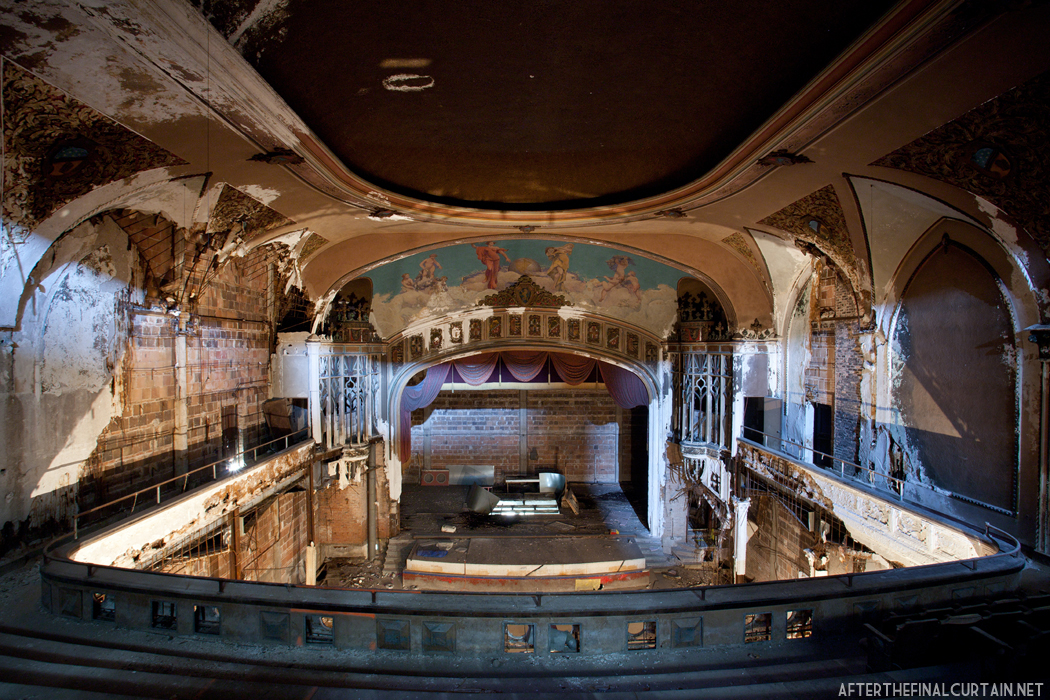
View of the auditorium from the balcony.
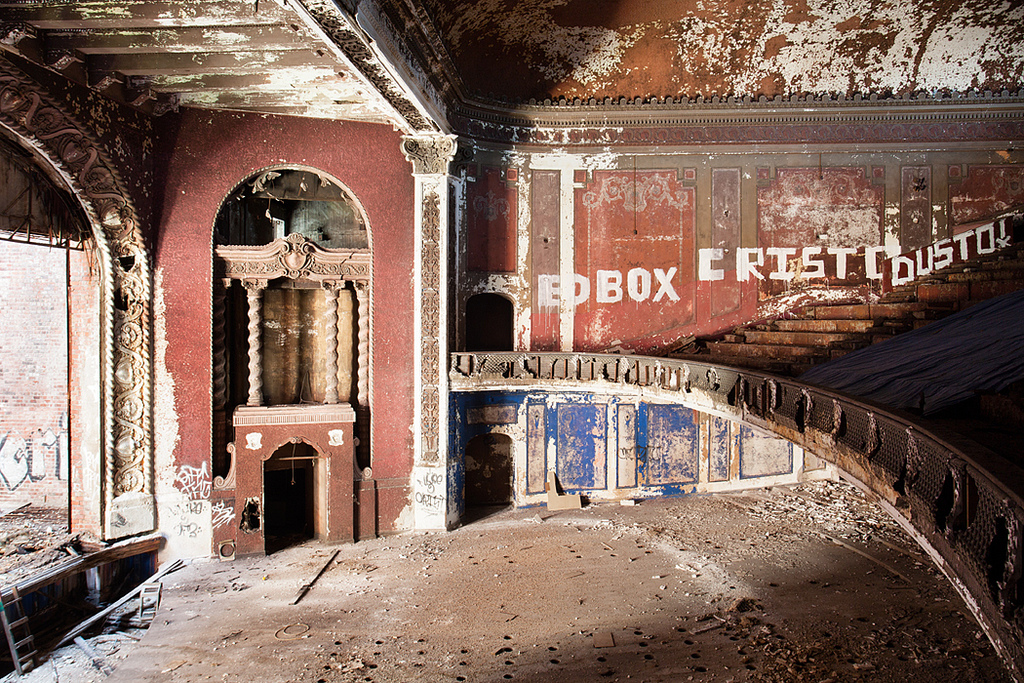
The Variety Theatre opened on November 24, 1927 in the Jefferson neighborhood of Cleveland, Ohio. It was built by Sam Stecker, Meyer Fine and Abe Kramer of the Variety Amusement Company. The 1,900 seat theater was designed in the Spanish gothic style by Cleveland-based architect Nicola Petti, who also designed the nearby Cedar Lee Theatre. The Variety building also included retail space and twelve apartments.
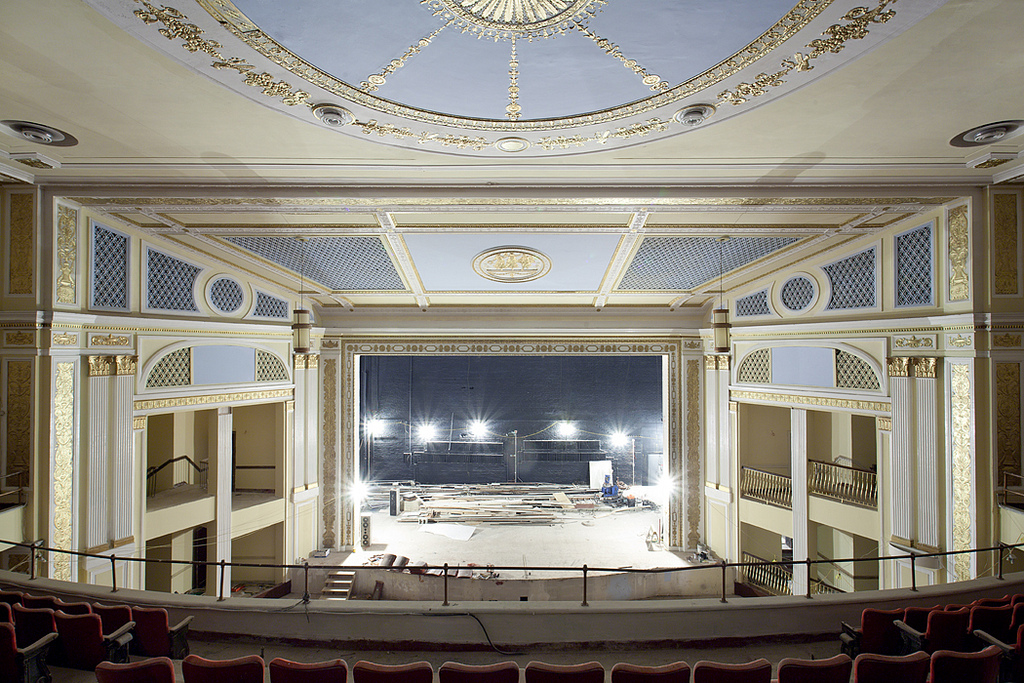
View of the Loew’s Palace Theatre from the balcony.
Hi everyone – I want to let you all know about an upcoming event.
On August 18, I’ll be giving a lecture on “The Fall of the American Movie Palace” as part of the Atlas Obscura Speakers series of talks at the Observatory in Brooklyn.
Here’s some information about it from the Observatory’s website:
There’s nothing remarkable about a movie theater today, but there used to be. When the great American Movie Palaces opened, they were some of the most lavish, stunning buildings anyone had ever seen. With the birth of the multiplex, theater companies found it harder and harder to keep these buildings open. Some were demolished, some were converted, and some remain to this day. “The Fall of the American Movie Palace” will take you through the history of these magnificent buildings, from their opening in the early 1900s to years after the final curtain.
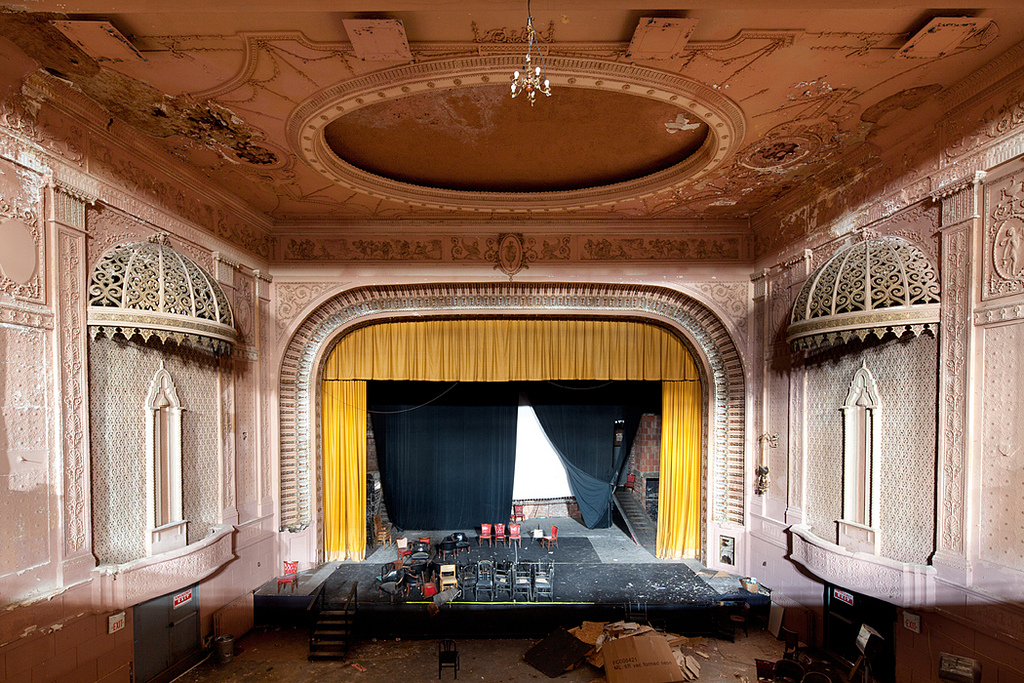
View of the Proctor’s Troy Theatre from the side of the upper balcony.
The Proctor’s Troy Theatre opened as the Proctor’s Fourth Street Theatre on November 23, 1914 in Troy, NY. It was designed by architect Arlard Johnson and built by the Charles P. Boland Company for F. F. Proctor. The 2,283 seat theater cost $325,000 to build and was the largest of Proctor’s theaters in New York State when it opened. The building is five stories tall and in addition to the theater, contains space for offices and retail.




 After the Final Curtain