Shapshot: Liberty Theatre

Introducing: the Snapshot Series  – Occasionally in my travels I come across a theater that I can’t find a lot of information on, or that I only have a chance to photograph for an hour or two. They’re still beautiful and fascinating, so they definitely have a place on After the Final Curtain.
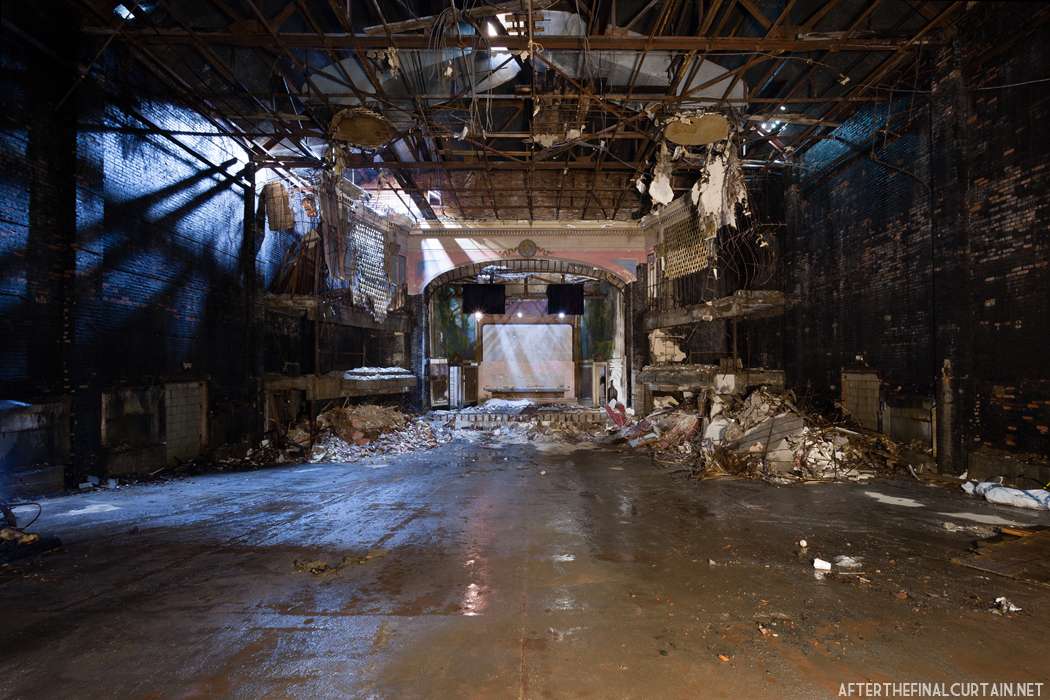
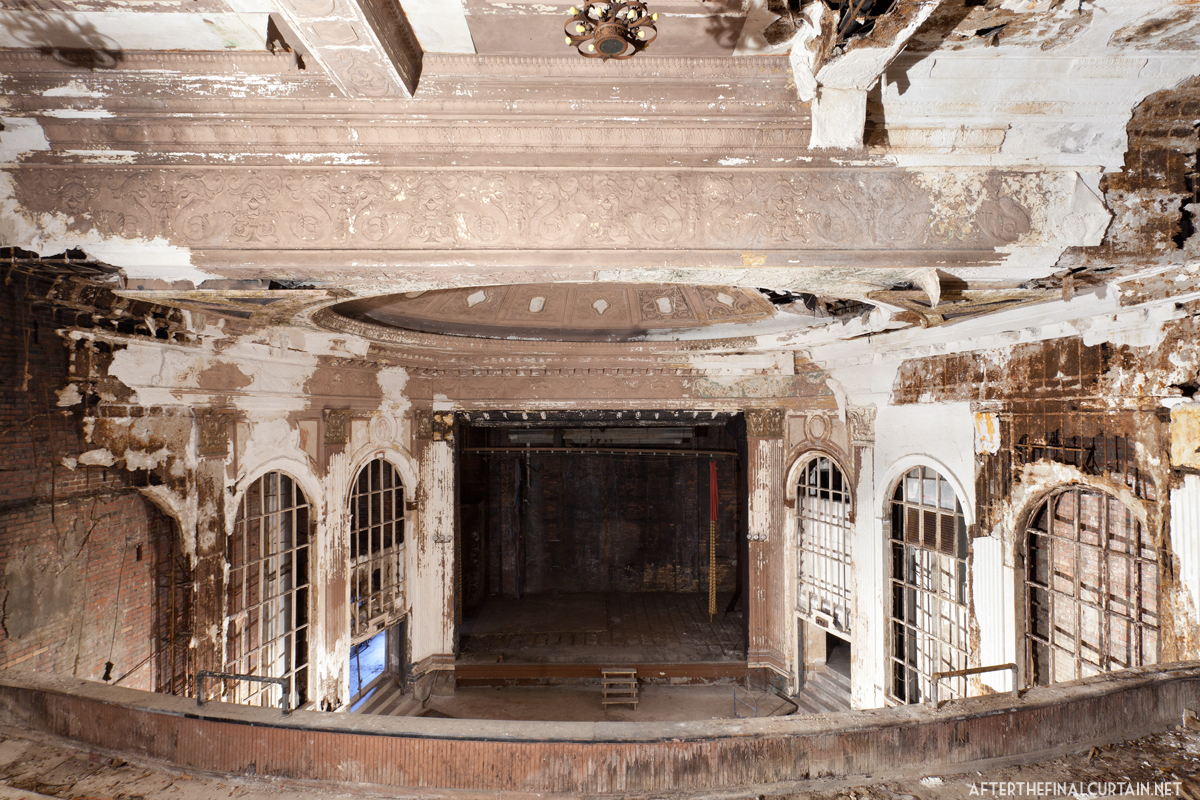
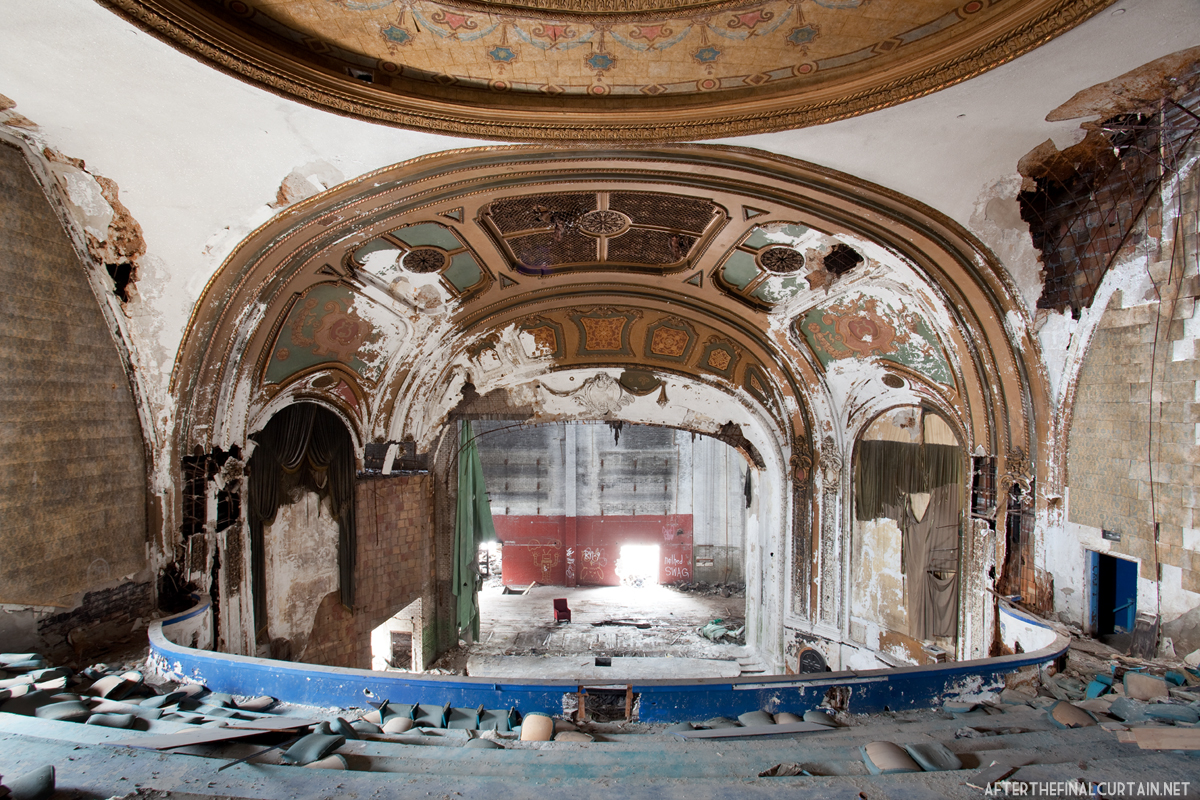
View from the back of the auditorium.

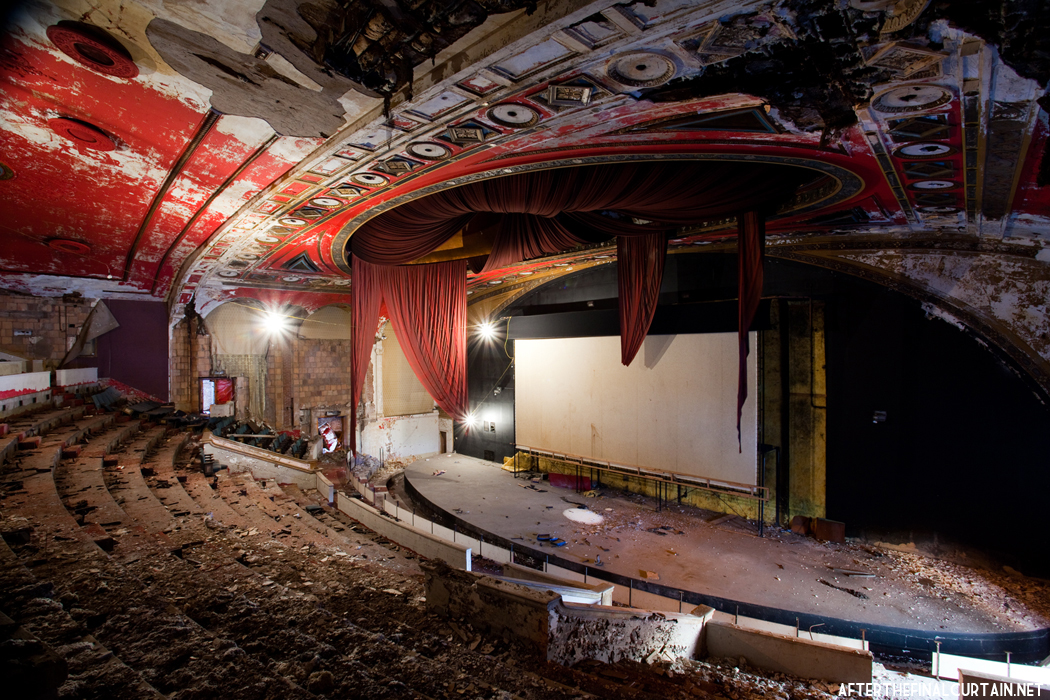
The Liberty Theatre opened in 1922 in Dorchester, MA. It was operated by New England Theatres and showed primarily silent films. The 898-seat theater was in poor shape by 1941 and was later sold to ATC Theatres. In 1949, the Liberty was remodeled and reopened as an art house theater, but ended up closing in the 1950s. It was used as a household appliance warehouse in the 1960’s and later as a church until 1977, when it was converted to a warehouse for storage.
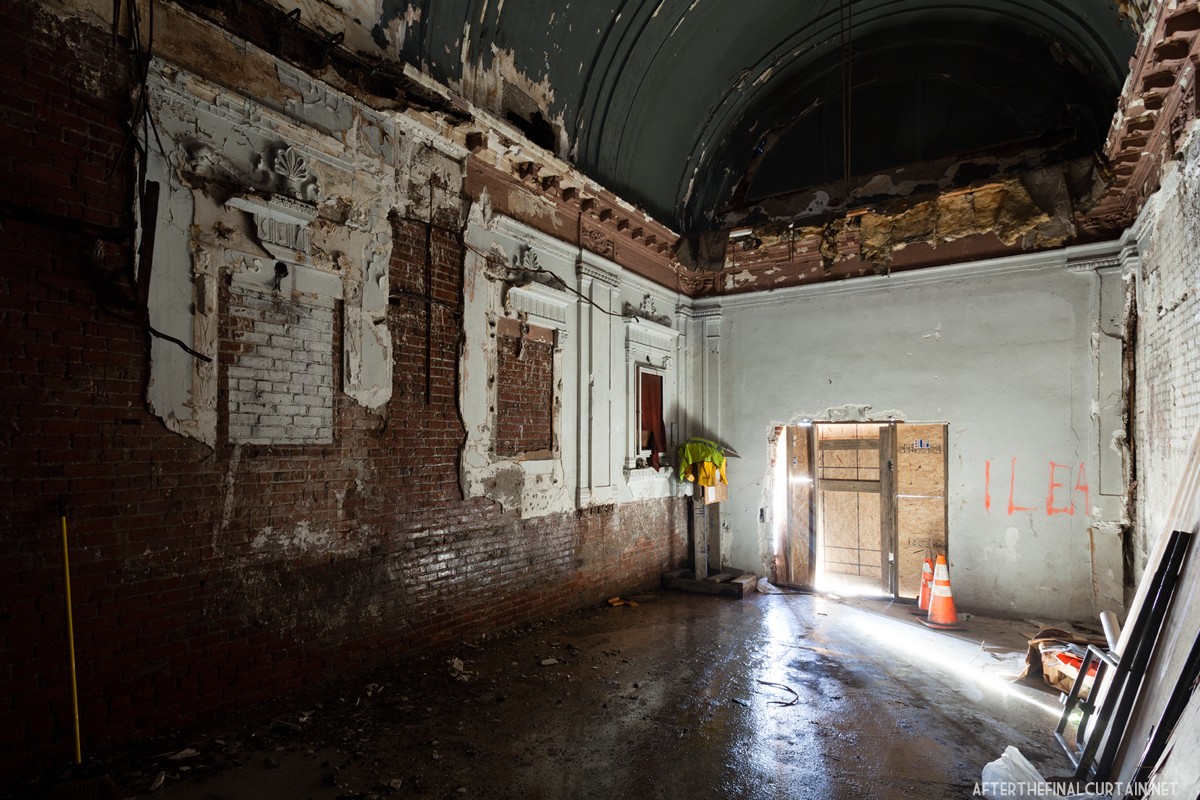
The lobby of the Liberty Theatre.

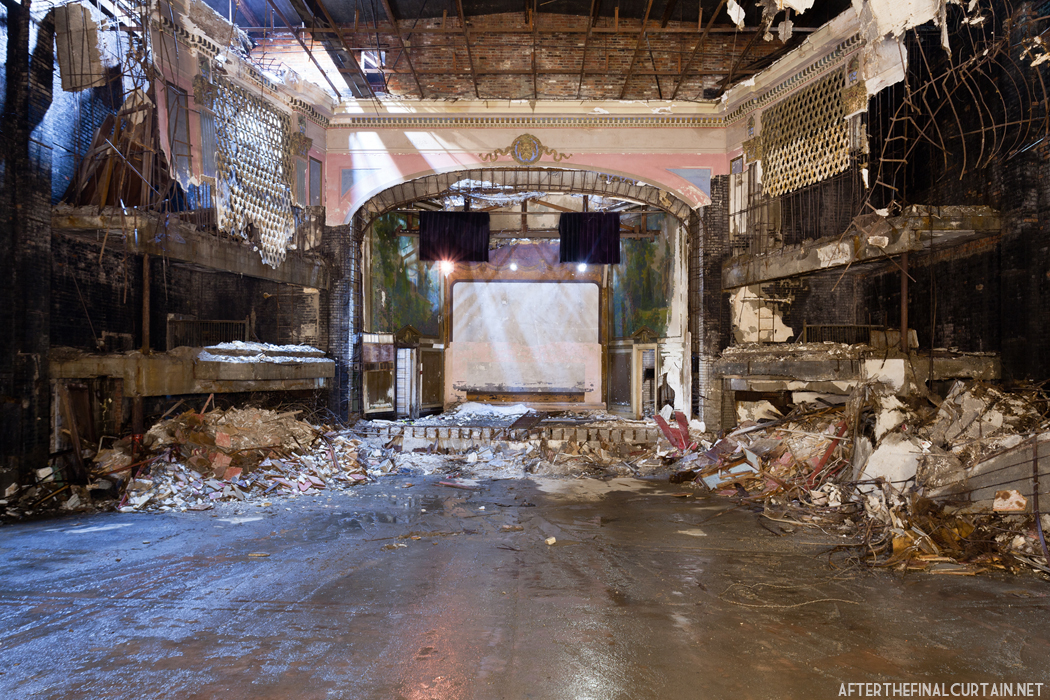
The Liberty Theatre was demolished in early 2013.
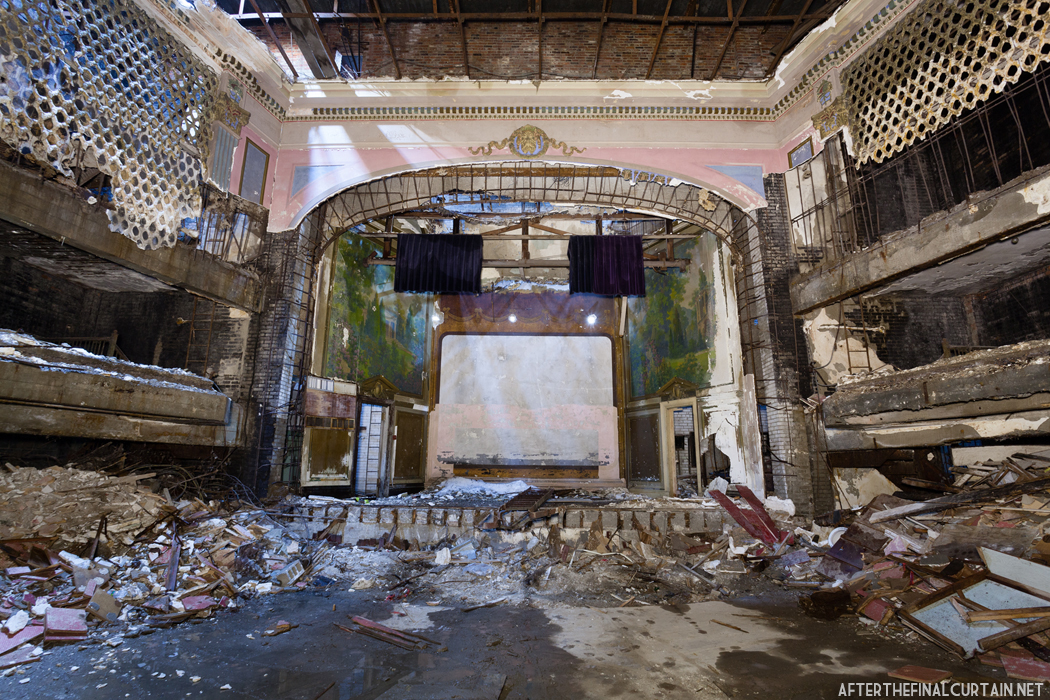
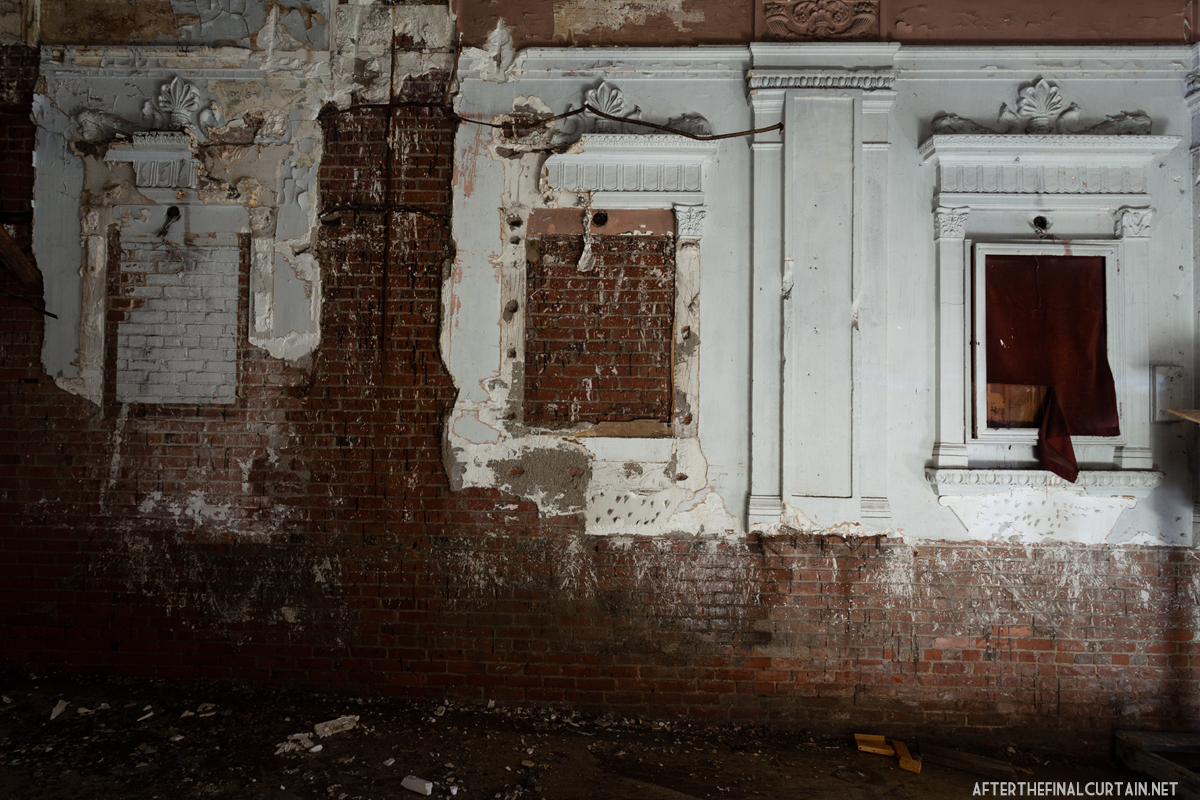
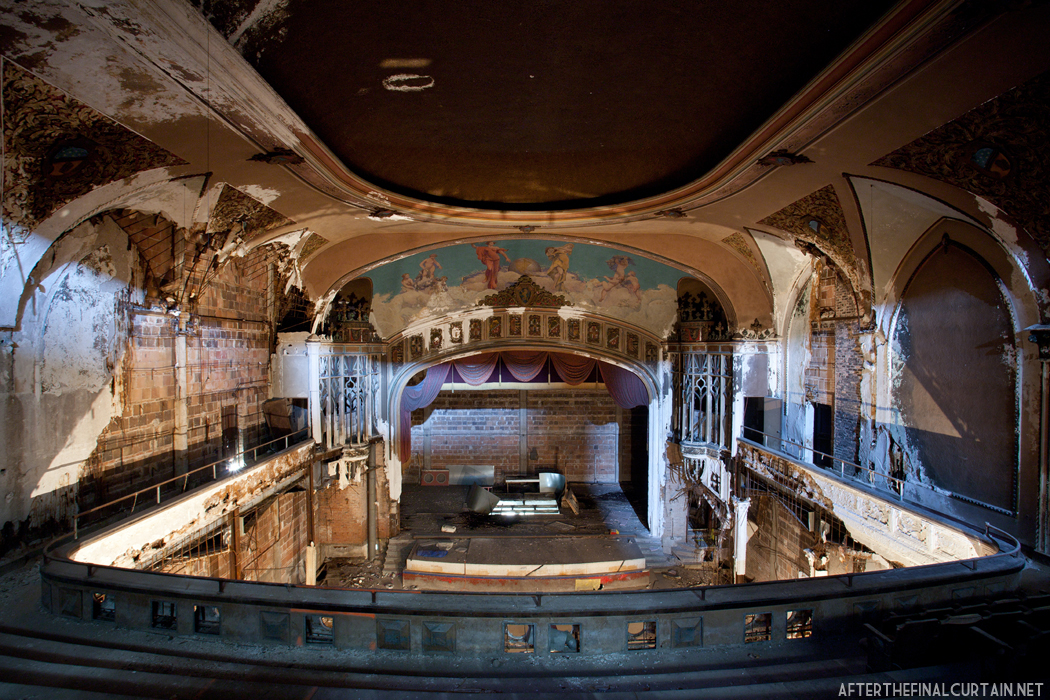
A lot of the original decor survived the theater's transformations over the years.
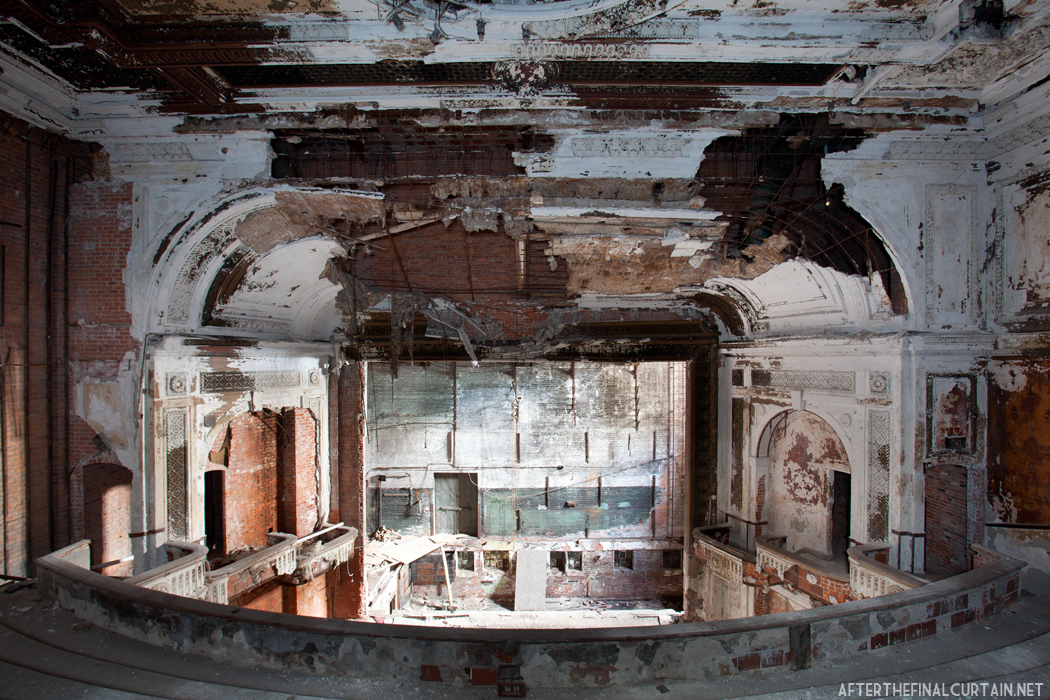
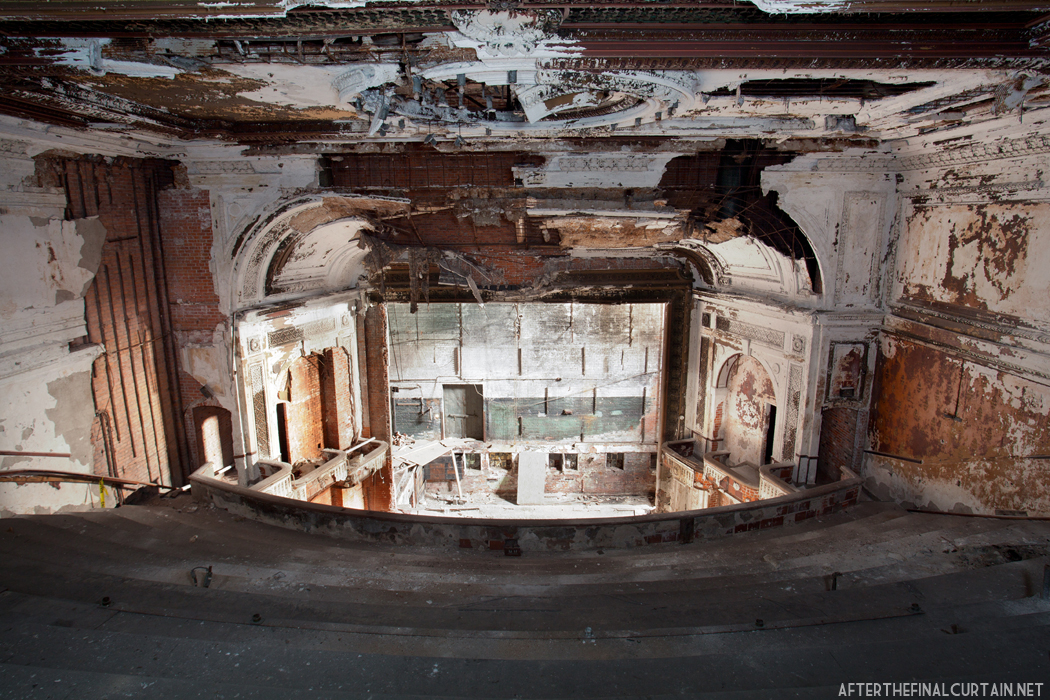
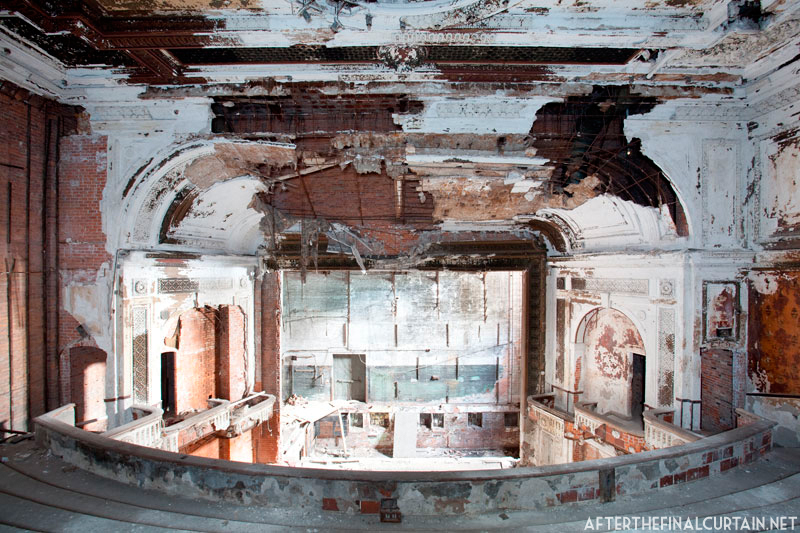
Much of the theater had been demolished before I had the chance to photograph it.
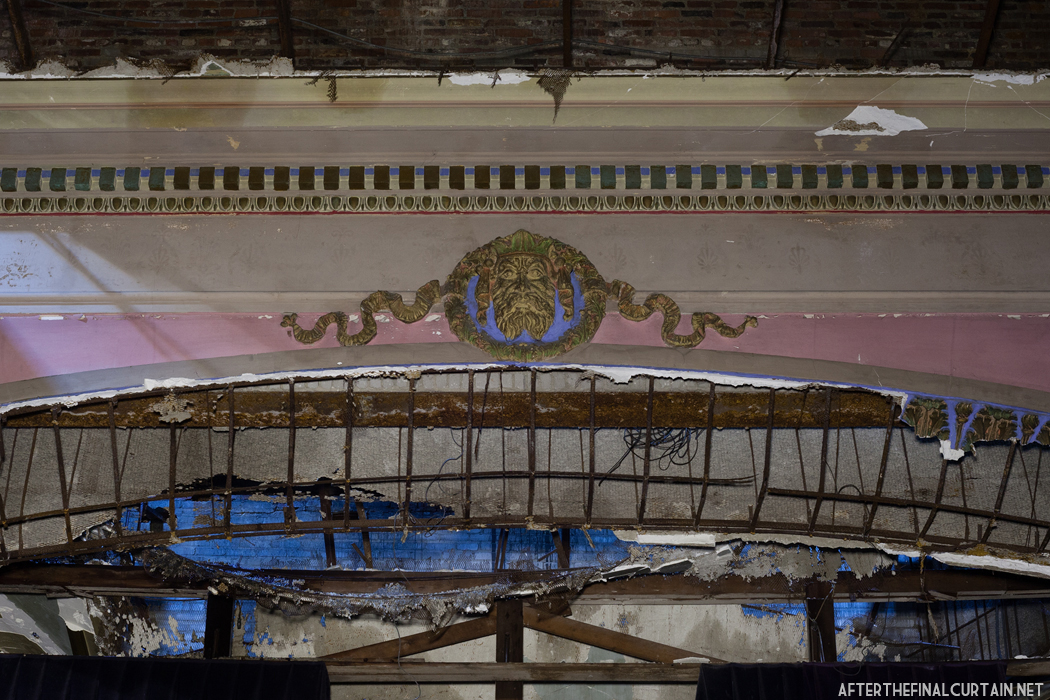
A close up of the proscenium arch.
A close up of some of the remaining plasterwork in the lobby.
Liberty_Theatre_04


© Matthew Lambros and After the Final Curtain, 2013. Unauthorized use and/or duplication of this material without express and written permission from this blog’s author and/or owner is strictly prohibited. Excerpts and links may be used, provided that full and clear credit is given to Matthew Lambros and After the Final Curtain with appropriate and specific direction to the original content.
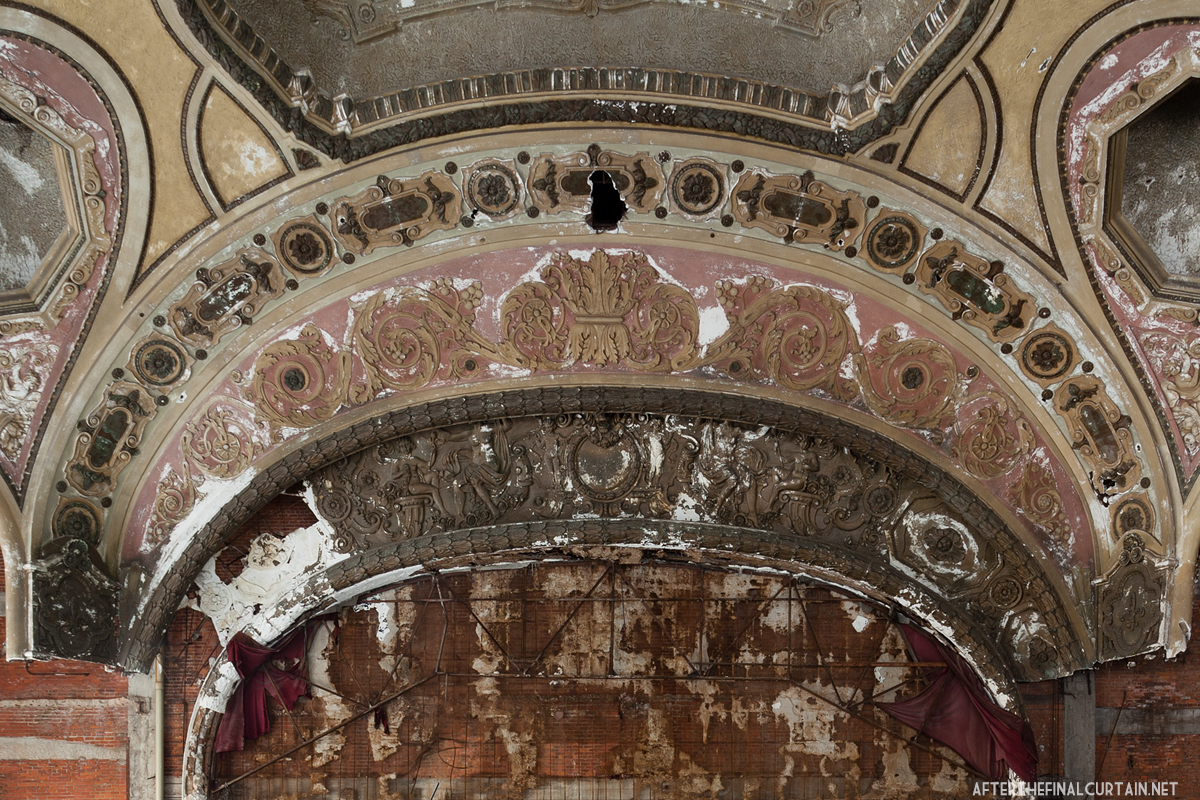
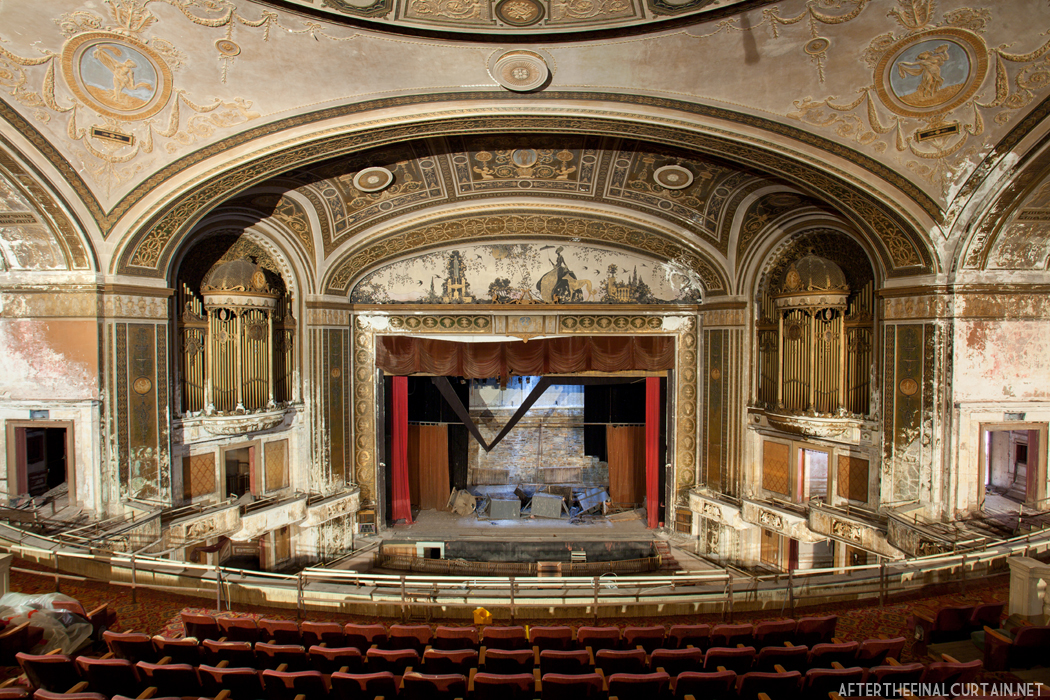
The Michigan Theatre

The theater's proscenium arch.

The theater’s proscenium arch.

Built on the site of Henry Ford’s first garage, the Michigan Theatre opened on August 23, 1926 in Detroit, Michigan. The 4,038 seat theater was designed by Chicago-based theater architecture firm Rapp & Rapp (also known for the Kings Theatre in Brooklyn) for the Balaban and Katz Theatre Corporation.

Continue reading

Spring Print Sale

Loews_Palace_Theatre_04
Loew’s Palace Theatre Bridgeport, CT

It’s time for another round of the “From the balcony” Print sale. The following prints will be $25 dollars off from now until April 30th. If you buy all 5 you’ll receive an additional discount!

Prints are available in editions of five in the following sizes:

The available sizes are:

8″x10″ – $25.00

12″x18″ – $50.00

16″x24″ – $75.00

In addition all the images on the Prints page will be 50% off until April 30.

Images are printed on Kodak Professional Endura Supra paper.

Please e-mail me if interested. Payment is accepted via Paypal, Amazon Payments or credit card. Prints are shipped via USPS or FedEx.

Grand Theatre Steubenville, OH
“The Eastown was the best audience in the world. And I’m not saying that just because you’re writing it down. Any other city, people went home from work to put on their Levis and black leather jackets for a concert. In Detroit they came from work like that. The Eastown — those were pure rock ’n’ roll times.” - Alice Cooper, The Detroit Free Press
Eastown Theatre Detroit, MI
National_Theatre_01
National Theatre Detroit, MI
Uptown Theatre Racine, WI

Eastown Theatre

The Eastown is one of the 22 theaters in my new book “After the Final Curtain: The Fall of the American Movie Theater.” Find out more here.

View of the auditorium from the balcony.

The Eastown Theatre opened on October 1, 1931 in Detroit, Michigan. It was built by the architectural firm of V.J. Waiver and Company for the Wisper and Westman Theatre chain. Designed in a Baroque architectural style, the 2,500 seat theater was built for motion pictures and did not have live performances until much later. Most movie palace openings were a grand event, and the Eastown was no exception. Newspaper ads proclaimed the opening to be, “the most glorious event in the history of east Detroit.” The opening film was Clark Gable’s first starring role “Sporting Blood.”

Continue reading

Sakura Gallery Paris, France

invitv2.indd

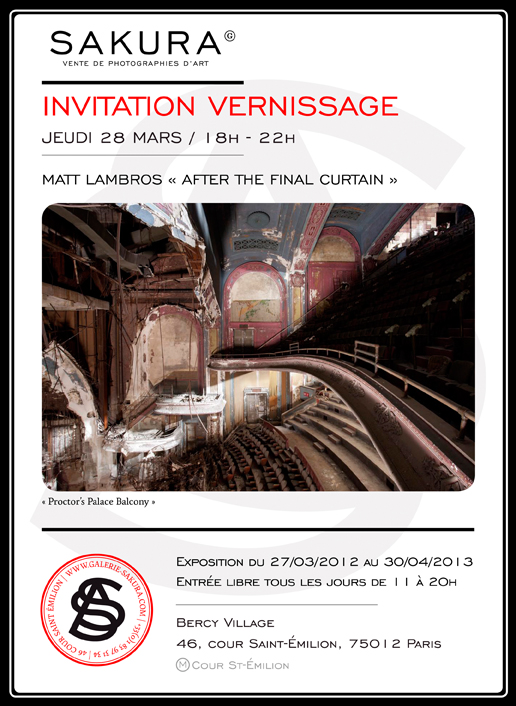
I’m happy to announce that 15 of my images are going to be shown at the Sakura Gallery in Paris, France from March 27 to April 30, 2013.

Sakura is located at 46, cour Saint-Emilion, 75012 Paris. For more information about the gallery check out their website : http://www.galerie-sakura.com.

Fabian Theatre

View of the balcony auditorium after multiplexing.

The Fabian Theatre opened on December 14, 1925 in Paterson, New Jersey. Designed by Paterson architect Fred Wesley Wentworth for theater magnate Jacob Fabian, the 3,228 seat theater was built in a Sullivanesque style with a two ton chandelier, tile floors, murals, and Turkish baths in the basement.

Continue reading

The National Theatre


Balcony level, National Theatre Detroit, MI
View of the auditorium from the balcony.

The National Theatre opened on September 16, 1911 in Detroit, Michigan. Designed by Detroit architect Albert Kahn (who designed so many buildings in Detroit that he was nicknamed, “the architect of Detroit”), the National is noted as his only theater and is the oldest surviving building from the city’s original theater district. Built in the Art Nouveau style, the exterior of the building is covered with terra cotta from Pewabic Pottery, another Detroit landmark.

Continue reading

Madison Theatre

Madison theater balcony view
View of the auditorium from the balcony.

The Madison Theatre opened on October 16, 1920 in Peoria, Illinois. It was built by architect Frederic J. Klein (known for Rockford, Illinois’ Coronado Theatre) for the Robinson Amusement Company. The 1,739 seat theater was originally designed in the Adamesque style and was remodeled in 1936 in the simpler art deco style to ease the maintenance of the building.

Continue reading

Proctor’s Palace Theatre

View of the auditorium from the side of the balcony.

Proctor’s Palace Theatre opened on January 31, 1916 in Yonkers, New York. The 2,300 seat theater was designed by William E. Lehman who is also known for the Count Basie Theatre in Red Bank, New Jersey. It was built for theater magnate F.F. Proctor. Lehman designed the auditorium with a mix of French, Flemish and Italian style architecture. He is quoted as saying, “I wanted to create a building that will wear well.”  The complex also included a six story office building.

Continue reading

Lecture Update

National Theatre Detroit, MI

Just a quick reminder – there are still tickets available to my lecture at the Observatory in Brooklyn on December 3 at 7:30PM.

Tickets can be purchased at http://www.eventbrite.com/event/4687750187?ref=elink

For more information about the lecture check out Atlas Obscura  and the Observatory’s websites.

http://atlasobscura.com/blog/american-palace

http://observatoryroom.org/2012/11/07/the-fall-of-the-american-movie-palace-2/