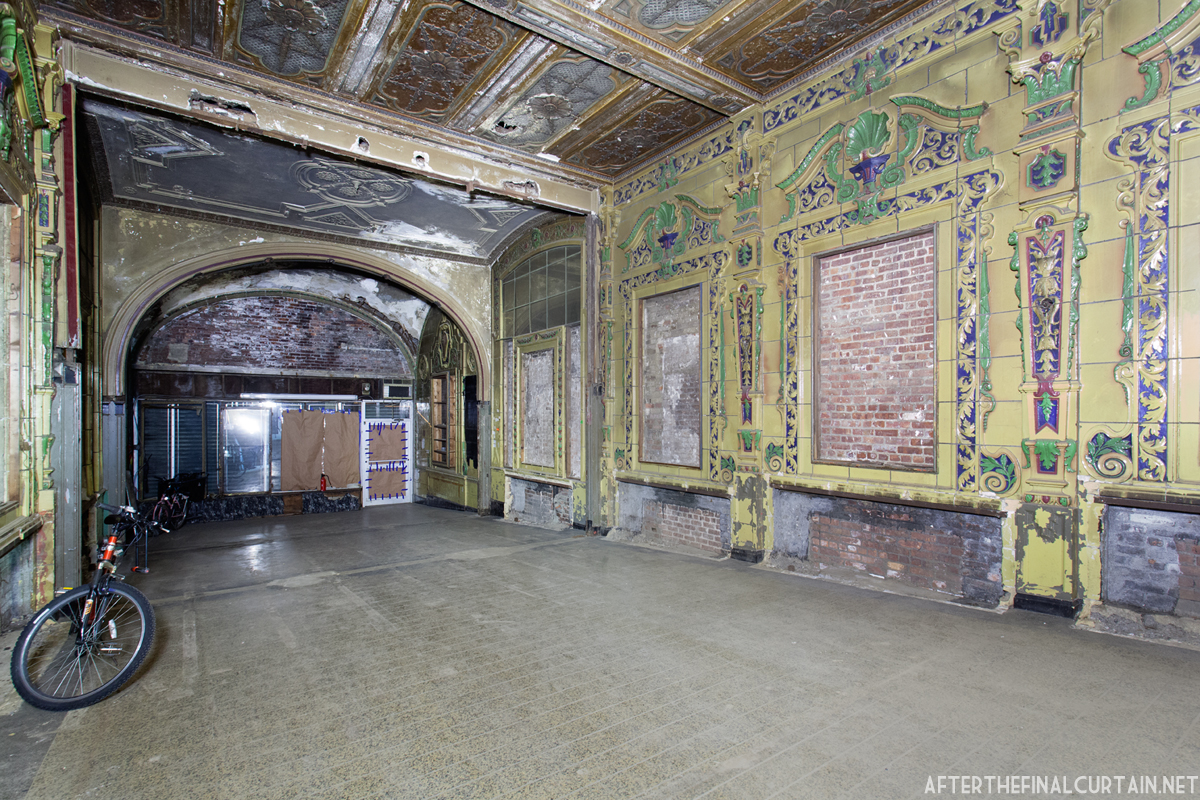
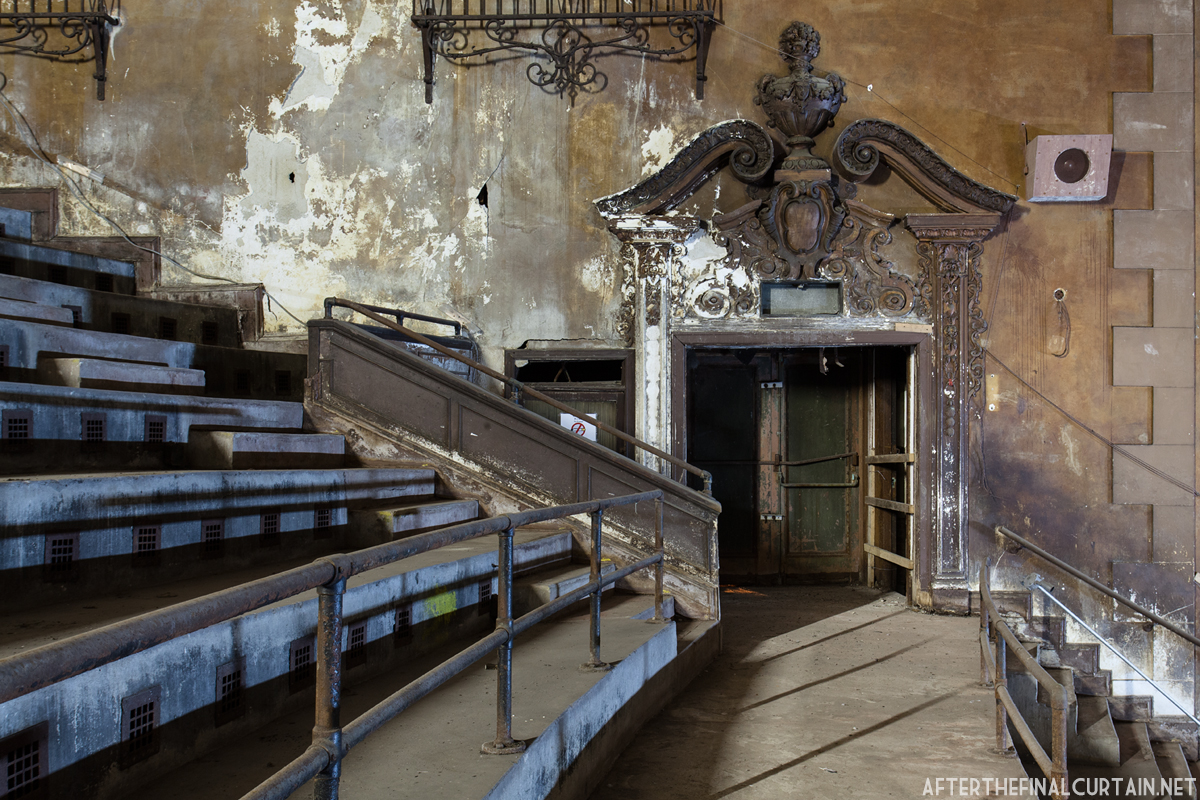
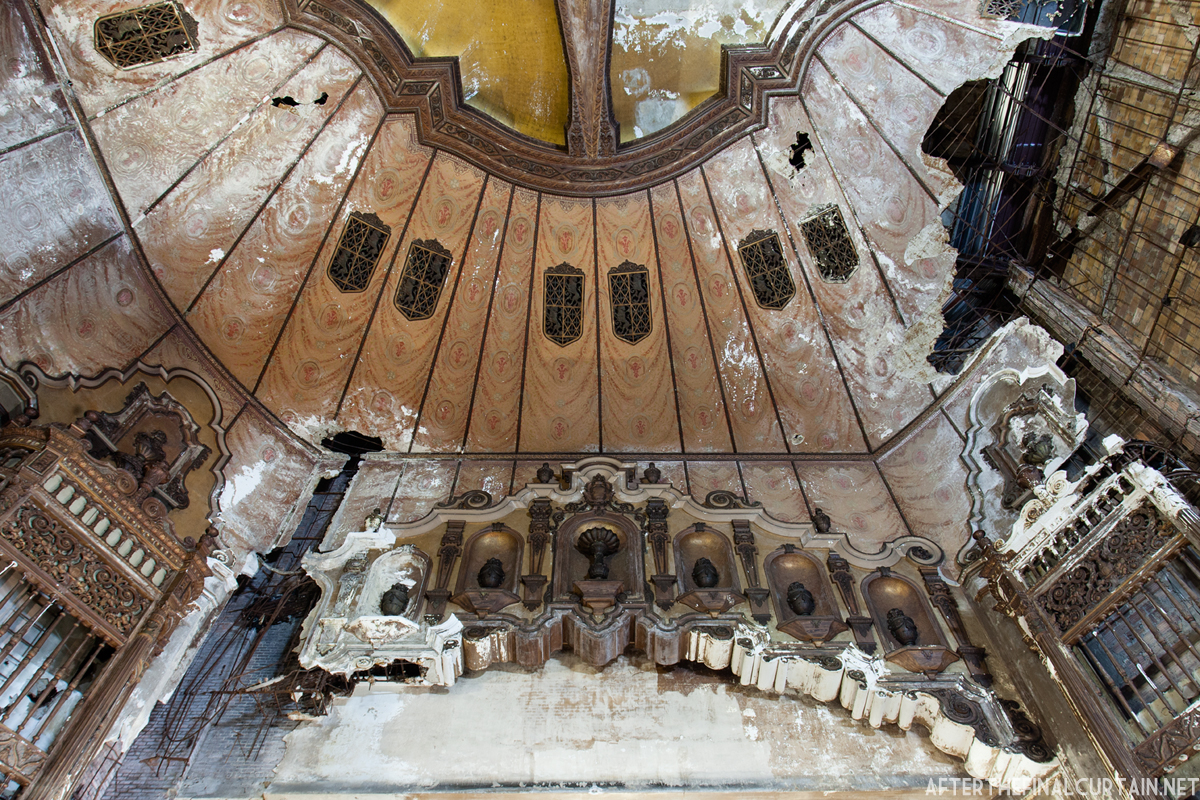
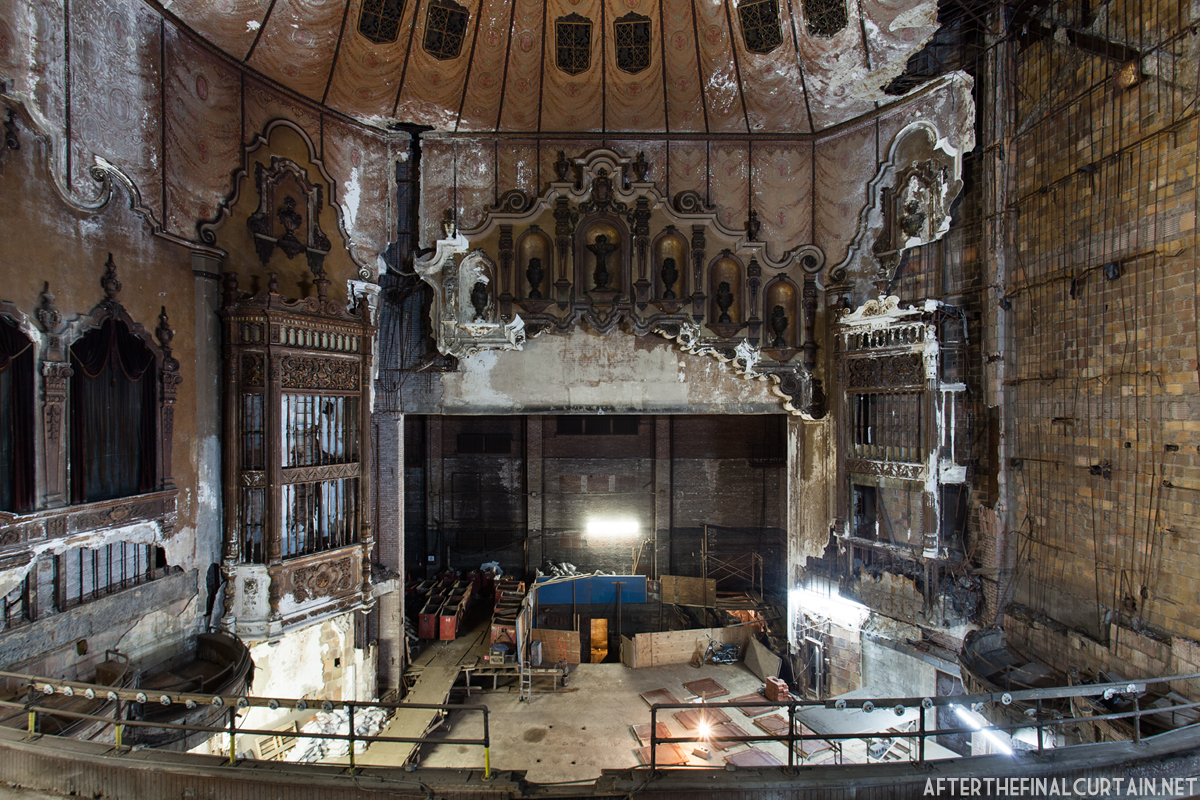
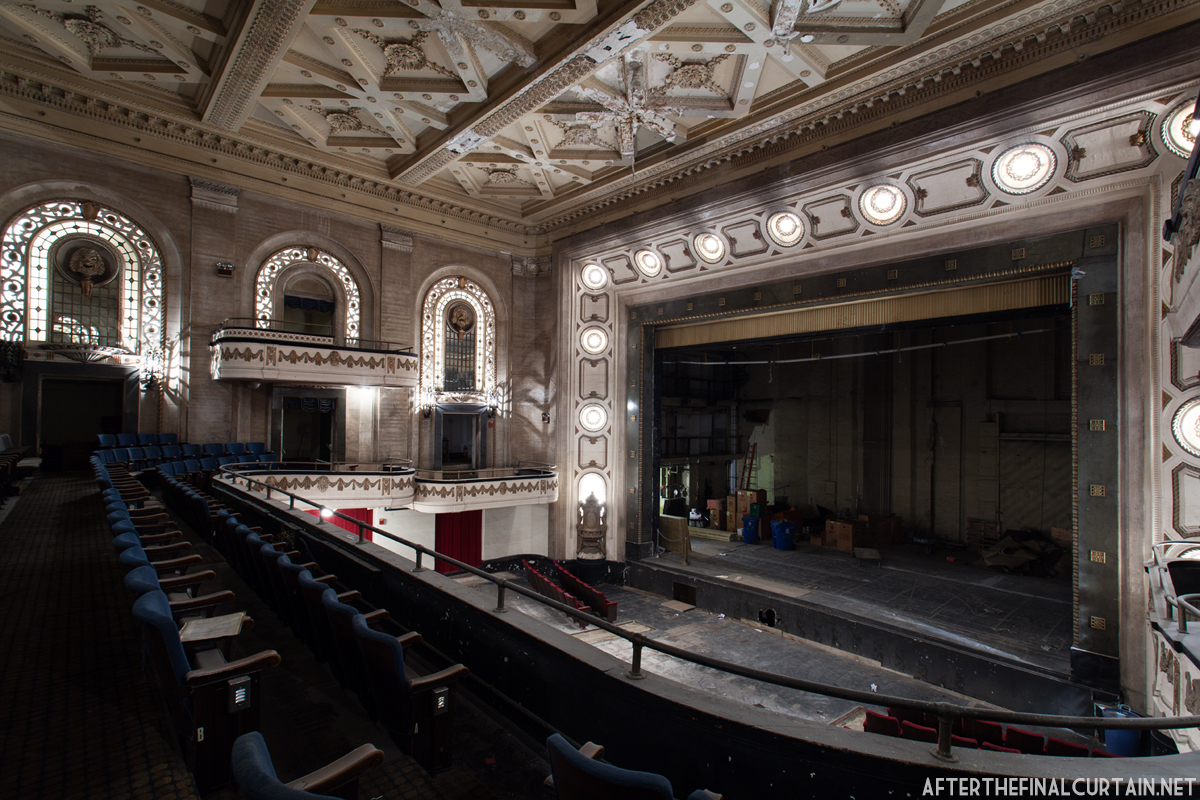
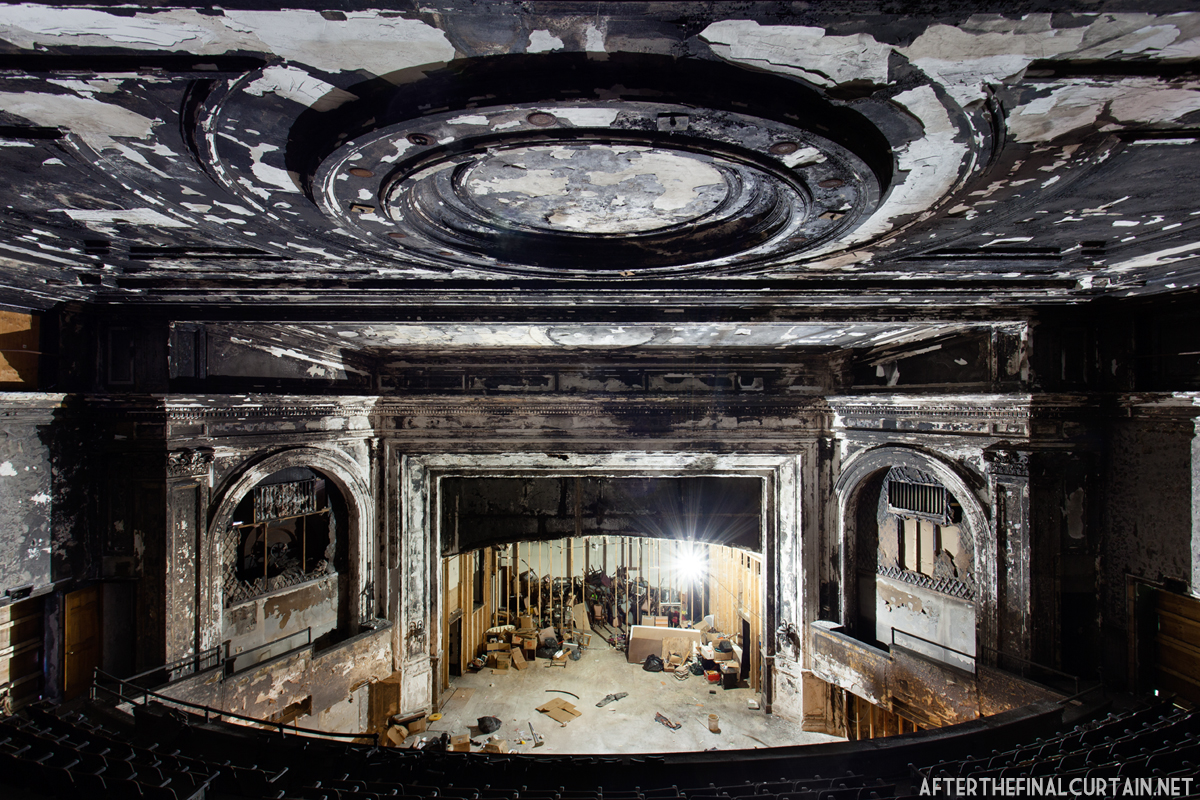
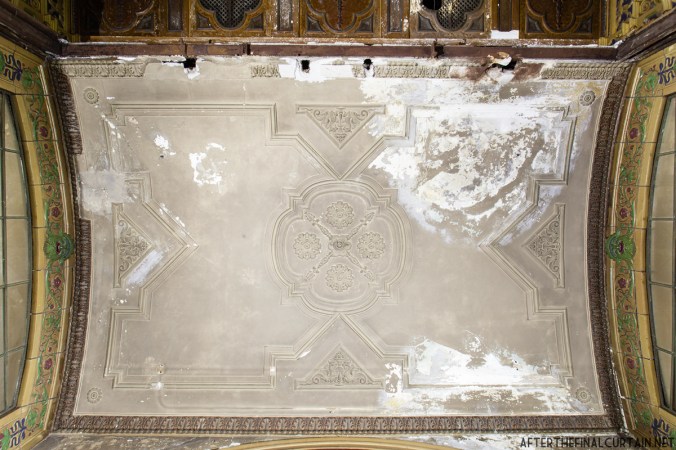
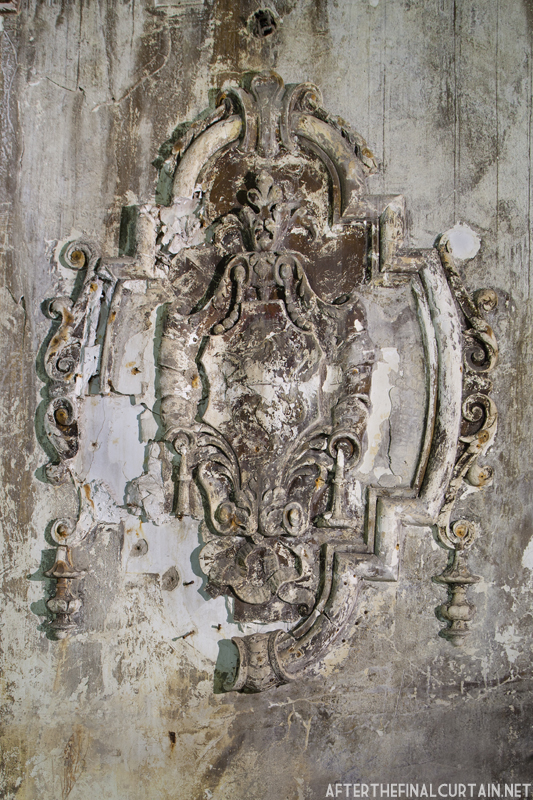
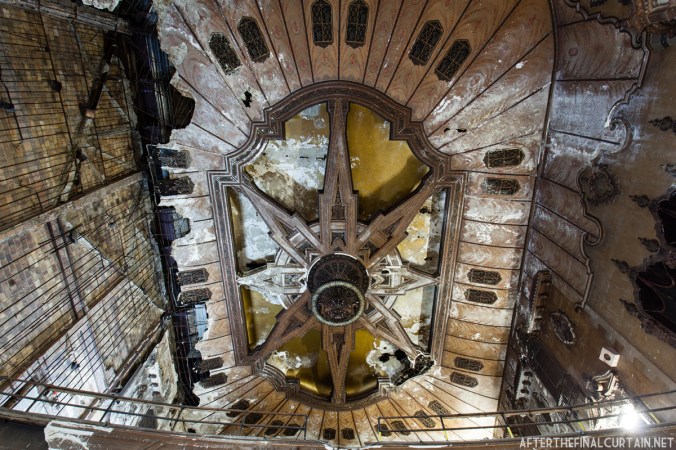
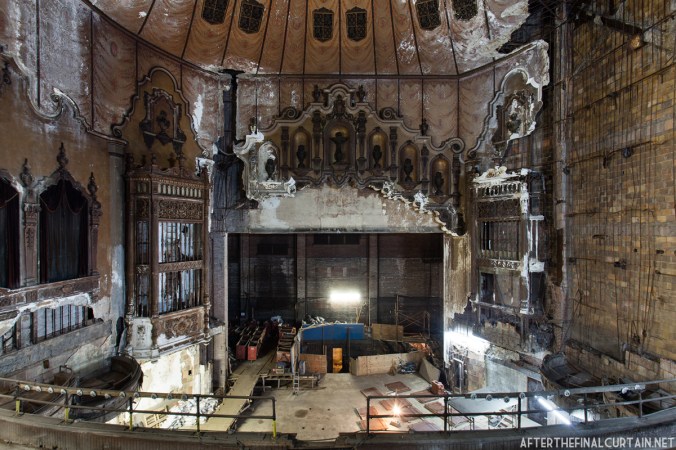
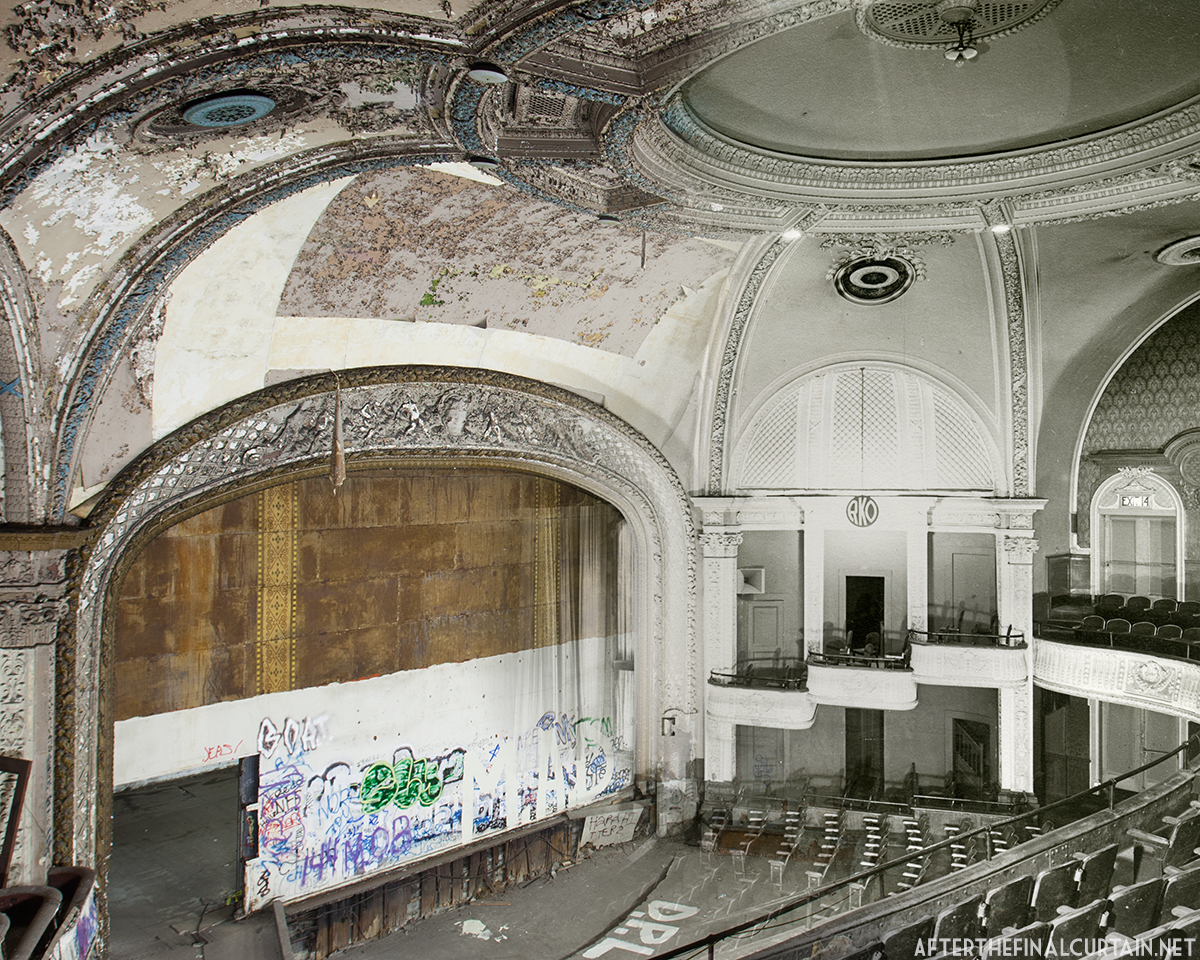
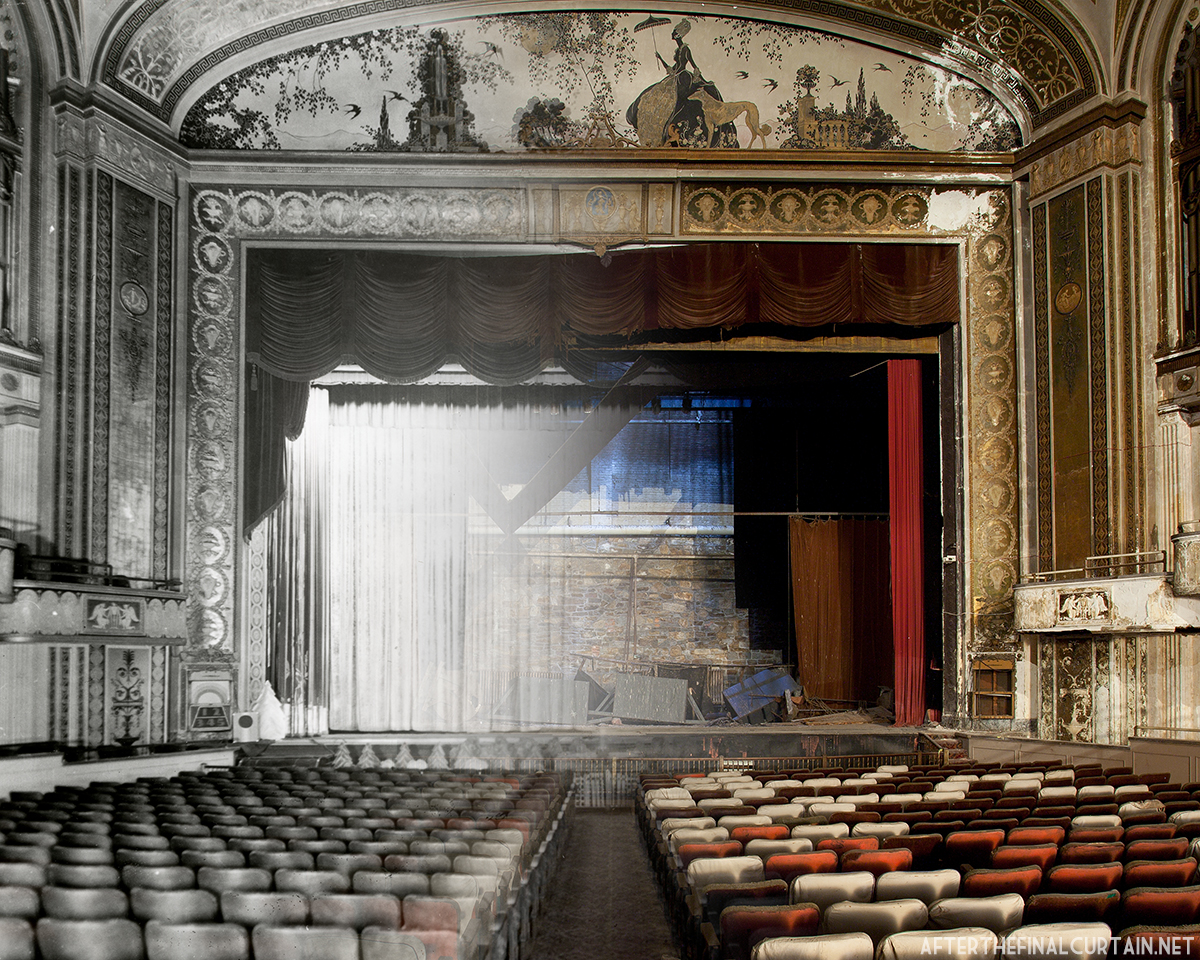
B.F Keith’s Prospect Theatre opened on September 7, 1914 in the Prospect Park neighborhood of Brooklyn, NY. The 2,381 seat theater was constructed on the site of a synagogue and three apartment buildings. It was designed by architect William McElfatrick for the Keith Vaudeville Company. The Prospect was dubbed “the woodless and postless theater” while it was being built due to the fact that no wood was used in its construction and there were no posts helping to support the balcony. Woodwork was left out of the building so that the theater would be much safer if a fire broke out. The balcony was supported by a 65 ton steel beam, which eliminated the need for support beams that could have obstructed views during performances. Opening advertisements boasted that the balcony was strong enough to support the world’s ten heaviest locomotives.
photography
Hiatus
Hi Everyone – Just wanted to let you all know that I’m taking a short hiatus from posting while I finish my book on the Loew’s Kings Theatre. Don’t worry though – the site isn’t going anywhere. I have a backlog of 16 theaters that I haven’t posted yet and plans to photograph many more. For updates during the hiatus check out the After the Final Curtain Facebook page at: https://www.facebook.com/Afterthefinalcurtain
Here’s a quick look at some of the upcoming theaters that will be featured on AFtC later this year:
Loew’s Canal Theatre
The Canal is one of the 22 theaters in my new book “After the Final Curtain: The Fall of the American Movie Theater.” Find out more here.
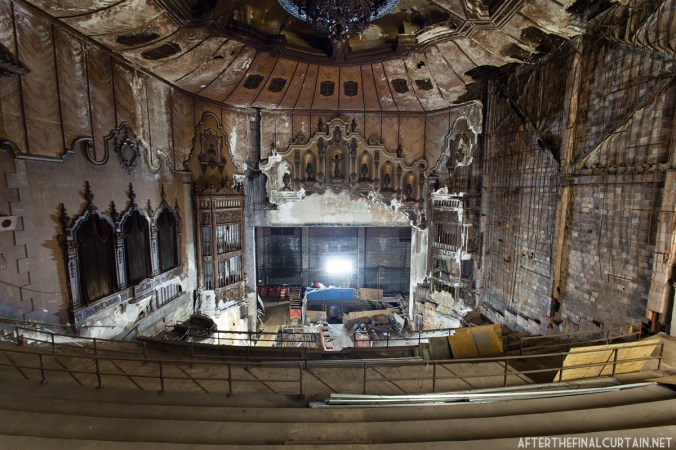
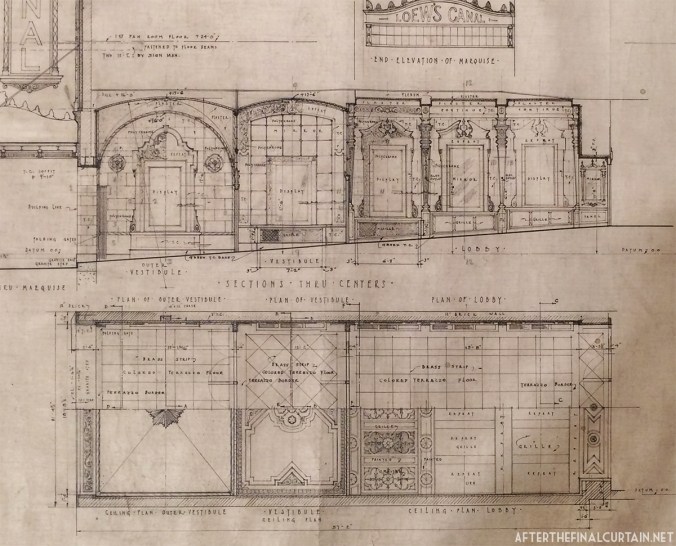
B&W Image from the Loew’s Collection, American Theatre Architecture Archive, Theatre Historical Society of America.
The Loew’s Canal Theatre opened in September of 1927 in New York, New York. The Loew’s Corporation contracted with Thomas W. Lamb, one of the foremost theater architects of the 20th century, to design a theater on Canal Street in Manhattan. The 2,314 seat theater was the second largest motion picture theater in the city when it opened. Even though it was a larger theater, it mostly showed “B” movies and serials. Loew’s sold the theater to the Greater M&S Circuit a little over a year after it opened, and bought it back when they went bankrupt in 1929.
On the morning of September 10, 1932, an explosion rocked the front of the Loew’s Canal, throwing the ticket booth into the street and shattering windows on a number of neighboring buildings. No one was injured in the blast, but Edward Brown, the theater’s night watchman, was thrown down a flight of stairs by it. A similar explosion destroyed the entrance of the Loew’s 46th Street Theatre an hour earlier. Both bombings were thought to be connected to the Motion Picture Operators’ Union Local 306, who were on strike at the time and protesting in front of both theaters, but nothing was ever proven.
According to an article in the New York Post, Comedian Jerry Stiller grew up going to the theater. Stiller says, “we used to go on Saturday morning at the Loew’s Canal. At nine in the morning, they’d show things like the “Fitzpatrick Traveltalk,” cartoons and serials like “Flash Gordon.” By the time you got to 10:30, they’d get to the double-header, two pictures in a row. What happened was, your mother or father would drop you off at nine, and they didn’t have to pick you up until three. That’s where we got our education.”
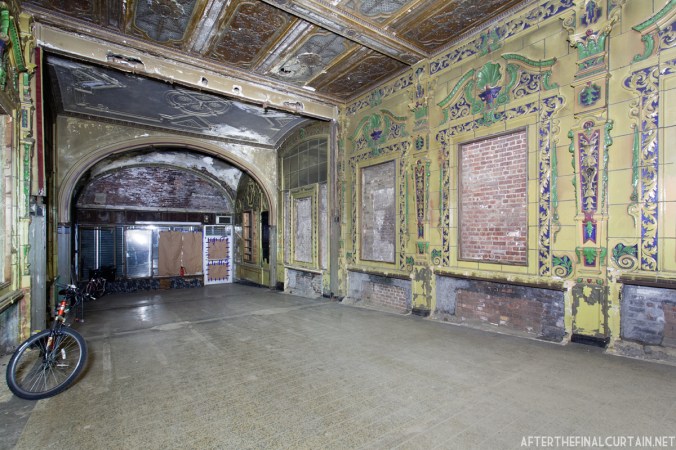
Eddie Cantor, who also grew up in the Lower East Side, had the world premiere of his film, “Forty Little Mothers” at the Loew’s Canal in April of 1940. The theater closed in the late 1950s, and by the early 1960s the lobby was converted to retail space, while the auditorium was used as a warehouse. The last occupant of the lobby space was an appliance store and repair shop that closed in the late 2000s.
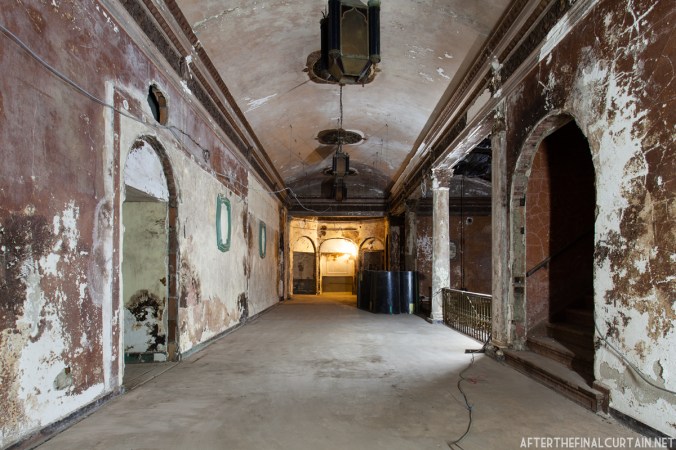
Parts of the mezzanine were blocked off and used for storage while the lobby was occupied by a retail store.
The terracotta façade of the theater was designated a New York City Landmark by the Landmarks Preservation Committee in 2010. Later that year, the Committee to Revitalize and Enrich the Arts and Tomorrow’s Economy (CREATE) teamed up with the building’s owners to conduct a feasibility study to convert the space into a performing arts center. They received a $150,000 grant from the Lower Manhattan Development Corp., but ultimately the project never came to fruition. The building’s owners planned on converting the space into an 11-story condo complex, but the plan was rejected by the NYC Department of Buildings. Currently, the former auditorium is still used as a warehouse, while the lobby space is empty.
If you’d like to help with my exploring/research efforts, please consider purchasing a print, all support is very appreciated.
© Matthew Lambros and After the Final Curtain, 2014. Unauthorized use and/or duplication of this material without express and written permission from this blog’s author and/or owner is strictly prohibited. Excerpts and links may be used, provided that full and clear credit is given to Matthew Lambros and After the Final Curtain with appropriate and specific direction to the original content.
Holiday Print Sale 2014
Happy Holidays! From now until December 31, 8×12, 12×18 and 16×24 prints are 50% off when you use the coupon code holiday2014 at checkout.
http://www.mlambrosphotography.com/prints
Don’t have time to get a print framed during this busy holiday season? No problem! As an added bonus I’m including eight framed prints for 50% off, too. Just use the same coupon code (holiday2014) at checkout.
http://www.mlambrosphotography.com/framedprints
If you have any questions feel free to email me at matt@mlambrosphotography.com
Adams Theatre
The Adams is one of the 22 theaters in my new book “After the Final Curtain: The Fall of the American Movie Theater.” Find out more here.
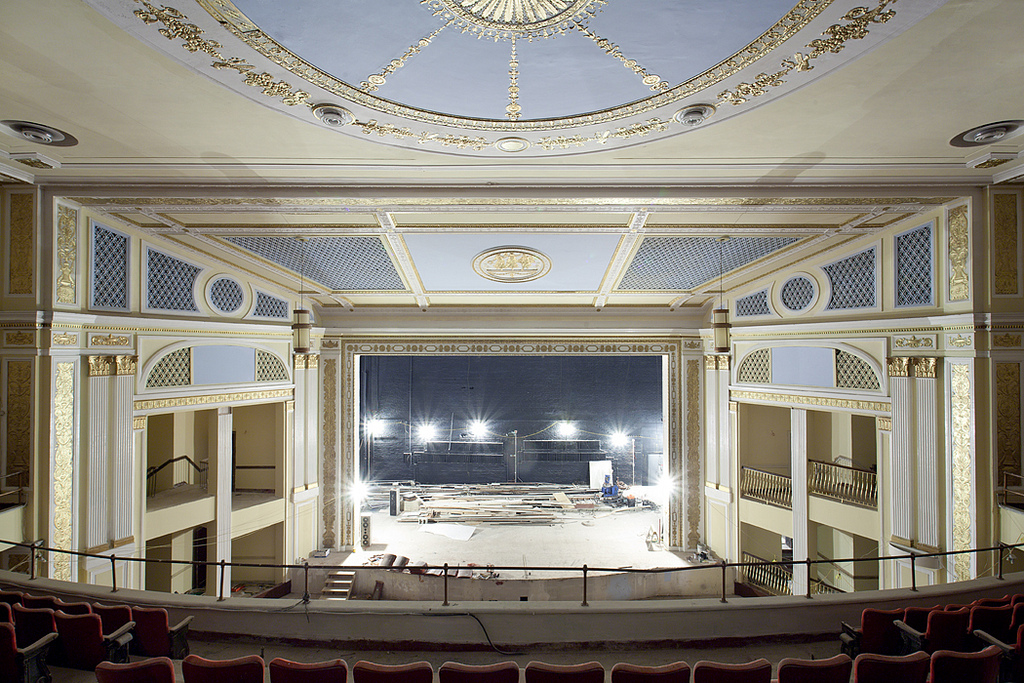
The Adams Theatre in Newark, New Jersey originally opened on January 12, 1912 as the Shubert Theatre. It was designed in the Beaux-Arts style by architect William E. Lehman, who also designed the Proctor’s Palace Theatre in Yonkers, NY. The 2,037 seat theater was originally used for theatrical productions, Broadway tryouts and revivals.
Franklin Park Theatre
The Franklin Park Theatre opened on December 8, 1914 in the Dorchester neighborhood of Boston, Massachusetts. Designed by Funk and Wilcox, who also designed the nearby Strand Theatre. The theater was originally operated by Jacob Lourie, who was a movie pioneer in Massachusetts and the original president of New England Theatres Operating Company (NETOC). NETOC was affiliated with Paramount Pictures, and many of the “famous players” performed at the Franklin Park. It cost $250,000 to build the theater, or $6 million when adjusted for inflation.
Road Trip 2014 Day 3
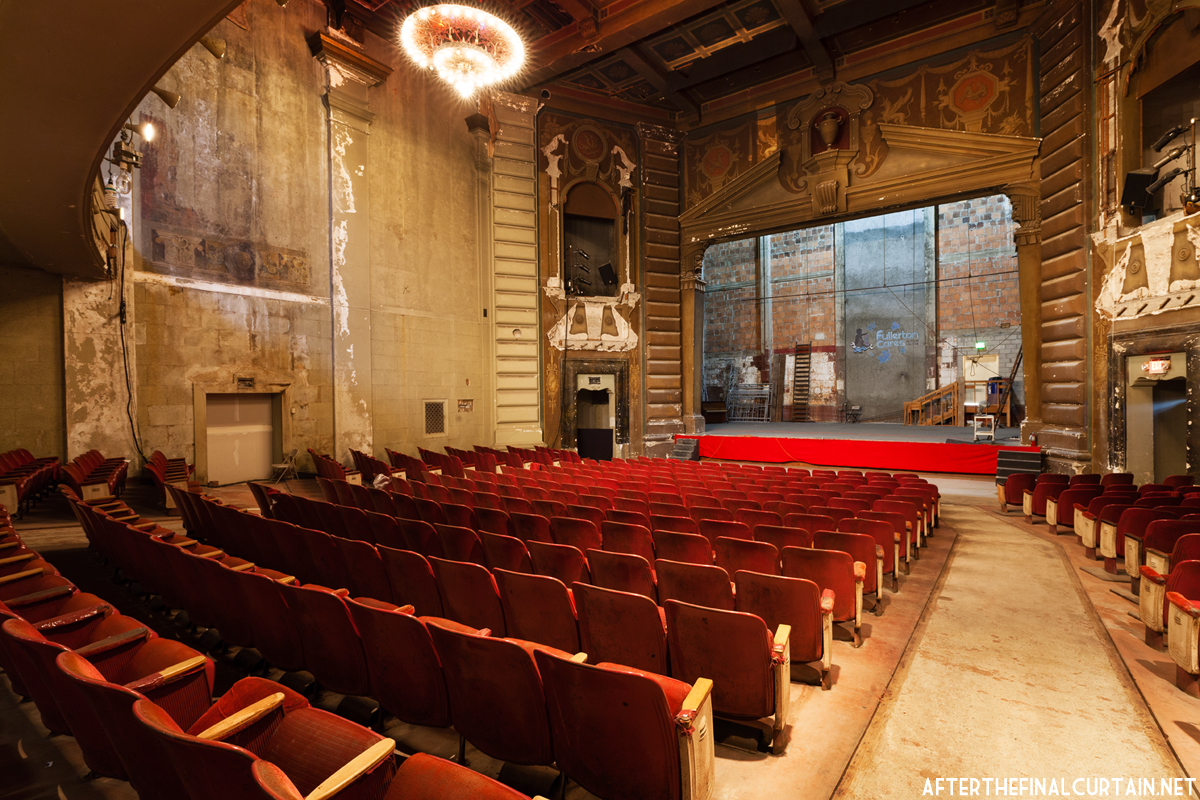
The Fox Theatre in Fullerton, CA opened in 1925. Designed by Raymond M. Kennedy, it was a sister theater to the Egyptian, and Chinese Theatres. The Fox closed in 1987, and was scheduled for demolition until a campaign to restore the building was launched in 2000.
Read more about the theater at: http://www.foxfullerton.org/w/
Russell Theatre
The Russell Theatre opened on December 4, 1930 in Maysville, Kentucky. Plans to build the theater were announced in 1929 by Col. J. Barbour Russell, a local businessman. Russell hired the architectural firm of Frankel and Curtis to design the theater. It was built on the site of a grocery warehouse owned by the Russell family at a cost of around $200,000. Russell envisioned the 700 seat theater as a grand movie palace, saying, “what the Roxy is to New York, the Russell will be to Maysville.”
Next Blog Post
Help me pick the next blog post on After the Final Curtain! Cast a vote for the theater you’d like to see next on the site, and whichever has the most votes by Thursday 6/19 will be featured in a blog post on Friday 6/20!
Thanks for voting! The Russell Theatre is the winner!
Theater RePhotographs
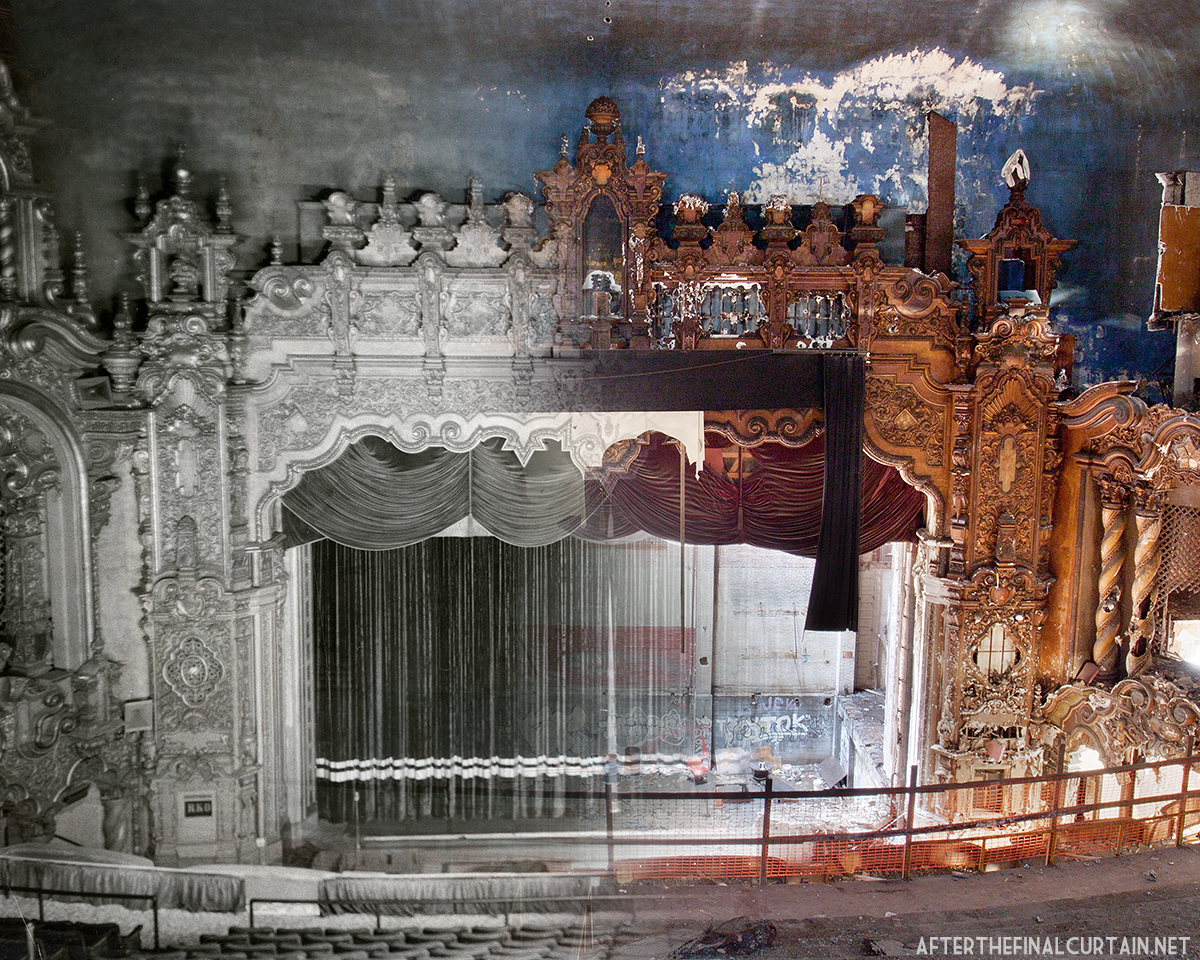
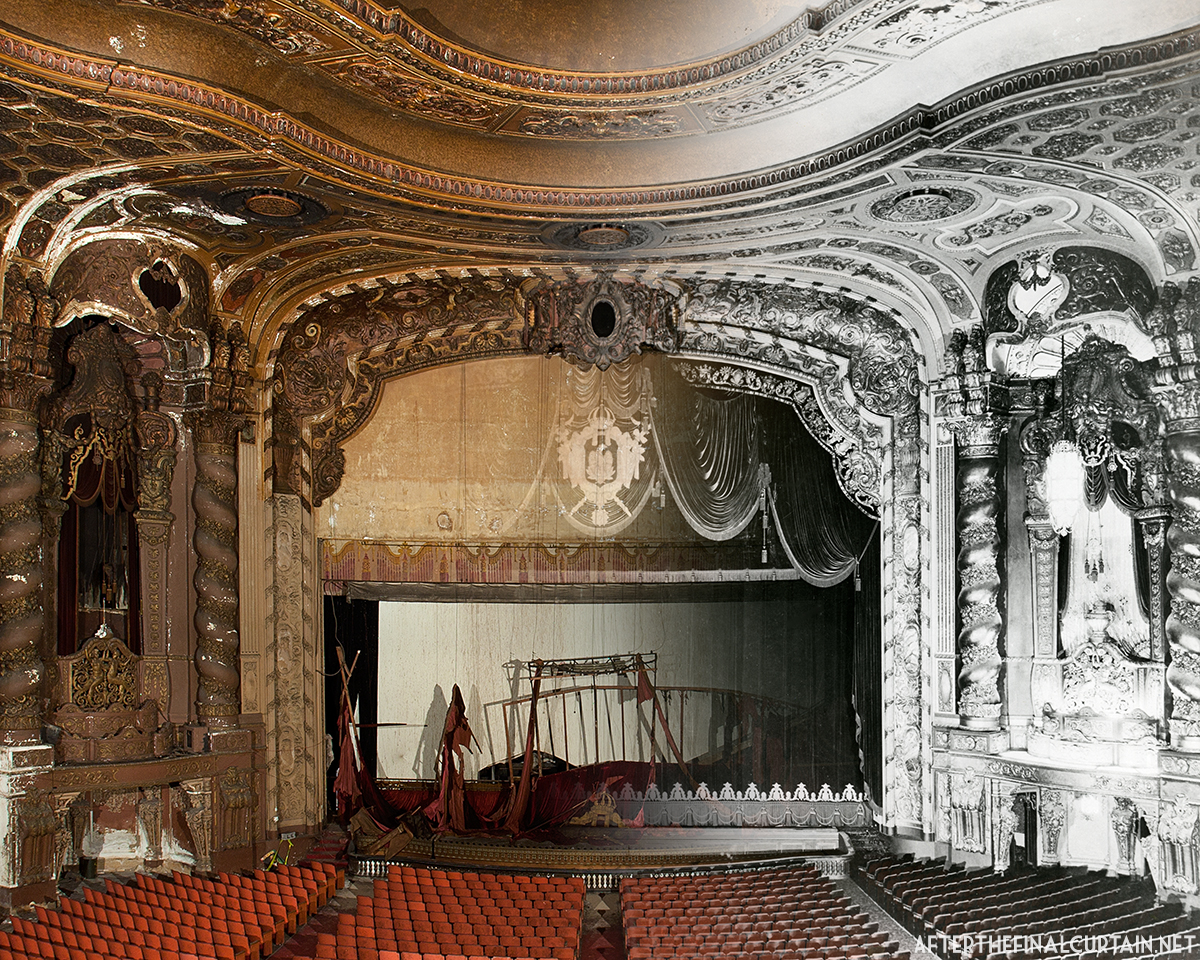
Over the years, I’ve come across a number of vintage photographs while researching blog posts for After the Final Curtain. One resource is the Theatre Historical Society of America‘s American Theatre Architecture Archive. With their permission I was able to combine our photographs to create these “rephotographs” showcasing a glimpse of what I have seen over the years. The composite of these images illustrates the rise and fall of these buildings and the potential for what they could become again, if restored.

RKO Keith’s Theatre Flushing, NY B&W Image of the RKO Keith’s Theatre from the Richard L. Hay Collection, American Theatre Architecture Archive, Theatre Historical Society of America
The before photograph of the RKO Keith’s Theatre was taken in 1955, and the after was taken in 2011, twenty-five years after the theater closed.

Loew’s Kings Theatre Brooklyn, NY B&W Image from the Loew’s Collection, American Theatre Architecture Archive, Theatre Historical Society of America
The before photograph of the Loew’s Kings Theatre was taken in 1929, and the after was taken in 2010, thirty-three years after it closed.

RKO Hamilton Theatre Manhattan, NY B&W image of the RKO Hamilton Theatre courtesy of the American Theatre Architecture Archive of the Theatre Historical Society of America
The before photograph of the RKO Hamilton Theatre was taken in the 1930s, and the after was taken in 2011, fifty-three years after the theater closed.

Loew’s Palace Theatre Bridgeport, CT B&W image of the Loew’s Palace Theatre courtesy of the American Theatre Architecture Archive of the Theatre Historical Society of America
The before photograph of the Loew’s Palace Theatre was taken in the 1930s, and the after was taken in 2011, thirty-six years after the theater closed.

Proctor’s Palace Theatre Newark, NJ B&W image of Proctor’s Palace Theatre courtesy of the American Theatre Architecture Archive of the Theatre Historical Society of America
The before photograph of the Proctor’s Palace Theatre was taken in 1955, and the after was taken in 2010, forty-two years after the theater closed.
Limited Edition Prints of these images are available at http://www.mlambrosphotography.com/rephotographs
A portion of sales from this limited edition print run will benefit the Theatre Historical Society of America and support their mission to document and celebrate the history of America’s theatres. For more information — check out their website at www.historictheatres.org
© Matthew Lambros and After the Final Curtain, 2013. Unauthorized use and/or duplication of this material without express and written permission from this blog’s author and/or owner is strictly prohibited. Excerpts and links may be used, provided that full and clear credit is given to Matthew Lambros and After the Final Curtain with appropriate and specific direction to the original content.