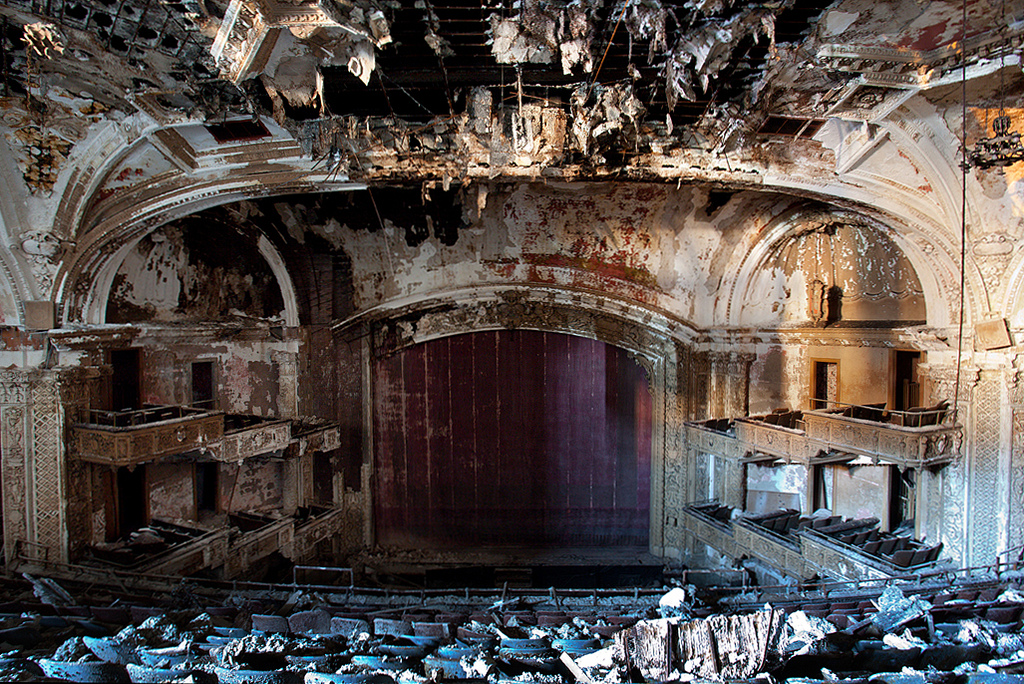
Adams Theatre Newark, NJ
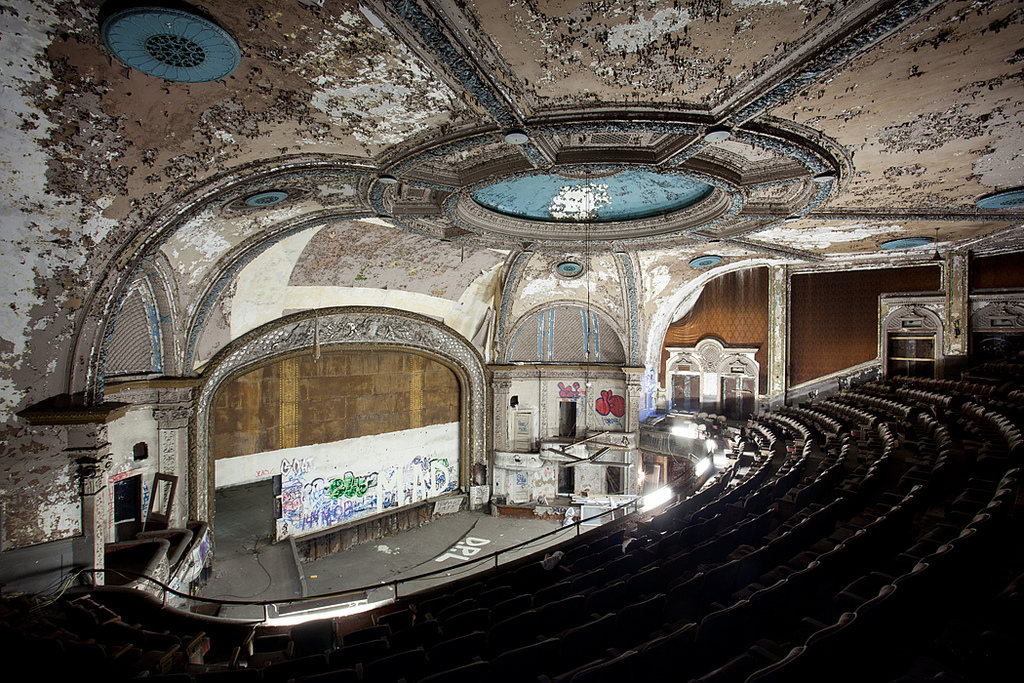
RKO Hamilton Theatre New York, NY
For a sneak preview of upcoming blog posts as well as outtake images from previous posts be sure to “like” After the Final Curtain on Facebook.
Adams Theatre Newark, NJ
RKO Hamilton Theatre New York, NY
For a sneak preview of upcoming blog posts as well as outtake images from previous posts be sure to “like” After the Final Curtain on Facebook.
The Paramount is one of the 22 theaters in my new book “After the Final Curtain: The Fall of the American Movie Theater.” Find out more here.

The Liberty Theatre opened on February 11, 1918 in Youngstown, Ohio. It was designed by architect C. Howard Crane, later known for designing the Fox Theatre in Detroit, Michigan. The 1,800 seat Liberty opened as a vaudeville theater, and was managed by C.W. Diebel. Diebel’s father had built a theater on the same lot as the Liberty, but it was demolished to make way for what would become the Paramount Theatre. According to an account in the Motion Picture News, the theater cost $500,000 to build (or $8.8 million when adjusted for inflation.)

The main level of the Paramount Theatre.
The exterior of the building was constructed with white glazed terra cotta, and the interior was decorated in the Adamesque style. Due to the Liberty’s wartime construction, it was very difficult to get the steel required for the framework. In 1929 the Liberty was purchased by Paramount Pictures and renamed the Paramount Theatre. Paramount Pictures spent $200,000 modernizing the building and installing a sound system so the theater could show sound films (or ”talkies”). The Paramount thrived for more than 50 years before closing in 1976. The theater reopened for two days in late 1984 to host “Youngstown Sheet & Tube Co. Steel Mill Movie Day.” People were given a short brief on the current state of the steel industry, a tour of the theater, and shown a film about the mill.
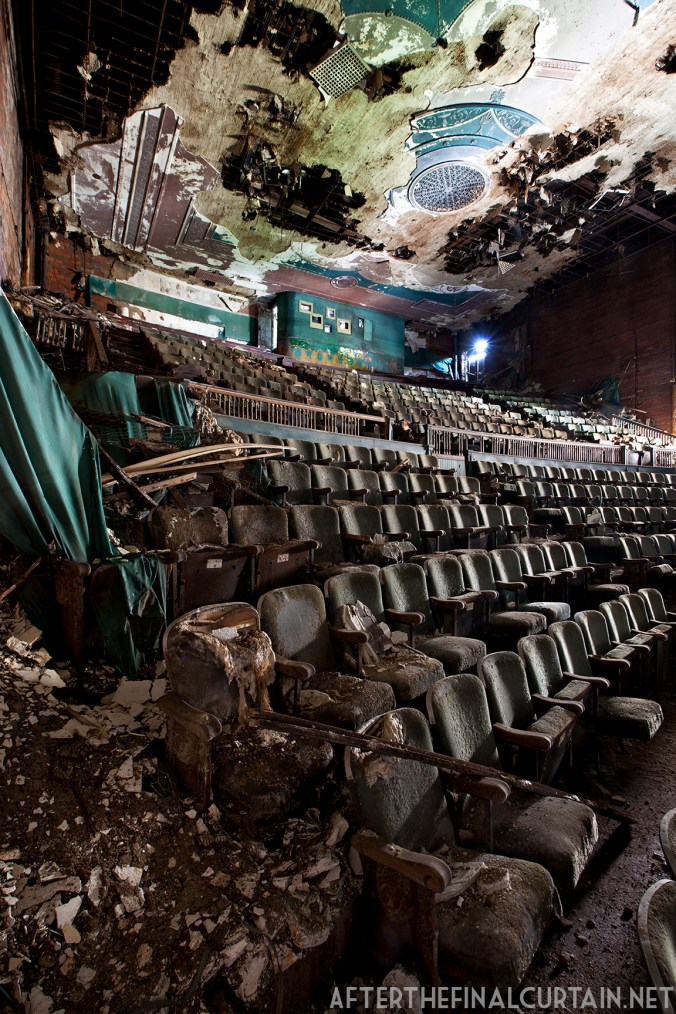
In April 2006 Grande Venues, Inc. purchased the Paramount. They planned to reuse it by adding a dance hall on the main floor and a one- or two-screen movie theater in the balcony. However, the restoration plans were never applied and the building was purchased by the city of Youngstown in 2011.
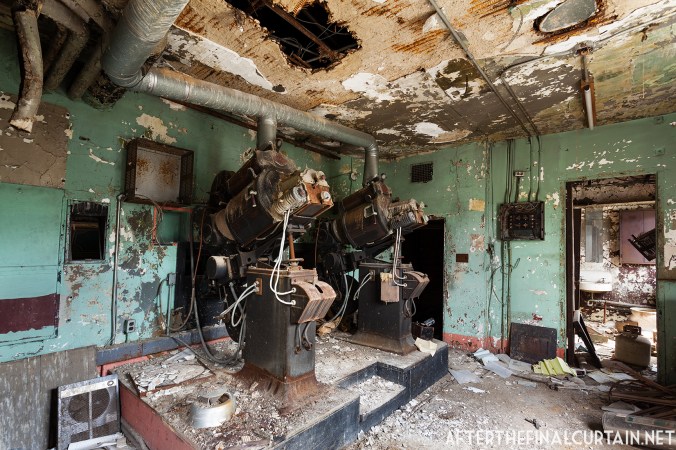
The Paramount Project, a group working to reuse the building in some capacity, wanted to save the facade for a small restaurant, and construct an amphitheater where the auditorium was located. However, two separate studies found that if the walls of the theater were removed, the facade would likely collapse. It would cost between 1.3 and 1.6 million dollars to shore the facade enough to survive the demolition. Due to the cost, the Paramount Project walked away from the building and in July 2013 it was demolished. The city turned the space into a parking lot.


The organ pipes were stored on the stage after the theater closed. They disappeared shortly before demolition.


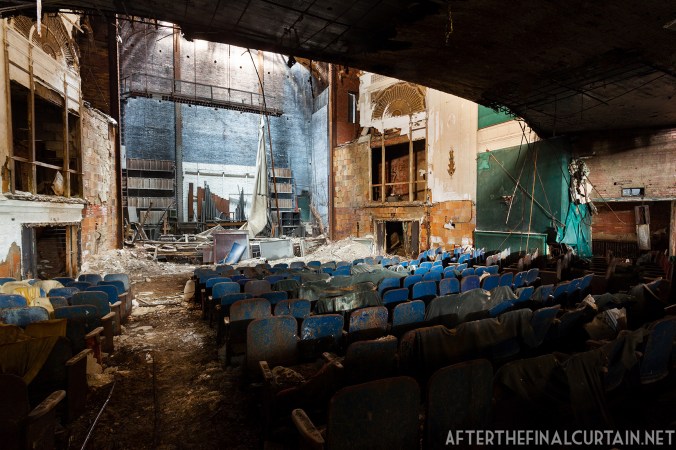
View of the auditorium from the balcony.
The Kenosha is one of the 22 theaters in my new book “After the Final Curtain: The Fall of the American Movie Theater.” Find out more here.

View of the auditorium from the side of the balcony.
The Kenosha Theatre opened on September 1st, 1927. It was designed by Larry P. Larson, an architect from the mid-western United States. The theater cost $750,000 ($10,220,301 when adjusted for inflation) and was financed by United Studios of Chicago. It was commissioned by Carl Laemmle, a Wisconsin native and one of the founders of Universal Studios. The 2300-seat theater was built to resemble the Alcazar castle in Segovia, Spain, which is rumored to be the inspiration behind Cinderella’s Castle at Walt Disney World.

Much of the blue ceiling was destroyed when the roof was replaced in the mid-1990s.
An atmospheric theater, the auditorium ceiling was painted a dark navy blue and covered with lights that were meant to look like stars. This gave patrons the illusion that they were sitting in a courtyard under the night sky while watching a film. Larson took it a step further than most of his contemporaries when it came to the layout of the ‘stars’ and arranged them with data from the department of astronomy at the University of Wisconsin.
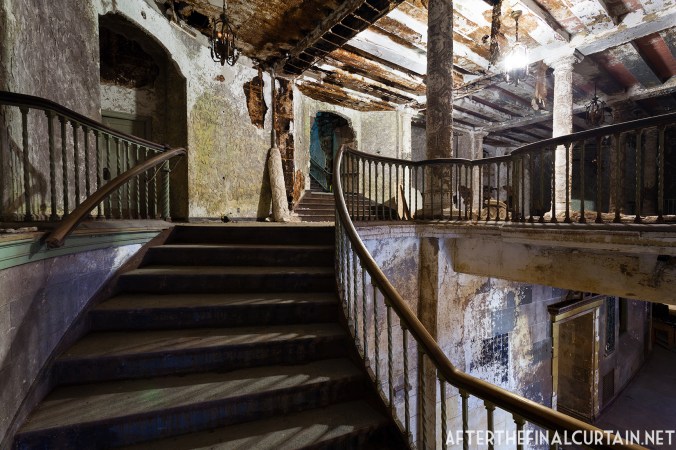
Lobby staircase leading to the balcony.
Like many early 20th century theaters, the Kenosha opened as a vaudeville and silent film house. The opening program included a vaudeville act called “Dear Little Rebel” and a silent film, “The Irresistible Lover”. The Kenosha began showing ‘talking pictures’ when a Vitaphone system was installed in February 1927. Vitaphone was the only commercially successful sound-on-disc system for showing motion pictures with sound. The sound was on phonograph or vinyl records and was synced to the film by special turntables attached to the projectors. Like other theaters of this era, the Kenosha often held contests and giveaways to encourage customers to return. In July of 1928 the theater offered free airplane flights to its patrons. You could sign up to take a free flight with a licensed pilot as long as you saw a film at the theater.
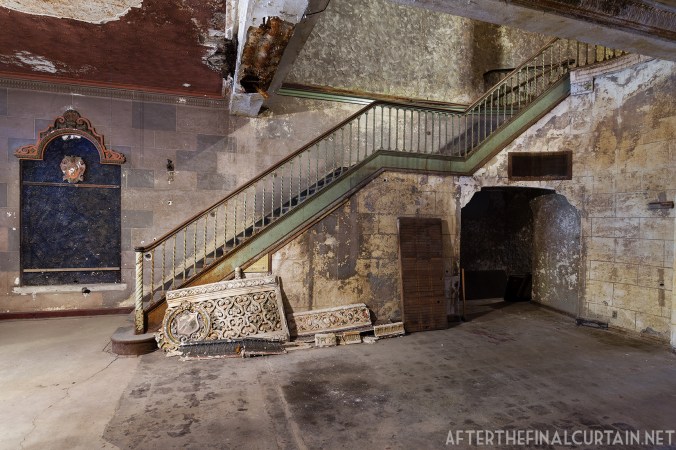
Some fallen pieces of plaster are being stored in the theater’s lobby so they can be used in the eventual restoration.
On December 18, 1928 eight men broke into the Kenosha Theatre, tied up the night watchman and cracked open the safe in the office, stealing $1,022 in cash and $720 in gift-ticket books. Alexander Dotz, the night watchman, confessed the following day that the robbery was an ‘inside job’ and that he planned the heist with his co-conspirators at a roadhouse the day before took place. He also revealed that his brother, a police officer, who had watched the robbery from the balcony, was planning on arresting the men but chickened out at the last minute. Both brothers testified in court that they had been forced to participate in the robbery due to repeated threats from the ringleader, Angelo Tarello. The Dotz Brothers were each sentenced to 16-20 years in the Green Bay Reformatory.

View of the auditorium from the rear of the balcony.
Warner Bros, who took over the theater in 1929, closed the Kenosha Theatre in March of 1933 along with six other theaters in the area. Sol J. Hankin, general manager for Warner Bros is quoted as saying, “We may keep the theaters closed for a year, maybe less, maybe more, maybe forever. General economic conditions are the chief cause for their closing, but I can say that we do not believe there was the proper amount of cooperation from union labor”. Hankin cited that motion picture operators refused a reduction in salary that other theater employees had received. The Kenosha was reopened the following year after it was acquired by Standard Theatres, Inc.

A close up of the theater’s proscenium arch.
Many Hollywood stars performed live at the Kenosha, including Frank Sinatra, Bing Crosby, Nat King Cole, Lawrence Welk and the Three Stooges. It closed on April 21, 1963, 36 years after it opened. Standard Theatres Inc. sold the theater with a stipulation in the deed that it could not be used as a theater for 30 years. Standard also owned the Lake Theatre in Kenosha and did not want competition. It was later used as a warehouse and a flea market before being closed permanently. Due to years of neglect, the roof leaked badly and much of the interior was damaged by the water exposure.
In 1983 the theater was purchased by Kenosha Theatre Development. The group repaired the storefronts and the apartments attached to the building to help generate funds towards restoration of the theater. In the mid-1990s a new roof was installed. This had the unfortunate effect of destroying most of the ‘starlit’ ceiling, but it was necessary to prevent further water damage. Debris from the roof covered the main floor and it took volunteers three years to remove it all. It’s estimated that the theater will cost $24 million to restore.
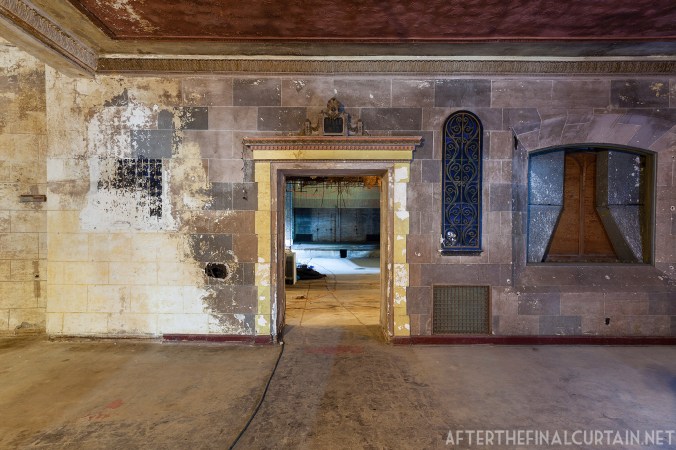
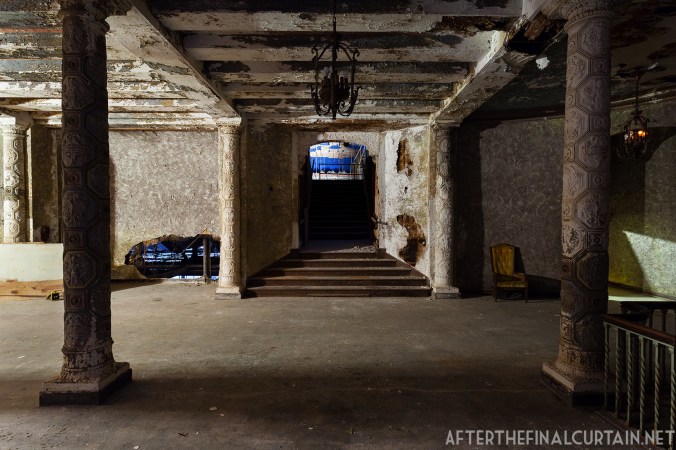
Entryway to the auditorium from the lobby.


The main level of the Lawndale Theatre.
When the Lawndale Theater of North Lawndale, IL closed permanently in the early 2000s, it had been in use primarily as a church. This end to the theater very much resembles its beginning — after a series of architectural control changes, it is generally believed that the design responsibilities finally fell to William P. Whitney, a local architect known mostly for designing churches. However, there is no hard evidence for Whitney’s involvement in the project. The Lawndale’s resemblance to Whitney’s Symphony Theater in Chicago suggests his influence on the Lawndale’s design.
Continue reading
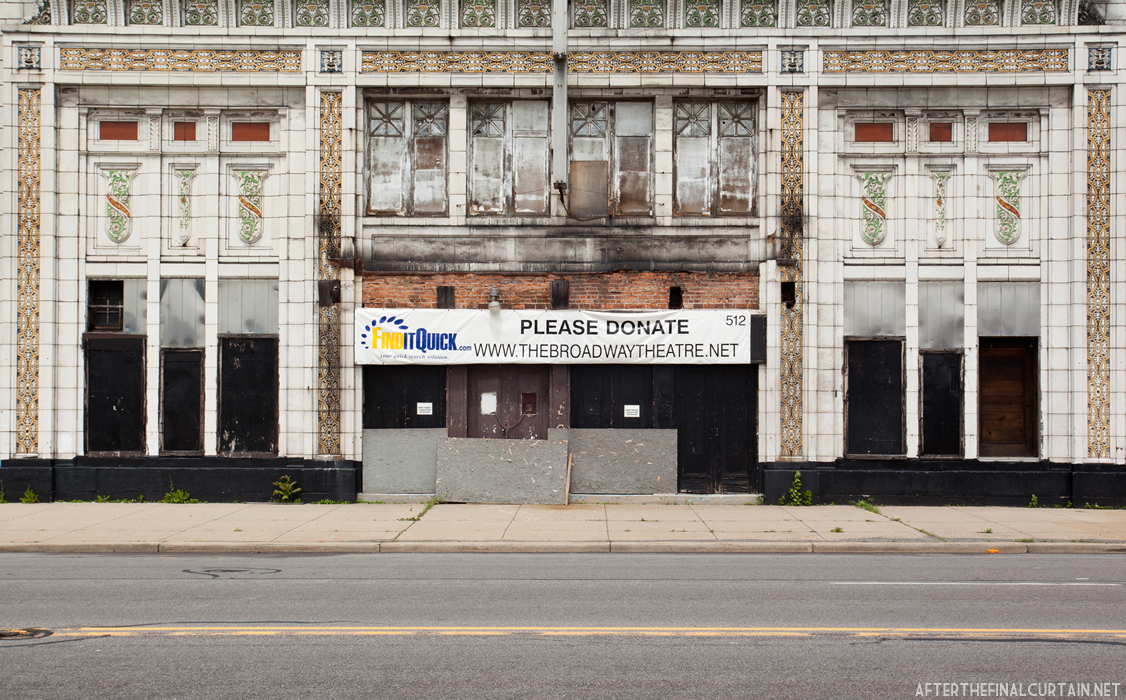
The front of the Sattler Theatre
The Sattler Theatre opened in 1914 and was built on a site that had been used for other theaters in the past. The Sattler Theatre was comissioned by John G. Sattler, the founder of Sattler’s, a local Buffalo department store. It was designed by architect Henry L. Span, who designed many of Buffalo’s theaters, including the North Park Theatre, which is still in use. Continue reading
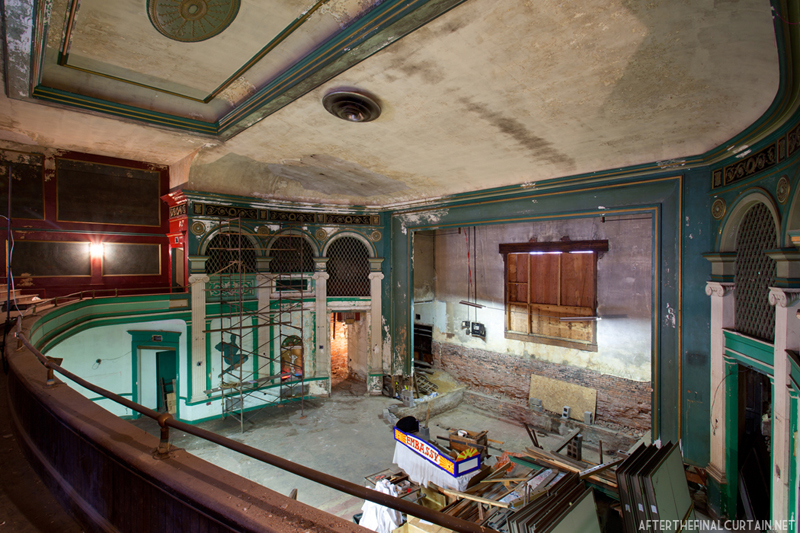
View of the Embassy Theatre from the balcony
The Embassy Theatre in Lewistown, PA opened on Monday, October 17, 1927. Before the Embassy was built the National Theatre stood in the same location and was partially demolished in early 1927. The Embassy was designed by A. D. Hill of the Philadelphia firm H.C. Hodgens and A.D. Hill. The firm is known for its 1928 design of The Tower Theater in Upper Darby, PA, which is still in use. The Embassy was lavishly decorated and referred to as “the Radio City Music Hall” of Central Pennsylvania.
I’m on a roadtrip photographing theaters across the Midwest — check back for updates next week!


The interior of the Center Theatre
The Center Theatre is an art deco theater that was designed by architect Abraham H. Okun and built in 1938. Okun was a prominent local architect at the time, known for many other buildings in the county (such as the Ohave Shalom Synagogue). Located in the hamlet of Woodbourne, NY in the Borscht Belt (an area of the Catskills known for being a popular vacation spot for Jewish people from the New York metropolitan area), it was the first air-conditioned theater in Sullivan county. Continue reading

View from the balcony of the Keiths Theatre
The RKO Keith’s Theatre, originally called the Keith-Albee Theatre, opened Christmas Day, 1928 at 1:00 PM. Located in Flushing, Queens, it was designed by Thomas W. Lamb, an architect known for his theater designs, which can also be seen in New York’s Ziegfeld Theatre and Proctor’s 58th Street (which was built simultaneously with the Keith’s).
I’ve decided to expand my post on the Kings Theatre into 4-5 parts using some excerpts from my book, Kings Theatre; The Rise, Fall and Rebirth of Brooklyn’s Wonder Theatre. Find out more about the book here. This original post will remain, and the first part in the new series can be viewed here.
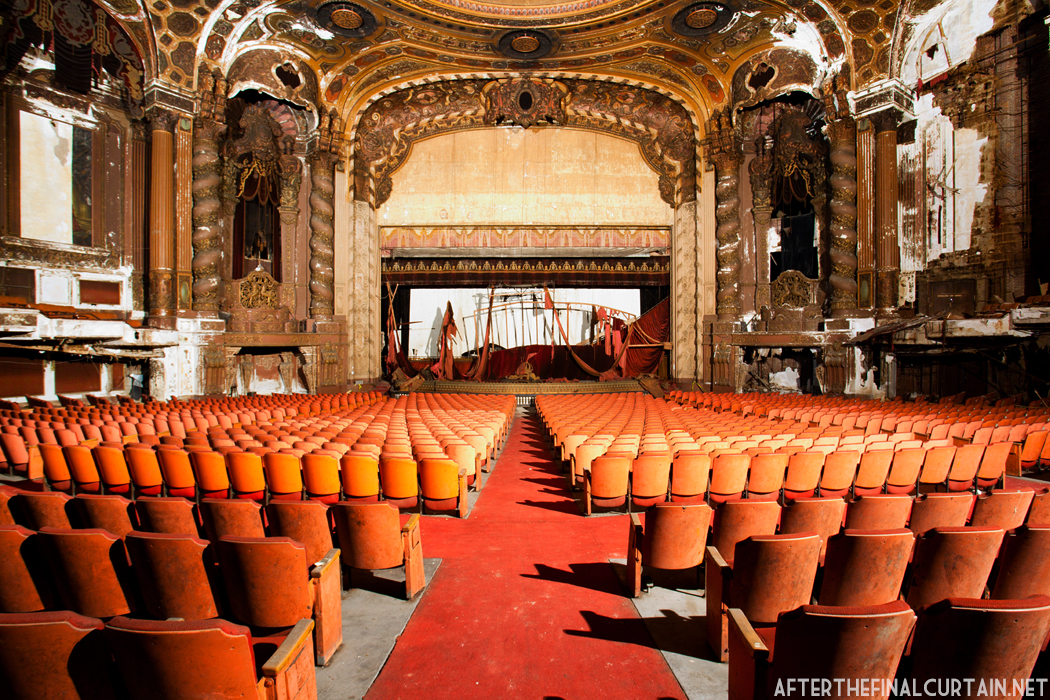
View of the auditorium from the center of the main level.
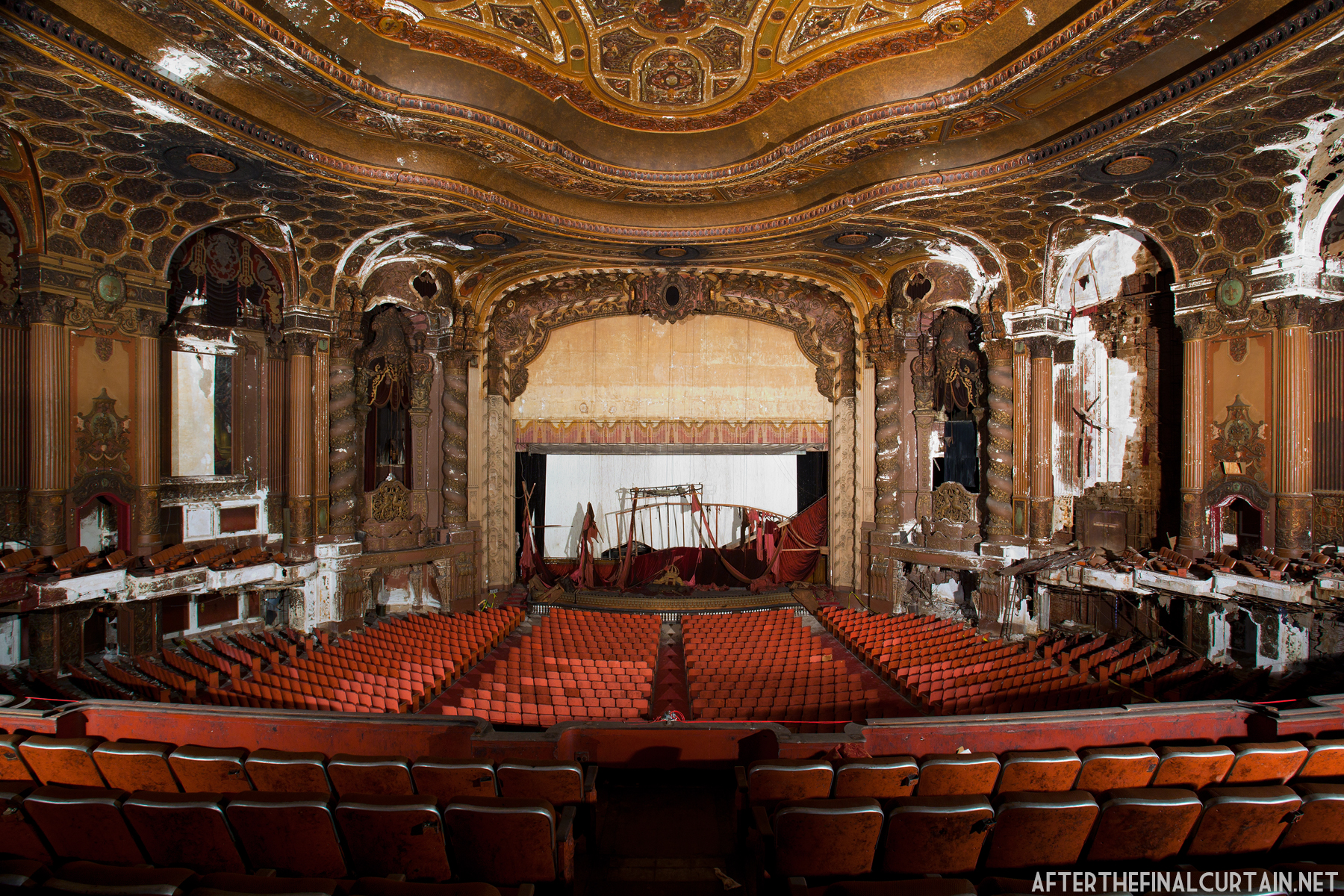
Loew’s Kings Theatre opened on September 7, 1929 in Brooklyn, NY, and was designed by the architectural firm of Rapp and Rapp (also known for the Paramount Theater in Times Square) and decorated by Harold W. Rambush. It was operated by the Loew’s theaters chain, and, along with the Loew’s Jersey Theatre, Loew’s Paradise Theatre, the Loew’s Valencia Theatre and the Loew’s 175th Street Theatre, it was one of the five “Loew’s Wonder Theaters” in the New York metropolitan area.
 After the Final Curtain