February Lecture and Exhibition

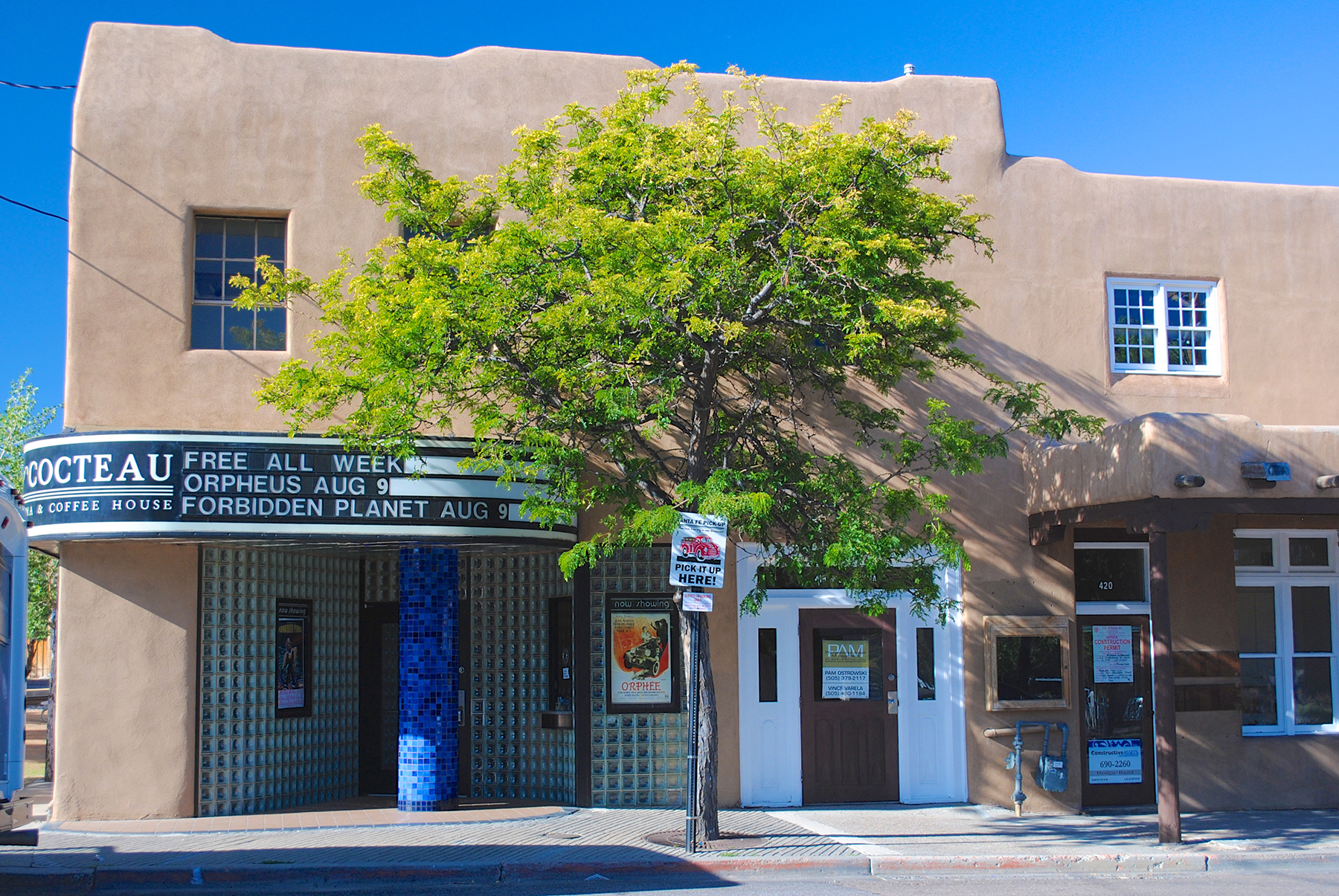
The exterior of the Jean Cocteau Theatre. Photo: Suzanne Kessler

The exterior of the Jean Cocteau Theatre. Photo: Suzanne Kessler

I’m very excited to announce that I’ll be giving a lecture on abandoned theaters on February 17 at the Jean-Cocteau Theatre in Santa Fe, New Mexico. A selection of my images will be exhibited at the theater’s gallery space until March 17.

Below is a brief history of the theater from it’s website:

“The Jean Cocteau Cinema opened as the Collective Fantasy Cinema in 1976. Brent Kliewer, programmer for the Collective Fantasy, bought the theater in 1983 and renamed it the Jean Cocteau in reverence to the French filmmaker and artist. Kliewer, who remains the programmer for The Screen in Santa Fe, sold it to Blue Pearl Corporation in 1986.

Trans-Lux Corporation purchased the venue in 1989 and ran the theatre, which has a single screen and 120 seats, until closing it in April of 2006. The state of New Mexico then leased offices above the theater and the theater itself as the home for the state film office, with plans to make the theatre auditorium into a film museum. Funding for that project never came to fruition and the film office left the theater and offices in 2010. Trans-Lux still owned the theater, which stood vacant until it was purchased by author George R R Martin in 2013, who reopened it on August 9, 2013.

The theater shows film on 35 mm and digitally as well, combining the best of the old with the best of the new, including Santa Fe’s only ‘Midnight Movie’ series, with a different title being offered each weekend at 11 PM.”

For more information on the space check out the Jean Cocteau website and their Facebook page.

Lyric Fine Arts Theatre

The Lyric is one of the 22 theaters in my new book “After the Final Curtain: The Fall of the American Movie Theater.” Find out more here.

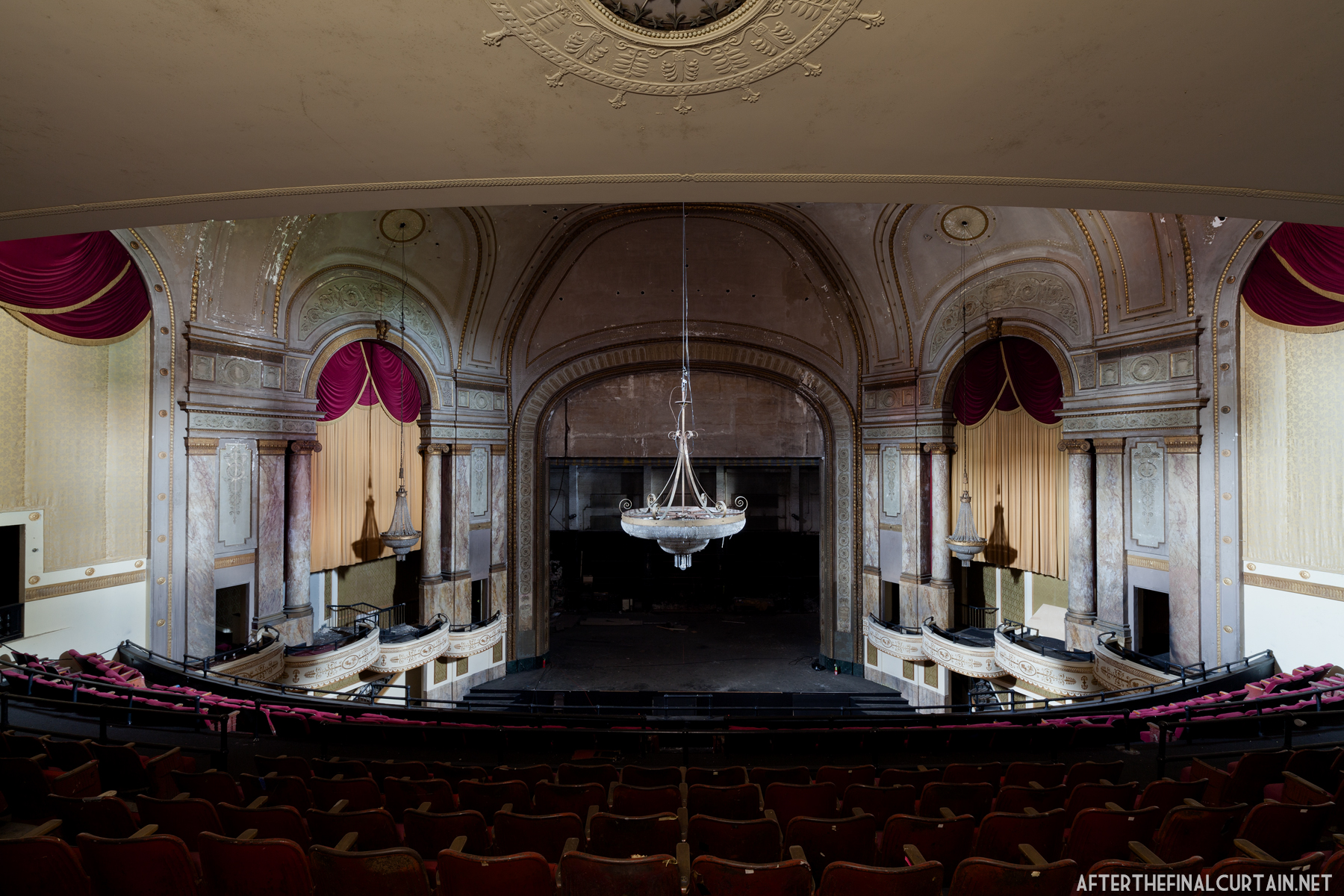
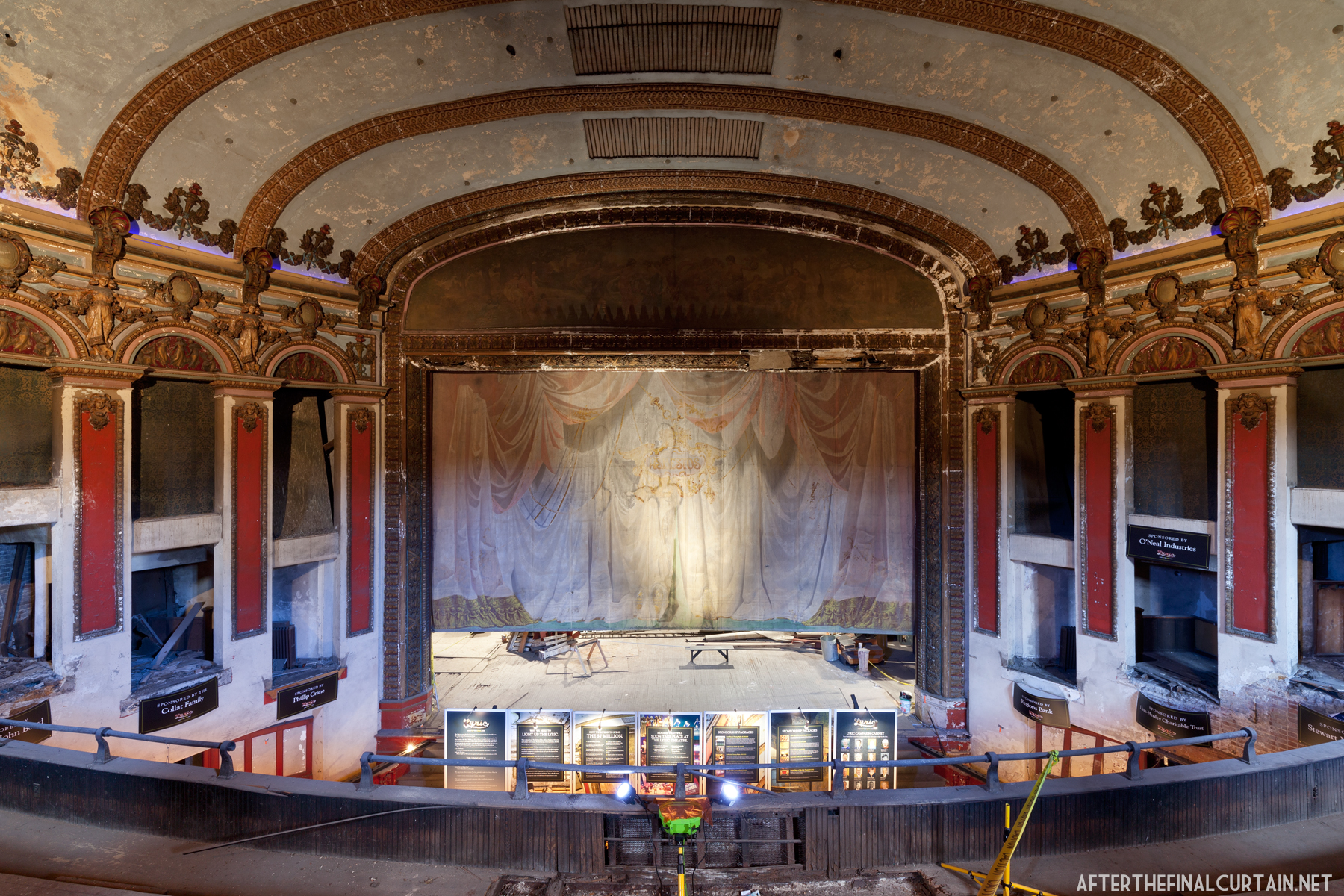
View of the auditorium from the mezzanine.

View of the auditorium from the mezzanine.

The Lyric Fine Arts Theatre opened on January 14, 1914 in Birmingham, Alabama. It was built for Louis V. Clark by C.K Howell, the architect of many theaters on the B.F. Keith vaudeville circuit in the South. Clark leased the theater to Jake Wells who owned and managed a number of theaters, including the nearby Bijou Theatre. The Lyric’s opening was delayed due to a legal dispute with the Orpheum Theatre over where shows on the B.F. Keith’s vaudeville circuit would play.

Continue reading

Holiday Print Sale

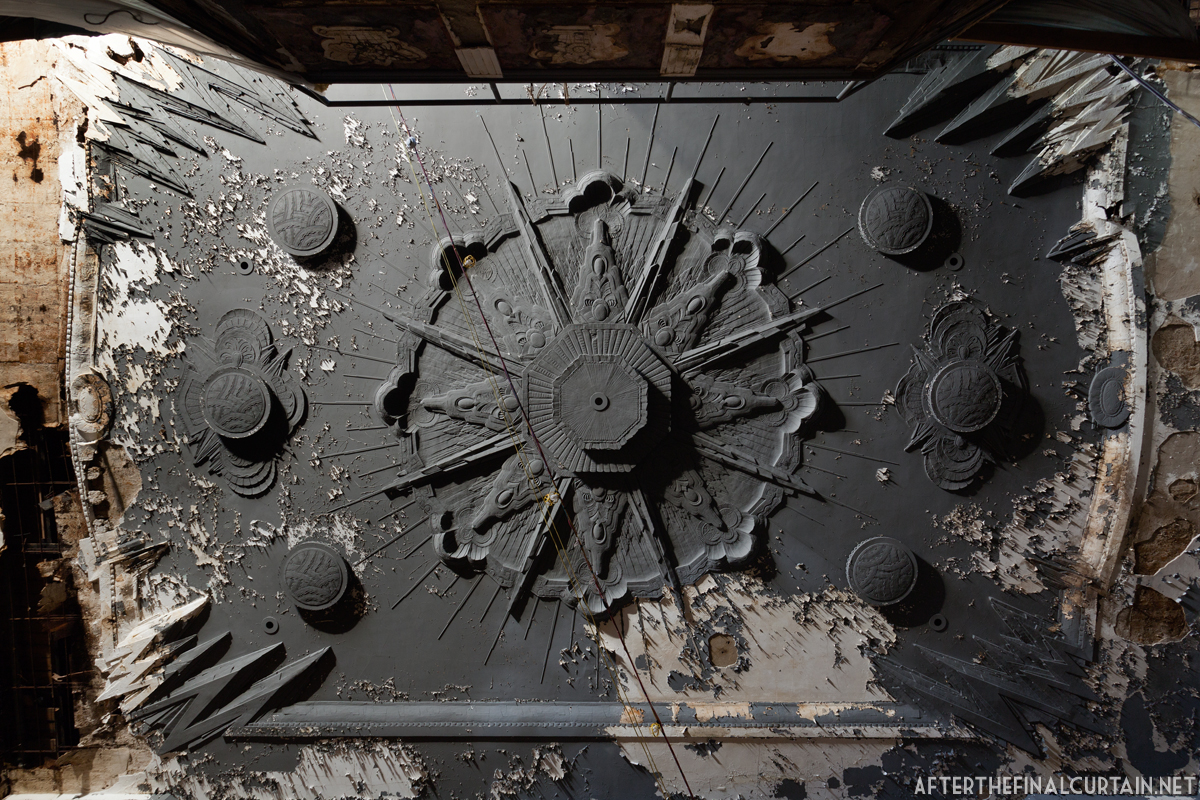
Ceiling, Uptown Theatre Philadelphia, PA

Ceiling, Uptown Theatre Philadelphia, PA

The annual Holiday print sale is here! Beginning December 9 and ending on December 24, all prints will be 20% off. Place an order by December 19 to get it in time for Christmas!

Quite a few of the images haven’t been offered as prints before so check out the new print page and enter the coupon code holidaysale2013 to get 20% off your order.

If there’s an image you’d like a print of but do not see it on the page,  send me an email and I’ll add it for you.

Snapshot: Empress Theatre

Post 3 in the Snapshot Series  – Occasionally in my travels I come across a theater that I can’t find a lot of information on, or that I only have a chance to photograph for an hour or two. They’re still beautiful and fascinating, so they definitely have a place on After the Final Curtain

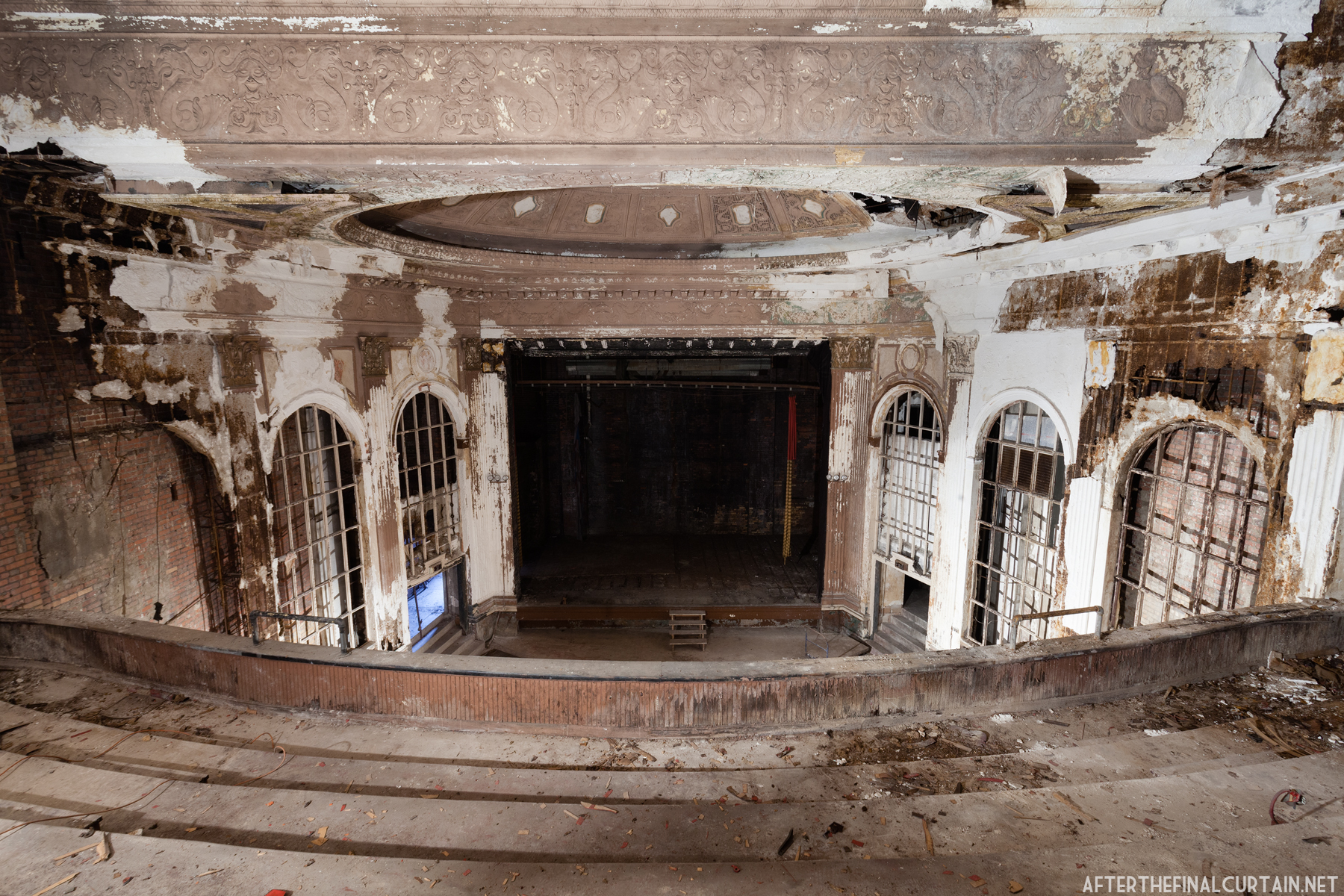
The remains of the Empress Theatre's proscenium arch.

The remains of the Empress Theatre’s proscenium arch.

The Empress Theatre opened in 1927 in the Crown Heights neighborhood of Brooklyn, New York. The 1,595 seat theater was built by architect Charles A. Sandblom, who is also known for the Gramercy Theater in Manhattan. Originally part of the Century Circuit, the theater became part of the RKO circuit in 1929.

Continue reading

Loew’s State Theatre (State Palace Theatre)

The State is one of the 22 theaters in my new book “After the Final Curtain: The Fall of the American Movie Theater.” Find out more here.

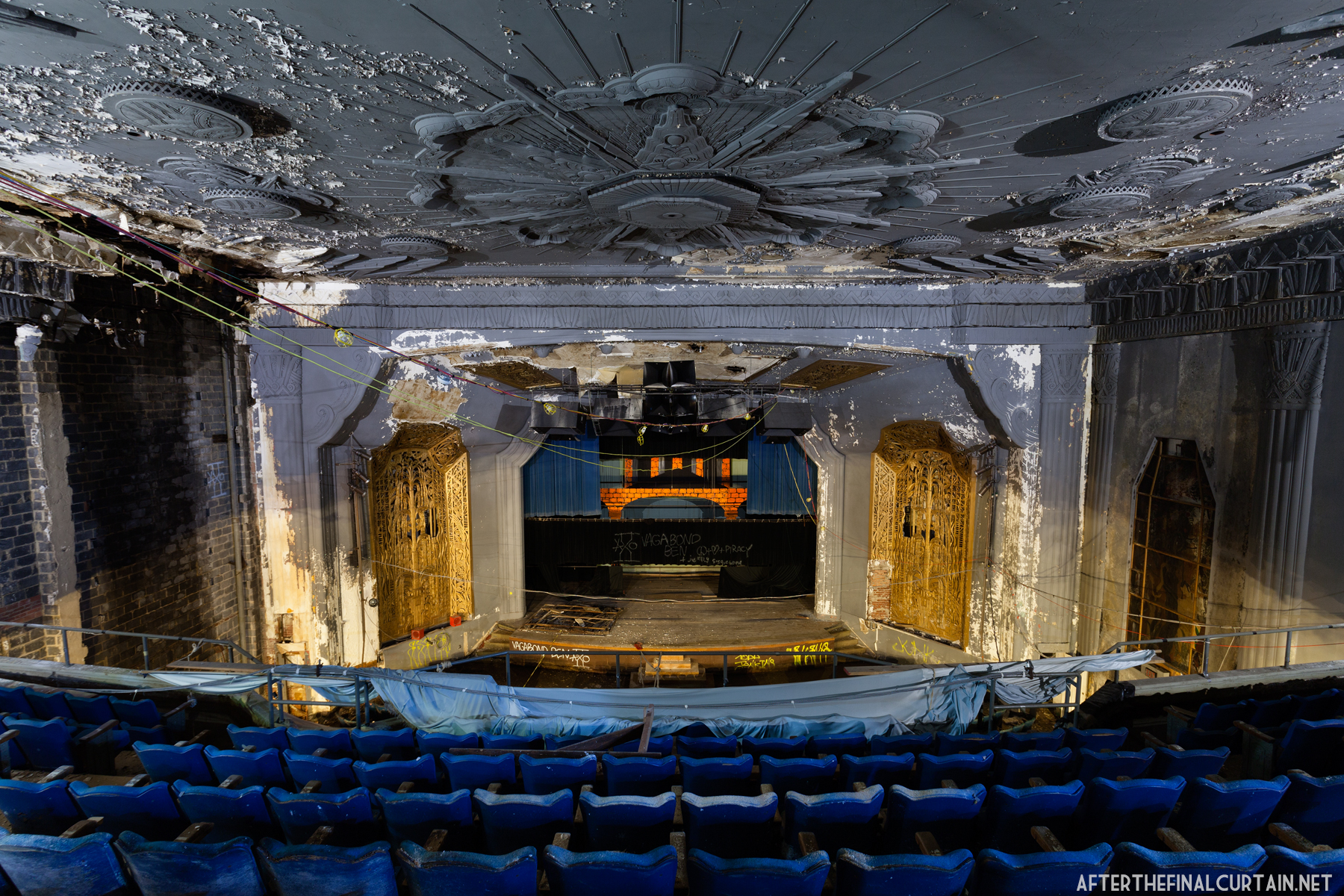
View of the auditorium from the top balcony.

View of the auditorium from the top balcony.

The Loew’s State Theatre opened on April 3, 1926 in New Orleans, Louisiana. It was built by renowned theater architect Thomas W. Lamb for the Loew’s Theatre Corporation. The 3,335 seat theater cost $1.5 million ($20 million adjusted to current value) to build. At the time of the opening, the “New Orleans Item” proclaimed the State, “the greatest playhouse south of Philadelphia and west of Chicago.”

Continue reading

Snapshot: Metropolitan Opera House

Post 2 in the Snapshot Series  – Occasionally in my travels I come across a theater that I can’t find a lot of information on, or that I only have a chance to photograph for an hour or two. They’re still beautiful and fascinating, so they definitely have a place on After the Final Curtain.

View of the auditorium from the side of the upper balcony.

View of the auditorium from the side of the upper balcony.

Philadelphia’s Metropolitan Opera House opened on November 17, 1908 as the Philadelphia Opera House. The 3,482 seat theater was built by architect William H. McElfatrick for Oscar Hammerstein, the grandfather of Oscar Hammerstein II, the famous musical theater lyricist. However, Hammerstein fell into debt and was forced to sell the opera house to one of his competitors, the Metropolitan Opera of New York City, after only two years.

Continue reading

And Now for Something (kind of) Different

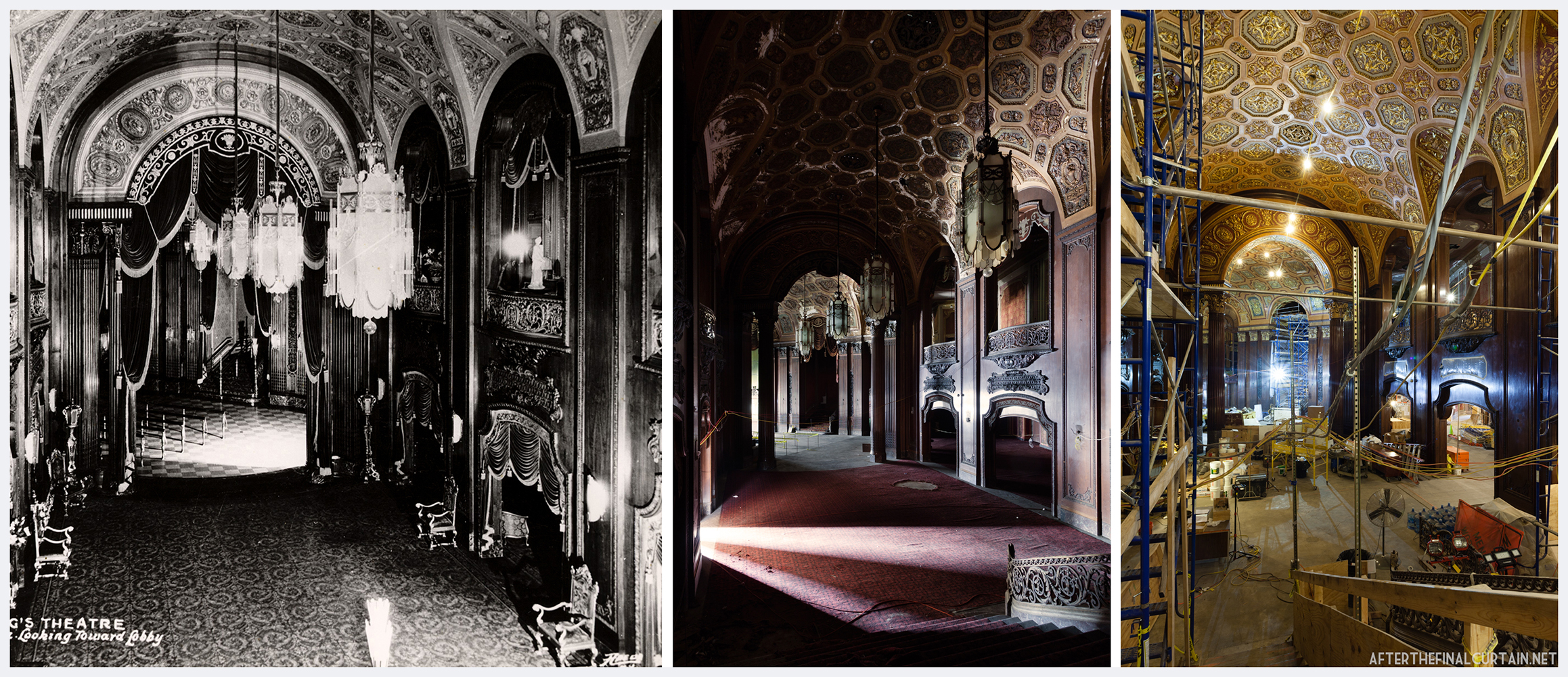
B&W Image from the Loew’s Collection, American Theatre Architecture Archive, Theatre Historical Society of America

B&W Image from the Loew’s Collection, American Theatre Architecture Archive, Theatre Historical Society of America

I’m currently working on something I’m very excited about, but can’t announce just yet. I still want to give you all a hint though! 

The photos in the triptych above are of the Loew’s Kings Theatre lobby when the theater was open, 30 years after it had been closed, and six months into the restoration.

Keep an eye out for more details soon!


© Matthew Lambros and After the Final Curtain, 2013. Unauthorized use and/or duplication of this material without express and written permission from this blog’s author and/or owner is strictly prohibited. Excerpts and links may be used, provided that full and clear credit is given to Matthew Lambros and After the Final Curtain with appropriate and specific direction to the original content.

End of Summer Print Sale

Embassy Theatre Port Chester, NY

Embassy Theatre Port Chester, NY

Summer is coming to an end, and since I spent quite a bit of my summer photographing more theaters for After the Final Curtain, it’s time for another “From the Balcony” print sale. The following prints will be $10 – $25 dollars off from now until September 21. If you buy all five, you’ll receive an additional 10% discount!

Loew's State Theatre New Orleans, LA

Loew’s State Theatre New Orleans, LA

Prints are available in editions of five in the following sizes:

The available sizes are:

8″×12″ – $50.00

12″x18″ – $75.00

16″x24″ – $100.00

20″x30″ – $150.00

24″x36″ – $200.00

In addition all the images on the Prints page will be 25% off until September 21.

Images are printed on Kodak Professional Endura Supra paper.

Please e-mail me if interested. Payment is accepted via Paypal, Amazon Payments or credit card. Prints are shipped via USPS or FedEx.

Uptown Theatre Philadelphia, PA

Uptown Theatre Philadelphia, PA

Jayhawk Theatre, Topeka, KS

Jayhawk Theatre, Topeka, KS

Lyric Fine Arts Theatre Birmingham, AL

Lyric Fine Arts Theatre Birmingham, AL

The Jayhawk State Theatre of Kansas

The Jayhawk is one of the 22 theaters in my new book “After the Final Curtain: The Fall of the American Movie Theater.” Find out more here.

View of the auditorium from the balcony.

View of the auditorium from the balcony.

The Jayhawk Theatre opened in August of 1926 in Topeka, Kansas.  It was built by local architect Thomas W. Williamson, and designed by the Boller Brothers. The Boller Bros. were known for designing hundreds of theaters across the country, using the Jayhawk design as a prototype. In addition to the theater, the building contained a hotel and a commercial arcade that connected the two sections.

Continue reading

Grand Theatre Steubenville, Ohio

The Grand is one of the 22 theaters in my new book “After the Final Curtain: The Fall of the American Movie Theater.” Find out more here.

All of the seats have been recently removed due to the upcoming restoration.

All of the seats have been recently removed due to the upcoming restoration.

The Grand Theatre building was built in 1885 by German immigrant Jacob Griesinger, Sr. in Steubenville, Ohio.  It originally housed a saloon, restaurant and livery stables. In 1924, the building was taken over by Charles, Edward, Howard and William Biggio. The four brothers had the stables torn down and constructed the Grand Theatre auditorium in its place.

Continue reading