I knew I wanted to do something a little different for the 200th theater I photographed. I was speaking with a friend who went to school in upstate (real upstate, not just slightly north of NYC) and he asked “have you been to the one above the library in Marathon?” I hadn’t heard of it and was immediately intrigued. I found a few recent photos online and knew this would be perfect. Plus, it’s now the oldest theater I’ve photographed in the United States. As with most of my posts – it was originally posted on Patreon in August 2021. For expanded early posts, as well as video walkthroughs and other exclusive content you can become a patron at: https://www.patreon.com/afterthefinalcurtain
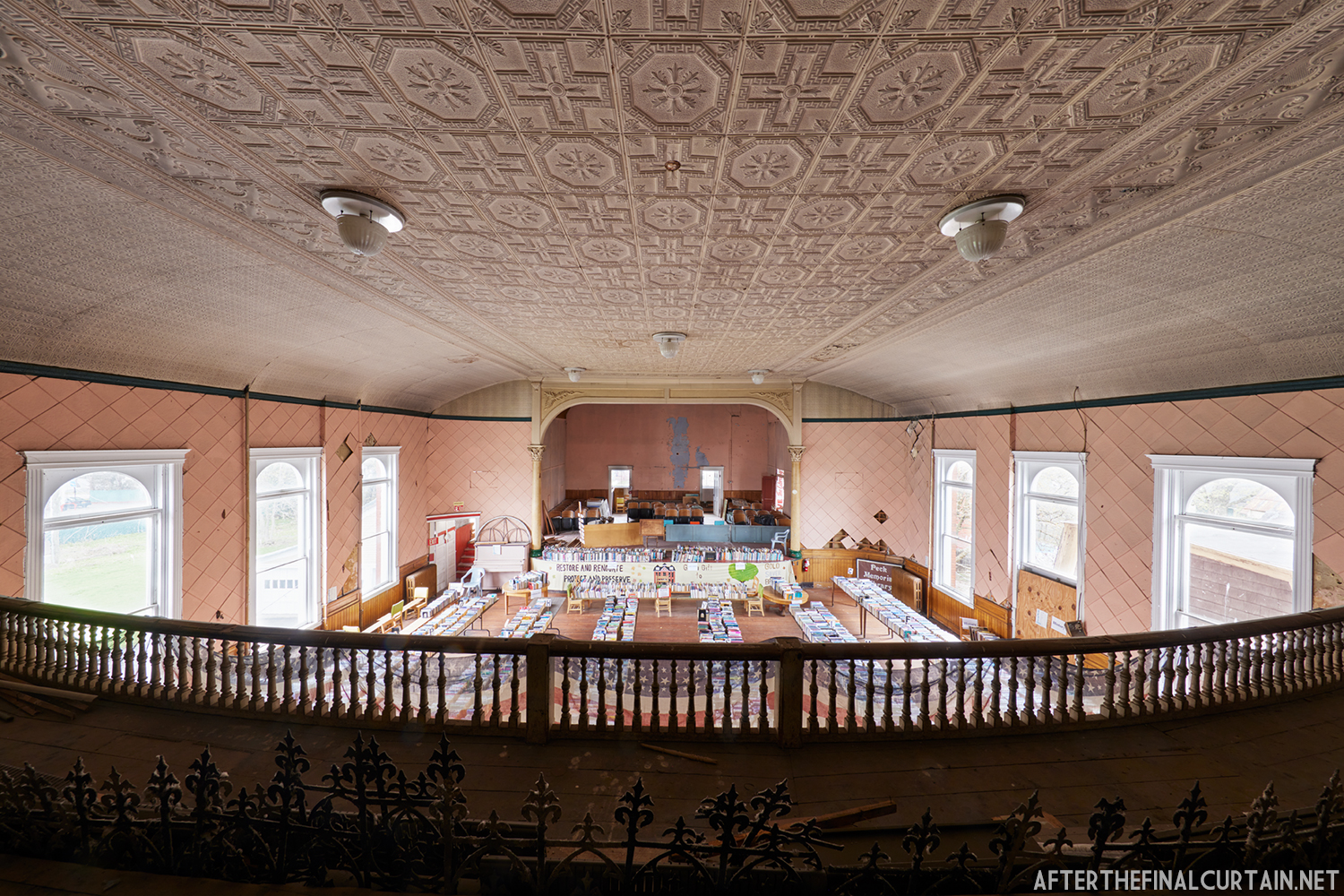
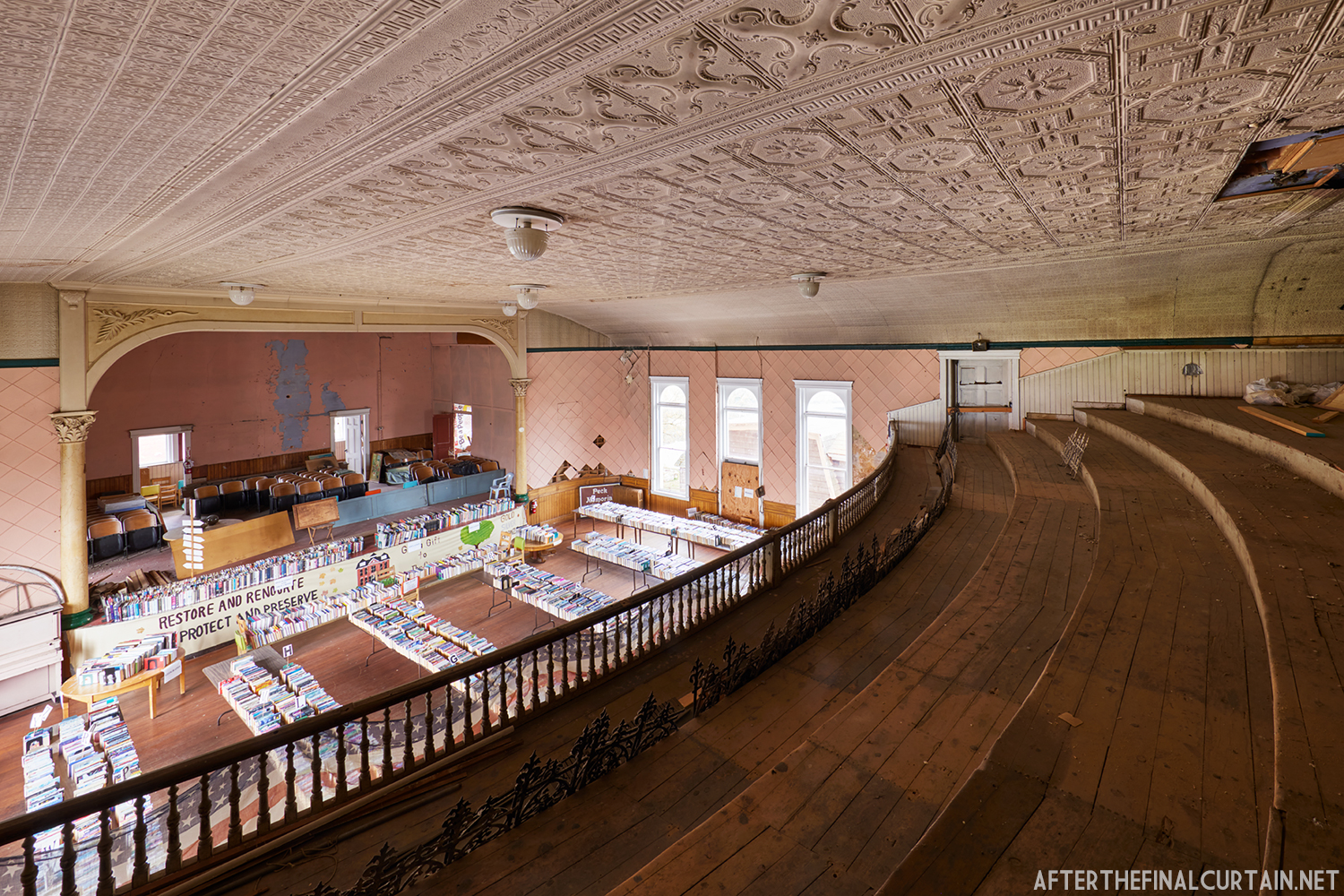
View of the auditorium from the balcony.
In January 1891, Mersena Peck, a native of Marathon, New York died. She left $20,000 ($584,217 when adjusted for inflation) in trust for the creation of a public library in Marathon and named three town residents as trustees. They began working to carry out her wishes and were well underway by 1893. However, before construction could start, a group of 125 citizens petitioned that the building include a space for public entertainment. Architect Miles F. Howe adjusted the blueprints to add a 600 seat opera house on the second floor of the building.
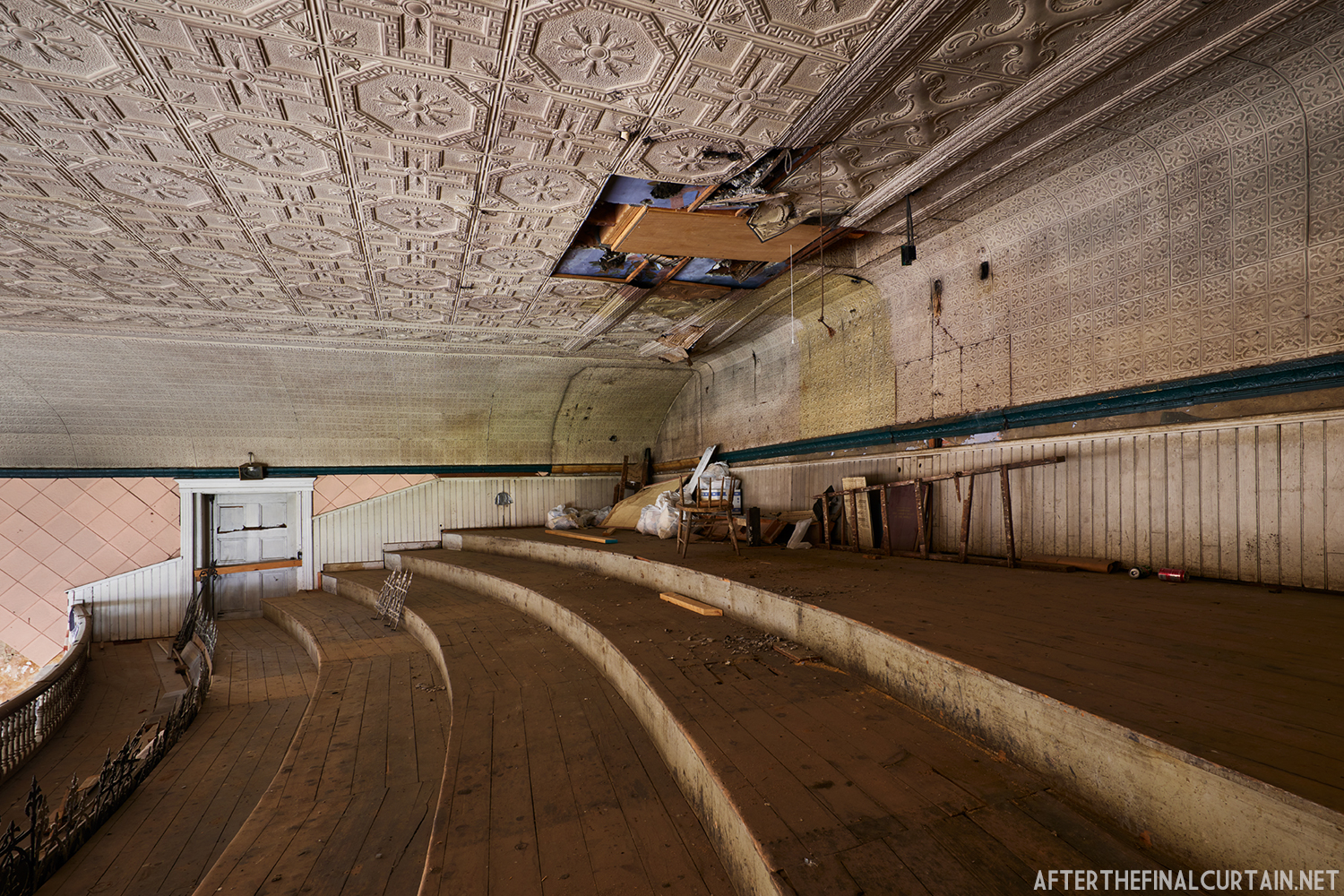
The Marathon Library and Opera House opened on January 1, 1896. It began as a live performance space, hosting traveling performers before transitioning over to films in the early 1930s. The Library Opera House was renamed the Park Theatre and lasted as a movie theater until 1953. The auditorium is currently only used a few times a year to host a used book fair.
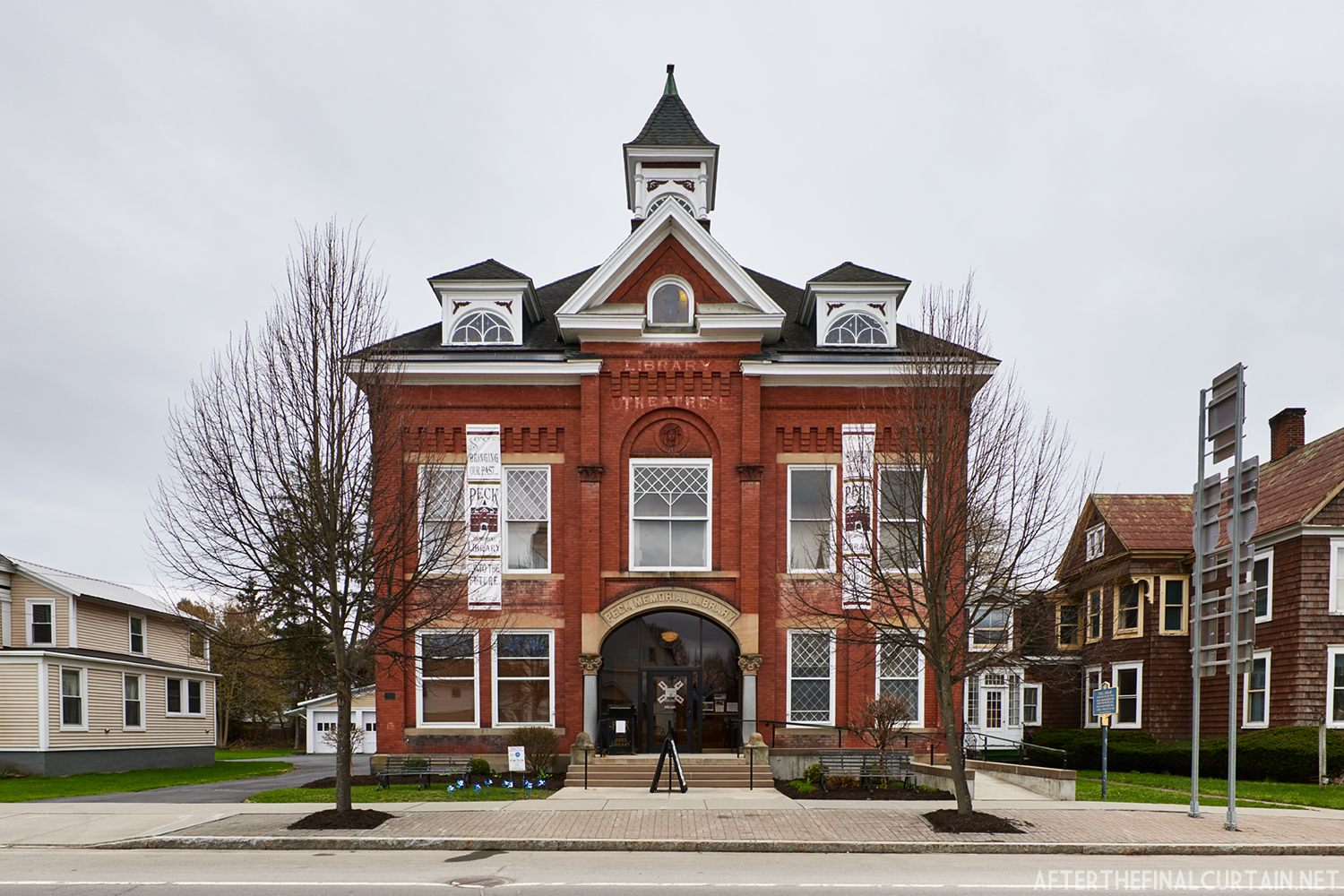
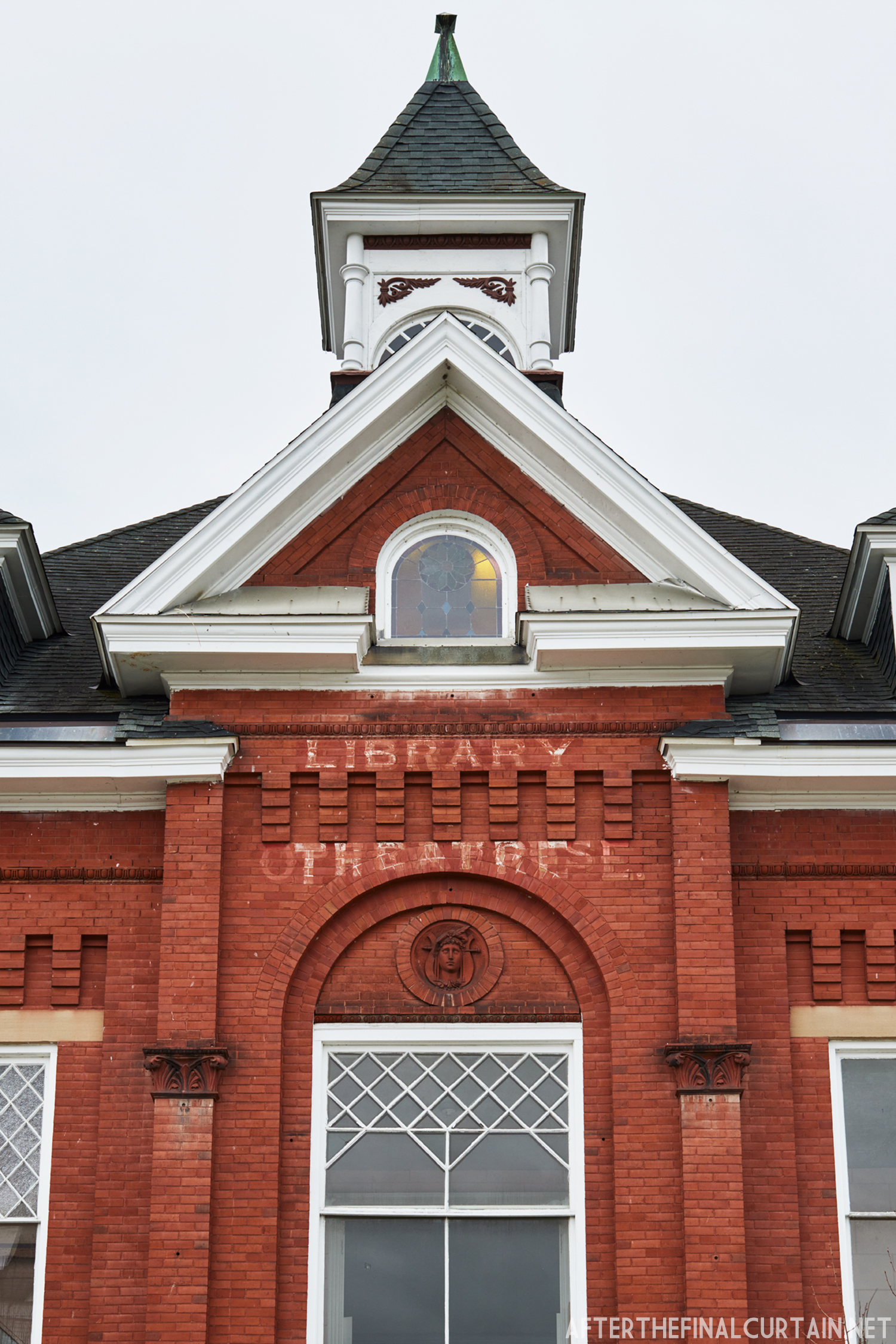
The exterior of the Marathon Library/Opera House.
In early 2020, the Marathon Public Library announced that the building needs close to $1 million in renovations. They’ve received $50,000 through their capital campaign but far from enough to be able to make the renovations needed to reopen the opera house.
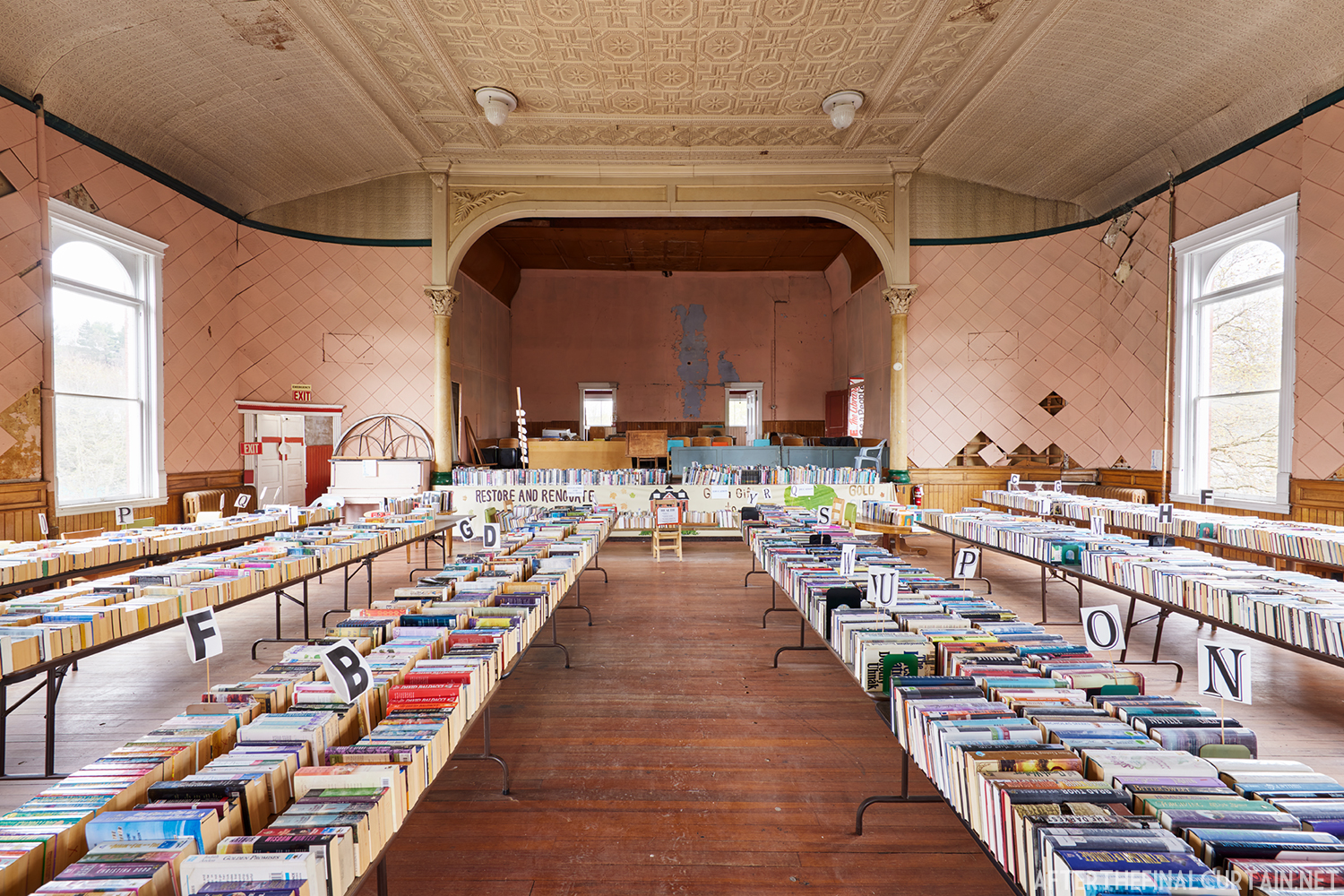
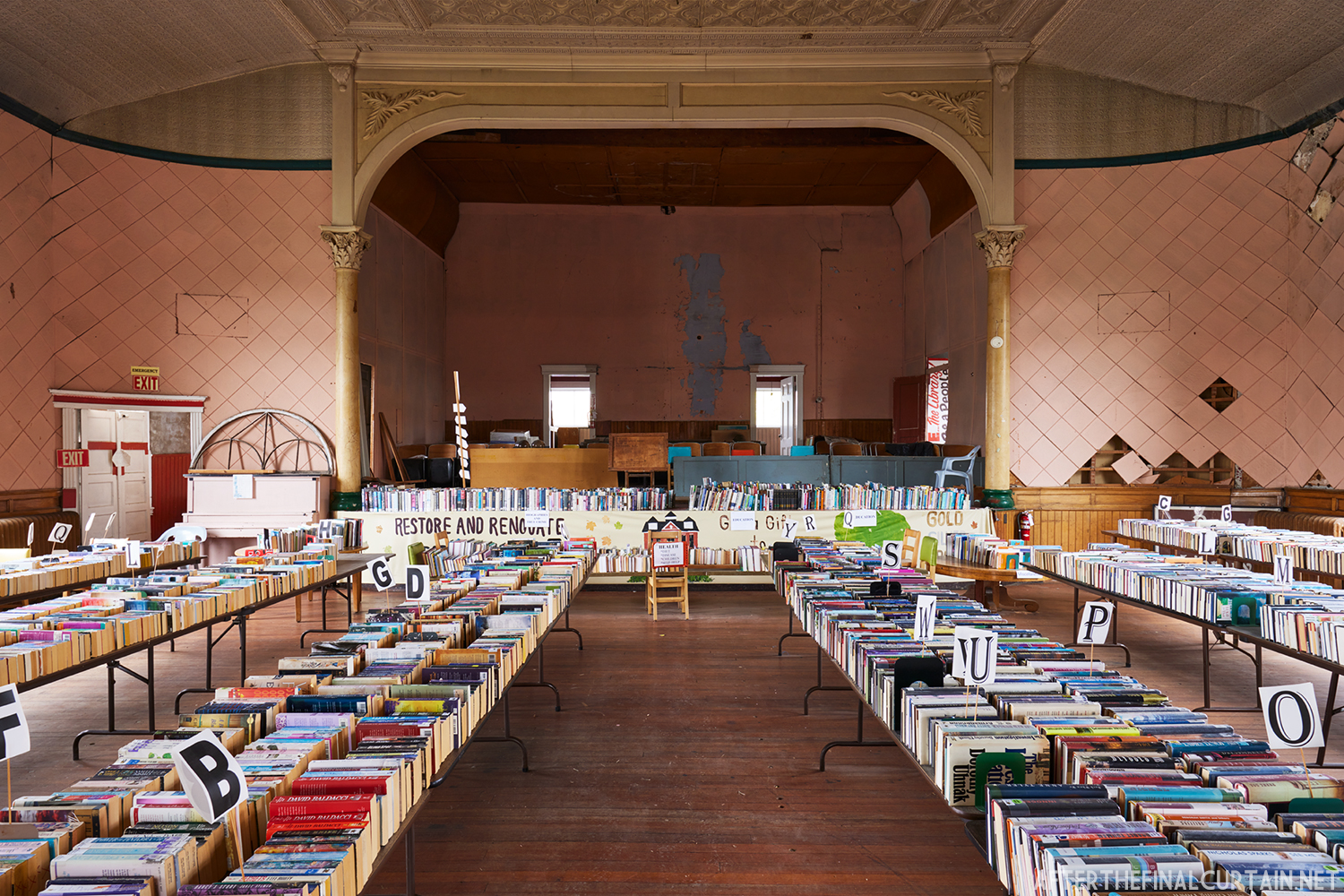
The orchestra level of the auditorium is used as a book fair.
 After the Final Curtain
Congrats
Beautiful! I live close to Marathon and will have to swing by and see this one day soon! Thanks for the post.
Amazing
Am a Marathon native. Underneath the tin ceiling are still the original frescos of cherubim encircling where once was a gas lut chandelier. Around the perimeter of the ceiling is a garland of roses, hopefully all to be revealed when tin ceiling is removed. One wonders if an electrified replica of the gas chandelier could be recreated. Actors from 1895 on scribbled their names in back area of stage where the dressing rooms were. We know that in 1901 Quo Vadis was performed their with one of the 8 traveling troupes of that play which arrived in town, surely via the passenger train complete with props and backdrops. Would be a great fundraiser to recreate that play with a pianist playing the music composed for its performance.