The Boulevard Theatre – Queens, NY

This was originally posted on After the Final Curtain’s Patreon in July 2023. For expanded early posts, as well as video walkthroughs and other exclusive content, you can become a patron at: https://www.patreon.com/afterthefinalcurtain

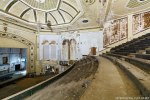
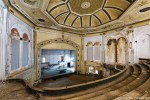
View of the auditorium from the balcony.

Located in the Jackson Heights neighborhood of Queens, NY, the Boulevard Theatre has a rich history that spans nearly a century. It first opened its doors on September 10, 1926, as one of three theaters built in Queens by the Grob & Knobel circuit with Herbert J. Krapp as architect. The other two were the Jackson Theatre and the Sunnyside Theatre.  It was the only one of the three that had large enough stage facilities to handle a musical or Broadway style play.

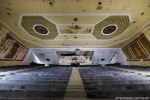
View of the auditorium from the stage during demolition.

The theater, with 1,839 seats, was designed to showcase shows that had recently closed on Broadway or were on trial before their official run. This made it a popular place for theater enthusiasts. In 1928, William Fox acquired the Grob & Knobel theaters, and Louis Werba managed the Boulevard Theatre. But due to the Depression, both Fox and Werba faced bankruptcy. As a result, the Boulevard Theatre became a double-feature movie house under Fox’s successor, Skouras Theatres. Skouras also took control of the Jackson Theatre and Sunnyside Theatre, which were later sold to Century Theatres.

After years as a live theater venue, the Boulevard switched formats and became a movie theater. In the 1960s, it was a first run movie theater.  A special screening of “Yours, Mine and Ours” starring Lucille Ball and Henry Fonda was shown at the theater in 1968 before its wide release.
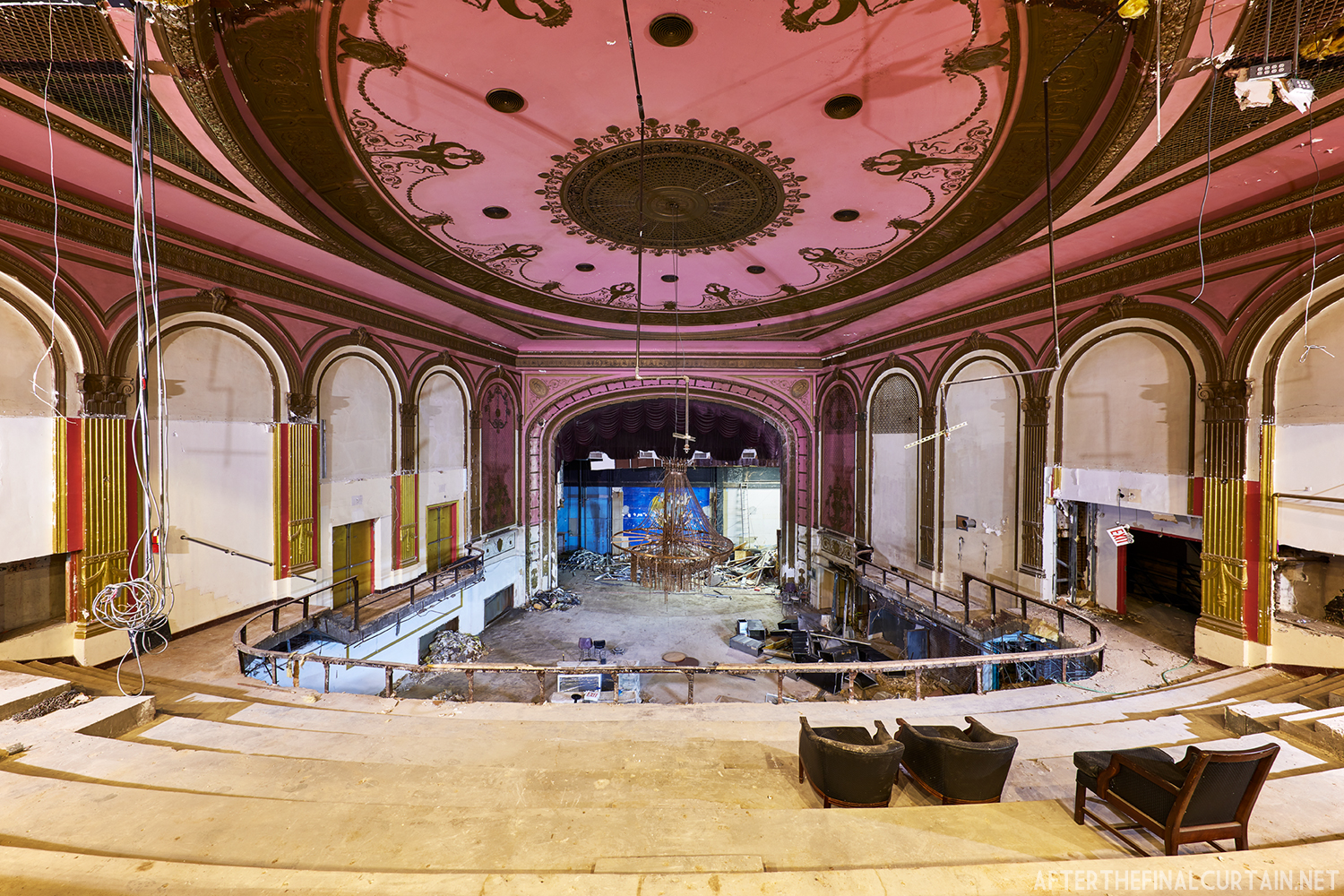
Triplexed in the 1970s, the Boulevard Theatre encountered difficulties because it was located in a residential area on Northern Boulevard, far from the 82nd Street shopping district around Roosevelt Avenue. This, combined with a decline in the neighborhood, led to the theater closing in the 1980s and its owner planned on demolishing it. However, this did not happen partially because of the community’s disapproval of his plan.

Eventually, the Boulevard Theatre was sold and transformed into the successful Natives Restaurant-Theatre, catering to Queens’ Hispanic community. The entrance was converted into a restaurant-bar, and the three auditoriums were used for various events. However, by 2016, it had turned into a restaurant/nightclub, which closed during the Covid-19 Pandemic. In early 2021, it was demolished, putting an end to its rich and storied history.

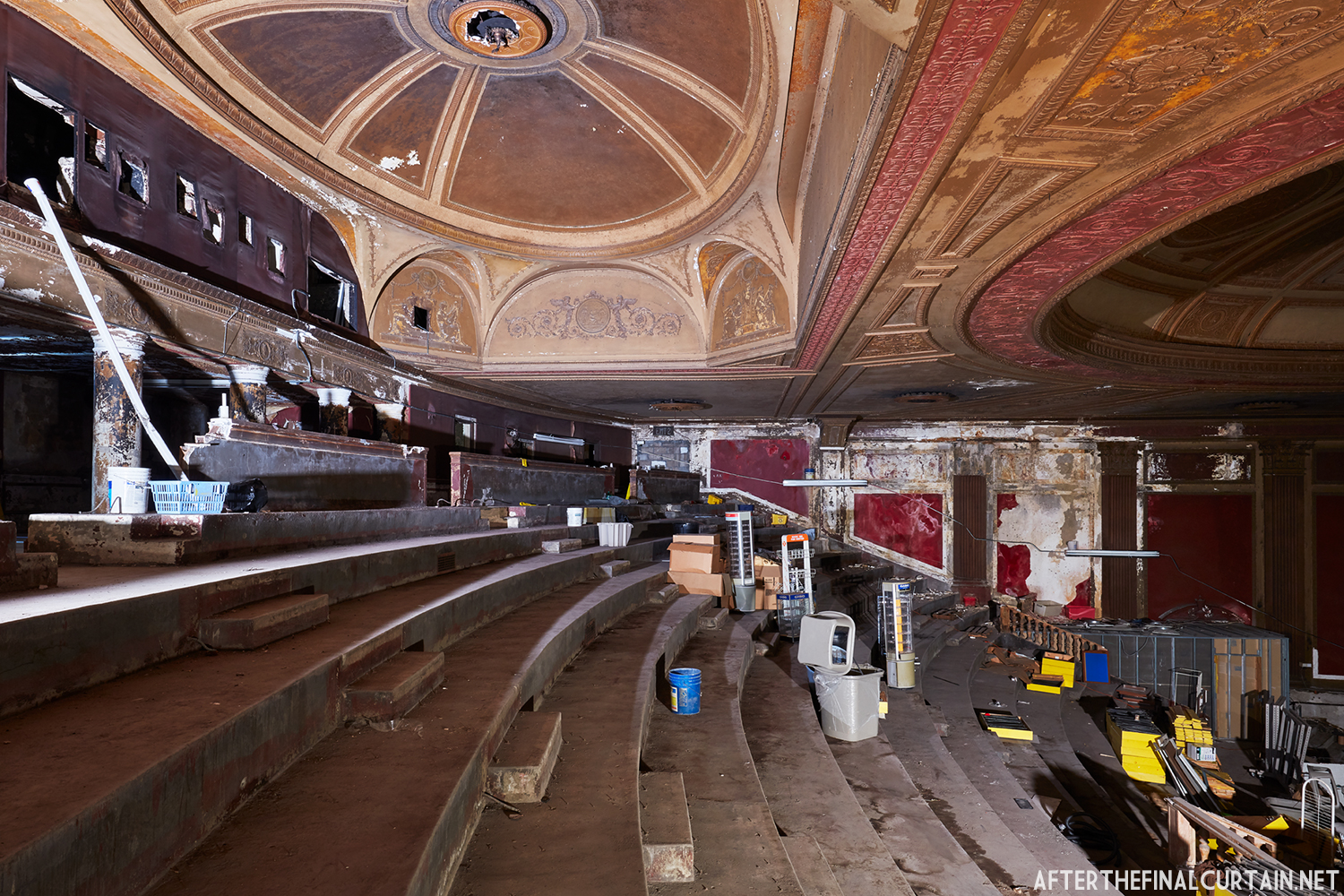
The remains of one of the stairways leading to the balcony.

RKO Madison Theatre – Queens, NY

This was originally posted on After the Final Curtain’s Patreon in May 2023. For expanded early posts, as well as video walkthroughs and other exclusive content, you can become a patron at: https://www.patreon.com/afterthefinalcurtain

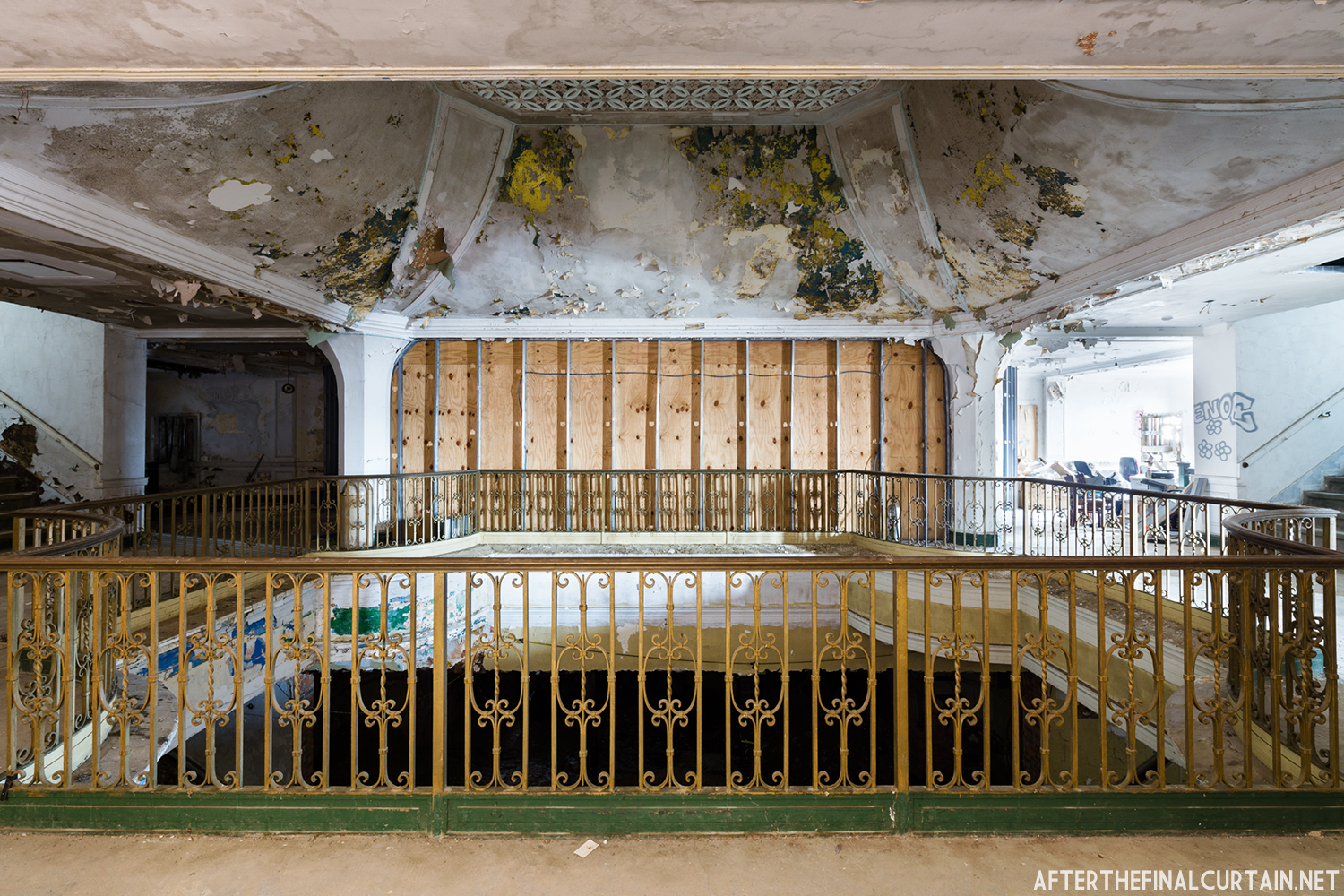
View from the balcony of the RKO Madison Theatre.

It’s not uncommon to see buildings in New York City with a mismatched facade, especially in neighborhoods where space is at a premium. But if you’re like me, and you’re interested in the history of the city, you might wonder what that building used to be. And in the case of this particular building, it has quite a history. The building at the corner of Myrtle and Wykoff Avenue used to be the RKO Madison Theatre, which opened on November 24, 1927.

The Madison Theatre, as it was originally known, is situated on the border of Brooklyn and Queens, was constructed by B.S. Moss, a subsidiary of Keith-Albee. Moss’s original plan was to name the theater Beacon, but he was eventually persuaded to change the name to Madison, as a tribute to James Madison, the fourth President of the United States, and Madison Street, which was situated nearby. The architect in charge of the design was Eugene DeRosa, who had previously worked on the Colony Theatre in Manhattan. DeRosa employed an Italian Renaissance style, with a classical Greek facade made of white marble. The theater’s slogan around the time of its opening was “Bringing Broadway to Brooklyn.”

A close up of the theater’s dome.

It boasted a seating capacity of 2,760, which was significantly larger than Moss’ earlier venture, the Colony. The Grand Foyer spanned two stories and was accentuated with a vaulted ceiling that sported crystal chandeliers. The walls of the foyer were crafted from colored marble, with bronze borders that added a touch of class. A white marble staircase led patrons to the mezzanine promenade, which featured a lounge area and restrooms. The auditorium was large and included a balcony with a loge section at the front. Its ceiling, from the center of the dome, featured a three-tiered crystal chandelier, and the colored lights within the dome’s cove allowed for an ever-changing ambiance. The orchestra pit was situated at the front of the stage and had three separate elevators, one each for the orchestra, piano, and Wurlitzer organ, which was an unprecedented luxury for a neighborhood theatre. Much of the Madison’s grandeur was due to Moss’ intention to outdo the competition of the nearby Fox Ridgewood, which had been the area’s dominant theatre since 1913.

Much of the theater’s lobby still exists, but it has been completely walled off.

Houdini’s brother, Theo Hardeen, had his stage show at the Madison Theatre on May 30th, 1945. Thirteen days later, on June 12, 1945, Theo Hardeen passed away at the age of 69 from esophagus cancer. The RKO Madison Theatre was a popular venue in Ridgewood for decades. However, it became a Grindhouse, which was a theater that mostly showed b-grade horror or exploitation films, in the 1970s and eventually closed right after Halloween in 1977. The last film it showed was a twin-bill horror flick. The building was then converted for retail use in 1978 and has since housed several stores, including Consumers, Busy Bee, Odd Lot, and now Liberty Department Store.

The projection booth has been stripped bare of all equipment.

Queens Theatre – Queens Village, NY

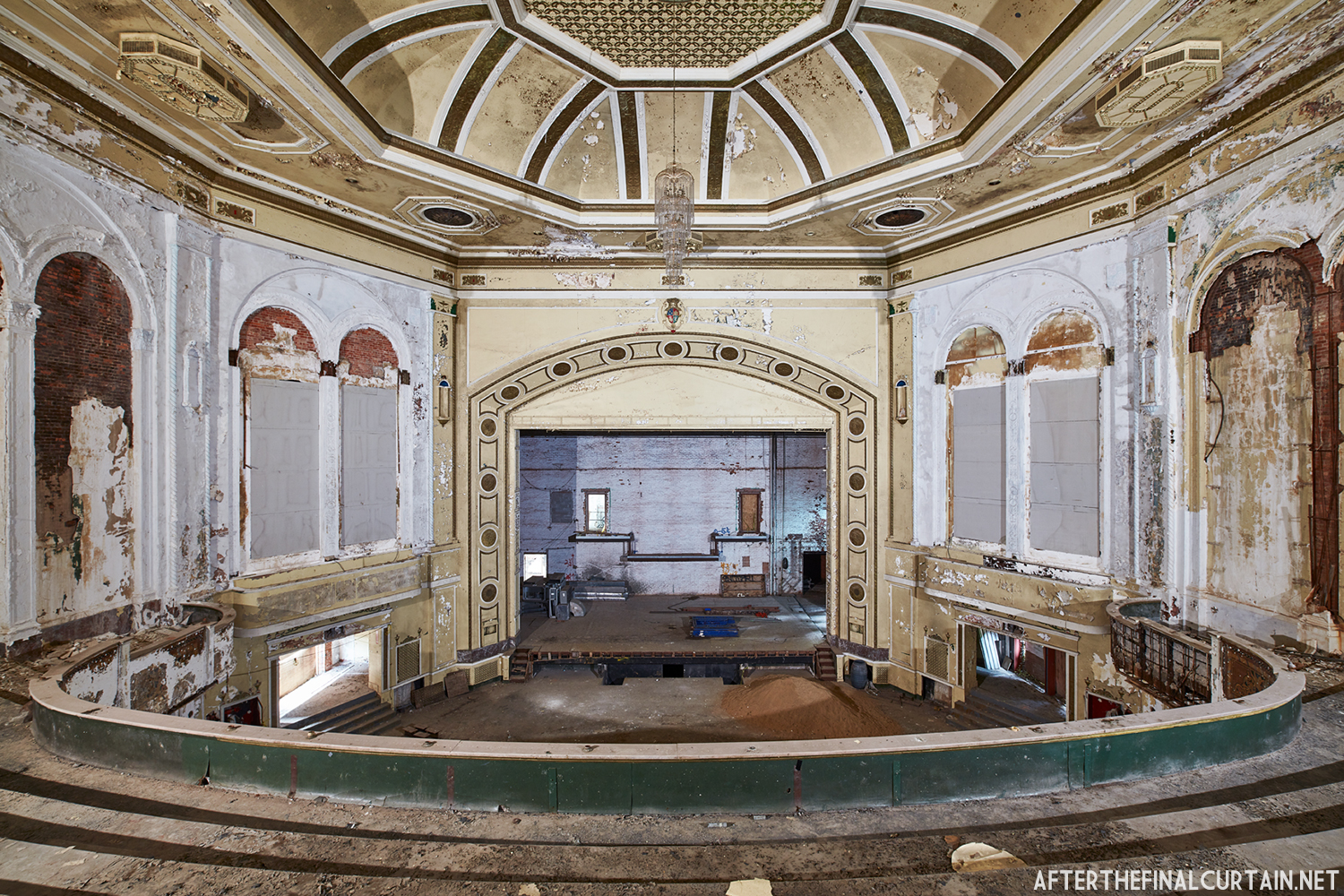
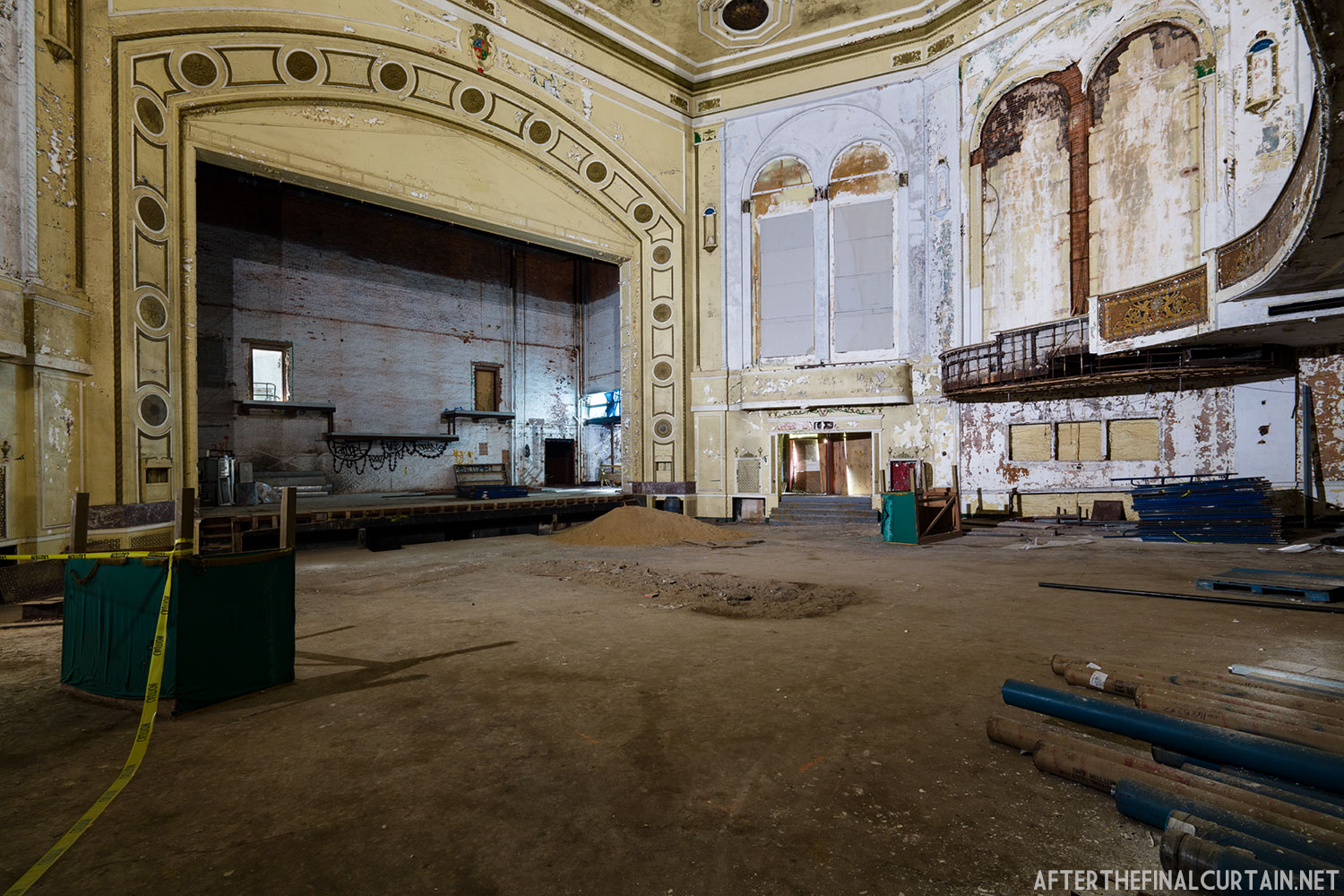
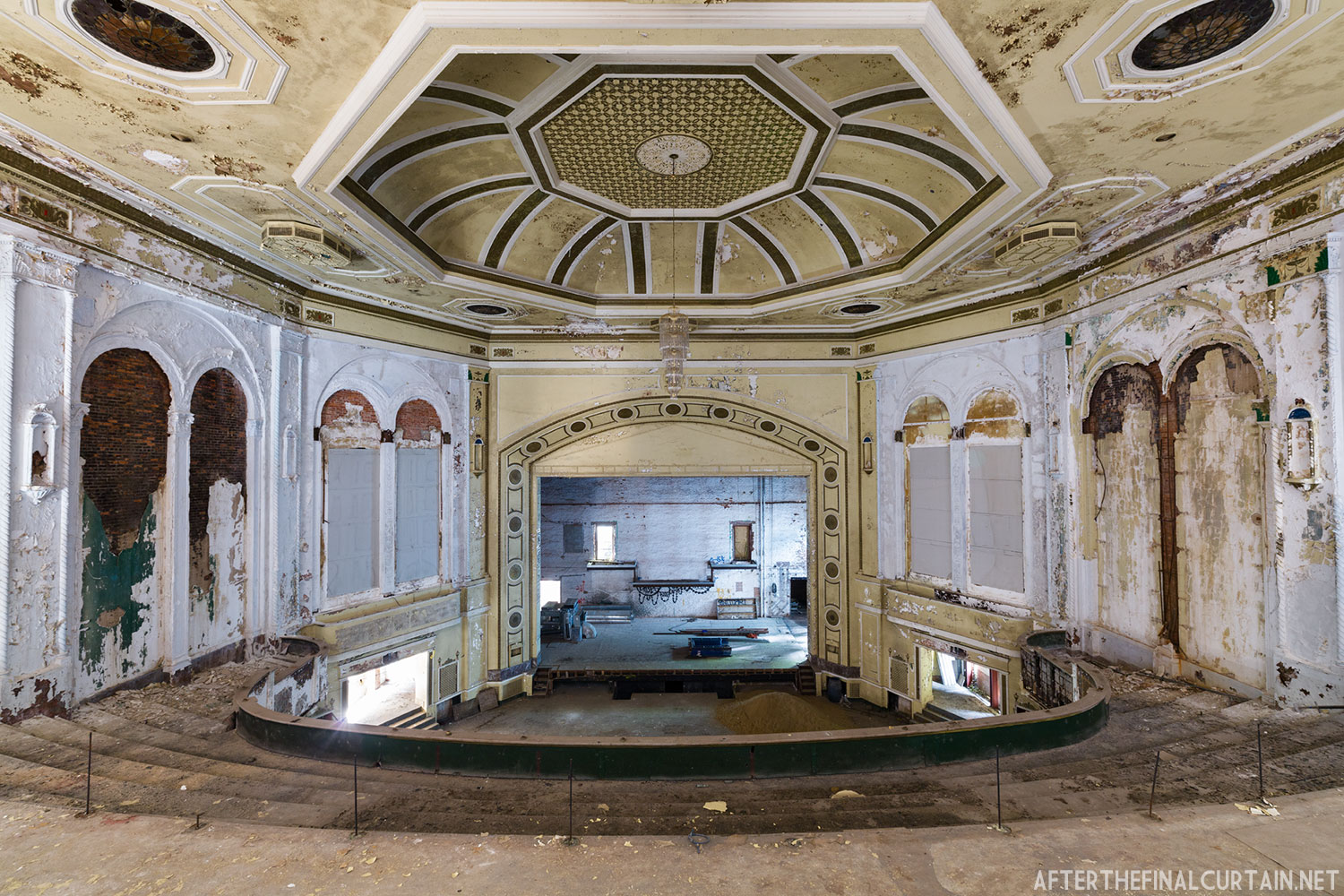
View of the auditorium from the balcony.

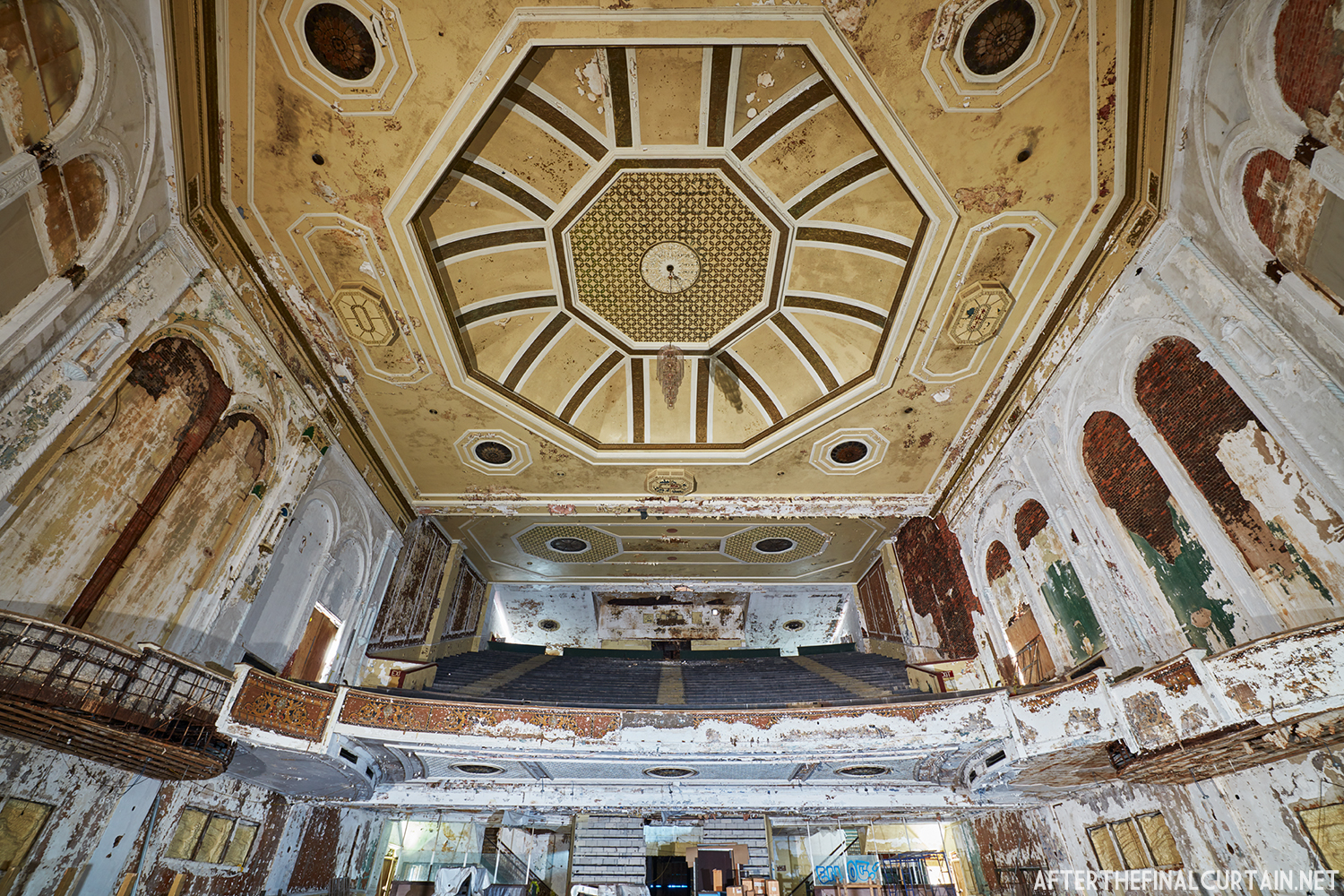
The Queens Theatre opened on December 29, 1927 opened in the Queens Village neighborhood of Queens, NY. It was designed by architect R. Thomas Short, who also designed the nearby Prospect Theatre in Flushing, for the Century Theatre Circuit. Morris Rosenthal, who managed the Majestic Theatre in Bridgeport, CT, was brought on as the theater’s manager. The 2,500 seat theater opened with a performance by The Happiness Boys, a popular radio act, and for the first year showed a combination of vaudeville and silent pictures. 

View of the auditorium ceiling from the stage.

In January 1929 Vitaphone, an early form of talking movies, was installed. The switch from vaudeville and silent films did not go over well with the regular patrons, and they threatened to go to another theater. Rosenthal, the manager of the Queens, got a permit to hang a banner in front of the theater that said “Sound Talkies – See and hear!” along with a catchy phrase about the upcoming film to help drive traffic into the theater. On September 13, 1938 projectionist Solomon Schulman killed Nat Klein in the Queen’s projection booth during a screening of “The Devil’s Party.” Klein was a former projectionist’s assistant. Schulman claimed that Klein failed to get a job at a different theater, blamed Schulman, and attacked him with a fire extinguisher. Schulman was convicted of second degree manslaughter and sentenced to 5-10 years at Sing Sing Prison in Ossining, NY.

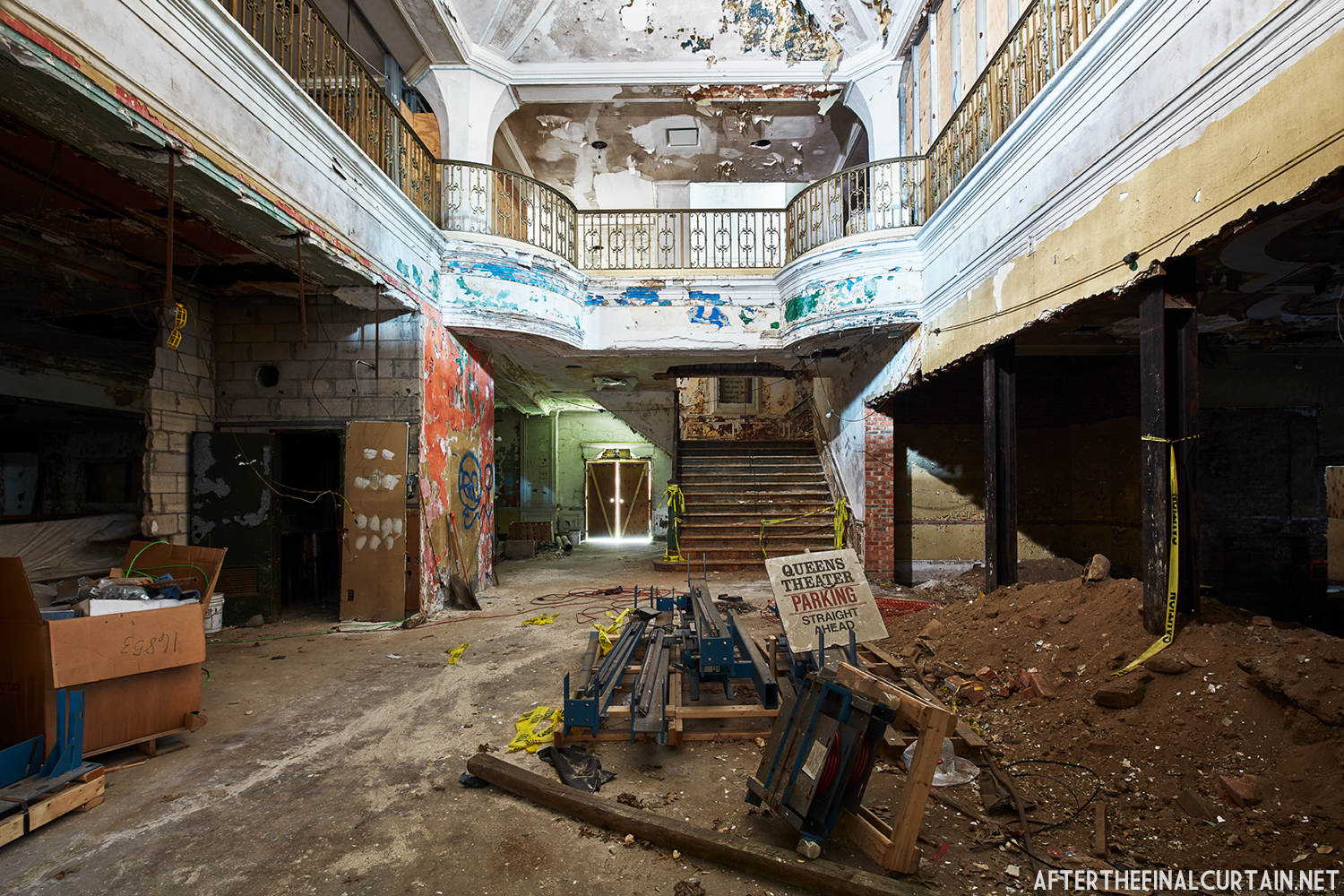
The main floor of the lobby was almost completely gutted during the late 2000s.

The Queens closed on March 1, 1974 after a showing of “Last Tango in Paris” starring Marlon Brando and Maria Schneider. According to Joseph Wickman of Century Theatres, the Queens had been losing money for years, and only filled 150 of the 2000 seats during the final showing.  Later that year, Louis Diaz reopened the theater as an independent house. He started showing first run films, then switched to Spanish language films, then Spanish language XXX films, and by 1976 English language XXX films. A Queens based group called the “Coalition for Decency” began to picket the theater, and eventually sat down with Diaz and asked him to stop showing XXX films. He declined, but did stop putting up posters for films outside the theater. In July 1976 Diaz was charged with promoting obscenity for showing the pornographic films “The Taking of Christina” and “Little Sisters.” He plead guilty and was fined $1,500. He was charged again the following year, and this time the films and the projector’s lenses were seized. The case was eventually dismissed, and the theater continued showing XXX films until it closed February 1989. 

The interior of the theater was very similar to the now demolished Prospect Theatre in Flushing, NY.

In July 1990, the Queens was renovated and reopened as a performing arts center. Marty Oser, who was behind the renovation, hoped that the lack of venues between Manhattan and Long Island would give the Queens a chance. Kool and the Gang, The Marshall Tucker Band, David Brenner, Waylon Jennings, Frankie Valli and the Four Seasons, Ace Frehley, and Jerry Lee Lewis all performed at the theater during this time. However, it wasn’t very successful and it closed again in late December 1990.

A 3 manual 11 rank Opus 1569 Austin Theatre Organ was installed in the theater when it opened. It was later moved to Chaminade High School in Mineola, NY.

On October 2, 1993, the New York Deliverance Gospel Temple began holding services at the theater before purchasing it in January 1995. They sold it to the All Nations Apostolic Tabernacle (ANAT) in September 2006. ANAT closed the building and began to renovate it into a 2,500 seat second location for their rapidly growing congregation . They completed work on the building’s facade, but the interior work stalled out. Despite a few attempts to complete construction, the building was put on the market in early 2019. 


The Ridgewood Theatre

Proscenium Arch - Ridgewood Theatre

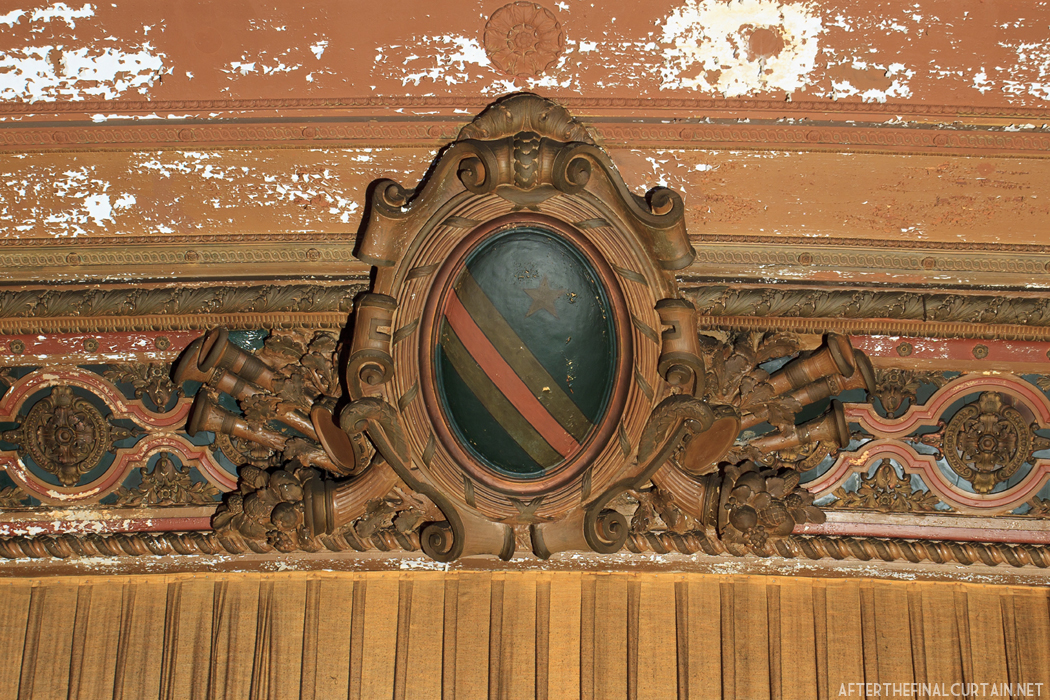
The top of the Ridgewood Theatre’s proscenium arch.

The Ridgewood Theatre opened on December 23, 1916. Located in the Ridgewood neighborhood in Queens, New York, the 2,500 seat theater was built by the Levy Brothers Real Estate firm. The Ridgewood was designed by famed theater architect Thomas W. Lamb, who is known for the design of many New York area theaters. The Ridgewood was modeled after the now demolished Mark Strand Theatre, which was the first ever motion picture palace.

Continue reading

Keith-Albee Theatre, or RKO Keith’s Theater

balcony of keith's theatre

View from the balcony of the Keiths Theatre

The RKO Keith’s Theatre, originally called the Keith-Albee Theatre, opened Christmas Day, 1928 at 1:00 PM.  Located in Flushing, Queens, it was designed by Thomas W. Lamb, an architect known for his theater designs, which can also be seen in New York’s Ziegfeld Theatre and Proctor’s 58th Street (which was built simultaneously with the Keith’s).

Continue reading