Kings Theatre – The Rise, Fall and Rebirth of Brooklyn’s Wonder Theatre


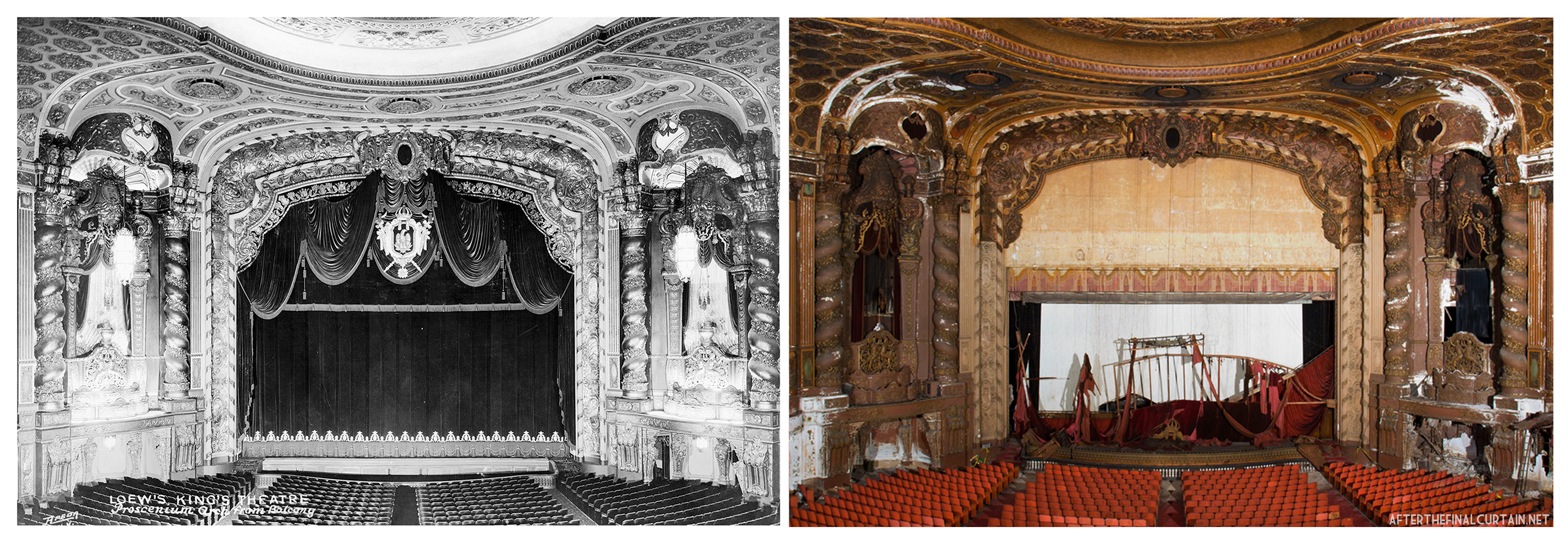
Proscenium arch from the balcony, Loew's Kings Theatre. B&W Image from the Loew’s Collection, American Theatre Architecture Archive, Theatre Historical Society of America

Proscenium arch from the balcony, Loew’s Kings Theatre.
B&W Image from the Loew’s Collection, American Theatre Architecture Archive, Theatre Historical Society of America


I’m very excited to announce that I’ve partnered with the Theatre Historical Society of America for my first book: Kings Theatre, The Rise, Fall and Rebirth of Brooklyn’s Wonder Theatre. The book will cover the entire history of the Loew’s Kings Theatre from it’s original construction to the reopening in February 2015.  I’ve photographed over 75 abandoned theaters over the past 5 years, and being able to document one being restored has been amazing. Every visit to the theater has been awe inspiring and I can’t wait to share what I’ve seen with all of you. 

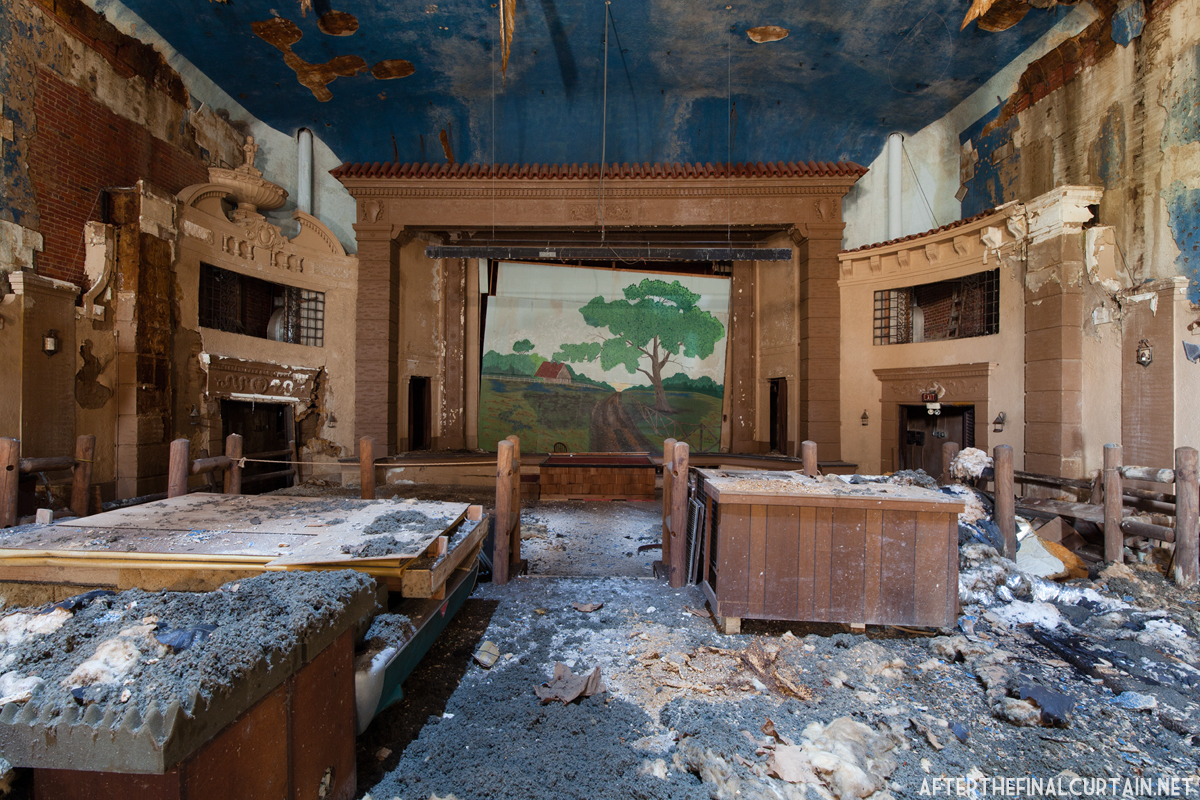
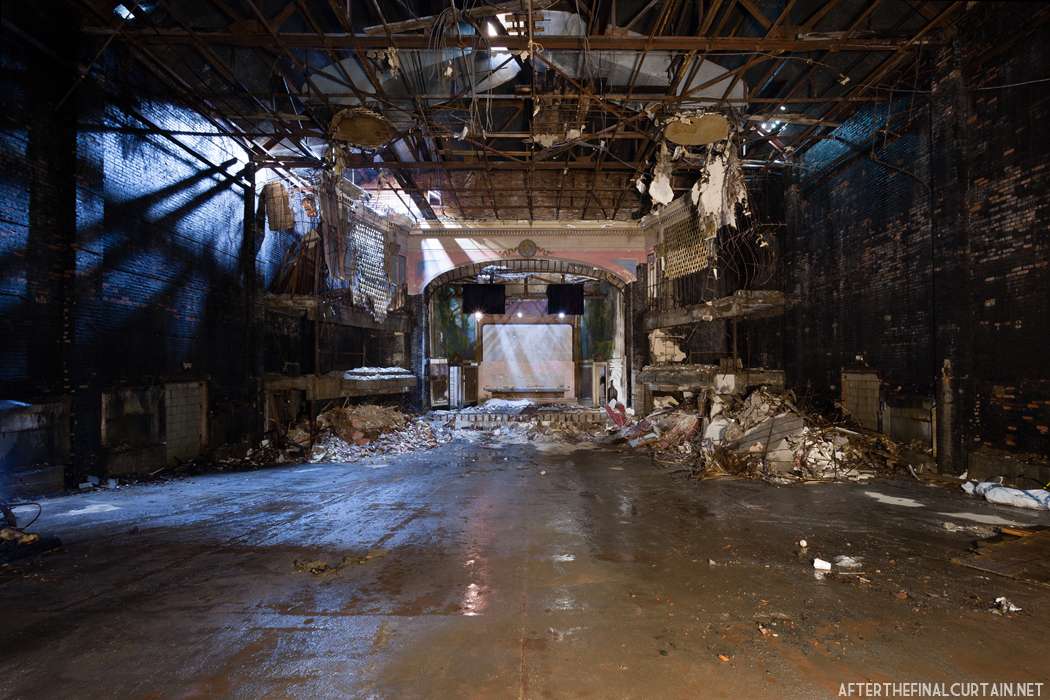
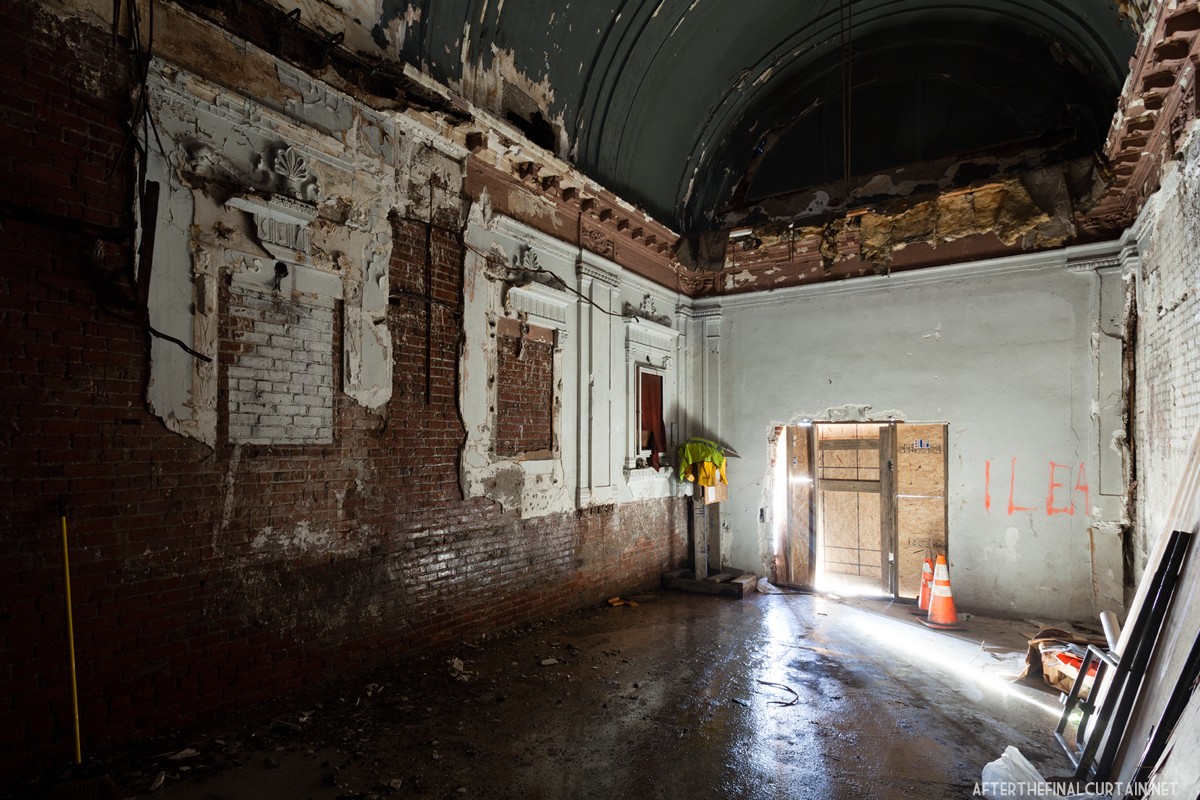
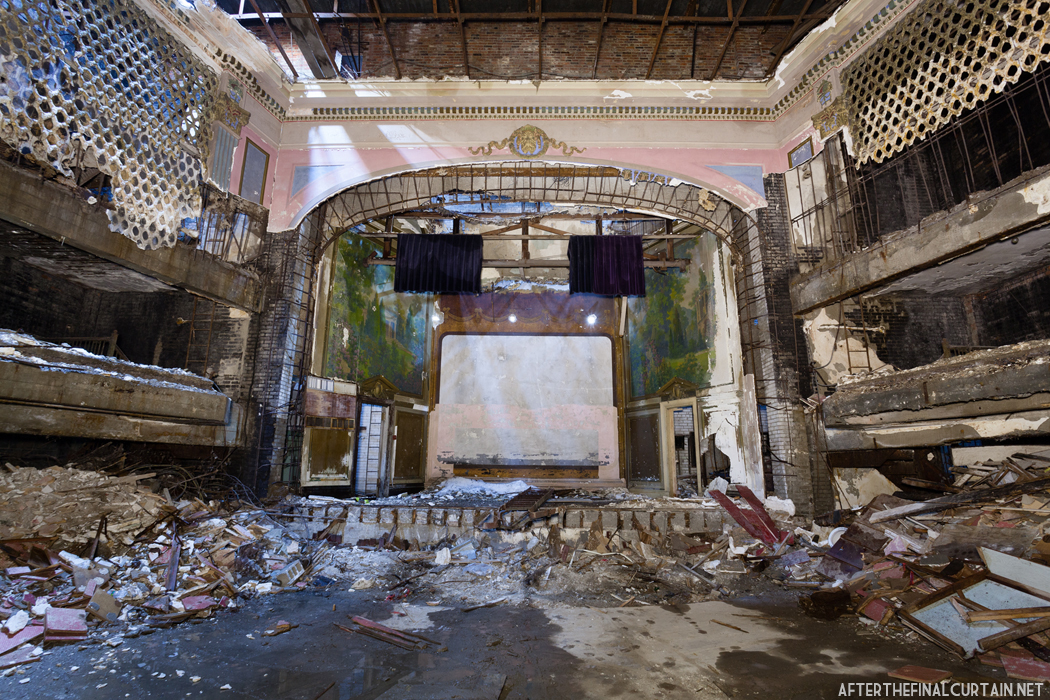
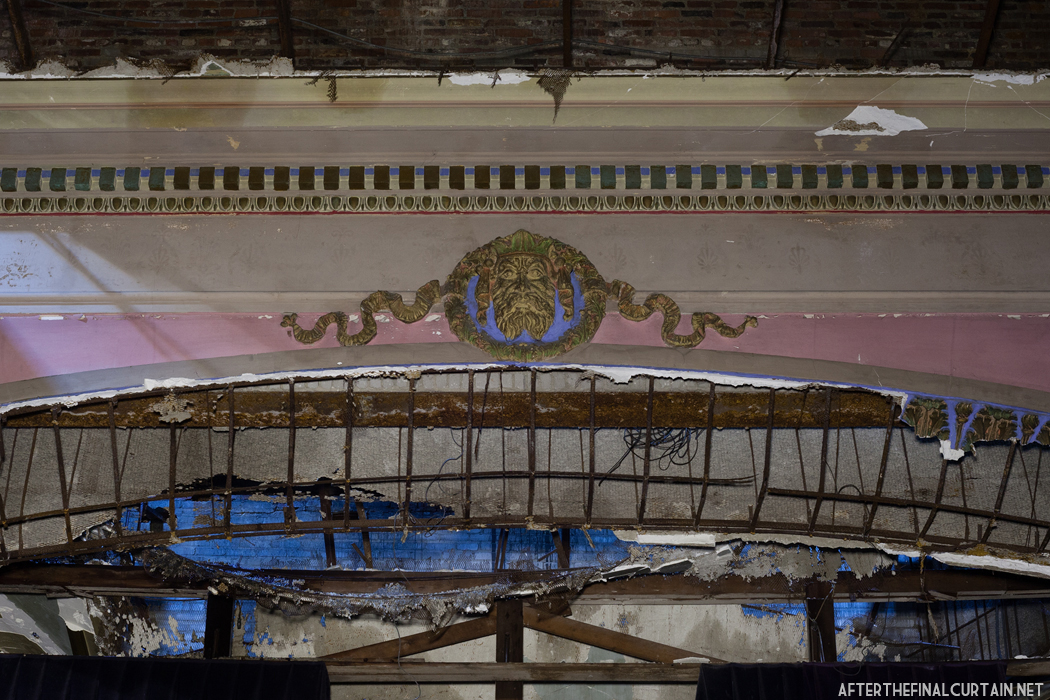
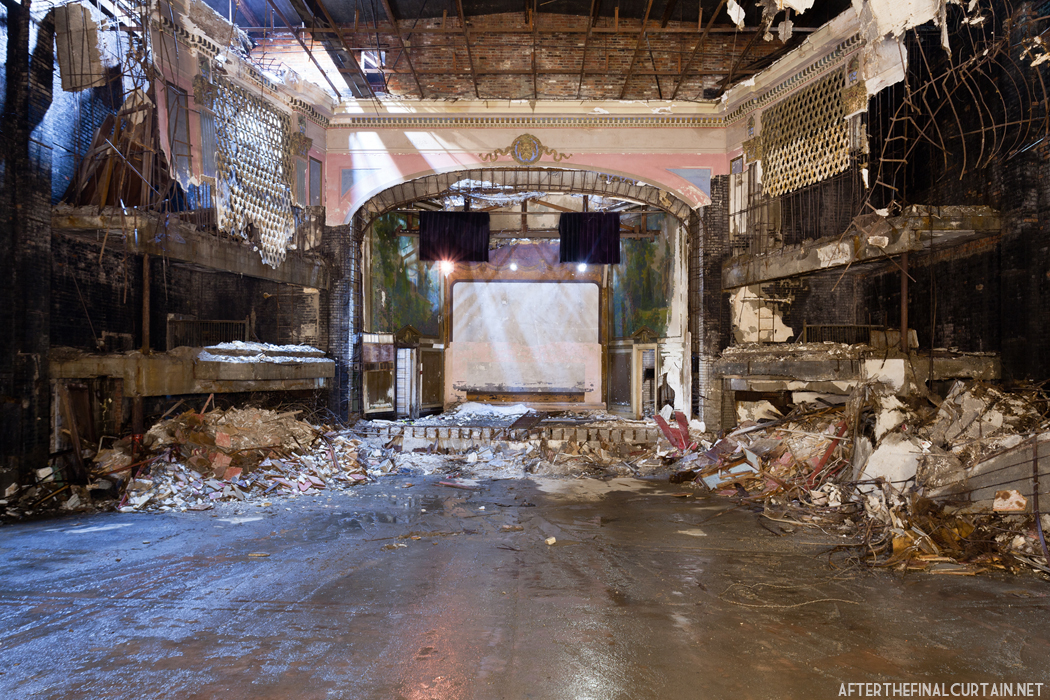
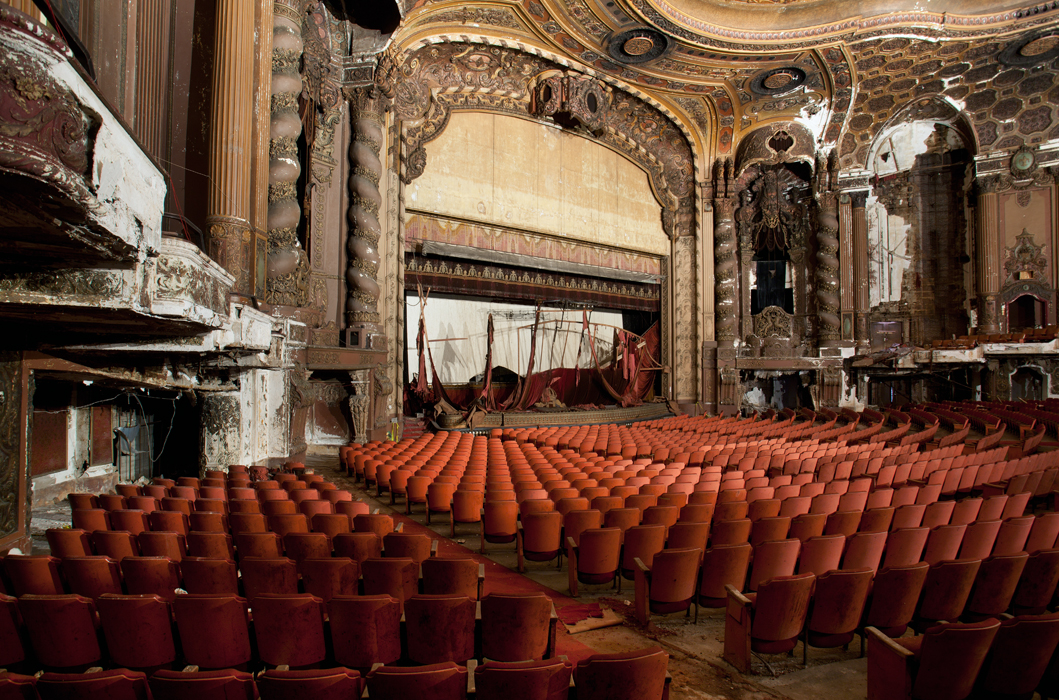
Kings Theatre Pre-renovation.

Kings Theatre Pre-renovation.

Thanks to everyone at THS, ACE Theatrical Group, Evergreene Architectural Arts, Martinez + Johnson Architecture and Gilbane Building Company for all the help bringing this project to fruition.

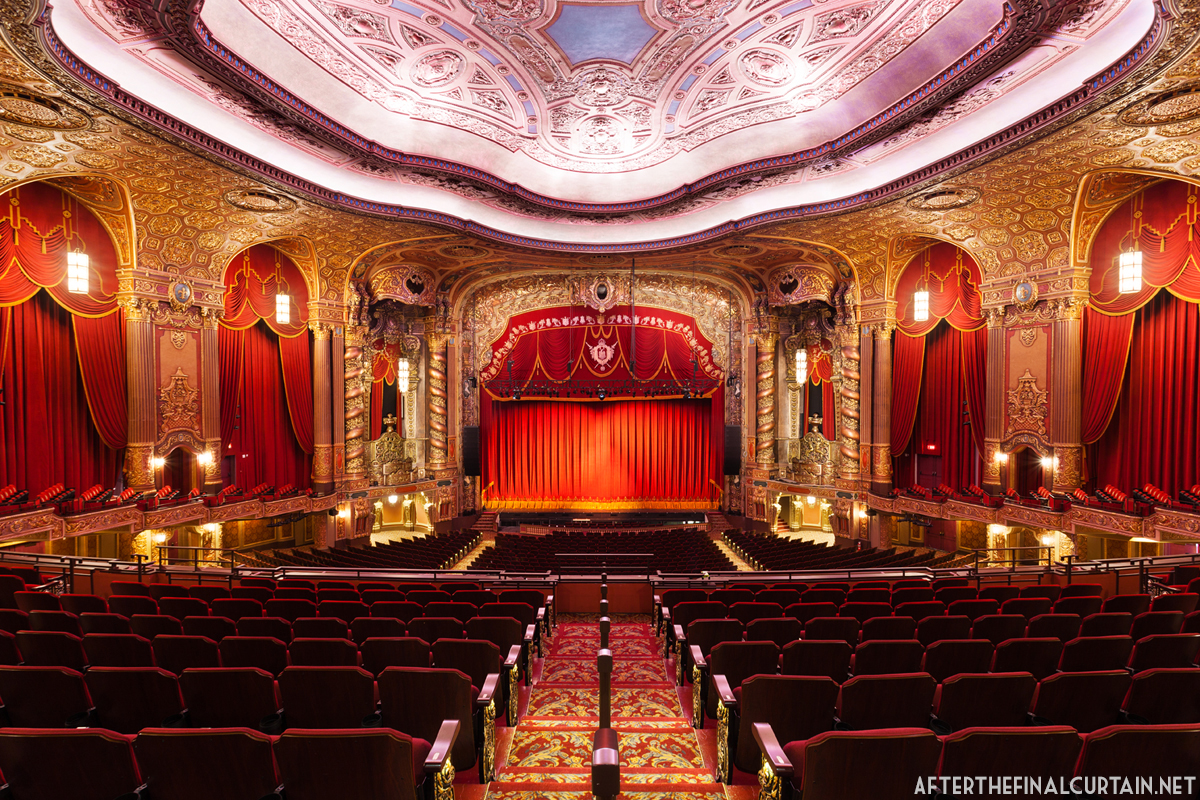
Kings Theatre after renovation.

Kings Theatre after renovation.


To order signed copies of the book visit: http://www.afterthefinalcurtainprints.com/product/kings-theatre-the-rise-fall-and-rebirth-of-brooklyn-s-wonder-theatre

and regular copies: https://www.amazon.com/Kings-Theatre-Rebirth-Brooklyns-Wonder/dp/0692032002/ref=asap_bc?ie=UTF8


The OKLA Theatre – McAlester, Oklahoma

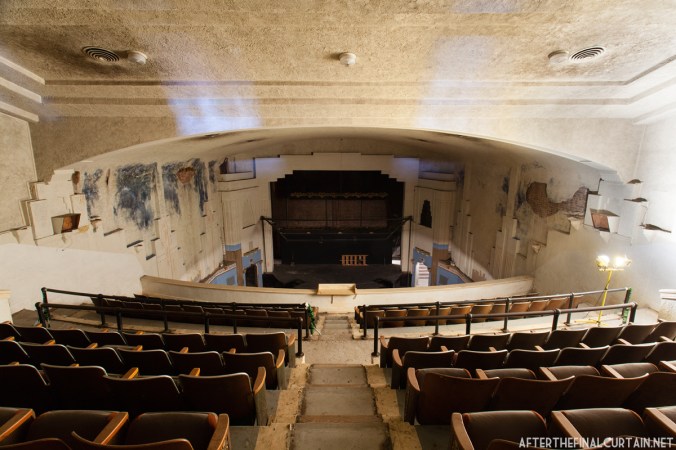
View from the balcony of the auditorium.

View from the balcony of the auditorium.

The OKLA Theatre opened on July 10, 1931 in McAlester, Oklahoma. It was built on the site of the Palace Theatre, which burned down in December of 1930. Wallace Wilkerson, the owner of the theater building, hired architect W. Scott Dunn to build a new theater on a budget of $50,000. Dunn converted the existing cinema walls into a partial atmospheric style theater. It was built for Robb & Rowley Theatres, but the lease was taken over by Howard Hughes’s theater company, Hughes-Franklin Midwest Theatre Corp LTD.

Architect W. Scott Dunn called it a "revised moderne, semi atmospheric" theater.

Architect W. Scott Dunn called it a “revised moderne, semi atmospheric” theater.

The opening day film was “The Man in Possession,” starring Robert Montgomery. Admission prices were 25 cents for the balcony and 35 cents for main level seats. The day after opening, the McAlester News Capital said that, “the theater, in the opinion of patrons, is on a par with the very best found in larger cities.” Hughes-Franklin only ran the 800-seat theater for one year before leasing it back to Robb & Rowley Theatres. In 1950, the premiere of “Rock Island Trail,” starring Forrest Tucker, was held at the theater. The movie was released on the 100th anniversary of the Rock Island Railroad line, part of which runs through McAlester.

View of the auditorium from the stage.

View of the auditorium from the stage.

Wilkinson’s heirs sold the building to United Artists Theatres in December of 1983. UA operated the theater for six years before closing on September 4, 1989 due to declining ticket sales. When it closed, the OKLA was the last surviving single screen movie theater in McAlester. A year later, the OKLA was bought by Kiamichi Actors Studio Theatre, Inc., a local performing arts group. KAST intended to restore the theater, but was unable to raise the funds and surrendered the deed to the bank. It was then purchased from the bank by the Ardeneum of Oklahoma Charitable and Educational Foundation, Inc.
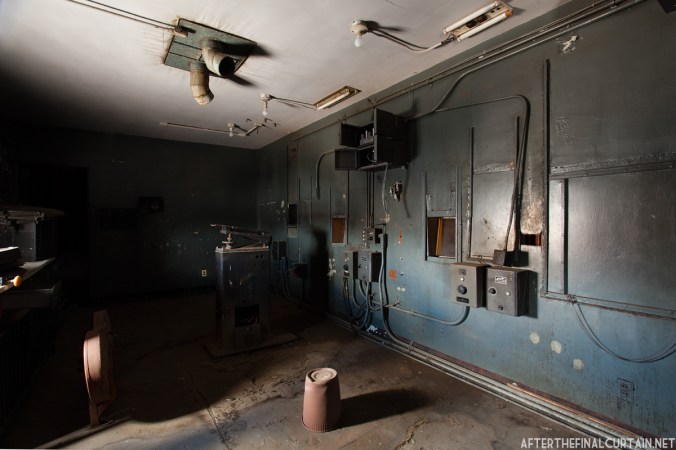
The remains of the projector room.

The remains of the projector room.


Pride in McAlester, a local community improvement non-profit organization, leased the theater from the Ardeneum in June of 2010 with the intent to restore the theater. They’ve since held several events to raise money for the restoration. In 2012, Pride in McAlester applied for and received a $200,000 grant from the Oklahoma Department of Environmental Quality, to be used to remove the lead paint and asbestos in the theater. The current plan is for the theater to be used as a non-profit multi-use community center. It will host concerts, recitals, lectures, movie screenings, community theater, award ceremonies and business meetings. According to a 2010 interview with a Pride in McAlester representative, the renovations will be at least 50% complete by 2015. Donations can be made at the OKLA Theatre’s website. 

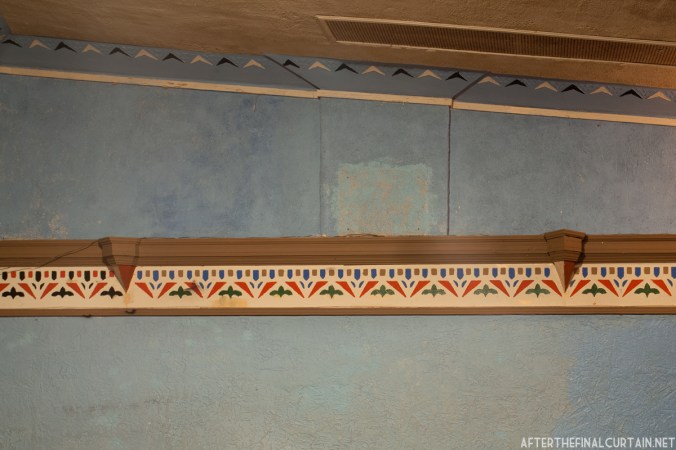
The atmospheric blue paint, concealed by a subsequent paint job , is beginning to show through.

The atmospheric blue paint, concealed by a subsequent paint job, is beginning to show through.

The lobby is currently used for storage.
The lobby is currently used for storage.

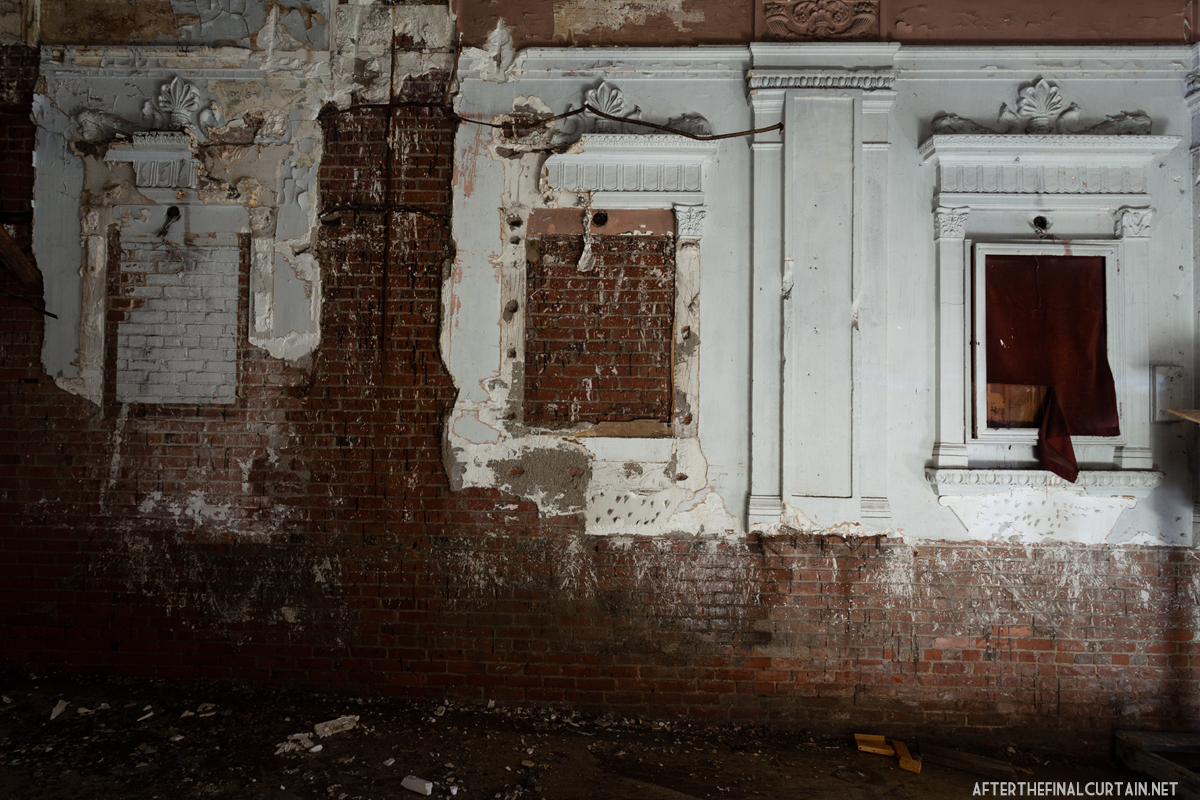
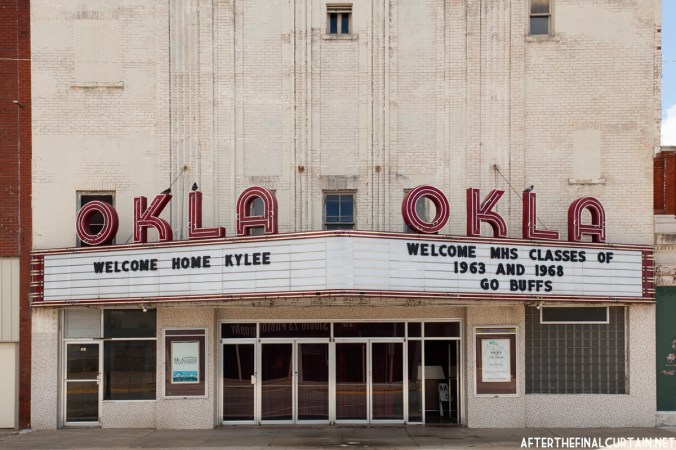
When the original marquee was replaced in 1948,  two of the windows on the front of the building were bricked over.

When the original marquee was replaced in 1948, two of the windows on the front of the building were bricked over.

View of the auditorium from the side of the balcony.
View of the auditorium from the side of the balcony.

A close-up of some of the details on the wall of the main level.

A close-up of some of the details on the wall of the main level.

When it opened the OKLA was dubbed "the finest talking picture theater in all of eastern Oklahoma.”

When it opened the OKLA was dubbed “the finest talking picture theater in all of eastern Oklahoma.”

The information in this post was obtained with the help of the Theatre Historical Society of America, for more information including how to join – check out their website at www.historictheatres.org

© Matthew Lambros and After the Final Curtain, 2014. Unauthorized use and/or duplication of this material without express and written permission from this blog’s author and/or owner is strictly prohibited. Excerpts and links may be used, provided that full and clear credit is given to Matthew Lambros and After the Final Curtain with appropriate and specific direction to the original content.
Paramount Theatre – Marshall, TX

The Paramount is one of the 22 theaters in my new book “After the Final Curtain: The Fall of the American Movie Theater.” Find out more here.

View of the auditorium from the main level.

View of the auditorium from the main level.

Delayed and over budget, the Paramount Theatre in Marshall, Texas opened on March 31, 1930. The opening was the first event in what the city of Marshall dubbed “Program of Progress” month. The East Texas Theatre Company, Inc. commissioned Emil Weil, Inc., an architecture firm based in New Orleans, to design the 1,500 seat atmospheric theater.

Continue reading

Holiday Print Sale

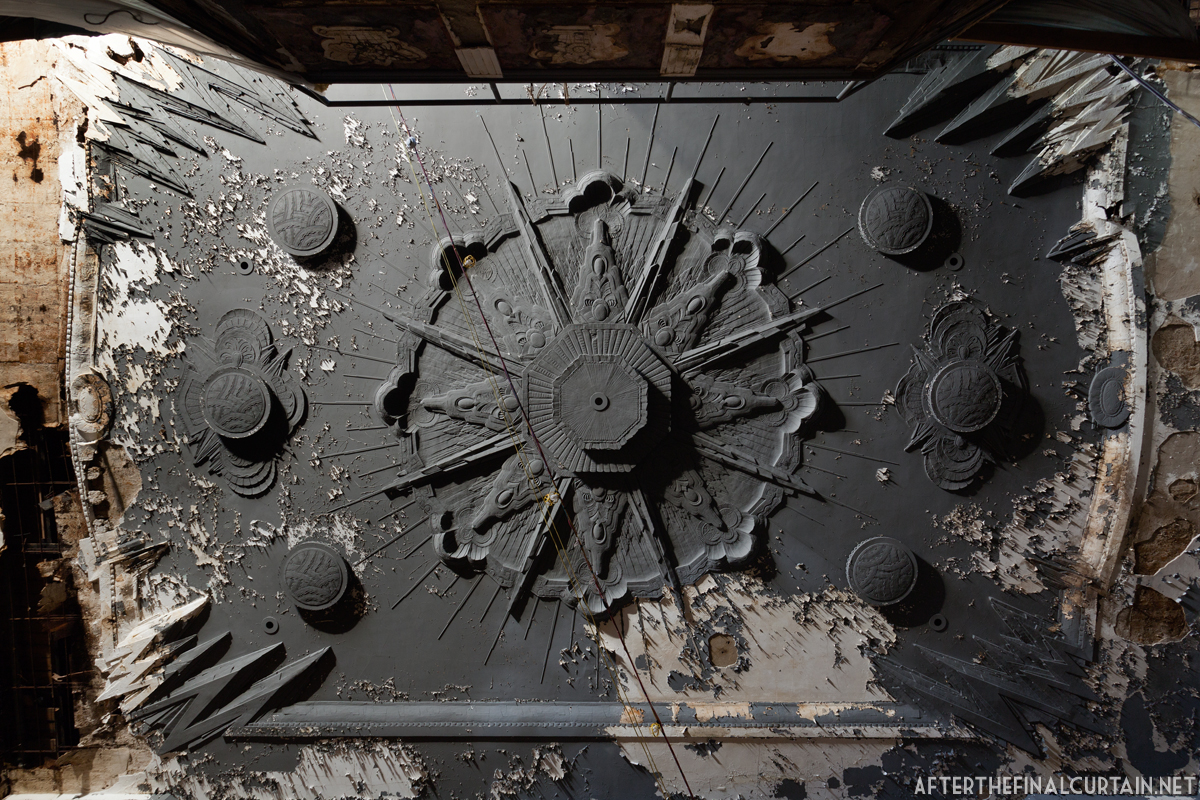
Ceiling, Uptown Theatre Philadelphia, PA

Ceiling, Uptown Theatre Philadelphia, PA

The annual Holiday print sale is here! Beginning December 9 and ending on December 24, all prints will be 20% off. Place an order by December 19 to get it in time for Christmas!

Quite a few of the images haven’t been offered as prints before so check out the new print page and enter the coupon code holidaysale2013 to get 20% off your order.

If there’s an image you’d like a print of but do not see it on the page,  send me an email and I’ll add it for you.

Snapshot: Empress Theatre

Post 3 in the Snapshot Series  – Occasionally in my travels I come across a theater that I can’t find a lot of information on, or that I only have a chance to photograph for an hour or two. They’re still beautiful and fascinating, so they definitely have a place on After the Final Curtain

The remains of the Empress Theatre's proscenium arch.

The remains of the Empress Theatre’s proscenium arch.

The Empress Theatre opened in 1927 in the Crown Heights neighborhood of Brooklyn, New York. The 1,595 seat theater was built by architect Charles A. Sandblom, who is also known for the Gramercy Theater in Manhattan. Originally part of the Century Circuit, the theater became part of the RKO circuit in 1929.

Continue reading

Loew’s State Theatre (State Palace Theatre)

The State is one of the 22 theaters in my new book “After the Final Curtain: The Fall of the American Movie Theater.” Find out more here.

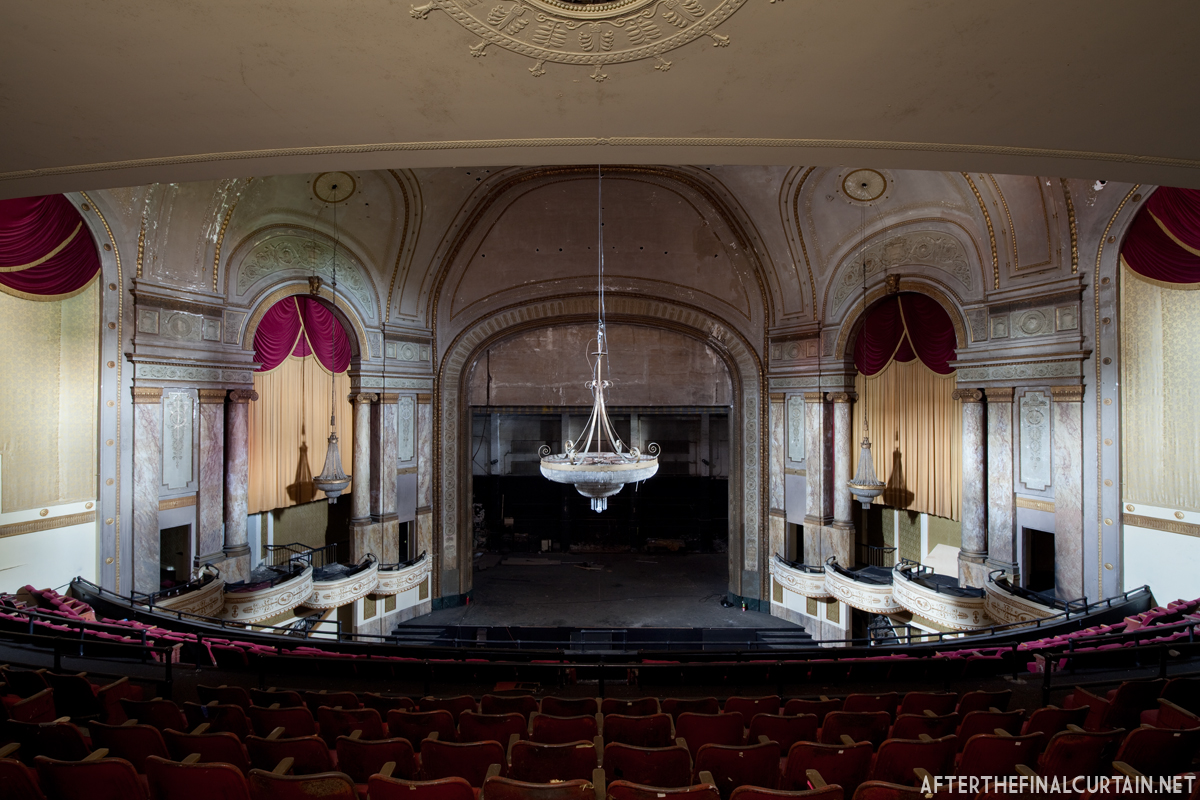
View of the auditorium from the top balcony.

View of the auditorium from the top balcony.

The Loew’s State Theatre opened on April 3, 1926 in New Orleans, Louisiana. It was built by renowned theater architect Thomas W. Lamb for the Loew’s Theatre Corporation. The 3,335 seat theater cost $1.5 million ($20 million adjusted to current value) to build. At the time of the opening, the “New Orleans Item” proclaimed the State, “the greatest playhouse south of Philadelphia and west of Chicago.”

Continue reading

Road Trip 2013 Day 7

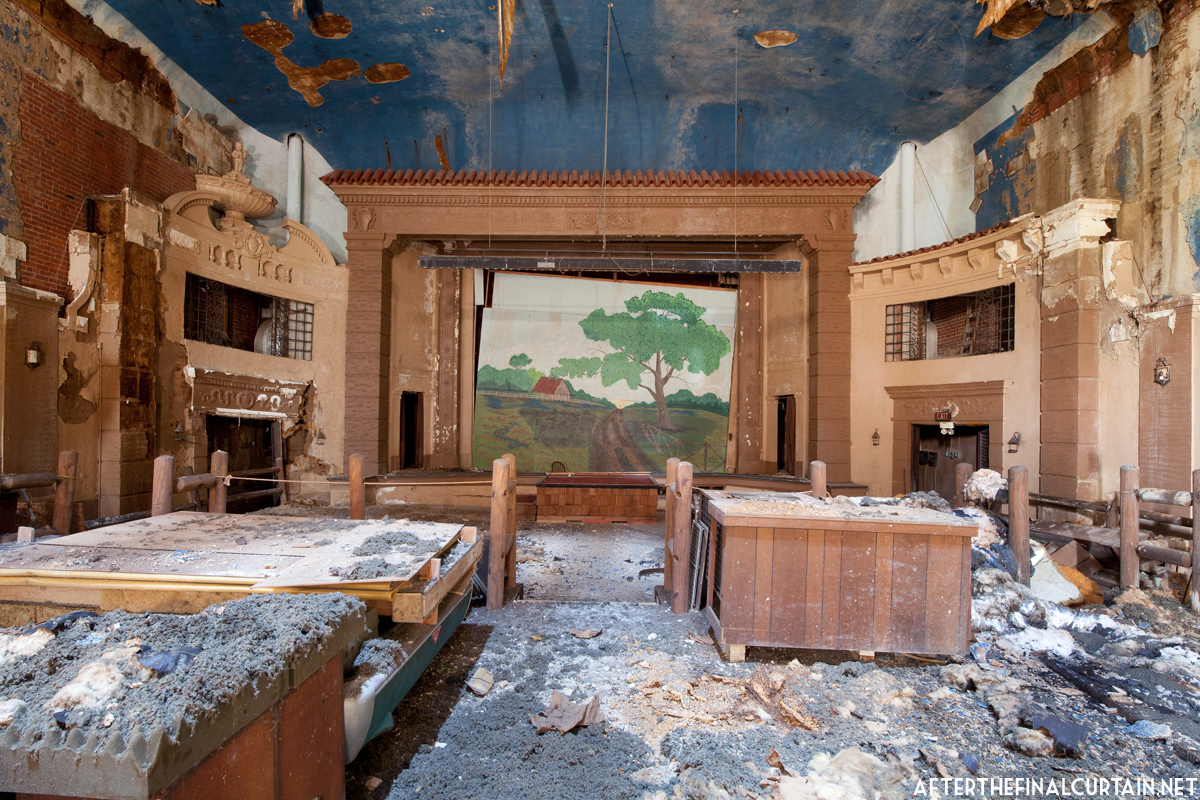
Stage, Paramount Theatre Marshall, Texas

View of the stage from the main level.

The last stop of the trip was the Paramount Theatre in Marshall, Texas. The Paramount opened in 1930, and has had a number of different uses over the years. After it closed as a theater, it was used as a western themed dinner theater, and then a recording studio. The building is currently for sale.


© Matthew Lambros and After the Final Curtain, 2013. Unauthorized use and/or duplication of this material without express and written permission from this blog’s author and/or owner is strictly prohibited. Excerpts and links may be used, provided that full and clear credit is given to Matthew Lambros and After the Final Curtain with appropriate and specific direction to the original content.
Road Trip 2013 Day 6

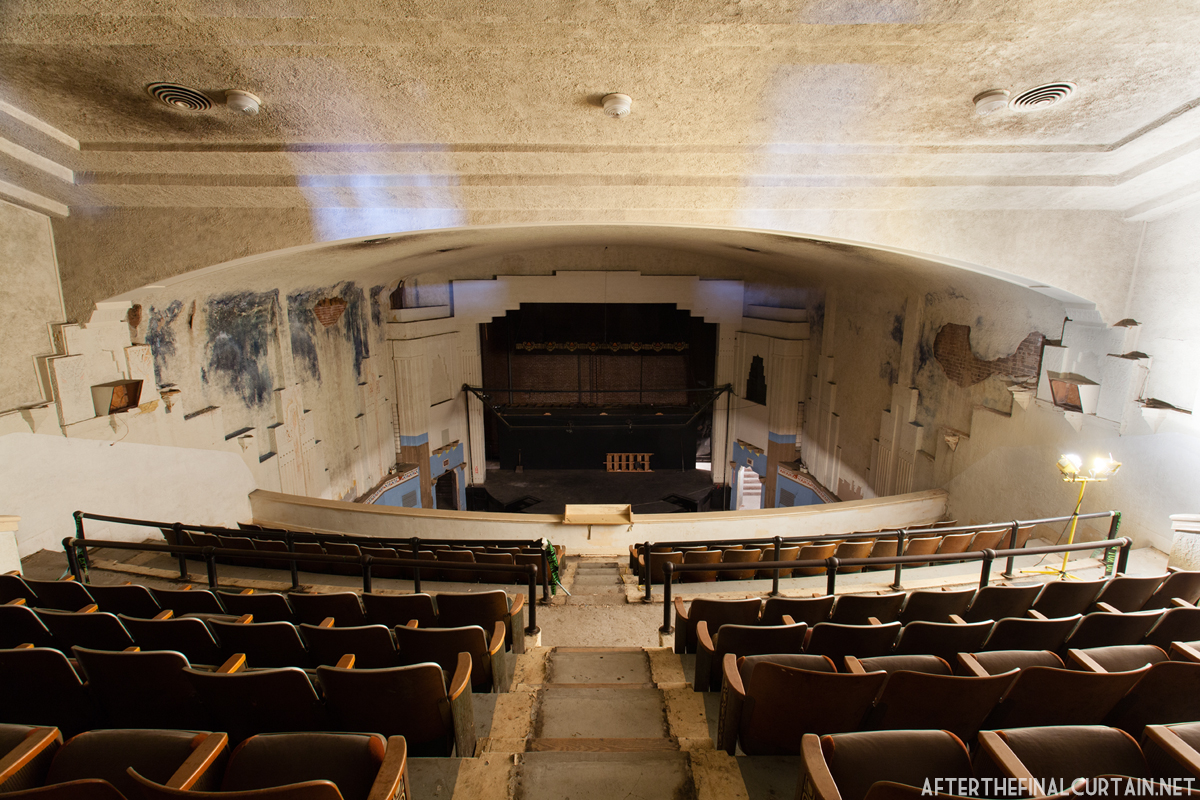
View from the balcony of the Berry Theatre.

View from the balcony of the Berry Theatre.

After making a quick stop at the Dallas Fort Worth Airport to drop off some of my road trip companions, I headed over to the Berry Theatre in Fort Worth. The theater opened as the White Theatre in the early 1940s, and was eventually renamed the Berry Theatre after the street in resides on.


© Matthew Lambros and After the Final Curtain, 2013. Unauthorized use and/or duplication of this material without express and written permission from this blog’s author and/or owner is strictly prohibited. Excerpts and links may be used, provided that full and clear credit is given to Matthew Lambros and After the Final Curtain with appropriate and specific direction to the original content.
Road Trip 2013

_MG_3046

Hi everyone – I’m on another trip photographing some of America’s abandoned theaters. Keep an eye out on the blog for updates over the next week.


© Matthew Lambros and After the Final Curtain, 2013. Unauthorized use and/or duplication of this material without express and written permission from this blog’s author and/or owner is strictly prohibited. Excerpts and links may be used, provided that full and clear credit is given to Matthew Lambros and After the Final Curtain with appropriate and specific direction to the original content.

Shapshot: Liberty Theatre

Introducing: the Snapshot Series  – Occasionally in my travels I come across a theater that I can’t find a lot of information on, or that I only have a chance to photograph for an hour or two. They’re still beautiful and fascinating, so they definitely have a place on After the Final Curtain.

View from the back of the auditorium.

View from the back of the auditorium.

The Liberty Theatre opened in 1922 in Dorchester, MA. It was operated by New England Theatres and showed primarily silent films. The 898-seat theater was in poor shape by 1941 and was later sold to ATC Theatres. In 1949, the Liberty was remodeled and reopened as an art house theater, but ended up closing in the 1950s. It was used as a household appliance warehouse in the 1960’s and later as a church until 1977, when it was converted to a warehouse for storage.

The lobby of the Liberty Theatre.

The lobby of the Liberty Theatre.

The Liberty Theatre was demolished in early 2013.

A lot of the original decor survived the theater's transformations over the years.

Much of the theater had been demolished before I had the chance to photograph it.

A close up of the proscenium arch.

A close up of the proscenium arch.

A close up of some of the remaining plasterwork in the lobby.

A close up of some of the remaining plasterwork in the lobby.

Liberty_Theatre_04


© Matthew Lambros and After the Final Curtain, 2013. Unauthorized use and/or duplication of this material without express and written permission from this blog’s author and/or owner is strictly prohibited. Excerpts and links may be used, provided that full and clear credit is given to Matthew Lambros and After the Final Curtain with appropriate and specific direction to the original content.