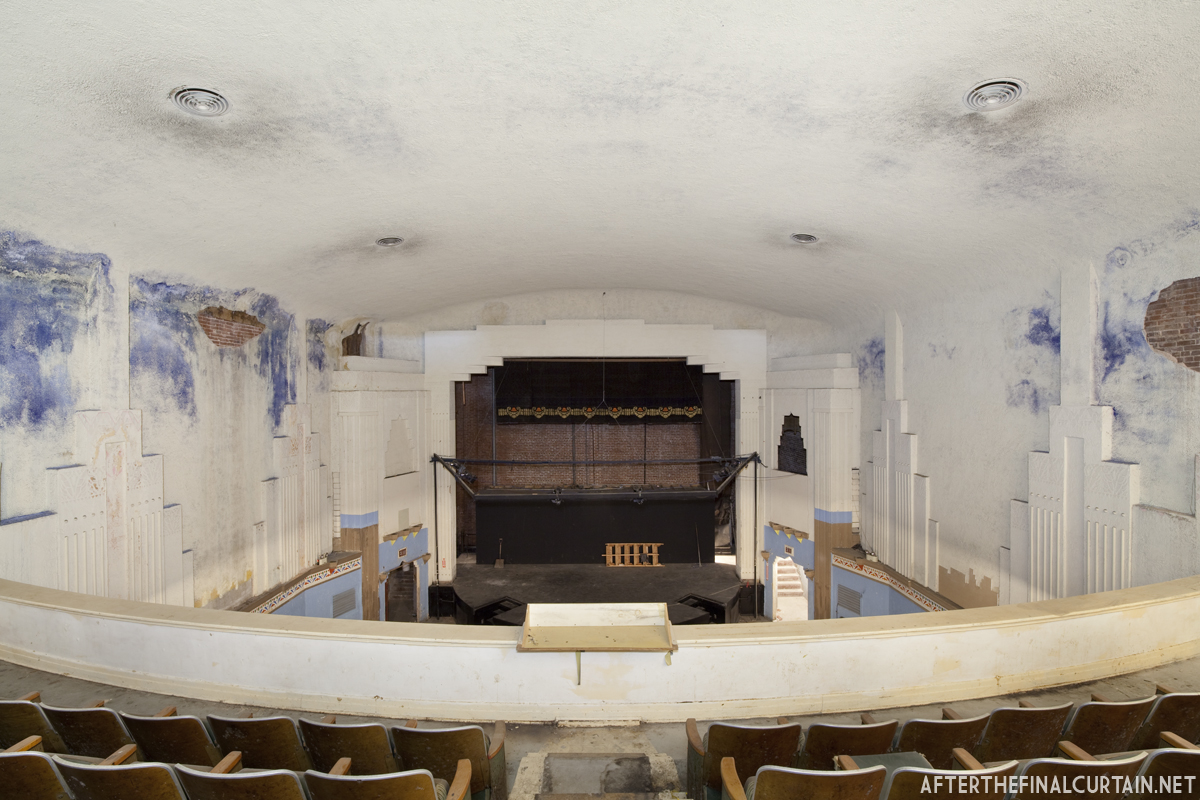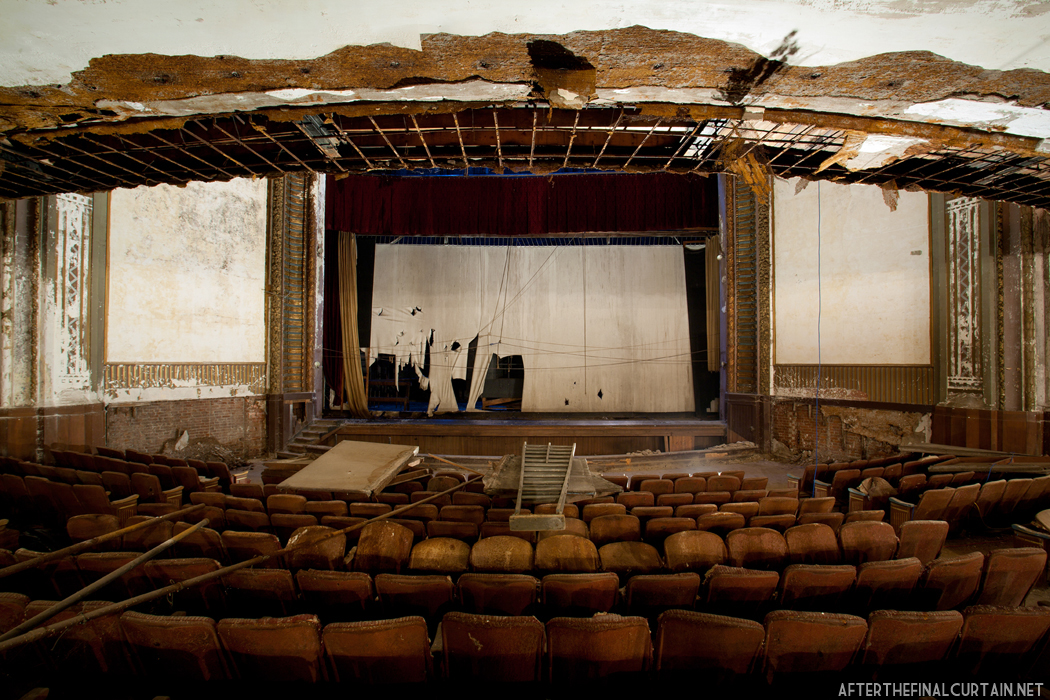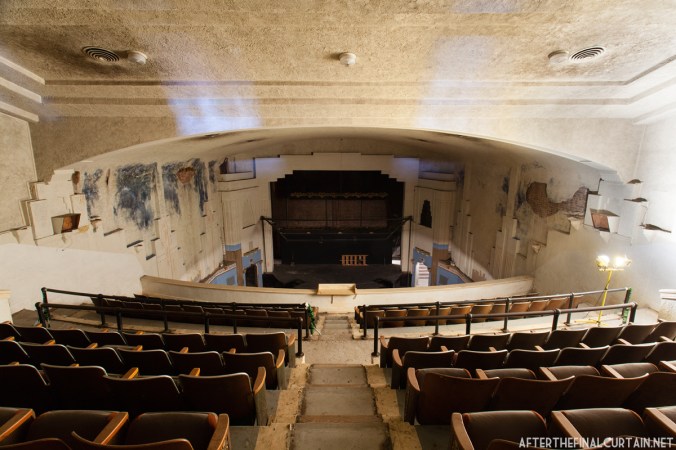
The Russell Theatre opened on December 4, 1930 in Maysville, Kentucky. Plans to build the theater were announced in 1929 by Col. J. Barbour Russell, a local businessman. Russell hired the architectural firm of Frankel and Curtis to design the theater. It was built on the site of a grocery warehouse owned by the Russell family at a cost of around $200,000. Russell envisioned the 700 seat theater as a grand movie palace, saying, “what the Roxy is to New York, the Russell will be to Maysville.”
Restoring
Theater Updates
In light of the recent demolition of the Boyd Theatre in Philadelphia, I thought I’d post an update for some of the theaters I’ve visited over the years.
The Loew’s Kings Theatre in Brooklyn has undergone a $94 million restoration, and will reopen as a performing arts center in late 2014/early 2015.
The Boyd Theatre was demolished in the spring of 2014, despite the efforts of the Friends of the Boyd. This demolition means that Philadelphia is one of the only large cities in America without at least one restored downtown movie palace. Fortunately, the Friends of the Boyd were able to come to an agreement with the owners to preserve some of the art deco features of the theater.
The OKLA Theatre – McAlester, Oklahoma
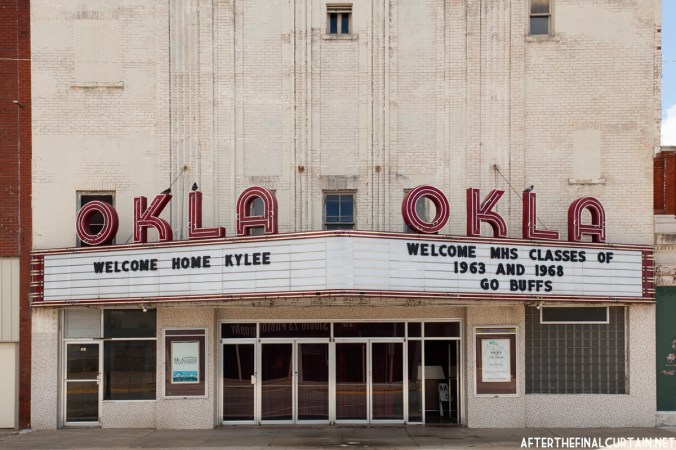
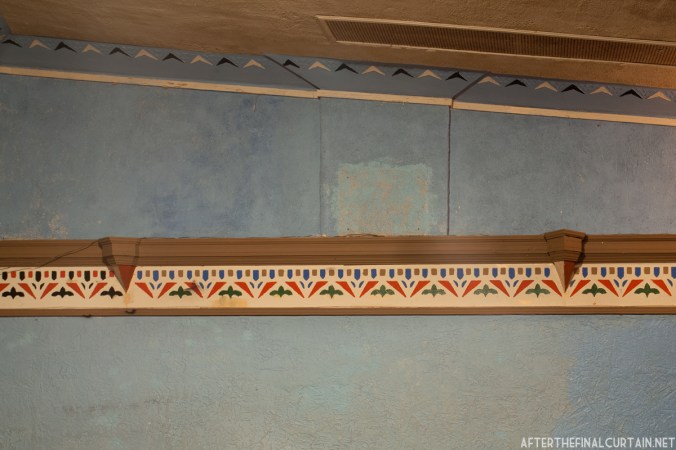
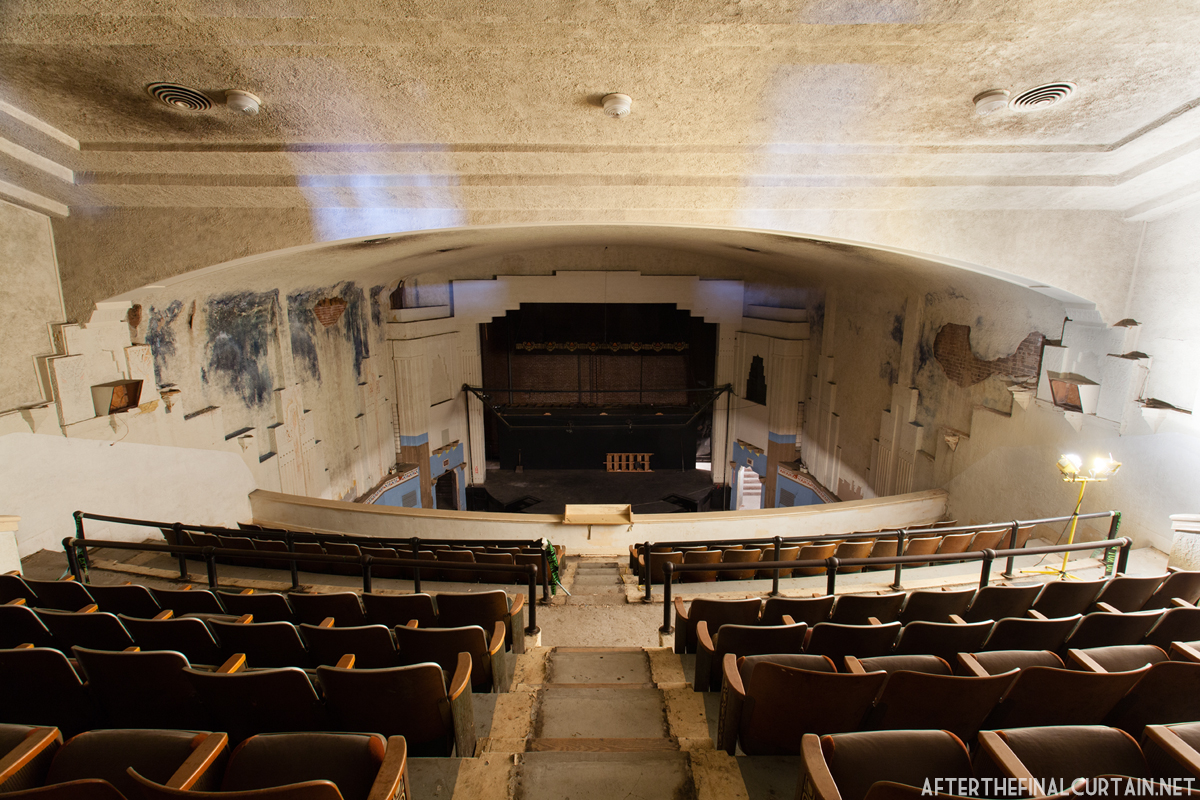
The OKLA Theatre opened on July 10, 1931 in McAlester, Oklahoma. It was built on the site of the Palace Theatre, which burned down in December of 1930. Wallace Wilkerson, the owner of the theater building, hired architect W. Scott Dunn to build a new theater on a budget of $50,000. Dunn converted the existing cinema walls into a partial atmospheric style theater. It was built for Robb & Rowley Theatres, but the lease was taken over by Howard Hughes’s theater company, Hughes-Franklin Midwest Theatre Corp LTD.
The opening day film was “The Man in Possession,” starring Robert Montgomery. Admission prices were 25 cents for the balcony and 35 cents for main level seats. The day after opening, the McAlester News Capital said that, “the theater, in the opinion of patrons, is on a par with the very best found in larger cities.” Hughes-Franklin only ran the 800-seat theater for one year before leasing it back to Robb & Rowley Theatres. In 1950, the premiere of “Rock Island Trail,” starring Forrest Tucker, was held at the theater. The movie was released on the 100th anniversary of the Rock Island Railroad line, part of which runs through McAlester.
Wilkinson’s heirs sold the building to United Artists Theatres in December of 1983. UA operated the theater for six years before closing on September 4, 1989 due to declining ticket sales. When it closed, the OKLA was the last surviving single screen movie theater in McAlester. A year later, the OKLA was bought by Kiamichi Actors Studio Theatre, Inc., a local performing arts group. KAST intended to restore the theater, but was unable to raise the funds and surrendered the deed to the bank. It was then purchased from the bank by the Ardeneum of Oklahoma Charitable and Educational Foundation, Inc.
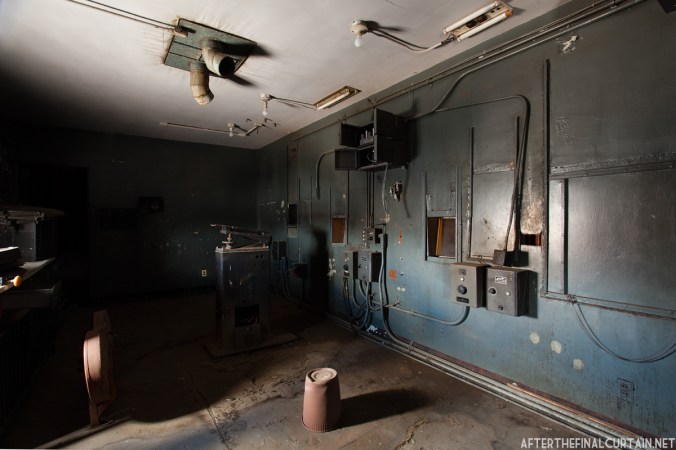
Pride in McAlester, a local community improvement non-profit organization, leased the theater from the Ardeneum in June of 2010 with the intent to restore the theater. They’ve since held several events to raise money for the restoration. In 2012, Pride in McAlester applied for and received a $200,000 grant from the Oklahoma Department of Environmental Quality, to be used to remove the lead paint and asbestos in the theater. The current plan is for the theater to be used as a non-profit multi-use community center. It will host concerts, recitals, lectures, movie screenings, community theater, award ceremonies and business meetings. According to a 2010 interview with a Pride in McAlester representative, the renovations will be at least 50% complete by 2015. Donations can be made at the OKLA Theatre’s website.

When the original marquee was replaced in 1948, two of the windows on the front of the building were bricked over.
The information in this post was obtained with the help of the Theatre Historical Society of America, for more information including how to join – check out their website at www.historictheatres.org
© Matthew Lambros and After the Final Curtain, 2014. Unauthorized use and/or duplication of this material without express and written permission from this blog’s author and/or owner is strictly prohibited. Excerpts and links may be used, provided that full and clear credit is given to Matthew Lambros and After the Final Curtain with appropriate and specific direction to the original content.
Lyric Fine Arts Theatre
The Lyric is one of the 22 theaters in my new book “After the Final Curtain: The Fall of the American Movie Theater.” Find out more here.
The Lyric Fine Arts Theatre opened on January 14, 1914 in Birmingham, Alabama. It was built for Louis V. Clark by C.K Howell, the architect of many theaters on the B.F. Keith vaudeville circuit in the South. Clark leased the theater to Jake Wells who owned and managed a number of theaters, including the nearby Bijou Theatre. The Lyric’s opening was delayed due to a legal dispute with the Orpheum Theatre over where shows on the B.F. Keith’s vaudeville circuit would play.
And Now for Something (kind of) Different

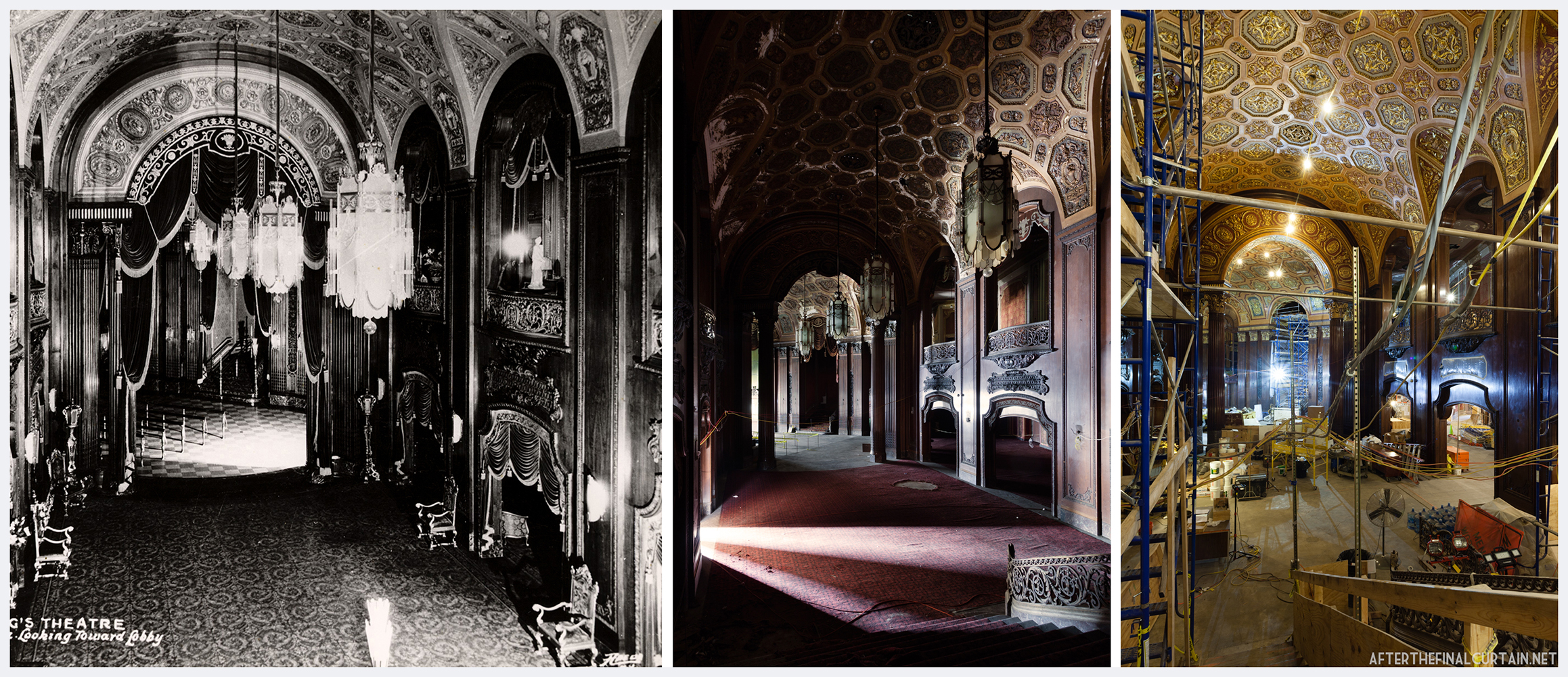
B&W Image from the Loew’s Collection, American Theatre Architecture Archive, Theatre Historical Society of America
I’m currently working on something I’m very excited about, but can’t announce just yet. I still want to give you all a hint though!
The photos in the triptych above are of the Loew’s Kings Theatre lobby when the theater was open, 30 years after it had been closed, and six months into the restoration.
Keep an eye out for more details soon!
© Matthew Lambros and After the Final Curtain, 2013. Unauthorized use and/or duplication of this material without express and written permission from this blog’s author and/or owner is strictly prohibited. Excerpts and links may be used, provided that full and clear credit is given to Matthew Lambros and After the Final Curtain with appropriate and specific direction to the original content.
Road Trip 2013 Day 5
The next stop on the trip was the Okla Theatre in McAlester, Oklahoma. The Okla opened on July 10, 1931 and closed on September 4, 1989. The city of McAlester is currently trying to restore and reopen the theater. For more information check out their website: http://www.oklatheater.com/
© Matthew Lambros and After the Final Curtain, 2013. Unauthorized use and/or duplication of this material without express and written permission from this blog’s author and/or owner is strictly prohibited. Excerpts and links may be used, provided that full and clear credit is given to Matthew Lambros and After the Final Curtain with appropriate and specific direction to the original content.
Proctor’s Palace Theatre
Proctor’s Palace Theatre opened on January 31, 1916 in Yonkers, New York. The 2,300 seat theater was designed by William E. Lehman who is also known for the Count Basie Theatre in Red Bank, New Jersey. It was built for theater magnate F.F. Proctor. Lehman designed the auditorium with a mix of French, Flemish and Italian style architecture. He is quoted as saying, “I wanted to create a building that will wear well.” The complex also included a six story office building.
The Variety Theatre
The Variety is one of the 22 theaters in my new book “After the Final Curtain: The Fall of the American Movie Theater.” Find out more here.
The Variety Theatre opened on November 24, 1927 in the Jefferson neighborhood of Cleveland, Ohio. It was built by Sam Stecker, Meyer Fine and Abe Kramer of the Variety Amusement Company. The 1,900 seat theater was designed in the Spanish gothic style by Cleveland-based architect Nicola Petti, who also designed the nearby Cedar Lee Theatre. The Variety building also included retail space and twelve apartments.
Road Trip Day 6
I took the Greyhound bus from Chicago to Cleveland to photograph the last place on the road trip: The Variety Theatre. The theater opened on November 27, 1927, and closed in the 1980s. It was last in use as a wrestling venue called Wrestle Plex.
Full blog posts for all the theaters I visited on this trip are coming soon.
Q&A with Kathy McKean, Managing Director of MIFA Victory Theatre
I recently spoke with Kathy McKean – the Managing Director of the Massachusetts International Festival of the Arts. MIFA owns and is renovating the Victory Theatre in Holyoke, MA.
1. What is MIFA?
“MIFA is a Holyoke based International Festival that brings world-class events to Holyoke and the Pioneer Valley. MIFA’s 2011 Season included Hal Holbrook in ‘Mark Twain Tonight’ and Silent Film Night The Last Command. Other presentations in Holyoke have been Shakespeare’s Globe Theatre in ‘Love’s Labour’s Lost’, contemporary Irish Dance in ‘Irish Cream’, Eddie Palmieri in Concert, a series of French Dance, Enchanted Circle Theatre in ‘Sojourners Truth’ and Mikhail Baryshnikov 2004 World Tour. MIFA is a vehicle for community restoration and historic and architectural preservation and is renovating and reopening the historic Victory Theatre, a 1600 hundred-seat Broadway style theater in downtown Holyoke. The iconic theater will be returned to its original use as a live theater house for Holyoke, the Valley and the Northeast.”