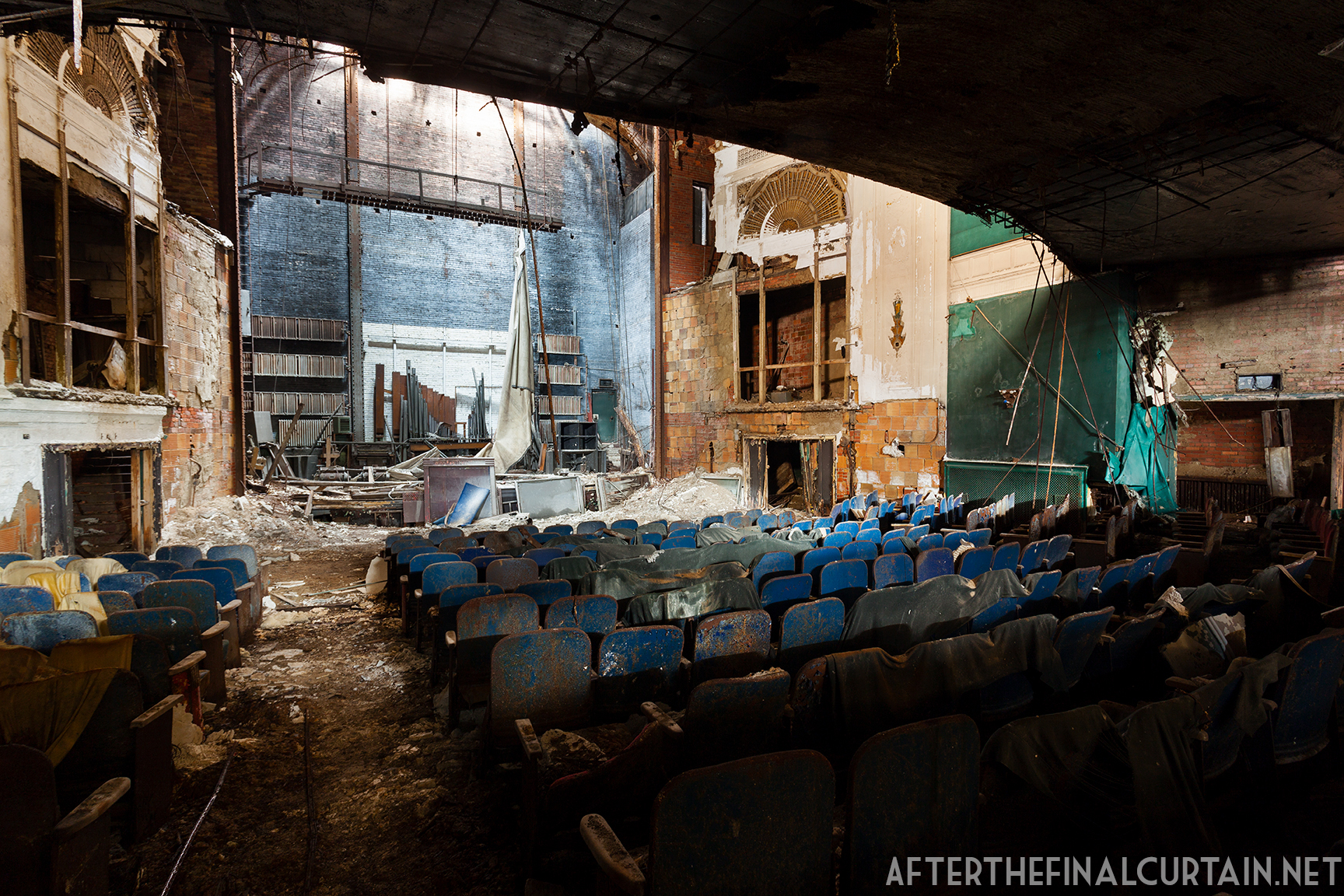
Main level, Paramount Theatre – Youngstown, Ohio.
I’ve been going through some of my older posts and expanding the text as well as re-editing the photos. Check out the first redone post – The demolished Paramount Theatre in Youngstown, Ohio.
Main level, Paramount Theatre – Youngstown, Ohio.
I’ve been going through some of my older posts and expanding the text as well as re-editing the photos. Check out the first redone post – The demolished Paramount Theatre in Youngstown, Ohio.
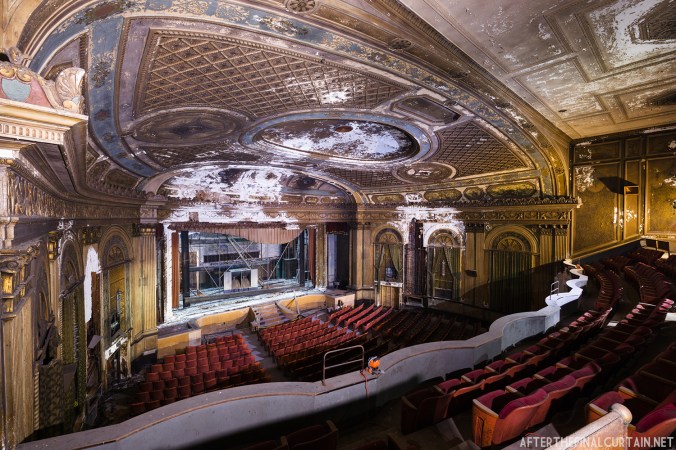
Robins Theatre – Warren, Ohio.
Hi Everyone,
I’ll be speaking in at The Gallery at Alan Baxter Associates in London on February 24, 2018 for the Cinema Theatre Association. The address is 75 Cowcross Street, Farringdon, London EC1M 6EL. Doors will open at 5:00 PM and tickets cost £10.00 at the door (which includes wine and light refreshments). Copies of my first book, After the Final Curtain: The Fall of the American Movie Theater, will be available for purchase.
It’s been a long time since I was last in England, and I can’t wait to check out some theaters while I’m there!
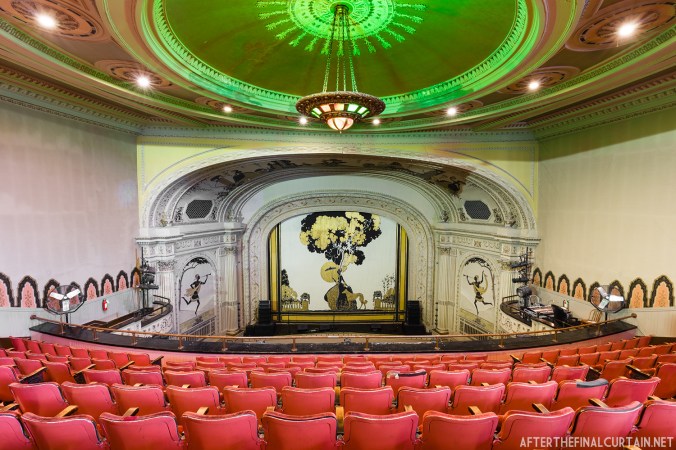
Cabot Theatre – Beverly, MA
On April 5, 2018 I’ll be speaking at the Cabot Theatre in Beverly, MA. I’ll also be exhibiting some new work at the gallery space in the theater. If you think the murals in this theater look familiar, it’s because they were most likely painted by the same artist as the ones in the Loew’s Poli and Loew’s Majestic Theatres in Bridgeport, CT. More details to come!
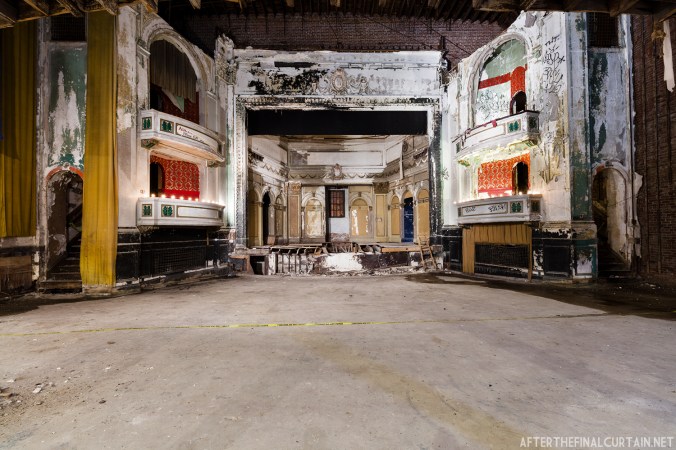
Everett Square Theatre – Boston, MA
I’ve secured another workshop date at the Everett Square Theatre in Boston, MA on April 14, 2018. I soft announced the first date on my Facebook page and it sold out in a few days. This one will probably go fast as well. You can find out more information and sign up here.
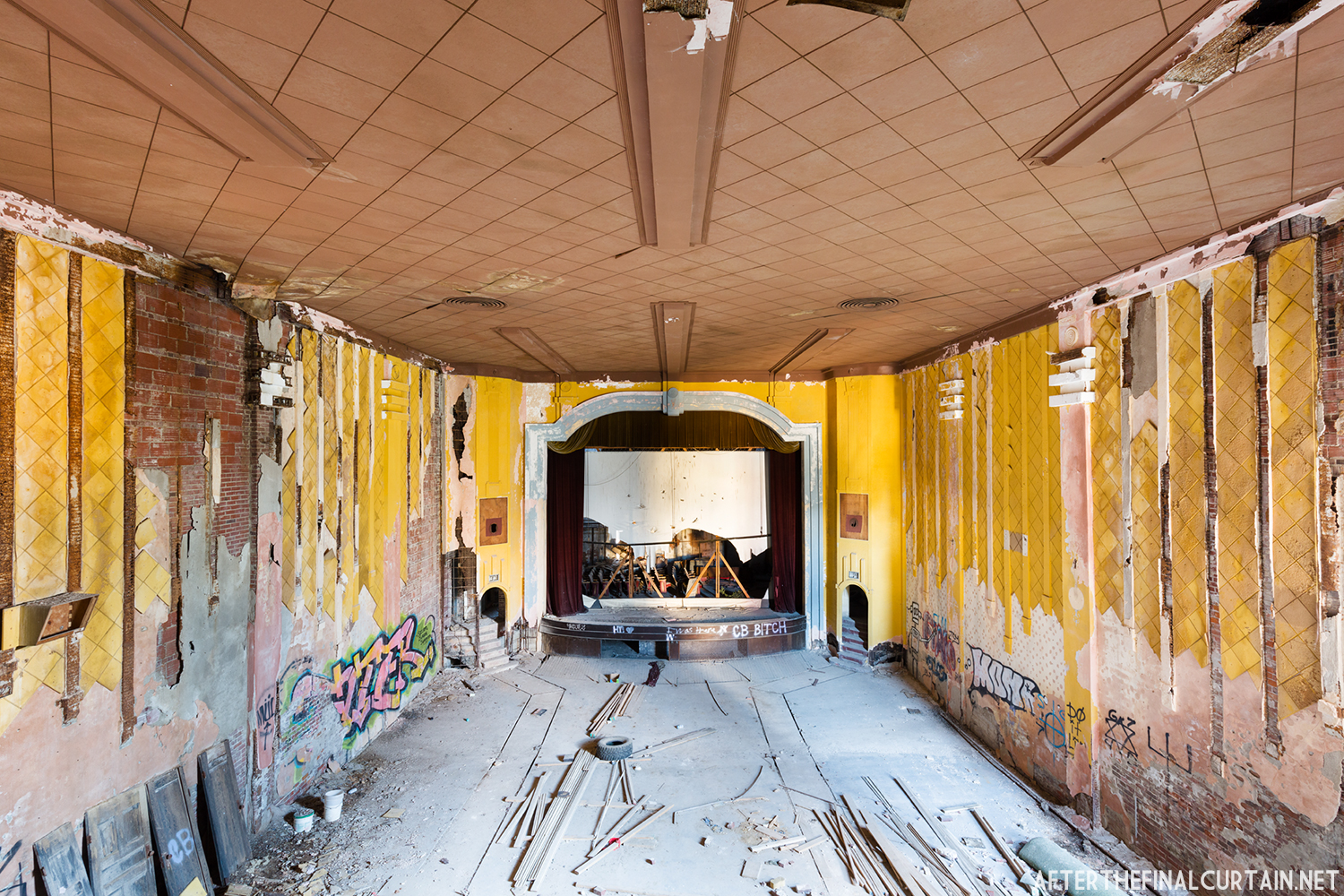
View from the balcony.
The original Gem Theatre in Cairo, Illinois opened on October 10, 1910. Opening night’s main attraction was the Cora Youngblood Carson Sextette, a group of young women who sang and danced. Three photoplays, which was an early form of motion picture, were also shown. This incarnation of the Gem was destroyed by a fire in 1929, and a new theater was built in its shell at a cost of $200,000 (or $2.8 million when adjusted for inflation.) The Gem was destroyed by another fire that started in one of the dressing rooms on February 27, 1934. It was rebuilt as an art deco theater with 900 and reopened in 1936.
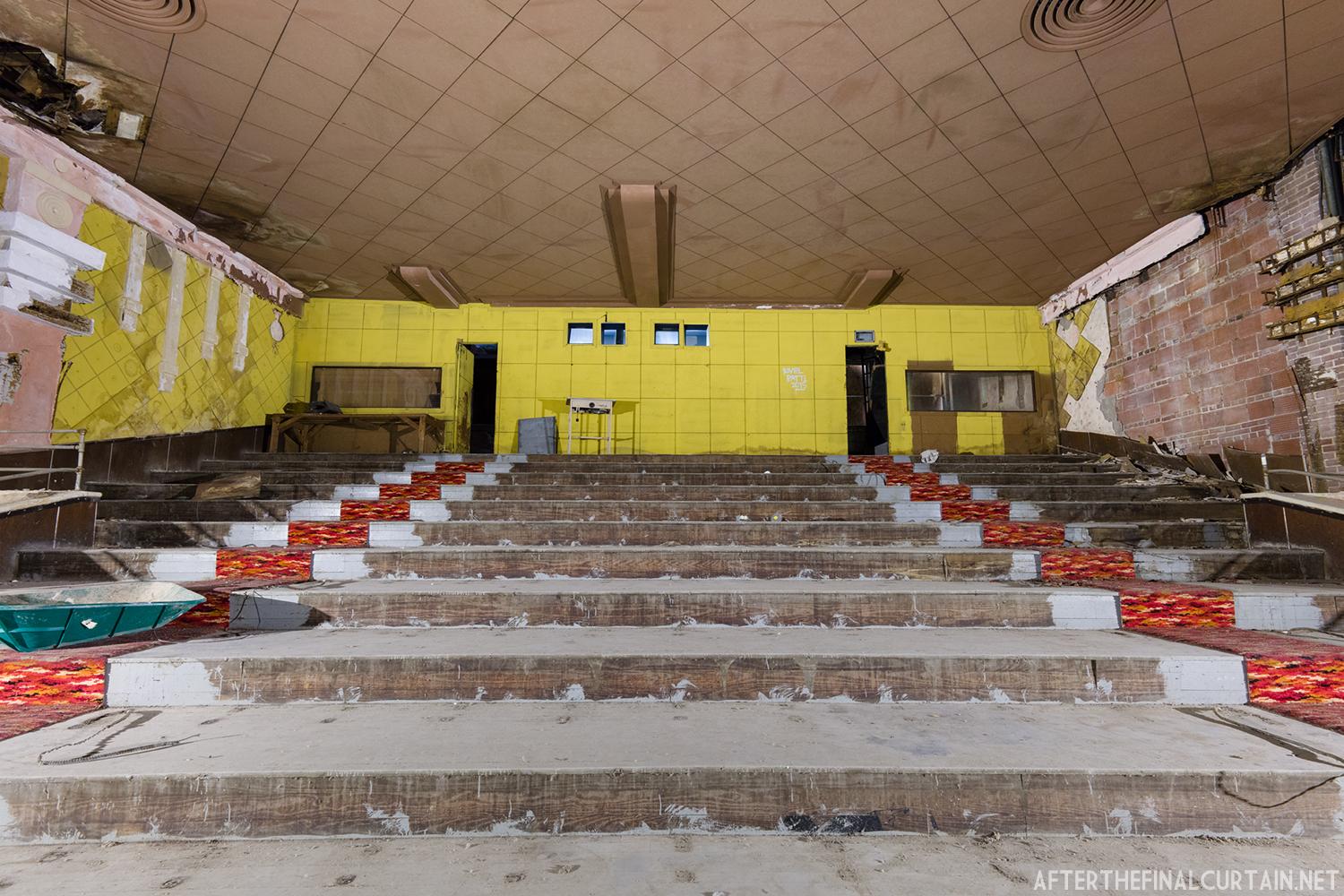
Construction of the original 685 seat theater was completed in just over four months.
In 1978, the Gem closed for good, and the lobby was turned into retail space, at one point becoming a video rental store called Gem Video. In 1995, the building was donated to the city, who planned on reopening as a movie theater and cultural arts center. They began work on the building in March of 1996, and were assisted by former Peace Corps volunteers as part of the Peace Corps 35 year anniversary. During this time the roof was replaced, the marquee was removed and restored, and the lobby was restored.
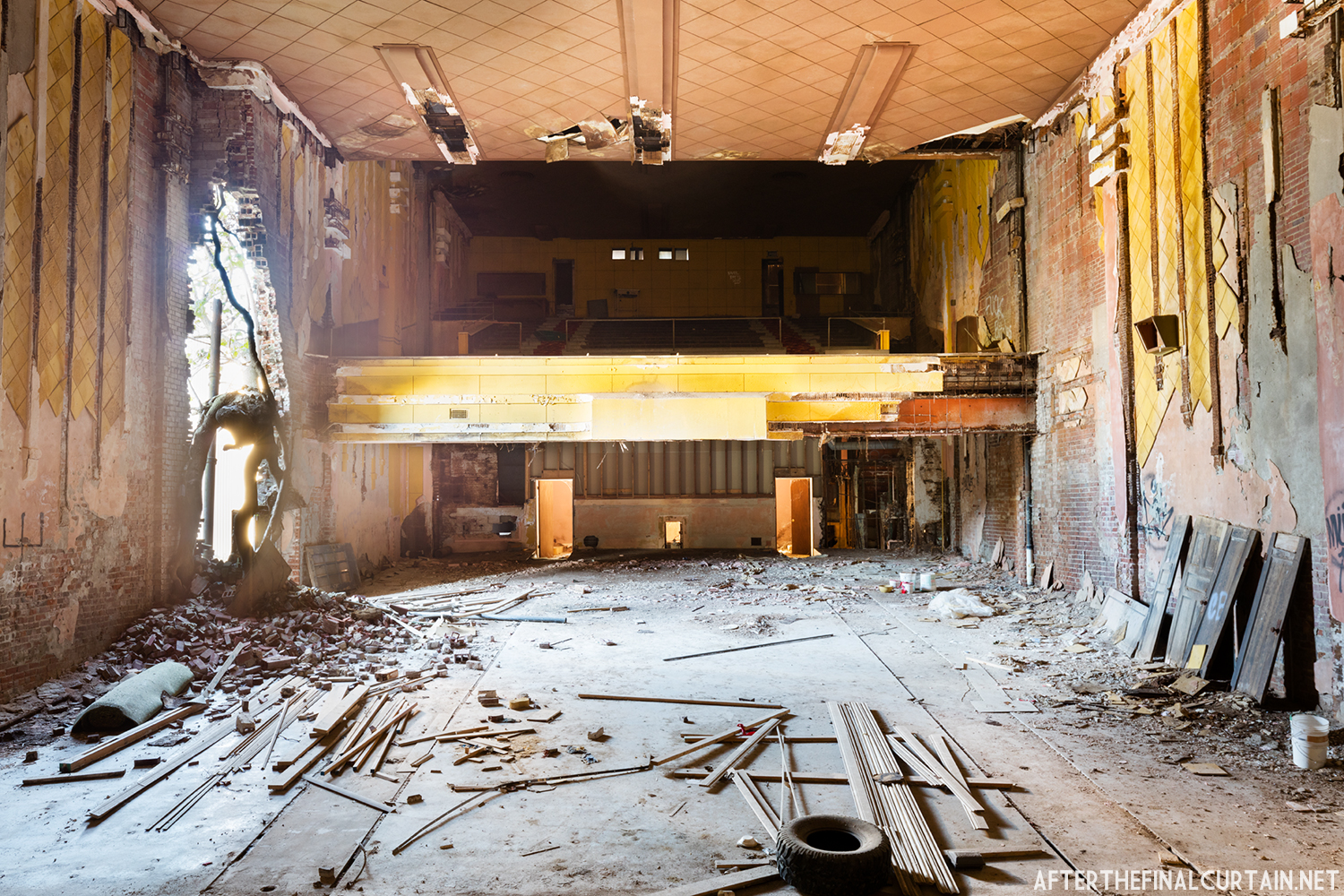
A tree is growing in the auditorium through a large hole in the wall.
On October 1, 1998, the restored lobby was shown to the public during Cairo’s October Days Festival. In 2000, the City of Cairo received a $436,000 Federal grant from the Commerce Department’s Economic Development Administration, and $231,900 of it was to go to the redevelopment of Gem Theatre. An additional $20,000 was given by the state of Illinois to renovate the theater’s stage and the city itself contributed $70,256. However, the restoration of the theater was put on hold in the mid-2000’s and it is unclear whether it will ever be restored.

The lobby was restored in the late 90s, but has fallen back into disrepair.
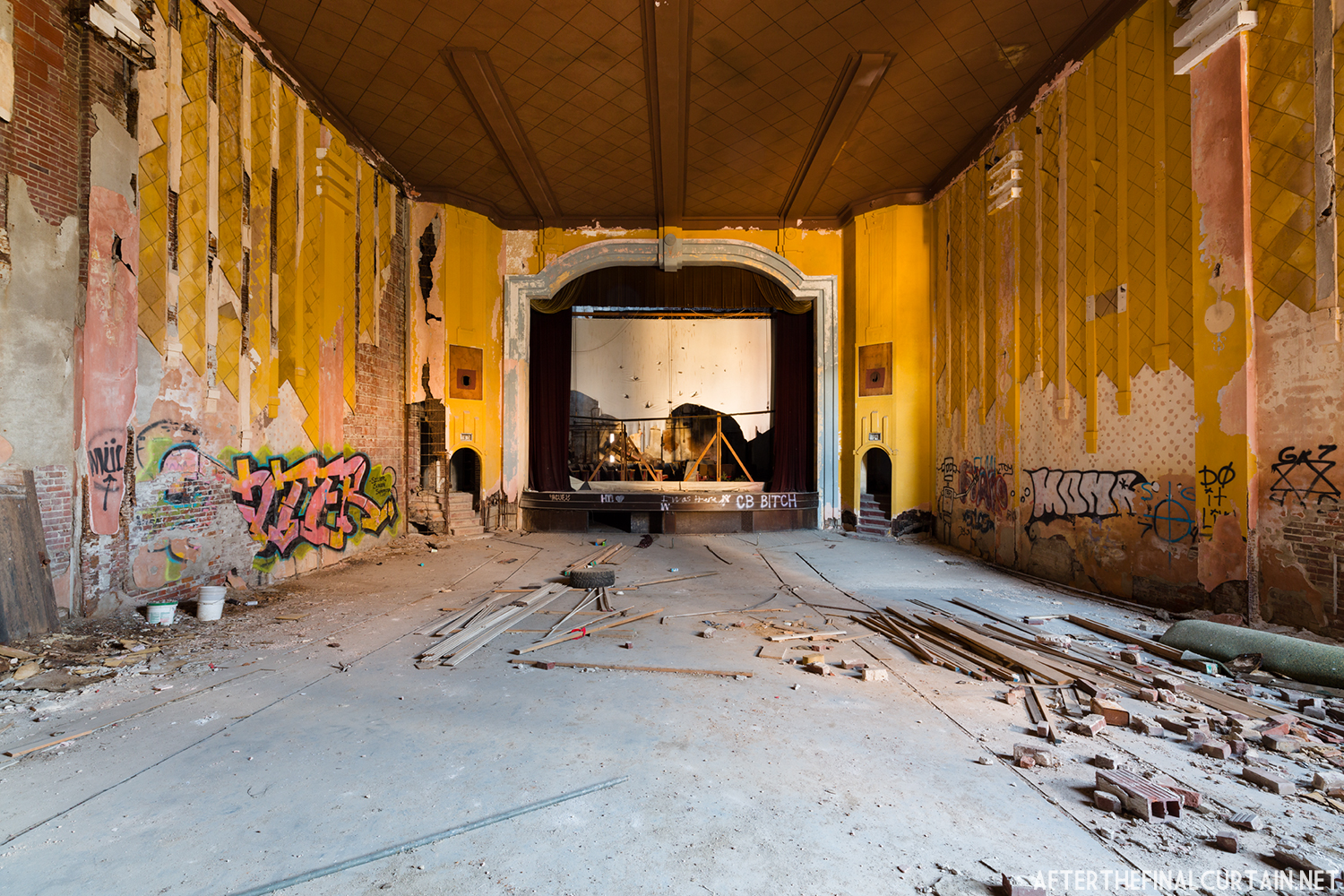
One of the original advertising slogans for the theater was “It’s Cool at the Gem.”
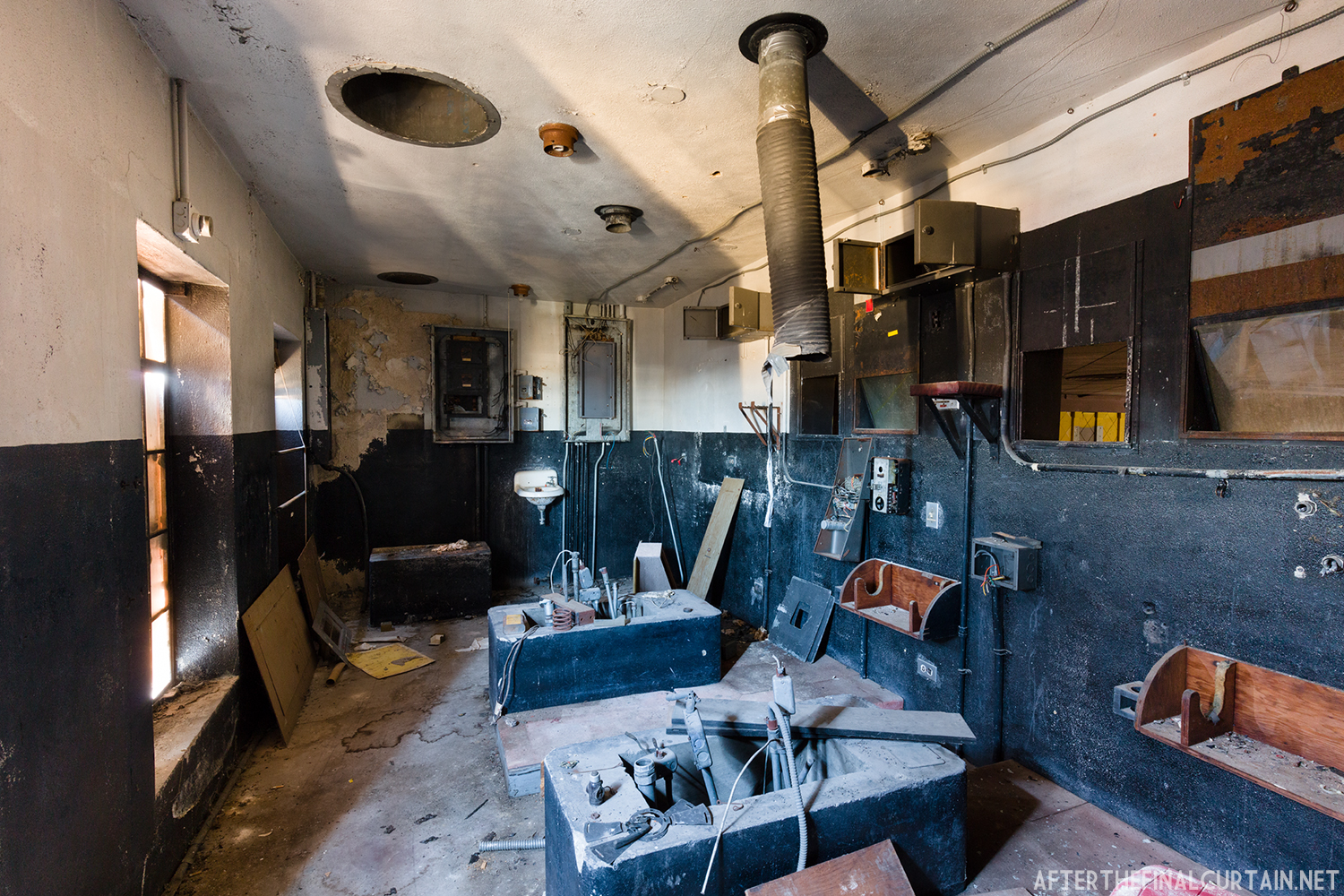
The projection room is empty.
I’ve been practicing with my newly acquired drone, and thought that a theater walkthrough might make for an interesting video. So a few days ago I revisited the Everett Square Theatre in Boston, MA to do just that. I think that I’ll be making many more of these videos going forward.
I’ve been posting Facebook Live videos of the theaters I’ve visited as I’ve been traveling around the country. I’ve decided to branch out to YouTube, and started my own channel. The theater featured in the video above is the Fox Theatre in Fullerton, CA. I was lucky enough to visit it twice, once in 2014, and again in 2017 after the ceiling was restored. This video is only available in SD, but future ones will be High Definition.
I’ll be posting more videos from theaters across the country soon.

During the late 1930’s tickets cost .25 cents, except on Wednesdays when admission only cost .10 cents.
The Fitchburg Theatre in Fitchburg, Massachusetts originally opened on February 7, 1929. It was designed by architect George W. Jacobs for the Maine and New Hampshire Theater Corporation (MNHTC). The construction of the theater displaced two buildings, one of which is now the Masciarelli Funeral Home, a Fitchburg Historic Landmark. MNHTC spared no expense in construction, which included a $15,000 Wurlitzer Style 190 pipe organ, large decorative tapestries for the auditorium, and a Photophone system. The 1,751-seat theater was the second theater in New England to have Photophone, a system of syncing recorded audio with motion picture.
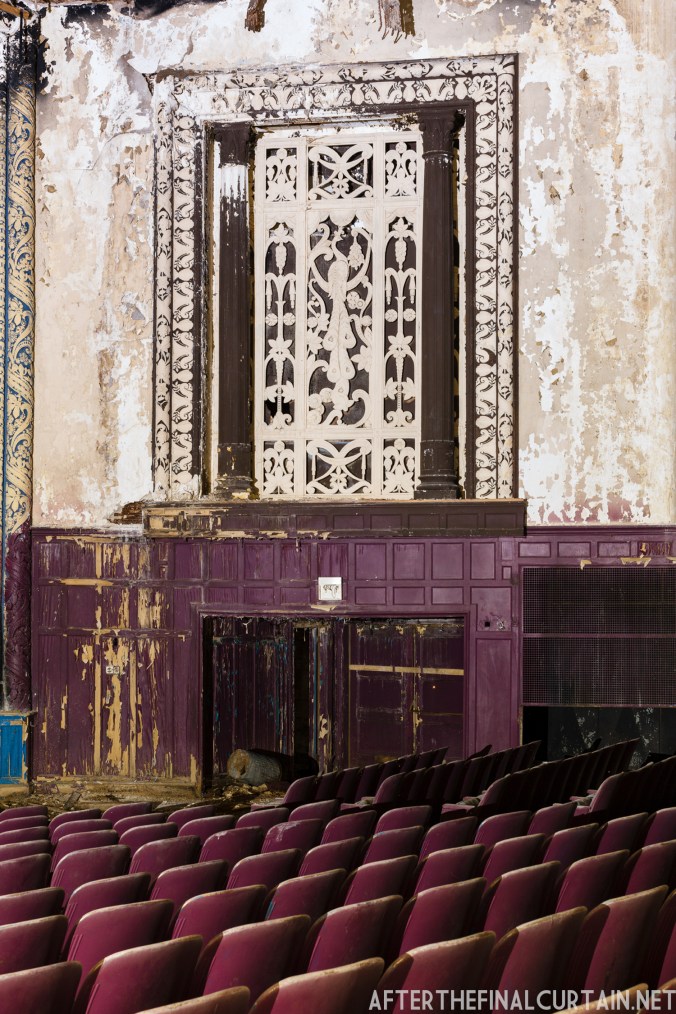
The Wurlitzer organ is long gone. It was removed in the 1960s.
Like many of its contemporaries, the Fitchburg Theatre had a mix of motion pictures and live (often vaudeville) performances. Its opening day program consisted of “In Old Arizona,” starring Warner Baxter, Dorothy Burgess and Edmund Lowe, five vaudeville acts (Miss Raffin’s Marvelous Troupe of Monkeys, Marie DeComa and Company, Don Romaine & Will Castle, Will Ward & Co.). Harry Rodgers played the Wurlitzer organ during the festivities. Tickets to the opening were reserved in advance and the same show was performed on February 8 and 9. Vaudeville performances continued at the theater until 1948, much longer than usual. In 1954, the theater closed for renovations. A concession stand, new marquee and updated seating were added.

The Lobby is currently full of construction debris.
The Fitchburg Theatre closed in 1970 and reopened the following year as an adult theater. Fitchburg police raided the theater on December 31, 1973 and seized copies of “Deep Throat,” and “The Devil in Miss Jones.” More adult films were seized in subsequent raids on February 11, 1974 and July 5, 1974. The owners were fined $10,000 in August 1974 for violating Massachusetts obscenity laws.

Frank Hollis, of the vaudeville team Kenney and Hollis was the first manager of the theater.
In 1975 the theater was forced to close when the city of Fitchburg refused to renew the theater’s license to show films. It was rumored that it was due to the obscenity law violations, but that was denied by Hedley Brey, the Mayor of Fitchburg at the time. Brey said it was because the owners had not complied with a city ordinance requiring the approval of the Health, Building, Fire and Police departments’ approval to show films to the public. Ben Sack Theatres, Inc. leased the theater later that year, and it reopened as the Family Theatre on July 30, 1975 with a showing of “Doc Savage: Man of Bronze.”

Some of the original plasterwork can be seen again due to the drapes that were put up during the 1980 remodel falling down.
Live performances began again soon after it reopened, and many famous bands performed at the theater during this time, including; Rush, Merle Haggard, Dolly Parton, Loretta Lynn, Hank Snow and Freddy Fender. In 1980, the theater closed for renovations once again. This time it was triplexed with the orchestra level becoming one, and the balcony being divided into two smaller auditoriums. At the same time most of the ornate plasterwork was covered with drapes. Upon reopening the theater was renamed the Cinema-1-2-3. It closed for permanently in 1987 with a showing of “Crocodile Dundee.”
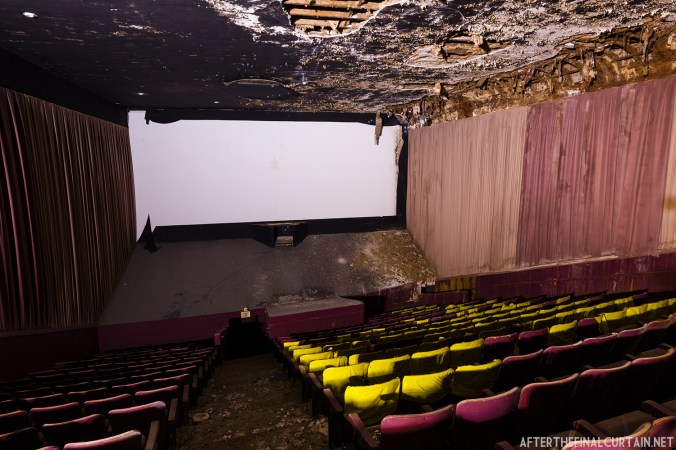
One of the two smaller auditoriums created from the former balcony space.
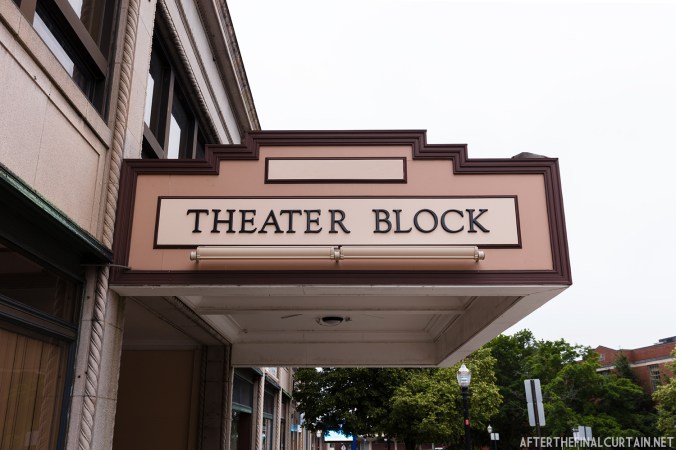
A few plans to reopen the theater were proposed over the next two decades, including reopening it as a movie theater, becoming a “draft house” theater that served alcohol, and gutting the theater and turning it into a rock climbing gym. In November 2016, the main street theater block was purchased by Fitchburg State University (FSU) for $350,000. FSU have a three-phase plan to renovate and reopen the block culminating in the theater becoming a 1,600-seat performing arts space for use by the University’s theater program and community organizations.

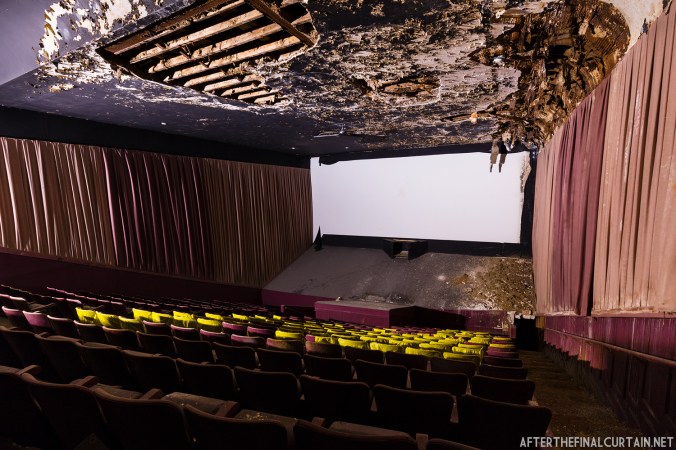
The second of the two balcony auditoriums.
My two books, After the Final Curtain: The Fall of the American Movie Theater, and Kings Theatre; The Rise, Fall and Rebirth of Brooklyn’s Wonder Theatre are available on Amazon and bookstores worldwide. Signed copies can be purchased at my site.
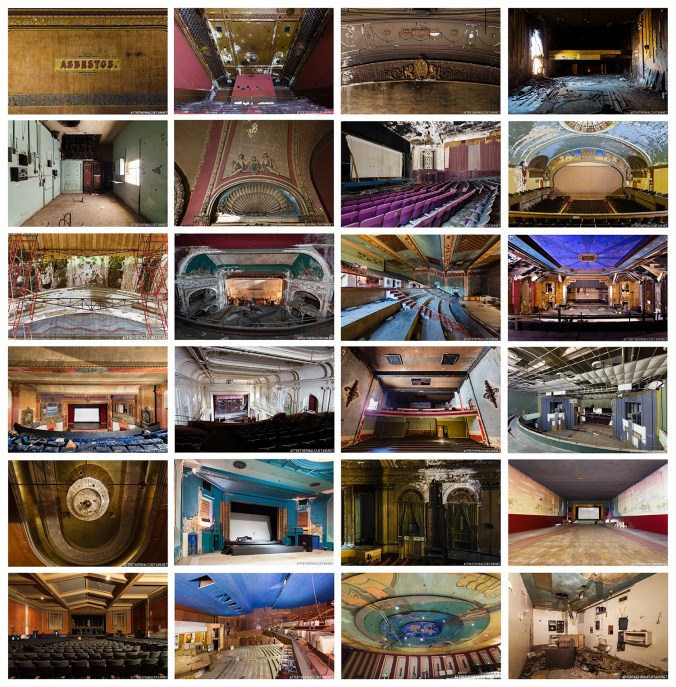
Happy New Year Everyone!
This year will mark the 7th anniversary of the After the Final Curtain, and with that I’m going to do something a bit different. AFtC will be going weekly in 2018! I’ve been photographing theaters much faster than I’ve been posting them, and as you can see by the image above I’ve got quite a backlog. There will be at least one new theater post a month as well as interviews, videos, updates of old blog posts, and more.
Look for the first post (The Fitchburg Theatre in Fitchburg, Massachusetts) this Thursday.
Want to see the Paramount for yourself? I host photography workshops at the theater a few times a year. Click here to sign up for the next one.

Originally billed in opening advertisements as “Springfield’s newest playground of pleasure,” the Paramount Theatre in Springfield, Massachusetts opened on September 29, 1929. In 1926, the Famous Players-Lasky Corporation, later known as Paramount Pictures Corp, signed a 14-year contract at $100,000 per year for the space at the former Massasoit Hotel and hired architect Ernest Carlson to design the theater. Carlson designed the Paramount for talking motion pictures, which were quickly replacing silent films. The 3,200-seat theater took three years to build, and cost $1,118,000 ($16 million when adjusted for inflation). A Wurlitzer 3/11 Opus 2011, Style 230 theater organ was installed prior to opening.
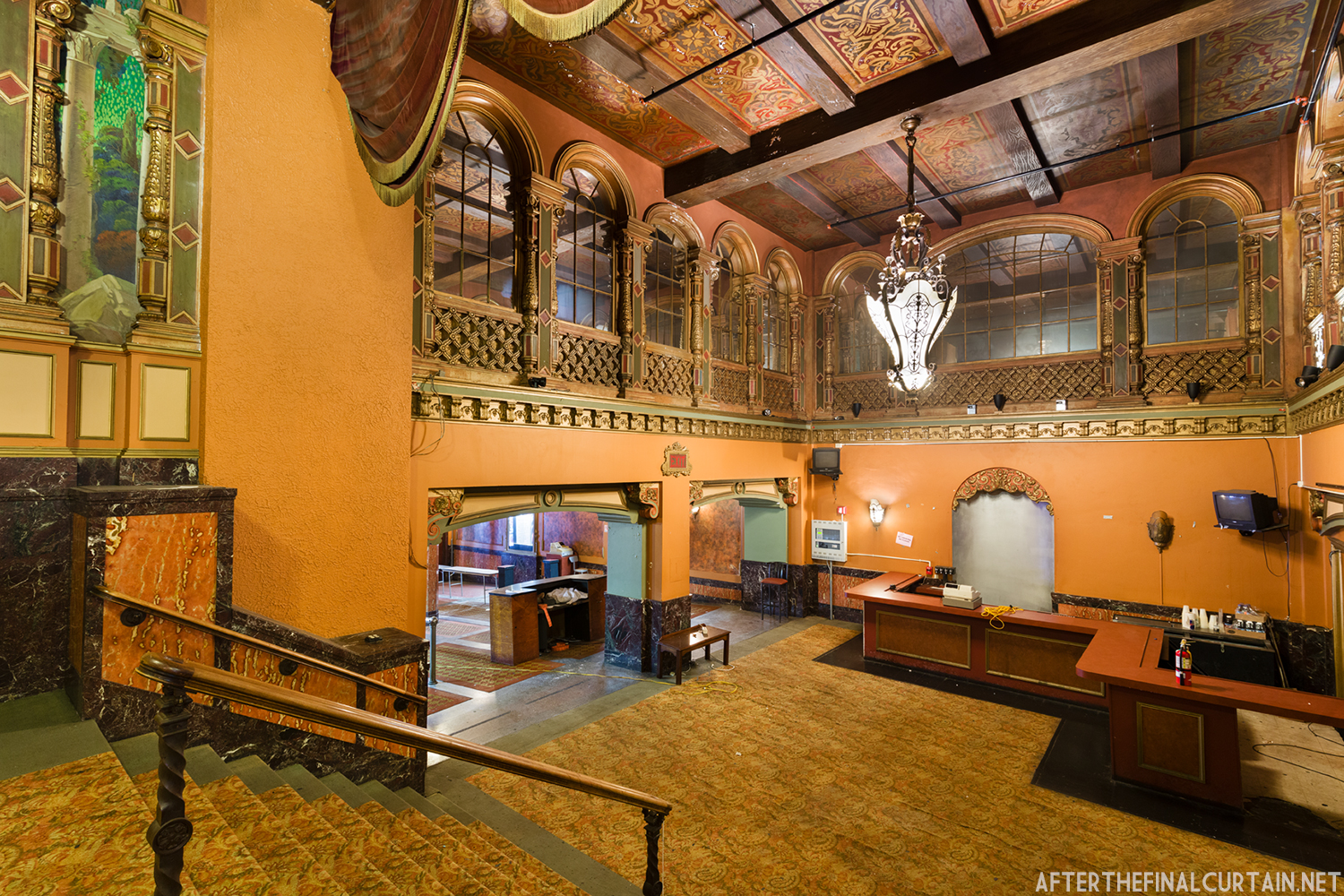
The opening week program at the Paramount consisted of the 1812 Overture performed by the New York Symphony Orchestra, Joe Alexander playing the Wurlitzer organ, a Paramount newsreel, and “Dance of Life,” a talking film starring Nancy Carroll and Hal Skelly. Like many other theaters of the time, entertainers often made appearances at the Paramount. At first it was as part of a vaudeville act, and later on to promote their films. Some of the stars that appeared at the theater included Ethel Barrymore, Jack Benny, Eric Von Stroheim, and Lillian Gish. The theater was operated by Western Massachusetts Theatres, Inc. (WMT), which was a division of Paramount Pictures. WMT also operated the nearby Victory Theatre in Holyoke, Massachusetts. The Paramount Theatre was WMT’s flagship theater until 1952 when the movie studios were forced to give up ownership of theaters by the verdict of the United States vs. Paramount Pictures Supreme Court case.
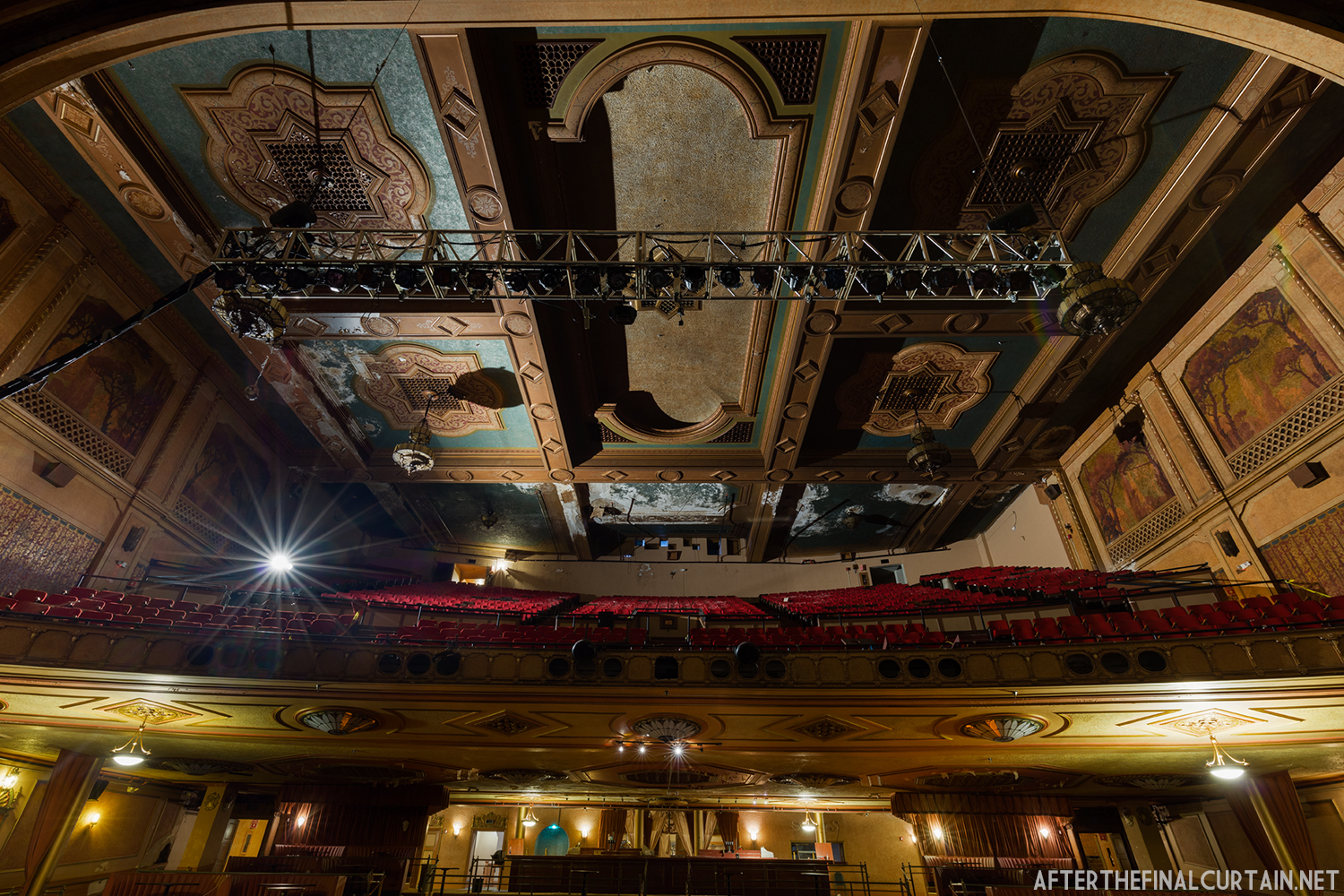
Movies were the main attraction at the Paramount until 1966, when musical performances and other live entertainment began to be regularly shown at the theater. In 1969, the Paramount closed for the first time. It reopened In 1975 and was renamed the Julia Sanderson Theater, after a Broadway actress from Springfield. Live shows continued at the theater until 1979, when it became a revival movie house, and its name was changed back to the Paramount. A new screen, and a speaker system taken from the recently closed Victory Theatre, were installed. It closed for a second time in 1986, but was used occasionally until 1999.
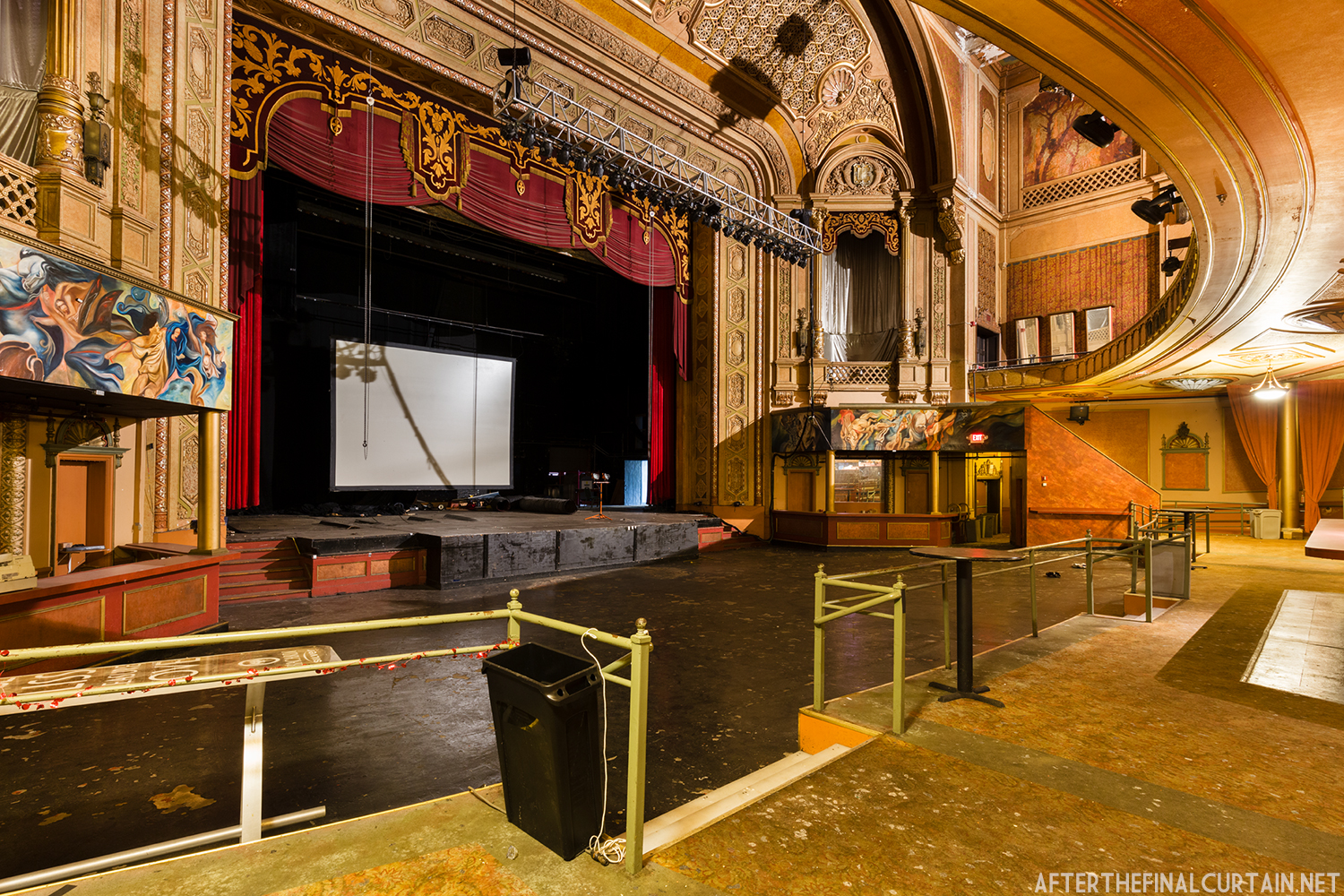
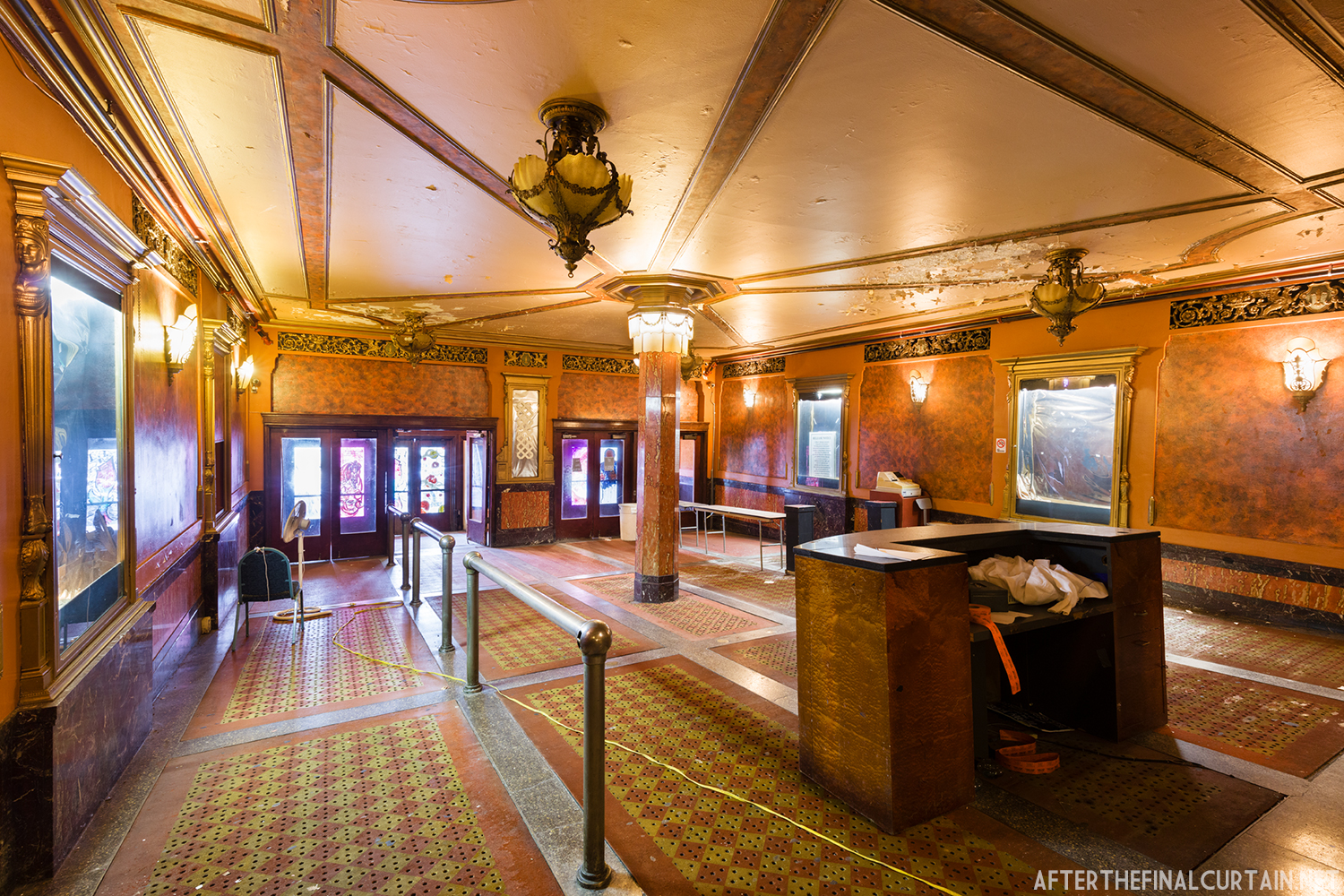
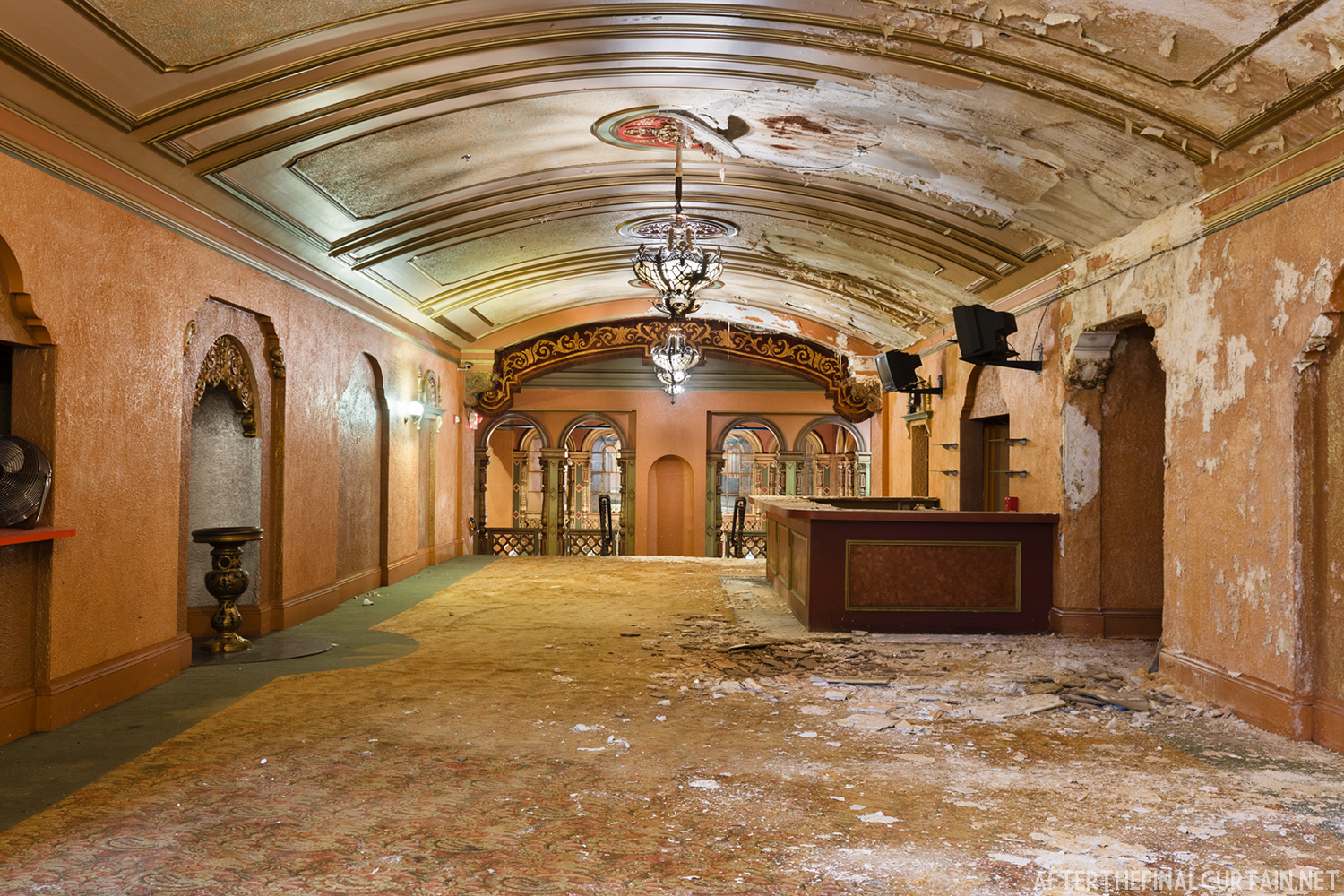
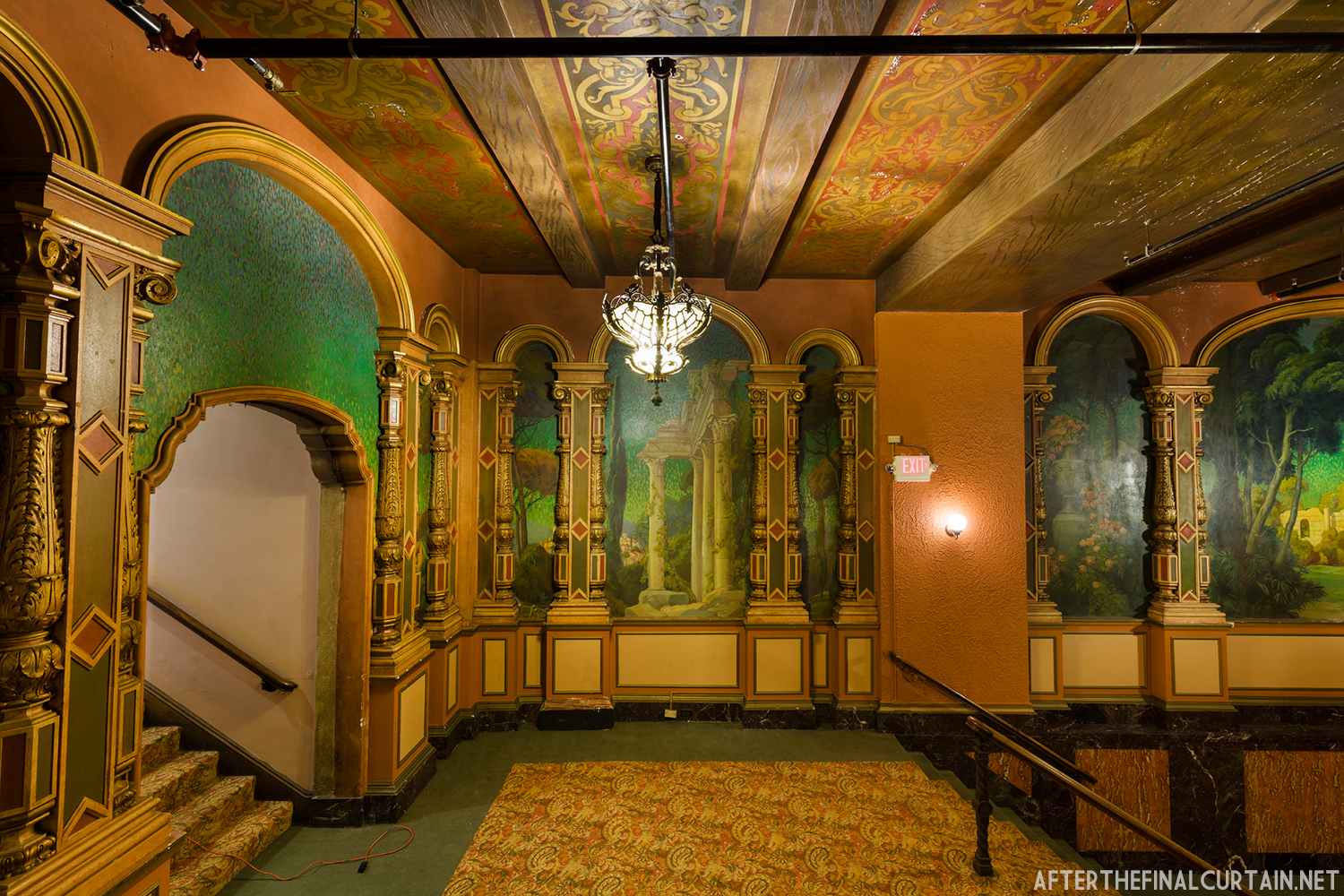
It was purchased by Paramount Realty Investment LLC/Creative Theater Concepts, who spent $1.3 million turning the theater into a nightclub/live performance space. It reopened as the Hippodrome Theatre in December 2000. The Hippodrome was a popular nighttime downtown destination for most of the 2000s. In 2011, it was purchased by the New England Farm Workers Council (NEFWC) for $1.7 million. They operated the theater sporadically until closing for good after a shooting in April 2015. NEFWC intend to remove the nightclub alterations and reopen the theater as a live performance space, as well as restore the Massasoit Hotel into an 81-room boutique hotel. The estimated costs for the restoration are between $32 and $41 million.
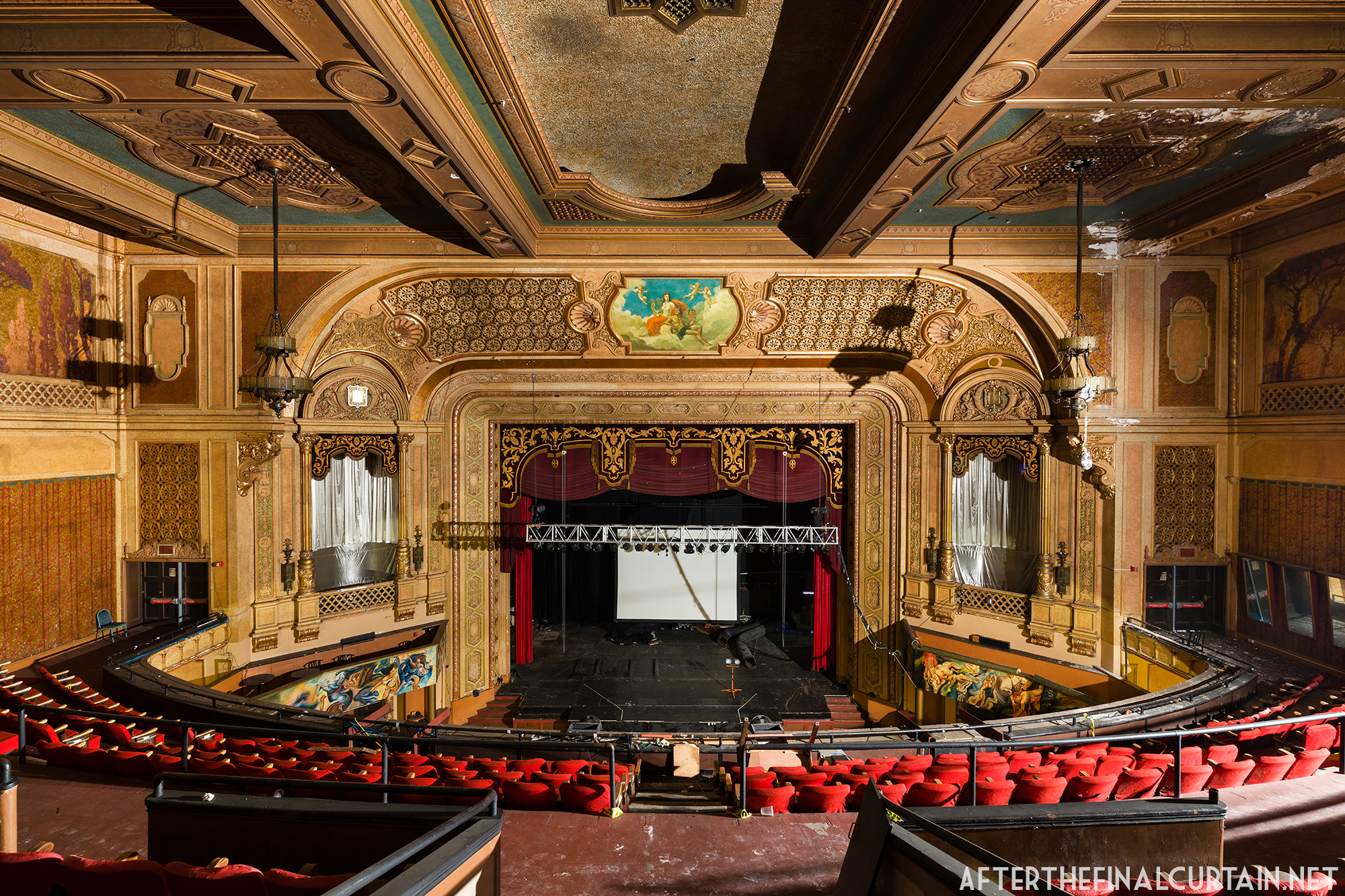
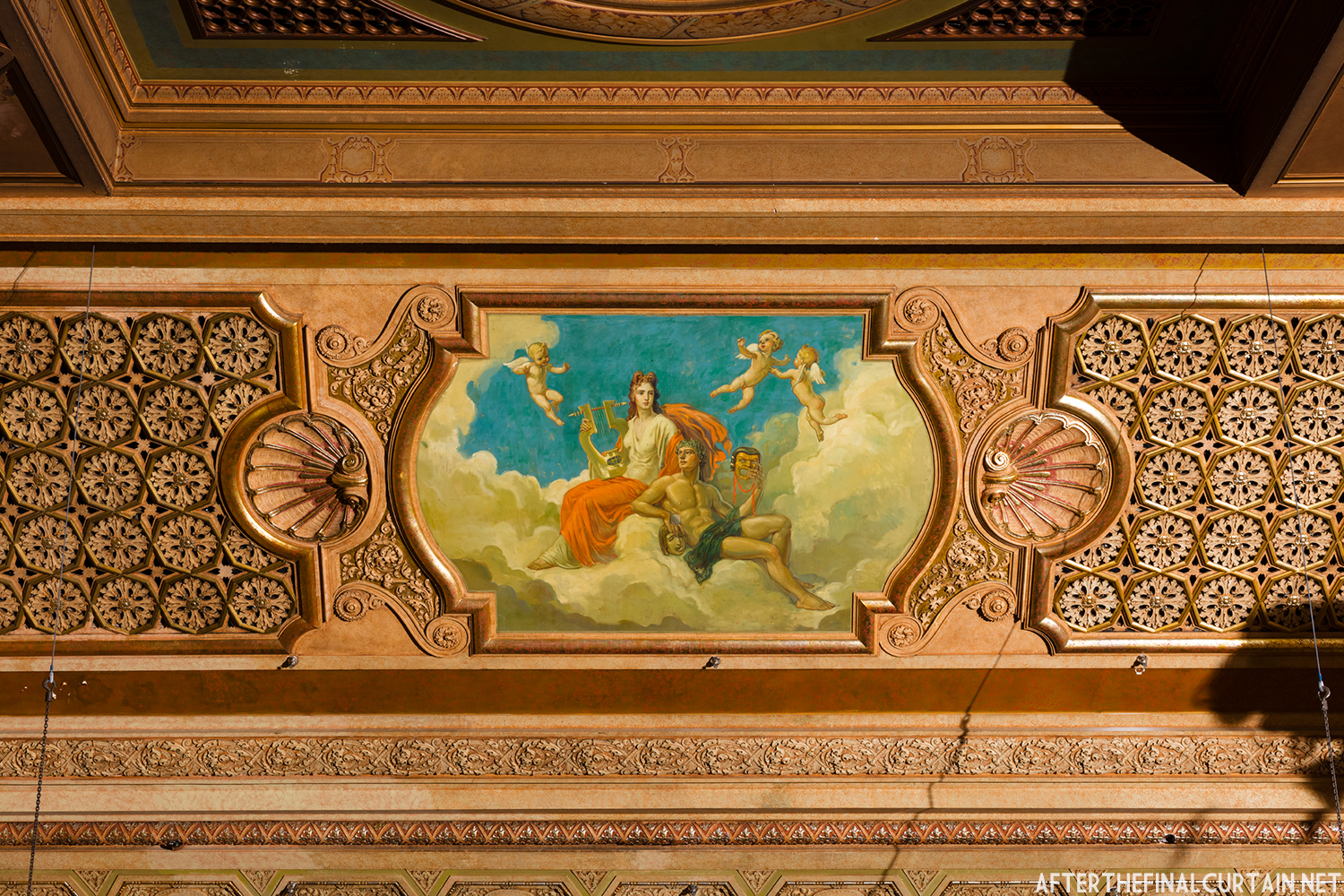
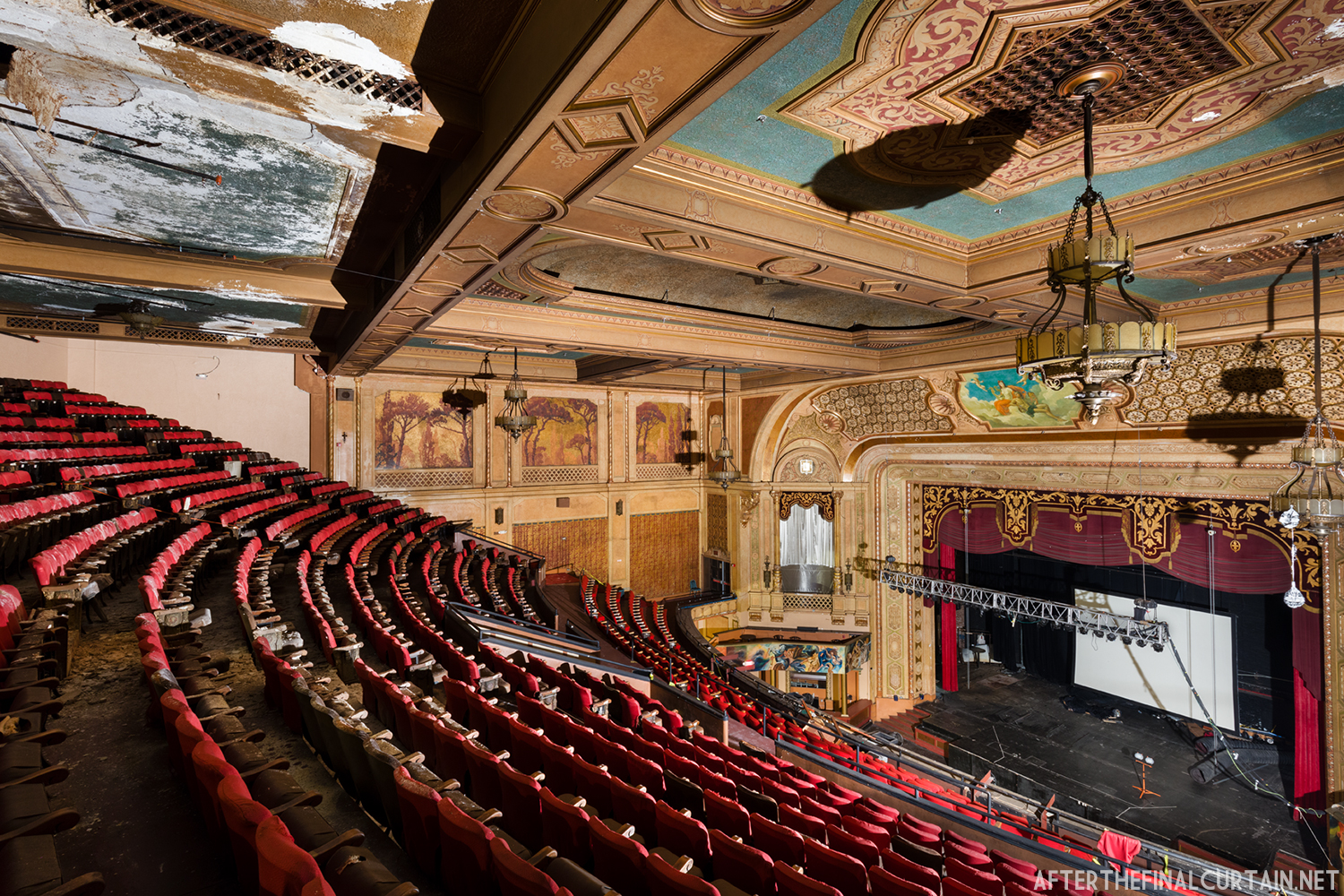
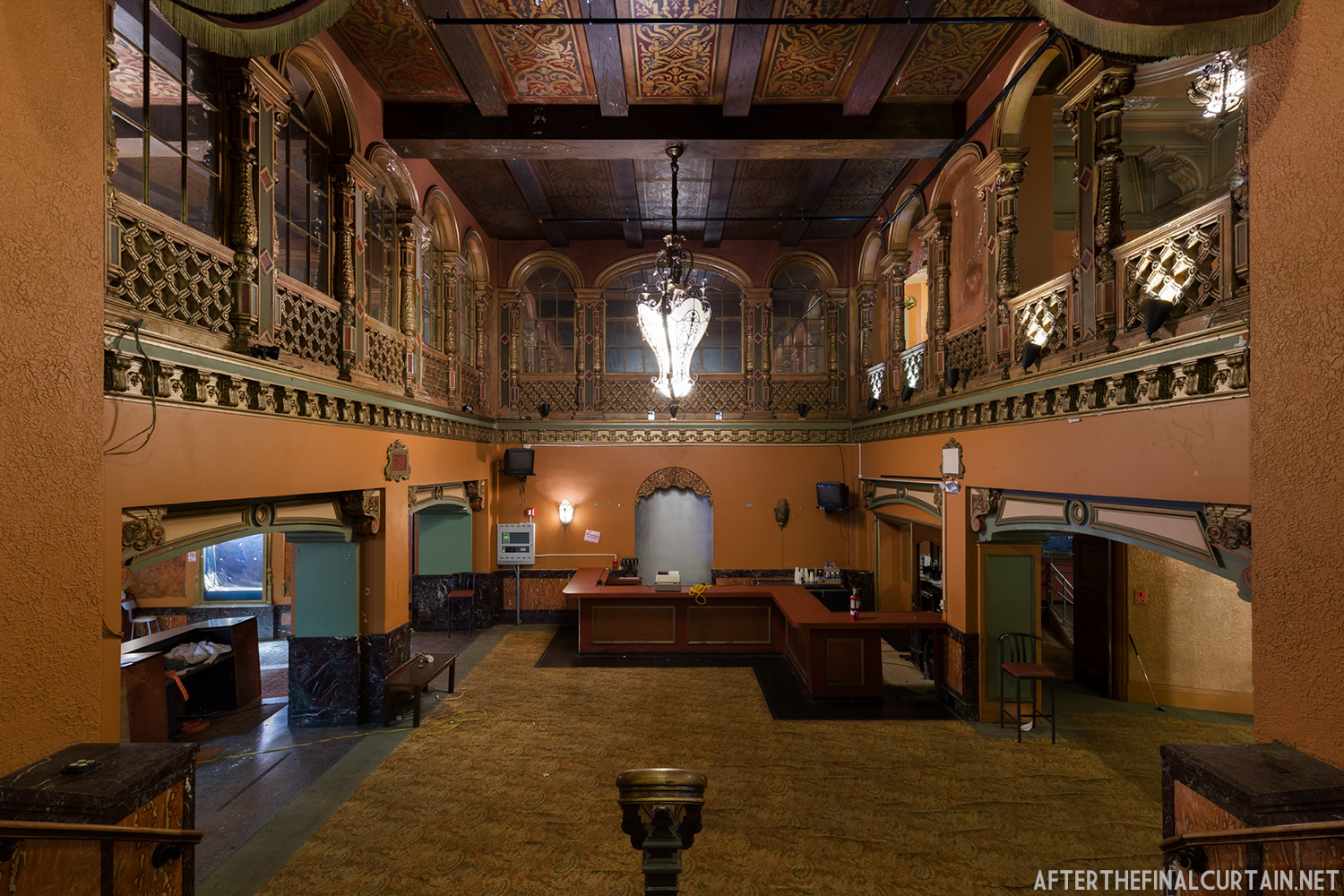
I’ve added two more photo workshops to the fall season. The Grand Theatre in Steubenville, Ohio and the Paramount Theatre in Springfield, MA. Both theaters are full of amazing details to photograph, and I’ll be on hand to help you out with any questions you might have. All levels of photographer, from beginner to expert, are welcome.
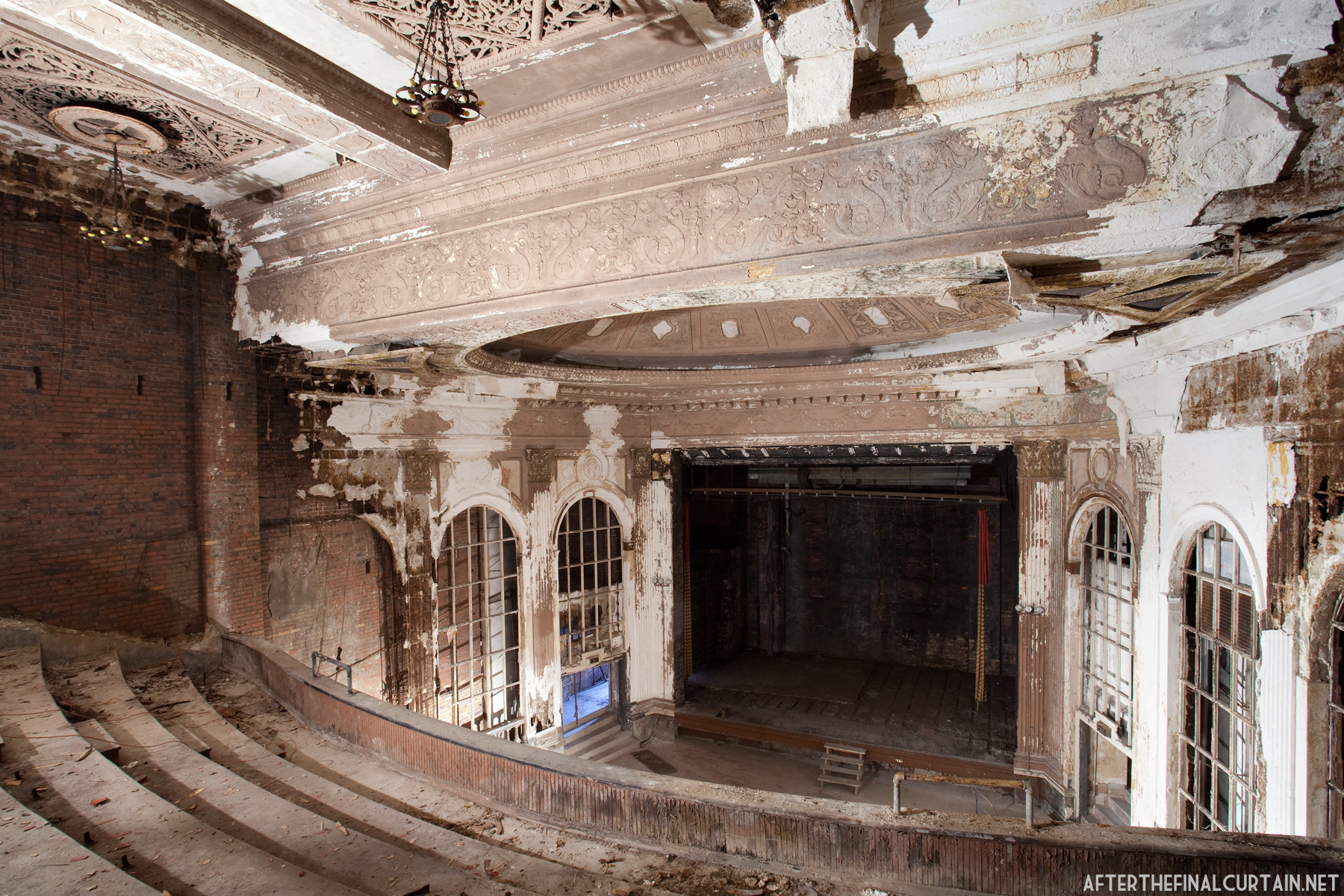
Balcony, Grand Theatre Steubenville, Ohio
Location: Steubenville, Ohio
Date/Time:
October 15, 2017 (Session 1) 9:00 AM – 12:00 PM and (Session 2) 1:00 PM – 4:00 PM
Cost: $50.00
Tickets: http://www.mlambrosphotography.com/workshops/grand-theatre-steubenville-ohio-workshop
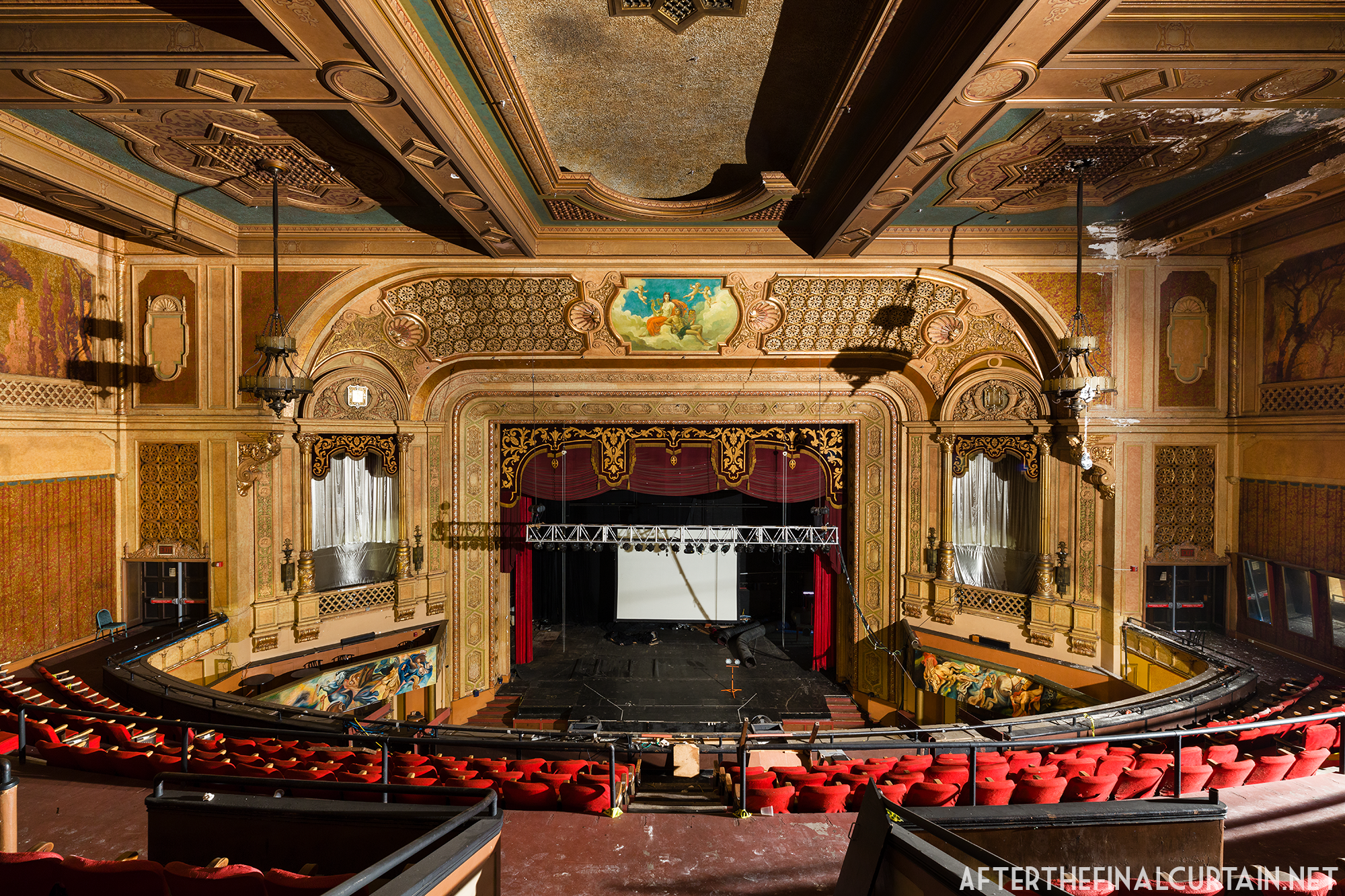
Paramount Theatre – Springfield, MA.
Location: Springfield, MA
Date/Time: November 4, 2017 (Session 1) 9:00 AM – 12:30 PM, (Session 2) 1:00 PM – 4:30 PM
Cost: $100.00
Tickets: http://www.mlambrosphotography.com/workshops/paramount-theatre-workshop
Past workshops I co-hosted raised thousands to help the theaters with maintenance, and other expenses. However, these are solo workshops, which means that more money will be going to the owners to help the theaters. While the money from these workshops will never be enough to save a theater, but every little bit helps.
If you have any questions feel free to e-mail me at: Matt@mlambrosphotography.com
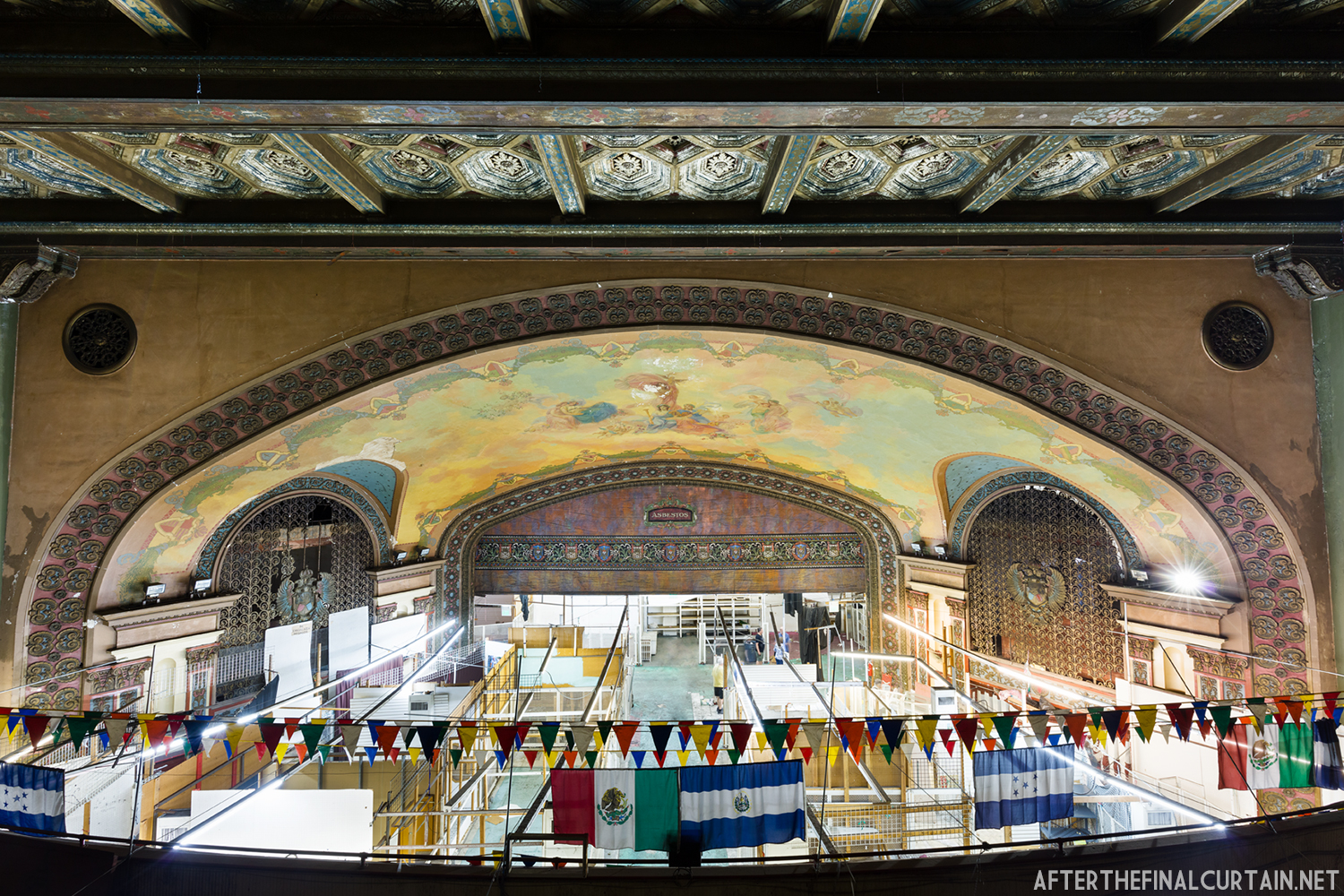
View from the balcony.
The Westlake Theatre in Los Angeles, CA opened on September 22, 1926. It was designed by architect Richard M. Bates, Jr., who designed the theater’s facade in a Spanish Baroque style known as Churrigueresque, and the interior in a mix of Renaissance and Adamesque. The 1,949 seat theater was built for the West Coast Langley Theatres for $750,000 ($10.2 million when adjusted for inflation). Anthony Heinsbergen, a nationally acclaimed muralist, painted the murals in the auditorium and lobby. A 2 manual, 10 rank Wurlitzer organ was installed prior to the opening, and the internal decorations were done by Robert Power Studios.
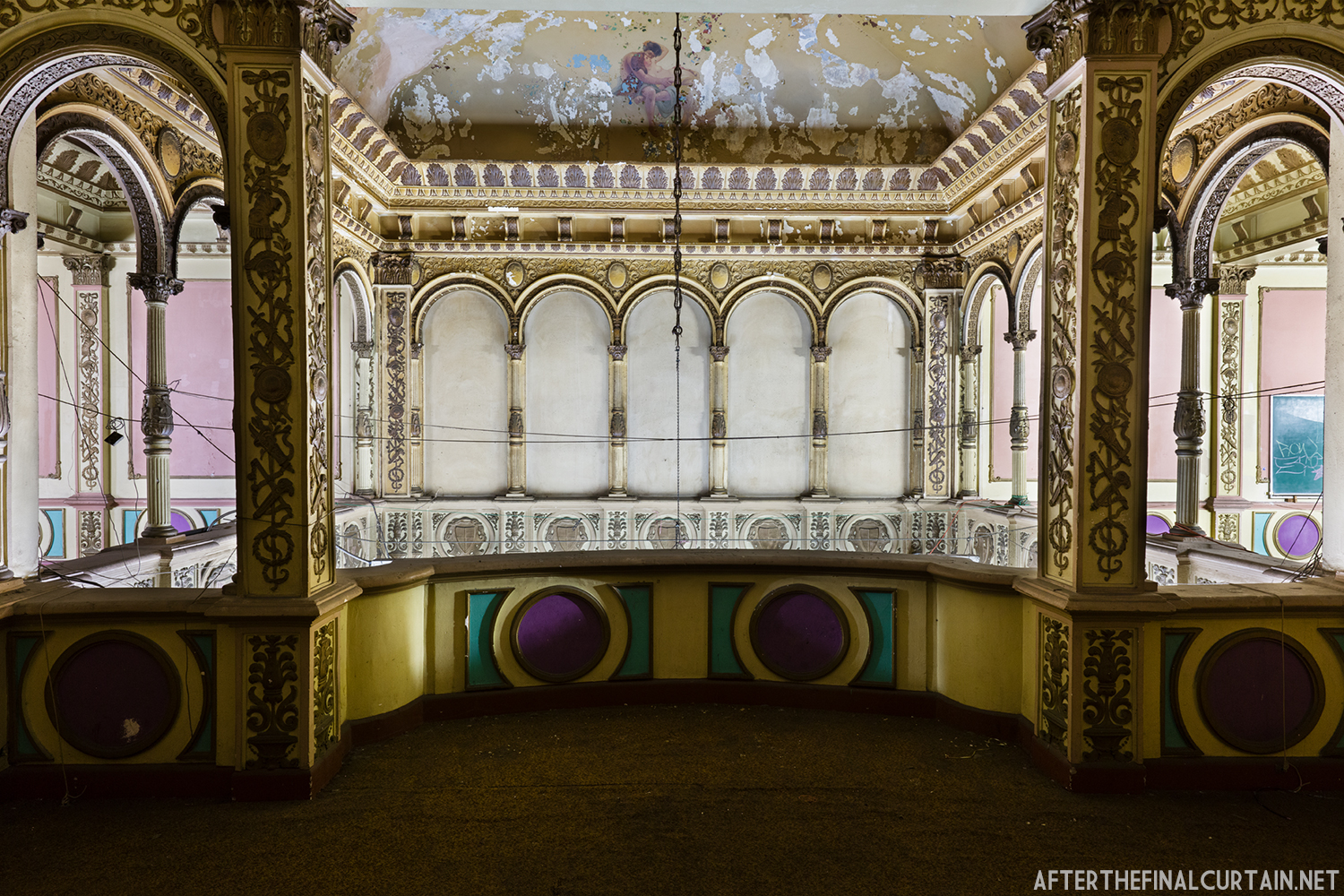
In 1935, portions of the theater, including the ticket booth, interior foyer and the marquee were updated by famed theater architect S. Charles Lee during a two week closure.
Billed as a “Hollywood Gala event,” the opening day consisted of “Other Women’s Husbands,” a silent film starring Monte Blue and Marie Prevost, as well as a performance by Charlie Nelson and his band. Soon after the theater opened, movie studios began using the Westlake to preview upcoming films. Some of the films previewed at the the Westlake include; “The Best Girl,” starring Mary Pickford, “The Jazz Singer,” starring Al Jolson, “The Wind,” starring Lillian Gish, and “A Texas Steer,” starring Will Rogers. The showing of “A Texas Steer” broke West Coast Theatre records for attendance at a film preview.
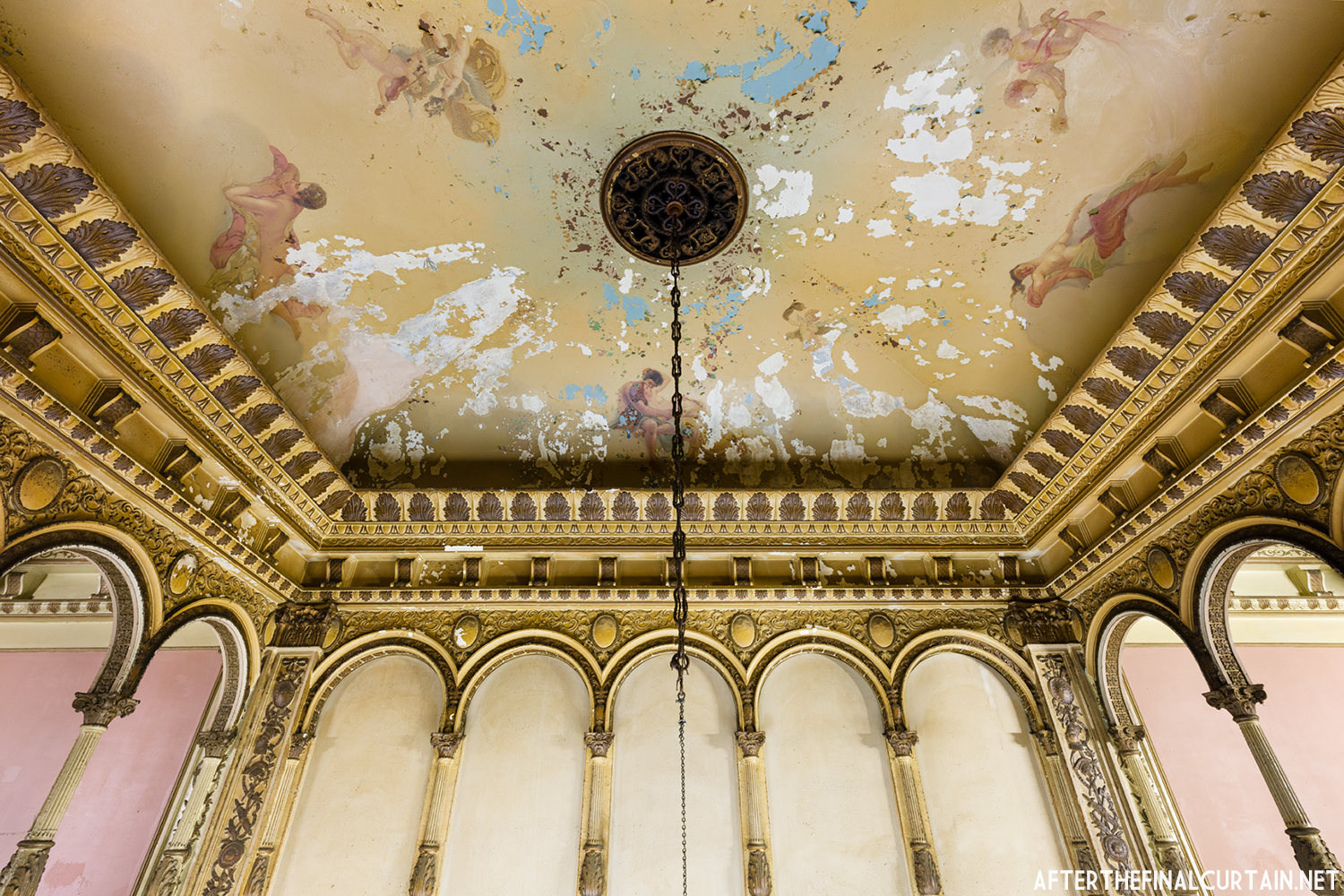
As part of the updates, Heinsbergen painted a new mural on the ceiling of the lobby.
Odd things happened at the Westlake over the years. On April 9, 1928, F.D. McMahan, the assistant manager at the time, walked in on a burglar trying to open the theater’s safe. The burglar ordered McMahan and another employee to open the safe, but both refused and the burglar fled after tying them up. Reverend Jim Jones, founder of the People’s Temple and leader of the Jonestown Massacre, was caught masturbating by an undercover police officer in the theater on December 13, 1973. He was arrested and booked for lewd conduct. Members of the People’s Temple (including a deputy D.A.) began to pressure the LAPD to dismiss the charge. They were eventually dropped after Alex Finkle, Jones’ doctor, claimed he had a prostate issue that caused him to have to shake his penis while urinating. Judge Clarence A. Stromwall ordered the records of the case sealed and destroyed.
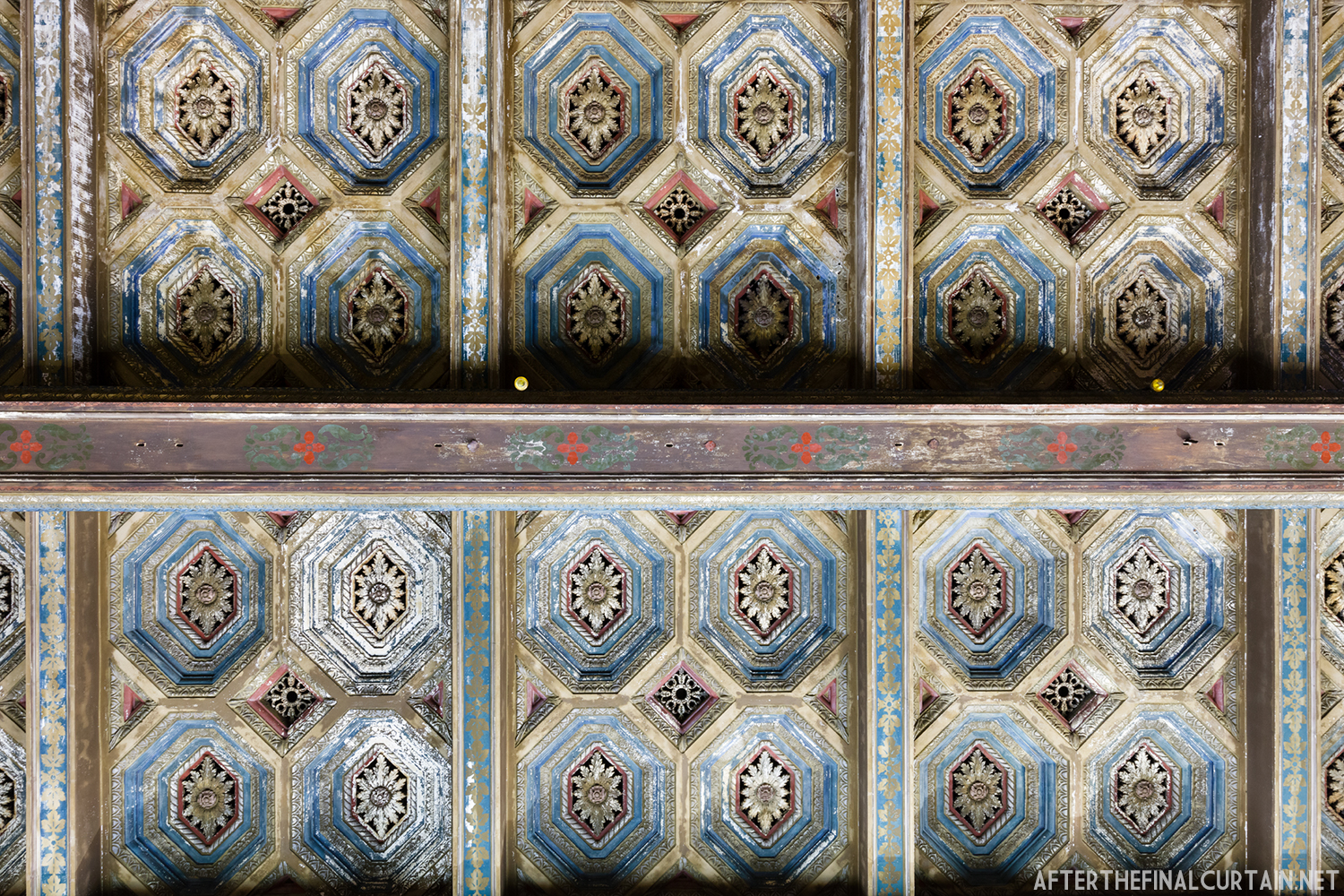
View of the auditorium ceiling.
The Westlake Theatre changed hands a few times throughout the years. First, it was purchased by Favorite Films of California, who also operated the Lake Theatre, from Fox West Coast Theatres. Favorite Films later sold the building to Metropolitan Theatres who turned it into a Spanish language house. In 1991, Metropolitan sold the theater to Mayer Separzdeh, who closed the theater on June 26, 1991, removed the seats, flattened the main level, and turned it into a swap meet. The City of Los Angeles responded to the changes by declaring the theater a Cultural Historic Monument in September of 1991.
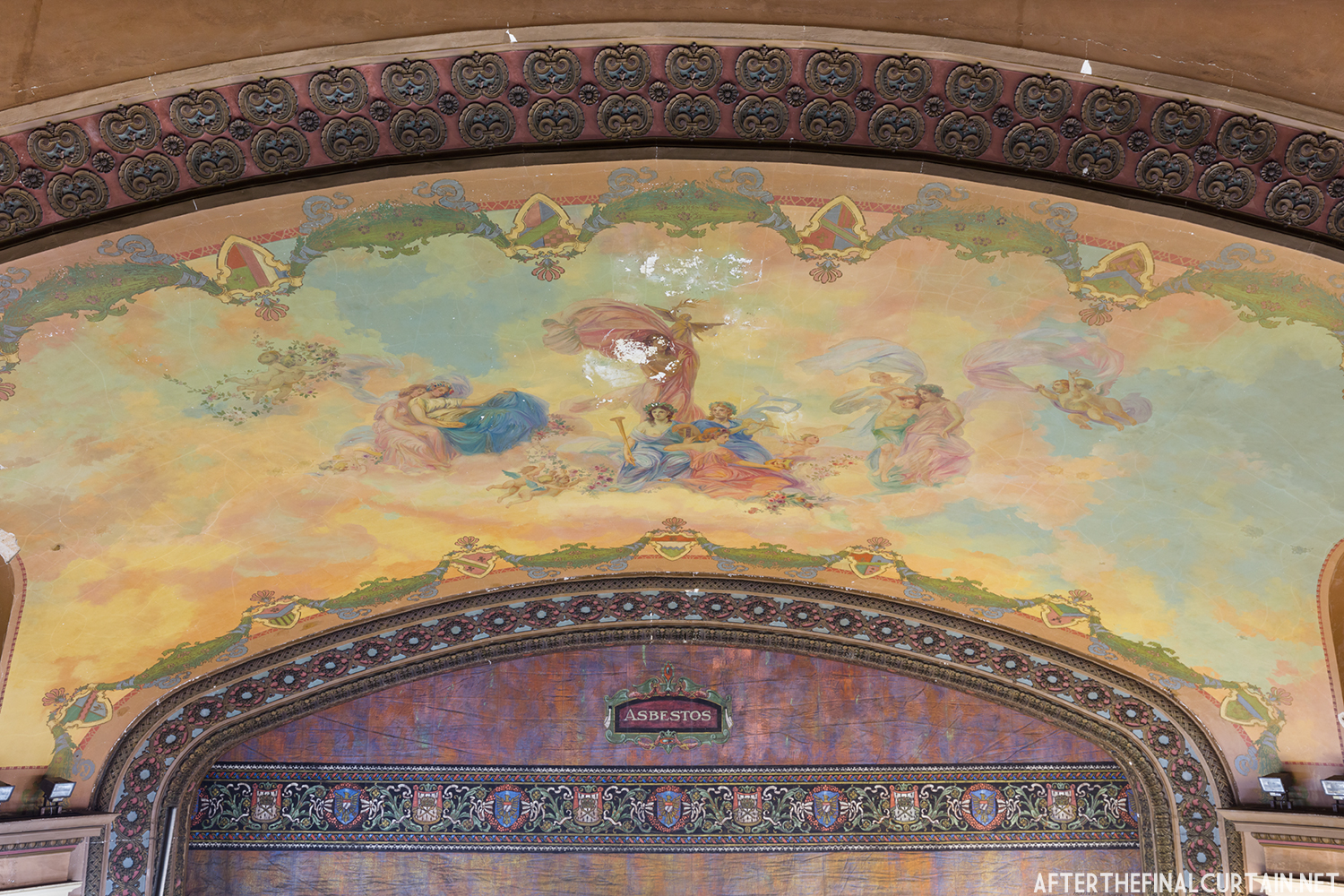
One of the movie studio film previews caused a divorce. Harry Langdon was caught with another woman by his wife at a preview of one of his films, and his wife used that against him in divorce proceedings.
In 2008, the building was purchased by the Community Redevelopment Agency (CRA) for $5.7 million. The CRA was created by the government of California with the intent of revitalizing derelict buildings, and there were a few proposals for reuse during this time. However, due to a decision by the CRA was disbanded in 2012. The City of Los Angeles assumed ownership of the building and issued a Request for Proposals in 2016. Unfortunately, even after extending the deadline, there was no interest. The building is currently for sale.
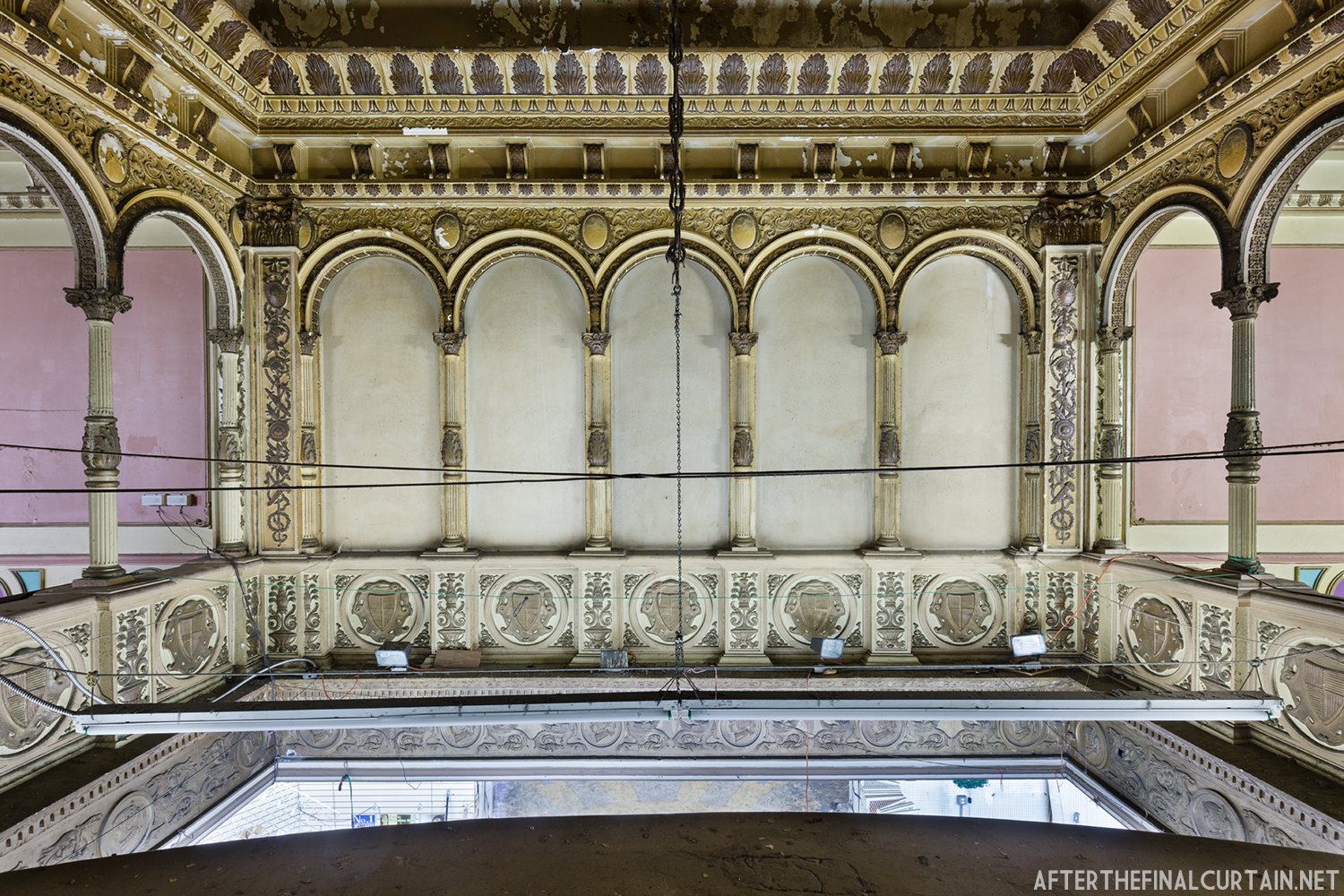
The theater was listed on the National Register of Historic Places in 2009.
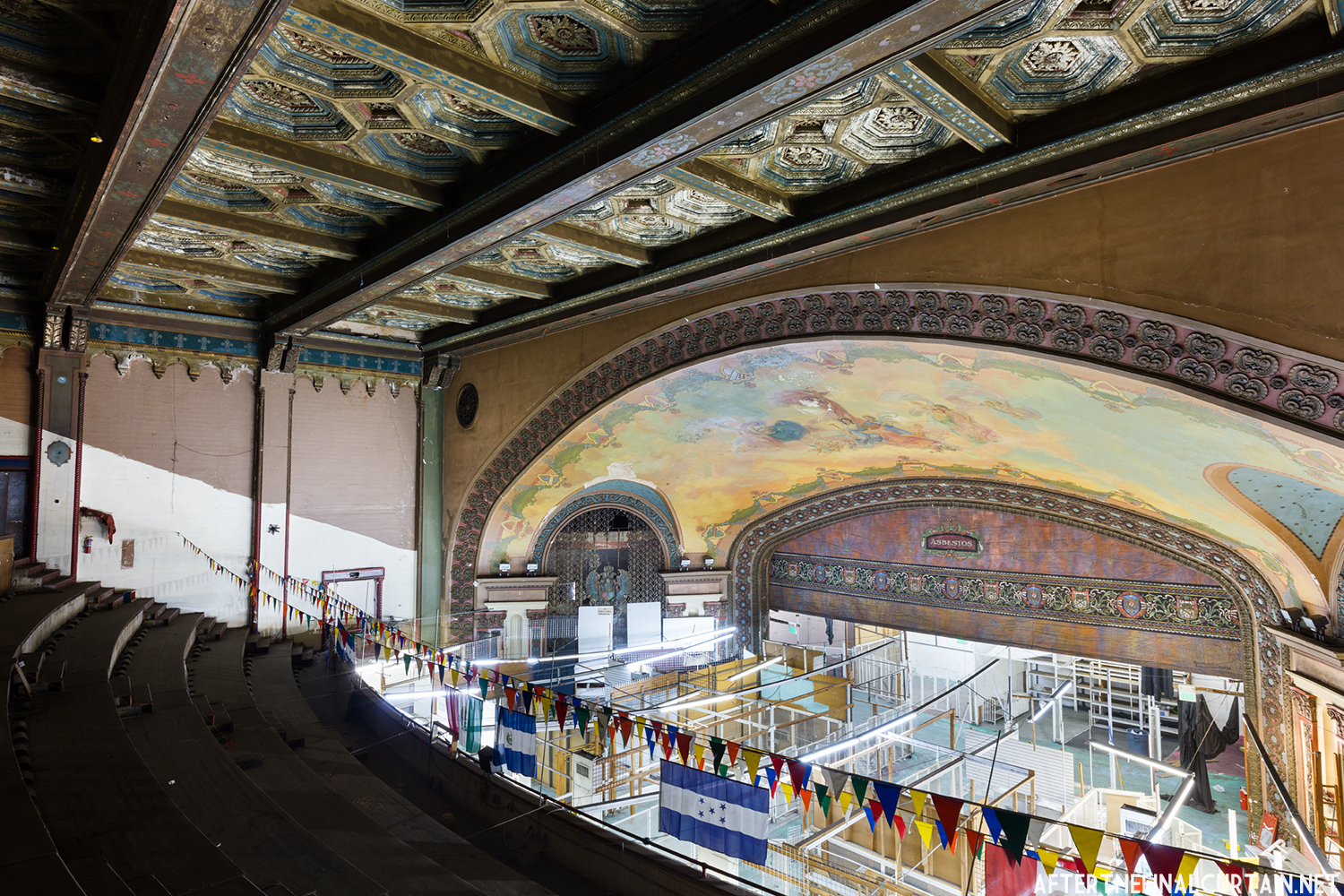
The Wurlitzer organ was removed from the theater and installed in a private home. It was later moved to a church, and was eventually used for parts when the church replaced it.
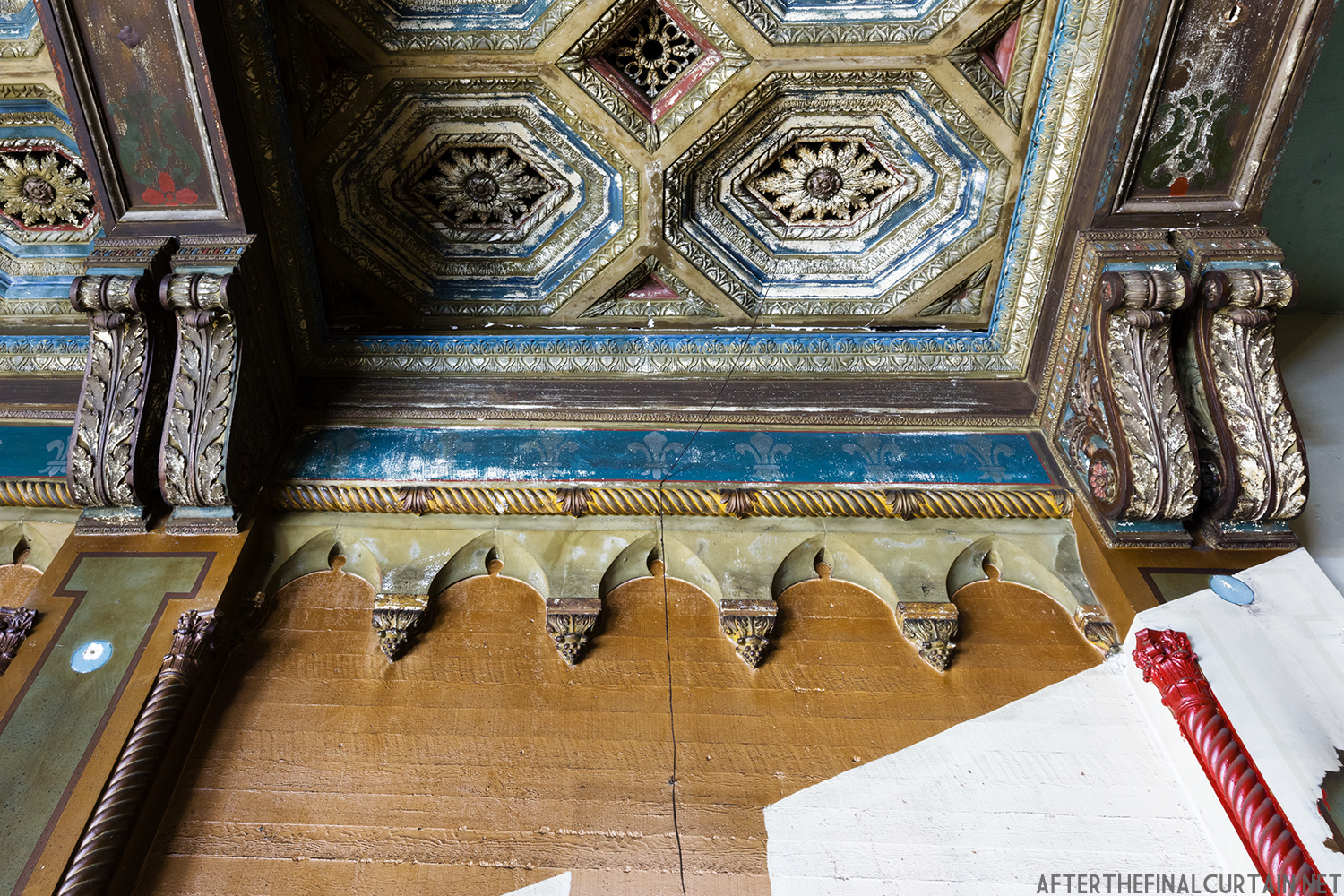
Throughout the years, the Westlake was used as a temporary home for different church congregations, including All Souls Church, who broadcasted live sermons from the theater.
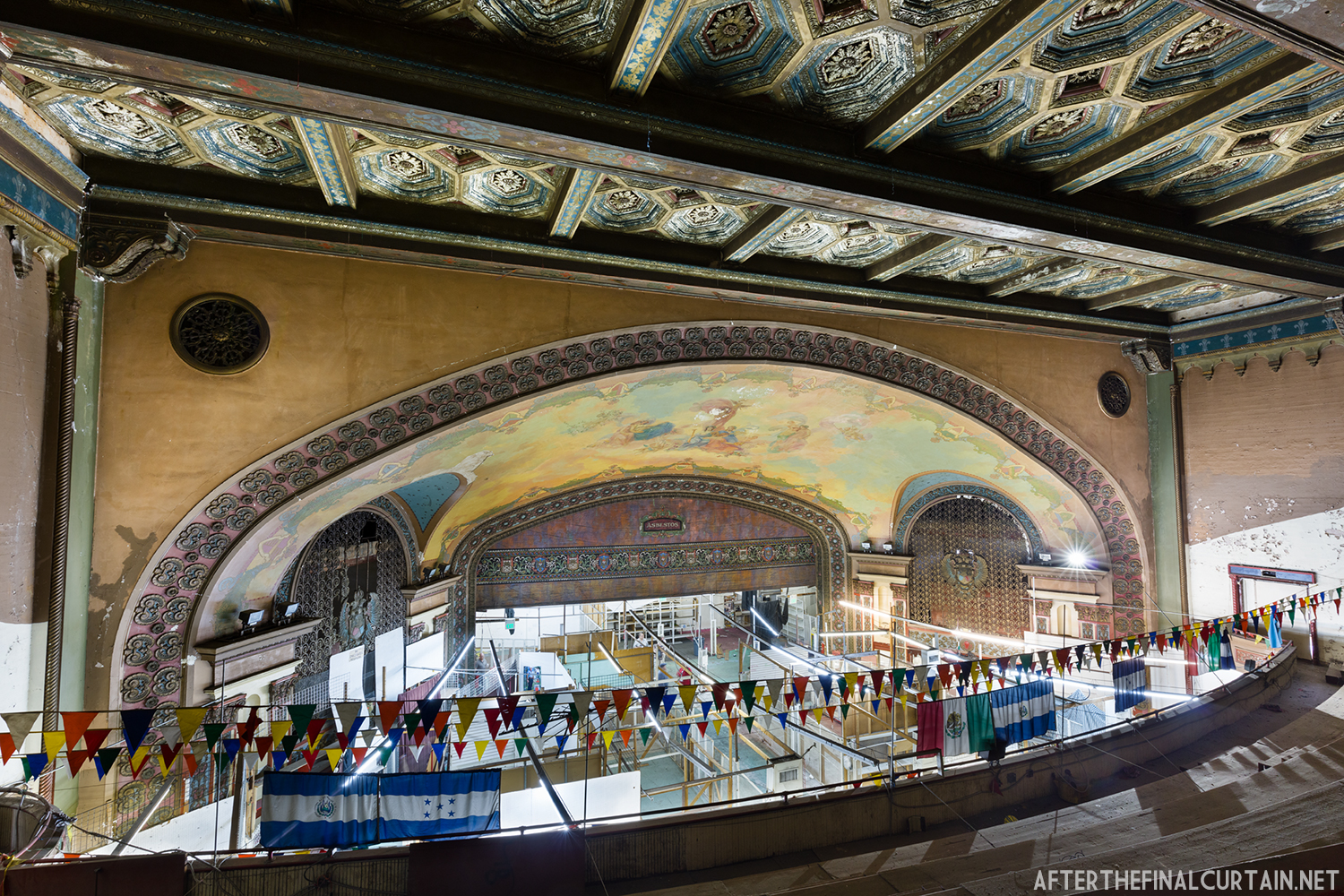
View of the auditorium from the side of the balcony.
For more on the Westlake and many other Los Angeles Theatres be sure to visit: https://losangelestheatres.blogspot.com/
 After the Final Curtain