The Sampson Theatre – Penn Yan, New York

This was originally posted on After the Final Curtain’s Patreon in February 2025. For expanded early posts, as well as video walkthroughs and other exclusive content, you can become a patron at: https://www.patreon.com/afterthefinalcurtain

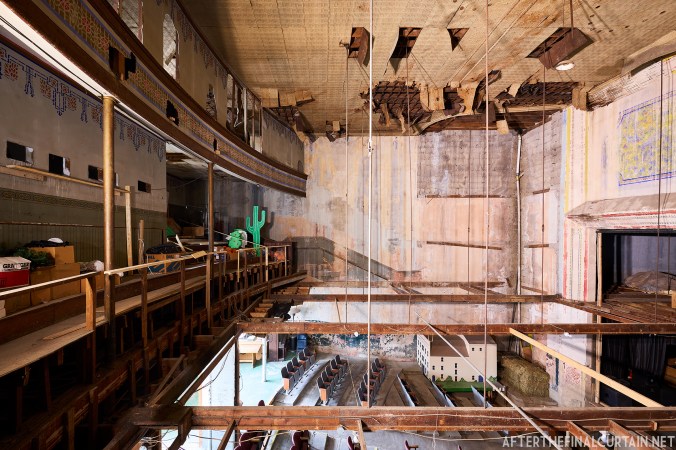
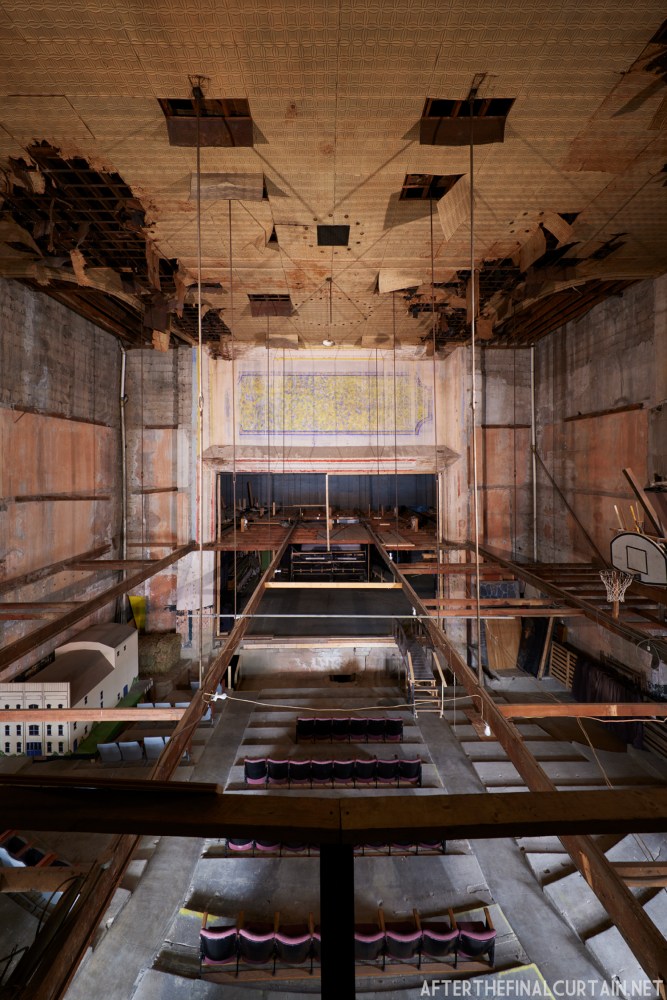
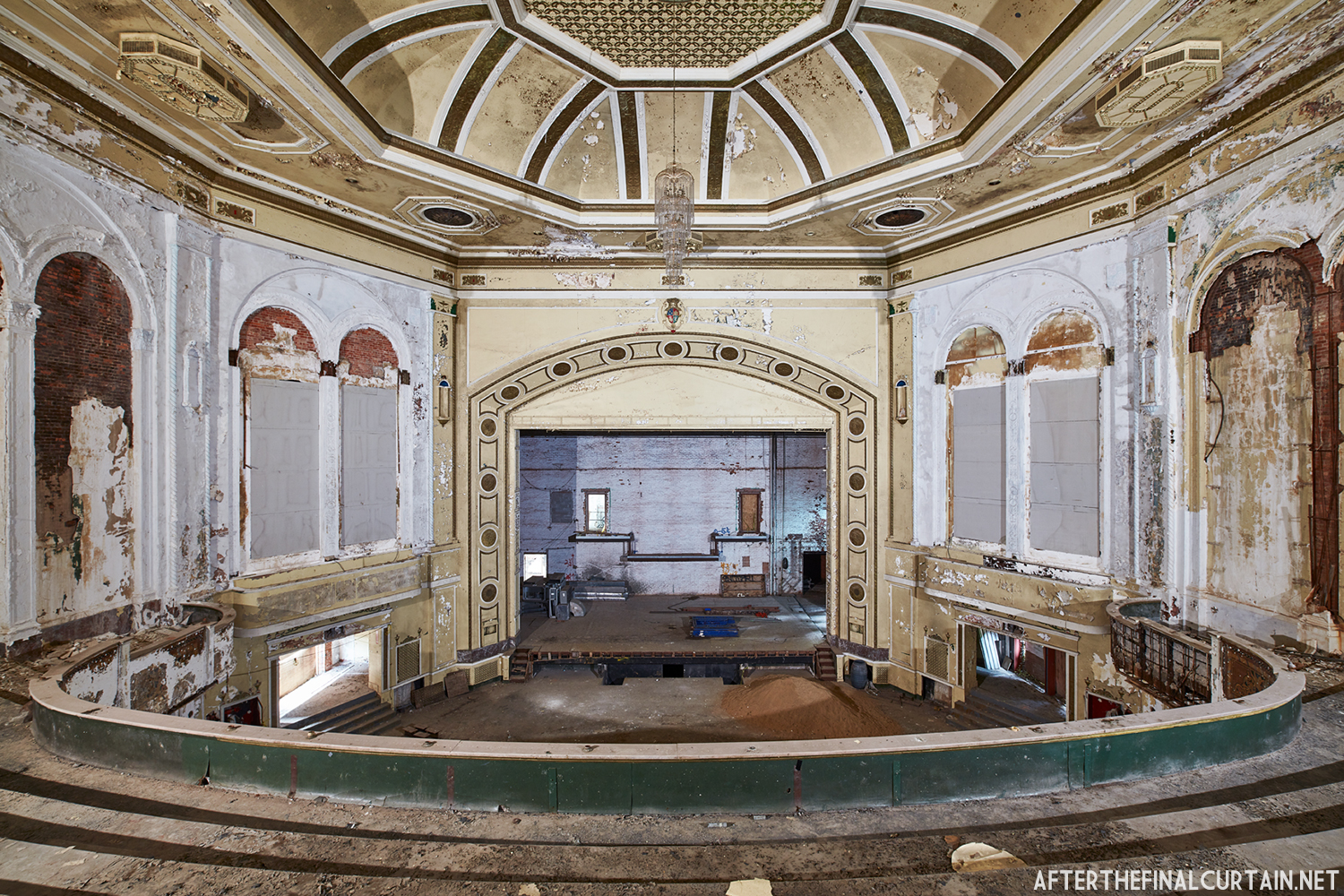
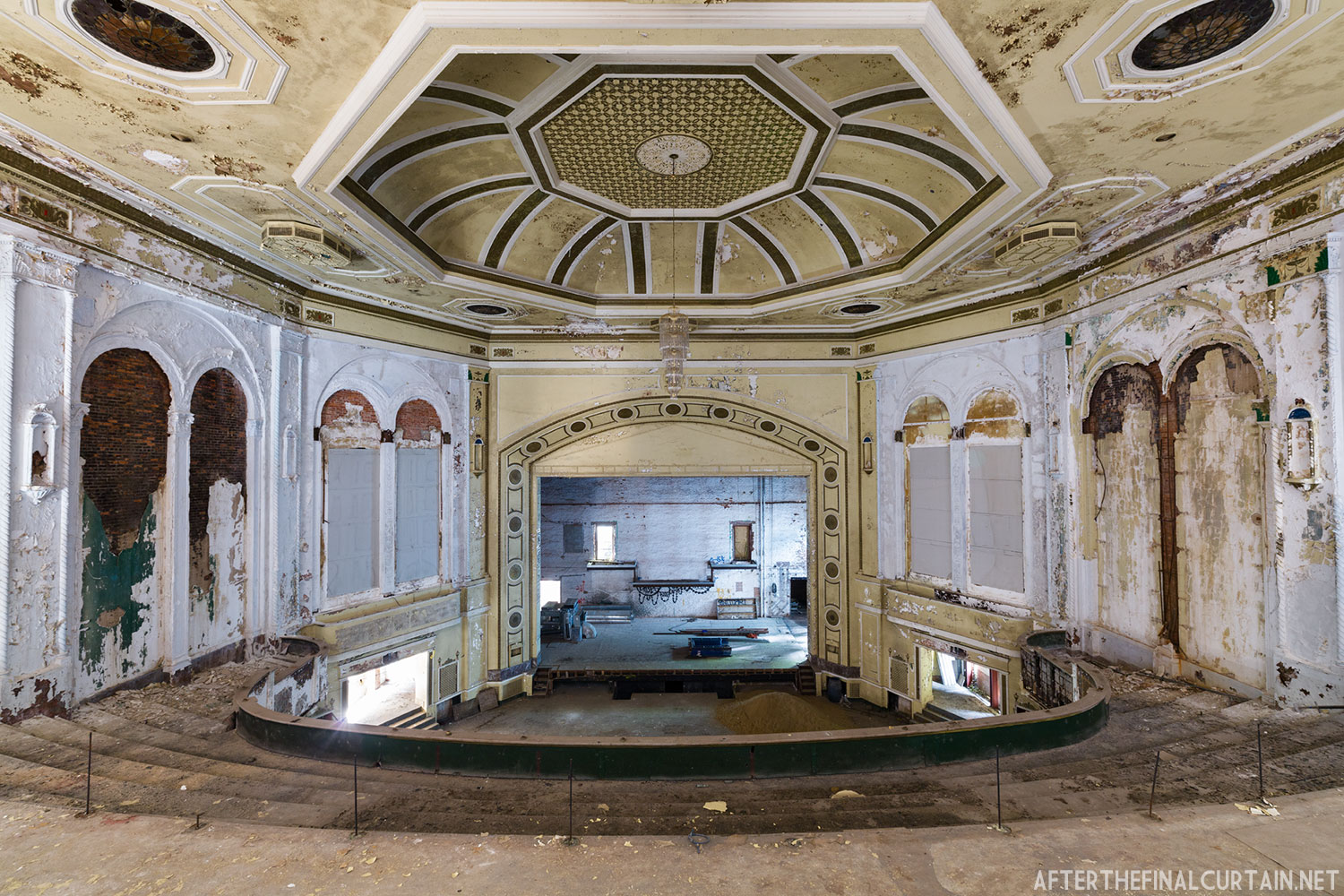
View from the side of the balcony.

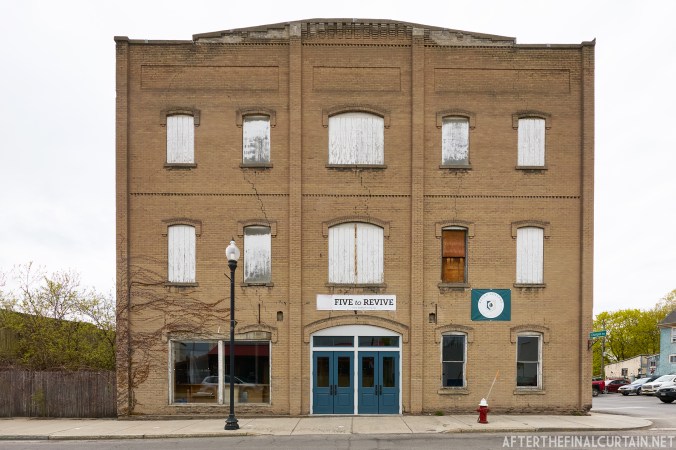
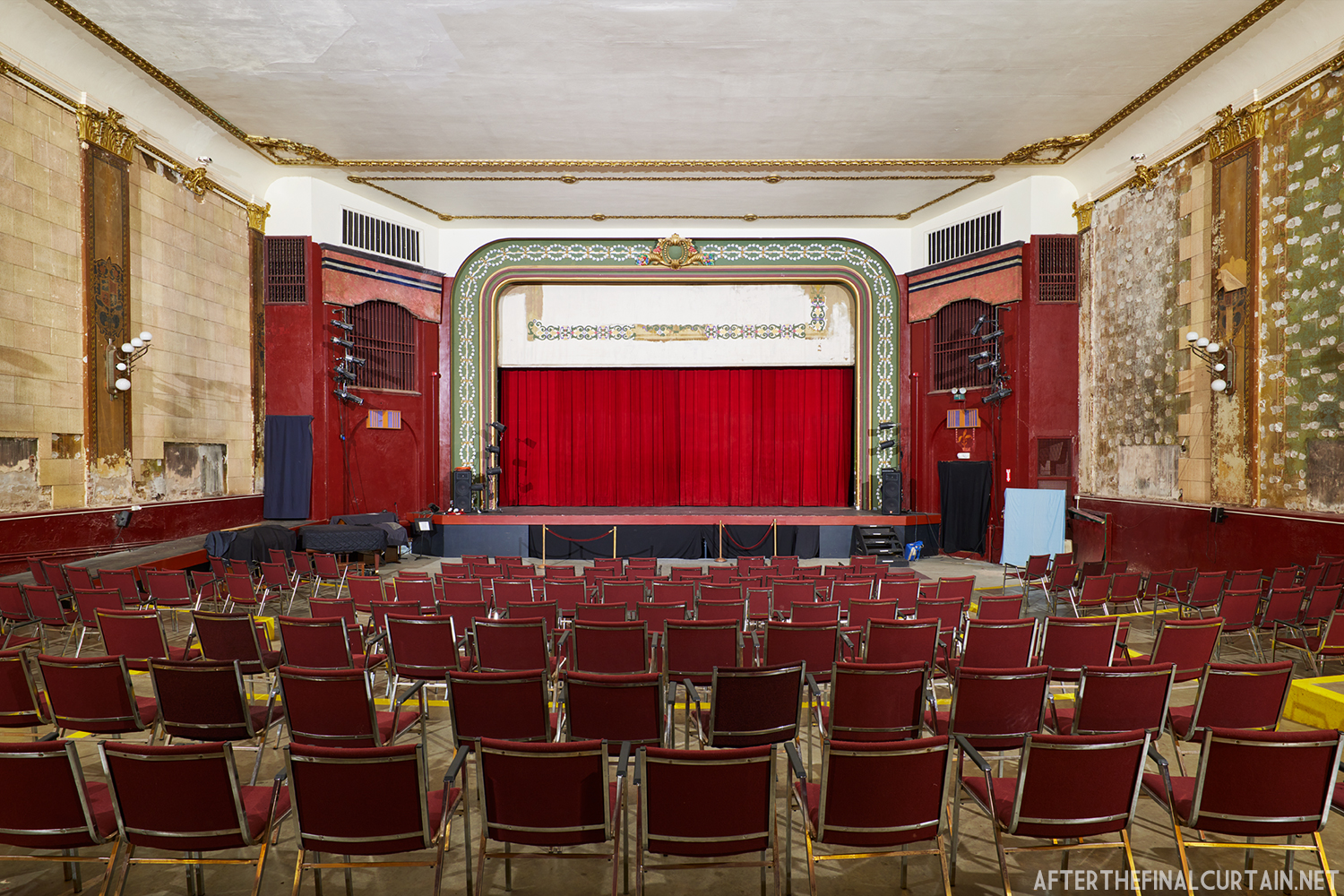
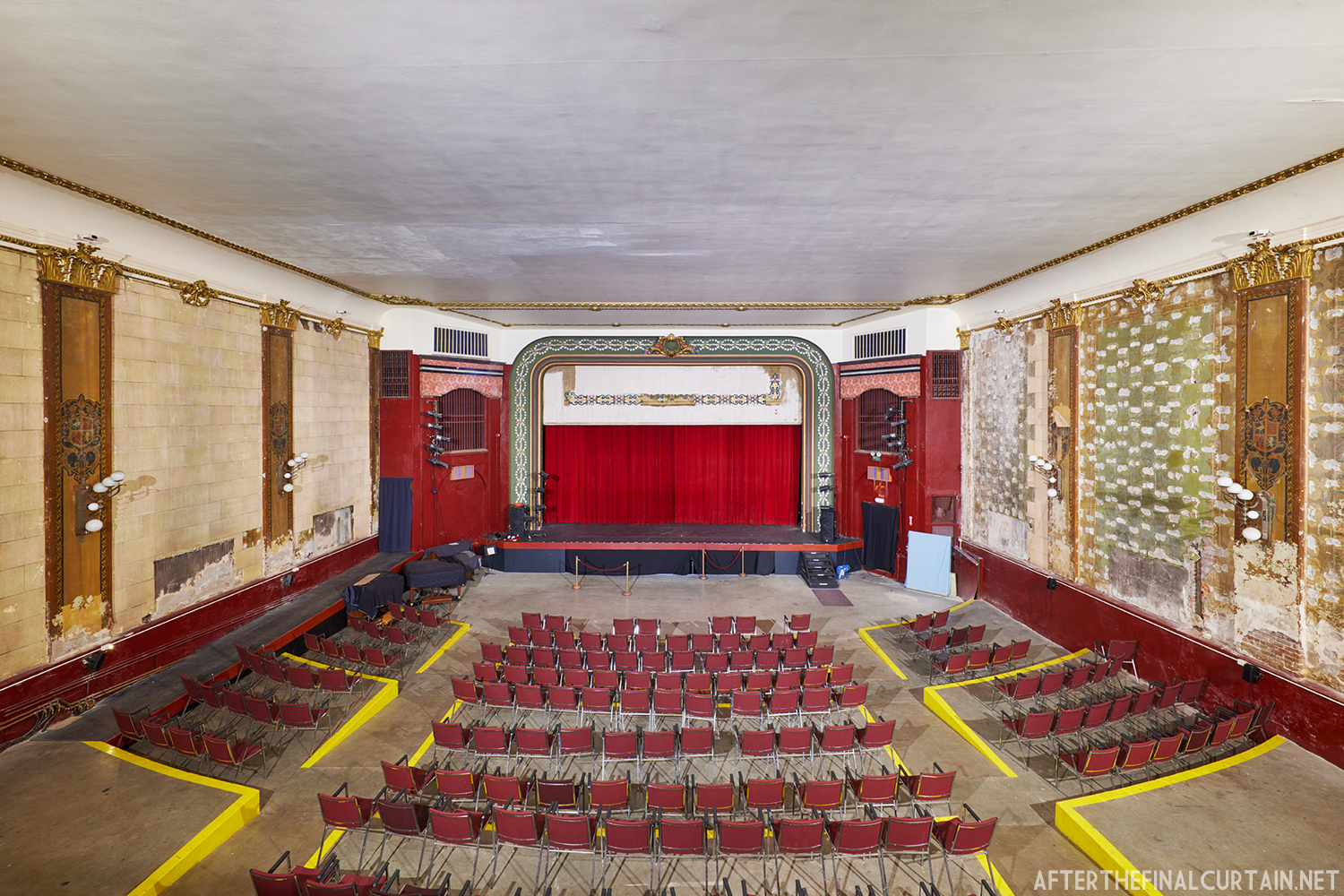
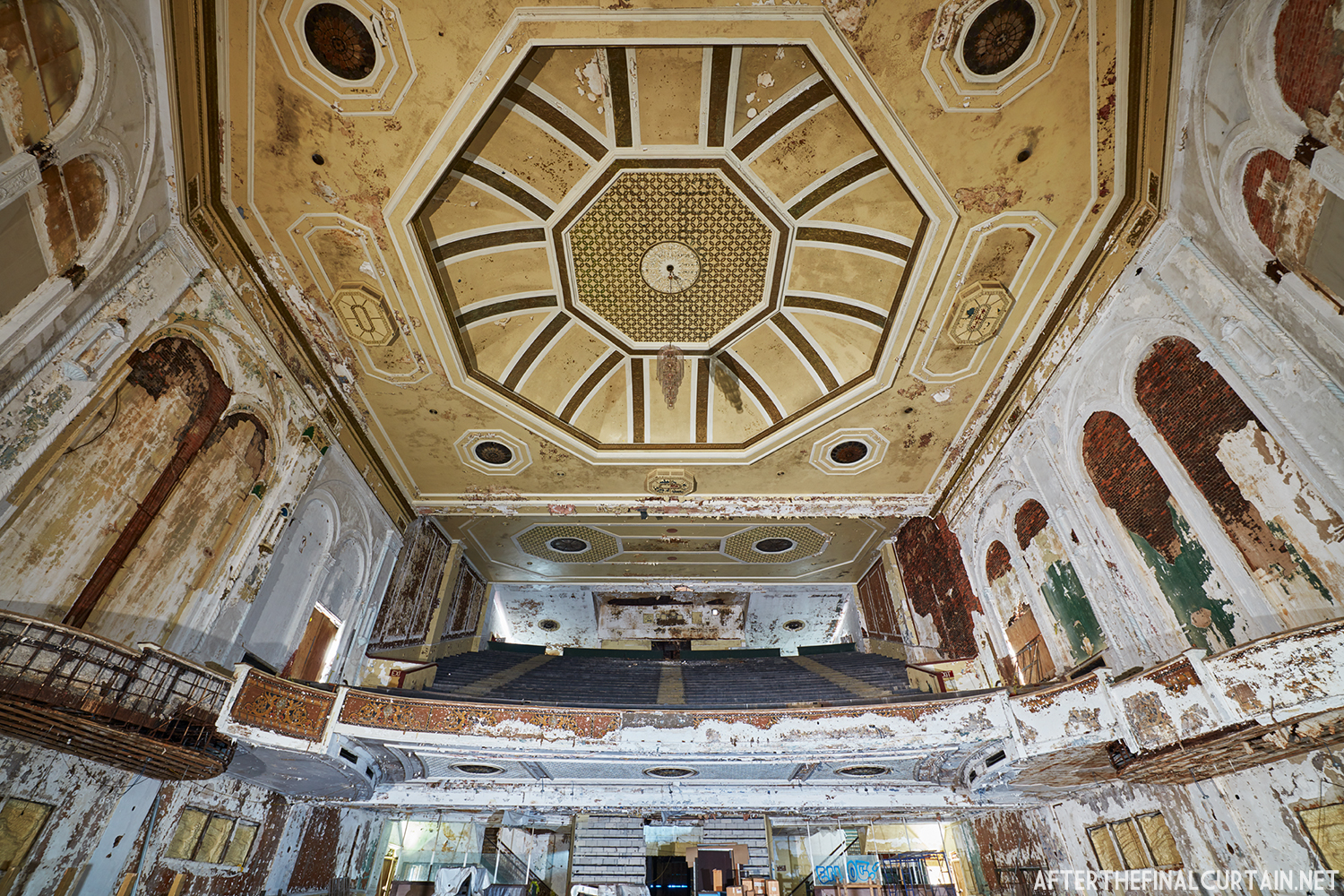
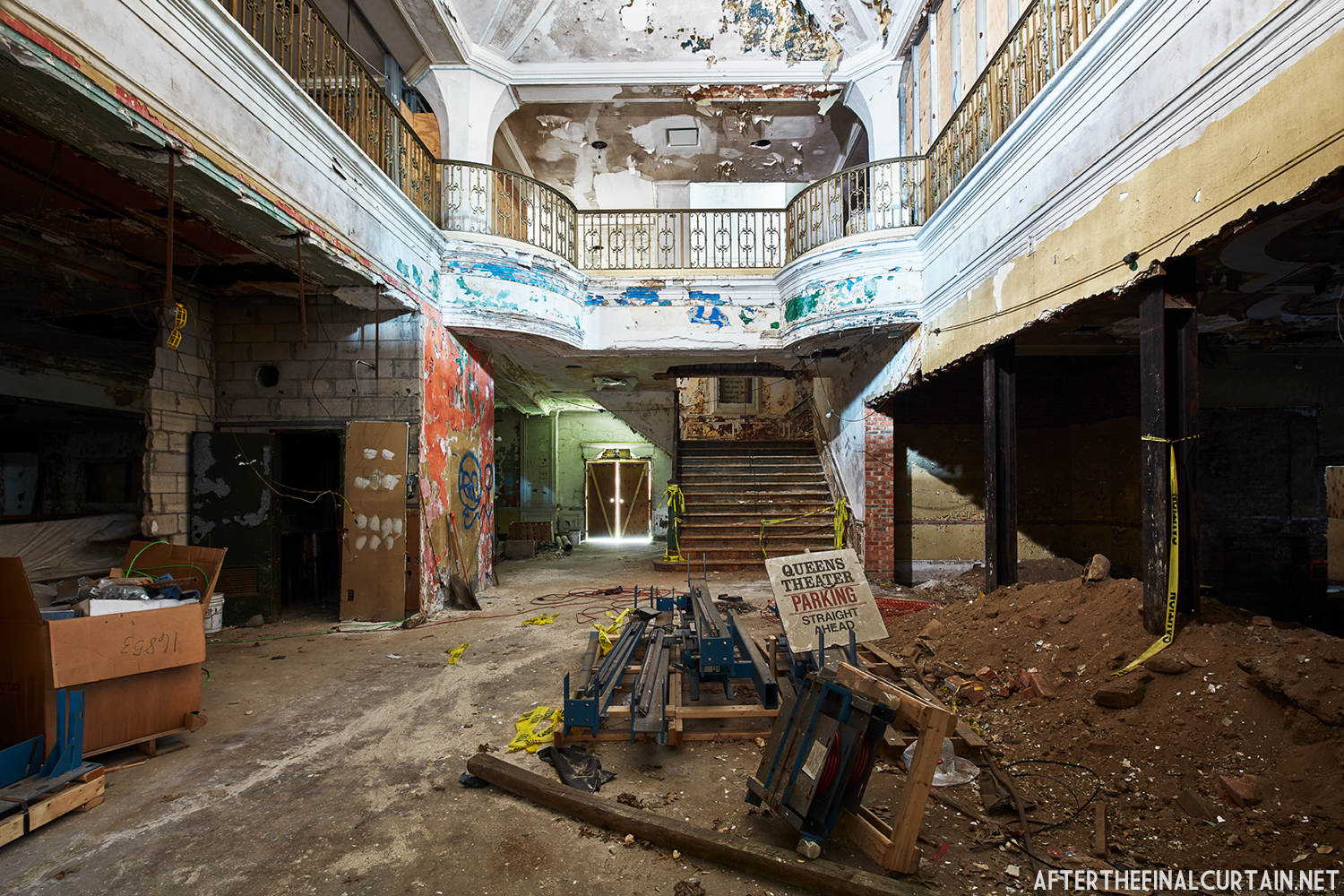
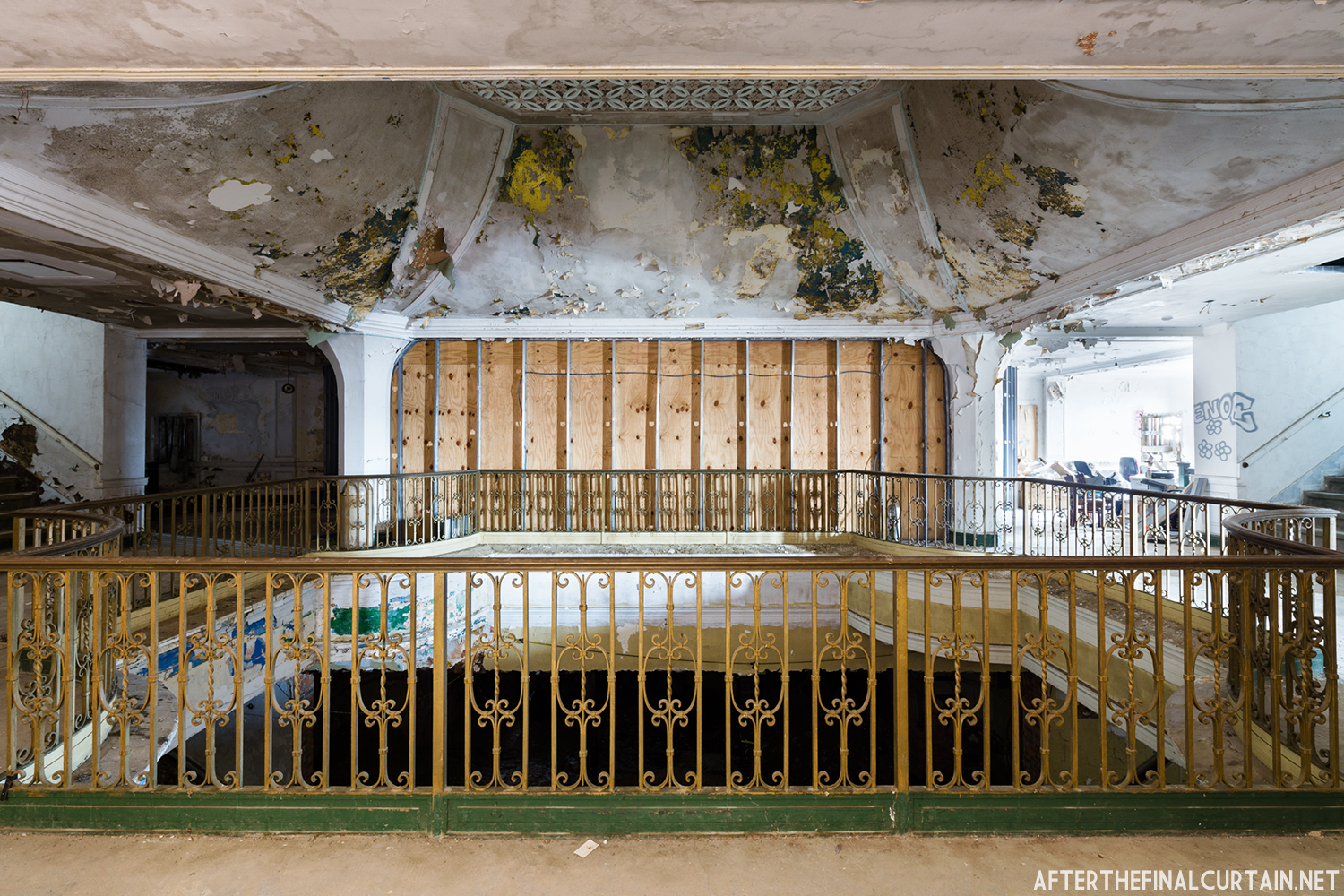
The Sampson Theatre in Penn Yan, New York originally opened on October 12, 1910. Built by local benefactor Dr. Frank Sampson, it was designed as a vaudeville house and entertainment venue. The grand opening featured a speech by President Theodore Roosevelt and a performance of Louis Mann’s comedy, “The Cheater.” The event drew a sell out crowd, with reserved seating priced at $3 and balcony seats available for 25 to 50 cents. 

The exterior of the theater in 2021.

For nearly two decades, the Sampson Theatre showcased major theatrical productions, including adaptations of “Uncle Tom’s Cabin,” George M. Cohan’s “Broadway Jones,” and operettas like “H.M.S. Pinafore.” The venue also featured silent films such as D.W. Griffith’s controversial “The Birth of a Nation” and popular serials like “The Perils of Pauline.” Vaudeville acts brought renowned performers to Penn Yan, including Joe Yule, father of Hollywood star Mickey Rooney. Local talent also graced the stage, with students from Penn Yan Academy participating in performances.

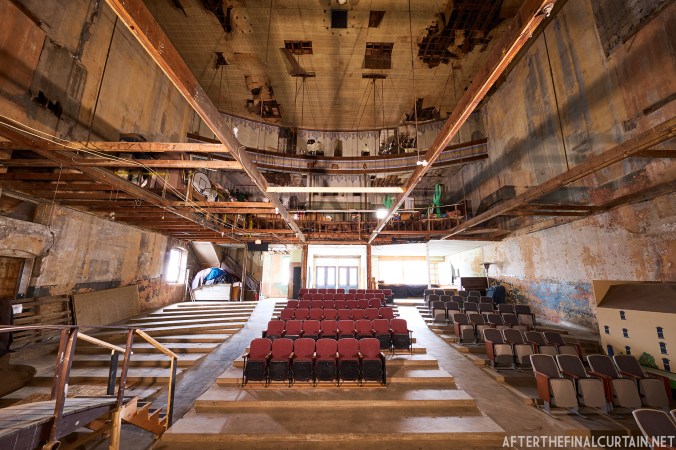
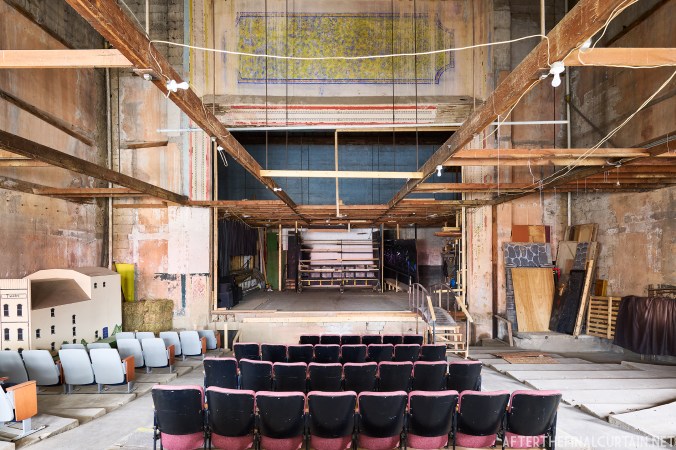
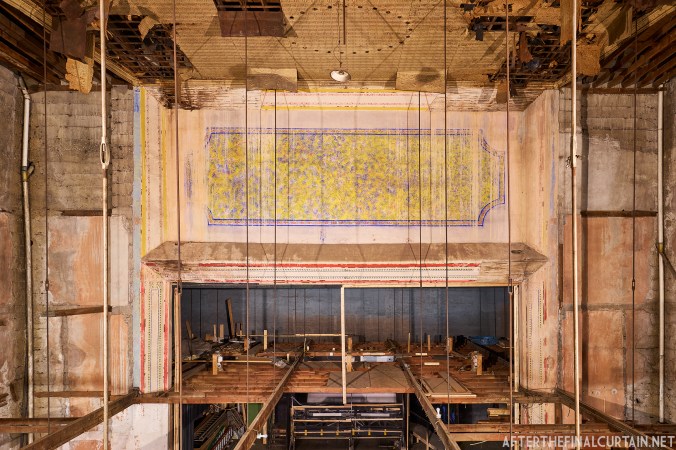
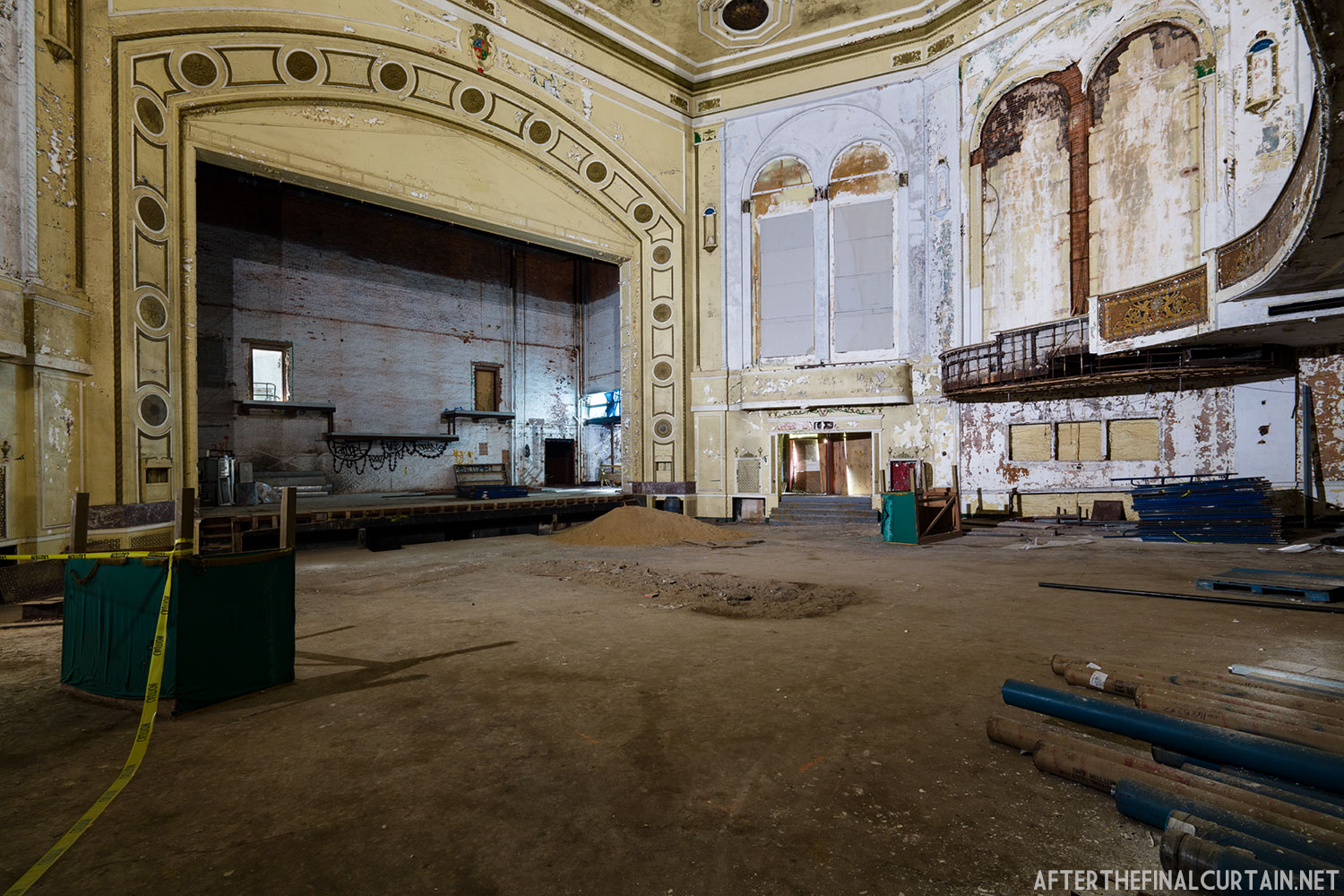
View from the stage area, with some remnants of the false ceiling framing still visible.

The theater’s use began to decline in the late 1920s as motion pictures gained popularity. In 1928, Harry C. Morse purchased the building and converted it into an indoor miniature golf course. In 1936, Wells Jewett repurposed it as an automobile garage and showroom, leading to significant alterations, including the removal of parts of the balcony. Over the decades, the building housed a car dealership and later a tire warehouse, operated by the Trombley family. Despite these changes, the structure retained its historic identity and significance.

In 2004, the Trombley family gifted the building to the Penn Yan Theatre Company (PYTCo), which began efforts to restore the theater to its original function as a performance venue. The Sampson Theatre has been recognized as an important historic site, listed on both the State and National Registers of Historic Places. Its early use of reinforced poured concrete construction was innovative for a small-town setting, contributing to the building’s longevity despite years of modifications.

The Sampson Theatre revitalization project has received significant support, including grants from the Rochester Area Community Foundation’s Historic Preservation program and the Keuka Area Fund. The funding aids restoration efforts such as installing vestibule doors and a box office. The theater was also selected as one of the Landmark Society’s inaugural “Five to Revive” preservation priorities. PYTCo continues to work toward its mission of enriching the community by reviving this historic entertainment center, bringing live performances and cultural events back to the heart of Penn Yan.

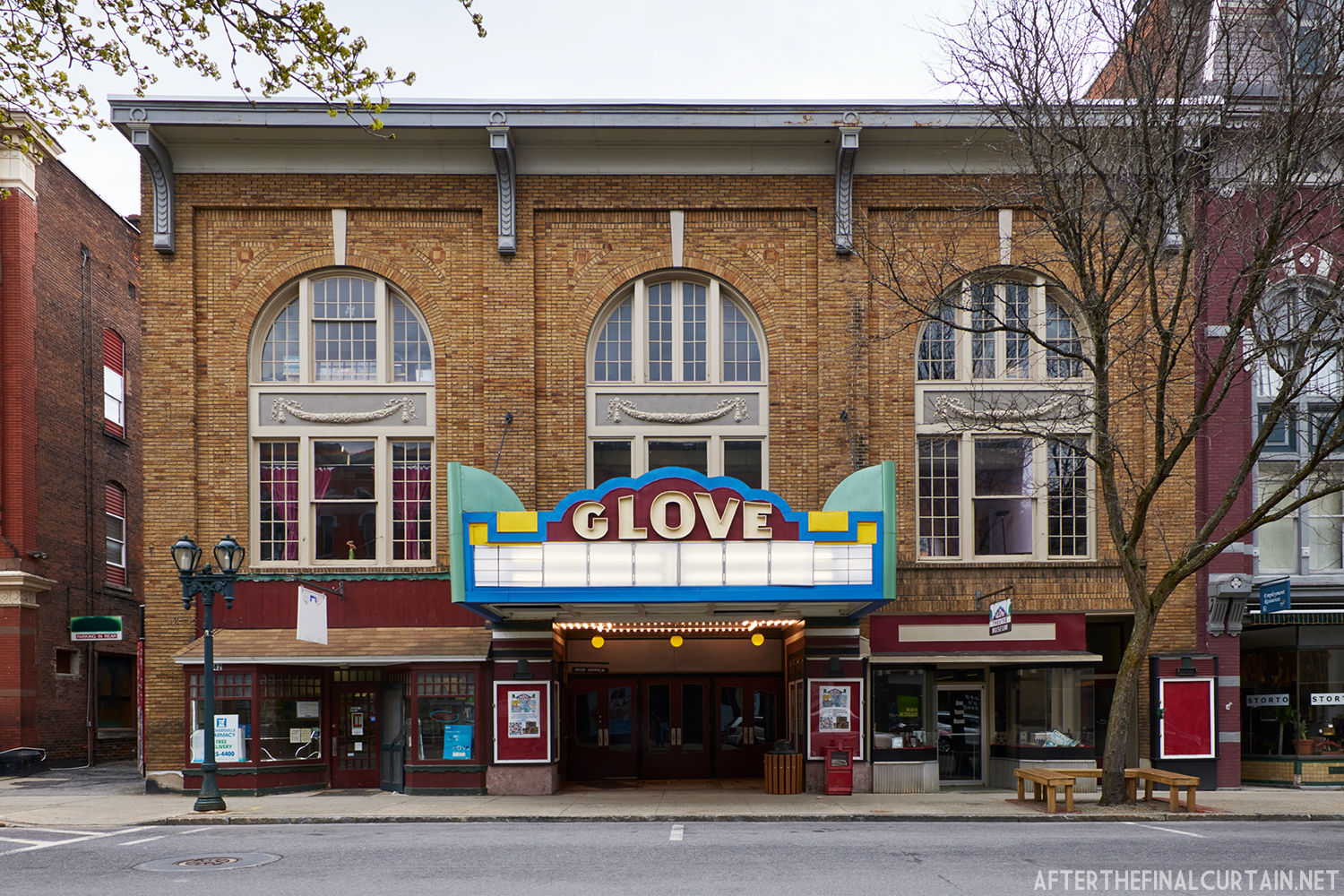
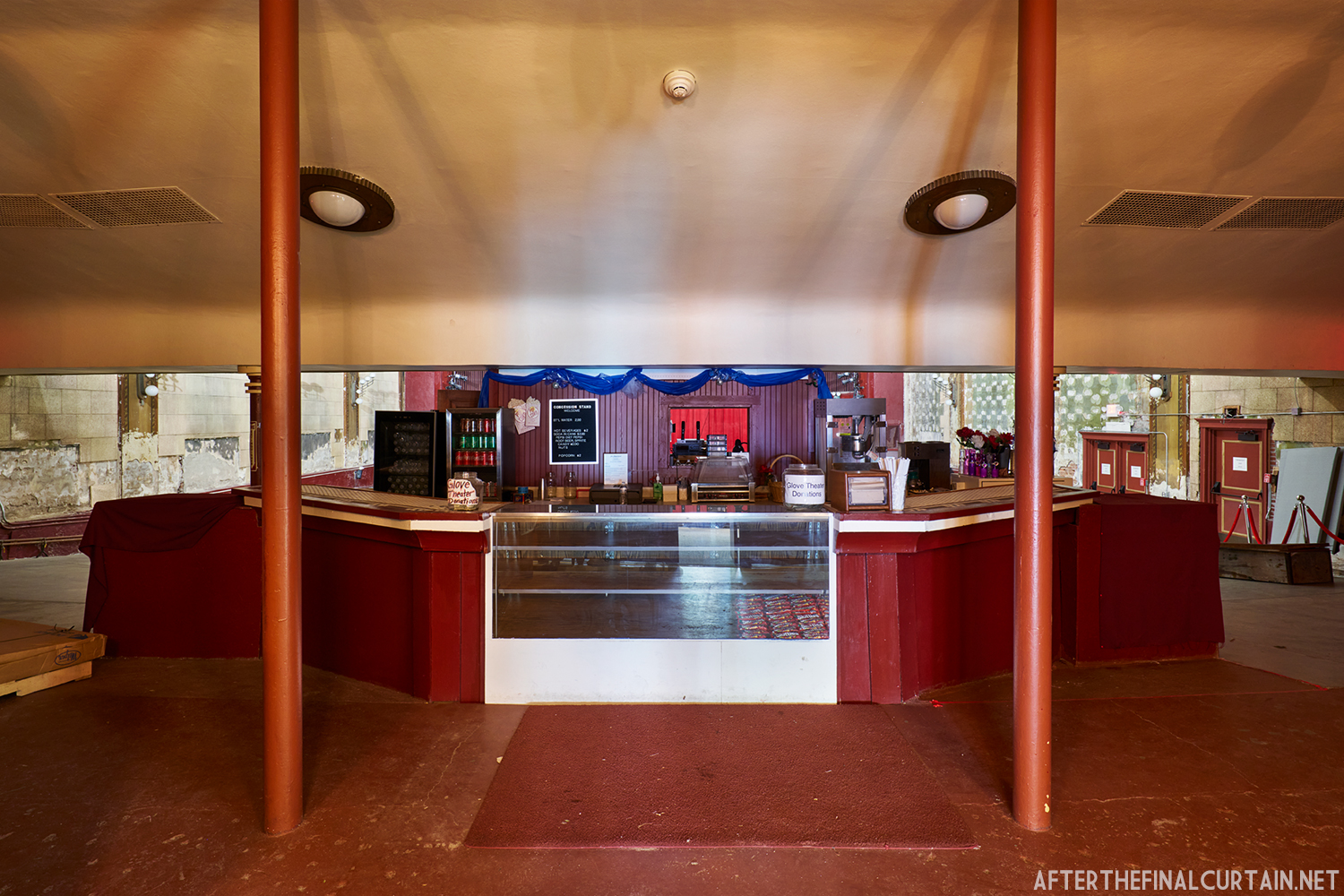
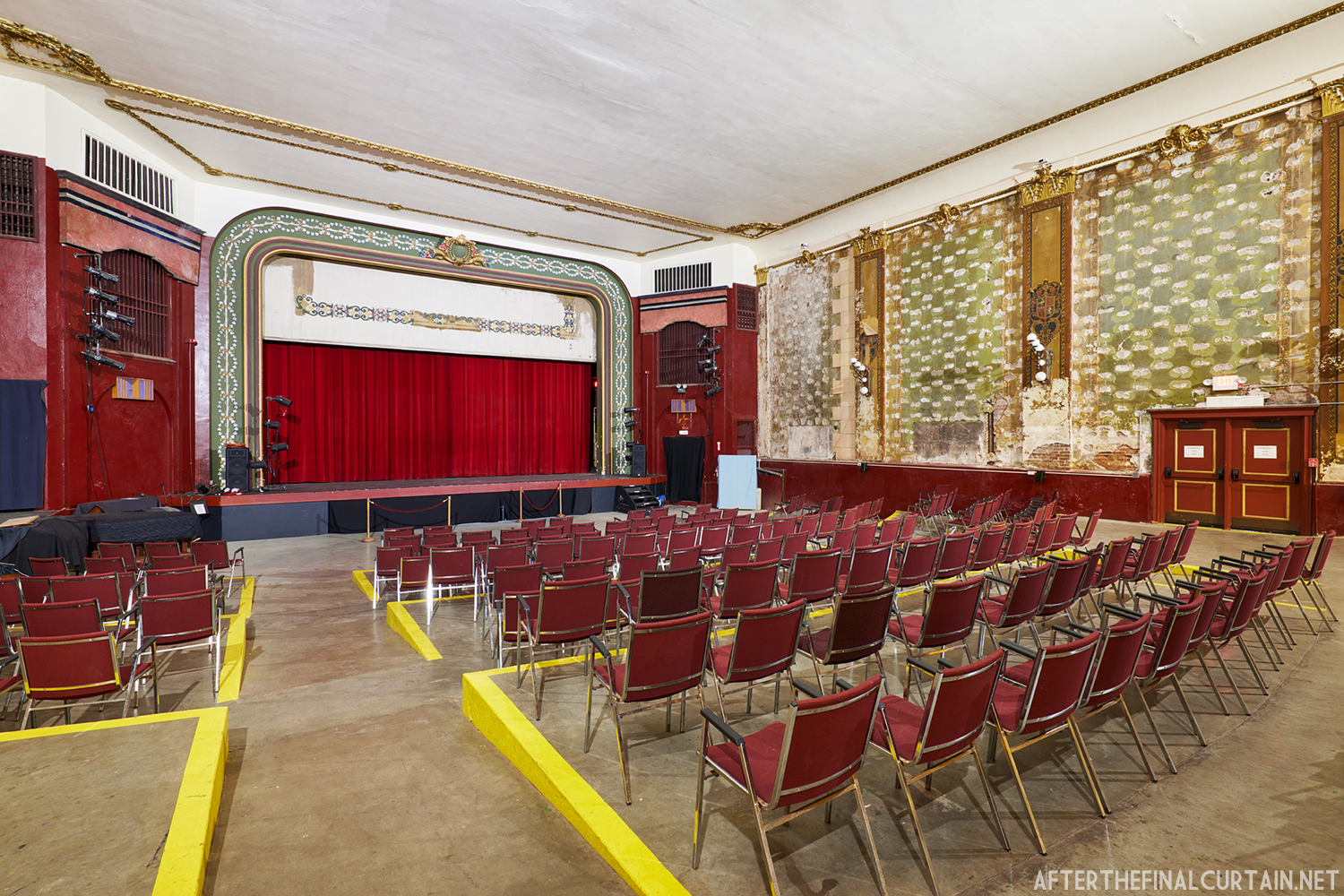
The Glove Theatre – Gloversville, NY

This was originally posted on After the Final Curtain’s Patreon in December 2024. For expanded early posts, as well as video walkthroughs and other exclusive content, you can become a patron at: https://www.patreon.com/afterthefinalcurtain
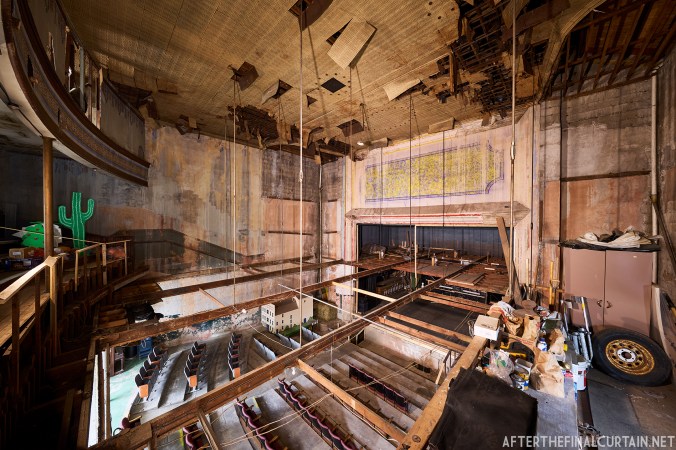
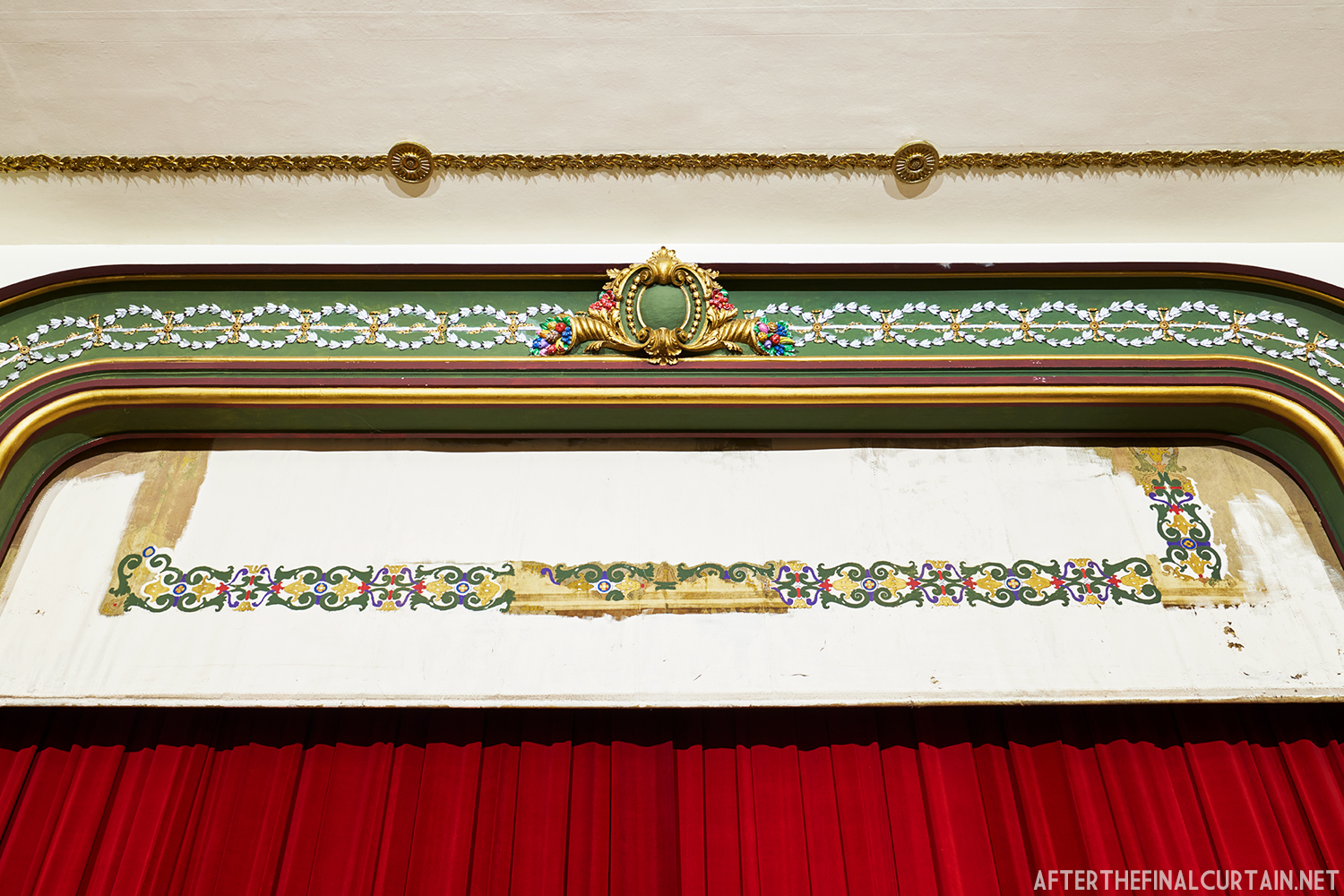
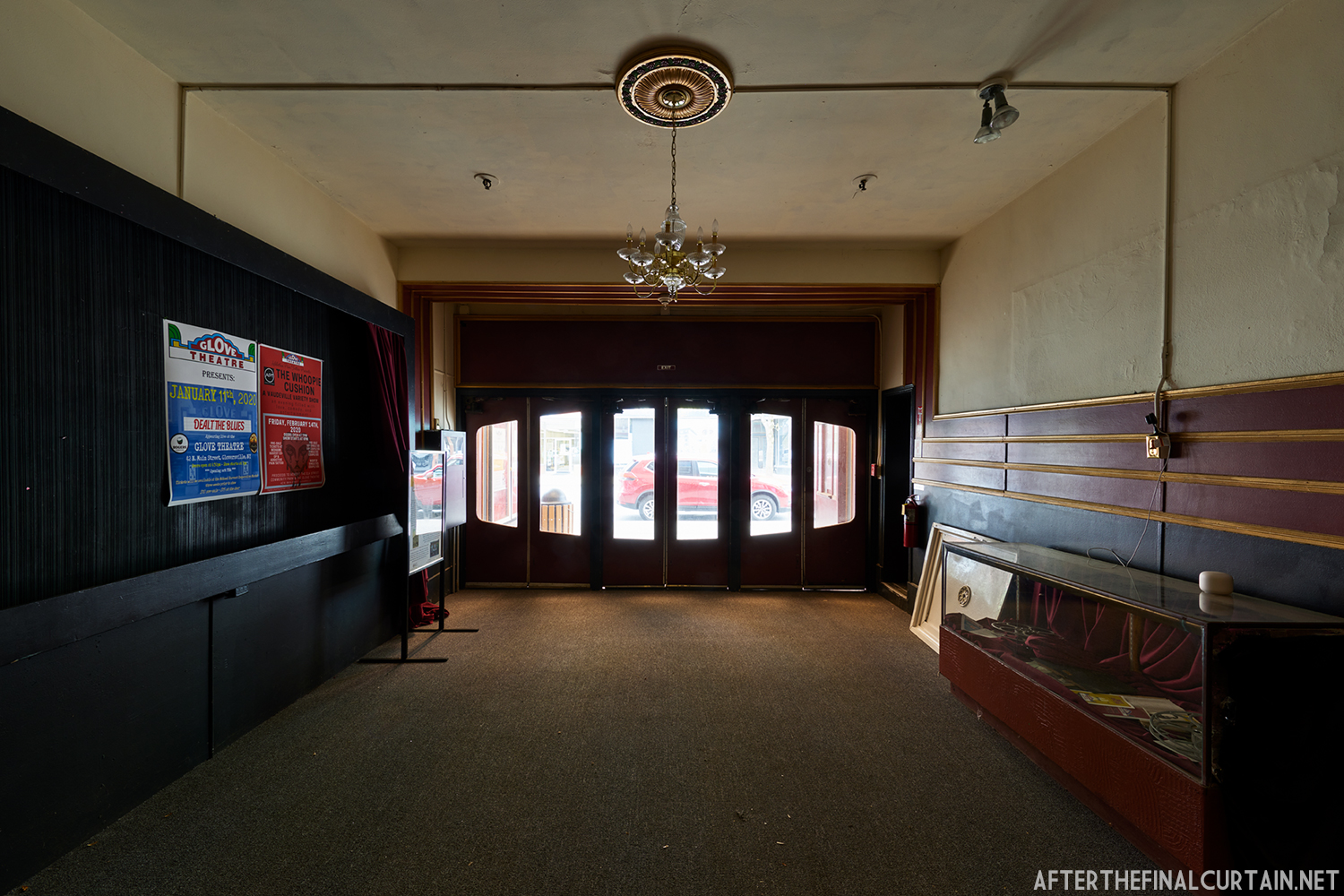
The Glove Theatre opened on October 9, 1914, as an 800-seat venue for live performances, vaudeville, and community events. Designed by architect Linn Kinne in the Classical Revival style, it quickly became a cultural hub in Gloversville, New York. Early years featured notable acts such as John Philip Sousa and Ethel Barrymore in “The Second Mrs. Tanqueray.” In 1920, the Schine brothers purchased the theater, making it the flagship of Schine Enterprises, which grew to operate over 150 theaters. By 1928, the Glove was among the first in the nation equipped with sound, showcasing its innovative edge.

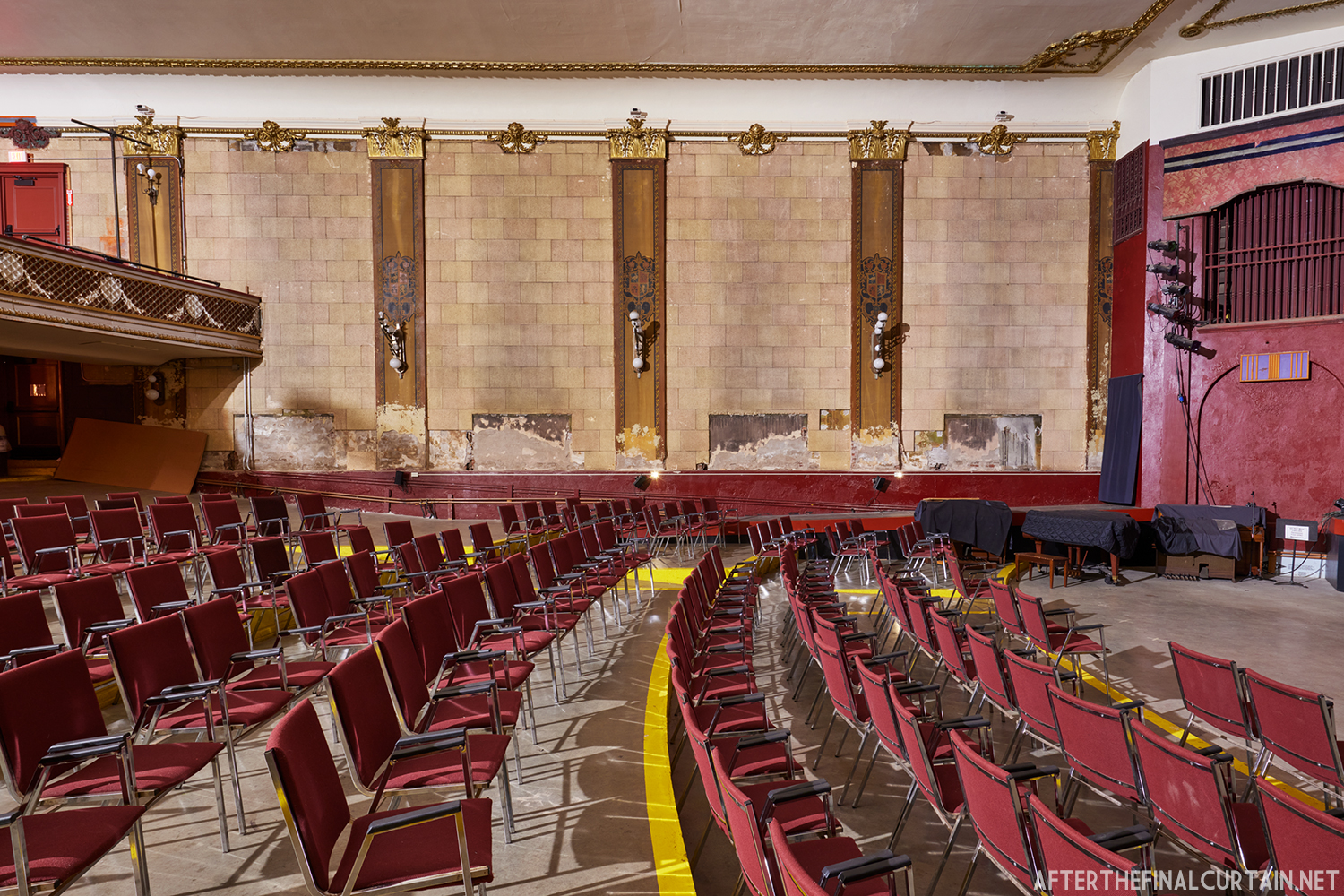
The Glove Theatre auditorium from the balcony.

View of the auditorium from the balcony.

A major Art Deco renovation in 1939 modernized the theater, including the addition of its iconic marquee. During this era, the Glove continued hosting renowned acts, including Irene Dunne, Charles Laughton, Charles Coburn, and Sally Rand. It also featured Ziegfeld Follies performers and major events like the premiere of “Drums Along the Mohawk” in 1939.

The exterior of the Glove theater in Gloversville, New York

The exterior of the theater.

Throughout the Great Depression and World War II, the theater remained a central community venue, offering newsreels, bond drives, and live entertainment while training veterans to manage theaters in the Schine chain.

The Glove’s prominence waned by the 1960s as economic shifts affected the region. Despite hosting memorable performances by acts like Tony Randall and Buddy Jewell, the theater closed in 1971, marking the end of regular operations. For over two decades, the building stood vacant, with occasional screenings and events. By 1995, the theater faced demolition, but community members rallied to save it, forming the Gloversville Theatre Corporation.

It reopened in 1997 with a grand event, The Phantom of the Glove, featuring local performers and community participation. In the 2000s, the theater hosted a mix of productions, including musicals, concerts, and youth programming. Performances included Alex Torres & His Latin Orchestra, the Wynotte Sisters, the Caroga Arts Collective, and Quintocracy. The Glove also featured unique acts like Zippy the Chimp, Leo the Lion (of MGM fame), and the NoLaNauts. The venue evolved into a community hub, offering affordable and creative programming for families and local artists.

Recent revitalization efforts have reinvigorated the theater. In 2022 and 2023, the Glove received nearly $4 million in grants from New York State to support renovations and expand programming. Weekly movie screenings, vaudeville shows, and live performances have become regular events. Today, the Glove continues to honor its legacy of hosting world-class entertainment while serving as a cultural and historic landmark in Gloversville.

The Glove’s website is: https://www.theglovetheatre.com/

Loew’s Gates Theatre – Brooklyn, New York

This was originally posted on After the Final Curtain’s Patreon in February 2025. For expanded early posts, as well as video walkthroughs and other exclusive content, you can become a patron at: https://www.patreon.com/afterthefinalcurtain


The Loew’s Gates Theatre in Brooklyn, NY, opened on November 21, 1921, as a state-of-the-art movie and stage presentation theatre. Advertised as “The Biggest Theatre Event in the History of Brooklyn,” the grand opening featured Bert Lytell in “Alias Lady Fingers” and Buster Keaton in “Hard Luck”, along with live vaudeville performances. The event was attended by New York Mayor John Hylan, Borough President Edward Riegelman, and Loew’s Circuit General Manager Nicholas Schenk. Movie stars such as Mae Murray, Will Rogers, Lew Cody, and Lillian Walker also graced the occasion. The theatre, boasting 3,600 seats, was managed by William Sheehey and featured a Möller 3-manual, 17-rank theatre organ.
Over the decades, the Loew’s Gates became a staple of Brooklyn’s entertainment scene, hosting both film screenings and live appearances. In 1952, baseball legends Jackie Robinson and Billy Cox joined Happy Felton at the theatre for a special Loew’s MGM Knothole Gang Show, drawing 2,500 attendees. In 1963, horror icons Peter Lorre and Boris Karloff made personal appearances for The Raven. By the late 1960s, Loew’s was among the first major circuits to introduce independent X-rated films, such as Without a Stitch (1970), much to the dismay of Motion Picture Association head Jack Valenti. However, unlike many other theaters, it did not switch to X-rated films full time. The theatre continued to operate as a movie house until its closure on July 13, 1977.

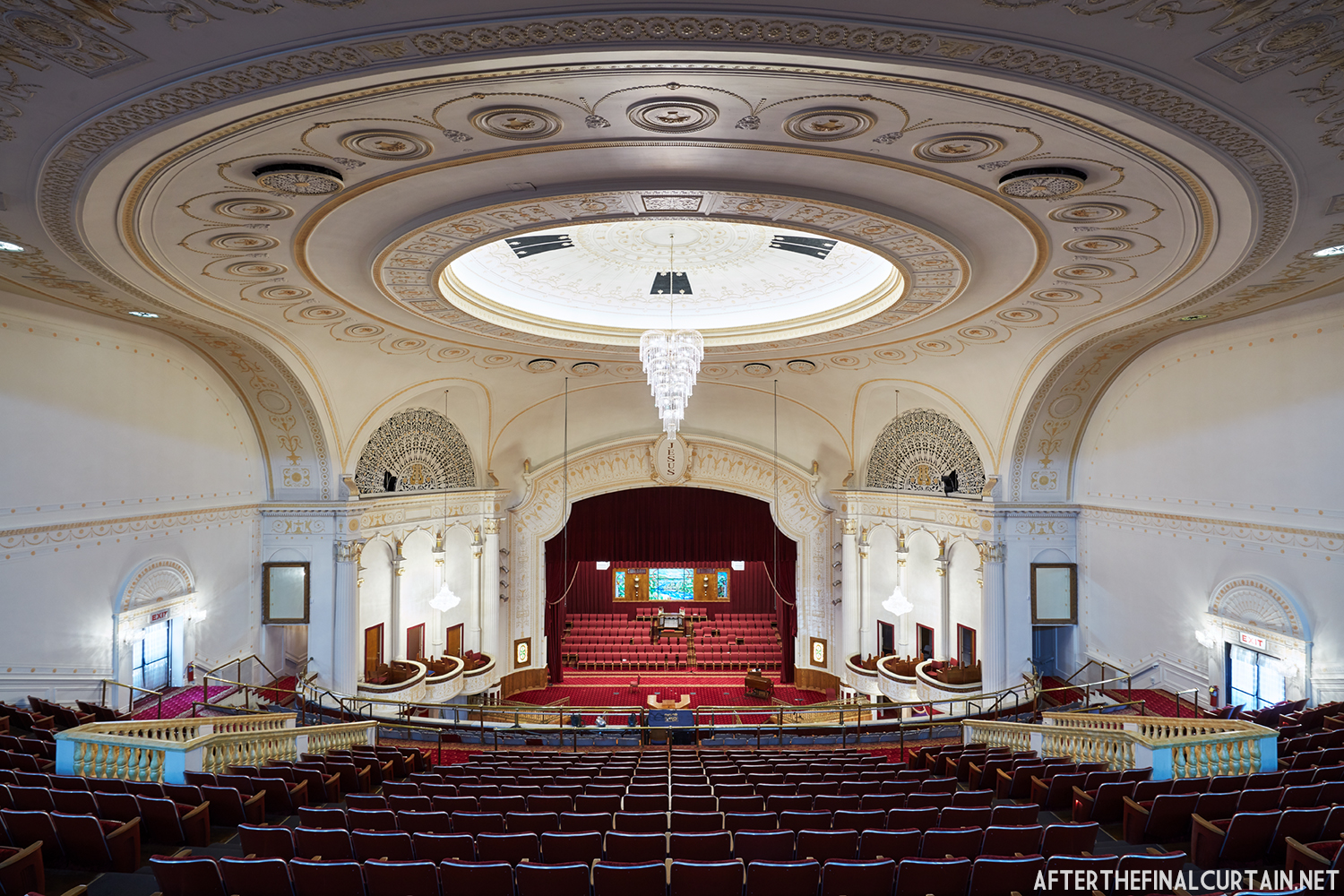
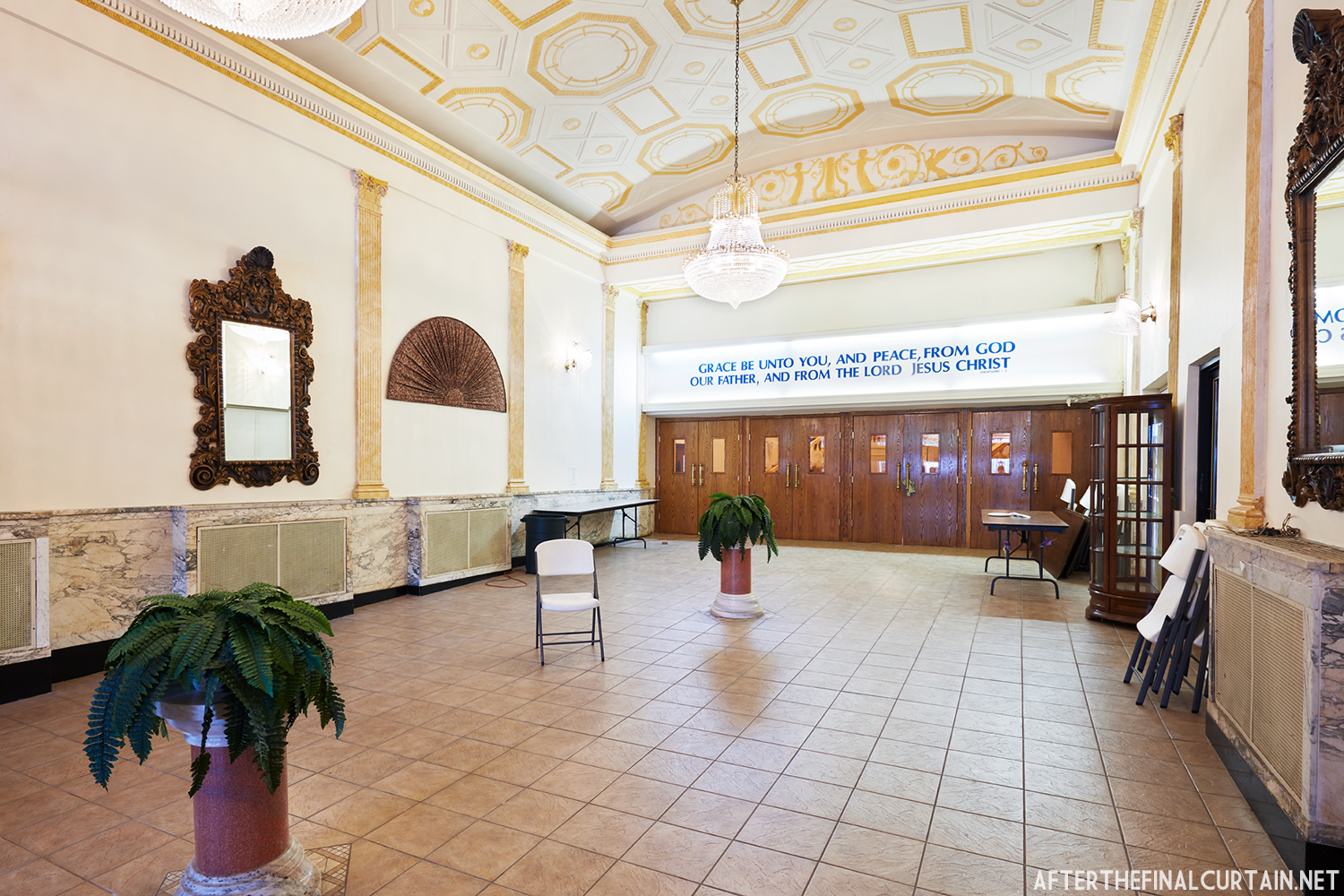
After closing, it was sold to the Triumphant Church of Jesus Christ Inc. on November 10, 1977, for just $10, with the condition that they settle an unpaid NYC tax bill of $74,000. The church, which had previously used the RKO Bushwick Theatre, moved into the Loew’s Gates, as ownership was more attainable than their prior rental situation. Under the leadership of Pastor Roy E. Brown, who also contributed to its interior design, the building was restored and remains in use as a place of worship today.

The Boulevard Theatre – Queens, NY

This was originally posted on After the Final Curtain’s Patreon in July 2023. For expanded early posts, as well as video walkthroughs and other exclusive content, you can become a patron at: https://www.patreon.com/afterthefinalcurtain

View of the auditorium from the balcony.

Located in the Jackson Heights neighborhood of Queens, NY, the Boulevard Theatre has a rich history that spans nearly a century. It first opened its doors on September 10, 1926, as one of three theaters built in Queens by the Grob & Knobel circuit with Herbert J. Krapp as architect. The other two were the Jackson Theatre and the Sunnyside Theatre.  It was the only one of the three that had large enough stage facilities to handle a musical or Broadway style play.

View of the auditorium from the stage during demolition.

The theater, with 1,839 seats, was designed to showcase shows that had recently closed on Broadway or were on trial before their official run. This made it a popular place for theater enthusiasts. In 1928, William Fox acquired the Grob & Knobel theaters, and Louis Werba managed the Boulevard Theatre. But due to the Depression, both Fox and Werba faced bankruptcy. As a result, the Boulevard Theatre became a double-feature movie house under Fox’s successor, Skouras Theatres. Skouras also took control of the Jackson Theatre and Sunnyside Theatre, which were later sold to Century Theatres.

After years as a live theater venue, the Boulevard switched formats and became a movie theater. In the 1960s, it was a first run movie theater.  A special screening of “Yours, Mine and Ours” starring Lucille Ball and Henry Fonda was shown at the theater in 1968 before its wide release.

Triplexed in the 1970s, the Boulevard Theatre encountered difficulties because it was located in a residential area on Northern Boulevard, far from the 82nd Street shopping district around Roosevelt Avenue. This, combined with a decline in the neighborhood, led to the theater closing in the 1980s and its owner planned on demolishing it. However, this did not happen partially because of the community’s disapproval of his plan.

Eventually, the Boulevard Theatre was sold and transformed into the successful Natives Restaurant-Theatre, catering to Queens’ Hispanic community. The entrance was converted into a restaurant-bar, and the three auditoriums were used for various events. However, by 2016, it had turned into a restaurant/nightclub, which closed during the Covid-19 Pandemic. In early 2021, it was demolished, putting an end to its rich and storied history.

The remains of one of the stairways leading to the balcony.

RKO Madison Theatre – Queens, NY

This was originally posted on After the Final Curtain’s Patreon in May 2023. For expanded early posts, as well as video walkthroughs and other exclusive content, you can become a patron at: https://www.patreon.com/afterthefinalcurtain

View from the balcony of the RKO Madison Theatre.

It’s not uncommon to see buildings in New York City with a mismatched facade, especially in neighborhoods where space is at a premium. But if you’re like me, and you’re interested in the history of the city, you might wonder what that building used to be. And in the case of this particular building, it has quite a history. The building at the corner of Myrtle and Wykoff Avenue used to be the RKO Madison Theatre, which opened on November 24, 1927.

The Madison Theatre, as it was originally known, is situated on the border of Brooklyn and Queens, was constructed by B.S. Moss, a subsidiary of Keith-Albee. Moss’s original plan was to name the theater Beacon, but he was eventually persuaded to change the name to Madison, as a tribute to James Madison, the fourth President of the United States, and Madison Street, which was situated nearby. The architect in charge of the design was Eugene DeRosa, who had previously worked on the Colony Theatre in Manhattan. DeRosa employed an Italian Renaissance style, with a classical Greek facade made of white marble. The theater’s slogan around the time of its opening was “Bringing Broadway to Brooklyn.”

A close up of the theater’s dome.

It boasted a seating capacity of 2,760, which was significantly larger than Moss’ earlier venture, the Colony. The Grand Foyer spanned two stories and was accentuated with a vaulted ceiling that sported crystal chandeliers. The walls of the foyer were crafted from colored marble, with bronze borders that added a touch of class. A white marble staircase led patrons to the mezzanine promenade, which featured a lounge area and restrooms. The auditorium was large and included a balcony with a loge section at the front. Its ceiling, from the center of the dome, featured a three-tiered crystal chandelier, and the colored lights within the dome’s cove allowed for an ever-changing ambiance. The orchestra pit was situated at the front of the stage and had three separate elevators, one each for the orchestra, piano, and Wurlitzer organ, which was an unprecedented luxury for a neighborhood theatre. Much of the Madison’s grandeur was due to Moss’ intention to outdo the competition of the nearby Fox Ridgewood, which had been the area’s dominant theatre since 1913.

Much of the theater’s lobby still exists, but it has been completely walled off.

Houdini’s brother, Theo Hardeen, had his stage show at the Madison Theatre on May 30th, 1945. Thirteen days later, on June 12, 1945, Theo Hardeen passed away at the age of 69 from esophagus cancer. The RKO Madison Theatre was a popular venue in Ridgewood for decades. However, it became a Grindhouse, which was a theater that mostly showed b-grade horror or exploitation films, in the 1970s and eventually closed right after Halloween in 1977. The last film it showed was a twin-bill horror flick. The building was then converted for retail use in 1978 and has since housed several stores, including Consumers, Busy Bee, Odd Lot, and now Liberty Department Store.

The projection booth has been stripped bare of all equipment.

Loew’s Kings Theatre – Part 4

Material from for this post was taken from the first three chapters of my book, Kings Theatre; The Rise, Fall and Rebirth of Brooklyn’s Wonder Theater. If you’d like to buy a copy, they are available on Amazon, and on my website. You can find the first three parts at the following links: 

https://afterthefinalcurtain.net/2018/09/13/loews-kings-theatre-part-one/

https://afterthefinalcurtain.net/2019/01/22/loews-kings-theatre-part-2-the-early-years/

https://afterthefinalcurtain.net/2019/03/08/loews-kings-theatre-part-3-the-queen-of-the-kings/

View from the side of the balcony.

Rumors circulated Loews was interested in selling the Kings in November 1976. Marty Markowitz, then president of the Flatbush Tenants Council, confirmed that the building was up for sale. According to Markowitz, “I know that the building is up for sale. I don’t know if it has been sold yet, but I know that the Loews Corporation would like to sell it.” Markowitz said, “We would like to bring live entertainment to the theater – Broadway-type shows and concerts so that there could be a sort of renaissance on Flatbush Avenue. We mentioned it to the Loews people, but they aren’t interested.” Chet Arnow, the vice president in charge of advertising and publicity for Loews, denied that the Kings was up for sale, but added, “Sure the Kings is up for sale. Every one of our theaters is always up for sale if the price is right. If we don’t get the right price, we’ll continue operating the Kings as usual.” Brunner also denied the rumors and stated that people have been talking about the Kings closing for 20 years. Despite their denials, less than six months later, the marquee read, “Closed: Will Reopen Soon.”


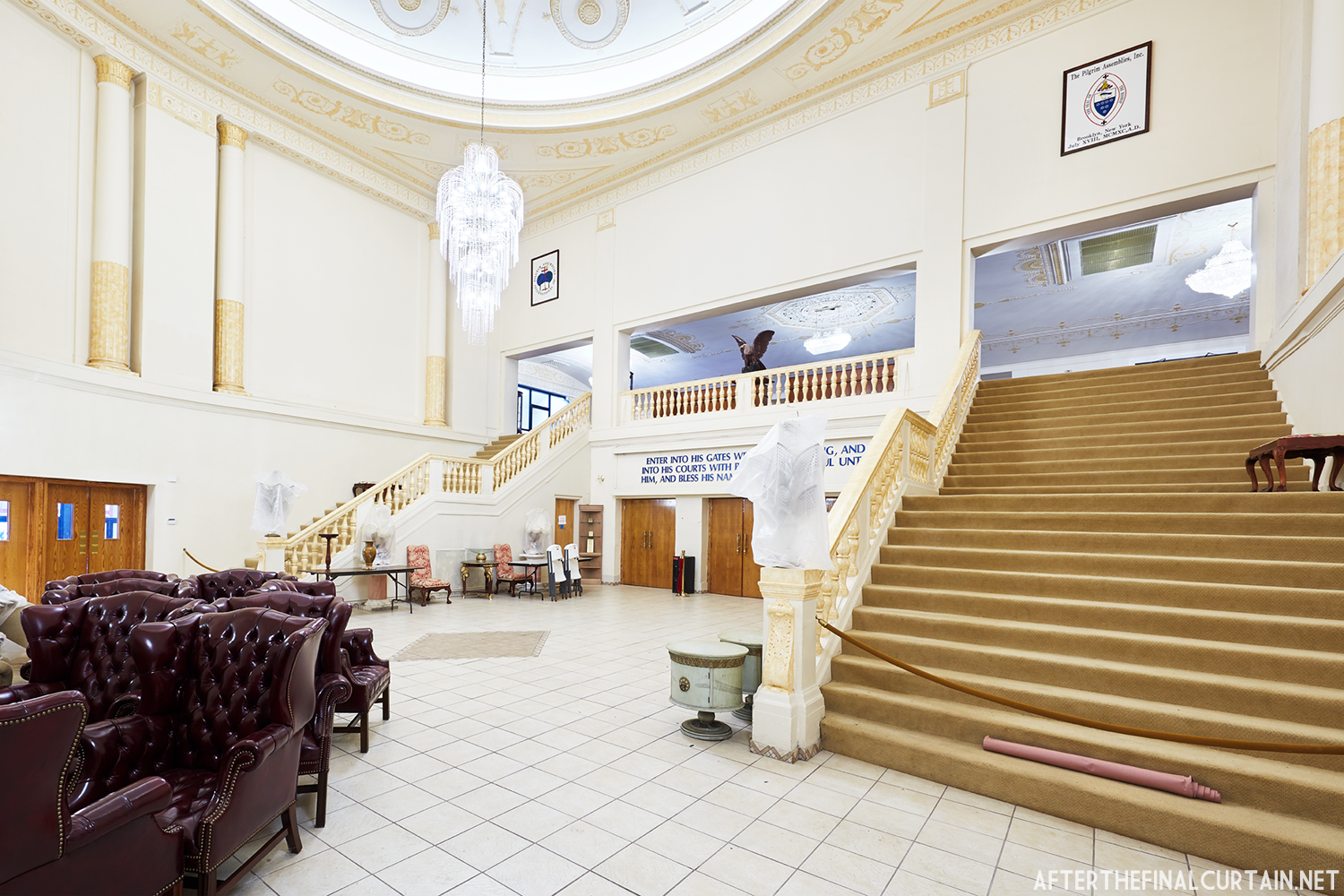
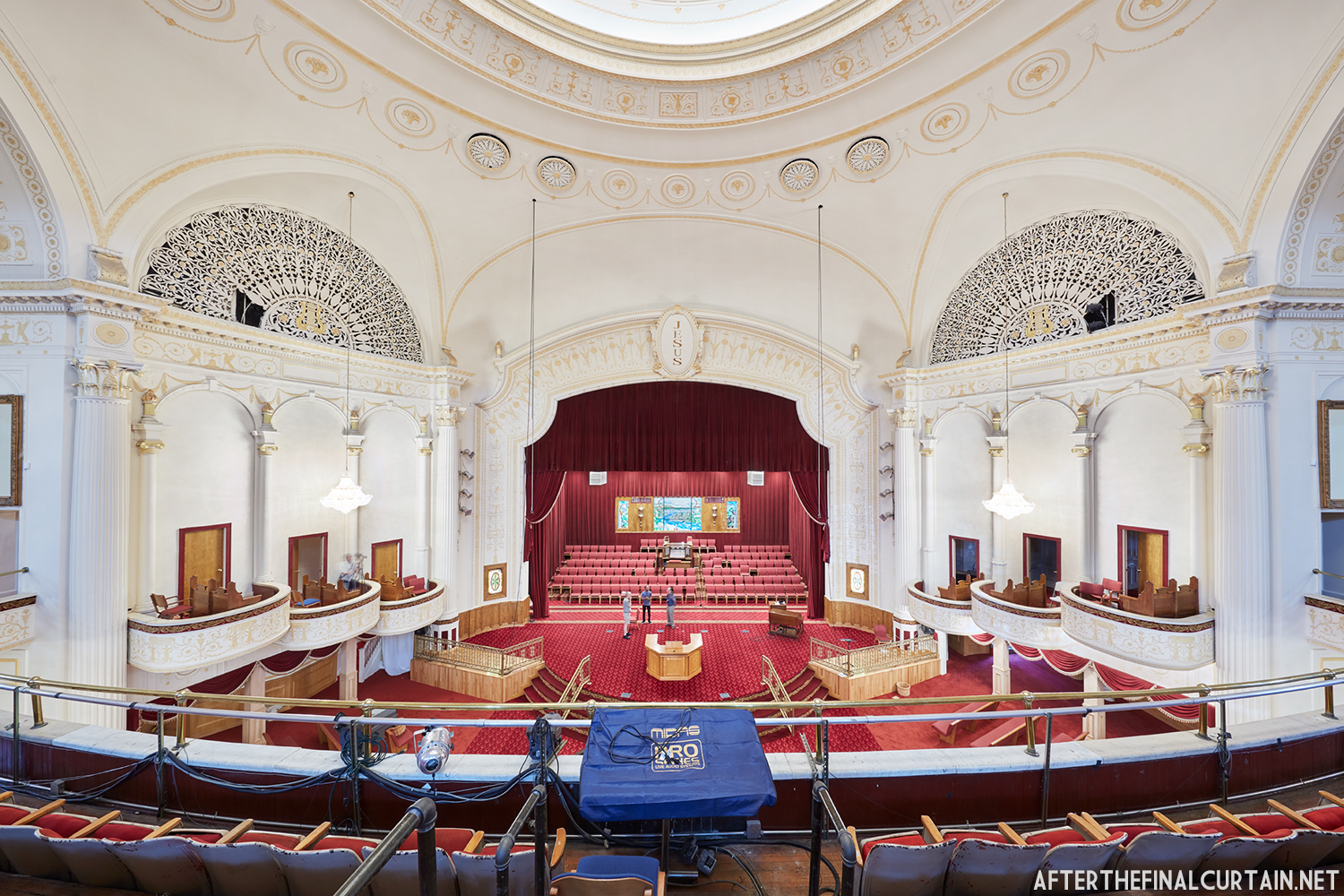
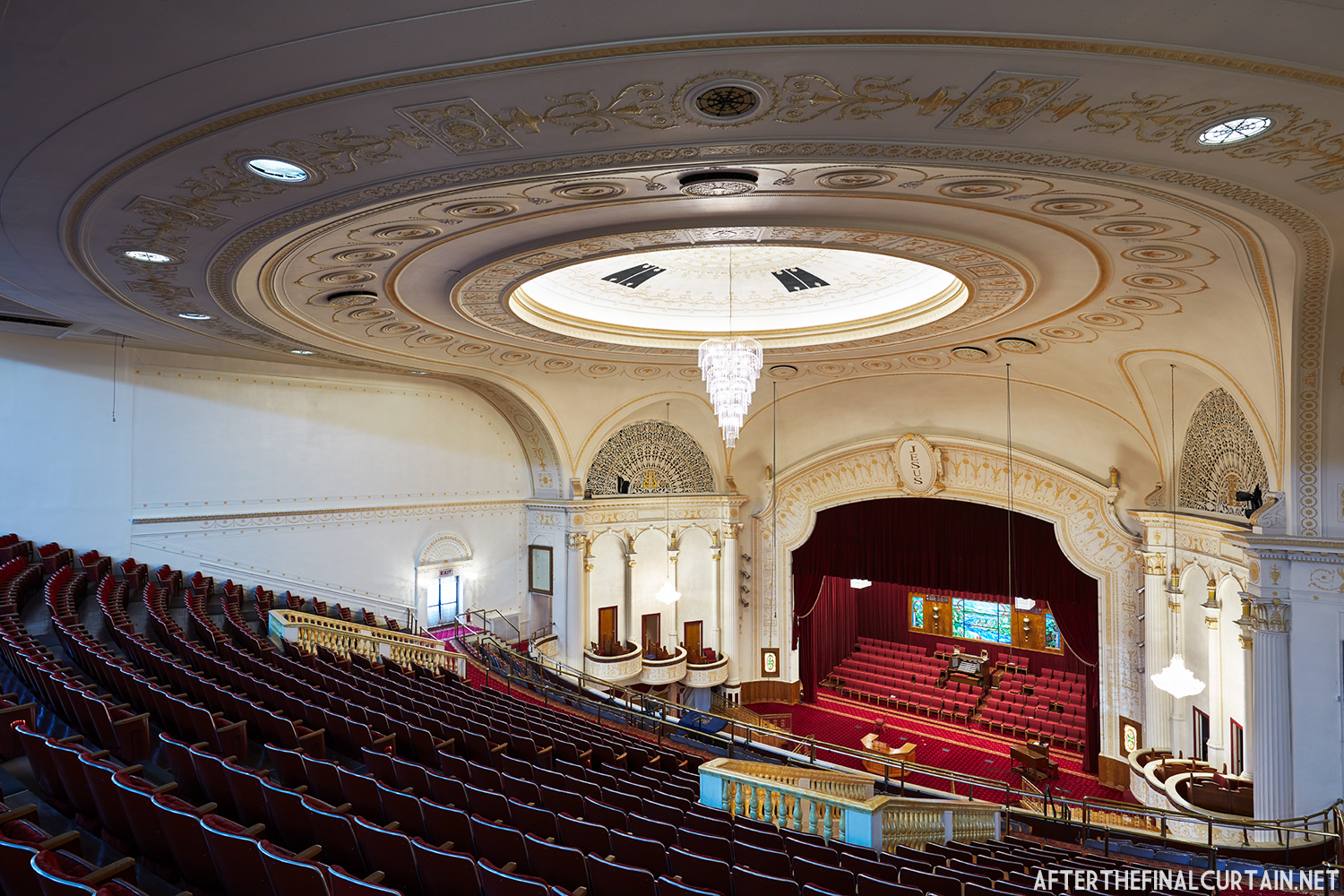
Soon after the theater closed, two churches asked about buying the theater and converting it into a place of worship. There was precedent for this; Loew’s 175th, one of the Kings’ sister theaters, had been purchased by the United Christian Evangelistic Association in 1969 and converted into a church. Another former Loew’s Wonder Theater, the Valencia, closed around the same time as the Kings and was turned into a church two years later when Loew’s donated the building to the Tabernacle of Prayer for All People.

During the Loew’s Valencia theater’s early years, clouds were projected across the ceiling, giving the illusion of sitting under the stars at night.

Less than a month after closing, the Kings Theater was sold to the Kings Royalty Production Corporation (KRPC) for $718,385, or $2,782,520 when adjusted for inflation. The KRPC was formed for the specific purpose of purchasing and running the theater. Robert Smerling and David Fellman, the owners of KRPC, also owned the American Theatre Management Corporation (ATMC), which had several theaters in the tri-state area. “Loew’s” was removed from the marquee, and it reopened in early June 1977 as simply the Kings Theatre. The first film shown was Day of the Animals, a horror movie starring Leslie Nielsen. KRPC contracted with major movie companies, including Warner Brothers and Paramount, to turn the Kings into a first-run movie theater.

On July 13, 1977, lightning struck a substation near Buchanan, NY and began a chain of events that caused the New York metropolitan area to lose power for around 25 hours. Looting began soon after the power went out. It was especially bad in the Bronx, Harlem, Queens, and Central Brooklyn. Eighty stores in Flatbush were hit, with 49 of them on Flatbush Avenue. The already low attendance and the destruction and looting during the blackout caused many people to stay away from the hardest hit neighborhoods.

One of the first films shown at the newly reopened theater was the follow up to the 1973 hit, The Exorcist. KRPC was banking on Exorcist II: The Heretic being as big a hit as the first one. Unfortunately, this film was considered by many to be one of the worst films ever made, and it languished at the box office. The Kings showed the “Exorcist II: The Heretic” for almost a month before switching to another film. By that point, the damage was done, and the KRPC could not meet expenses to keep the theater open. On Monday, August 29, 1977, the Kings closed again, just six weeks after it had reopened. The last film shown was “Bruce Lee: The Man, The Myth.”

Laurence Lehr, a representative employed by both KRPC and ATMC, claimed that the company closed the theater because it was cheaper to let the bank have it. “When you get monthly electric bills over $7,800 …, how do you expect to do business? You can’t do business in this city. The costs of labor, security, and everything else are ridiculous.” They tried to keep the costs down by rarely using the large chandeliers in the lobby and only turning the marquee on around 9 PM each evening. According to Lehr, the company was aware of the costs of running a theater when they bought it, but was hoping they could turn it around.


The Library Opera House – Marathon, NY (Lucky Number 200!)

I knew I wanted to do something a little different for the 200th theater I photographed. I was speaking with a friend who went to school in upstate (real upstate, not just slightly north of NYC) and he asked “have you been to the one above the library in Marathon?” I hadn’t heard of it and was immediately intrigued. I found a few recent photos online and knew this would be perfect. Plus, it’s now the oldest theater I’ve photographed in the United States. As with most of my posts – it was originally posted on Patreon in August 2021.  For expanded early posts, as well as video walkthroughs and other exclusive content you can become a patron at: https://www.patreon.com/afterthefinalcurtain

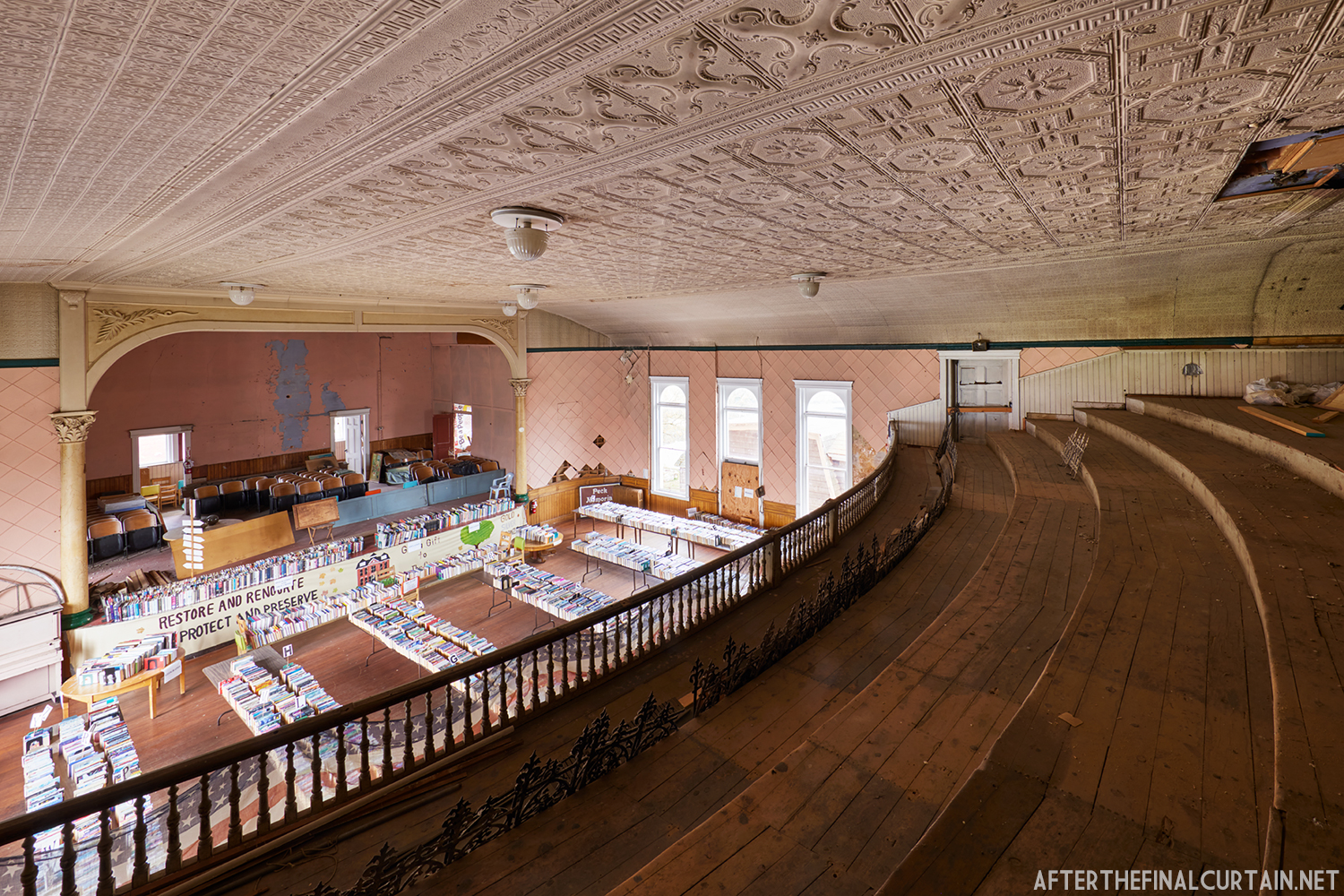
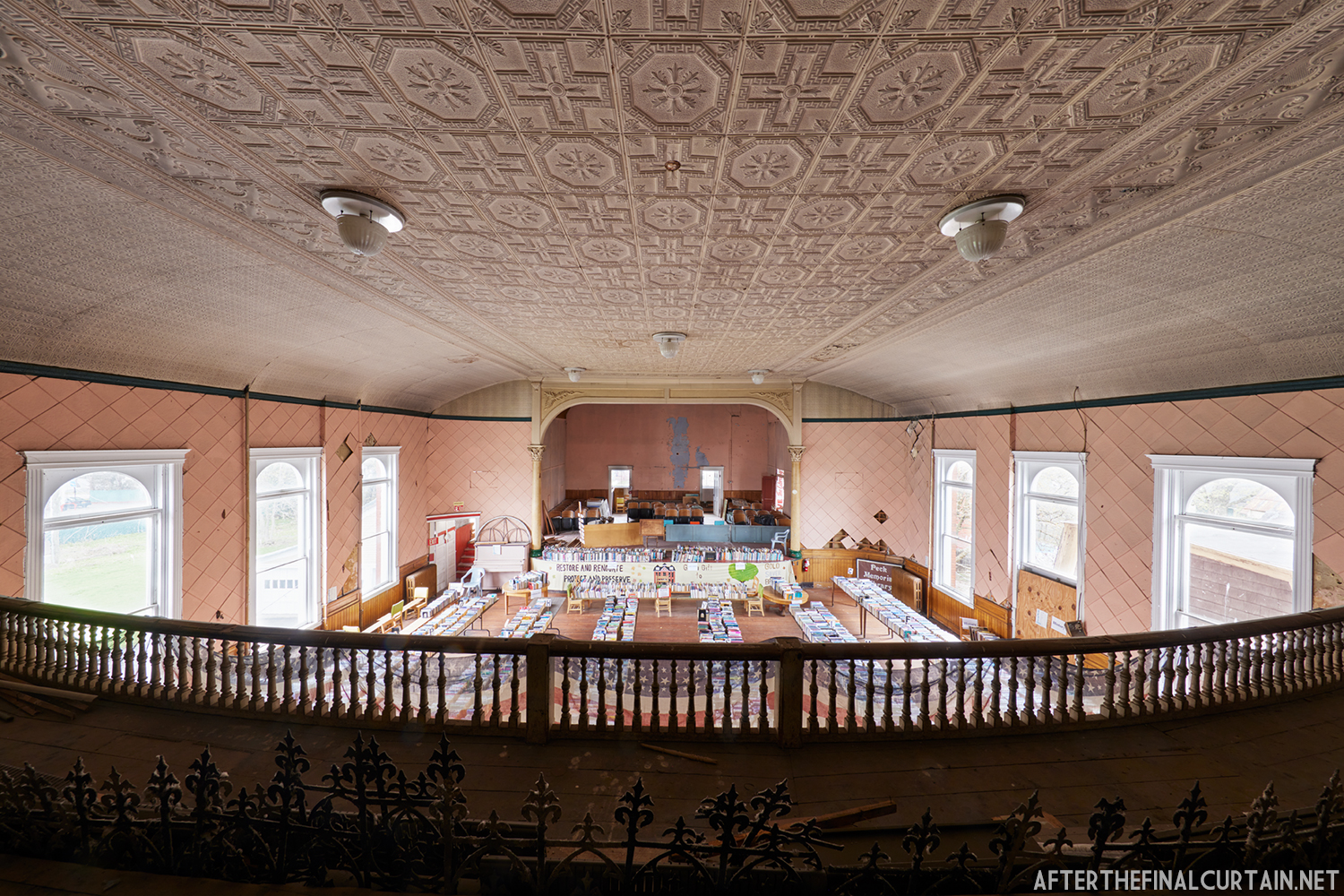
View of the auditorium from the balcony.

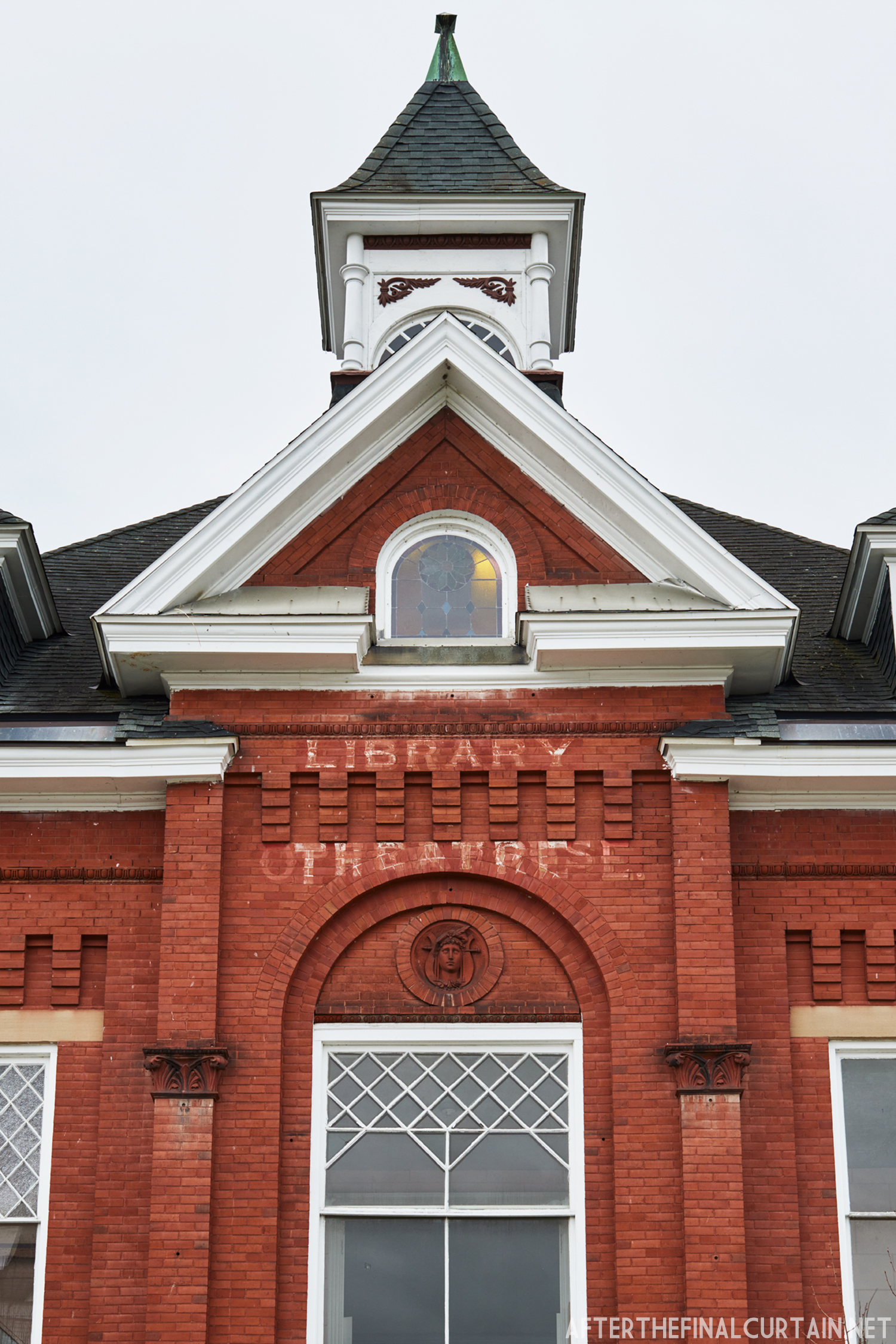
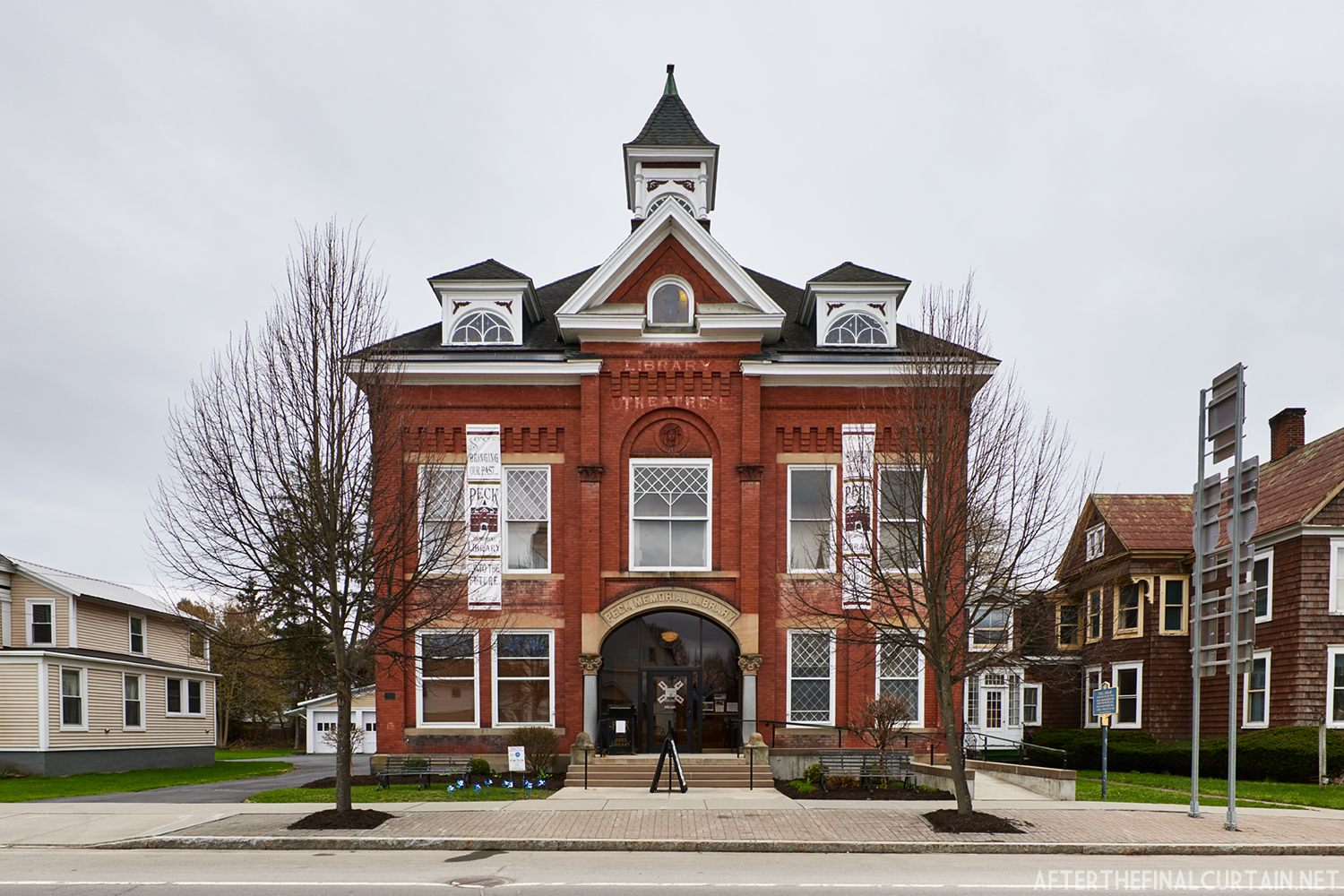
In January 1891, Mersena Peck, a native of Marathon, New York died. She left $20,000 ($584,217 when adjusted for inflation) in trust for the creation of a public library in Marathon and named three town residents as trustees. They began working to carry out her wishes and were well underway by 1893. However, before construction could start, a group of 125 citizens petitioned that the building include a space for public entertainment. Architect Miles F. Howe adjusted the blueprints to add a 600 seat opera house on the second floor of the building.

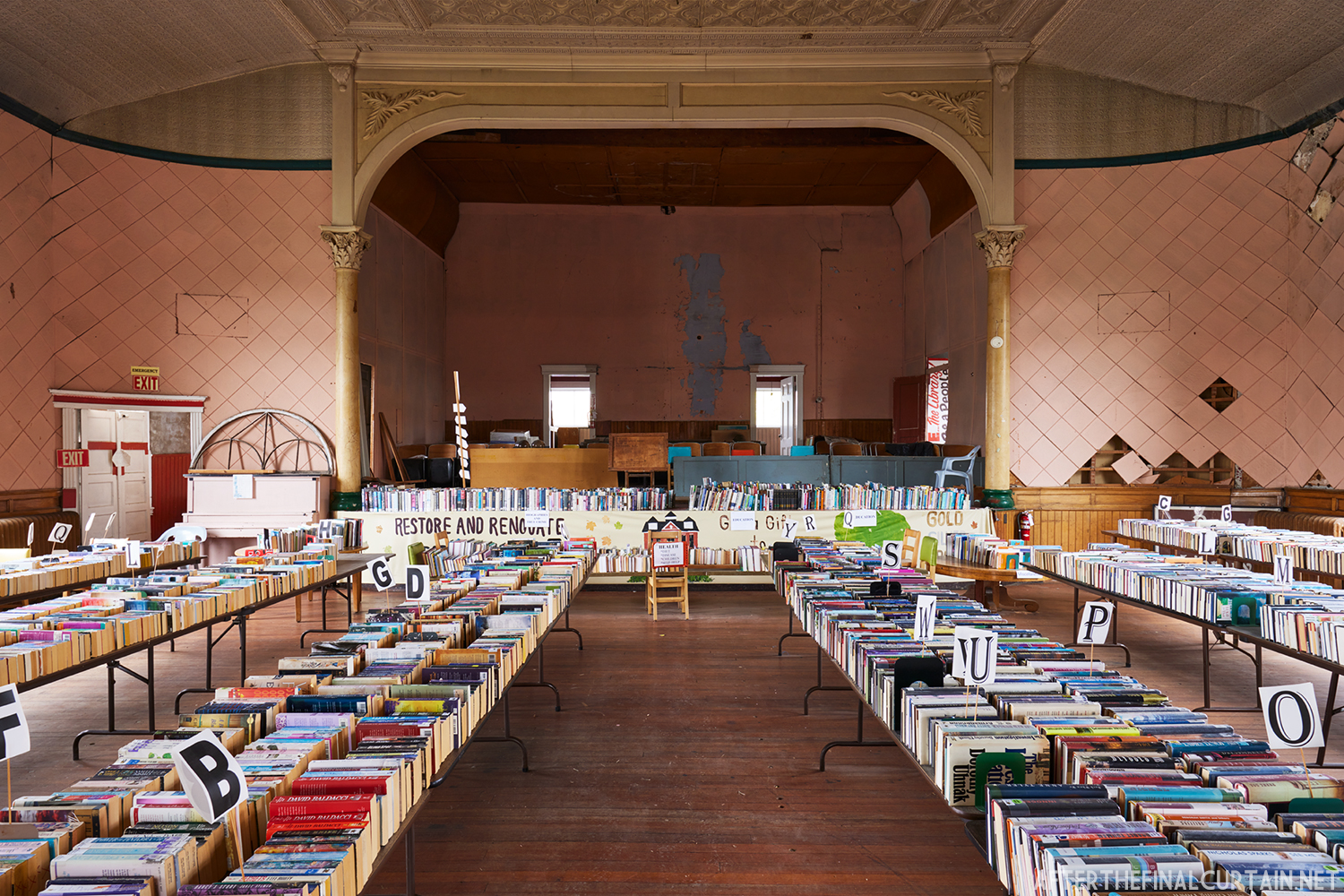
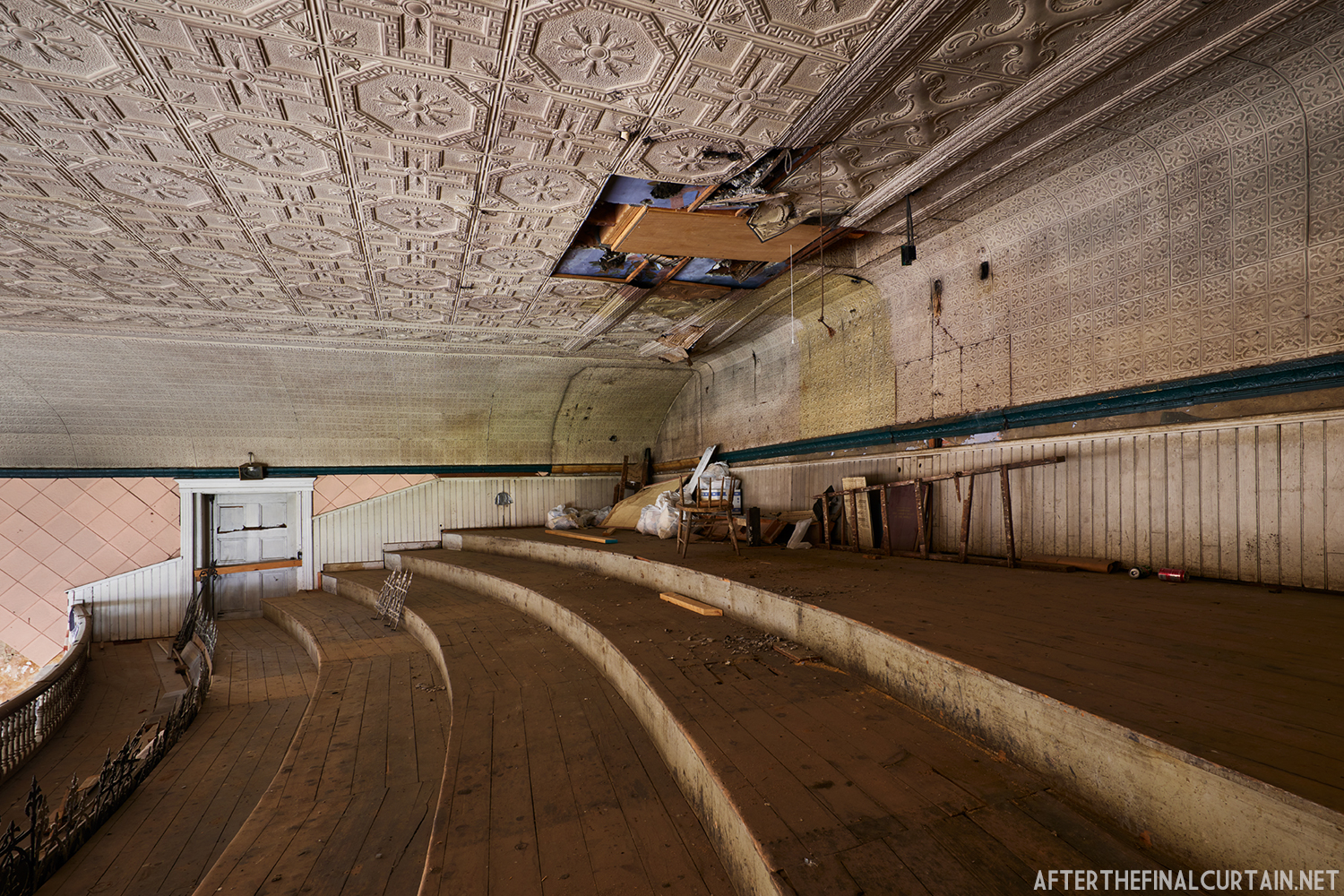
The Marathon Library and Opera House opened on January 1, 1896. It began as a live performance space, hosting traveling performers before transitioning over to films in the early 1930s. The Library Opera House was renamed the Park Theatre and lasted as a movie theater until 1953. The auditorium is currently only used a few times a year to host a used book fair.

The exterior of the Marathon Library/Opera House.

In early 2020, the Marathon Public Library announced that the building needs close to $1 million in renovations. They’ve received $50,000 through their capital campaign but far from enough to be able to make the renovations needed to reopen the opera house.

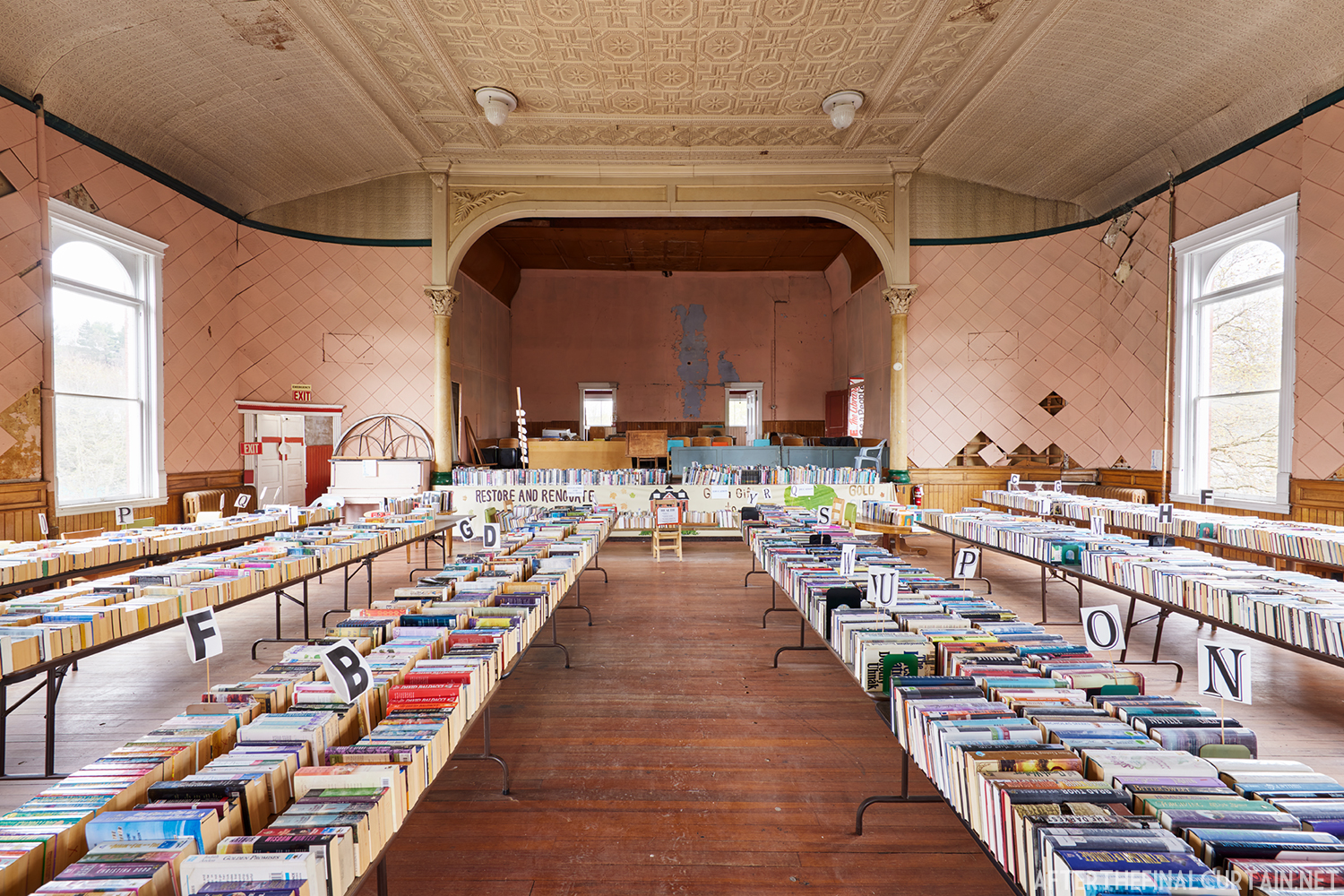
The orchestra level of the auditorium is used as a book fair.

Artists Sunday is here!

Orchestra level, California Theatre – San Diego, CA.

Artists Sunday has officially begun! Visit mlambrosphotography.com/store and use the coupon code “Artistssunday” at checkout to get 20% off your order. The first 13 people to spend over $100 will get a free matted 8×12 print.

I’ve added some one-of-a-kind metallic prints from a gallery exhibition last year as well as some other surprises.

Here are a few great artists who are offering deals on their work today:

CJ Lavoie – Paintings in oil, watercolor, or acrylic. Landscapes from sites in Colorado, Washington, Arizona, New Hampshire, and Maine.

Jill Harrington Nichols – Fine Art Paintings and Prints

David Shedlarz Photography – Limited edition, museum-grade fine art photography prints.

Loring Slivinski Fine Art & Photography – Nature Themed Art.

Christopher Sherman – Fine Art Photography and Founder of Artists Sunday

Queens Theatre – Queens Village, NY

View of the auditorium from the balcony.

The Queens Theatre opened on December 29, 1927 opened in the Queens Village neighborhood of Queens, NY. It was designed by architect R. Thomas Short, who also designed the nearby Prospect Theatre in Flushing, for the Century Theatre Circuit. Morris Rosenthal, who managed the Majestic Theatre in Bridgeport, CT, was brought on as the theater’s manager. The 2,500 seat theater opened with a performance by The Happiness Boys, a popular radio act, and for the first year showed a combination of vaudeville and silent pictures. 

View of the auditorium ceiling from the stage.

In January 1929 Vitaphone, an early form of talking movies, was installed. The switch from vaudeville and silent films did not go over well with the regular patrons, and they threatened to go to another theater. Rosenthal, the manager of the Queens, got a permit to hang a banner in front of the theater that said “Sound Talkies – See and hear!” along with a catchy phrase about the upcoming film to help drive traffic into the theater. On September 13, 1938 projectionist Solomon Schulman killed Nat Klein in the Queen’s projection booth during a screening of “The Devil’s Party.” Klein was a former projectionist’s assistant. Schulman claimed that Klein failed to get a job at a different theater, blamed Schulman, and attacked him with a fire extinguisher. Schulman was convicted of second degree manslaughter and sentenced to 5-10 years at Sing Sing Prison in Ossining, NY.

The main floor of the lobby was almost completely gutted during the late 2000s.

The Queens closed on March 1, 1974 after a showing of “Last Tango in Paris” starring Marlon Brando and Maria Schneider. According to Joseph Wickman of Century Theatres, the Queens had been losing money for years, and only filled 150 of the 2000 seats during the final showing.  Later that year, Louis Diaz reopened the theater as an independent house. He started showing first run films, then switched to Spanish language films, then Spanish language XXX films, and by 1976 English language XXX films. A Queens based group called the “Coalition for Decency” began to picket the theater, and eventually sat down with Diaz and asked him to stop showing XXX films. He declined, but did stop putting up posters for films outside the theater. In July 1976 Diaz was charged with promoting obscenity for showing the pornographic films “The Taking of Christina” and “Little Sisters.” He plead guilty and was fined $1,500. He was charged again the following year, and this time the films and the projector’s lenses were seized. The case was eventually dismissed, and the theater continued showing XXX films until it closed February 1989. 

The interior of the theater was very similar to the now demolished Prospect Theatre in Flushing, NY.

In July 1990, the Queens was renovated and reopened as a performing arts center. Marty Oser, who was behind the renovation, hoped that the lack of venues between Manhattan and Long Island would give the Queens a chance. Kool and the Gang, The Marshall Tucker Band, David Brenner, Waylon Jennings, Frankie Valli and the Four Seasons, Ace Frehley, and Jerry Lee Lewis all performed at the theater during this time. However, it wasn’t very successful and it closed again in late December 1990.

A 3 manual 11 rank Opus 1569 Austin Theatre Organ was installed in the theater when it opened. It was later moved to Chaminade High School in Mineola, NY.

On October 2, 1993, the New York Deliverance Gospel Temple began holding services at the theater before purchasing it in January 1995. They sold it to the All Nations Apostolic Tabernacle (ANAT) in September 2006. ANAT closed the building and began to renovate it into a 2,500 seat second location for their rapidly growing congregation . They completed work on the building’s facade, but the interior work stalled out. Despite a few attempts to complete construction, the building was put on the market in early 2019. 


After the Final Curtain: America’s Abandoned Theaters

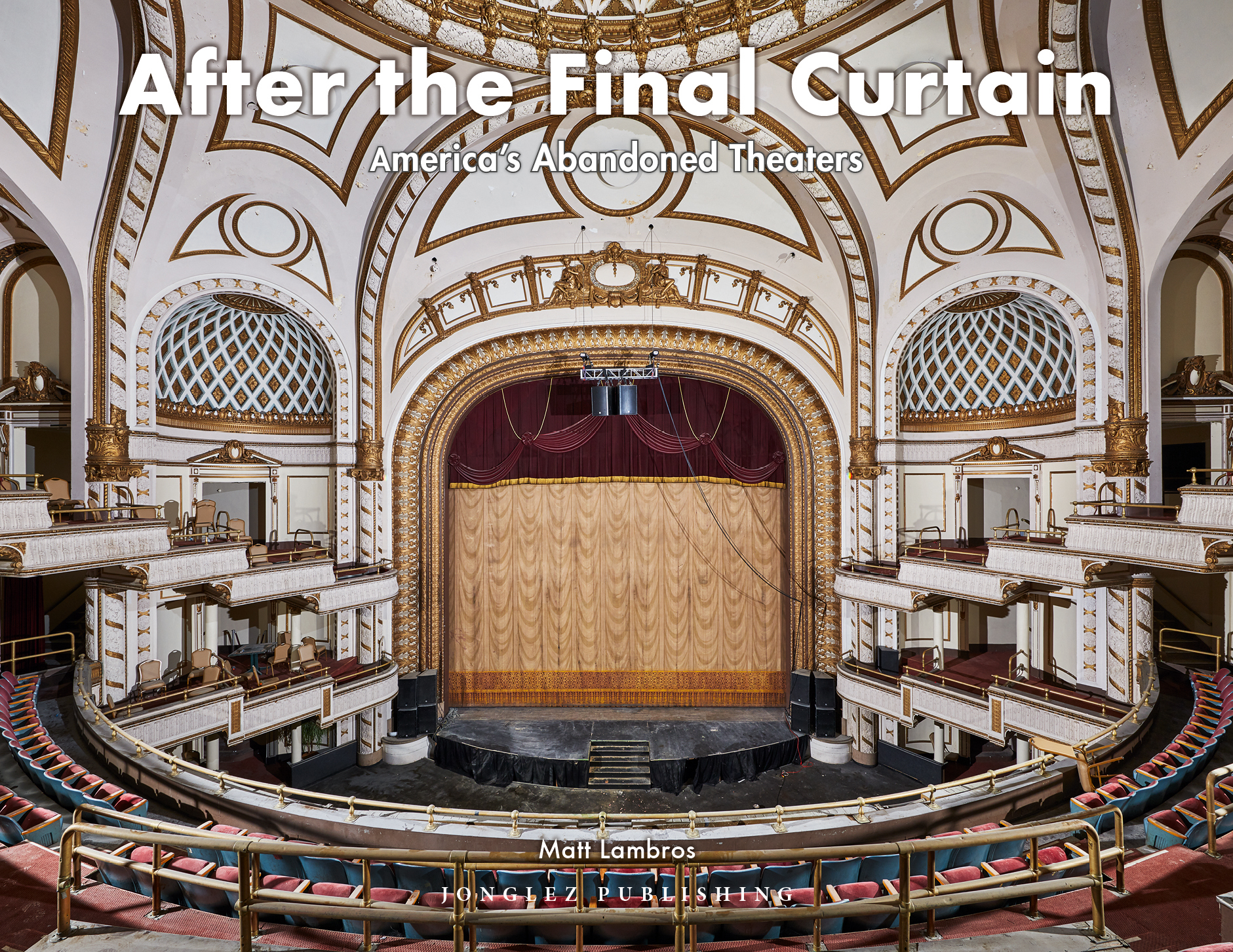
Cover of After the Final Curtain: America’s Abandoned Theaters.

I took a bit of a hiatus from the site to finish this up, but now that I’m completely done I’m excited to announce that my third book is coming out this November!

“After the Final Curtain: America’s Abandoned Theaters” will feature 20 different theaters across the United States, including six exclusive ones, and a foreword written by Tim League, the founder of the Alamo Drafthouse Cinema chain.

If you pre-order it via my site you will get a signed copy with a ticket stub and a 5×7 print of one of the theaters in the book. It should ship around the first week in November.

Pre-Order Link

The streets of small towns and cities across America were filled with the lights and sounds of movie theaters in the early 20th CenturyThe most opulent were known as “movie palaces,” which were designed to make their patrons feel like royalty; people would dress up to visit. But as time went on, it became harder and harder to fill the 2,000+ seat theaters, and many were forced to close.

Today, these palaces are illuminated only by the flicker of dying lights, and the sound of water dripping from holes in the ceiling echoes through the auditoriums. In “After the Final Curtain: America’s Abandoned Theaters,” internationally-renowned photographer Matt Lambros continues his travels across the United States, documenting these once-elegant buildings. From the supposedly haunted Pacific Warner Theatre in Los Angeles to the Orpheum Theatre in New Bedford, MA, which opened the same day the Titanic sank, Lambros pulls back the curtain to reveal what is left, giving these palaces a chance to shine again.

It’s also available to order on AmazonBarnes and Noble, Indiebound or your local bookstore.

I’m in the beginning stages of planning a book/lecture tour to promote the new book, so if you want me to visit your area let me know!

Here’s a sneak peek at some of the theaters that will be in the the new book:

View from the side of the balcony at the Emery Theatre in Cincinnati, Ohio

The auditorium of the United Artists Theatre in Detroit, MI

View from the balcony of the Majestic Theatre in East St. Louis, IL.