This was originally posted on After the Final Curtain’s Patreon in January 2025. For expanded early posts, as well as video walkthroughs and other exclusive content, you can become a patron at: https://www.patreon.com/afterthefinalcurtain
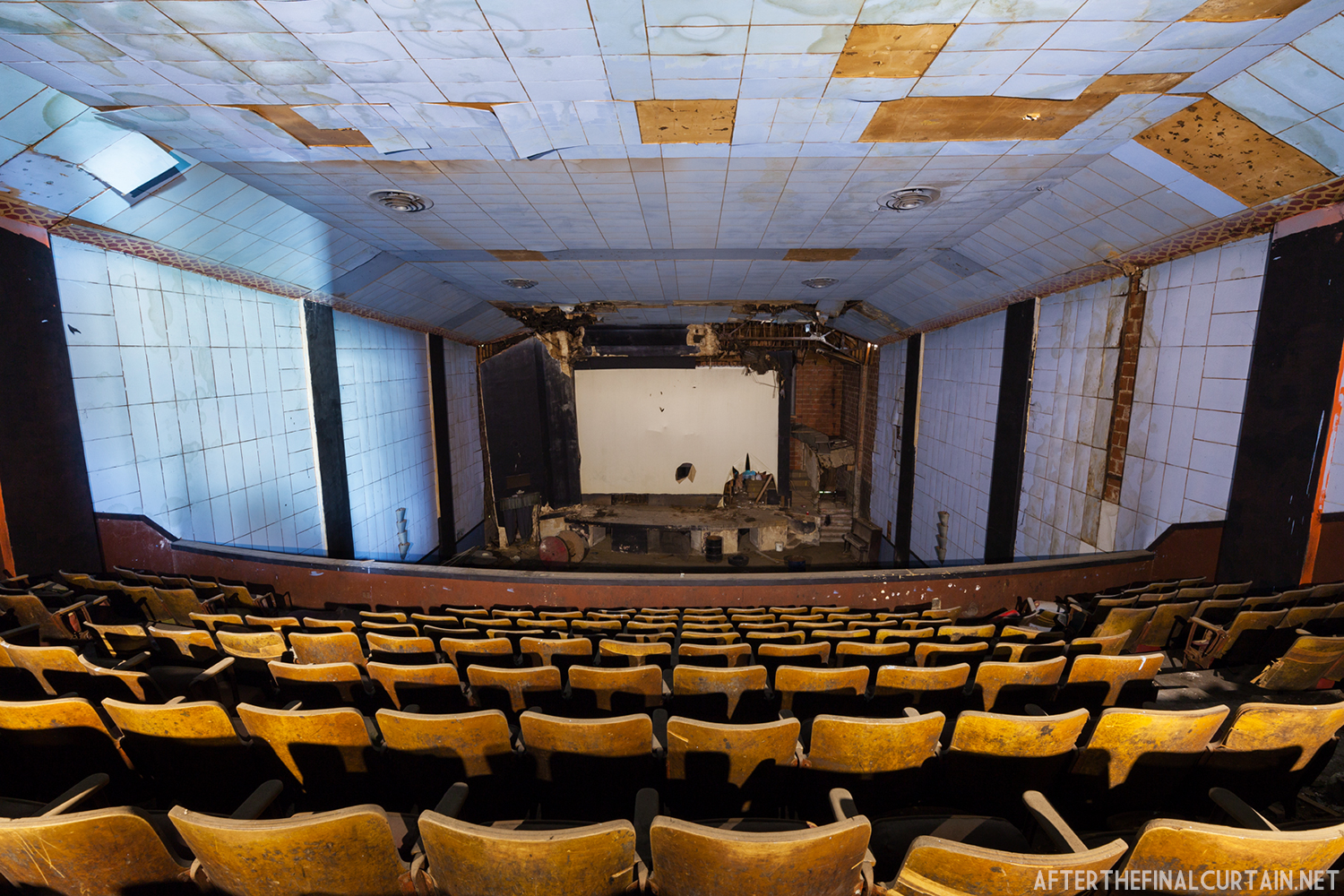
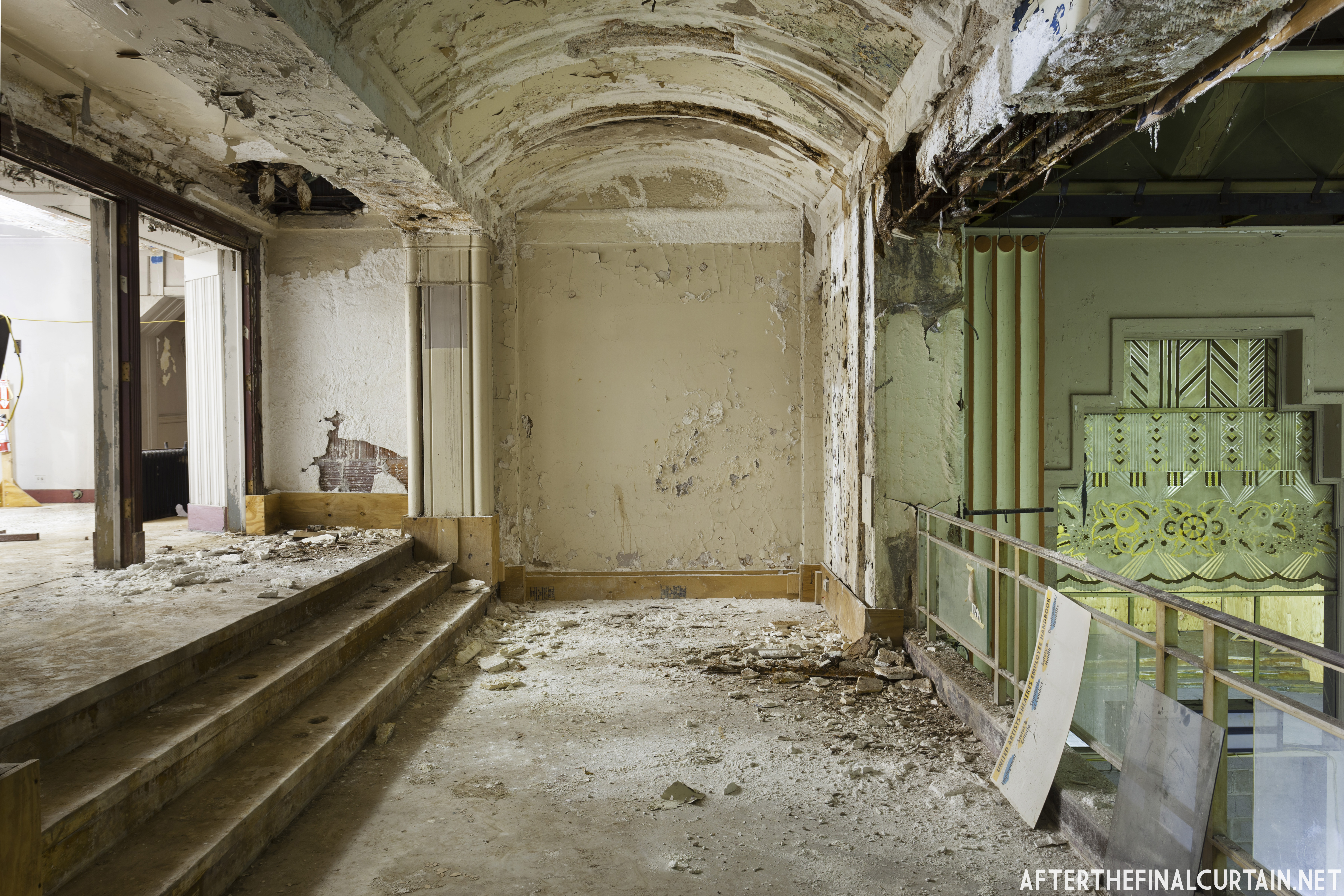
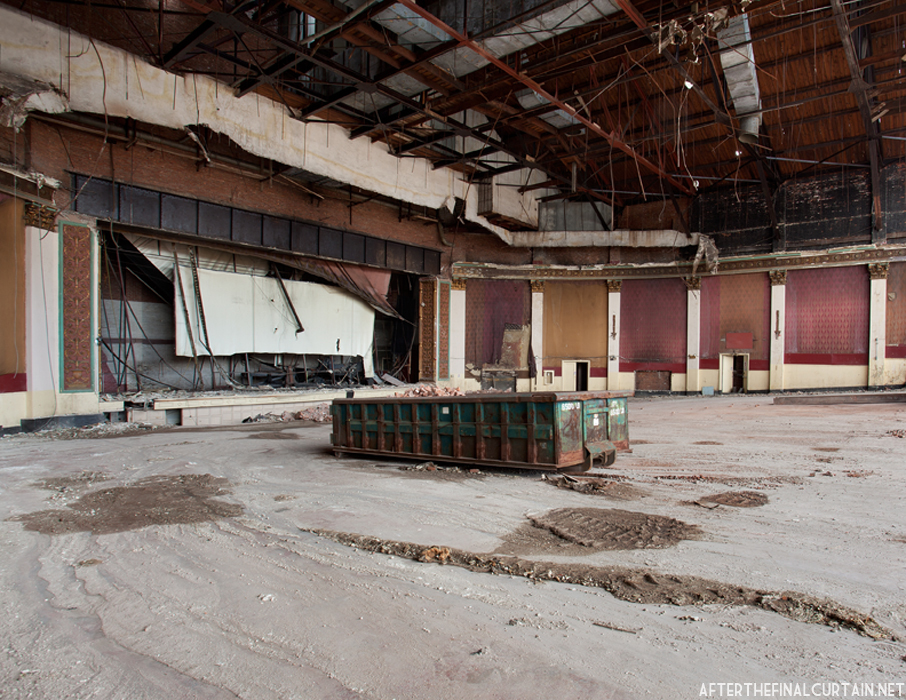
The interior of the auditorium was gutted a few years before the building was demolished.
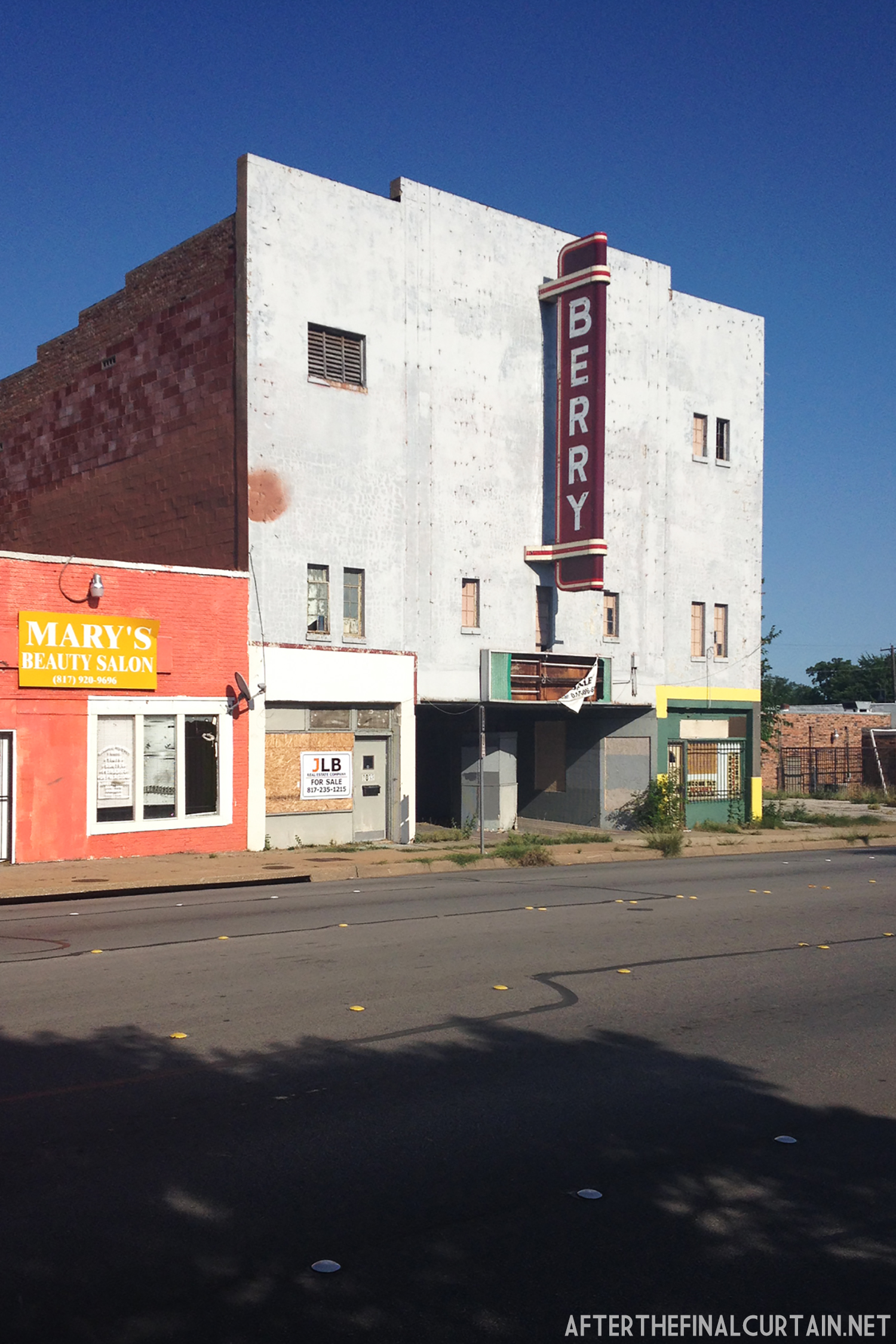
The Berry Theater, originally known as the White Theater after its owner, M.S. White, was located in Fort Worth, Texas at the intersection of W. Berry and Hemphill Streets. The 682 seat theater officially opened its doors on April 3, 1940.
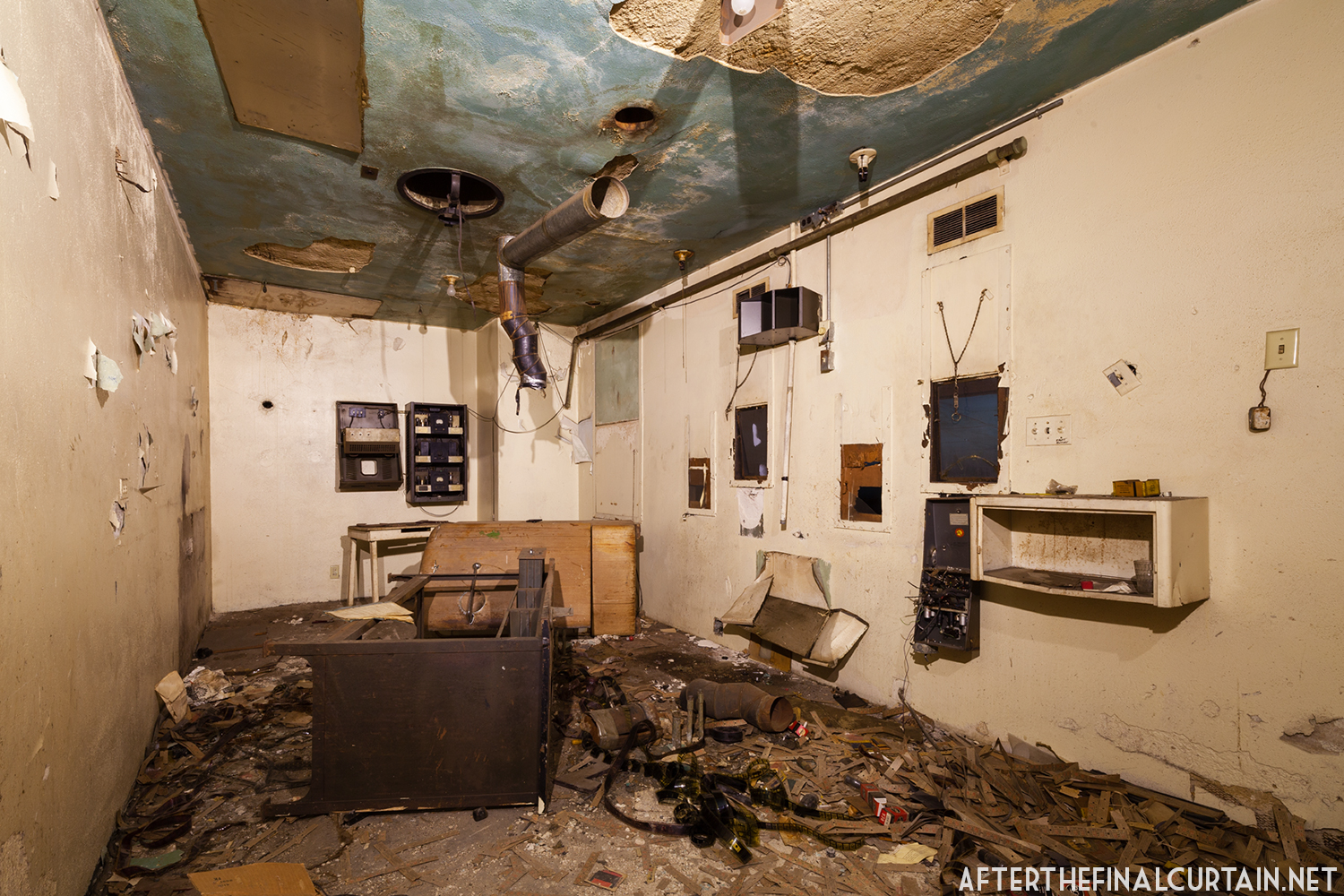
The projection room was largely stripped of equipment.
The building’s design featured a three-story facade that tapered down to a two-story stage house. The theater included a balcony and a distinctive exterior, with the first floor clad in burgundy ceramic tiles and a freestanding box office. The upper levels of the facade were painted stucco, accented with neon lighting that outlined and highlighted its architectural details.
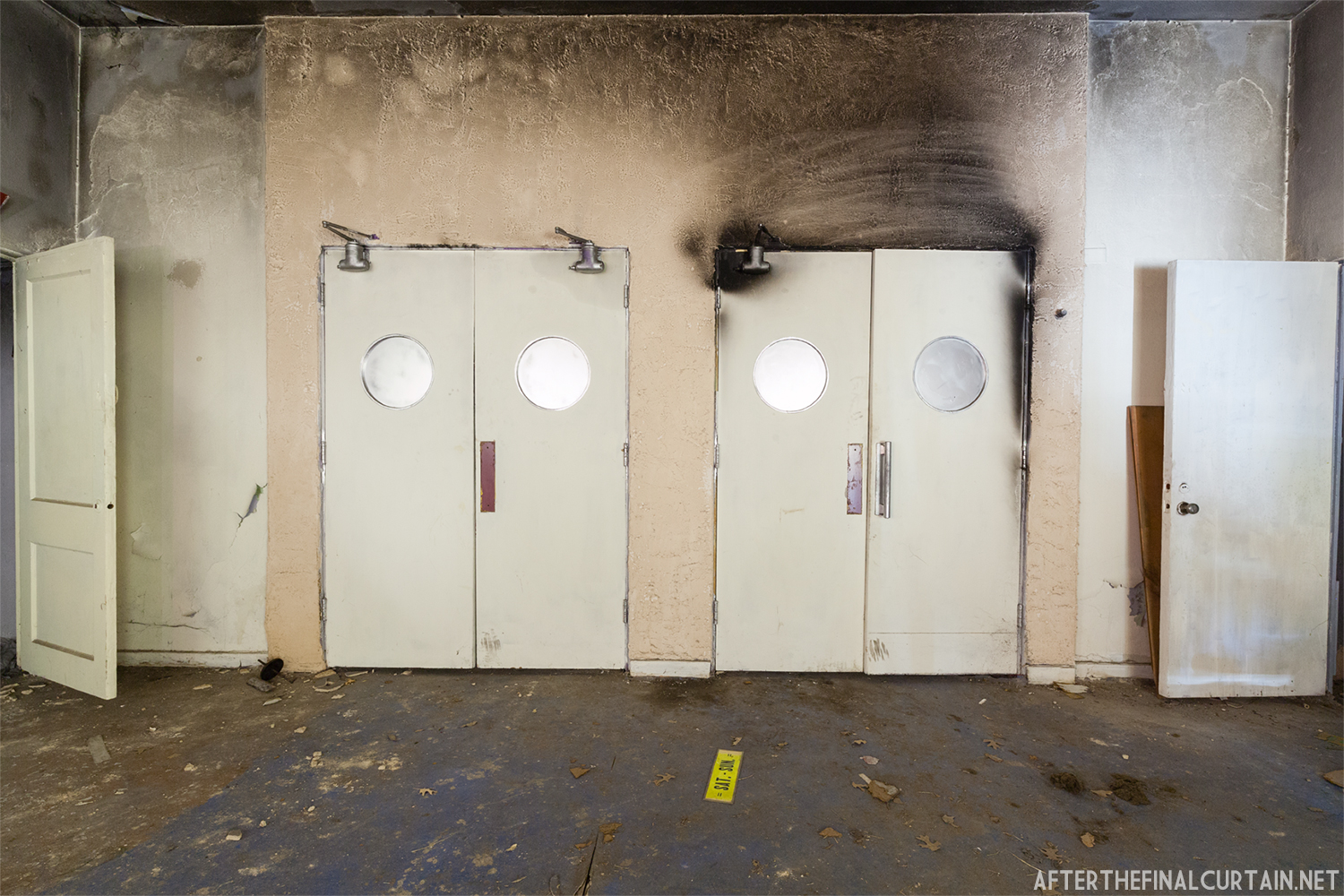
The doors that lead into the auditorium from the lobby.
After decades of vacancy, a commercial demolition permit for the building was issued on July 18, 2023. Demolition began shortly after 9 a.m. on Saturday, July 22, 2023. The site is now a vacant lot.
This was originally posted on After the Final Curtain’s Patreon in July 2023. For expanded early posts, as well as video walkthroughs and other exclusive content, you can become a patron at: https://www.patreon.com/afterthefinalcurtain
View of the auditorium from the balcony.
Located in the Jackson Heights neighborhood of Queens, NY, the Boulevard Theatre has a rich history that spans nearly a century. It first opened its doors on September 10, 1926, as one of three theaters built in Queens by the Grob & Knobel circuit with Herbert J. Krapp as architect. The other two were the Jackson Theatre and the Sunnyside Theatre. It was the only one of the three that had large enough stage facilities to handle a musical or Broadway style play.
View of the auditorium from the stage during demolition.
The theater, with 1,839 seats, was designed to showcase shows that had recently closed on Broadway or were on trial before their official run. This made it a popular place for theater enthusiasts. In 1928, William Fox acquired the Grob & Knobel theaters, and Louis Werba managed the Boulevard Theatre. But due to the Depression, both Fox and Werba faced bankruptcy. As a result, the Boulevard Theatre became a double-feature movie house under Fox’s successor, Skouras Theatres. Skouras also took control of the Jackson Theatre and Sunnyside Theatre, which were later sold to Century Theatres.
After years as a live theater venue, the Boulevard switched formats and became a movie theater. In the 1960s, it was a first run movie theater. A special screening of “Yours, Mine and Ours” starring Lucille Ball and Henry Fonda was shown at the theater in 1968 before its wide release.
Triplexed in the 1970s, the Boulevard Theatre encountered difficulties because it was located in a residential area on Northern Boulevard, far from the 82nd Street shopping district around Roosevelt Avenue. This, combined with a decline in the neighborhood, led to the theater closing in the 1980s and its owner planned on demolishing it. However, this did not happen partially because of the community’s disapproval of his plan.
Eventually, the Boulevard Theatre was sold and transformed into the successful Natives Restaurant-Theatre, catering to Queens’ Hispanic community. The entrance was converted into a restaurant-bar, and the three auditoriums were used for various events. However, by 2016, it had turned into a restaurant/nightclub, which closed during the Covid-19 Pandemic. In early 2021, it was demolished, putting an end to its rich and storied history.
The remains of one of the stairways leading to the balcony.
This was originally posted on After the Final Curtain’s Patreon. For expanded early posts, as well as video walkthroughs and other exclusive content, you can become a patron at: https://www.patreon.com/afterthefinalcurtain
View of the auditorium post twinning.
On December 1, 1920, the Pantages Theatre opened in Salt Lake City, and was called “Utah’s most ornate theater” in an early advertisement. Designed by Benjamin Marcus Priteca, the official architect of the Pantages circuit, the theater could accommodate 2,300 guests. Priteca had designed more than 20 theaters for the company, making him the preferred architect of Alexander Pantages. The theater cost a staggering $2 million, equivalent to $34 million in present-day terms. Priteca, famous for his work with Pantages, decorated the interior in the Italian Renaissance style, a popular choice in Pantages theaters that became known as “Pantages Greek.”
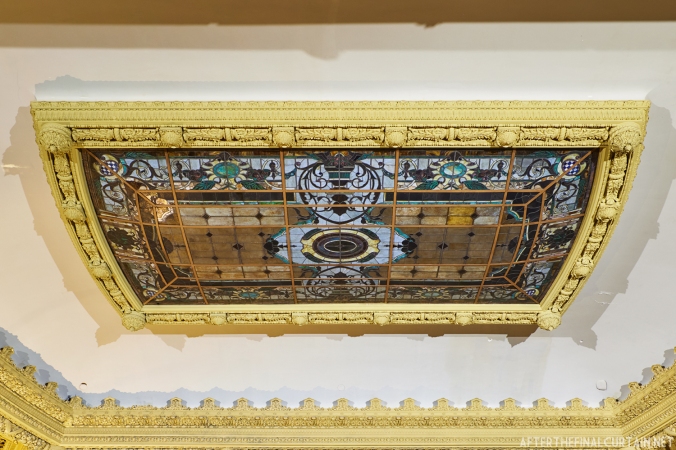
A close up of the tiffany skylight.
The grand opening of the theater featured the silent film “Polyanna,” starring Mary Pickford as well as some vaudeville performances. On September 11, 1929, it was renamed the RKO Orpheum Theatre and renamed again on September 29, 1937, as the Utah Theatre. The Utah Theatre reopened with a stage review and the film “The Girl Said No,” starring Robert Armstrong.
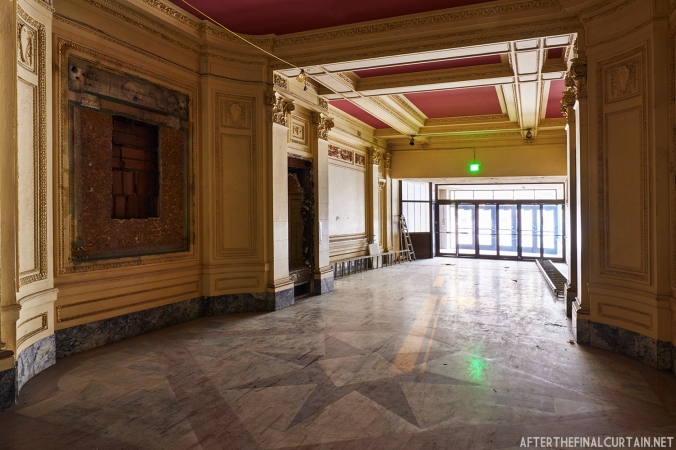
View of the lobby from the mezzanine level.
In 1938, the Utah Pantages Theatre underwent significant changes, which included the removal of its third story and the application of Art Moderne style to its facade. A new marquee was also installed in the same style. Over the years, the theater hosted many famous performances from celebrities such as Babe Ruth, Abbott and Costello, and Will Rogers.
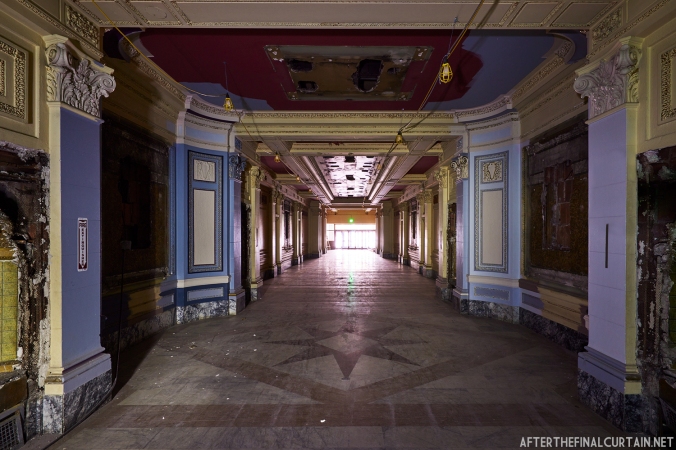
The theater had a long entrance hallway leading to the lobby.
The center section of the facade and marquee were replaced yet again in 1968, this time with a simpler design featuring a smaller projecting roof. The interior also underwent major renovations during this time, resulting in the creation of a twin-plex layout and the removal of original interior finishes in the lower auditorium to accommodate the renovation.
It ceased to operate as a movie theater in 1988 and was later used by a local dance company until 1992, when it was sold to new owners. Following a series of changes in ownership, the vacant building was eventually acquired by the Salt Lake City Redevelopment Agency (RDA) in 2009.
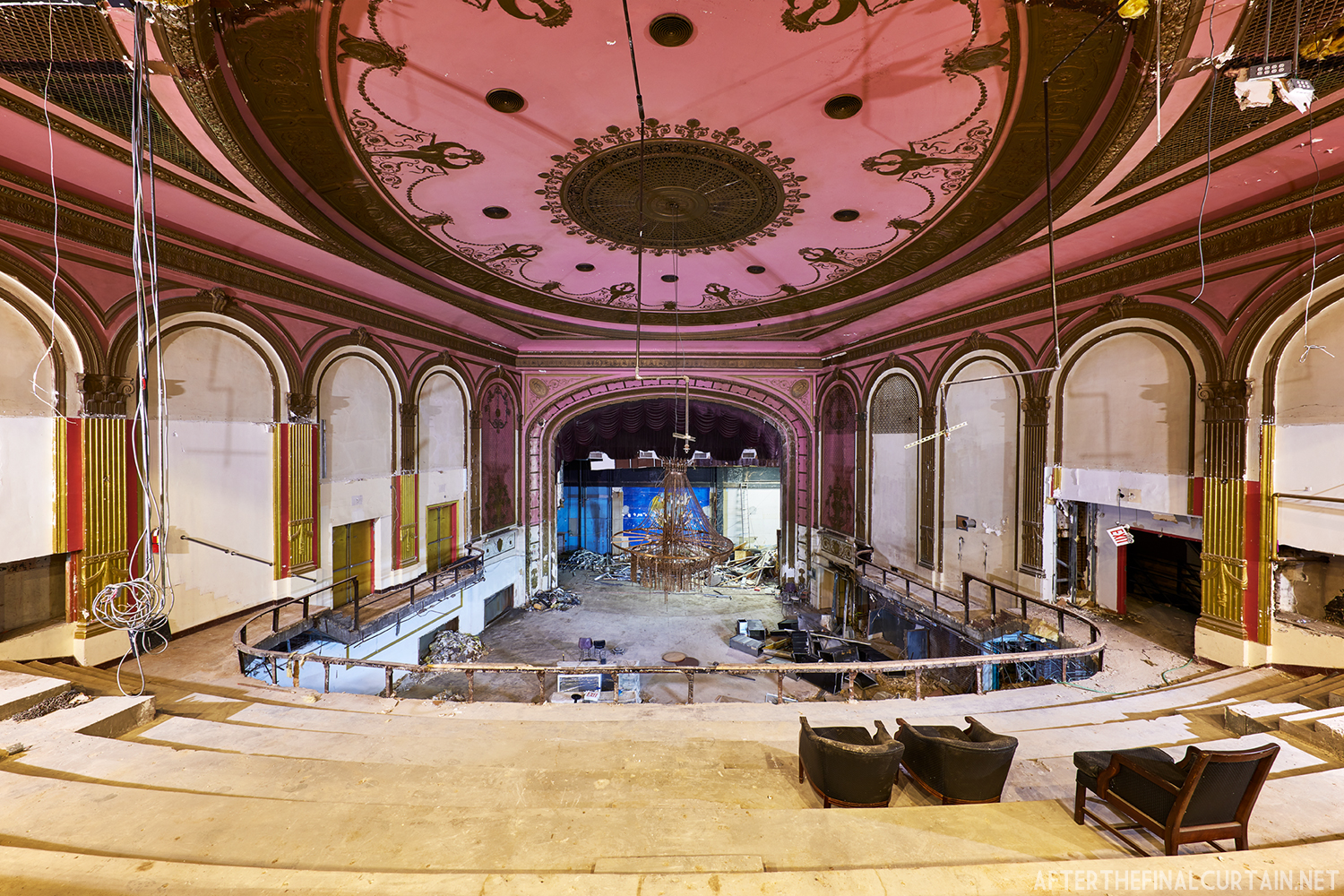
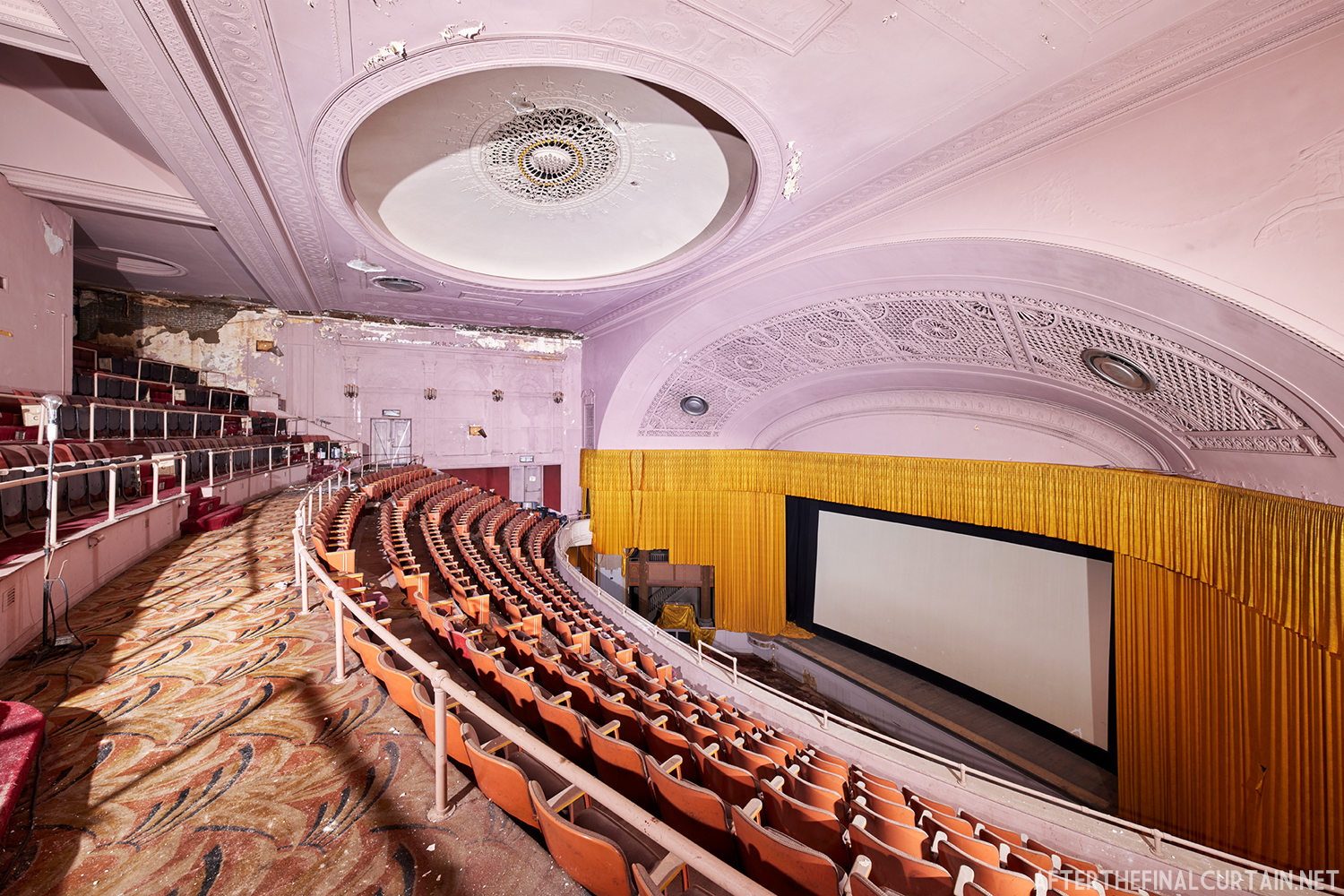
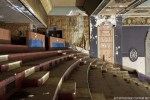
View of the auditorium from the side of the balcony.
Hines, a privately owned real estate development firm, signed an agreement with Salt Lake City in 2019 to purchase the Utah Theatre property. The agreement required the future residential development to include at least 10% of affordable housing units and to maintain a green space with public access. The developers acquired the property for $0 from the RDA under these conditions. However, the proposed 31-story, 400-unit apartment tower at the site, which would involve the demolition of the Utah Theatre, was met with controversy. There have been efforts to save the theatre from demolition as supporters of this initiative dispute the city’s renovation cost estimates of $60-$80 million.
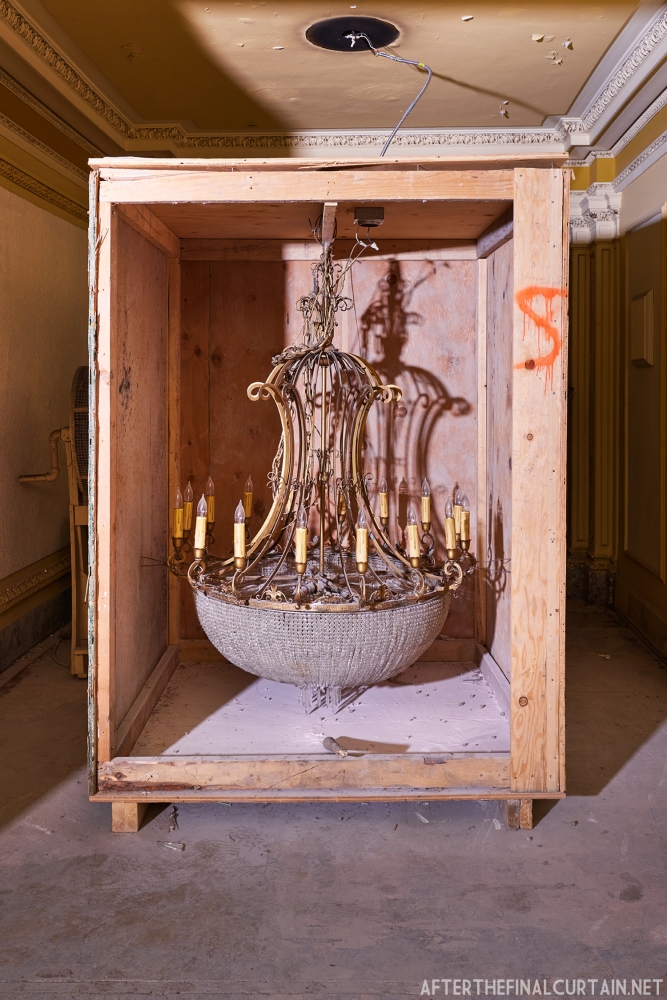
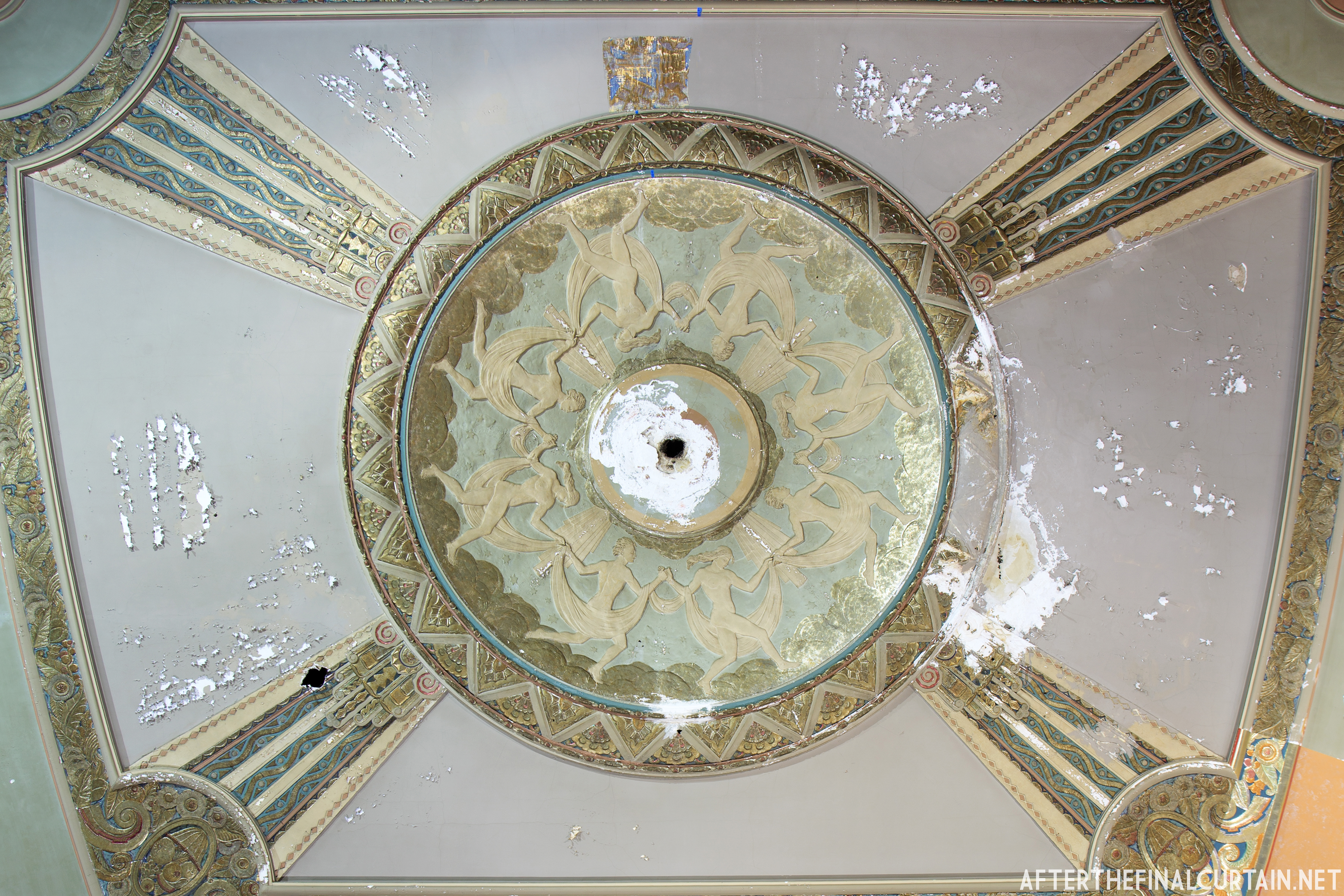
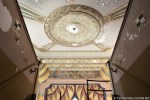
Some of the ornate plasterwork that remained in the theater prior to demolition.
The demolition of the historic theater, despite efforts by preservationists, and concerned citizens, began on April 19, 2022. Michael Valentine, a filmmaker and one of the founders of the group “Save the Historic Utah Pantages Theatre”, watched the demolition from a distance, streaming the event online. He lamented the loss of the beloved theater, describing it as a “hard to watch” and “sad day for Utah,” adding that it was “Utah’s greatest theater.” Multiple legal attempts to save the building proved unsuccessful, while the developers were unyielding in their pursuit of their construction schedule, citing financial losses for any delays.
After the theater’s demolition, Hines requested a one-year extension for finalizing their designs, citing unforeseen challenges discovered through soil samples. However, the loss of a key equity partner due to market changes has created significant financial difficulties for the Texas-based firm, causing them to miss their legal deadline for commencing construction.
The developer, though affirming their commitment to the success of the upscale tower, has not provided any timelines or estimates for when the delays might end. This has left many wondering about the future of the site and its impact on the surrounding community.
This was originally posted on After the Final Curtain’s Patreon in November 2022. For expanded early posts, as well as video walkthroughs and other exclusive content, you can become a patron at: https://www.patreon.com/afterthefinalcurtain
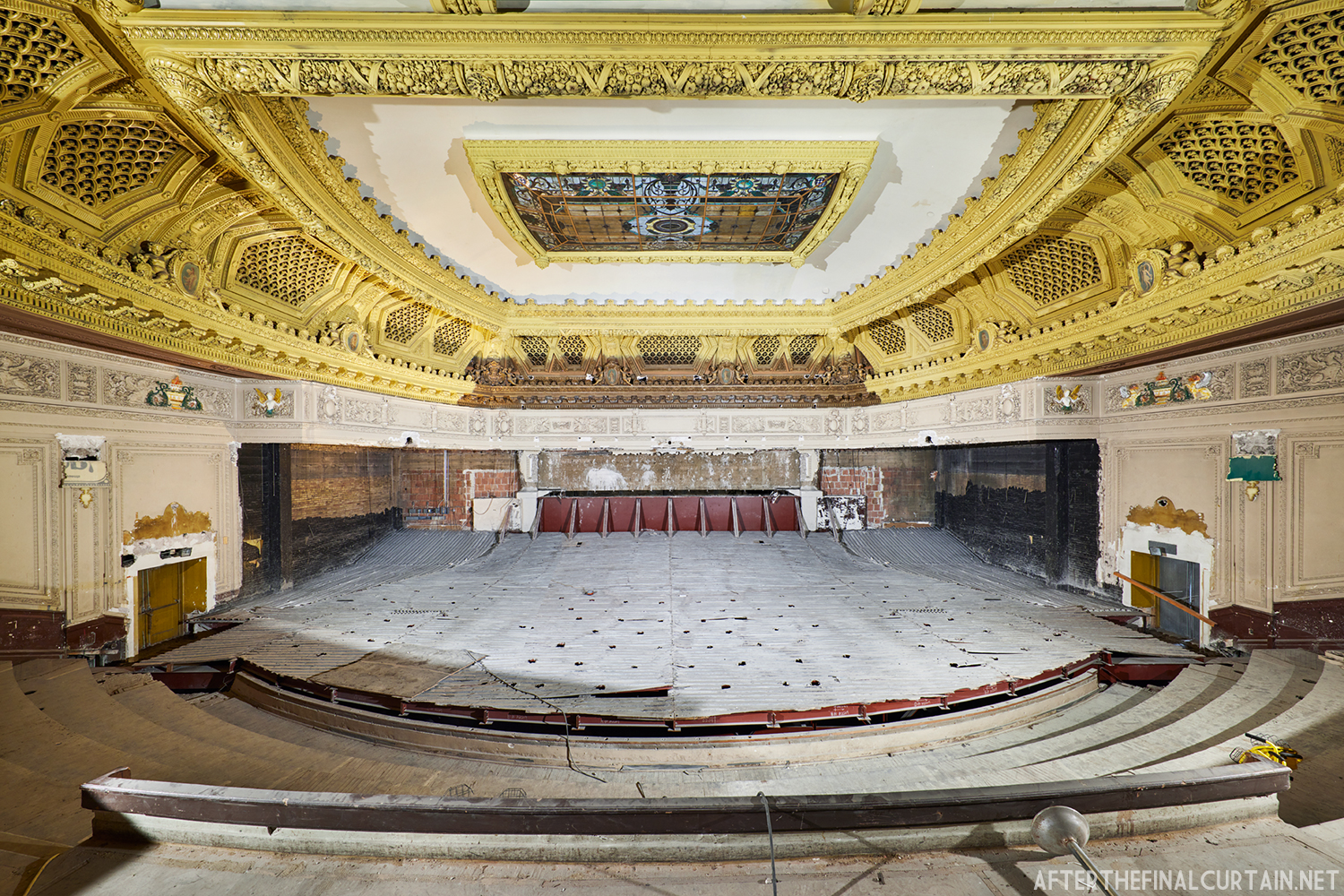
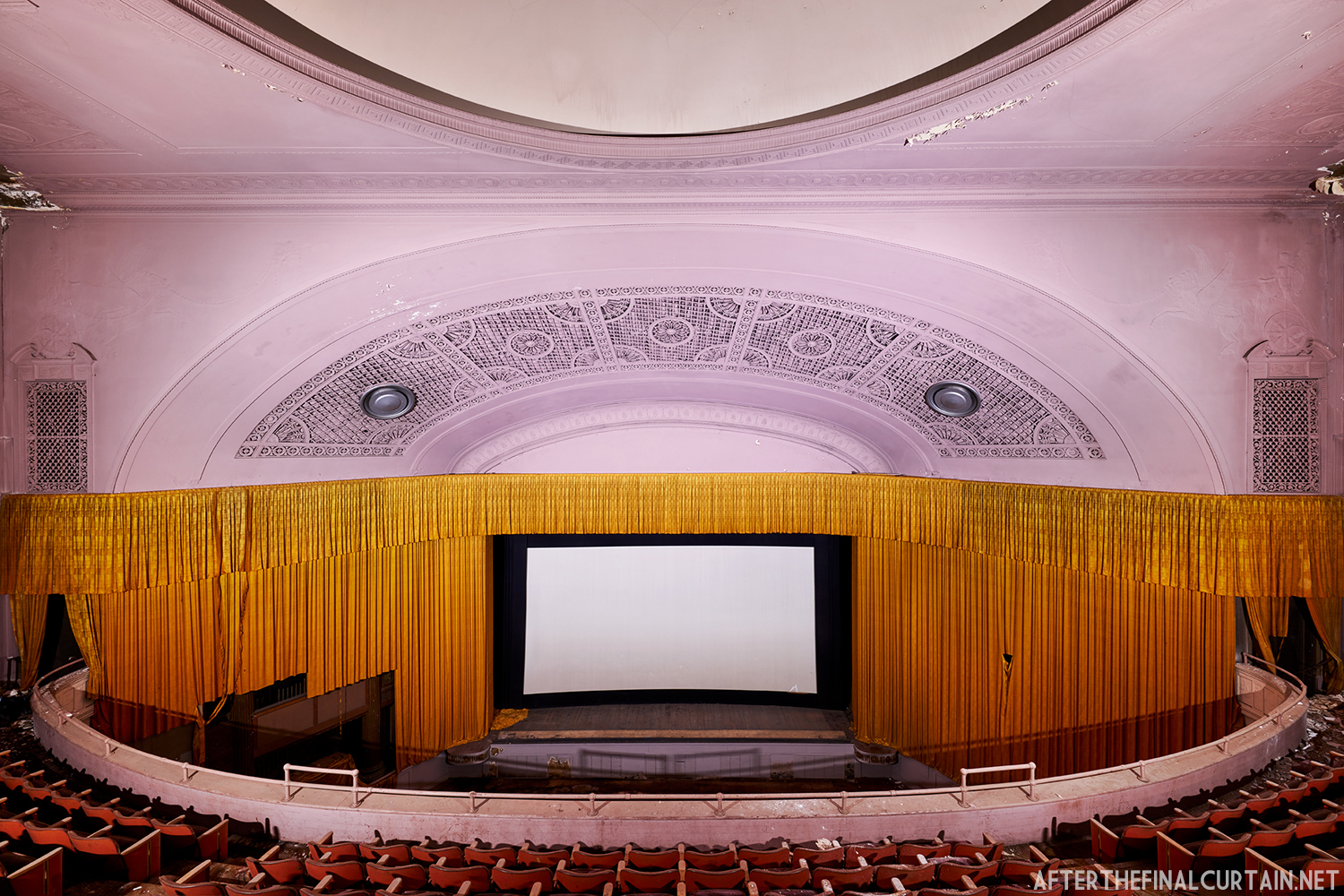
View of the auditorium from the center of the balcony.
Built at a cost of $250,000 ($4.1 million when adjusted for inflation) The Boyd Theatre in Bethlehem, PA originally opened on September 1, 1921 as the Kurtz Theatre. It was designed by E. C Horn Sons of New York City for Charles and John Kurtz, in the streamline moderne architectural style. The 1,626 seat theater originally featured vaudeville and silent films as part of the Shubert Advance Vaudeville circuit.
The original lobby was destroyed by a fire in December 1966.
Opening night featured a performance from a seven-piece orchestra, a minstrel show, two vaudeville acts, the silent film “The Great Moment” starring Gloria Swanson, and the theater organist playing the Estey pipe organ. Less than two months after opening, on October 24, 1921, the theater discontinued vaudeville, and began only showing silent films. The first film shown after this change was “Way Down East” starring Lillian Gish. In October 1922, the Broadway Players, a comedic opera company, began holding performances at the theater. In 1924, E.C. Horn Sons sued the Kurtz Brothers for non-payment of fees for their part in constructing the theater. They were awarded $21,000, or $364,000 with inflation, later that year.
The exterior of the theater was replaced after the fire in 1966.
The Kurtz closed in July 1924 and the following month the building was purchased by the Wilmer & Vincent theater circuit and reopened as the Colonial Theatre. It was named after the Colonial Theatre in Allentown, PA, which they also owned. In 1925, the interior of the theater was remodeled to the plans of William H. Lee, who also designed the Boyd Theatre in Philadelphia, PA and the Drake Theatre in Oil City, PA.
In 1934, the building was purchased by A.R. Boyd Enterprises of Philadelphia, and renamed the Boyd Theatre. A.R. Boyd Enterprises also operated the Boyd Theaters in Philadelphia, Allentown and Easton, PA. On December 27, 1966, a fire broke out at the theater. The fire destroyed much of the Boyd’s lobby and some of the retail spaces in the front of the building. Bethlehem’s building inspector condemned the remains of the lobby, and it had to be completely rebuilt, which kept the theater from reopening until early 1968.
View of the auditorium from the side of the balcony.
The Boyd was sold to a local family in 1970, and they continued to operate it as a single screen theater. However, the balcony was closed more often than not. A new Dolby Digital Surround sound system was installed in 1999 and was used for the first time during a showing of “Star Wars Episode I – The Phantom Menace.”
View of the auditorium from the stage.
The Boyd was damaged by heavy rainstorms in May 2011, and the owners announced it would be closed for the rest of the year while repairs were made. Unfortunately, the theater continued to deteriorate, never reopened, and was eventually sold. In February 2019, it was announced that the Boyd would be demolished and replaced by a 13 story apartment building. The theater was sold again in early 2021 to DLP Real Estate Capital and Monocacy General Contracting, and the replacement building was changed to six stories at a cost of $50 million.
Demolition began in February 2022, and was completed by early May. The “Boyd Theatre” sign was removed prior to the demolition and is planned to be incorporated into one of the new buildings’ courtyards. The new building is scheduled to be completed by 2023.
The Boyd is one of the 22 theaters in my new book “After the Final Curtain: The Fall of the American Movie Theater.” Find out more here.
View of the auditorium from the side of the balcony.
The Boyd Theatre, Philadelphia, Pennsylvania‘s only art deco movie palace, opened on Christmas Day in 1928. Located in Philadelphia’s Center City neighborhood, the 2,450 seat theater was commissioned by Alexander Boyd and built by Hoffman-Henon, a Philadelphia architecture firm also known for the construction of the nearby Prince Music Theatre. One of the companies commissioned for the Boyd’s interior decorationwas the Rambusch Company, who later decorated the Loew’s Kings Theatre.
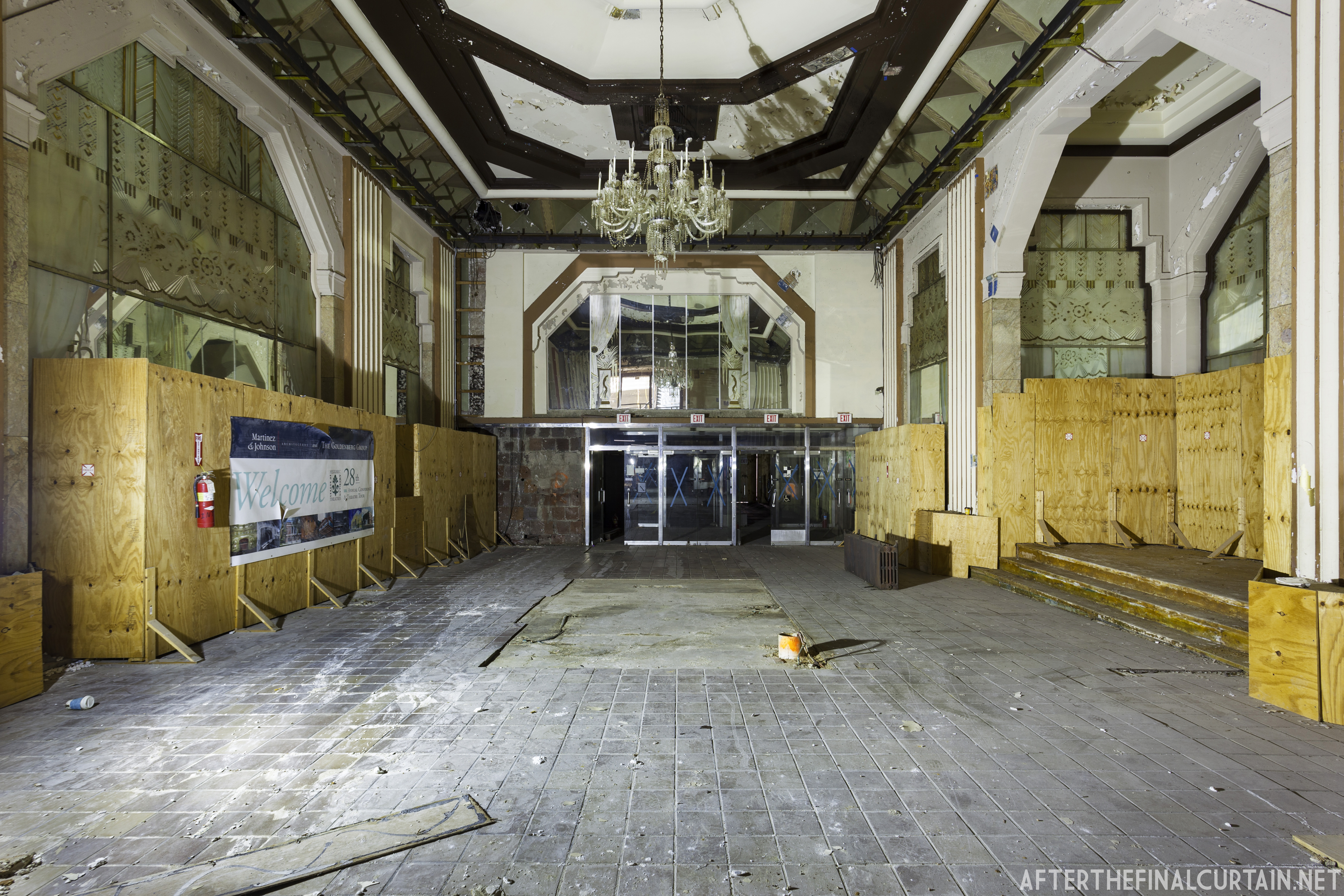
View of the lobby from the main level.
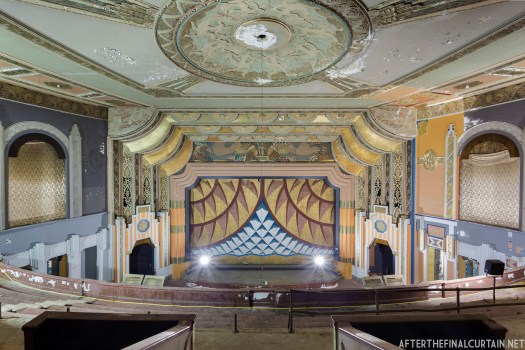
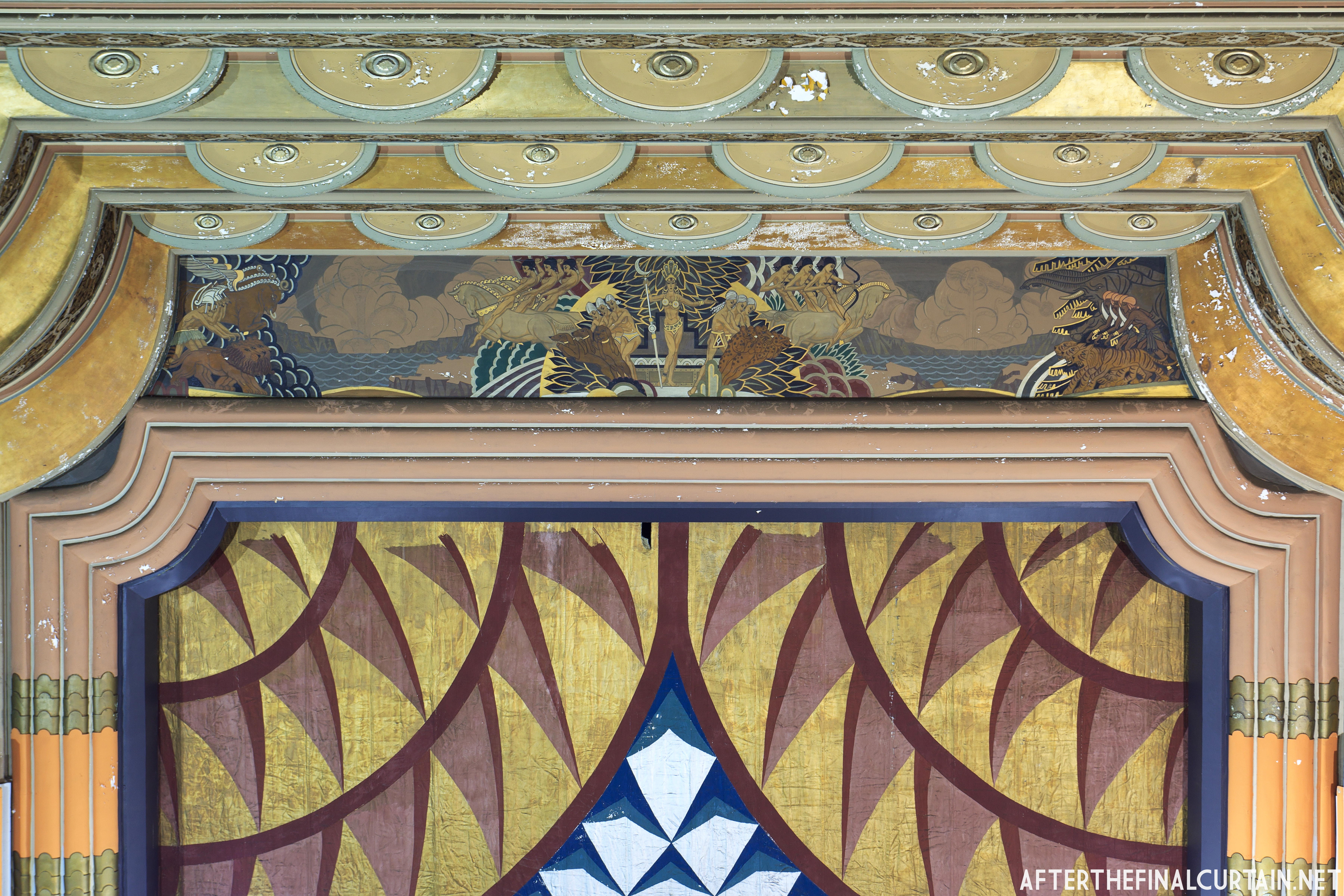
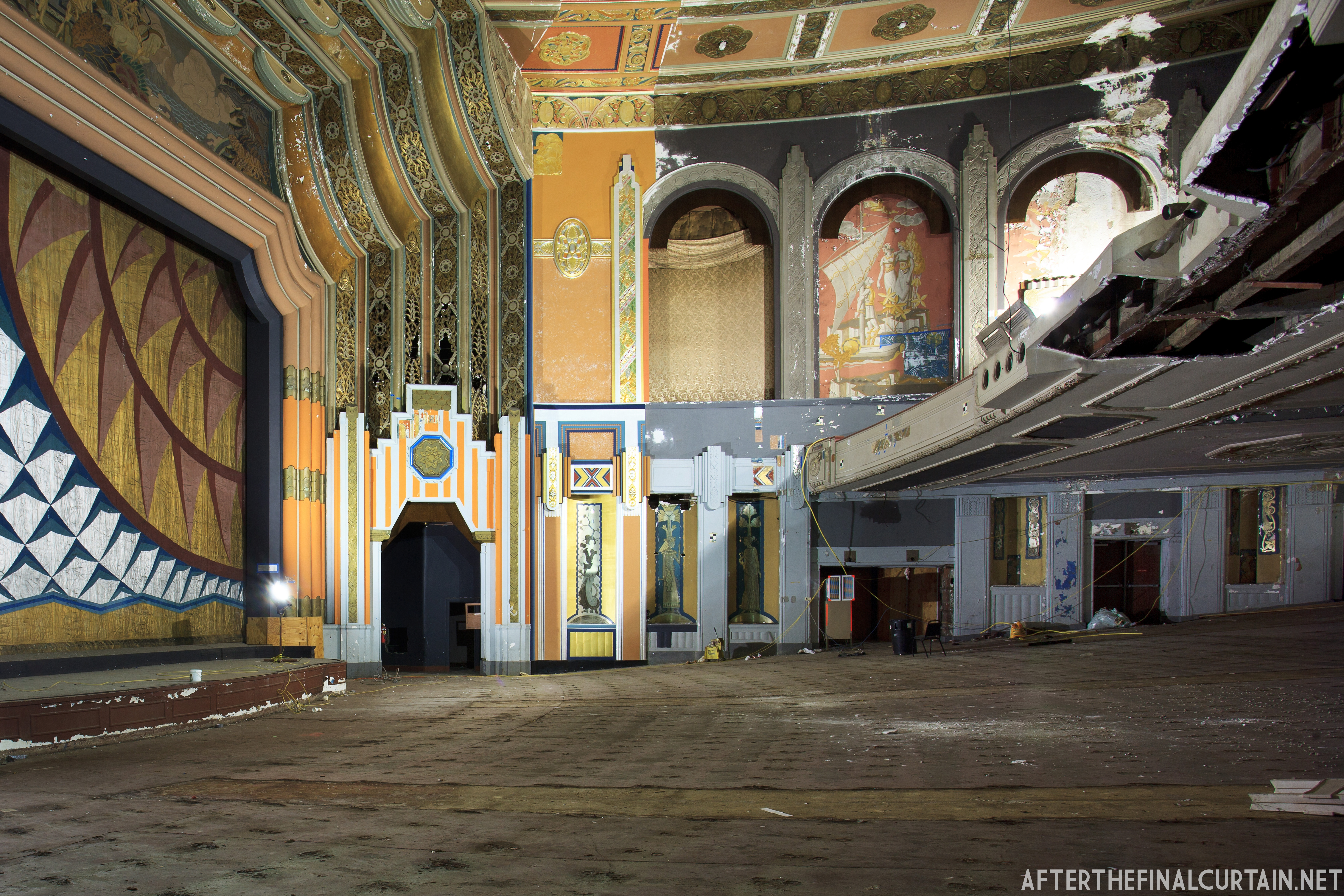
Unlike many theaters built in the 1920’s, the Boyd was originally intended to be a movie theater and, although there were backstage dressing rooms, did not feature vaudeville shows. According to the opening day brochure the Boyd was dedicated to women’s progress throughout history. This appreciation for women is referenced throughout the theater, especially in several murals, one of which shows an Amazonian queen fighting African and Asian armies.
The proscenium arch.
Alexander Boyd sold the theater to the Stanley Warner company, which ran many of downtown Philadelphia’s theaters, after the construction was completed. Shortly after the Boyd changed hands a Kimball theater organ was installed. It remained in the theater until 1969, when it was removed it was the last theater organ in a downtown Philadelphia theater. Various movie premieres were held at the theater over the years, including “Rocky III,” and “Philadelphia.” At the premiere of “Philadelphia” actor Tom Hanks is said to have remarked “Oh, a real movie theater!” when entering the Boyd.
View of the auditorium from the side of the orchestra level.
After being sold in 1971, the Boyd was renamed the SamEric by it’s new owners, the Sameric Corporation. They renovated the theater and eventually added three additional auditoriums next to the original, which was renamed again as SamEric 4. The theater closed and was slated for demolition in 2002 before a group of concerned citizens formed the “Committee to Save the SamEric” (which later became “Friends of the Boyd”) to save the theater from demolition. In the following ten years several attempts were made to restore the theater, without success.
In 2013, Florida theater chain iPic agreed to lease the building from developer Neal Rodin. iPic planned to restore the facade, and gut the interior of the theater to build an eight screen theater as well as a restaurant. Since the Boyd was listed on the National Register of Historic Places the Philadelphia Historical Commission met to vote to approve iPic’s plans. On March 14, 2014, after hearing the opinions of many Philadelphians for and against the demolition, the Commission voted to approve the plans. However, iPic’s plans fell through and in December 2014 Pearl Properties bought the property for $4.5 million. Pearl began demolition of the auditorium on March 14, 2015. Tatel, a Spanish restaurant, is opening in the former lobby and foyer of the Boyd. The Harper, a 27 story apartment tower, was built in place of the demolished auditorium. The Friends of the Boyd saved a number of artifacts from the Boyd before it was demolished, and have donated them to other theaters, including the Lansdowne Theatre in Lansdowne, PA.
The auditorium ceiling.
View of the auditorium from the center of the balcony.
The theater was cleaned out shortly after it closed.
The Montauk Theatre opened on January 30, 1924 in Passaic, NJ on the site of a former vaudeville theater — also called the Montauk Theatre — that was popular in the early 1900’s. Designed by local architect Abram Presikel in the Adamesque style, the theater sat 2,638 people and was operated by the Fabian Enterprises theater chain (which was known for showing both First National Pictures and Warner Bros. films). Continue reading →












 After the Final Curtain