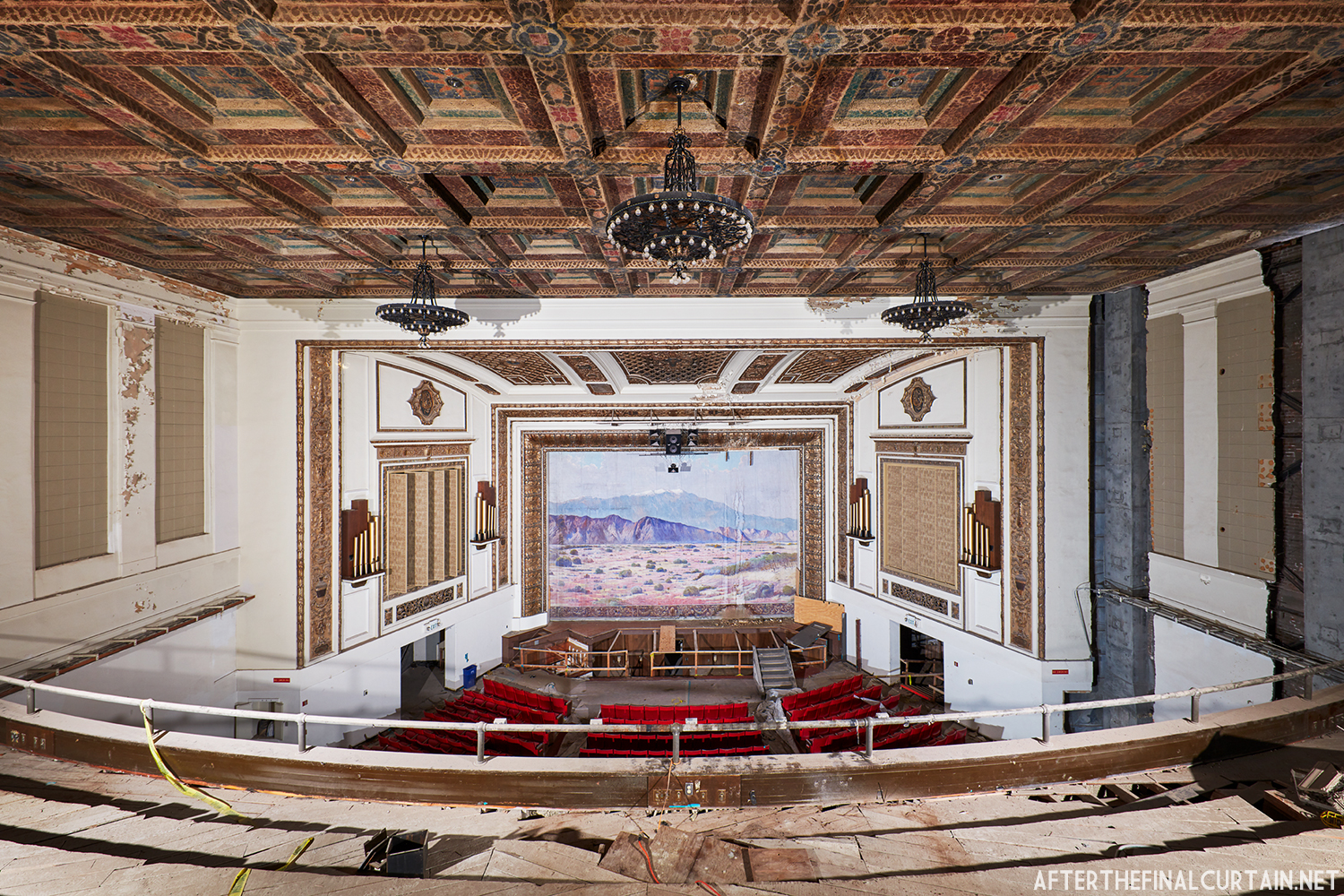
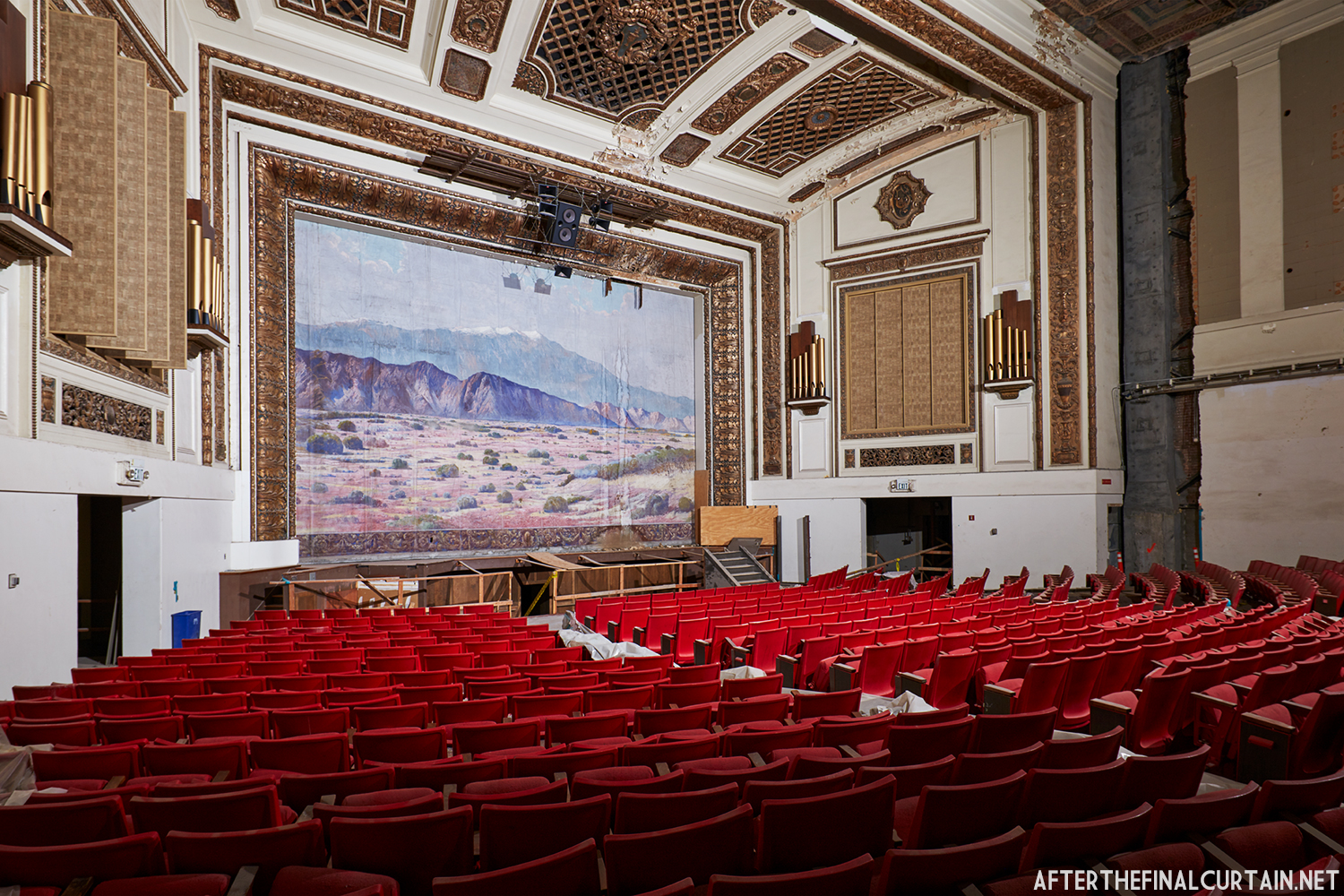
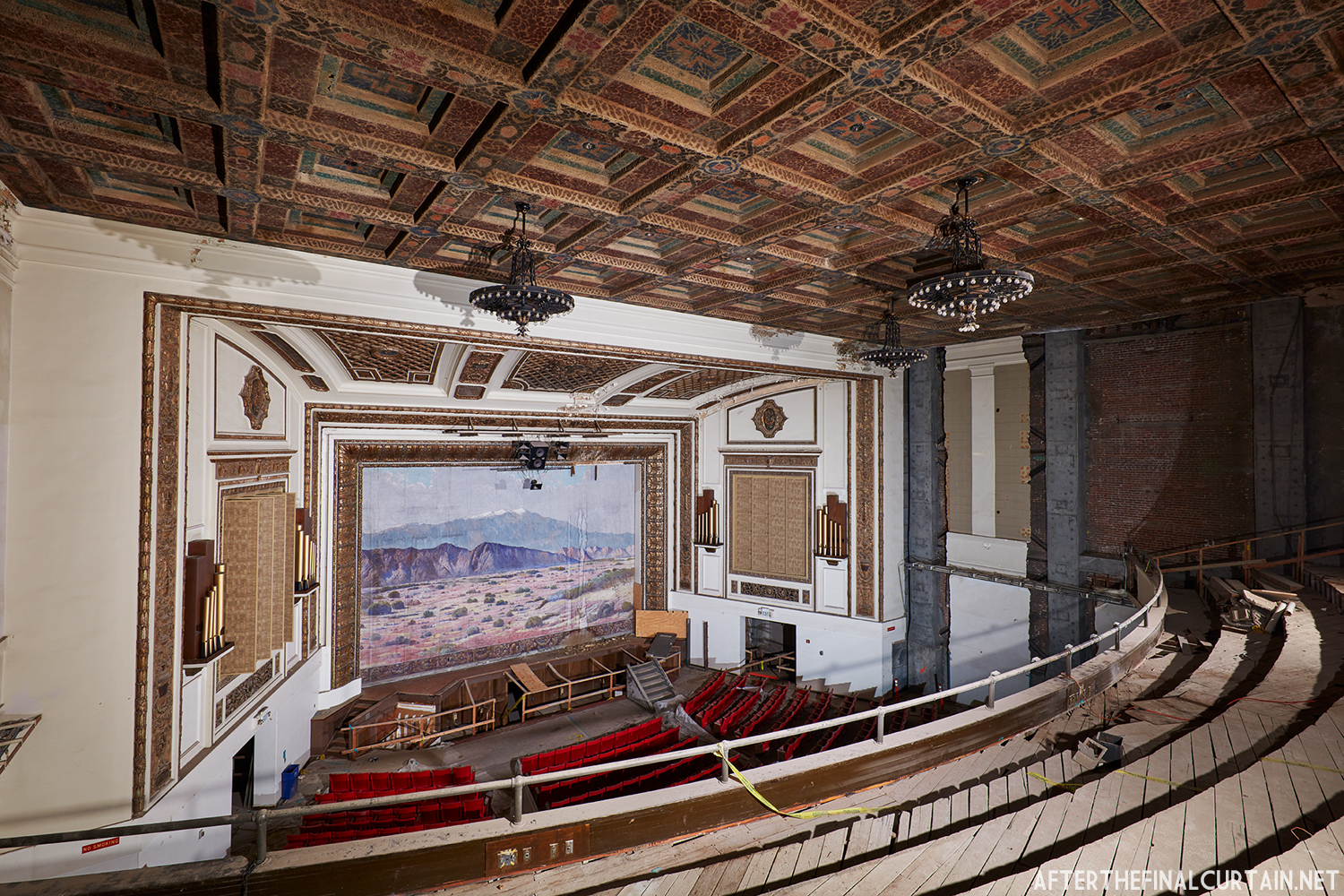
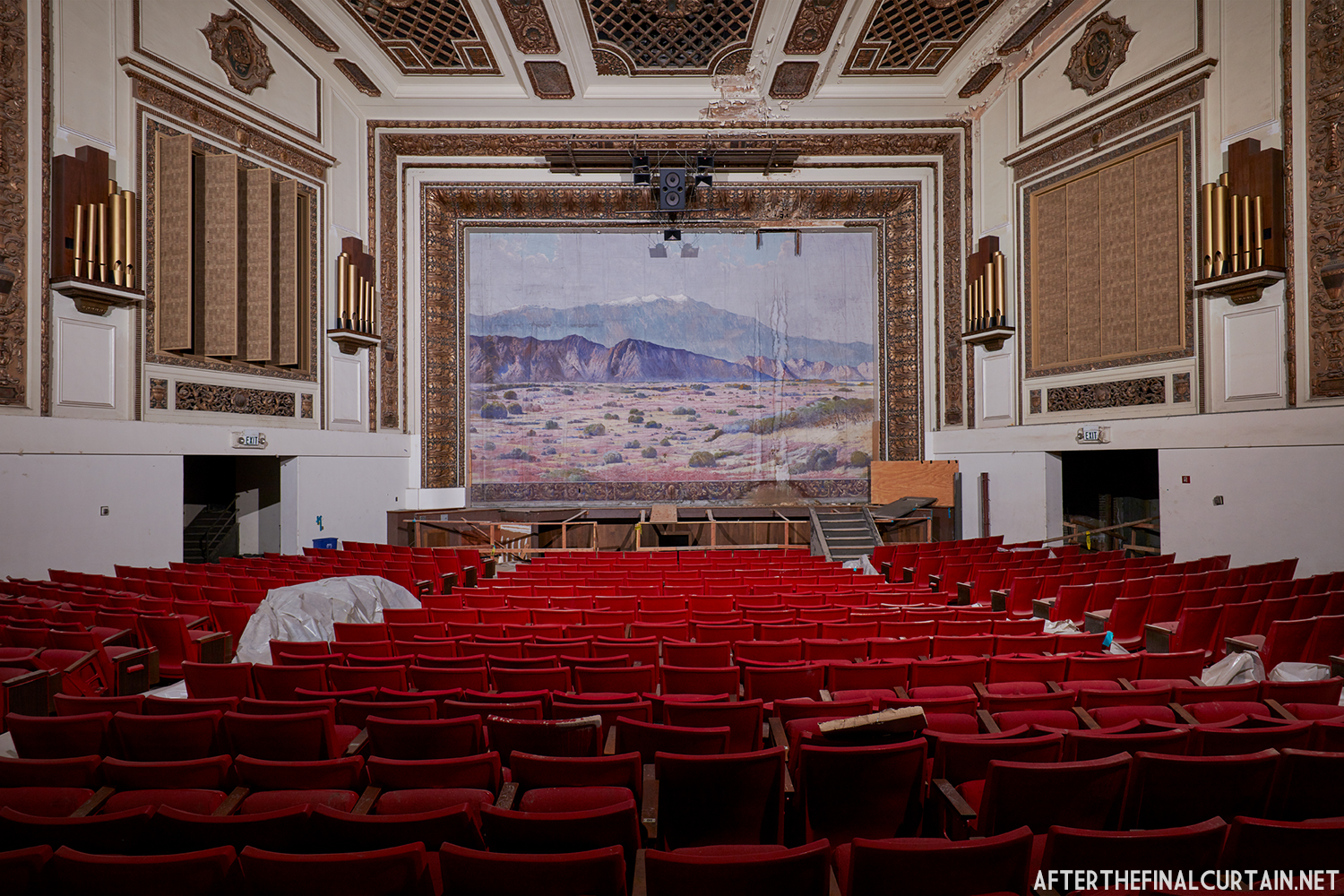
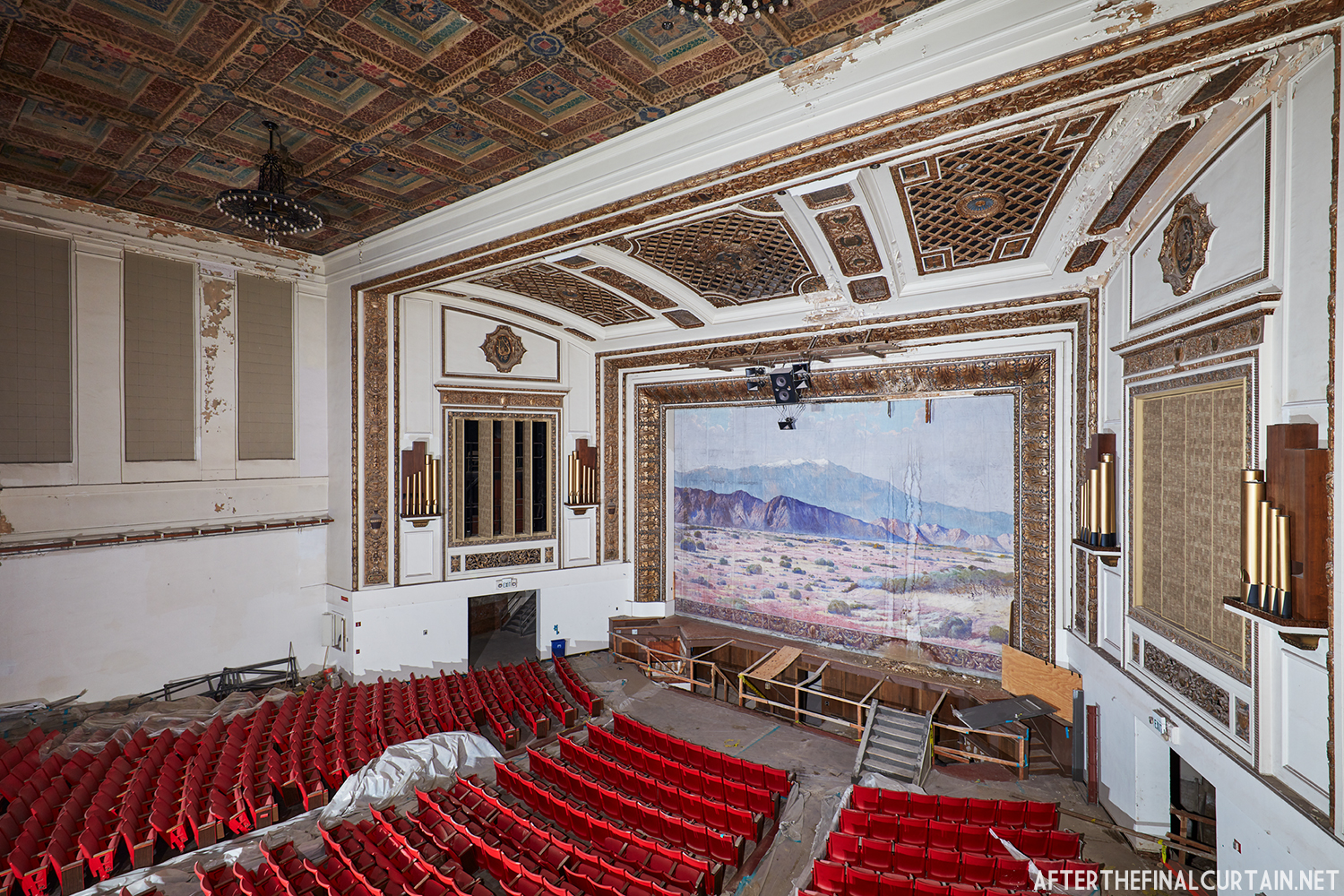
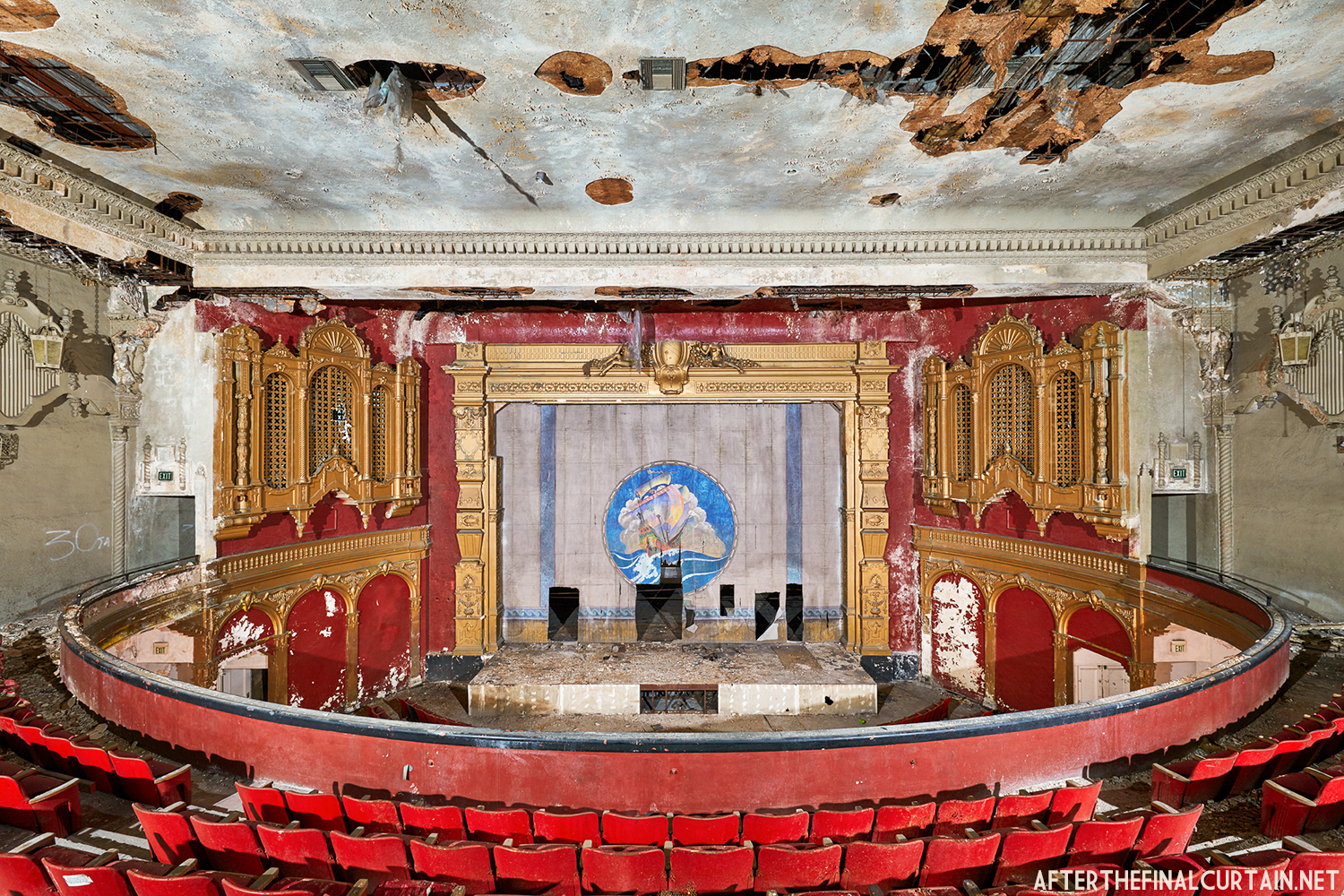
The Grand Theatre at Los Angeles Trade-Technical College opened in 1927 as part of the Los Angeles Polytechnic High School campus. Designed by A.C. Martin & Associates, the 30,000-square-foot auditorium featured a stenciled ceiling, original light fixtures, and a painted fire curtain showing Arrowhead Peak. After the high school relocated, the theater was absorbed into LATTC and used for student productions, lectures, and campus events.
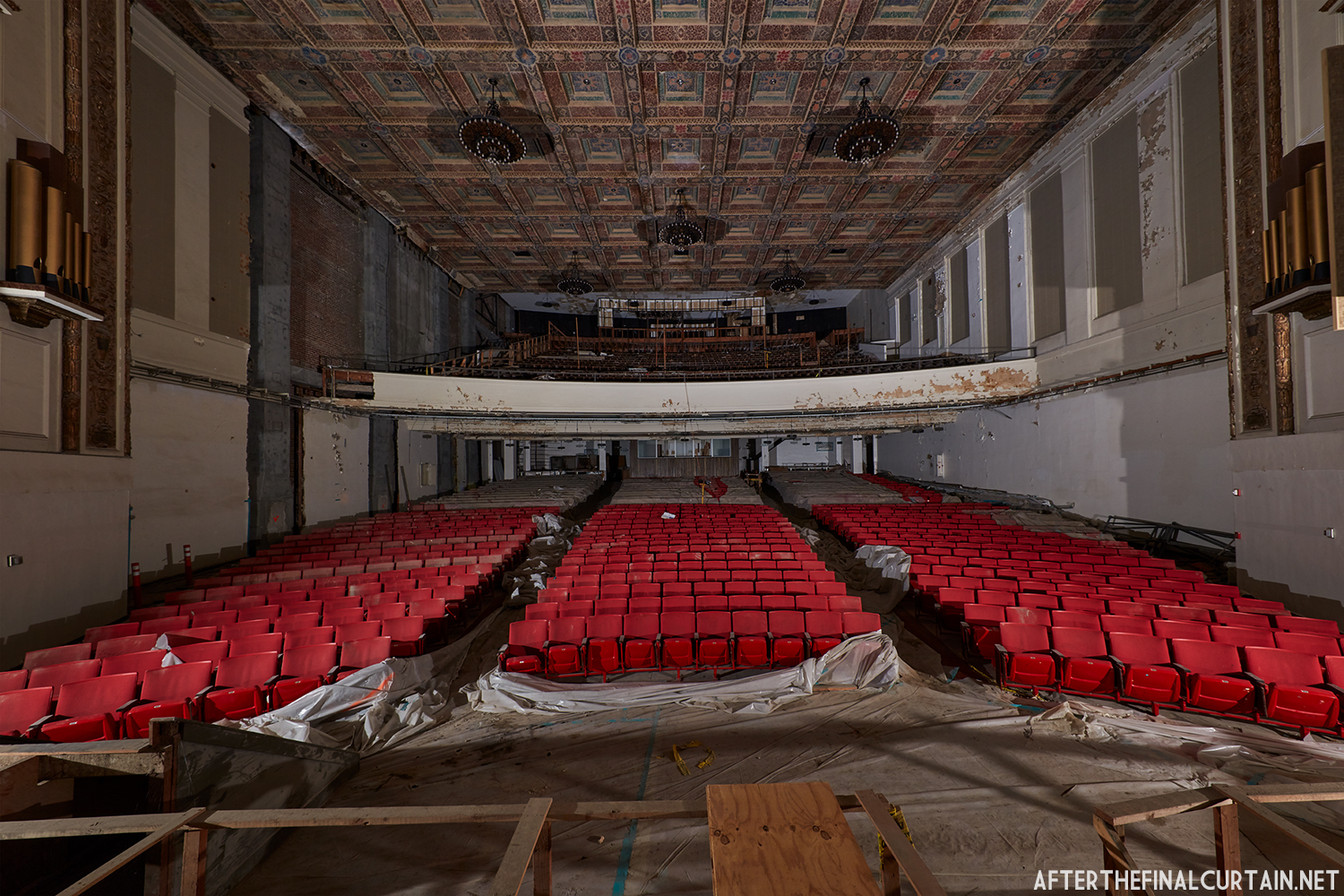
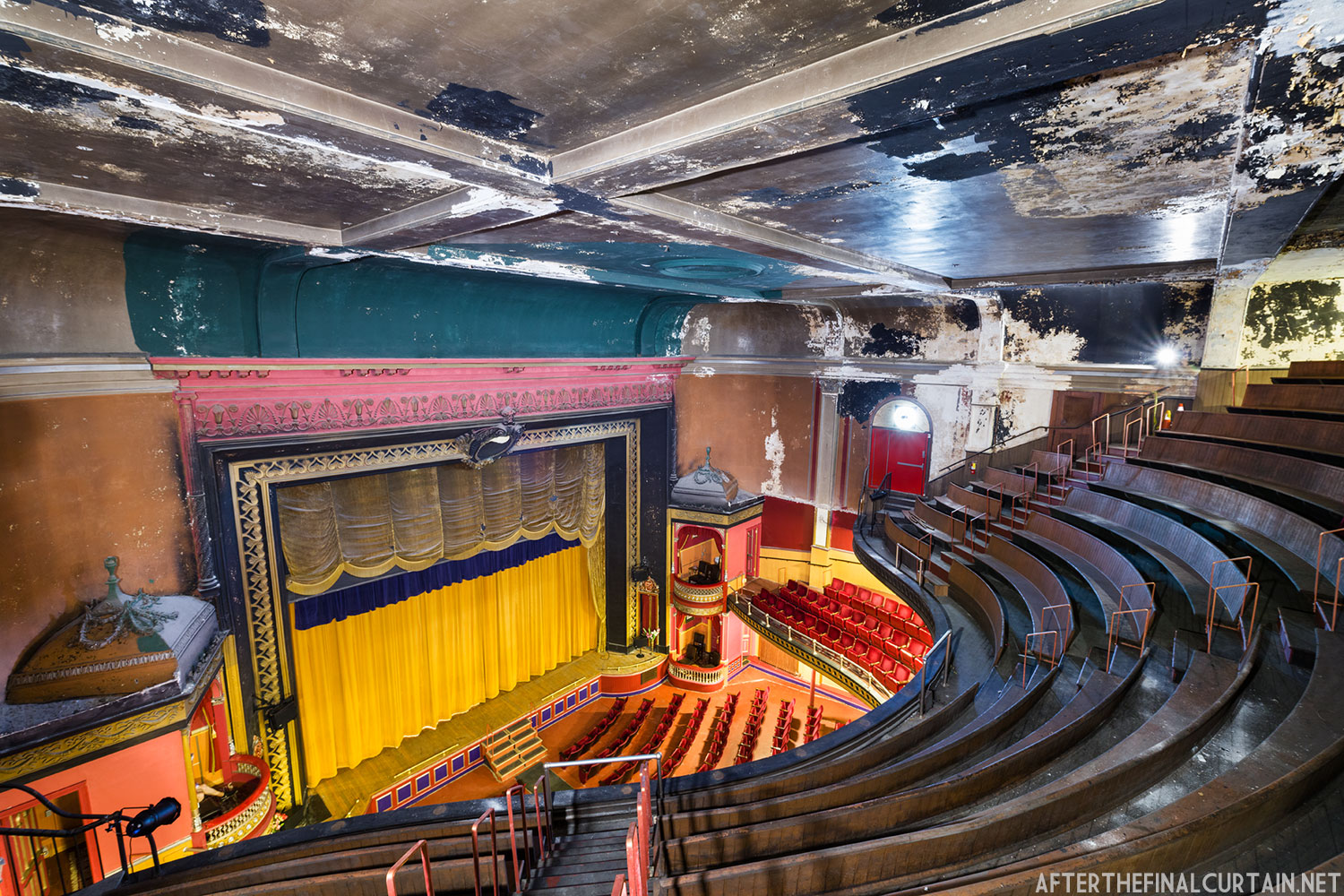
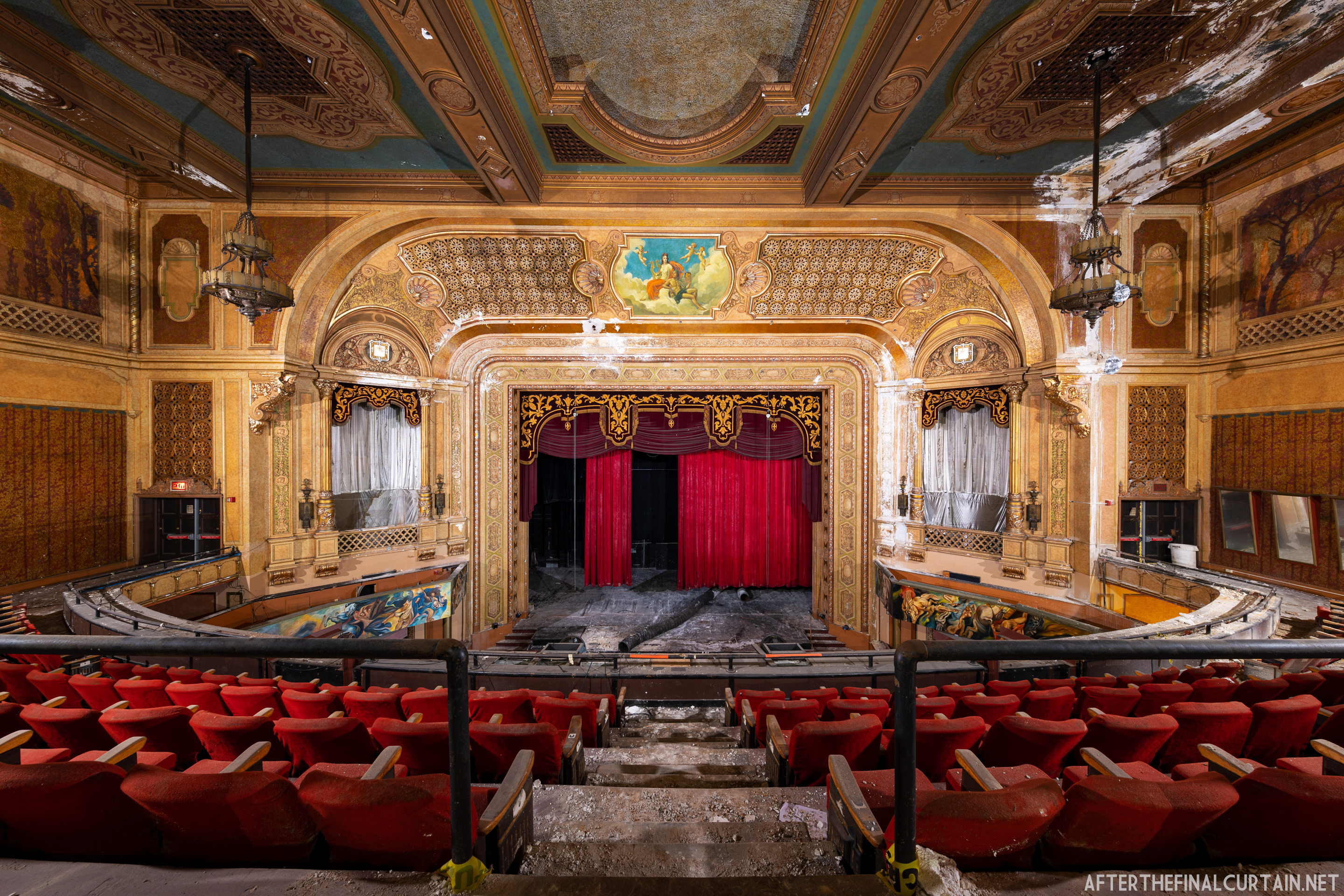
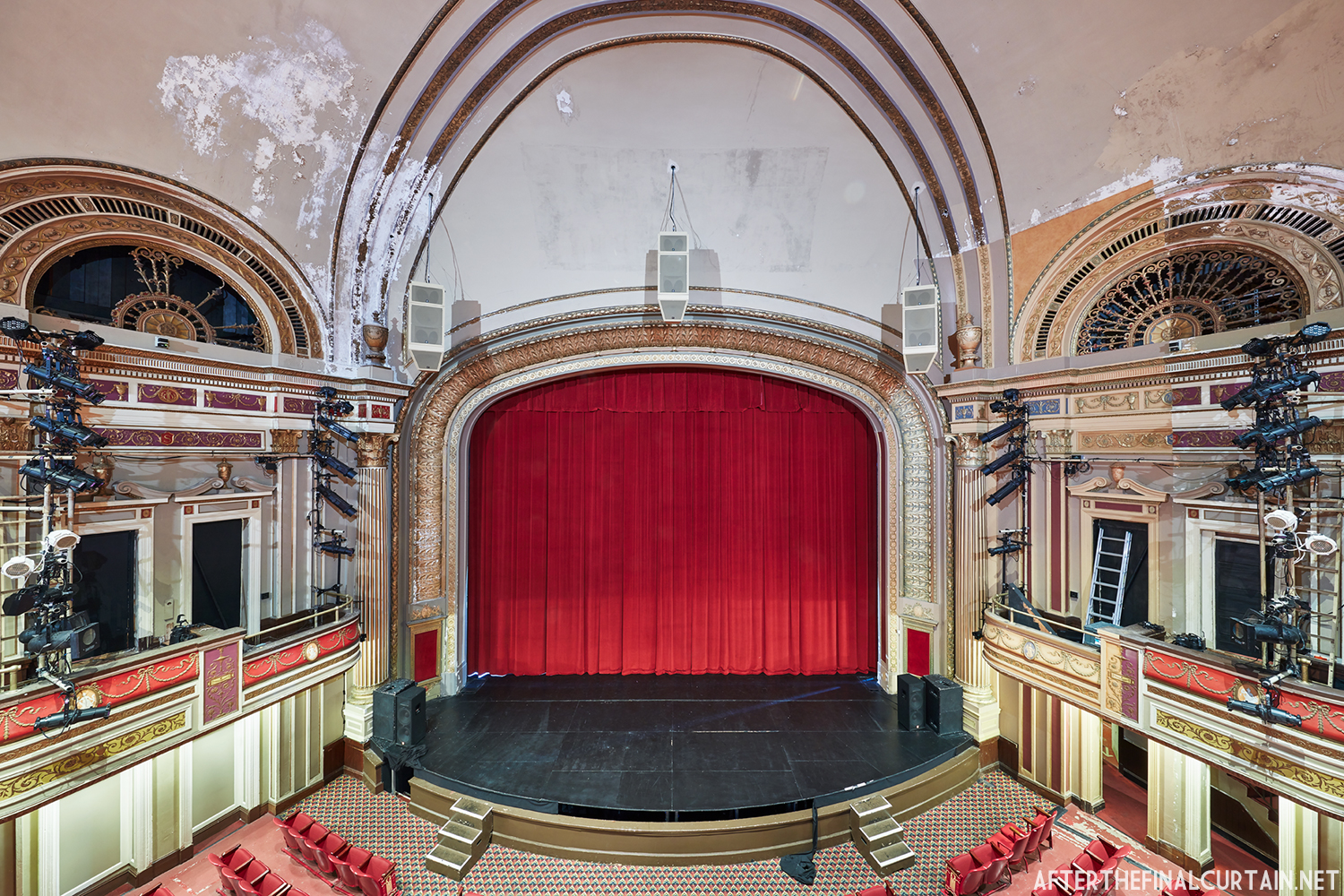
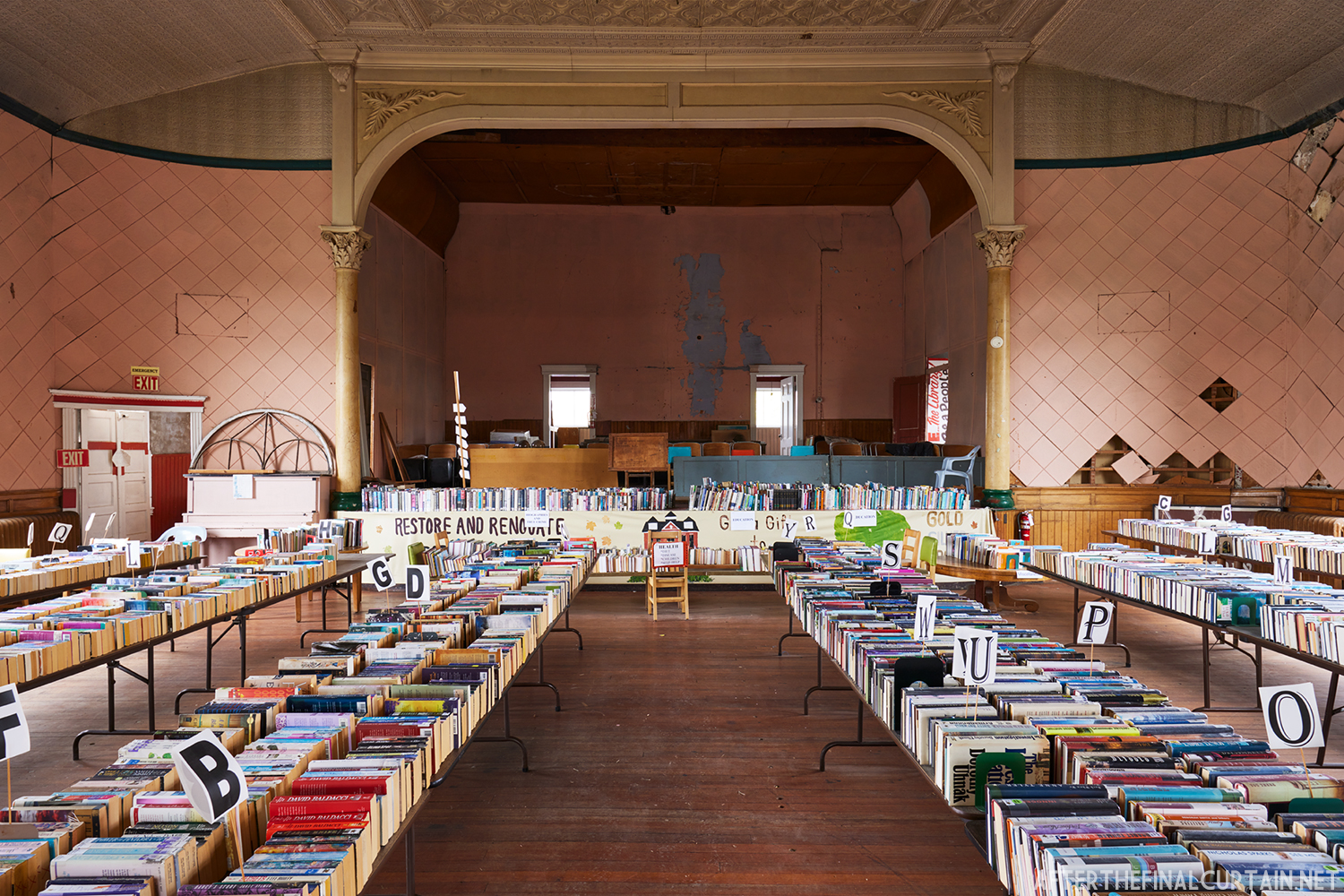
Looking back at the auditorium from the stage.
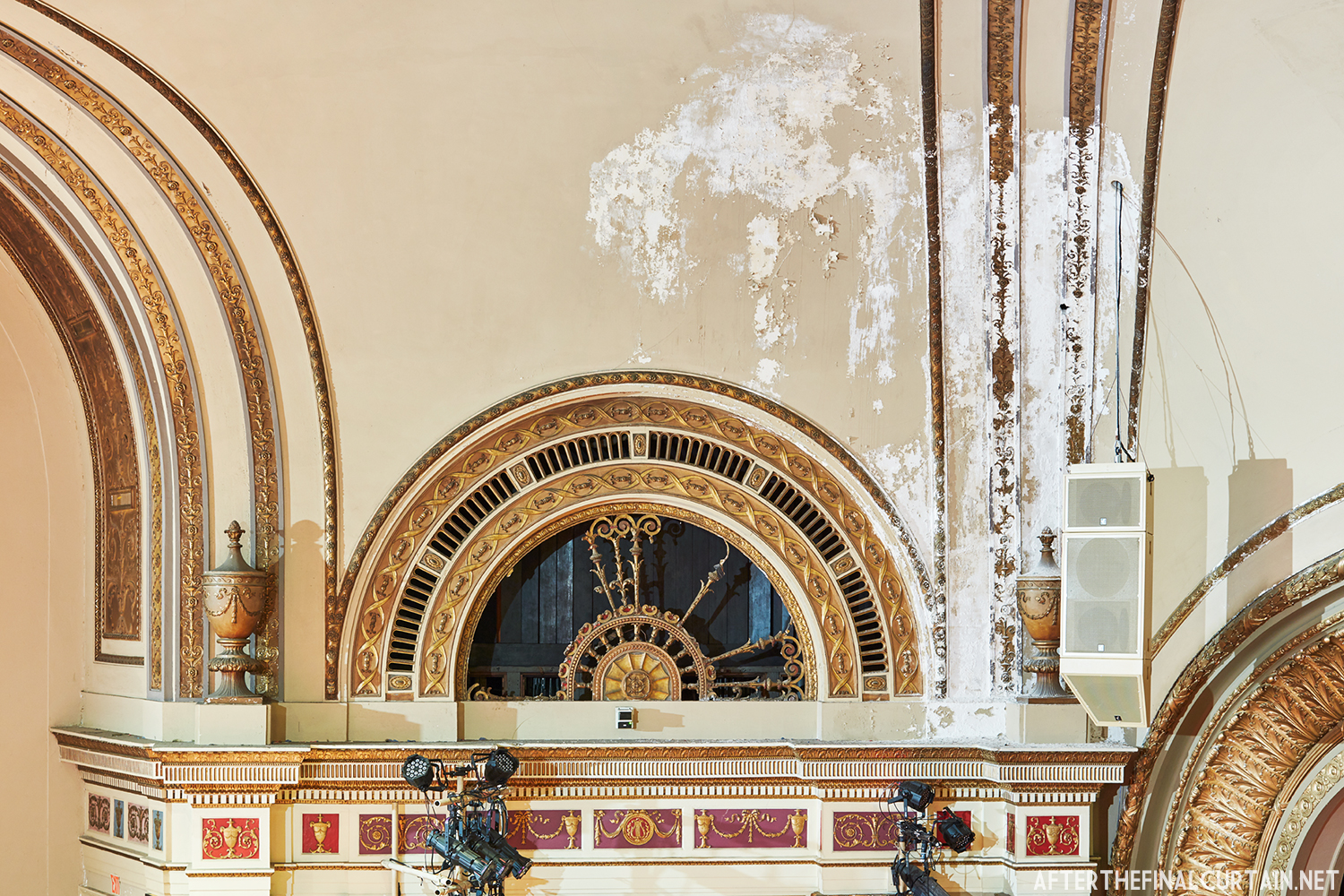
It shut down in 2009 when seismic retrofit work was abandoned, and it never reopened. Over time, water damage and mold took over. By 2022, the Los Angeles Community College District formally proposed demolition as part of a campus redevelopment plan. While the building was considered potentially historic under CEQA, the official word was that reuse wasn’t feasible or compatible with the college’s long-term goals.
Demolition began earlier this month. As of now, only the facade is still standing — but not for long. It’s all coming down to make room for a new entry plaza along Washington Boulevard, which the college says is needed for pedestrian safety and visibility. There are no immediate plans to build a replacement theater.
A longtime professor in the Humanities and Theatre department put it this way: “While the Grand Theatre was once a magnificent space, it had become infected with mold and had to be demolished for health reasons. It would have been far more expensive to attempt to save it rather than tear it down and build something new… We need a space suitable for large campus events like graduations and a theatre to accommodate our extensive fashion-design program.”
As we step into 2025, I’m excited to share what’s on the horizon for After the Final Curtain.
Workshops in 2025
This year, I’m introducing destination workshops designed for those who share a passion for photographing and preserving historic spaces. While I’ll still host a few local sessions, the focus will be on two major events: one in late spring/early summer and another in the fall. Each workshop will take place at multiple locations, giving us a chance to capture and celebrate the beauty of historic theaters in different settings. Whether you’re a seasoned photographer or just starting out, these workshops will be a fantastic opportunity to refine your skills and immerse yourself in these architectural gems.
Patreon: Exclusive Content for Theater Enthusiasts
For those who want even more, my Patreon page is the place to be. Many of my 2025 posts are already available there, including expanded features, behind-the-scenes insights, and video walkthroughs of historic theaters. Patreon also gives you early access to new content and a closer look at my creative process. If you’re as captivated by historic theaters as I am, I’d love to have you join the community! You can sign up here: https://www.patreon.com/afterthefinalcurtain.
Monthly Posts on After the Final Curtain
I’ve been hard at work finishing up my posts for 2025 and am already scheduled through August—just a few months left to go! Here on the main site, I’ll continue to share one post a month. These will highlight the history, beauty, and stories behind some of the most incredible theaters I’ve visited. Whether you’re following along here or on Patreon, there’s plenty to look forward to.
Thank you for your continued support and shared passion for historic theaters and photography. I’m so grateful to have this community and can’t wait the next year brings.
Here’s to another year of preserving and celebrating these remarkable spaces!
This was originally posted on After the Final Curtain’s Patreon in May 2023. For expanded early posts, as well as video walkthroughs and other exclusive content, you can become a patron at: https://www.patreon.com/afterthefinalcurtain
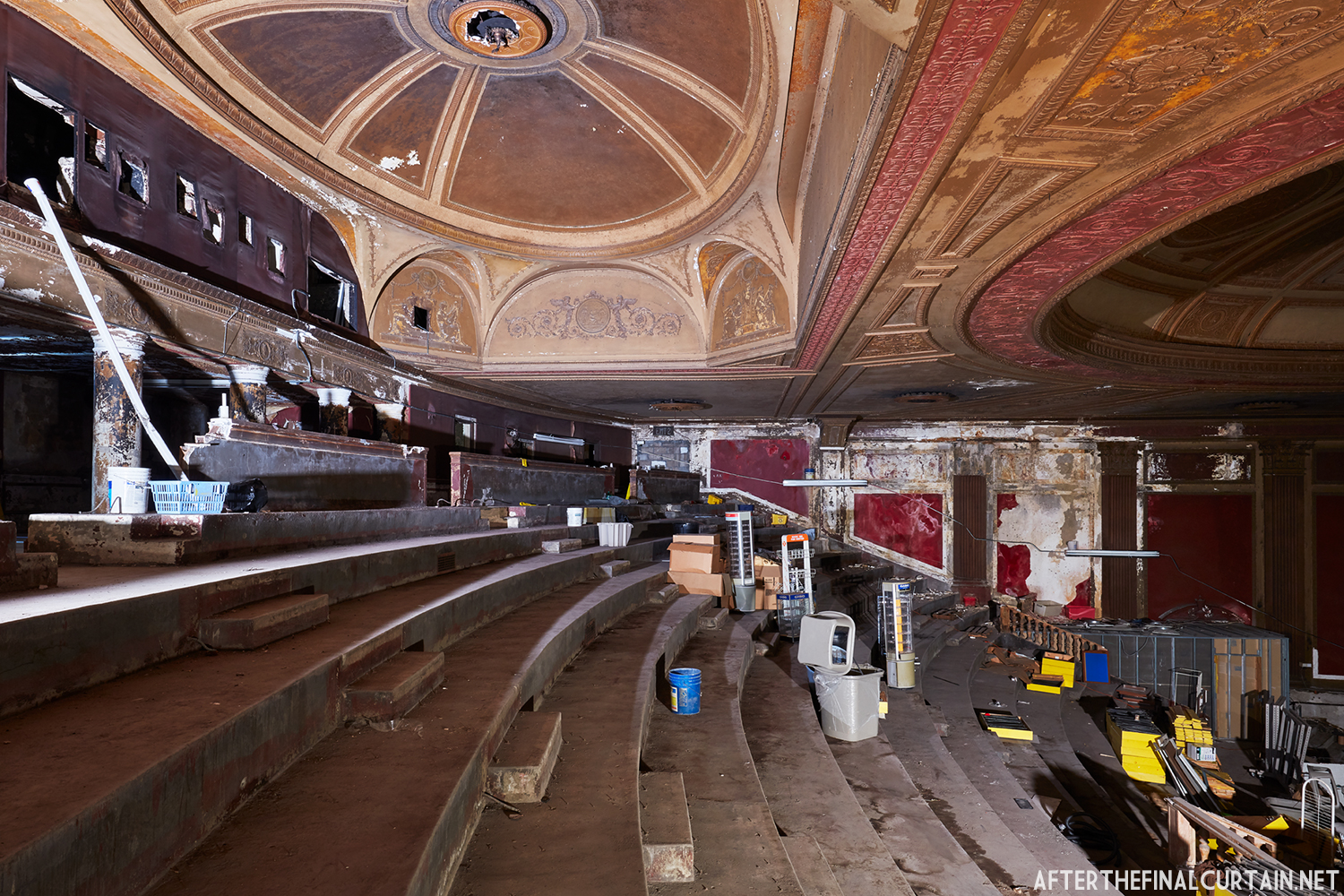
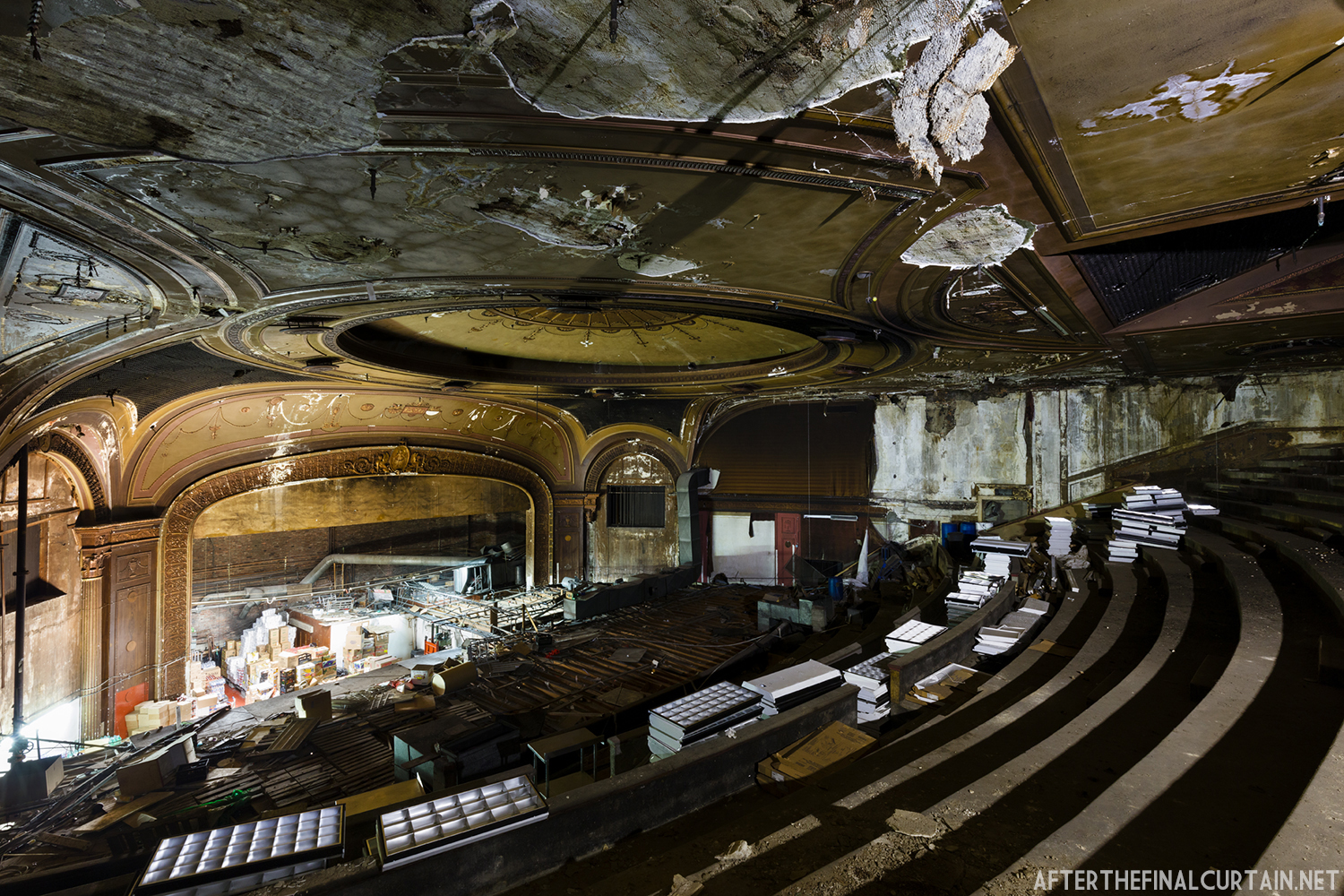
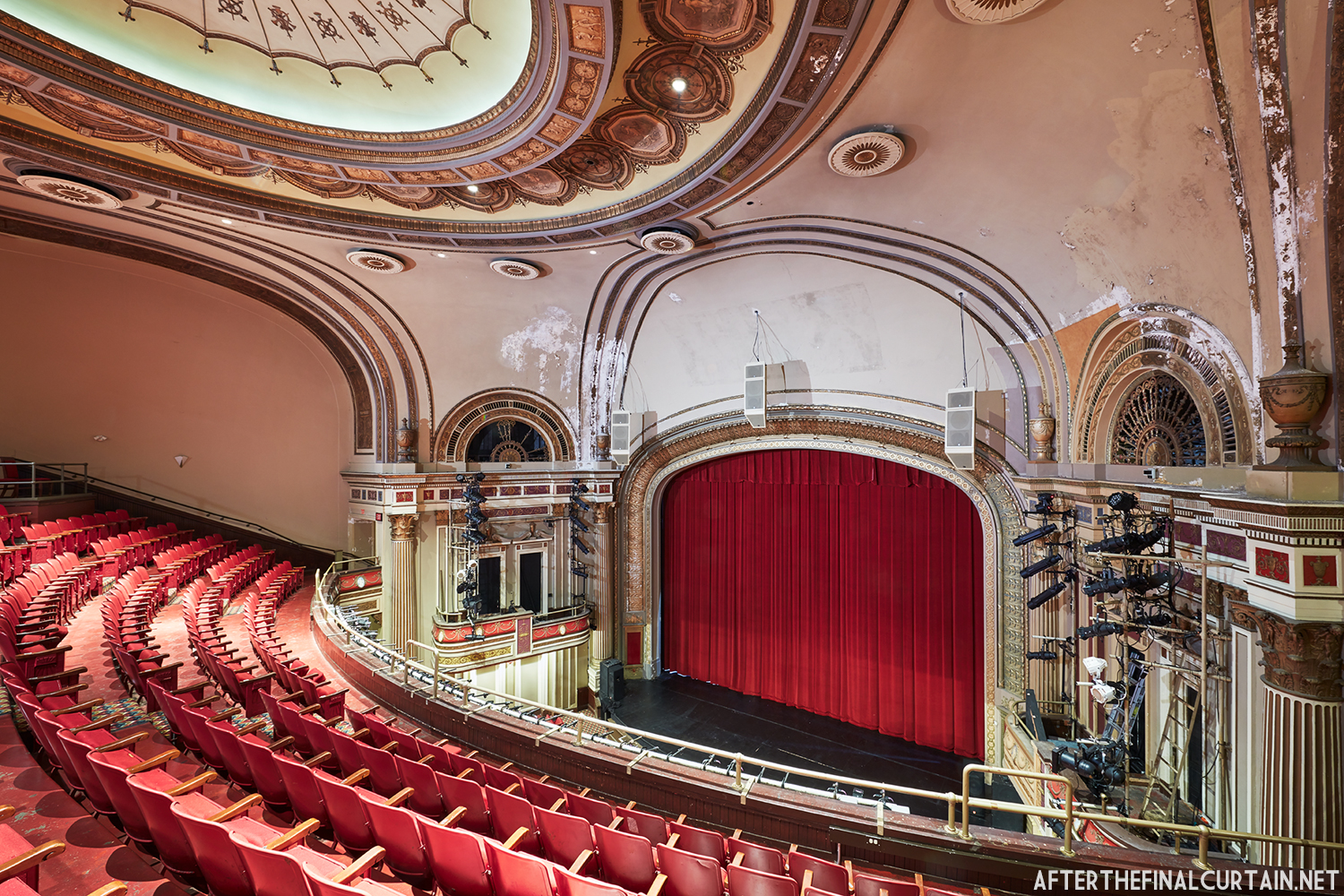
View from the balcony of the RKO Madison Theatre.
It’s not uncommon to see buildings in New York City with a mismatched facade, especially in neighborhoods where space is at a premium. But if you’re like me, and you’re interested in the history of the city, you might wonder what that building used to be. And in the case of this particular building, it has quite a history. The building at the corner of Myrtle and Wykoff Avenue used to be the RKO Madison Theatre, which opened on November 24, 1927.
The Madison Theatre, as it was originally known, is situated on the border of Brooklyn and Queens, was constructed by B.S. Moss, a subsidiary of Keith-Albee. Moss’s original plan was to name the theater Beacon, but he was eventually persuaded to change the name to Madison, as a tribute to James Madison, the fourth President of the United States, and Madison Street, which was situated nearby. The architect in charge of the design was Eugene DeRosa, who had previously worked on the Colony Theatre in Manhattan. DeRosa employed an Italian Renaissance style, with a classical Greek facade made of white marble. The theater’s slogan around the time of its opening was “Bringing Broadway to Brooklyn.”
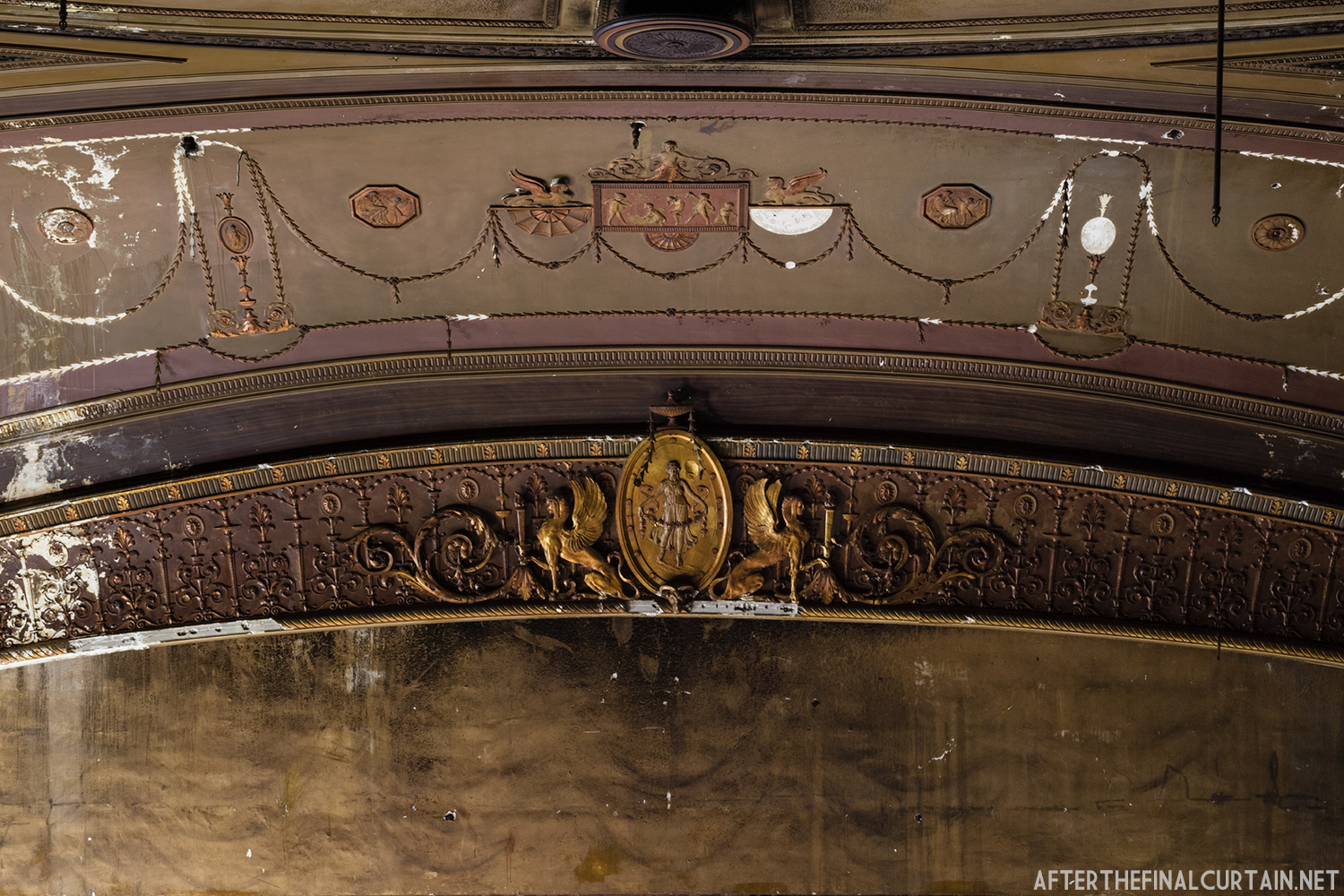
A close up of the theater’s dome.
It boasted a seating capacity of 2,760, which was significantly larger than Moss’ earlier venture, the Colony. The Grand Foyer spanned two stories and was accentuated with a vaulted ceiling that sported crystal chandeliers. The walls of the foyer were crafted from colored marble, with bronze borders that added a touch of class. A white marble staircase led patrons to the mezzanine promenade, which featured a lounge area and restrooms. The auditorium was large and included a balcony with a loge section at the front. Its ceiling, from the center of the dome, featured a three-tiered crystal chandelier, and the colored lights within the dome’s cove allowed for an ever-changing ambiance. The orchestra pit was situated at the front of the stage and had three separate elevators, one each for the orchestra, piano, and Wurlitzer organ, which was an unprecedented luxury for a neighborhood theatre. Much of the Madison’s grandeur was due to Moss’ intention to outdo the competition of the nearby Fox Ridgewood, which had been the area’s dominant theatre since 1913.
Much of the theater’s lobby still exists, but it has been completely walled off.
Houdini’s brother, Theo Hardeen, had his stage show at the Madison Theatre on May 30th, 1945. Thirteen days later, on June 12, 1945, Theo Hardeen passed away at the age of 69 from esophagus cancer. The RKO Madison Theatre was a popular venue in Ridgewood for decades. However, it became a Grindhouse, which was a theater that mostly showed b-grade horror or exploitation films, in the 1970s and eventually closed right after Halloween in 1977. The last film it showed was a twin-bill horror flick. The building was then converted for retail use in 1978 and has since housed several stores, including Consumers, Busy Bee, Odd Lot, and now Liberty Department Store.
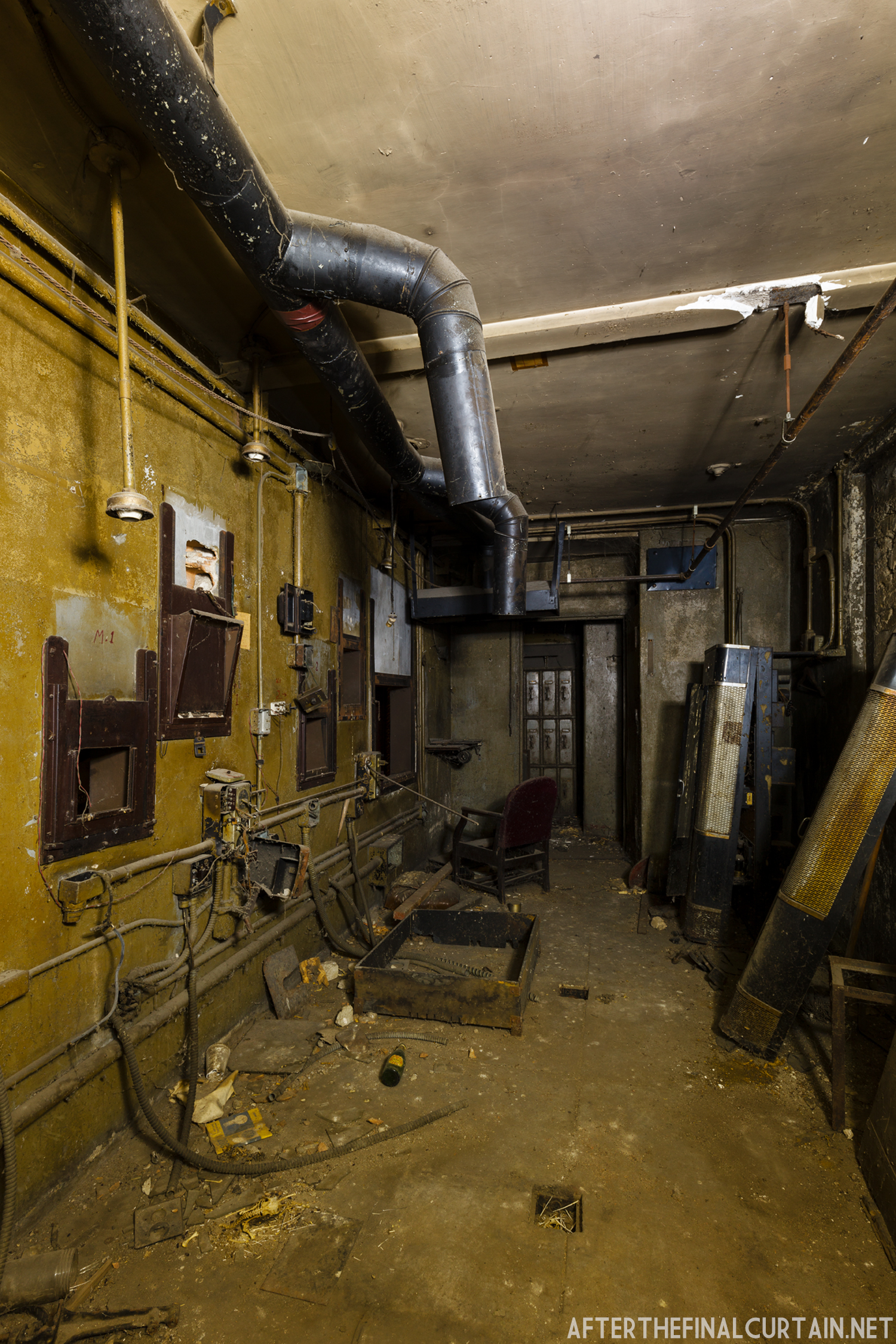
The projection booth has been stripped bare of all equipment.
I’m excited to announce that I’ll be hosting a photography workshop at the Fox West Theatre in Trinidad, Colorado, on October 21, 2023. Here’s a bit about the theater –
The Fox Theatre in Trinidad, Colorado, made its grand debut on March 16, 1908, showcasing the stage play “The Bondman.” Over the years, it served as a versatile venue for a variety of performances, including stage shows, vaudeville acts, opera, and silent films. It closed in 2013, making it one of the longest running single screen theaters in the country.
I spent around 8 hours photographing the place, and it wasn’t enough. There’s just too much to see.
View from the upper balcony of the Sorg Opera House.
Another new addition is the Sorg Opera House in Middletown, Ohio on September 30, 2023. This workshop was originally going to happen before the pandemic, and I’m happy it’s finally taking place.
It originally opened in the 1890s. The Sorg began showing early forms of motion pictures in 1901 and switched to films full time in the late 1920s. It is currently owned by the SORG (Sorg Opera Revitalization Group), who have performed much needed renovations on parts of the theater.
Finally, by popular demand – there will be another workshop at the Paramount Theatre in Springfield, MA on July 29, 2023. It’s one of my favorite workshop locations, and I’m glad it’s back in the rotation.
This was originally posted on After the Final Curtain’s Patreon in January 2022. For expanded early posts, as well as video walkthroughs and other exclusive content, you can become a patron at: https://www.patreon.com/afterthefinalcurtain
View of the auditorium from the side of the balcony.
The Casino Theatre originally opened as the Willis Theatre in late December 1923. It’s near 138th Street in the Mott Haven neighborhood of the Bronx, NY. The 2,166 seat theater was designed by architect Eugene De Rosa, who is known for many other New York Metropolitan Theatres such as The Apollo Theatre in Harlem, Studio 54 in Midtown Manhattan, and the St. George Theatre in Staten Island.
It was not a successful theater and closed and reopened many times throughout the 1920s, often with a change of format. It went from vaudeville to burlesque to motion pictures and even had a brief stint as a Broadway-style theater when a manager’s tryout for “A Woman of Destiny” was held at the theater in 1936.
The orchestra level was converted into a grocery store, and the stage area is used for storage.
The Willis was renovated and renamed the Casino in 1939 to coincide with the World’s Fair, which was being held at Flushing Meadows-Corona Park in Queens, NY. It closed as a movie house for the last time in the 1960s. After a few years, a supermarket replaced the theater. However, it wasn’t demolished, at least not completely. Instead, the lobby and orchestra level of the auditorium were gutted and converted into the supermarket. The balcony is all that remains of the Casino today.
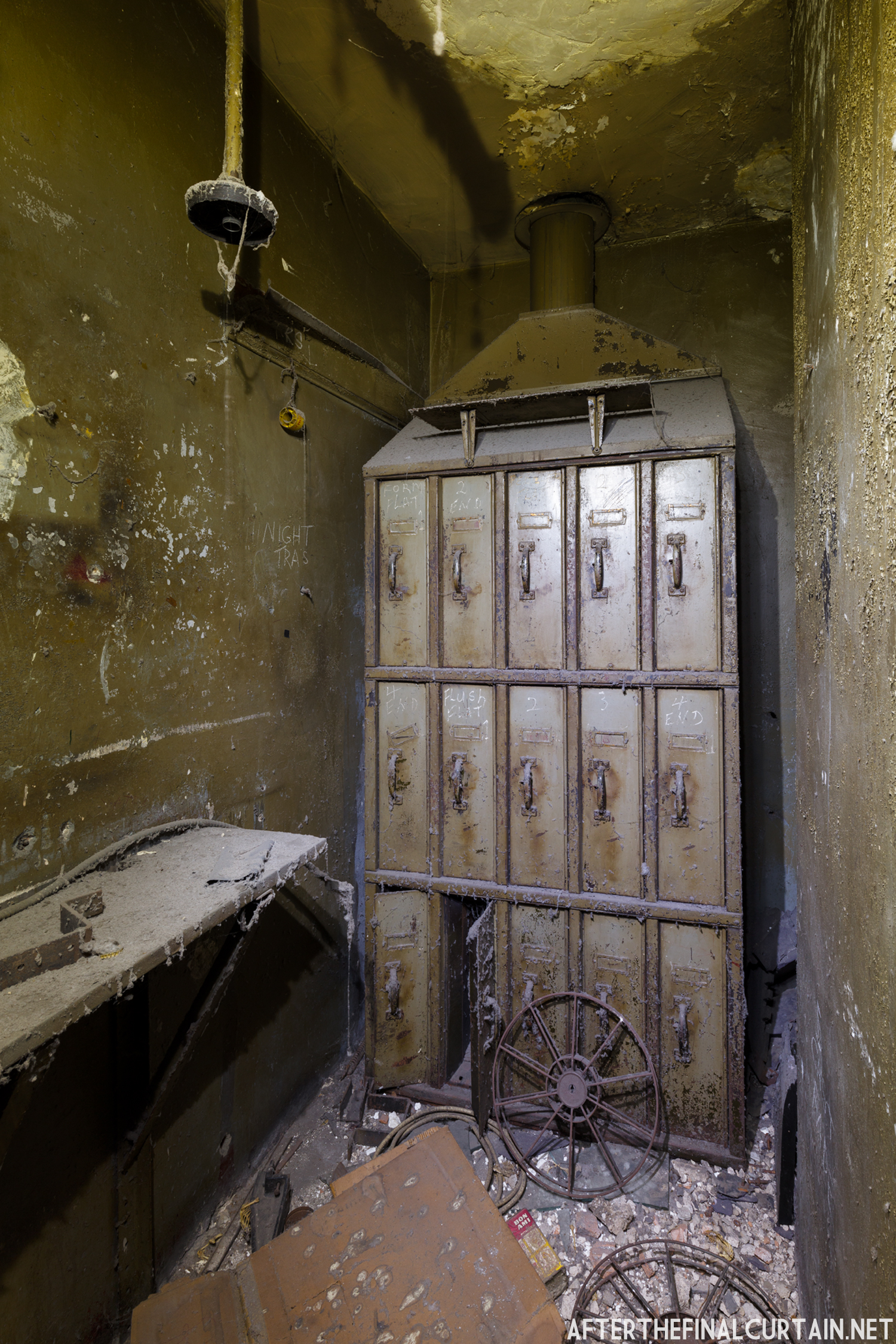
Storage lockers for films. Early film was made of nitrate, and it is very combustible, so it needed to be stored in lockers like the one pictured here.
I originally posted this post on After the Final Curtain’s Patreon in October 2021. For expanded early posts, as well as video walkthroughs and other exclusive content, you can become a patron at: https://www.patreon.com/afterthefinalcurtain
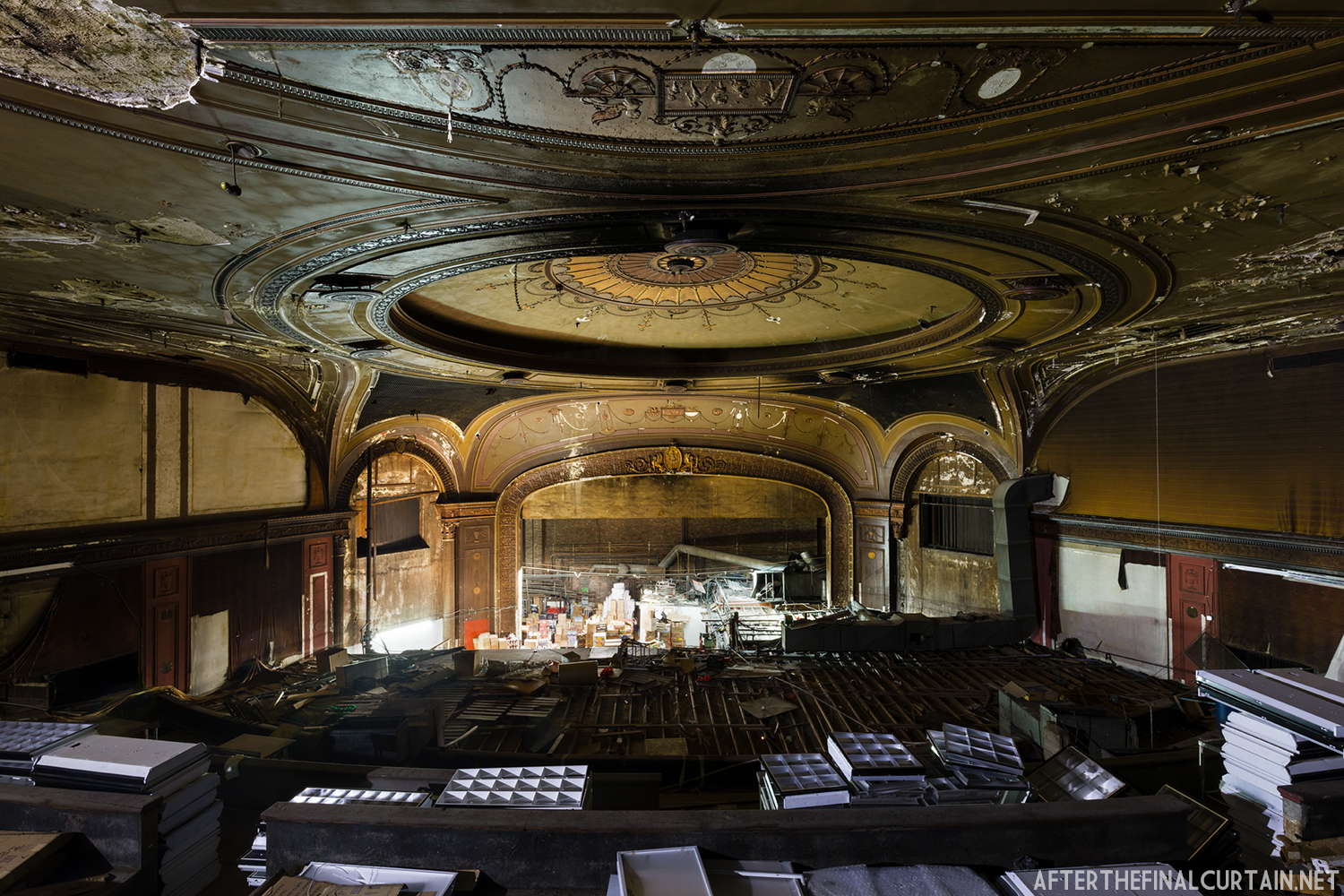
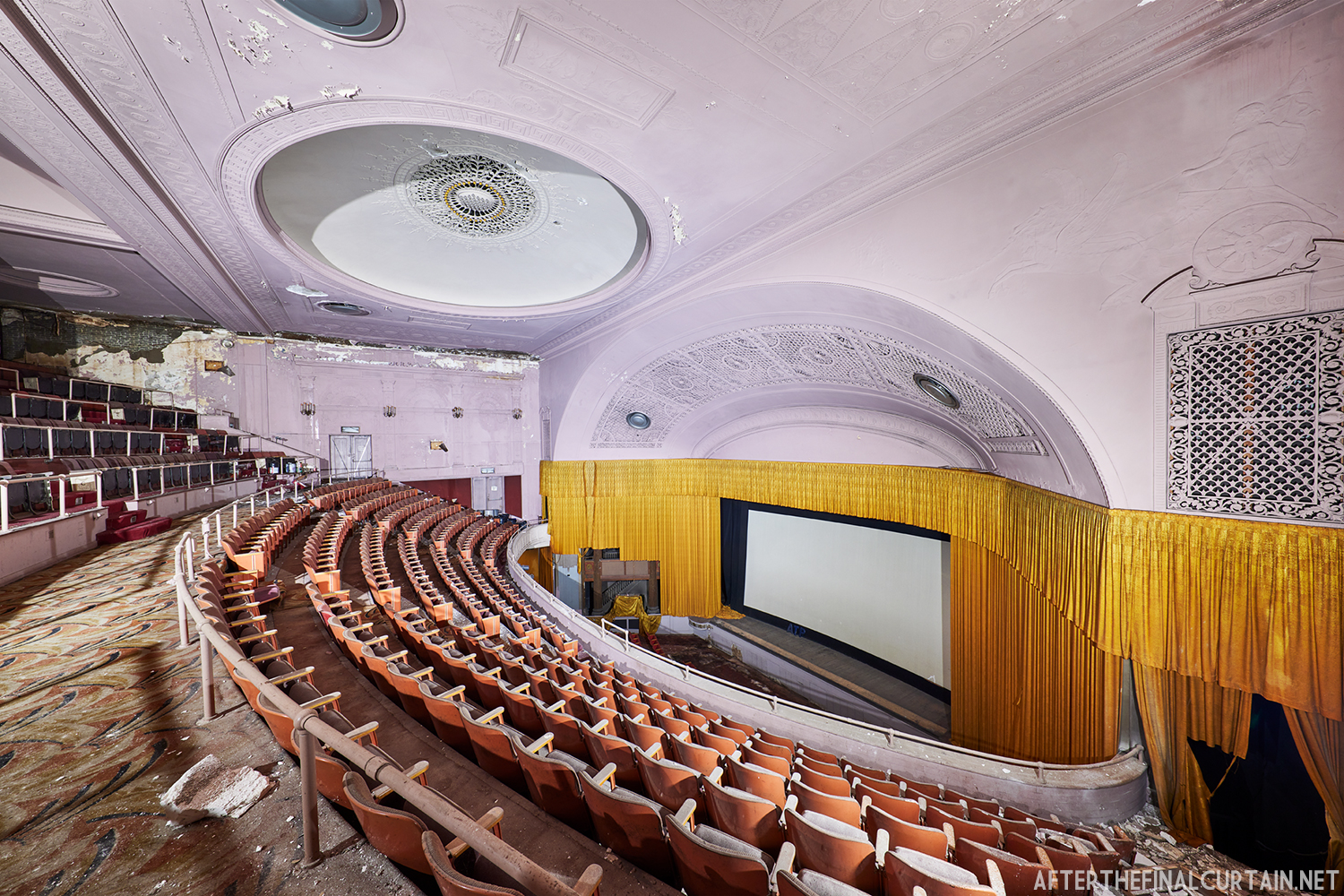
View of the auditorium from the balcony.
The Strand Theatre in the Dorchester neighborhood of Boston, Massachusetts, originally opened on November 11, 1918, the same day that the news of the Armistice, ending World War I, reached Boston. The Boston-based architectural firm of Funk & Wilcox, the same firm that designed the nearby Franklin Park Theatre and the Cabot Theatre in Beverly, MA, designed it. It was one of the first theaters in Massachusetts designed with motion pictures in mind. The Strand also had a $75,000 Hope-Jones Theatre Organ, one of the first of its kind in Massachusetts.
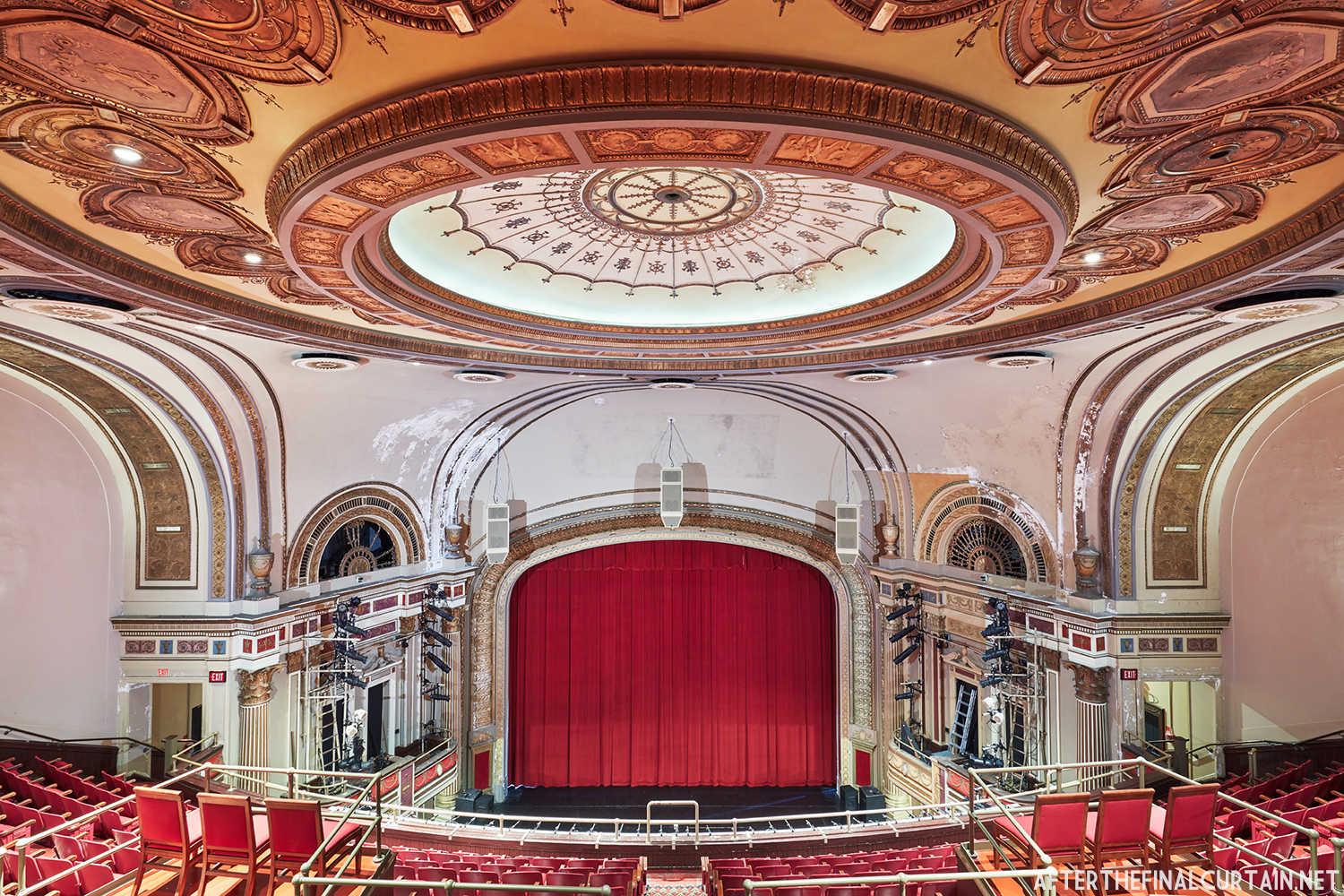
A portion of the lobby was restored to show what the theater could look like after a full restoration.
Early advertisements for the Strand called it “New England’s Most Beautiful Theatre” and “Dorchester’s New Million Dollar Photoplay Palace.” The 2,200 seat Strand opened with a silent film double feature of “Queen of the Sea” starring Annette Kellerman and“Out of a Clear Sky” starring Marguerite Clark. There was also a performance by “Songstress DeLuxe” Emile Earle. Hundreds of people showed up to the Strand’s opening celebration in part to celebrate the theater but also the signing of the armistice. Many celebrities performed at the Strand over the years, including Fred Allen, Fanny Brice, Milton Berle, Jack Benny, Jerry Lewis, Duke Ellington, and Alfred Hitchcock.
Like many single-screen theaters of its day, the Strand’s audience declined, and the theater closed in 1969. In 1979, the City of Boston took ownership of the theater, and the Strand reopened. It was managed by the M. Harriet McCormack Center for the Arts (MHMCA), who signed a 25-year lease for $1 a year. During this time, some big names performed at the theater – Joe Perry, B.B. King, Tracy Chapman, Public Enemy, Phish, and LL Cool J, just to name a few. MHMCA operated the theater until 2003, when the City declined to renew their lease because of allegations of mismanagement.
The right organ chamber and box seats were given a sample restoration as well.
The City of Boston is currently searching for a new operator of the Strand.
The Kerlin Gallery, one of the Creative York galleries in York, PA is currently exhibiting 16 pieces of my work. They range from 30×20 prints on aluminum to smaller framed prints.
The exhibition runs from Thursday, January 27 to Thursday, February 17, 2022. The opening reception is Thursday, January 27 from 6 to 8pm.
I will be at Creative York on Thursday, February 17 at 5pm for the closing reception. Following this reception, I’ll be speaking at the nearby Capitol Theatre at 7pm.
I knew I wanted to do something a little different for the 200th theater I photographed. I was speaking with a friend who went to school in upstate (real upstate, not just slightly north of NYC) and he asked “have you been to the one above the library in Marathon?” I hadn’t heard of it and was immediately intrigued. I found a few recent photos online and knew this would be perfect. Plus, it’s now the oldest theater I’ve photographed in the United States. As with most of my posts – it was originally posted on Patreon in August 2021. For expanded early posts, as well as video walkthroughs and other exclusive content you can become a patron at: https://www.patreon.com/afterthefinalcurtain
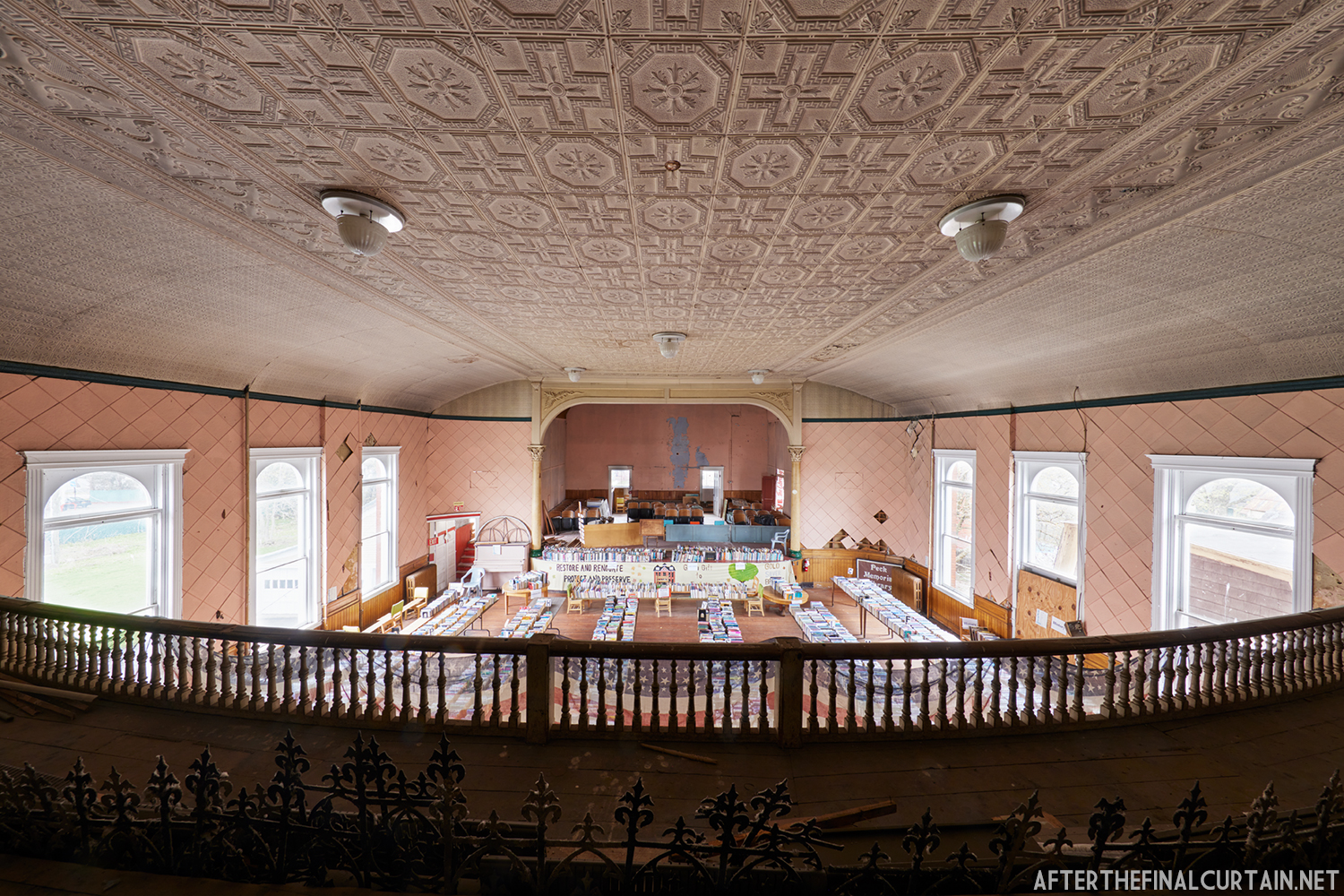
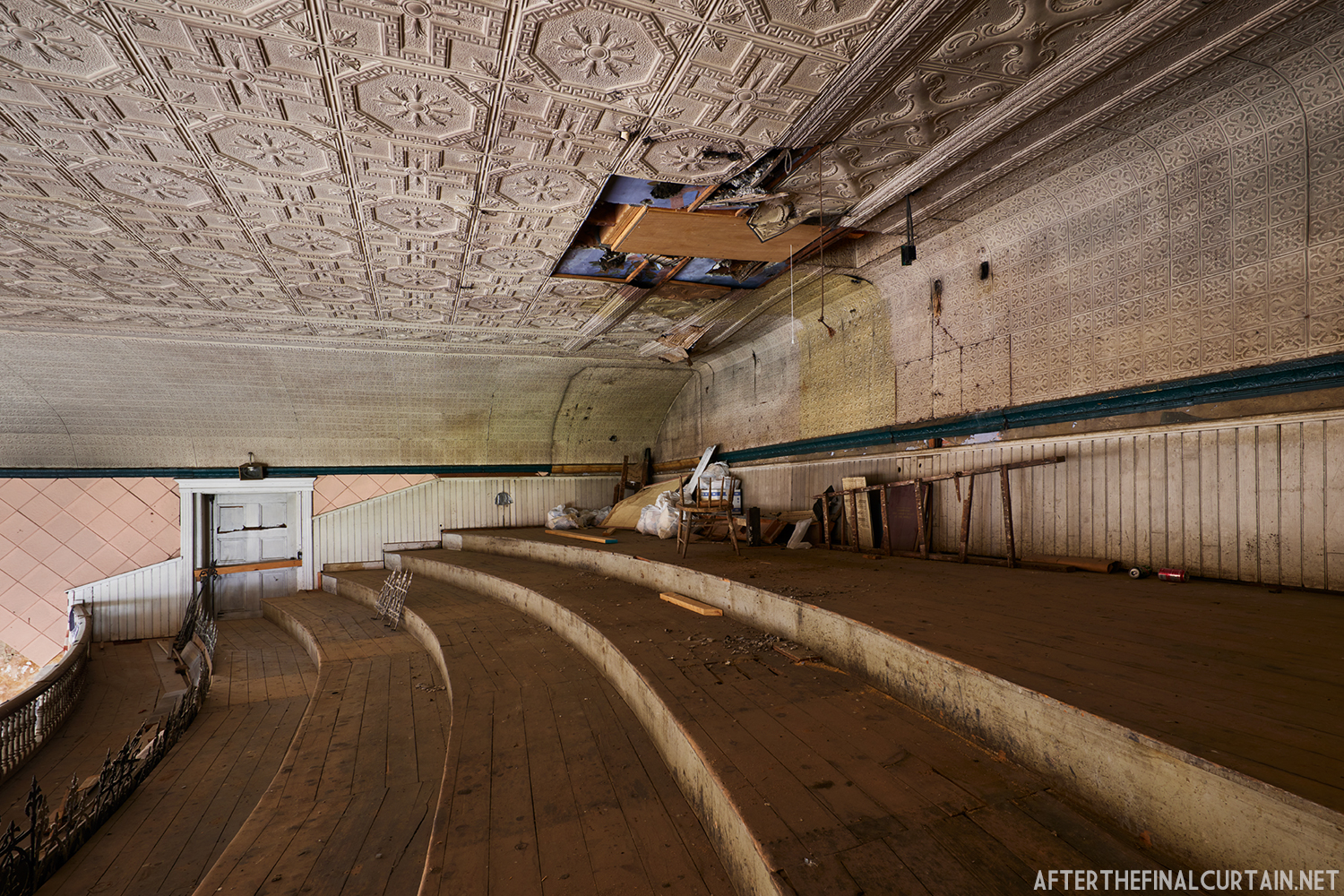
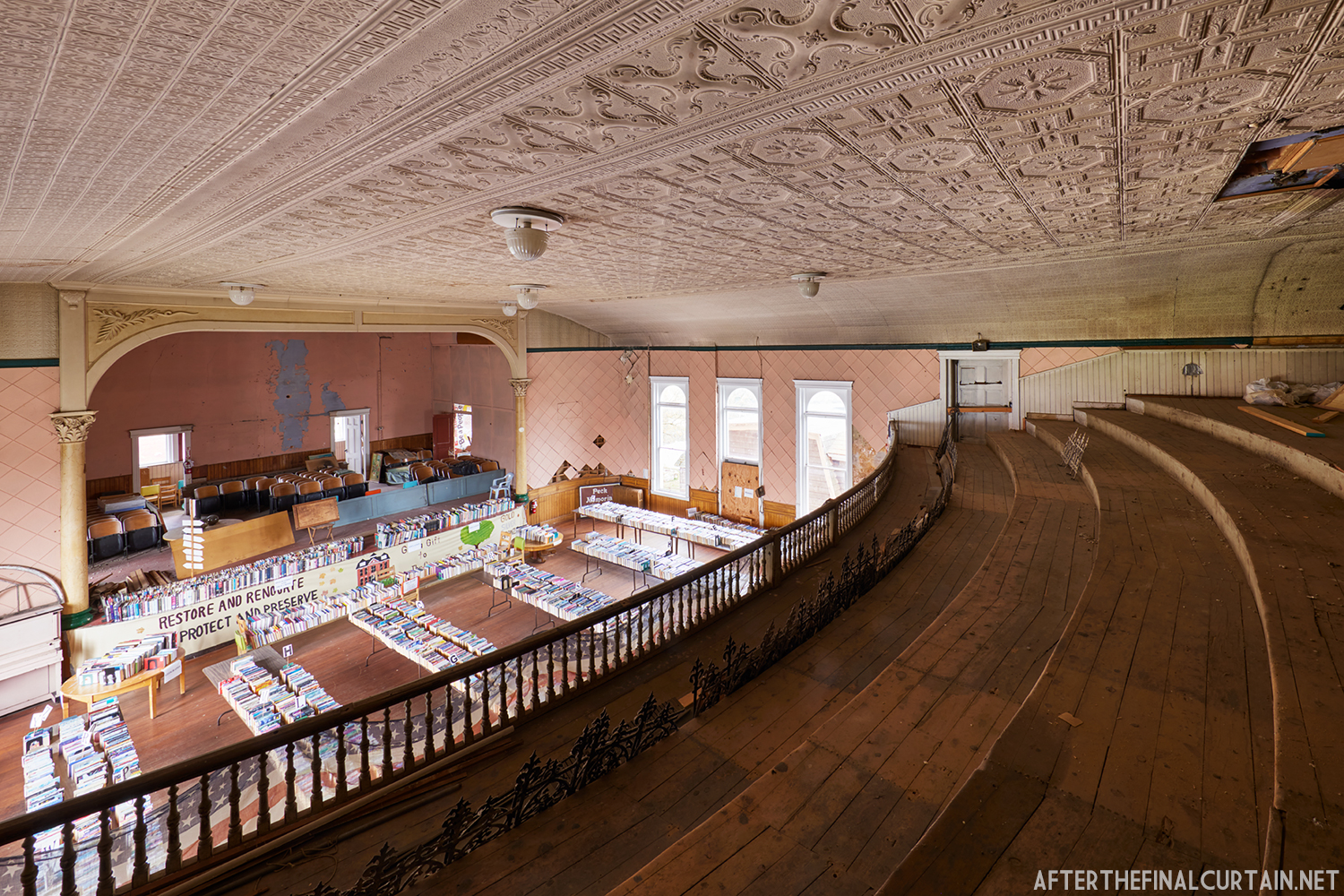
View of the auditorium from the balcony.
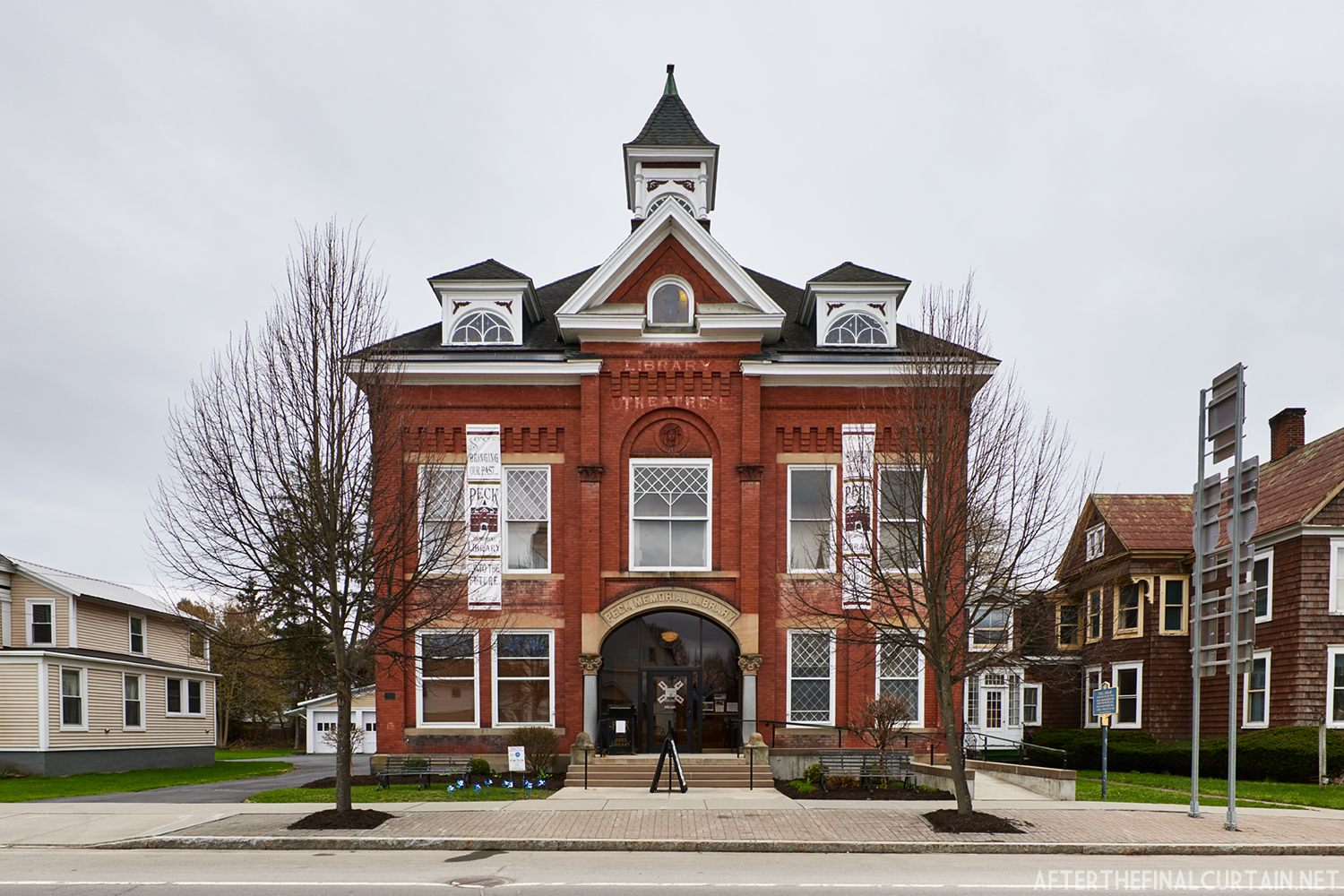
In January 1891, Mersena Peck, a native of Marathon, New York died. She left $20,000 ($584,217 when adjusted for inflation) in trust for the creation of a public library in Marathon and named three town residents as trustees. They began working to carry out her wishes and were well underway by 1893. However, before construction could start, a group of 125 citizens petitioned that the building include a space for public entertainment. Architect Miles F. Howe adjusted the blueprints to add a 600 seat opera house on the second floor of the building.
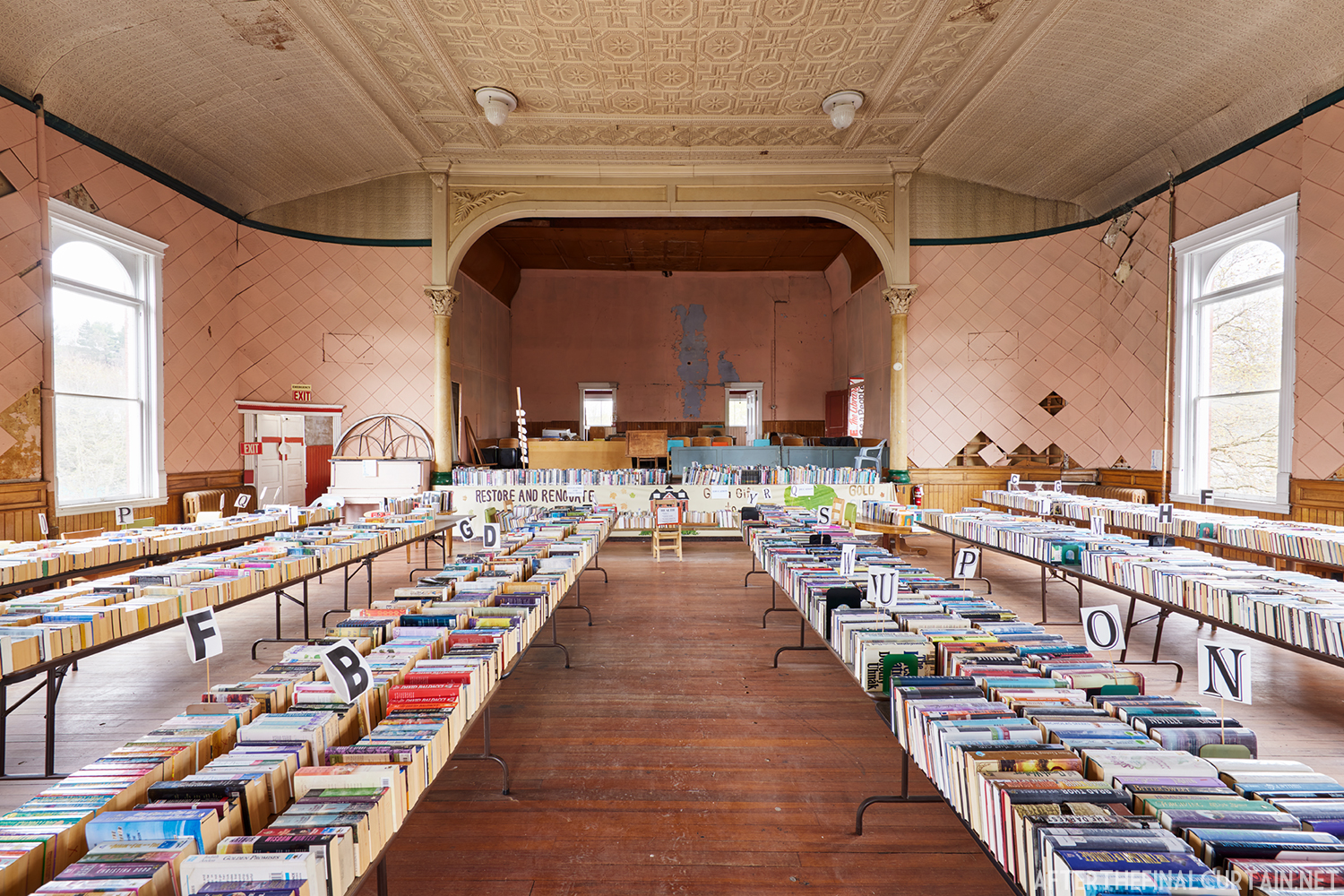
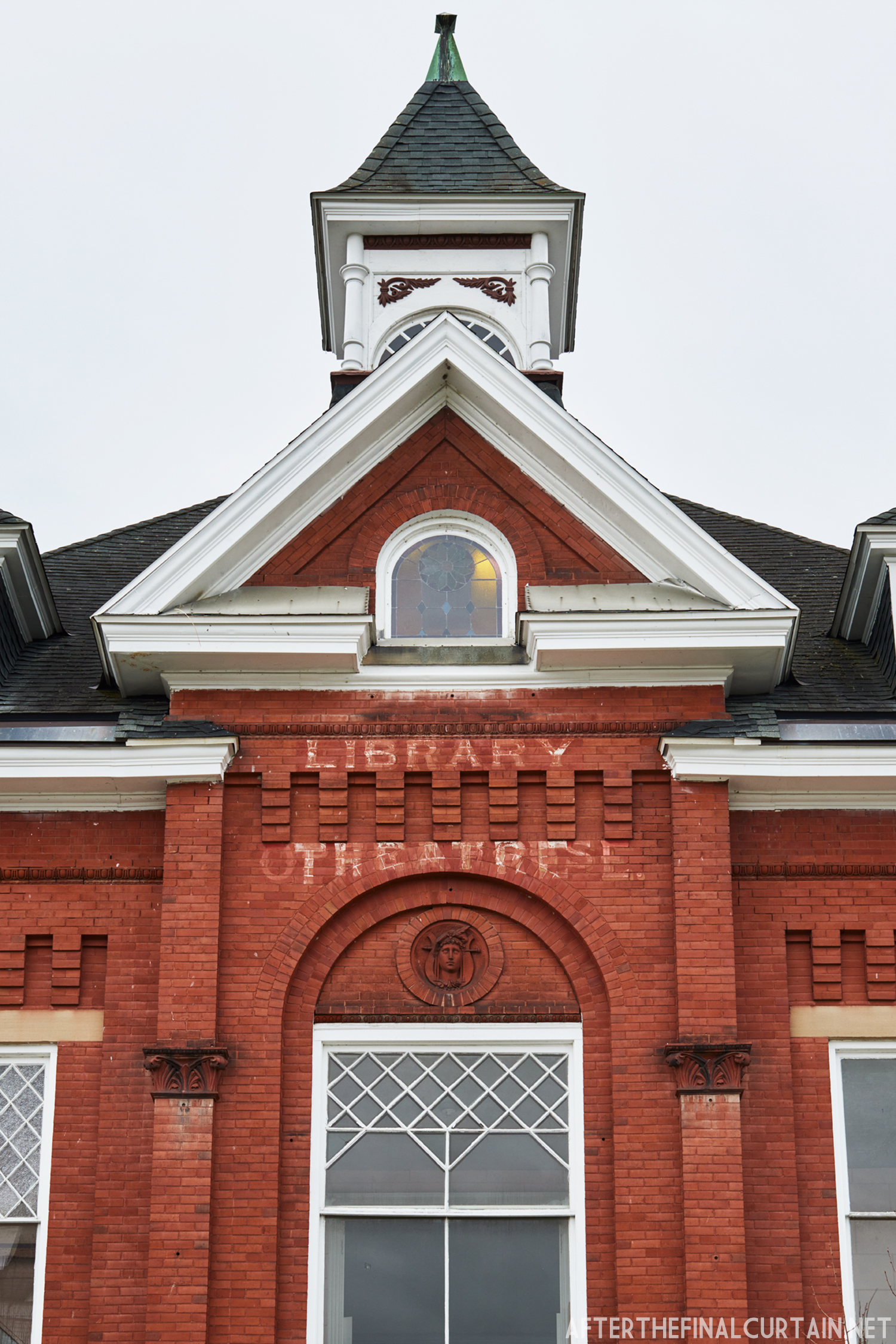
The Marathon Library and Opera House opened on January 1, 1896. It began as a live performance space, hosting traveling performers before transitioning over to films in the early 1930s. The Library Opera House was renamed the Park Theatre and lasted as a movie theater until 1953. The auditorium is currently only used a few times a year to host a used book fair.
The exterior of the Marathon Library/Opera House.
In early 2020, the Marathon Public Library announced that the building needs close to $1 million in renovations. They’ve received $50,000 through their capital campaign but far from enough to be able to make the renovations needed to reopen the opera house.
The orchestra level of the auditorium is used as a book fair.
I’ll be exhibiting some of my work at the Wall Gallery at Percival Brewing Company. It’s located at 83 Morse Street, Norwood, MA starting on December 14 and running to January 24, 2020. There’s going to be an opening reception on Dec 14 from 2-4 PM. Hope to see some of you there!
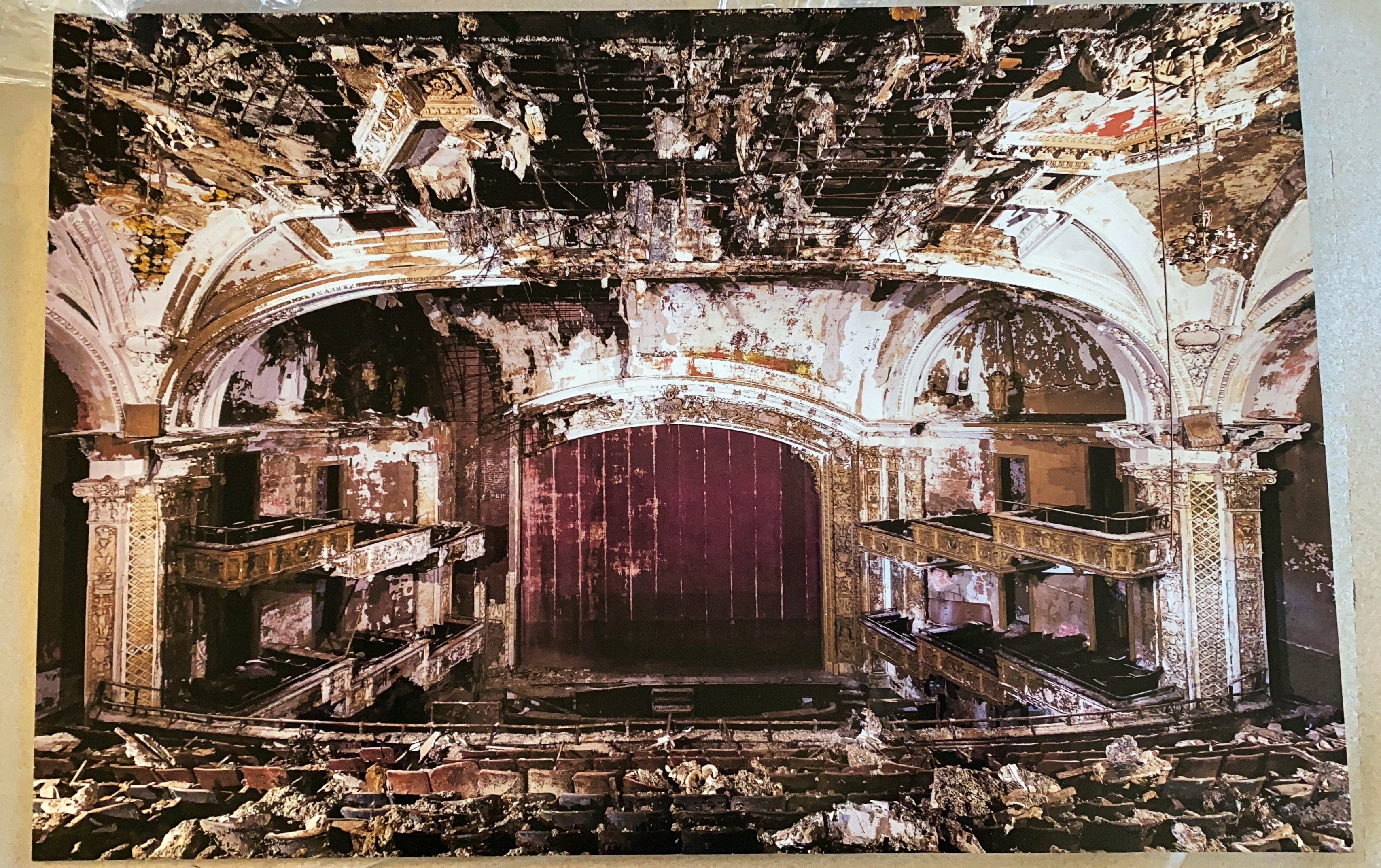
Almost all of the work I’m exhibiting will be on metal. Metal Prints are created by infusing a digital photograph onto raw aluminum, and the result is an image that almost jumps out at you. I’m not going to share them here because the screen and my iPhone shot doesn’t do them justice.




 After the Final Curtain