I’m moving all prints 12×18 and under in-house. I’ll be printing them myself going forward. This gives me full control over paper, color, and consistency, and keeps the work closer to how I want it to look.
Before that switch happens, I’m clearing out everything currently in the store.
Once the new store goes live, these are gone. No reprints.
If you’ve had your eye on something, now’s the time.
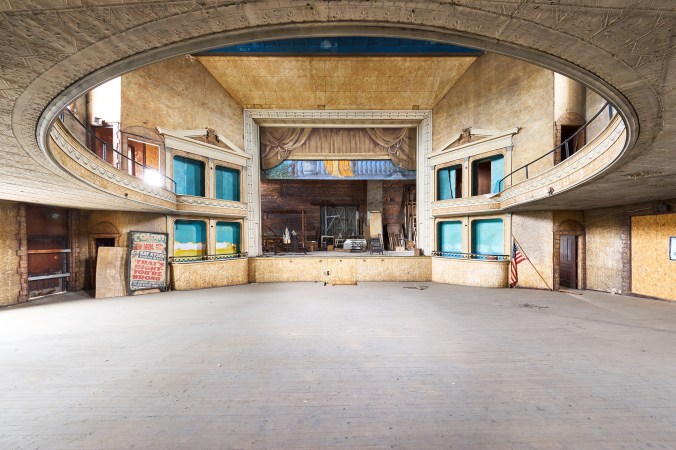
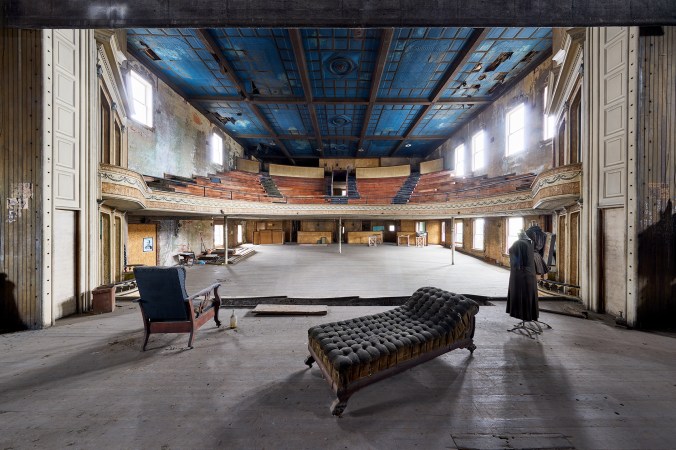
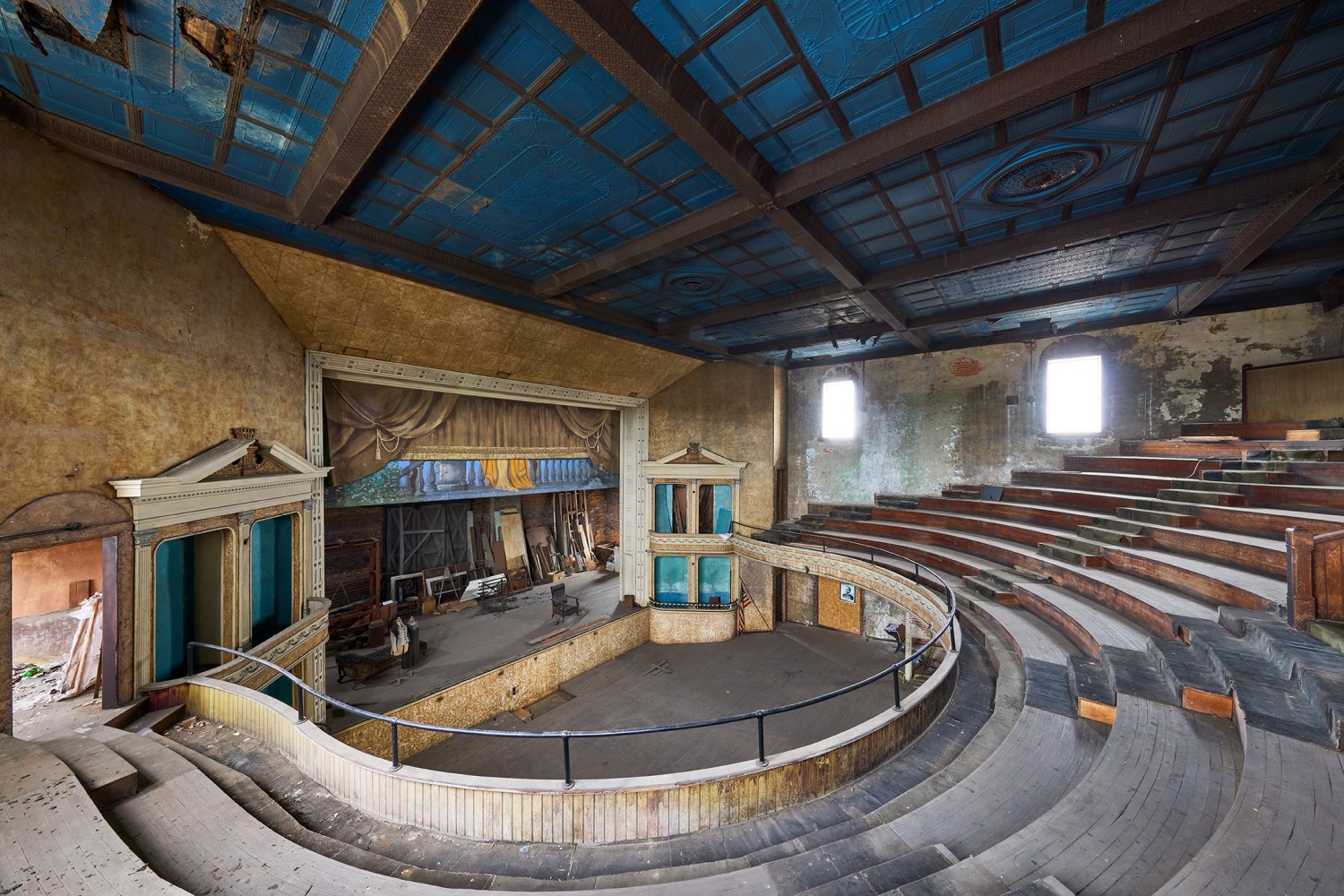
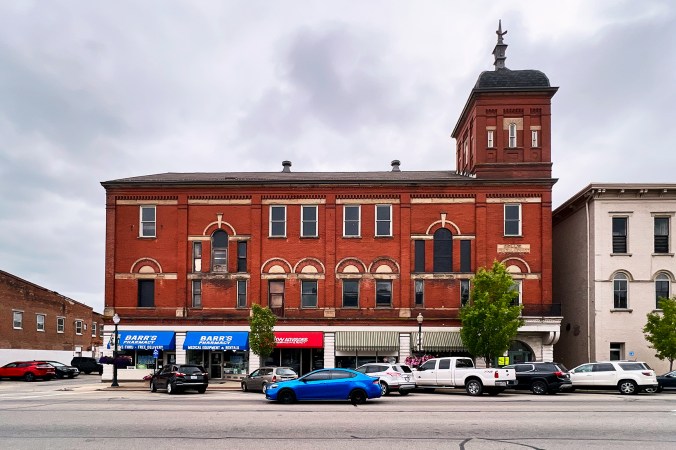
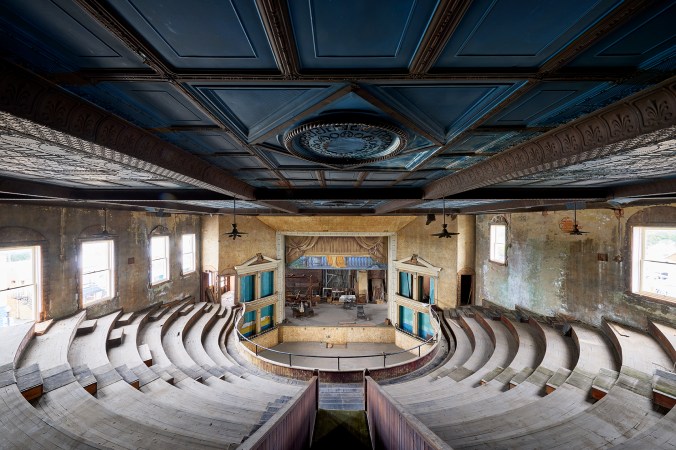
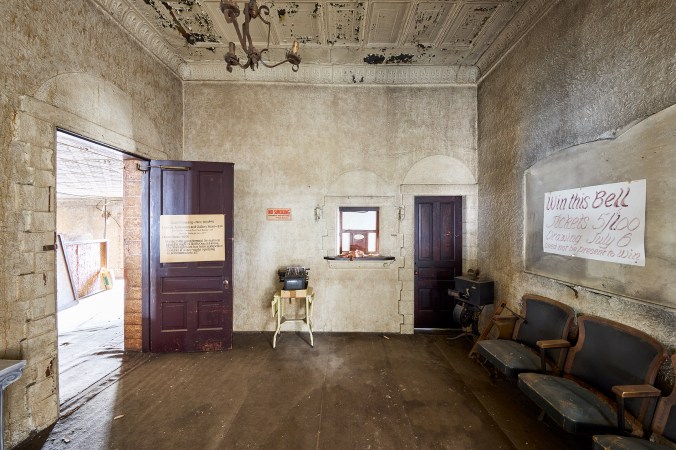
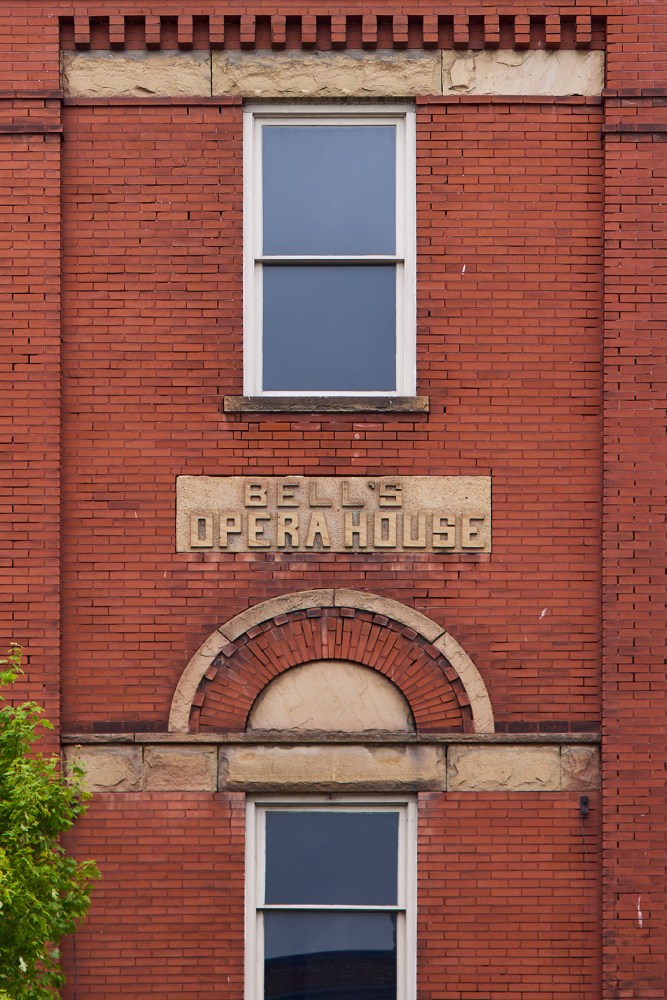
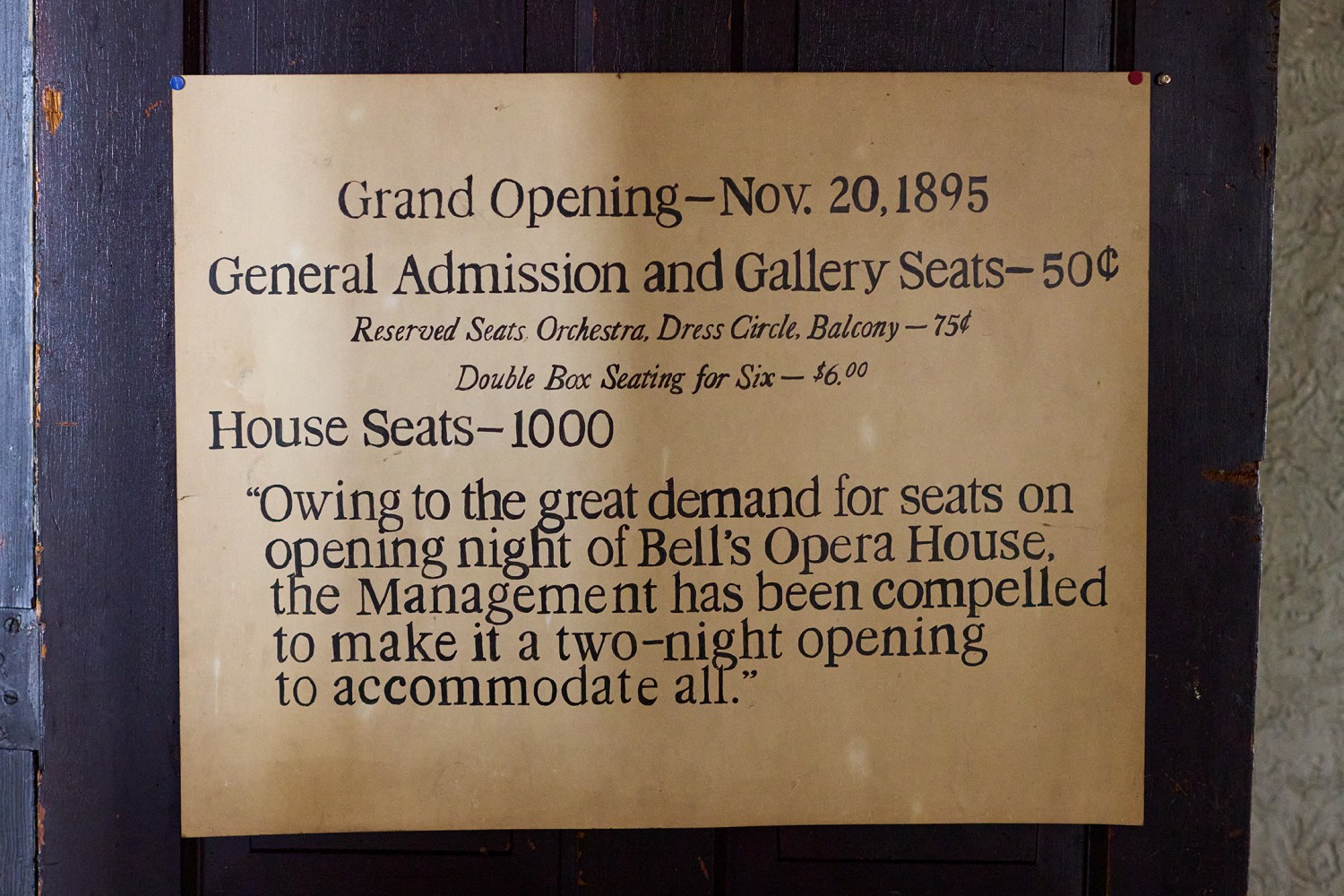
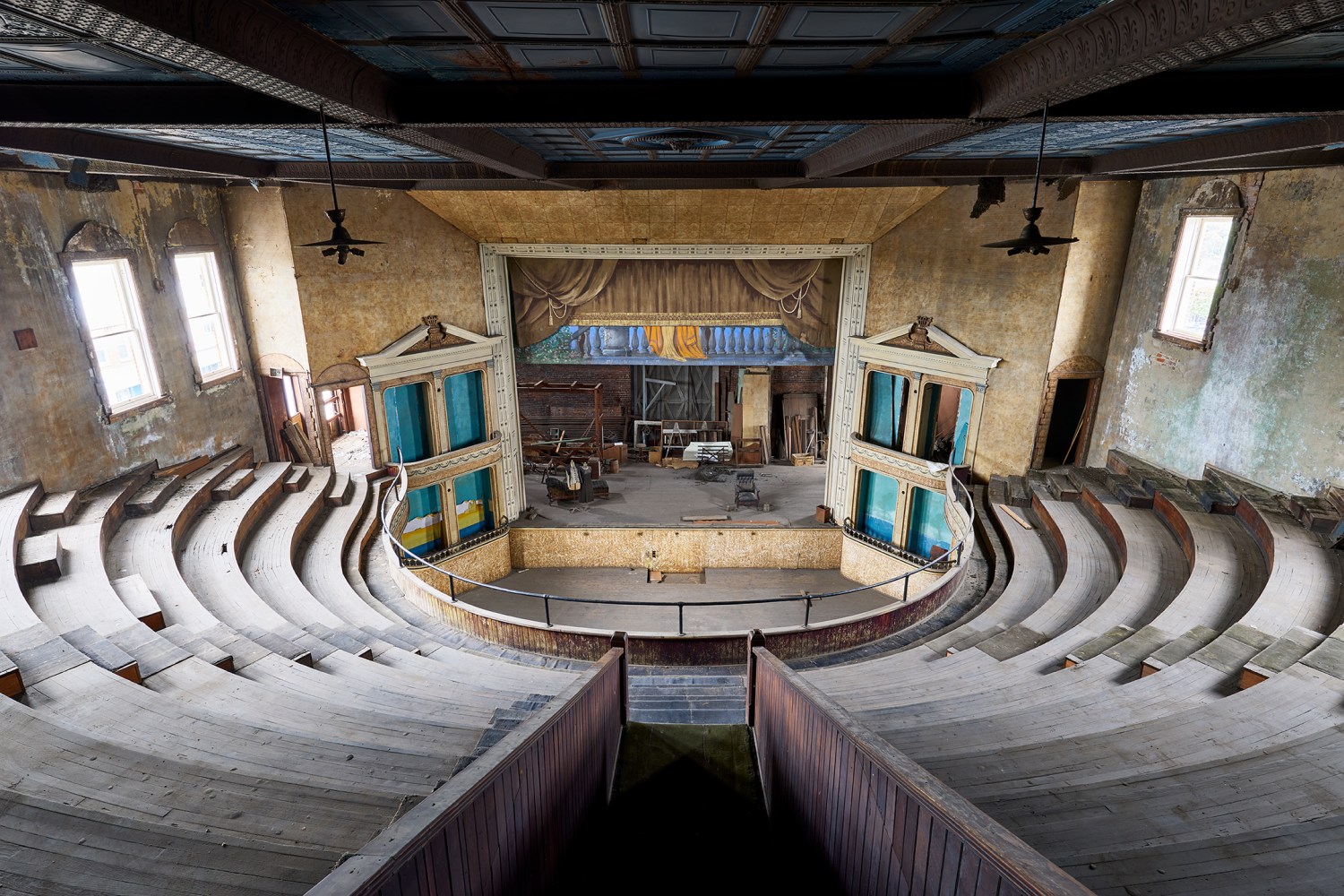
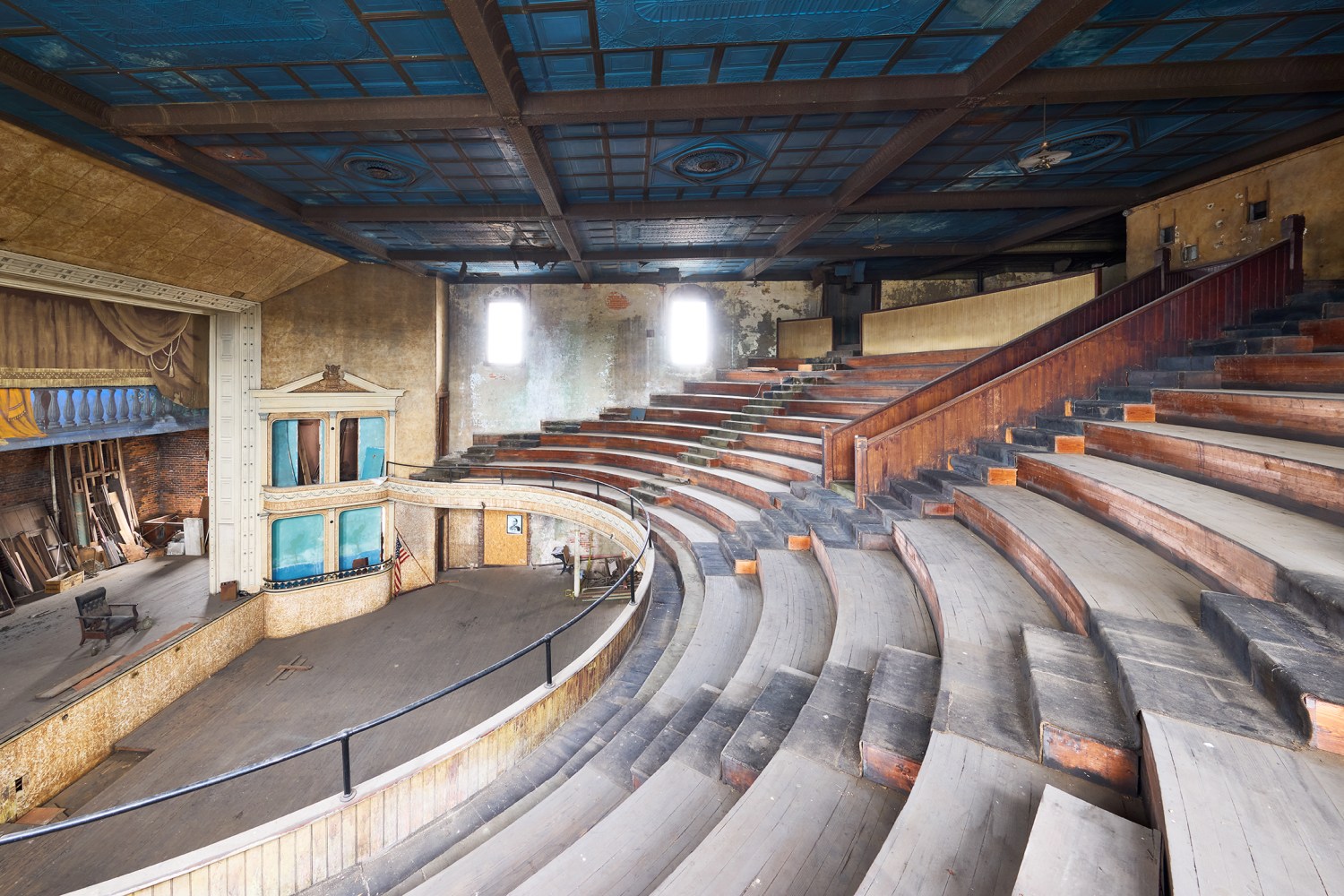
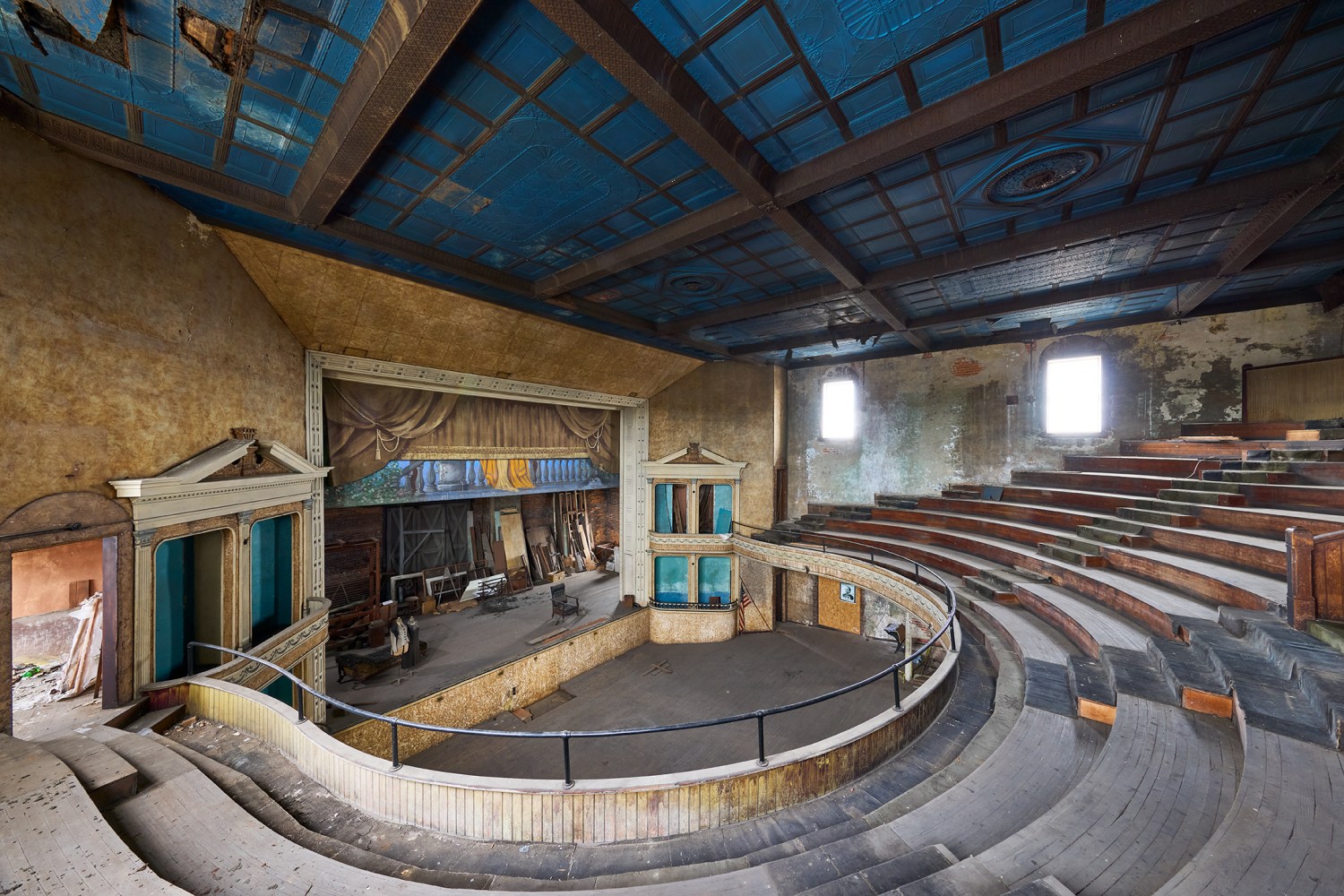
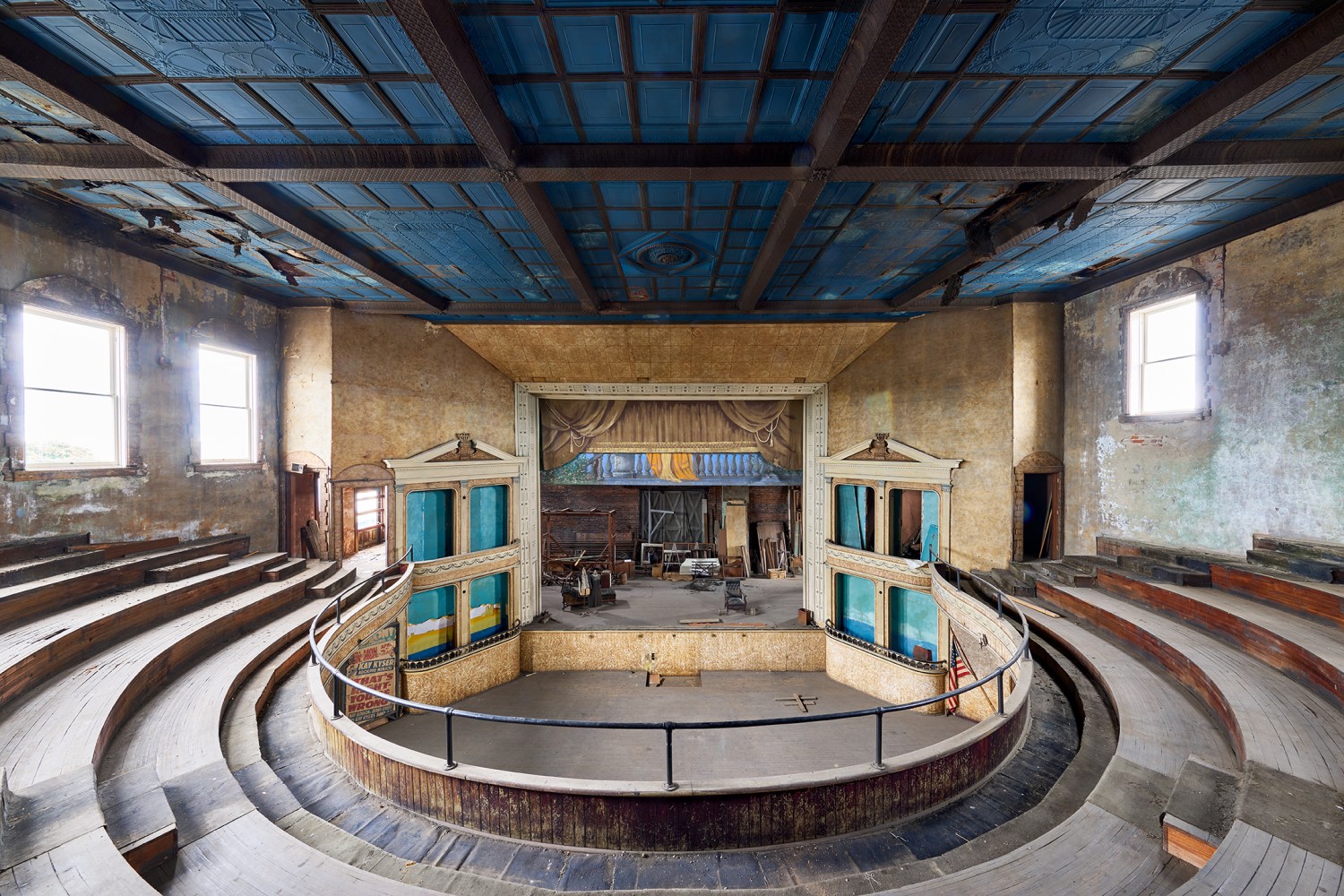
Bell’s Opera House officially opened on November 20, 1895, after just seven months of construction in Hillsboro, Ohio. It was built on South High Street, on a site once known as Rats’ Row, with a nearly 1,000-seat second-floor auditorium. The total construction cost came in at $40,000—about $1.5 million in today’s dollars—funded primarily by local manufacturer and philanthropist C.S. Bell.
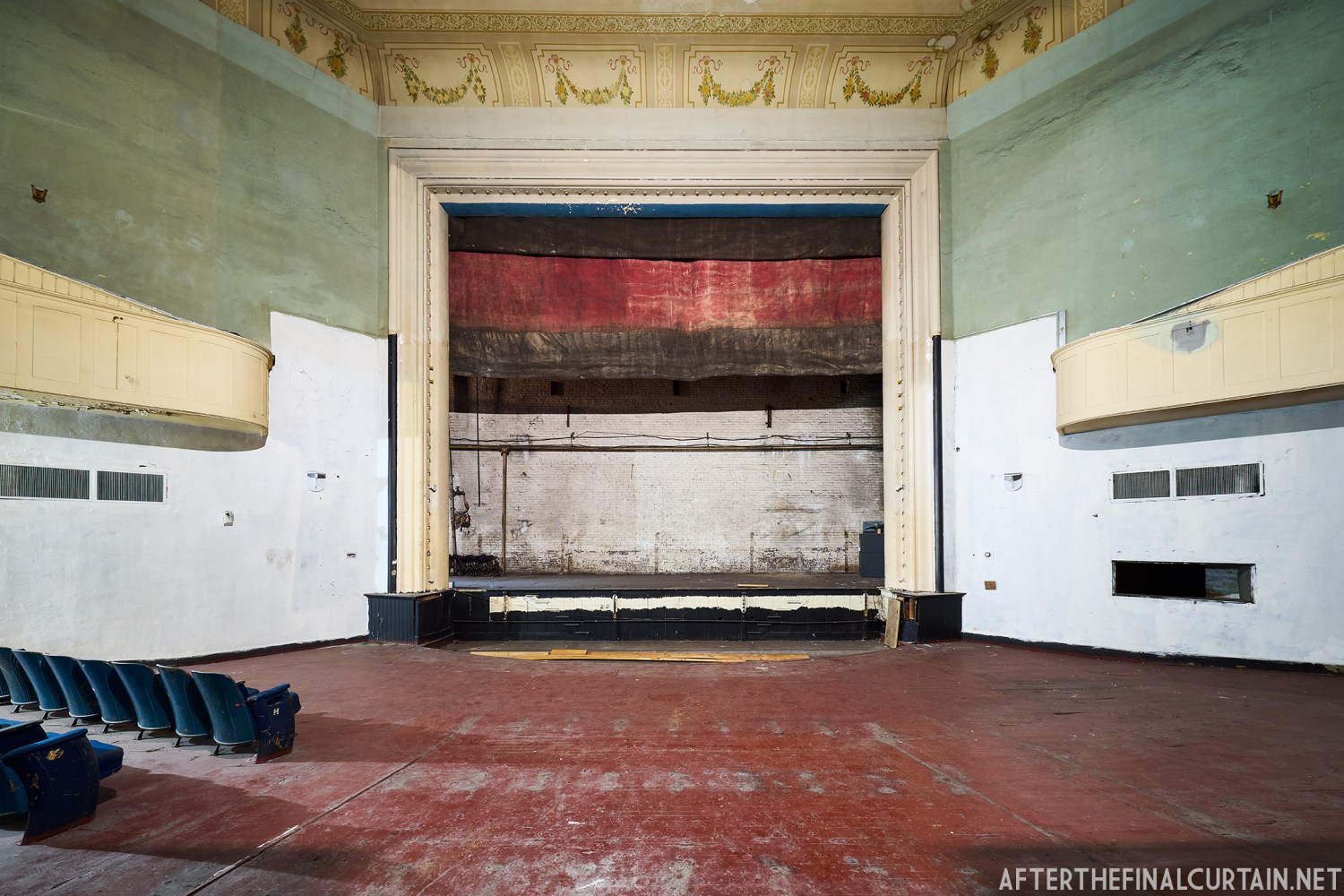
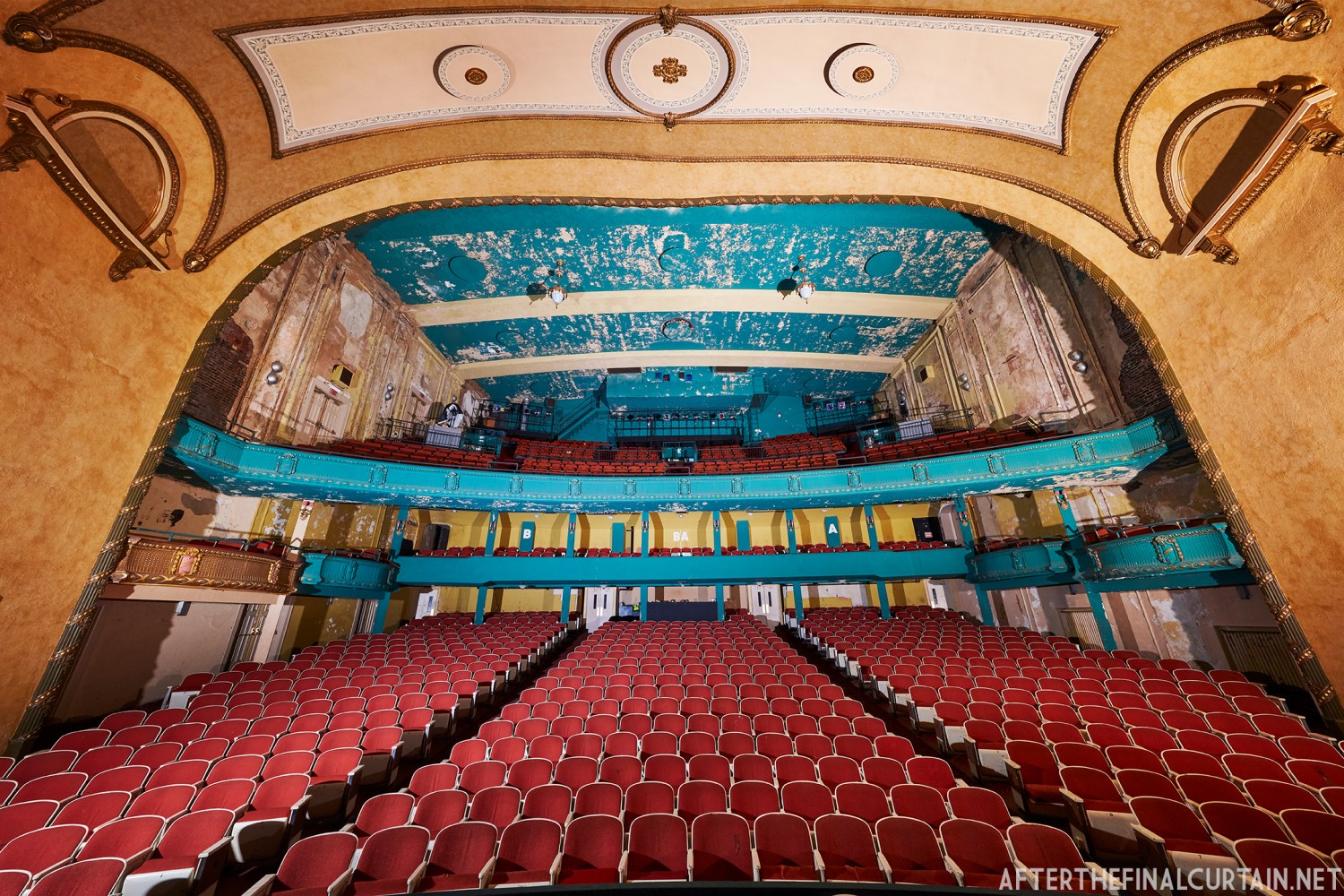
View of the auditorium from the stage.
Bell agreed to cover most of the cost if Hillsboro residents could raise $3,000 toward the project. Once the money was secured, work began in April 1895. The opening celebration stretched across two nights due to ticket demand, with performances of Friends by Edwin Milton Royle and a four-act romantic drama titled Mexico.
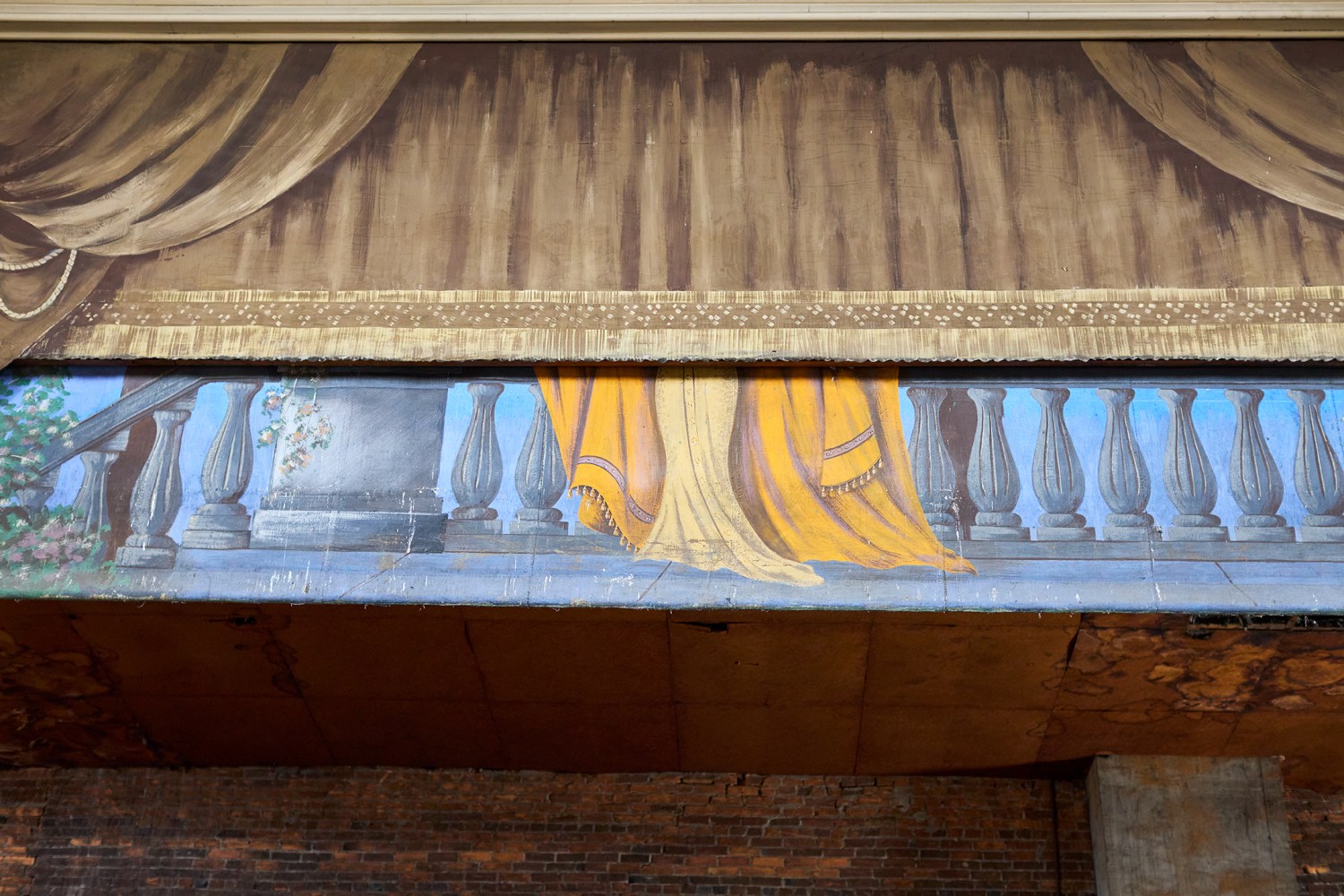
Unfortunately, the fire curtain was stuck.
The Opera House began showing silent films in 1903, starting with The Great Train Robbery. In the 1920s, it was converted into a sound-equipped movie house and rebranded as Bell’s Theatre. Ownership passed to Chakeres Theatres in 1939, but the venue closed just a few years later in 1942.
While there were brief revivals—including a return to live theater in 1957 for Ohio’s sesquicentennial—the building mostly sat dark for the second half of the 20th century. Its doors opened occasionally for festivals and local events through the 1990s.
Many of the theater’s original metal-frame seats were removed and sold for scrap during World War II. Others were reused in local schools or theaters. By the 2000s, Bell’s Opera House was largely forgotten, its interior aging but still structurally sound.
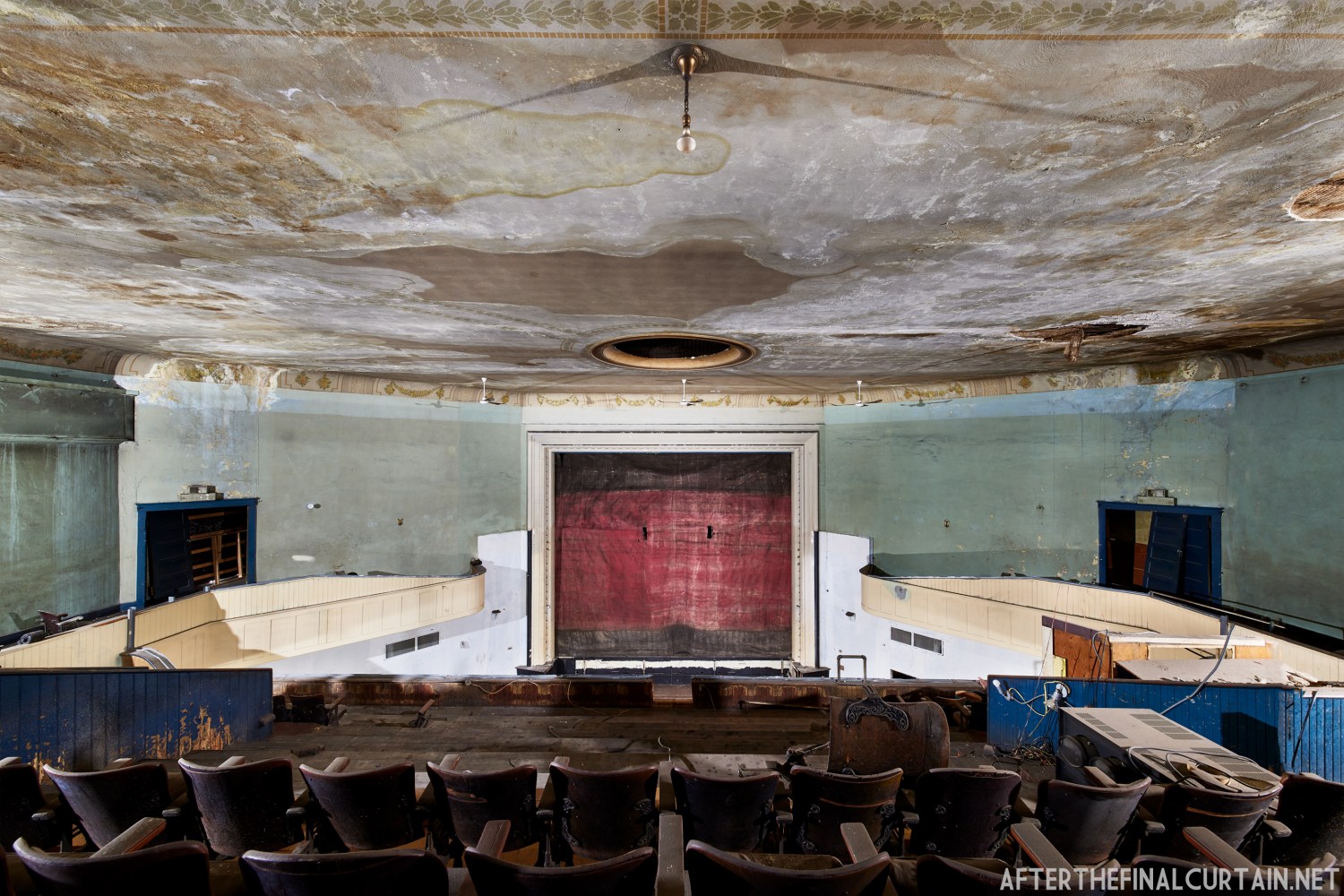
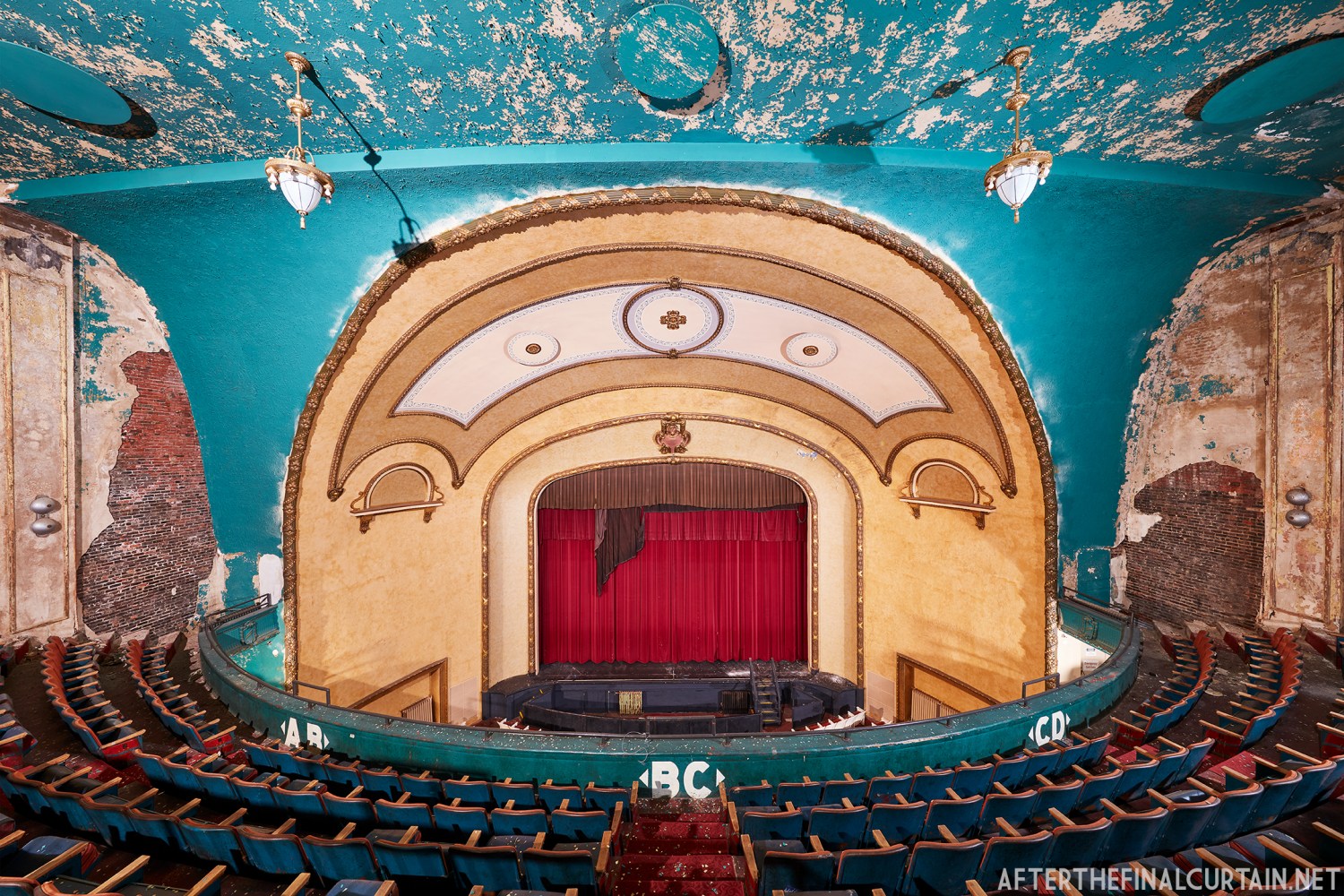
View of the auditorium from the projection booth.
In 2006, comedian and former mayor Drew Hastings purchased the building and began light restoration work in 2010–11. While stabilized, the building still needs significant investment to return it to public use. Hastings has said he hopes to sell it to a nonprofit that can complete the work and bring it back to life.
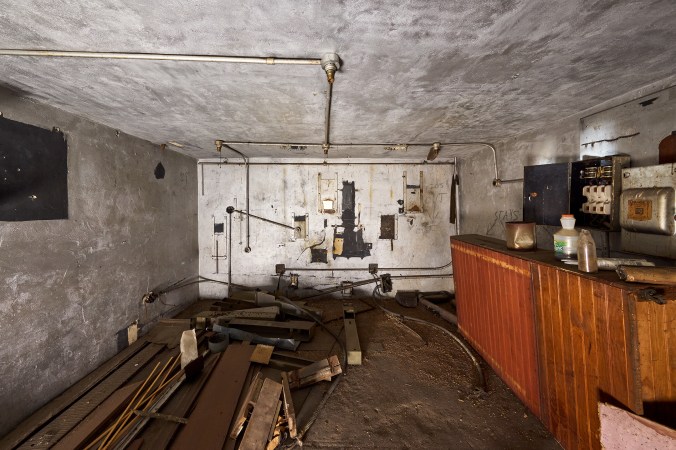
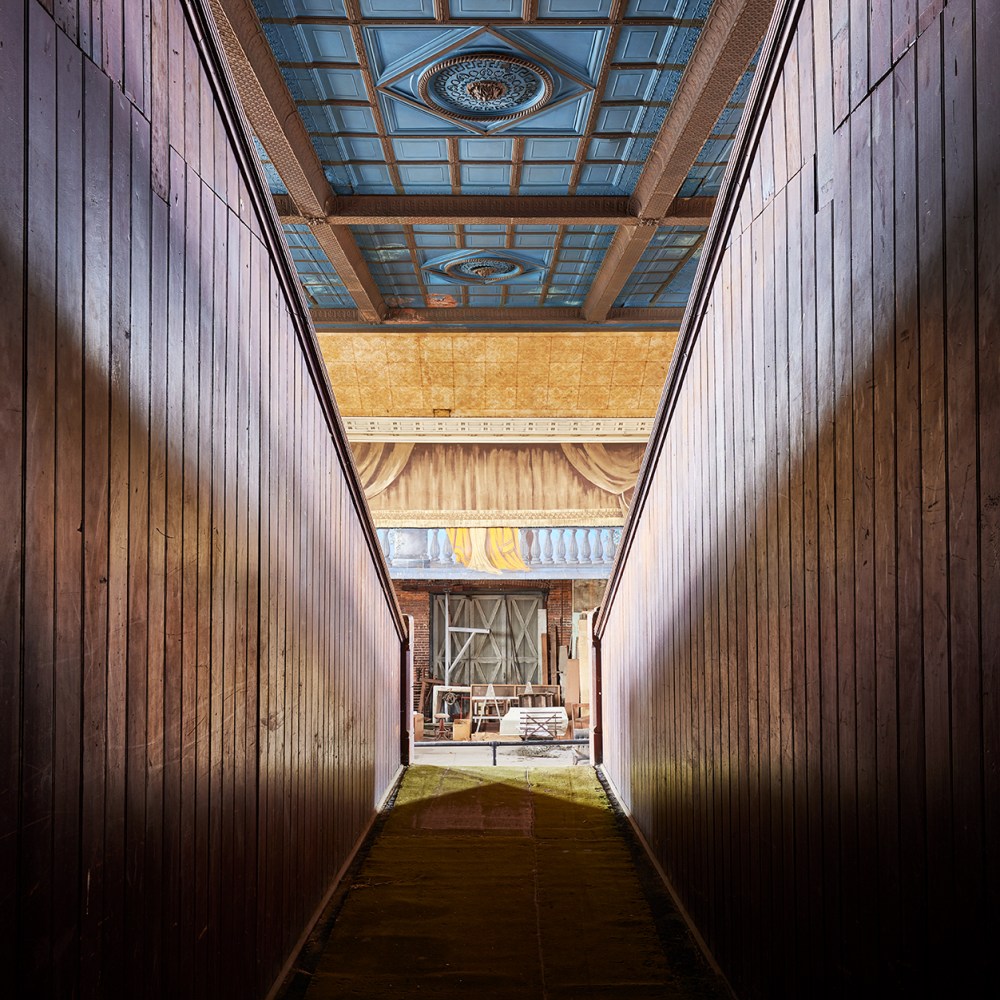
The projection booth was mostly cleaned out.
Kirsten Falke-Boyd, a classically trained singer and the great-granddaughter-in-law of C.S. Bell, visited the Opera House in 2023. Falke-Boyd was part of Bobby McFerrin’s Voicestra and has performed across the world. She described the space as both fragile and hauntingly beautiful, with its pressed tin ceiling, private box seats, and faded wallpaper still intact For her, it was more than a building—it was family history.
This was originally posted on After the Final Curtain’s Patreon in January 2025. For expanded early posts, as well as video walkthroughs and other exclusive content, you can become a patron at: https://www.patreon.com/afterthefinalcurtain
Shea’s Theater, located in the heart of Downtown Ashtabula, Ohio, opened its doors in 1949 during the height of the city’s industrial boom. Designed by Michael J. DeAngelis in the Streamline Moderne style, the theater was a $1 million investment by M.A. Shea with seating for 1,530 guests.
The theater’s heyday coincided with Ashtabula’s economic peak in the 1950s, when the city thrived as a bustling port town along the Great Lakes. Iconic stars like Judy Garland, Mickey Rooney, and Clark Gable graced its screen, while live performances by artists like “Polka King” Frank Yankovic drew record-breaking crowds of nearly 1,700 people.
Despite its initial success, Shea’s began to struggle by the 1970s. Newer theaters in Saybrook Township provided stiff competition, and declining attendance, coupled with financial woes, forced the theater to close in 1973. At the time, the corporation owed significant back taxes and rent, signaling the difficulties of maintaining such a large venue. Efforts to revive Shea’s were made throughout the late 1970s, with the building reopening as a public auditorium in 1977. It briefly hosted live theater, concerts, and community events, but poor attendance and insufficient funding led to its final closure in 1982.
Though its auditorium went dark, Shea’s remained a part of Ashtabula’s community in a limited capacity. A portion of the building became the Ashtabula Senior Center, while the theater’s iconic seats were refurbished and repurposed for the Ashtabula Arts Center. Behind a makeshift wall, the grand main hall sat untouched, a reminder of the theater’s former glory.
The current owner of the theater plans to revive the building in phases beginning with the restoration of its façade and marquee. The hope is to create excitement and community engagement by hosting smaller events in the revamped space while generating momentum for a full-scale restoration. It was recently given a a $500,000 grant from Ohio’s capital budget Although significant funding is still needed, local leaders believe the revitalization of the Shea’s could serve as a catalyst for bringing new energy to Downtown Ashtabula. Work has begun restoring the entryway and lobby of the theater.
This was originally posted on After the Final Curtain’s Patreon in December 2024. For expanded early posts, as well as video walkthroughs and other exclusive content, you can become a patron at: https://www.patreon.com/afterthefinalcurtain
Photographed prior to its purchase by Kristen Stewart.
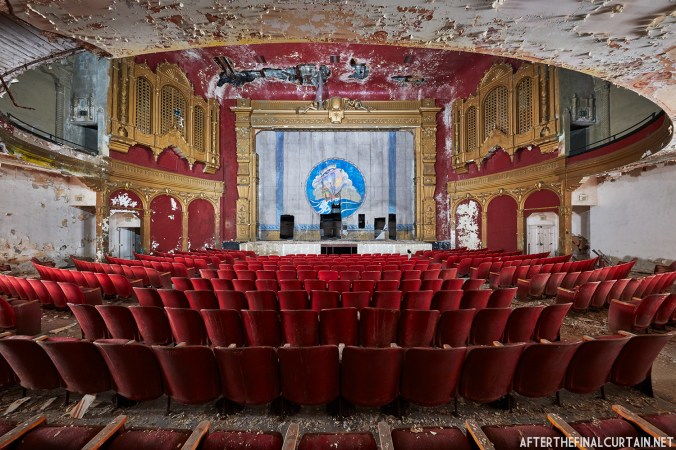
The Highland Theatre, located in Highland Park, Los Angeles, was designed by prominent theater architect Lewis A. Smith. Renowned for its Moorish-style interior, it opened on March 5, 1925, with a special appearance by actress Norma Shearer and the premiere of the film Lady of the Night. Originally seating 1,432 patrons, it was constructed for local banker Clyde M. Church on what was then Pasadena Avenue (now Figueroa Street).
Highland Park, once a bustling entertainment hub, was home to eight theaters, including the Arroyo, Franklin, and York theaters. The Highland Theatre quickly became a centerpiece of the neighborhood’s vibrant culture, operated initially by West Coast Theatres (later Fox West Coast Theatres). Like most suburban theaters of its time, it showcased several films a week.
The venue went through various transformations, including a period as an adult theater, before pivoting to family films in 1975 under operator Arman Akarakian. In 1983, it was converted into a triplex, reducing its capacity to 465 seats across three screens on the main floor, while the balcony and stage areas were left unused.
Designated a Los Angeles Historic-Cultural Monument in 1991, the Highland Theatre retained much of its original decor in the balcony area. Despite challenges, it thrived as a triplex by offering affordable prices and friendly service.
In August 2022, the theater building was listed for sale by the family that owned it for nearly a century. It was purchased in December 2022 by Cyrus Etemad, who also owns nearby properties like the Highland Park Bowl. While Etemad has expressed a commitment to preserving the building as a theater, no specific renovation plans have been announced.
The operator’s 99-year lease, originally signed in 1924, expired in February 2023. Etemad allowed the operator to continue running the theater rent-free for a year. However, on February 29, 2024, the Highland Theatre abruptly closed, citing financial difficulties exacerbated by the COVID-19 pandemic. The final films shown included Bob Marley: One Love and Dune: Part Two.
In June through August 2025, the theatre was used as a stand-in for a 1977 version of the New Beverly Cinema during filming of The Adventures of Cliff Booth (Netflix, 2026), the Tarantino-penned sequel to Once Upon a Time…in Hollywood. Exterior and lobby scenes were shot at the Highland, with auditorium scenes filmed elsewhere. Closed since February 2024, the theatre is slated to be renovated by its new owners.
This was originally posted on After the Final Curtain’s Patreon in February 2025. For expanded early posts, as well as video walkthroughs and other exclusive content, you can become a patron at: https://www.patreon.com/afterthefinalcurtain
The Loew’s Gates Theatre in Brooklyn, NY, opened on November 21, 1921, as a state-of-the-art movie and stage presentation theatre. Advertised as “The Biggest Theatre Event in the History of Brooklyn,” the grand opening featured Bert Lytell in “Alias Lady Fingers” and Buster Keaton in “Hard Luck”, along with live vaudeville performances. The event was attended by New York Mayor John Hylan, Borough President Edward Riegelman, and Loew’s Circuit General Manager Nicholas Schenk. Movie stars such as Mae Murray, Will Rogers, Lew Cody, and Lillian Walker also graced the occasion. The theatre, boasting 3,600 seats, was managed by William Sheehey and featured a Möller 3-manual, 17-rank theatre organ.
Over the decades, the Loew’s Gates became a staple of Brooklyn’s entertainment scene, hosting both film screenings and live appearances. In 1952, baseball legends Jackie Robinson and Billy Cox joined Happy Felton at the theatre for a special Loew’s MGM Knothole Gang Show, drawing 2,500 attendees. In 1963, horror icons Peter Lorre and Boris Karloff made personal appearances for The Raven. By the late 1960s, Loew’s was among the first major circuits to introduce independent X-rated films, such as Without a Stitch (1970), much to the dismay of Motion Picture Association head Jack Valenti. However, unlike many other theaters, it did not switch to X-rated films full time. The theatre continued to operate as a movie house until its closure on July 13, 1977.
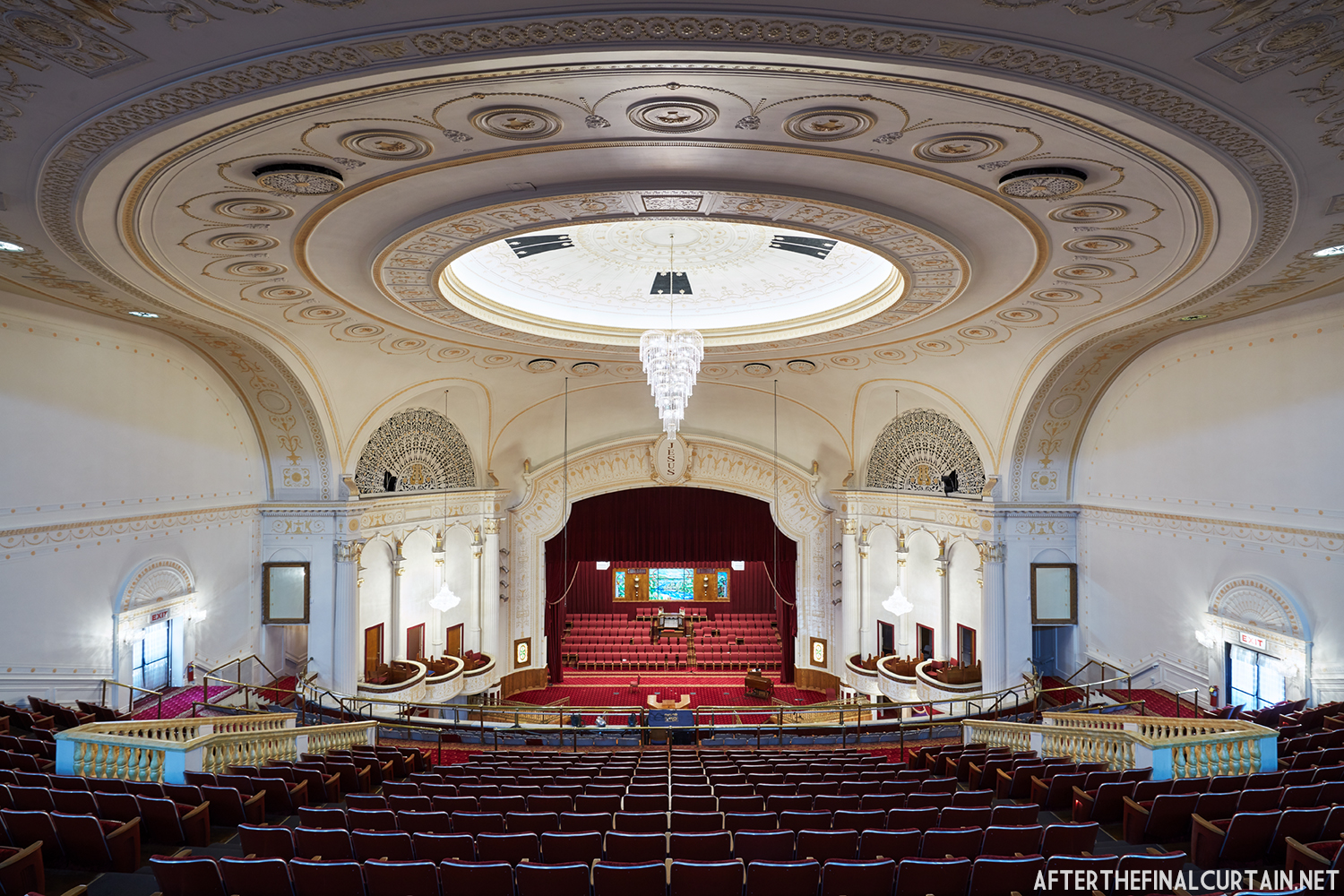
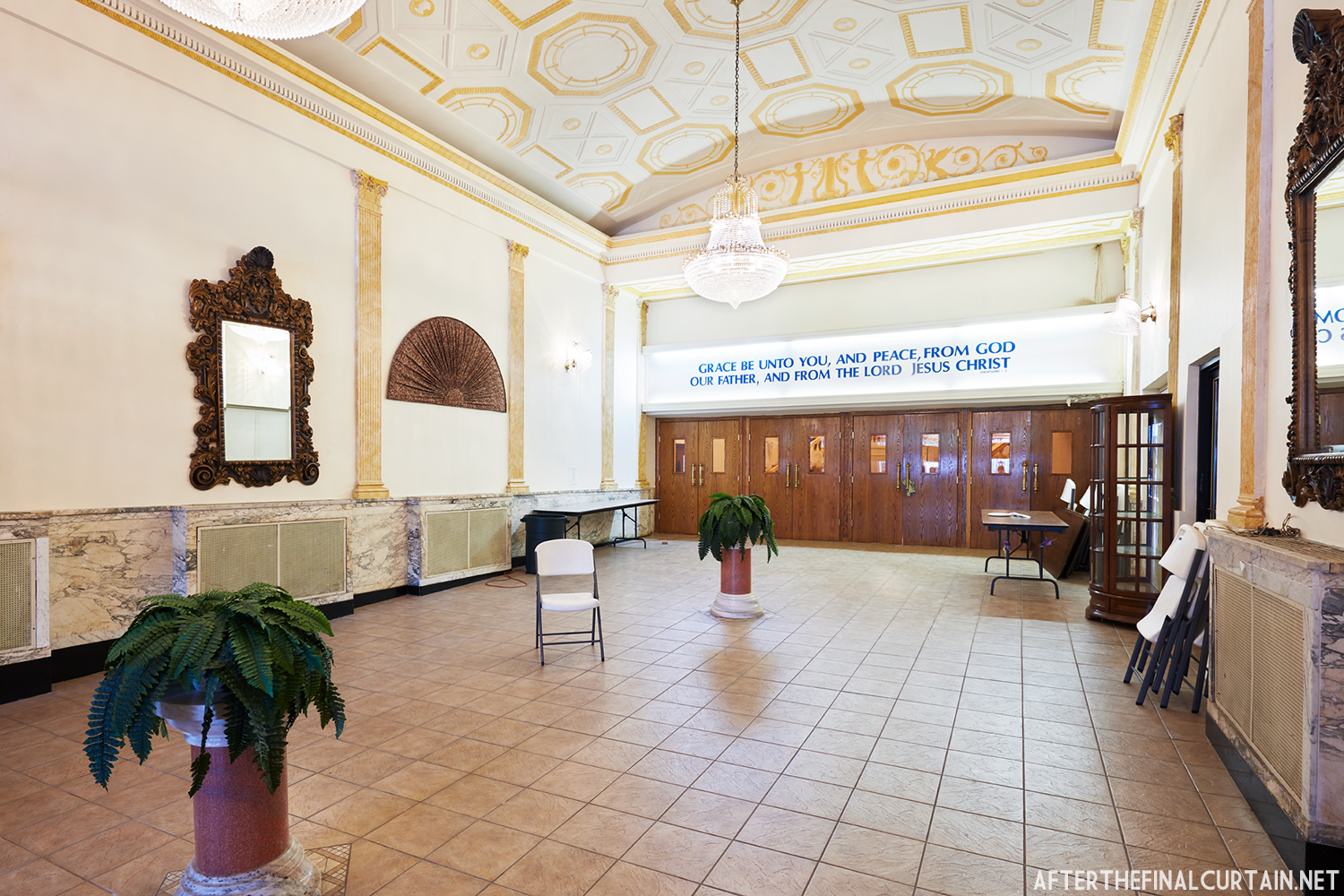
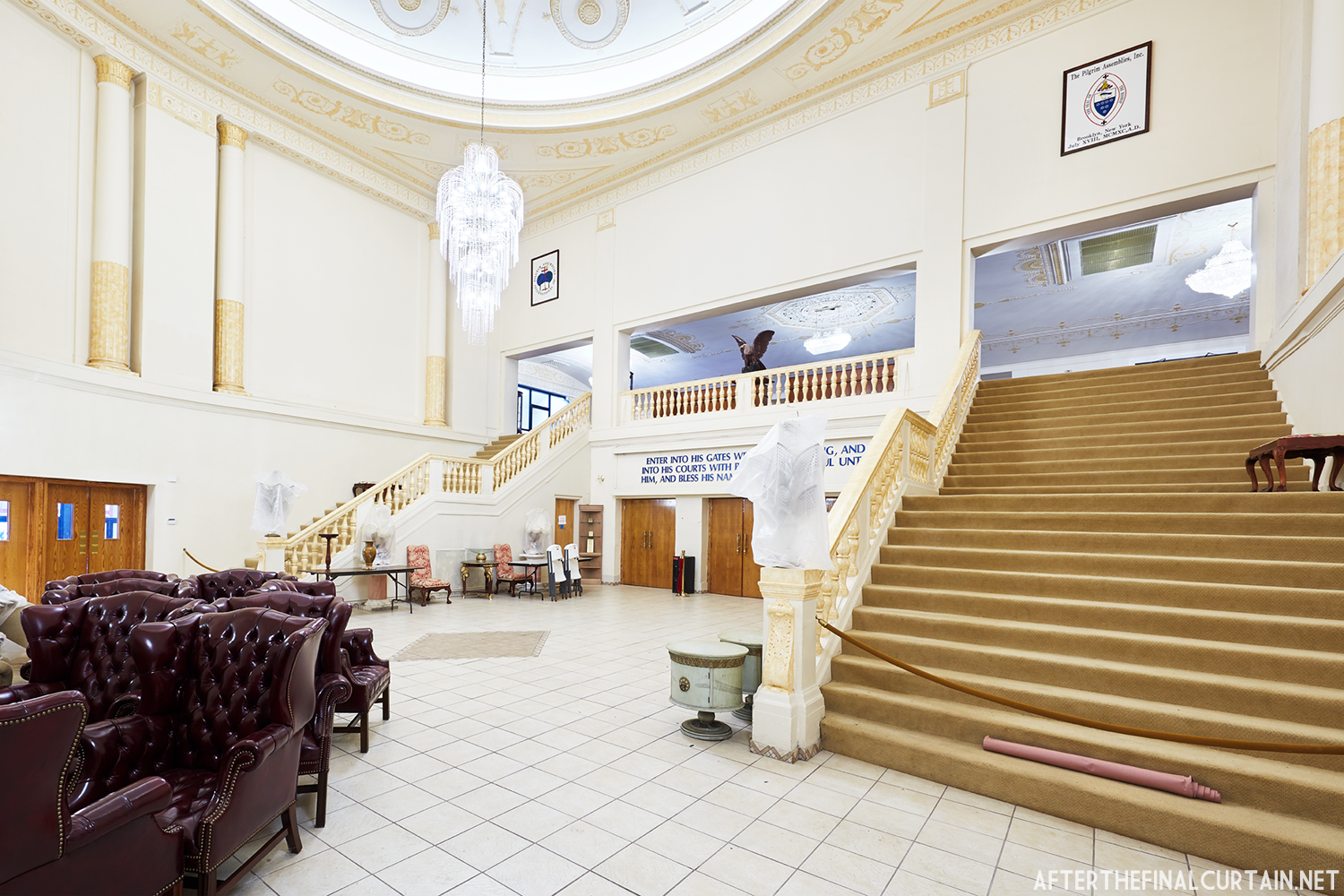
After closing, it was sold to the Triumphant Church of Jesus Christ Inc. on November 10, 1977, for just $10, with the condition that they settle an unpaid NYC tax bill of $74,000. The church, which had previously used the RKO Bushwick Theatre, moved into the Loew’s Gates, as ownership was more attainable than their prior rental situation. Under the leadership of Pastor Roy E. Brown, who also contributed to its interior design, the building was restored and remains in use as a place of worship today.
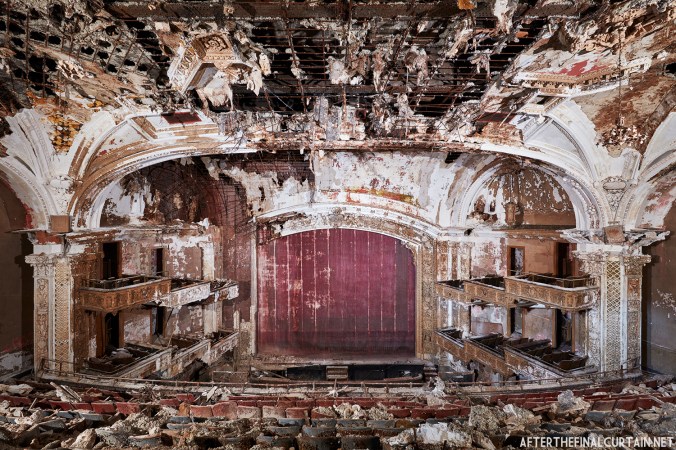
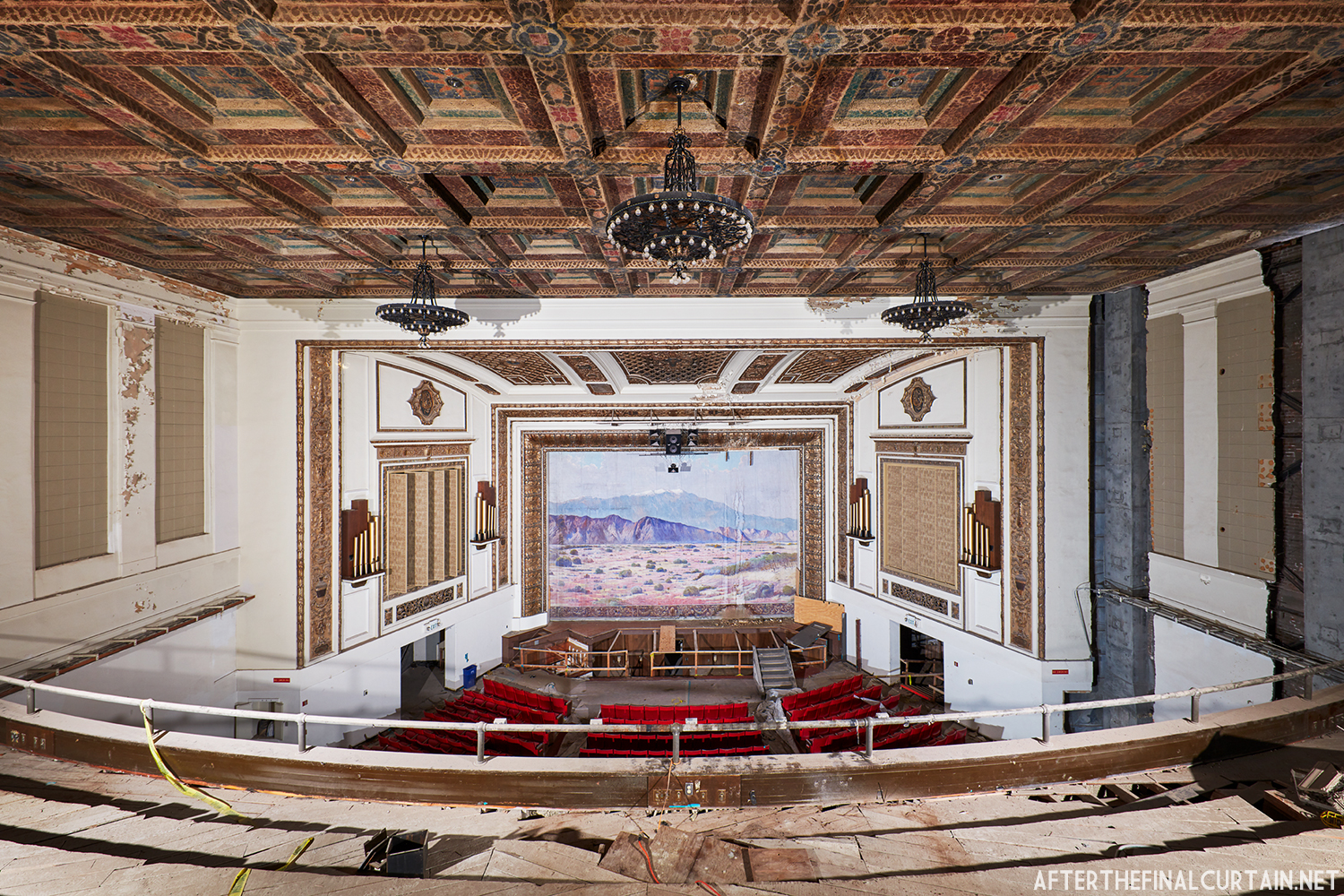
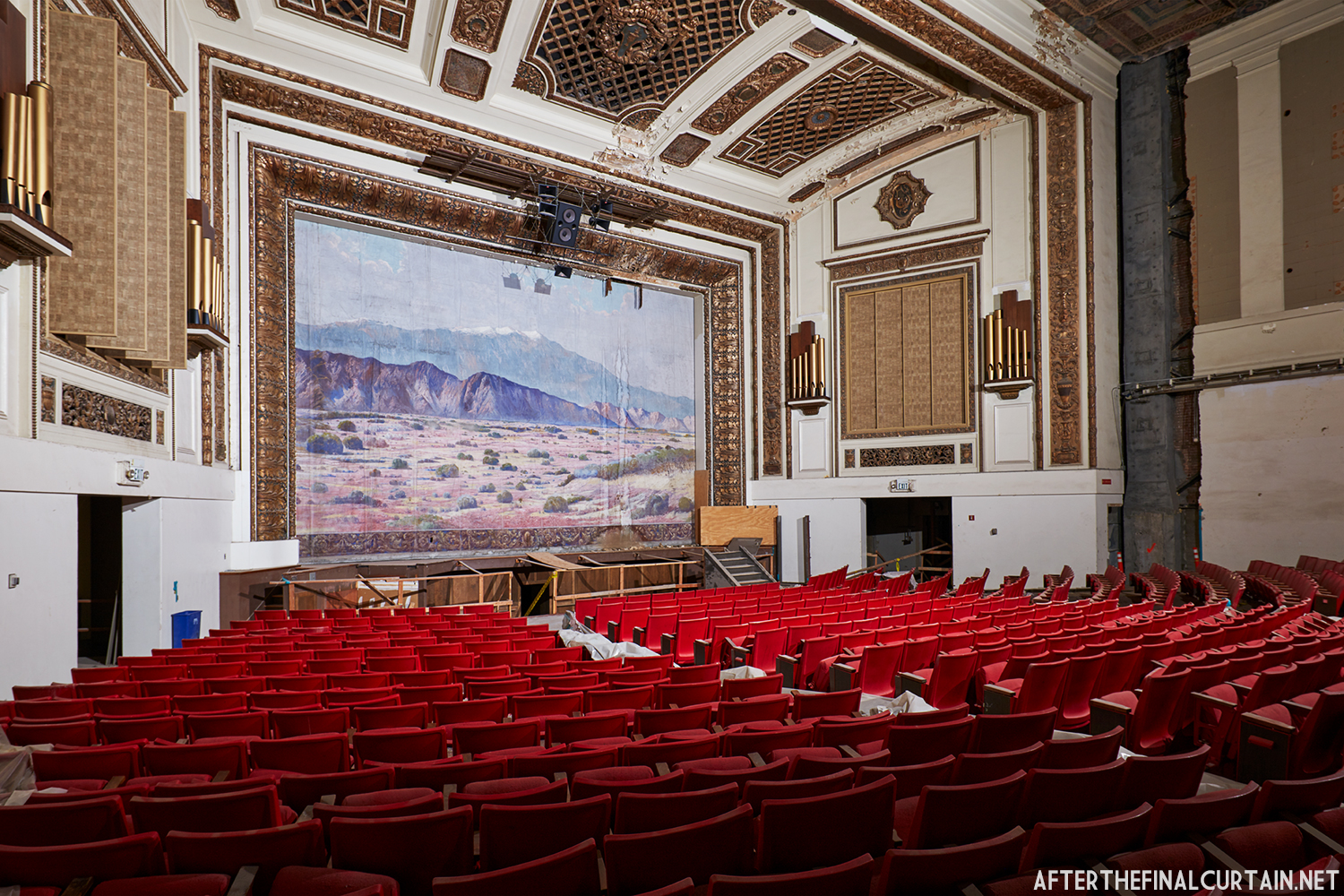
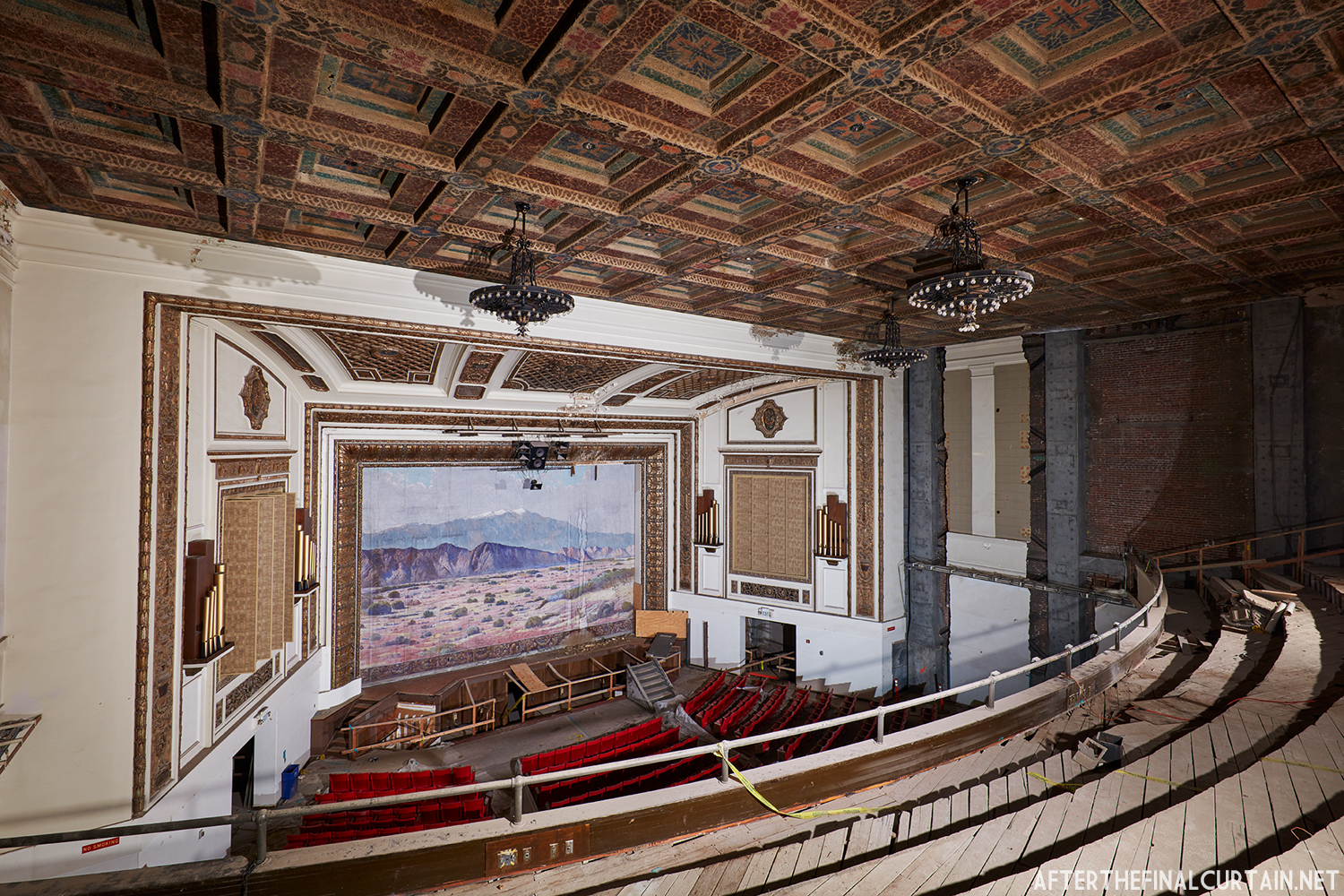
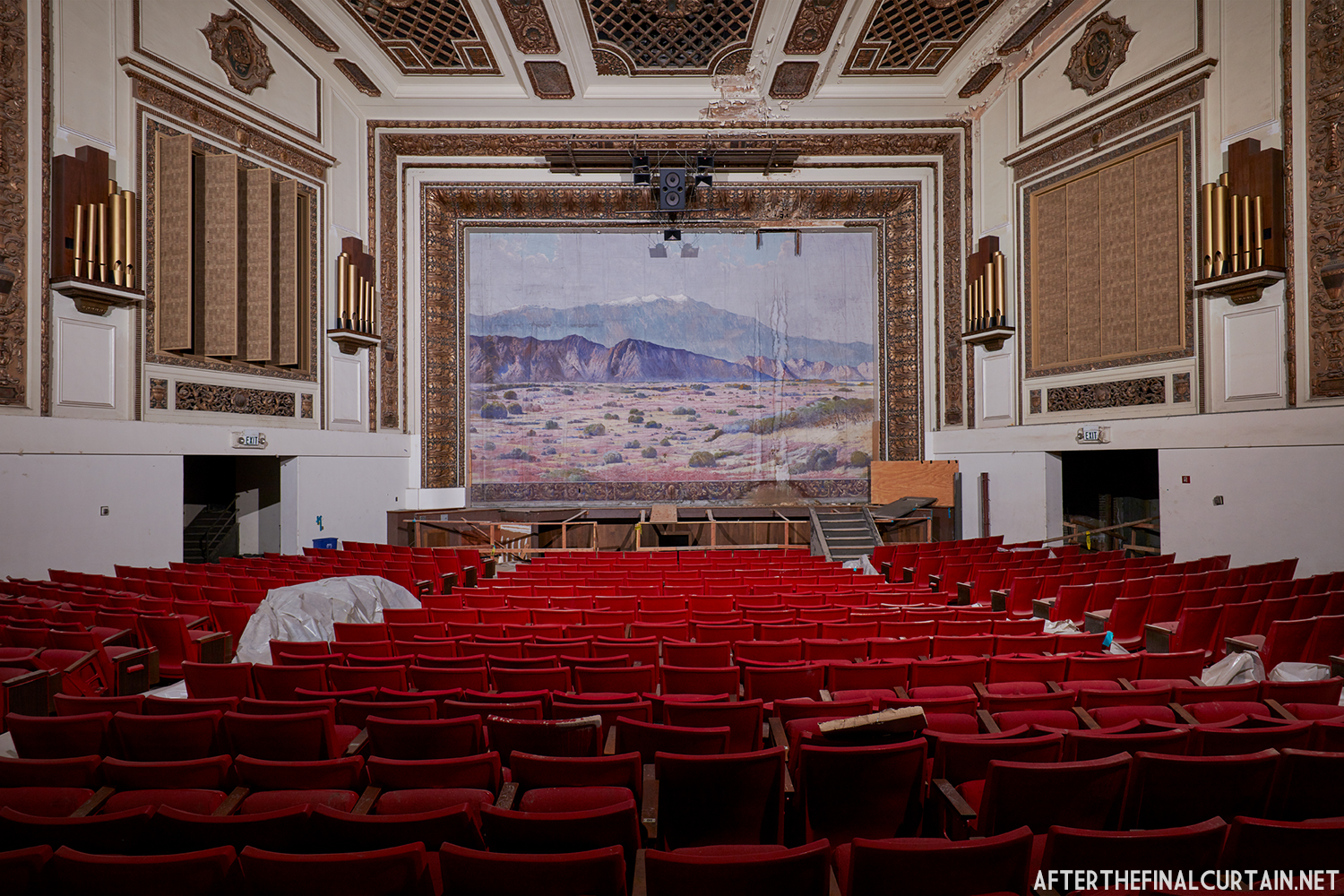
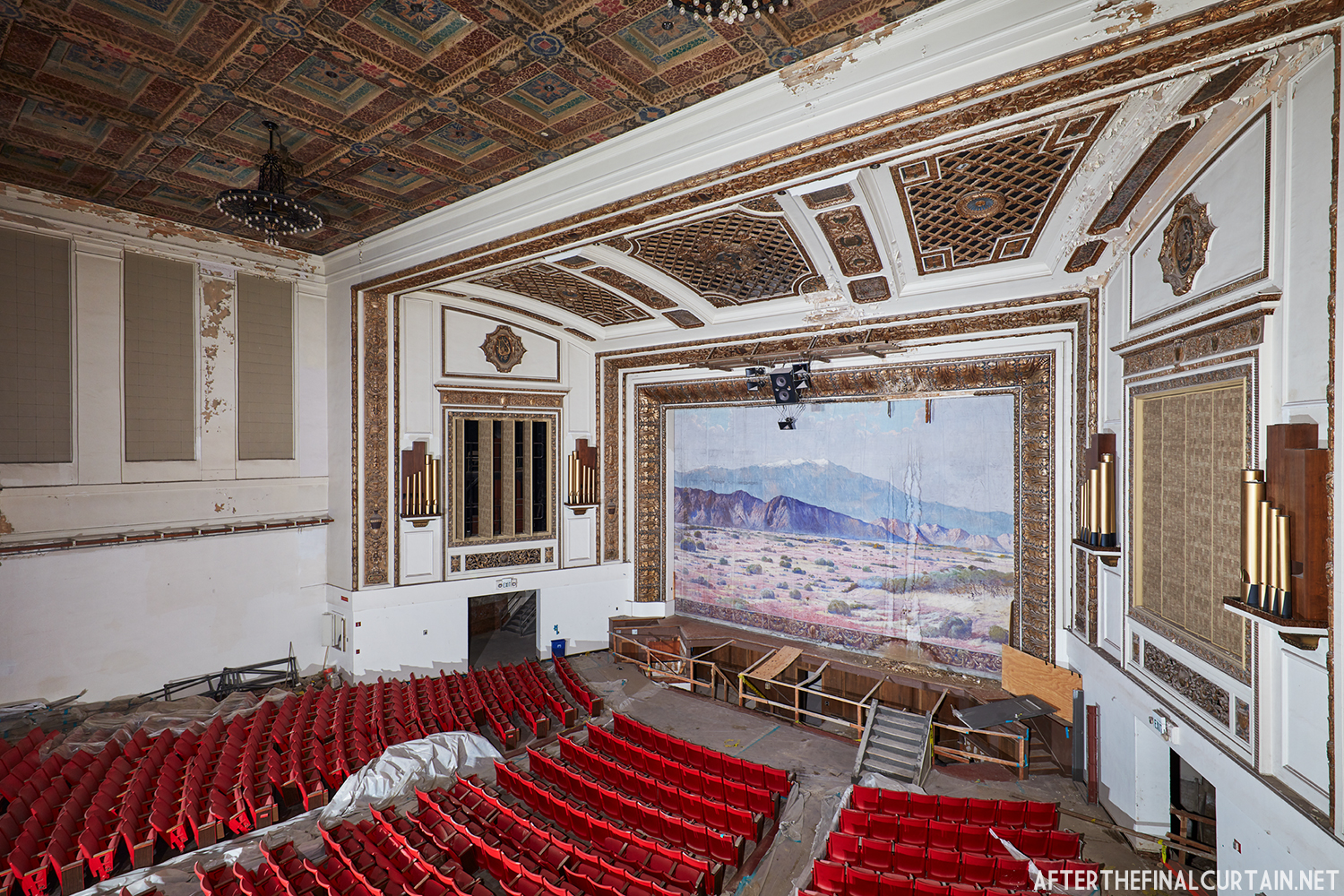
The Grand Theatre at Los Angeles Trade-Technical College opened in 1927 as part of the Los Angeles Polytechnic High School campus. Designed by A.C. Martin & Associates, the 30,000-square-foot auditorium featured a stenciled ceiling, original light fixtures, and a painted fire curtain showing Arrowhead Peak. After the high school relocated, the theater was absorbed into LATTC and used for student productions, lectures, and campus events.
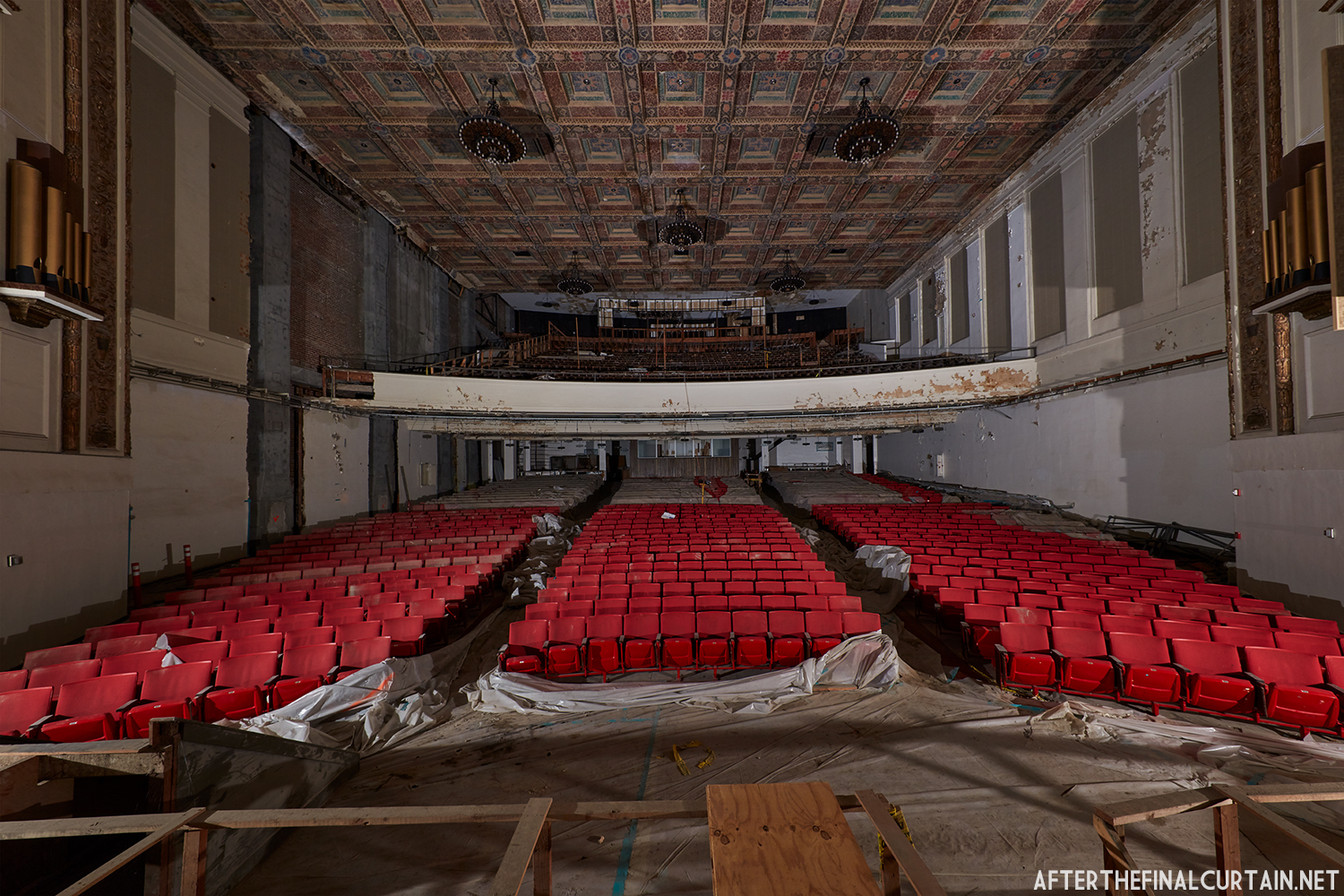
Looking back at the auditorium from the stage.
It shut down in 2009 when seismic retrofit work was abandoned, and it never reopened. Over time, water damage and mold took over. By 2022, the Los Angeles Community College District formally proposed demolition as part of a campus redevelopment plan. While the building was considered potentially historic under CEQA, the official word was that reuse wasn’t feasible or compatible with the college’s long-term goals.
Demolition began earlier this month. As of now, only the facade is still standing — but not for long. It’s all coming down to make room for a new entry plaza along Washington Boulevard, which the college says is needed for pedestrian safety and visibility. There are no immediate plans to build a replacement theater.
A longtime professor in the Humanities and Theatre department put it this way: “While the Grand Theatre was once a magnificent space, it had become infected with mold and had to be demolished for health reasons. It would have been far more expensive to attempt to save it rather than tear it down and build something new… We need a space suitable for large campus events like graduations and a theatre to accommodate our extensive fashion-design program.”
This was originally posted on After the Final Curtain’s Patreon. For expanded early posts, as well as video walkthroughs and other exclusive content, you can become a patron at: https://www.patreon.com/afterthefinalcurtain
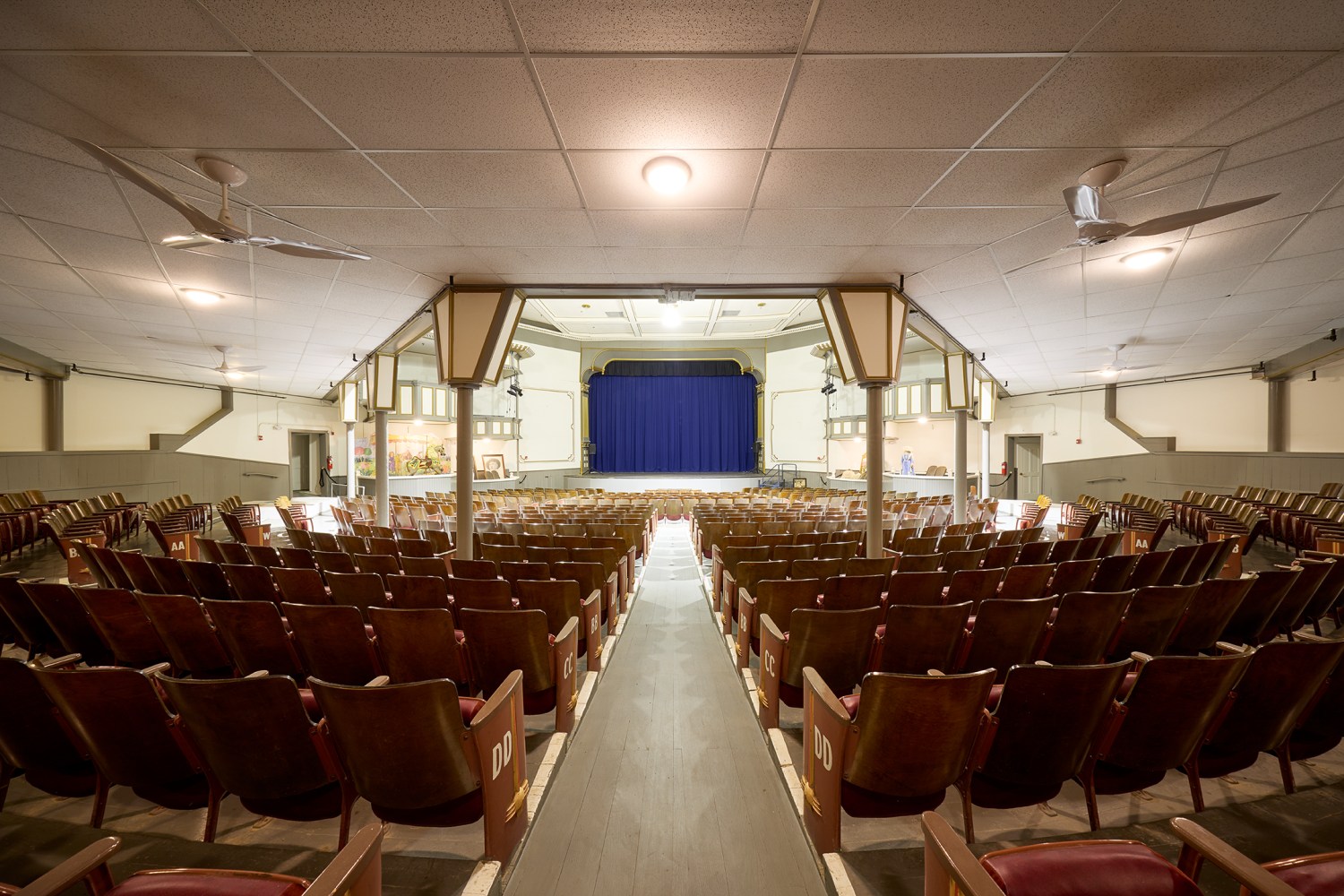
View of the auditorium from the orchestra level.
The Strand Theatre opened in downtown Clinton, Massachusetts, on Labor Day weekend in 1924, built to replace a section of High Street that had been destroyed by fire. Originally named the Philbin Theater, it hosted vaudeville acts, live performances, and silent films before transitioning to talkies in 1929. A naming contest soon after its opening led to the name that would stay with it for nearly a century. For decades, the Strand remained a key part of Clinton’s entertainment scene, offering a mix of live shows and films while competing with other theaters in town.
By the late 1970s, changing entertainment trends and declining attendance forced the Strand to close, leaving its doors shuttered for almost twenty years. In 1995, a full-scale renovation transformed the space into a cinema draft house, allowing audiences to watch second-run and classic films while enjoying food and drinks. Some seating was removed to accommodate small tables, but much of the historic charm remained intact. Open six nights a week, the Strand once again became a popular fixture in downtown Clinton, offering an alternative to larger, corporate-owned theaters. The MGM Theatre Report from 1941 documented its original layout of 1,112 seats—715 in the orchestra and 397 in the balcony—confirming its place as a major venue in the area.
View of the auditorium from the side of balcony.
The COVID-19 pandemic forced the Strand to close in March 2020, and although it reopened in May 2021, attendance never fully recovered. On December 31 of that year, it held its final film screening before closing once again, leaving a significant gap in Clinton’s downtown. Determined to revive the theater, town officials secured $100,000 in state American Rescue Plan Act (ARPA) funds and set aside an additional $300,000 in local ARPA funding. However, in order for the funding to be used, a new owner must be willing to invest an equal amount. Another $70,000 from the Local Rapid Recovery Plan has been allocated to restore the Strand’s iconic marquee, which has long served as a visual anchor on High Street.
The effort to restore the Strand aligns with Clinton’s larger downtown revitalization project, which has included $4.5 million in infrastructure improvements such as new sidewalks, streetlights, and pedestrian-friendly spaces. Town officials believe the theater could play a key role in attracting visitors to the area, not just as a movie house, but as a multi-use entertainment venue. A retractable screen could allow for concerts, comedy shows, or theatrical performances, making the space more adaptable to modern audiences. A stage already exists behind the movie screen but remains inaccessible in its current configuration. The building is currently for sale.
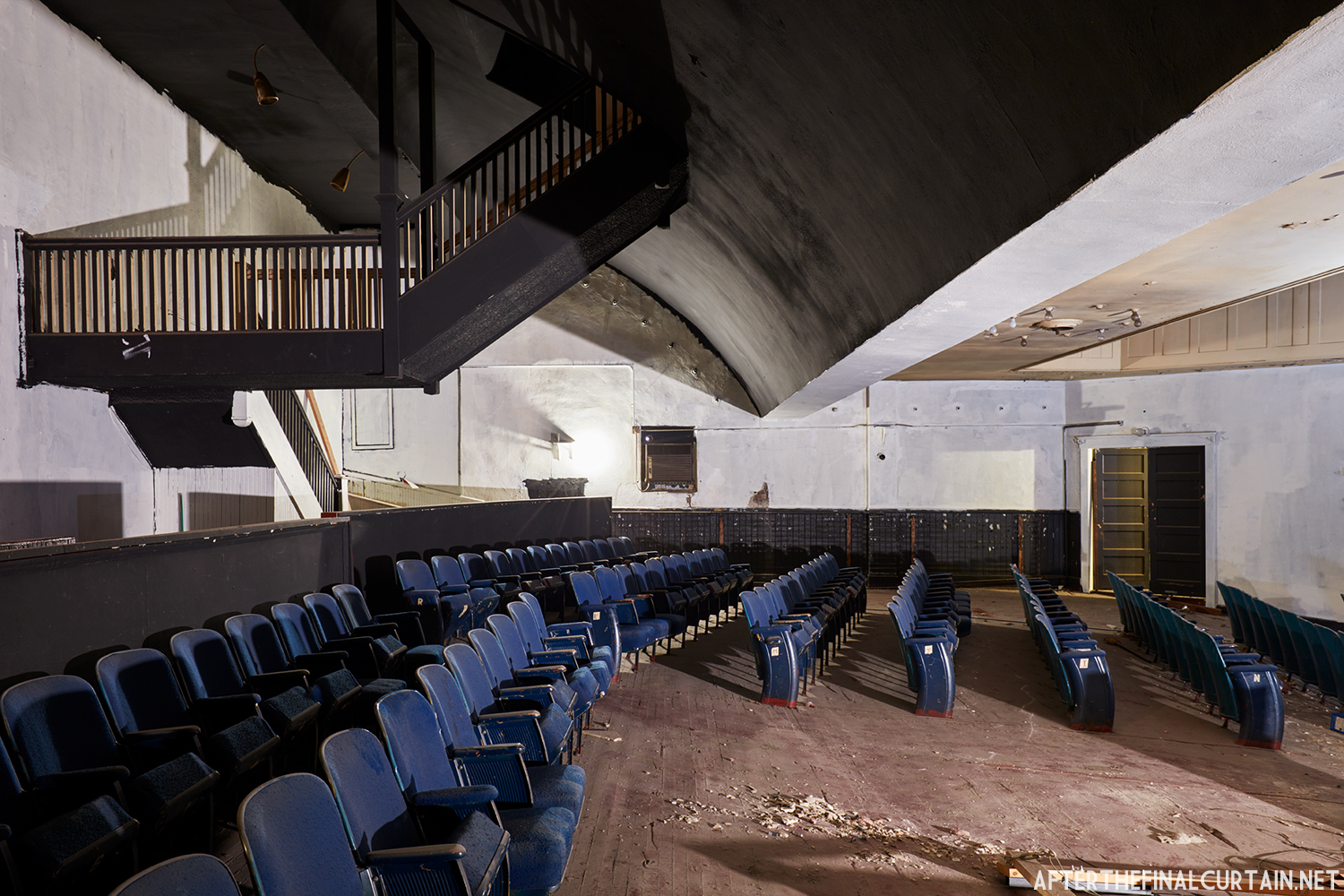
Some of the original seats remain in the balcony.Not much remains in the projection booth.
The oldest surviving theater in Worcester, Massachusetts, the Olympia Theatre originally opened on August 17, 1891, as Lothrop’s Opera House. Designed by architects Cutting & Forbush the theater sits tucked away on a side street in what is now known as Worcester’s theater district. ” Before its grand opening, women were invited for an exclusive preview of the venue’s stunning architecture and decor, accompanied by Worcester’s first all-female orchestra—an unusual occurrence for the time.
The theater made its debut with “The Specter Bridegroom” and “Queena.”
The theater saw multiple closures and reopenings throughout its early years. It closed for the first time in 1900, and reopened in 1904, and closed again the following year. In late 1906, a renovation plan was announced by architectural firm Cutting, Carleton & Cutting, the same firm that originally designed the theater. It reopened on June 12, 1907, as Lynch’s Pleasant Street Theatre. By the 1910s, silent films became the dominant form of entertainment, and the theater was renamed Pleasant Street Theater. On August 18, 1919, it was rebranded again as Olympia Theatre under the operation of E.M. Loew’s Theaters Inc.
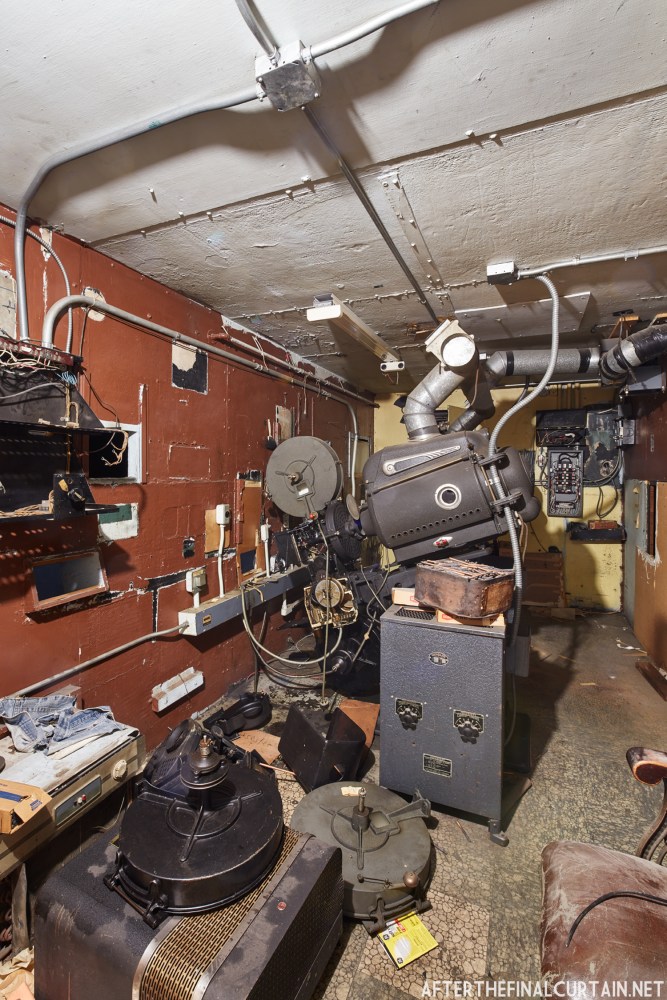
The projection room was not original to the theater, and was added when it was converted to show motion pictures.
Throughout its history, the Olympia Theatre witnessed many milestones. It played a crucial role in early cinema promotions, including record-breaking sales of promotional cards for “Her Husband’s Trademark.” Creative marketing campaigns, such as the footprint stunt for “Souls for Sale” and telephone advertising, contributed to its success. In May 1926, the theater fell victim to professional safecrackers who stole $2,000—equivalent to over $35,000 today.
Al Jolson, who later became a Hollywood legend, once found himself stranded in Worcester after a failed performance at the Olympia Theatre.
The Olympia continued evolving with the times. On May 30, 1956, after a month-long closure for refurbishment, it reopened as the Fine Arts Theatre, premiering “Les Diaboliques” and later showcasing other foreign art-house films. Opening with a mix of classic and cutting-edge foreign films, Fine Arts remained a downtown entertainment option for years. However, by the time it closed its doors on April 2, 1984, it had become known for showing X-rated films like “When A Woman Calls” and “That Lady From Rio.” It later transitioned into the New Art Cinema, an adult theater, before ultimately closing for good in January 2006.
The Olympia is Worcester’s oldest surviving theater. In August 2019, Patrick Flynn and Jennifer Wright launched a campaign to purchase the vacant building and turn it into the “Olympia Music Hall & Grill,” a 1,000-seat venue and restaurant for touring and local musicians. Their efforts, however, fell short of the $400,000 needed to secure the deal. Two years later, in September 2021, the building was sold for $527,400 to a local family. The new owners plan to reopening the Olympia as a performing arts center that will showcase films, musicians, and other live performances. The new owner’s website is https://www.wootheatre.org/.
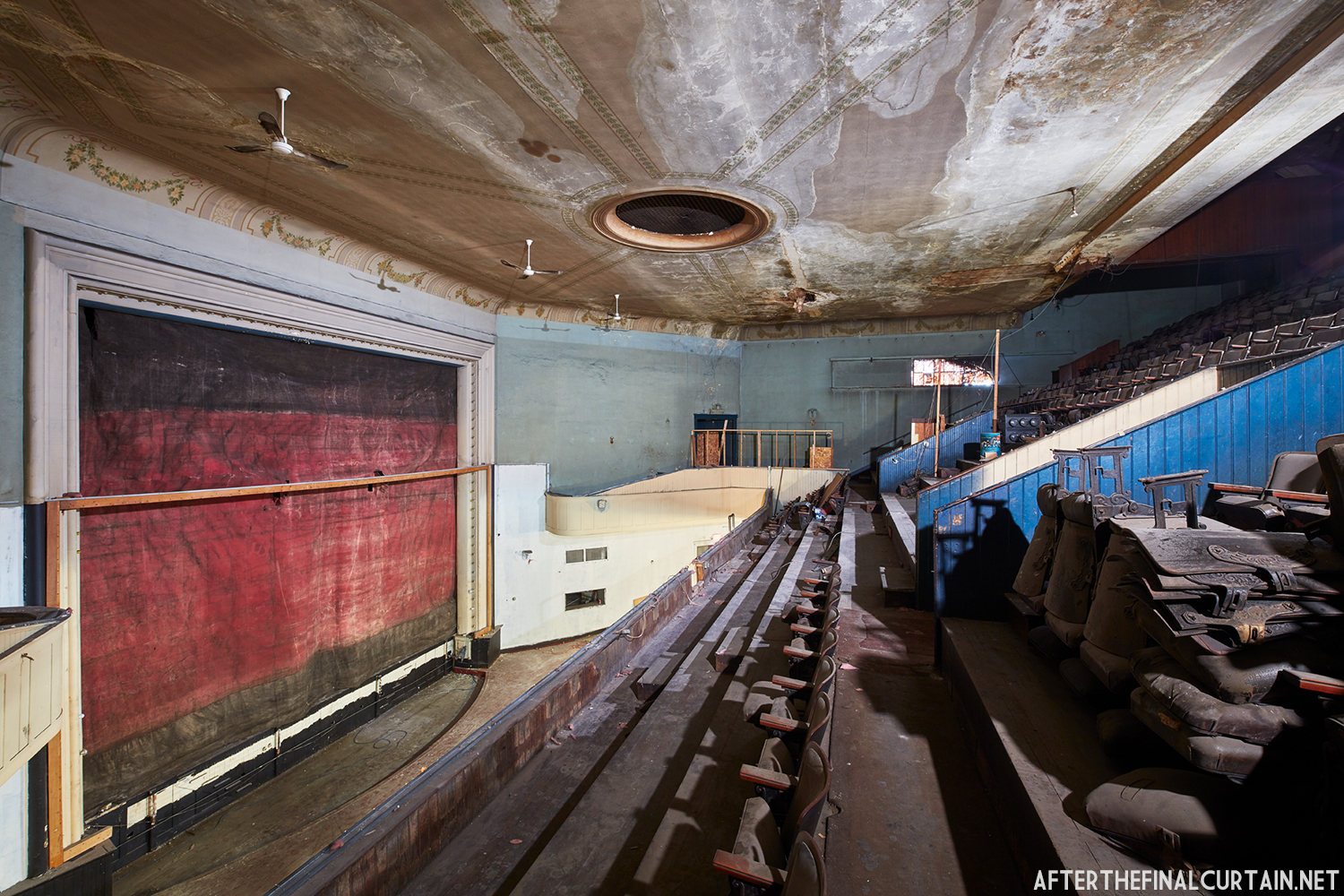
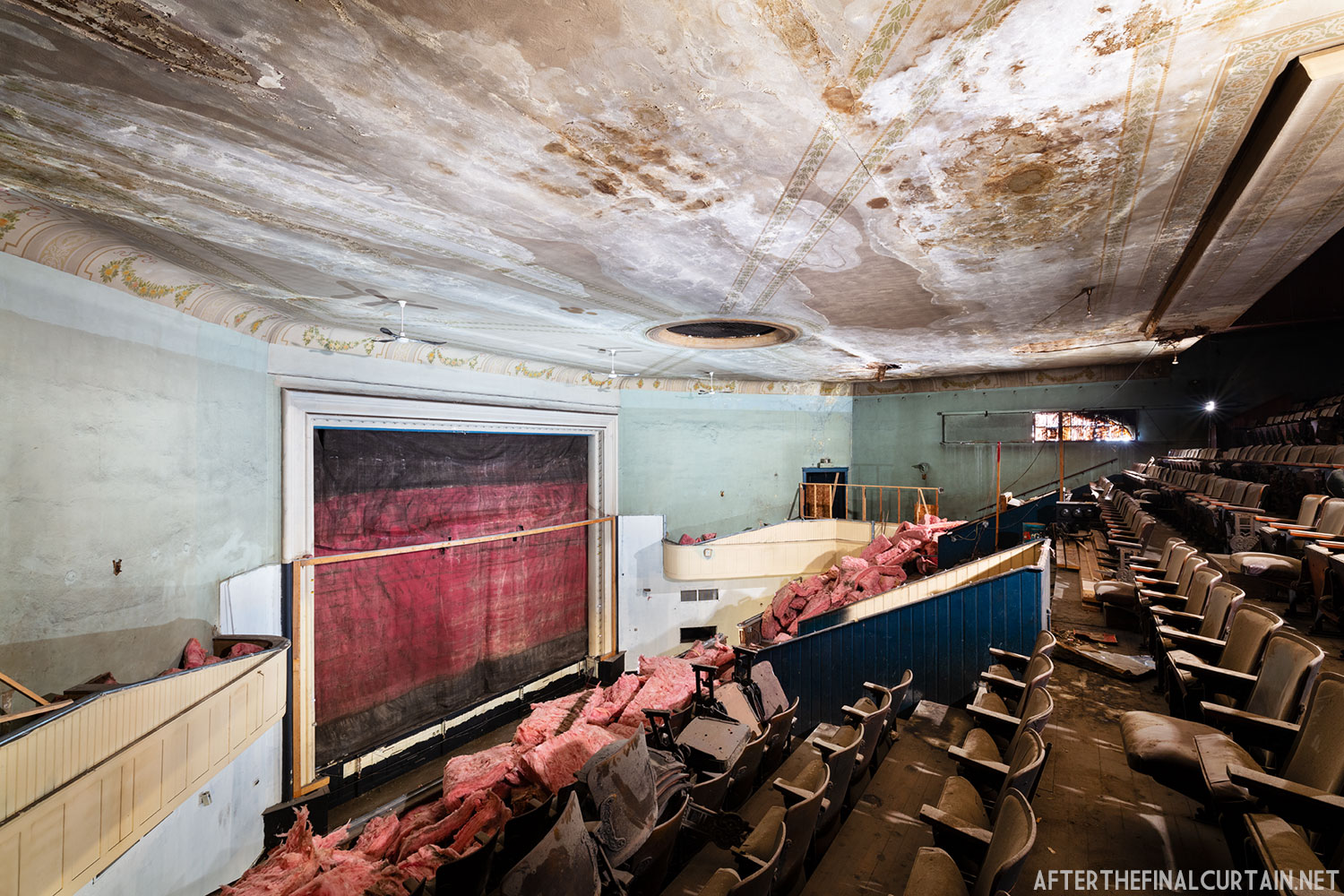
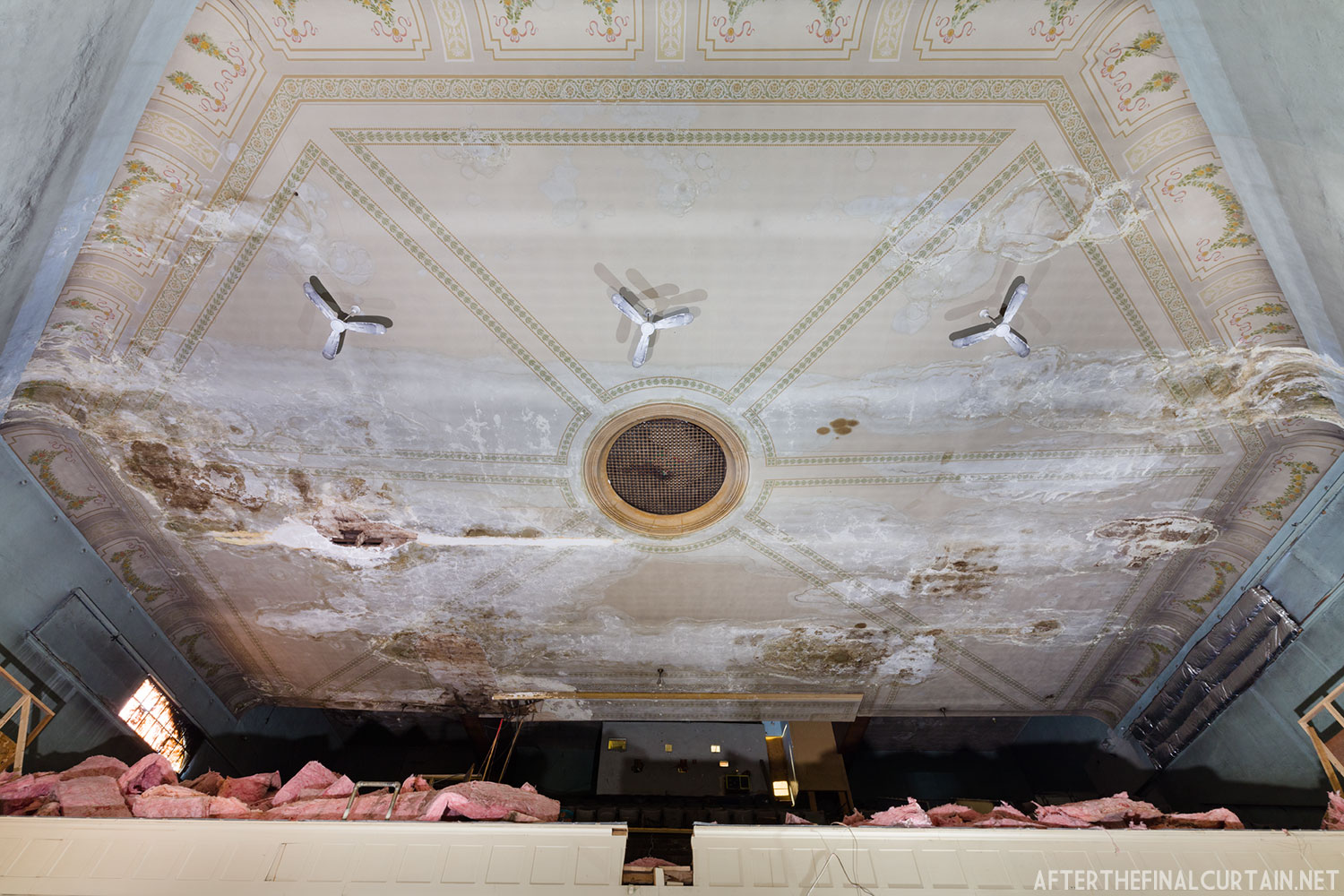
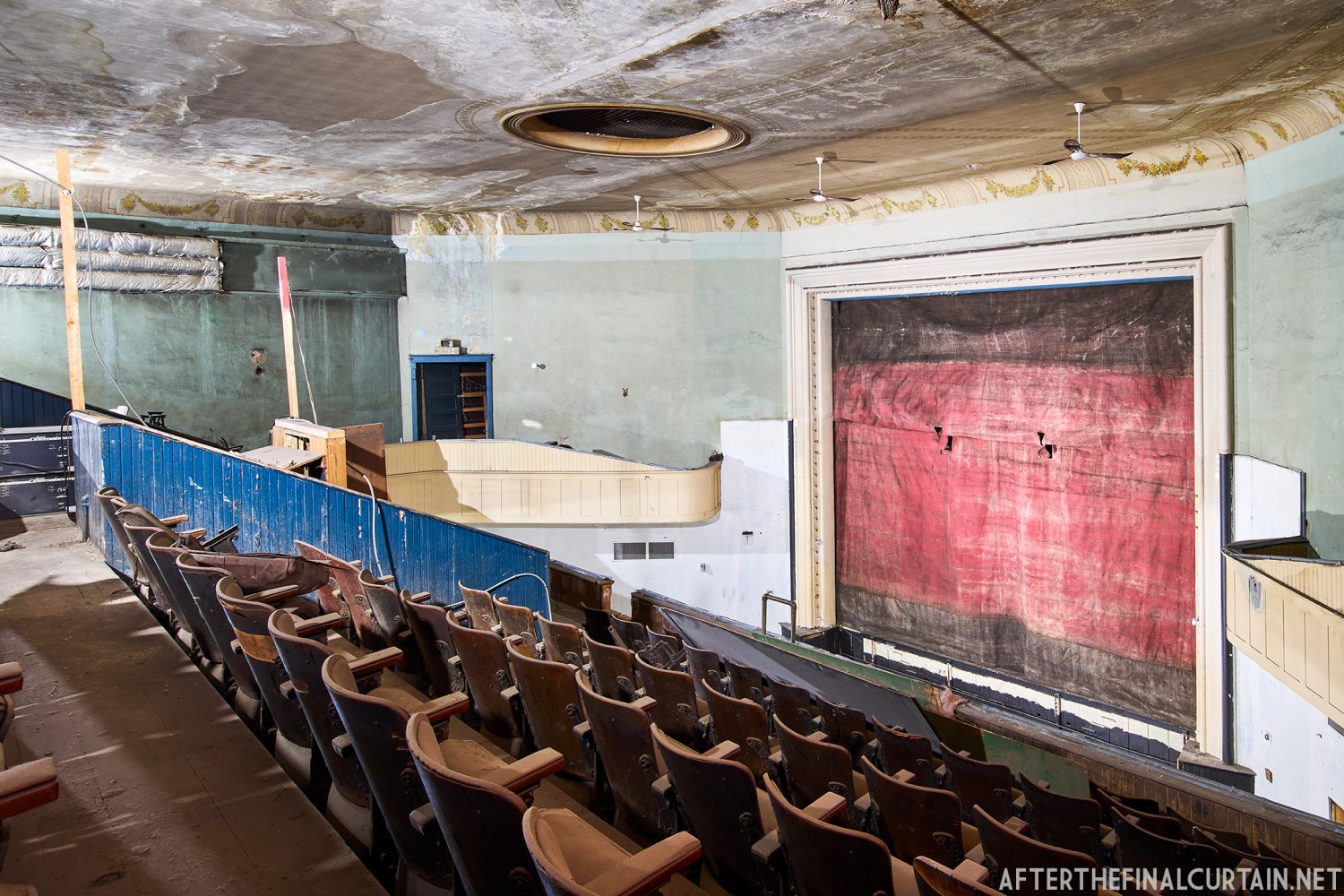
The balcony was sealed off when it was the New Art Cinema, and insulation was put in the balcony to keep the orchestra level warm.The Olympia has a very shallow stage. It’s around 8 feet deep.View of the auditorium from the side of the balcony.
This was originally posted on After the Final Curtain’s Patreon in August 2024. For expanded early posts, as well as video walkthroughs and other exclusive content, you can become a patron at: https://www.patreon.com/afterthefinalcurtain
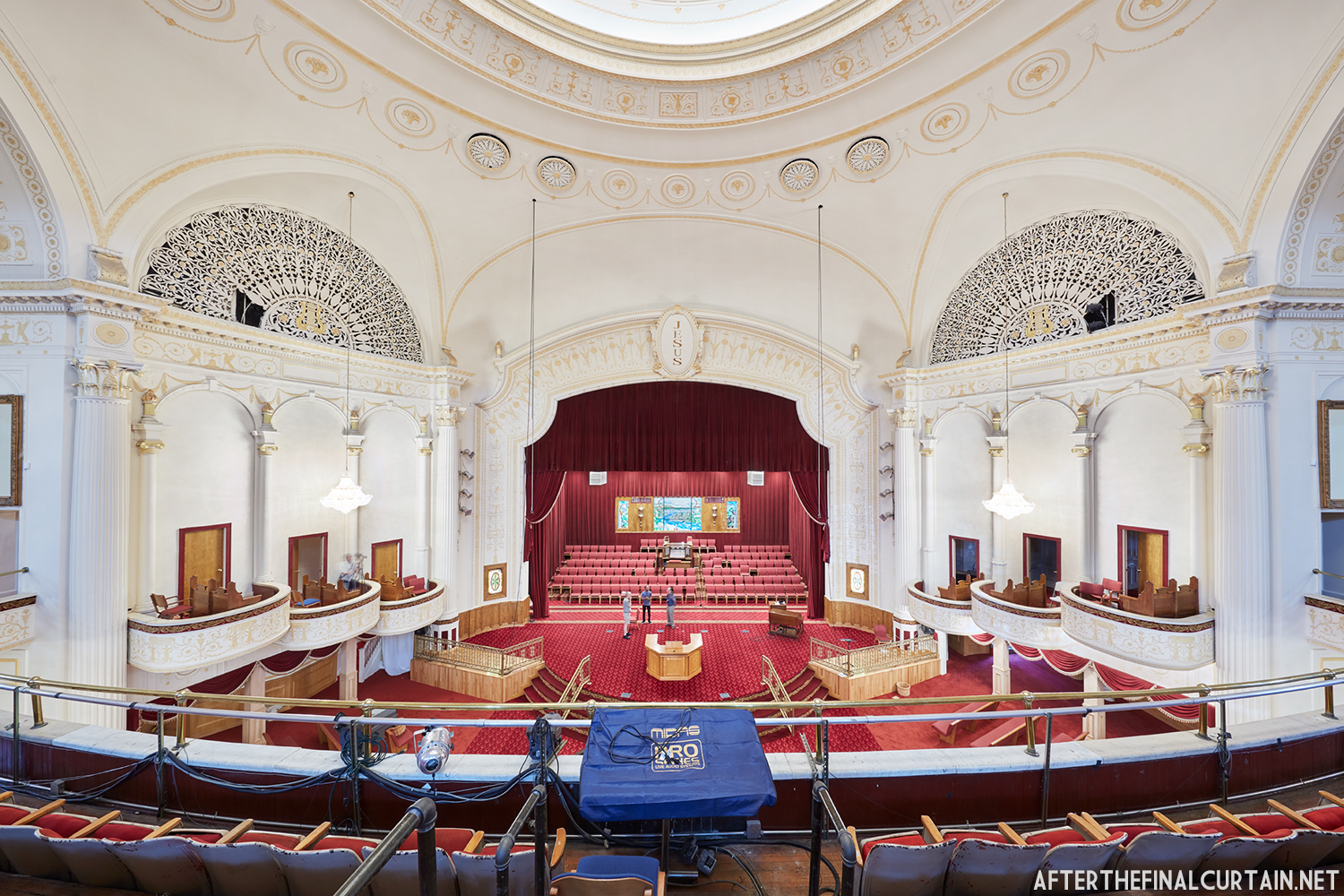
View of the auditorium from the side of the balcony.
On October 31, 1916, the Lincoln Square Theatre in Decatur, Illinois opened its doors. Designed by the local architectural firm of Charles J. Aschauer and Arthur M. Waggoner, it featured the Art Nouveau and Beaux Arts styles, which were popular at the time. The theater was considered fireproof, constructed of steel, concrete, and fireproof brick. It originally seated nearly 1,400 people and was equipped with a Barton theatre organ, featuring two 3-manual consoles. The public got its first glimpse of the theater during an event in early October 1916, with its formal grand opening occurring on October 27, 1916. The first performance featured George M. Cohan’s stage comedy “Hit-The-Trail-Holliday” starring Frank Otto and “My HomeTown Girl” starring John Hyams and Leila McIntyre.
In February 1926, the theater hired a 12-member orchestra to accompany stage productions and silent films. By June 1929, the theater “talkies” arrived in Decatur, first at the Empress Theater. The Lincoln began showing talkies 14 months later, marking the end of its vaudeville days.
Harry Blackstone, a famous magician, performed at the theater in September 1942. During his performance, a fire broke out at a neighboring drugstore. Blackstone cleverly and calmly evacuated the theater, convincing the audience of schoolchildren that they were part of a magic trick. No injuries were reported. Over the years, many famous performers graced the stage of the Lincoln Square Theatre, including Ethel Barrymore, and Bob Hope. Houdini was rumored to have performed at the Lincoln, but there’s no evidence to back that up. In March 1960, a fire heavily damaged the lobby, which was rebuilt a few months later.
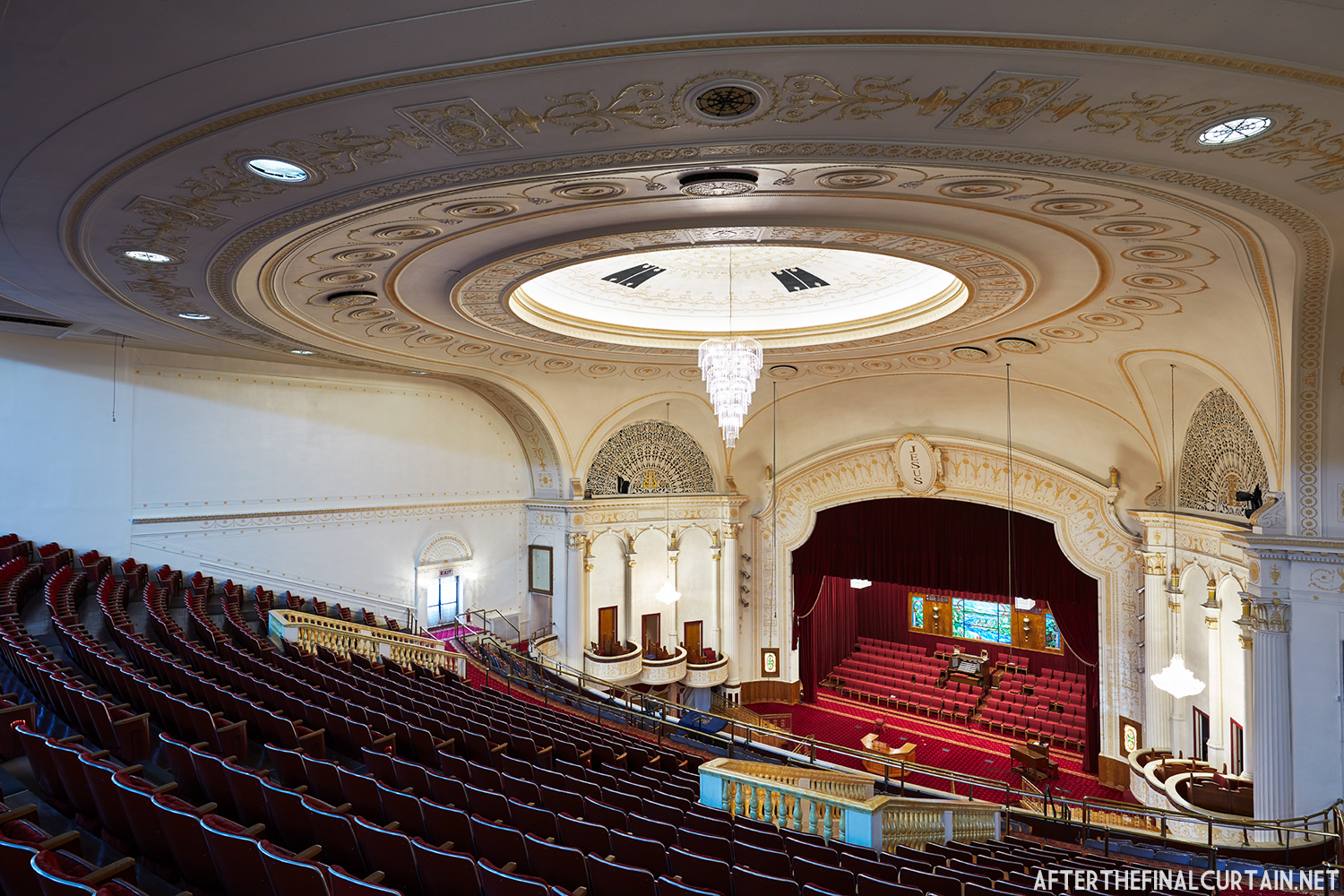
View of the auditorium from the center of the balcony.
The theater was sold in 1974 to Plitt Theaters Inc., and later passed to the Kerasotes chain. The Kerasotes chain leased the building on a month-to-month basis until 1980, when their lease was terminated. Before leaving, Kerasotes removed much of the theater’s valuable equipment, leaving the projectors and speakers in disrepair.
Travel Channel’s Most Terrifying Places in America filmed an episode at the theater, dubbing it one of the most haunted theaters in the United States.
Throughout the 1990 and 2000s, efforts to restore the Lincoln Square Theatre began. It reopened for a few years but the theater closed in May 2017, unable to complete full restoration. However, in 2021, a nonprofit group called “Friends of the Lincoln Square Theater” (FotLSQ) took over the project. The theater reopened as a concert venue in 2022. The FotLSQ has repainted much of the theater, replaced the curtains, and the seating on the main level.
*I didn’t photograph the lobby as the original was destroyed, and the new one was not interesting.
As we step into 2025, I’m excited to share what’s on the horizon for After the Final Curtain.
Workshops in 2025
This year, I’m introducing destination workshops designed for those who share a passion for photographing and preserving historic spaces. While I’ll still host a few local sessions, the focus will be on two major events: one in late spring/early summer and another in the fall. Each workshop will take place at multiple locations, giving us a chance to capture and celebrate the beauty of historic theaters in different settings. Whether you’re a seasoned photographer or just starting out, these workshops will be a fantastic opportunity to refine your skills and immerse yourself in these architectural gems.
Patreon: Exclusive Content for Theater Enthusiasts
For those who want even more, my Patreon page is the place to be. Many of my 2025 posts are already available there, including expanded features, behind-the-scenes insights, and video walkthroughs of historic theaters. Patreon also gives you early access to new content and a closer look at my creative process. If you’re as captivated by historic theaters as I am, I’d love to have you join the community! You can sign up here: https://www.patreon.com/afterthefinalcurtain.
Monthly Posts on After the Final Curtain
I’ve been hard at work finishing up my posts for 2025 and am already scheduled through August—just a few months left to go! Here on the main site, I’ll continue to share one post a month. These will highlight the history, beauty, and stories behind some of the most incredible theaters I’ve visited. Whether you’re following along here or on Patreon, there’s plenty to look forward to.
Thank you for your continued support and shared passion for historic theaters and photography. I’m so grateful to have this community and can’t wait the next year brings.
Here’s to another year of preserving and celebrating these remarkable spaces!




 After the Final Curtain