This post was originally posted on After the Final Curtain’s Patreon in September 2021. For expanded early posts, as well as video walkthroughs and other exclusive content you can become a patron at: https://www.patreon.com/afterthefinalcurtain
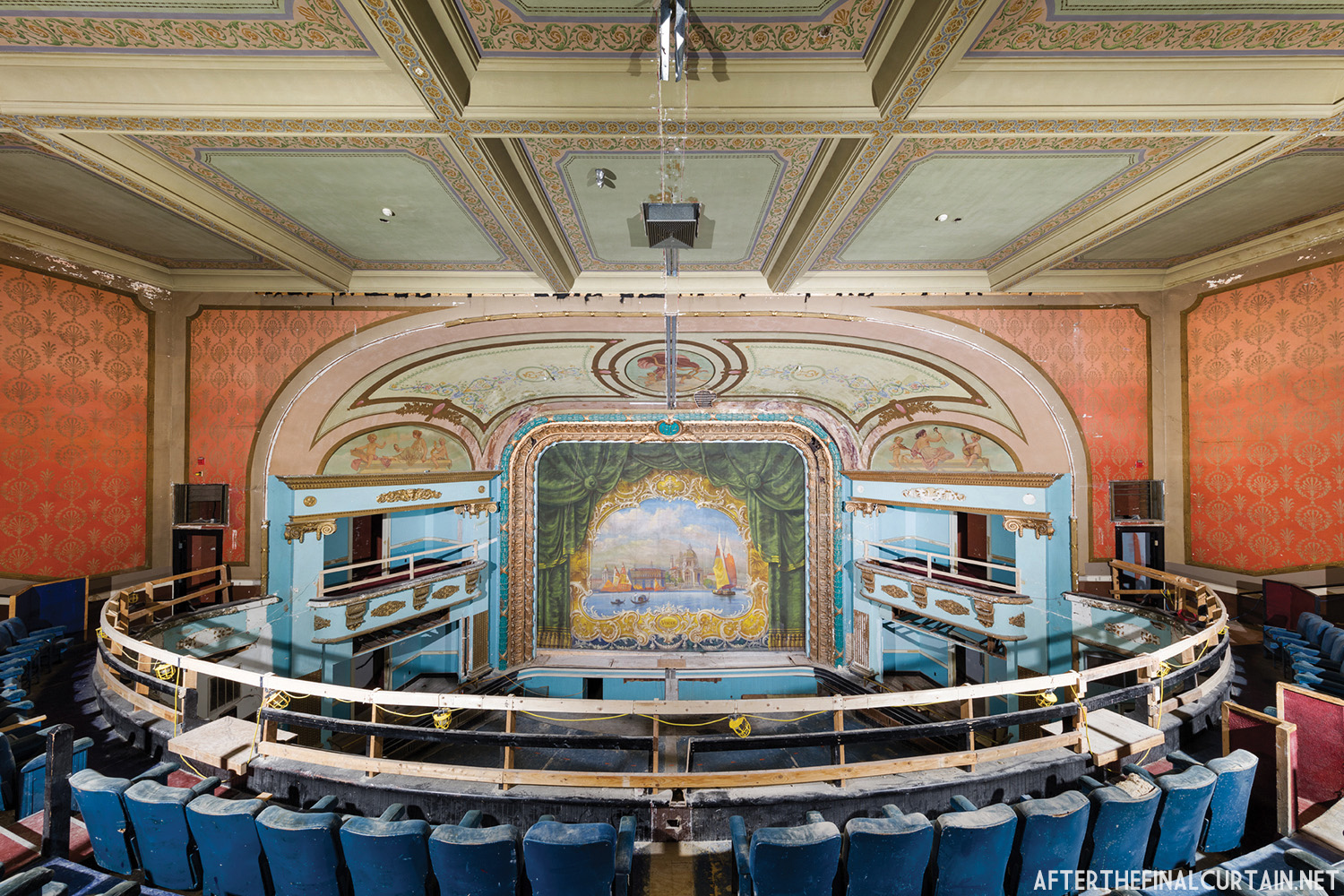
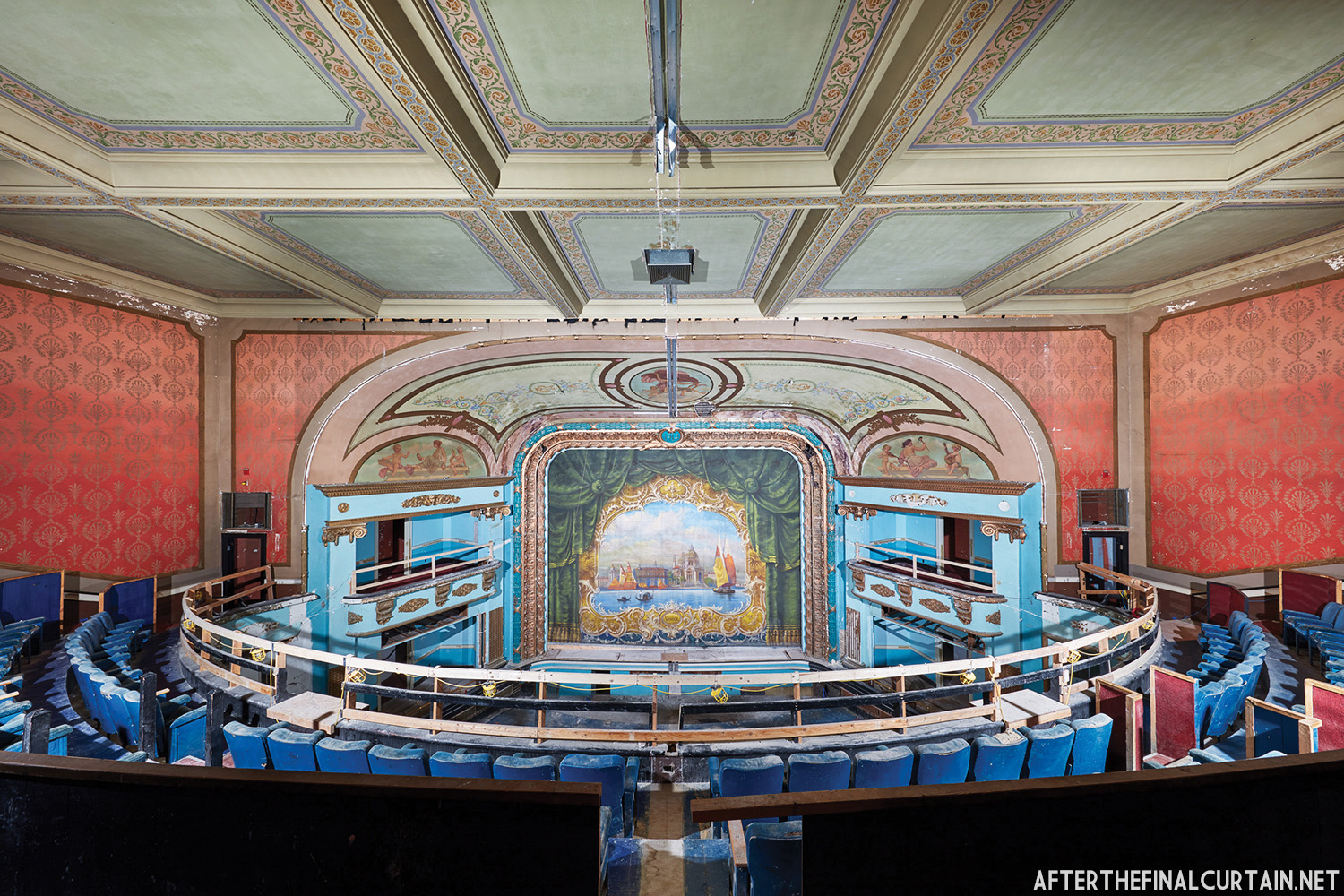
View from the balcony before restoration.
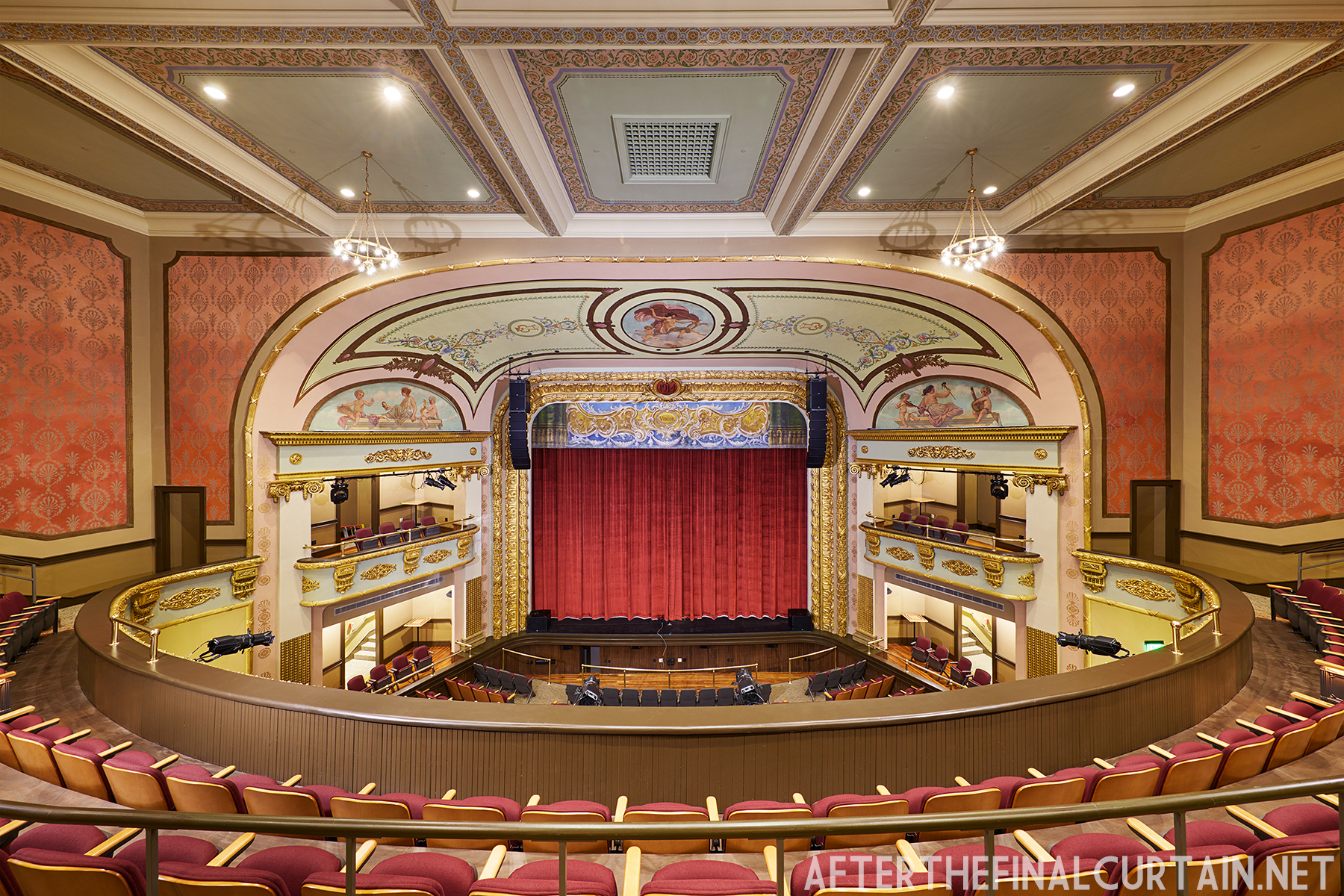
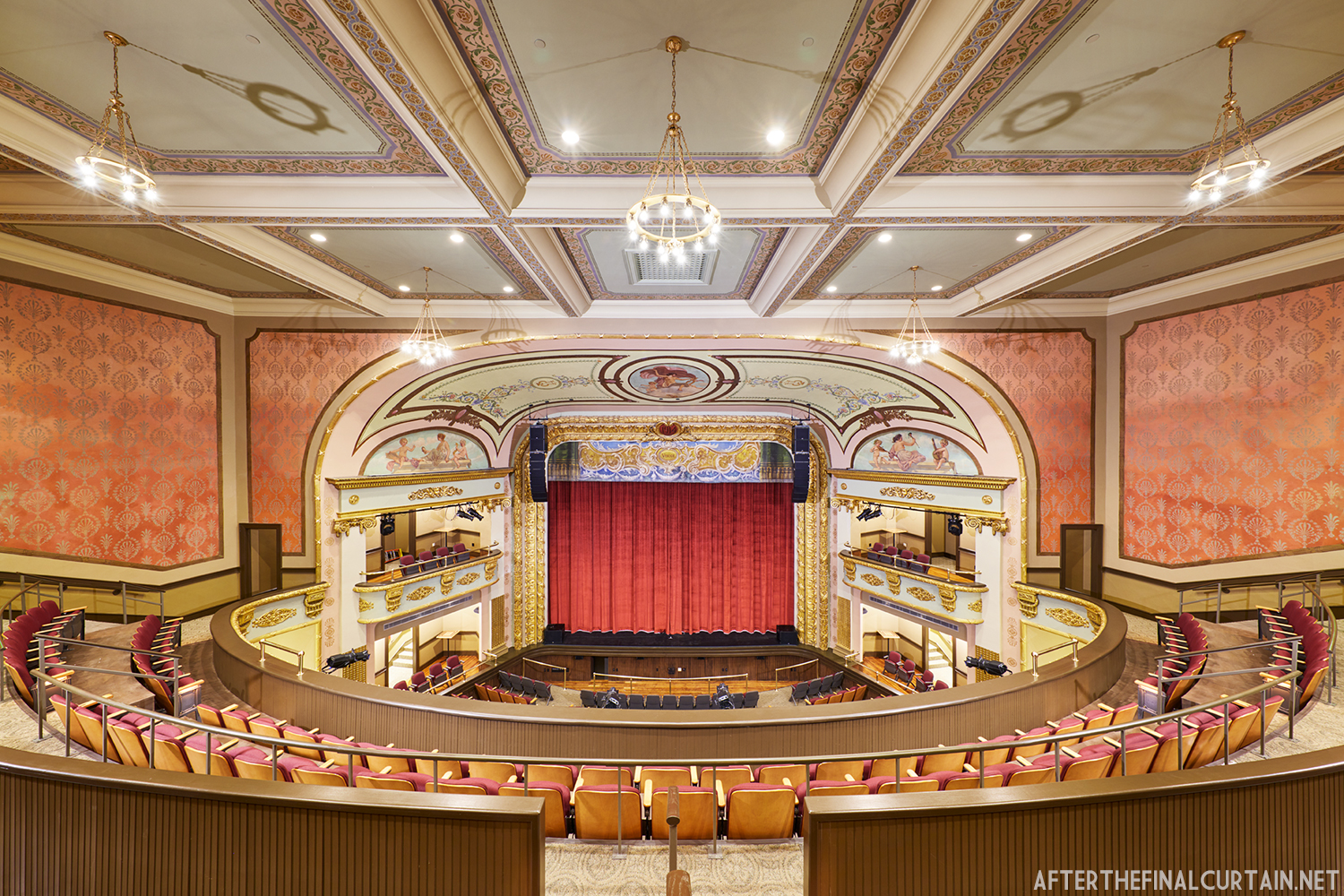
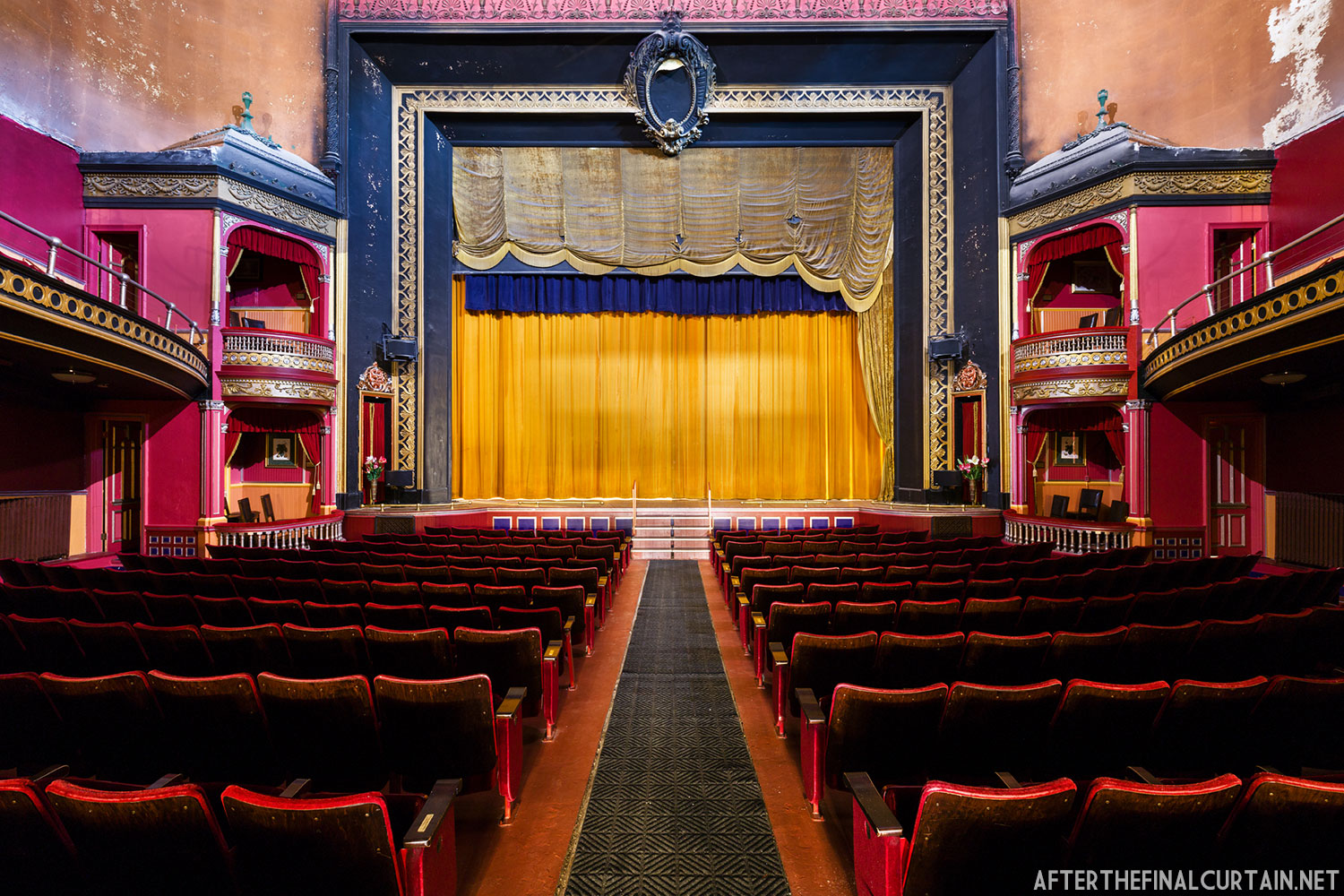
View from the balcony after restoration.
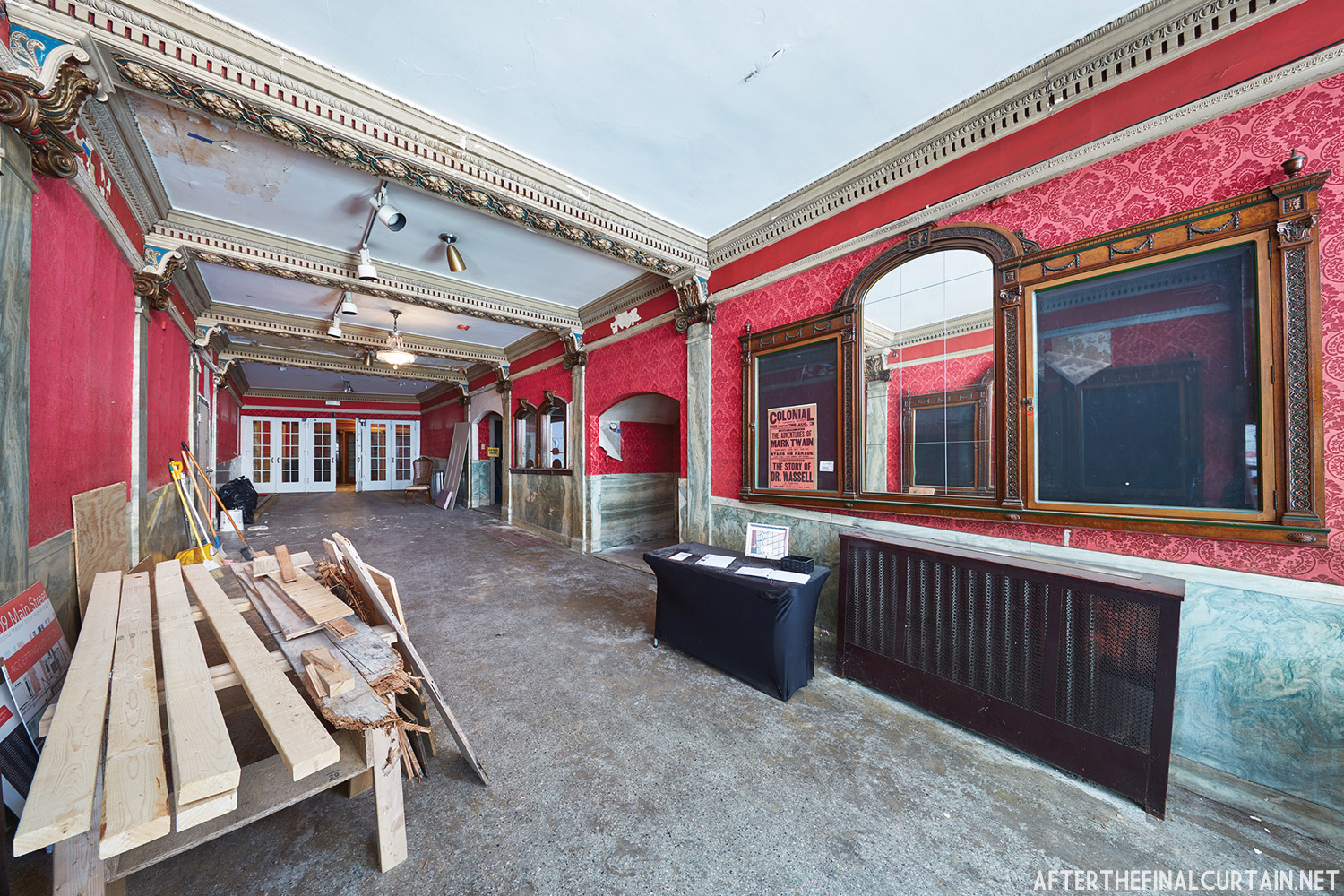
I’ve been photographing theaters for long enough that many have been completely restored and reopened since I first visited them. The Colonial Theatre in Laconia, NH, is one of those I have documented before, during, and after restoration.
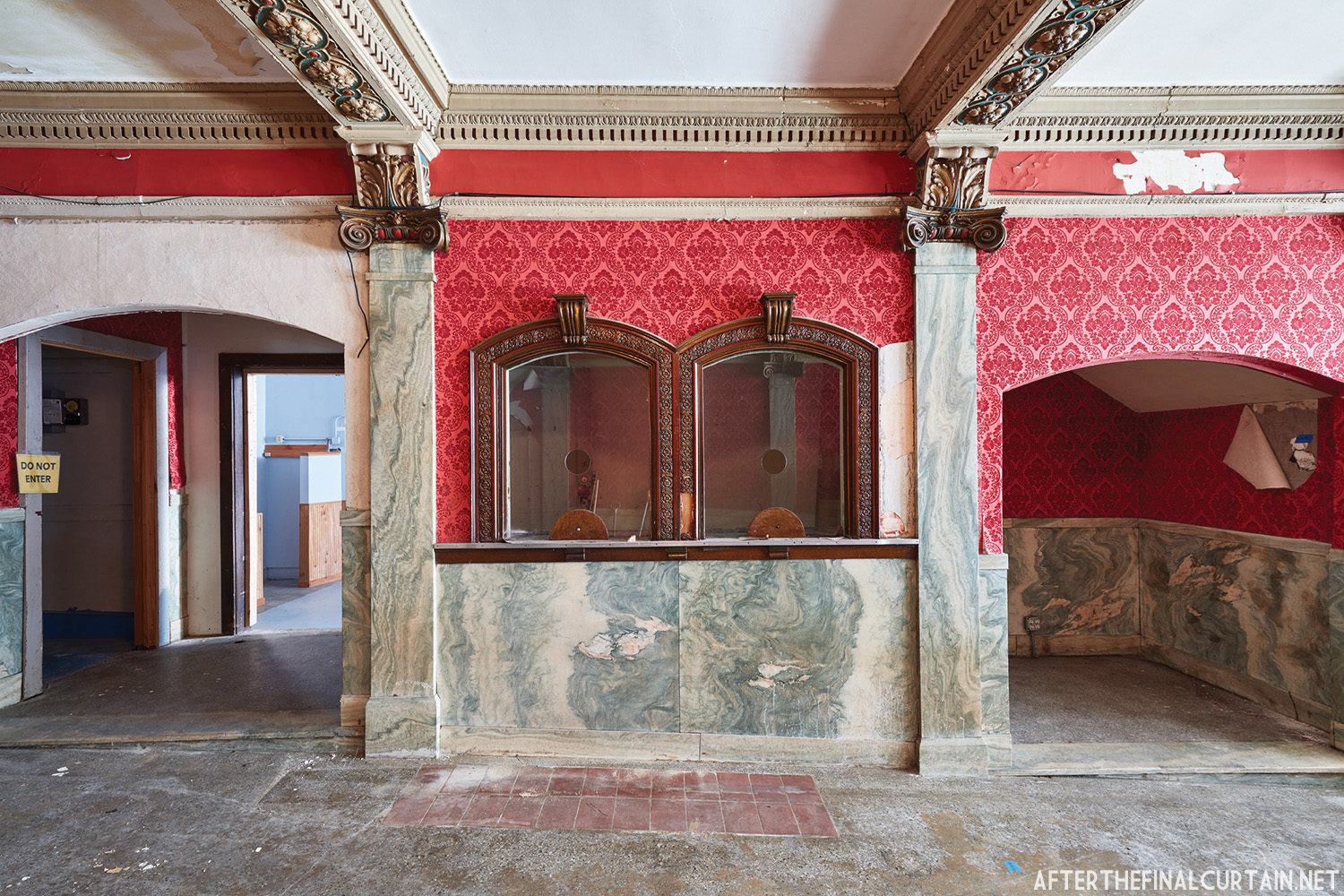
The lobby when I first visited the theater in early 2019.
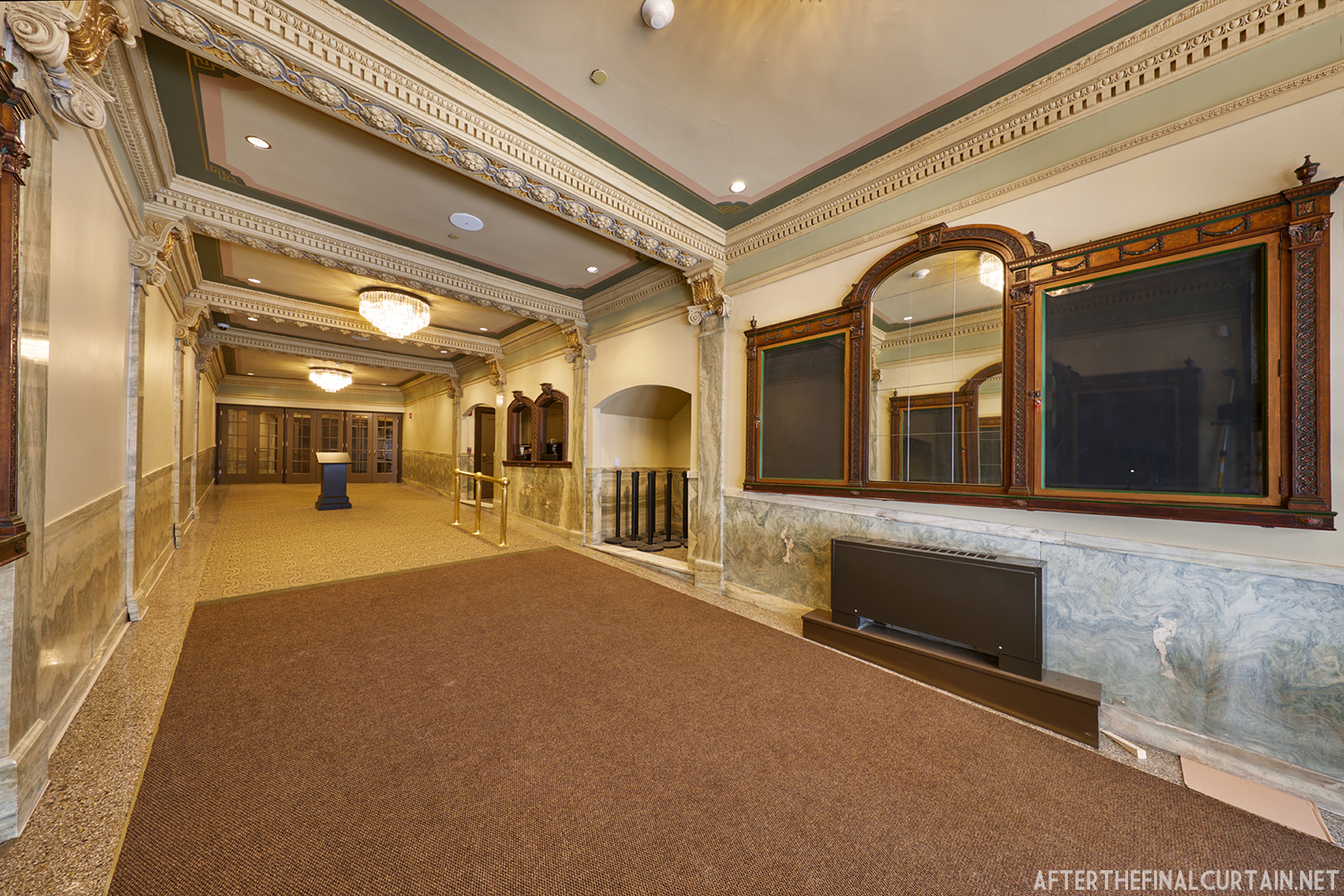
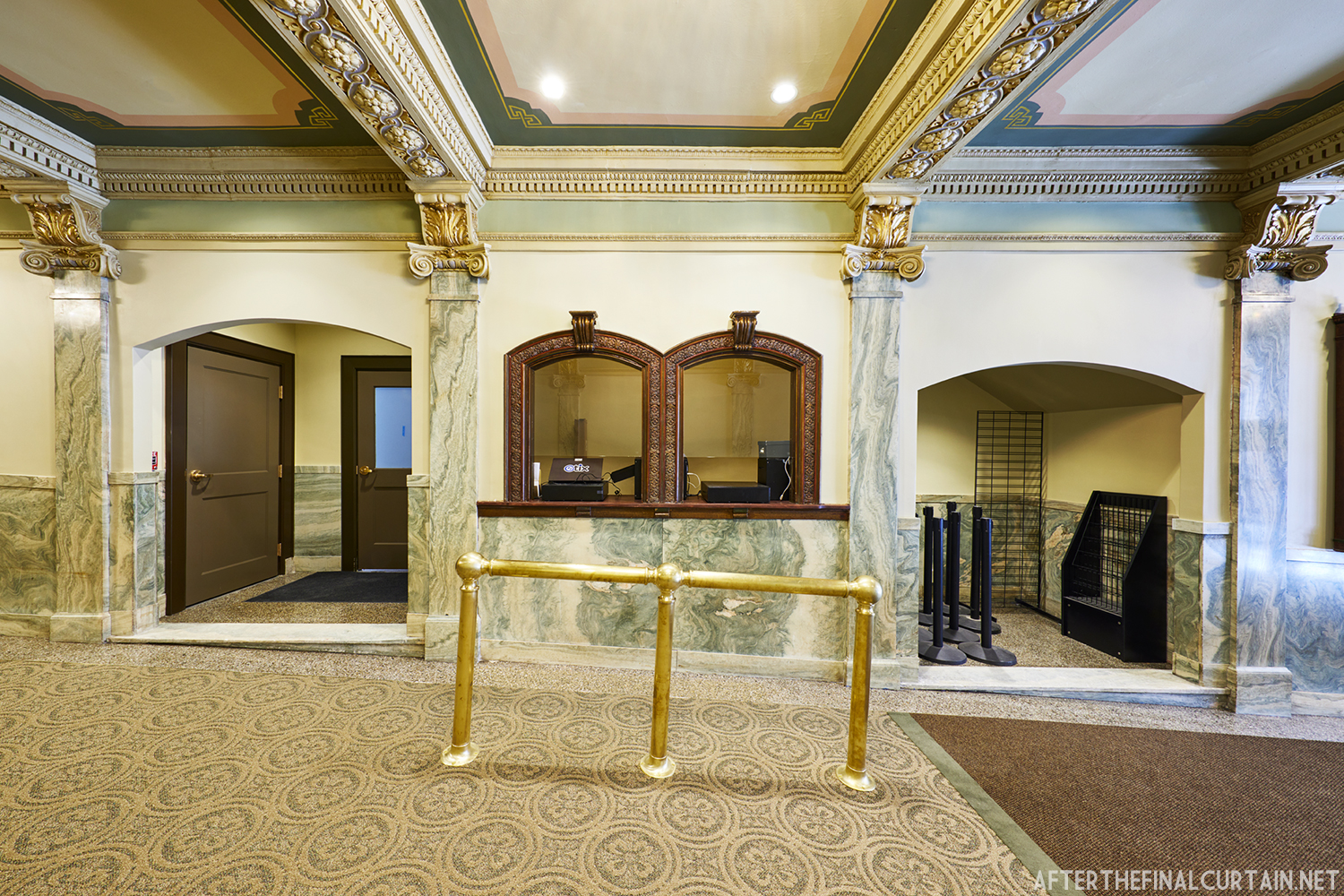
Here’s the same shot that was taken in May 2021. I was told that these are close to the original colors of the theater.
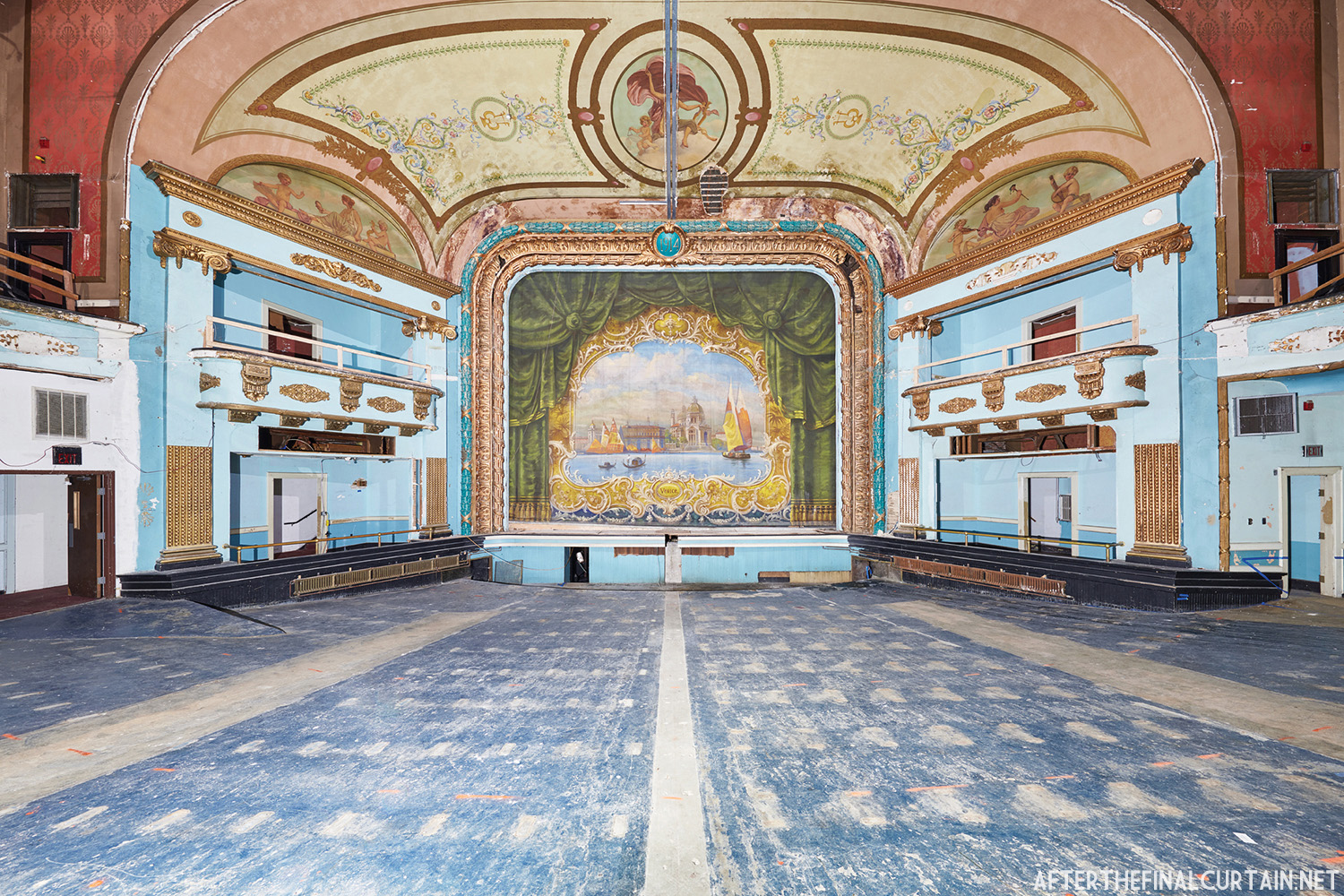
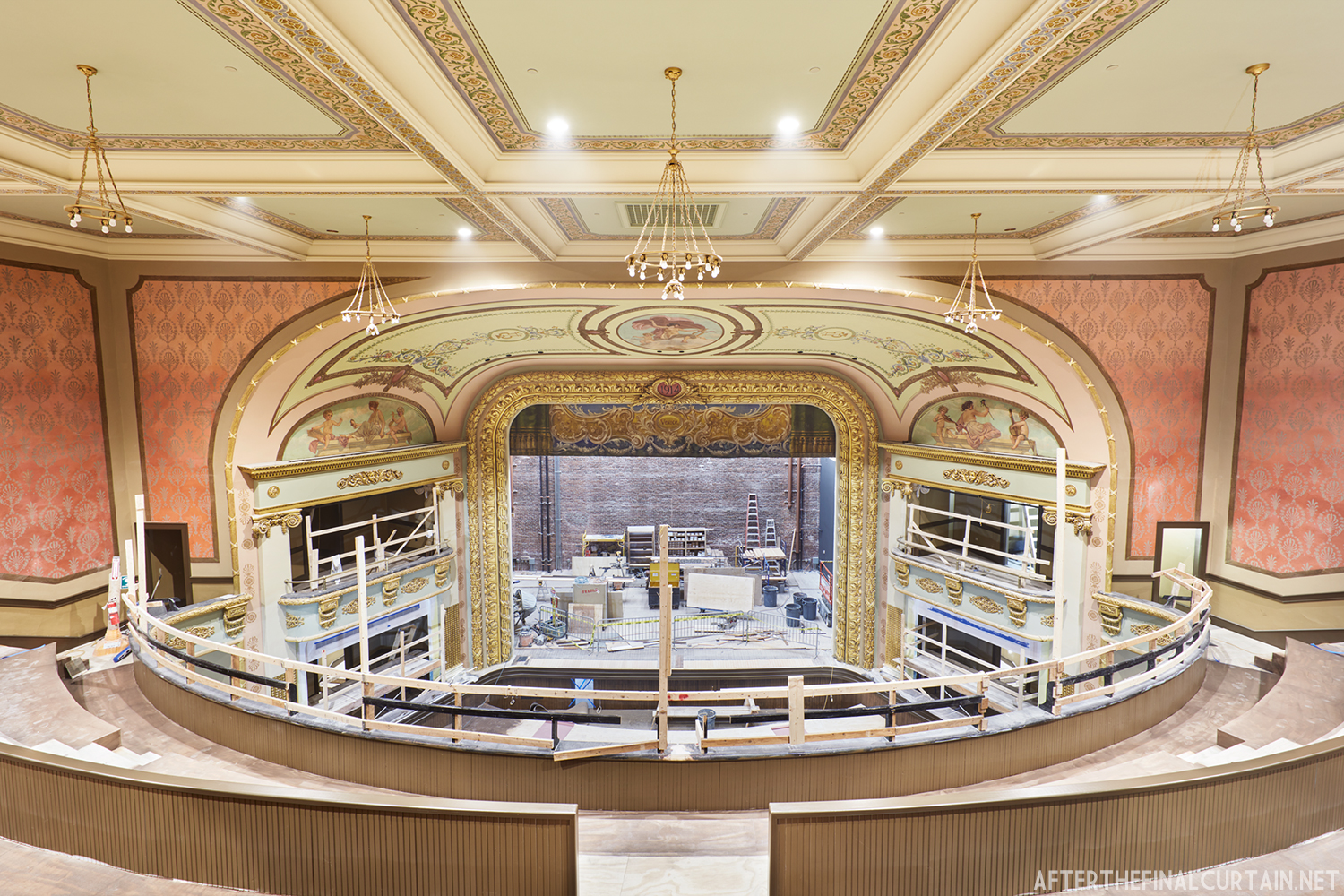
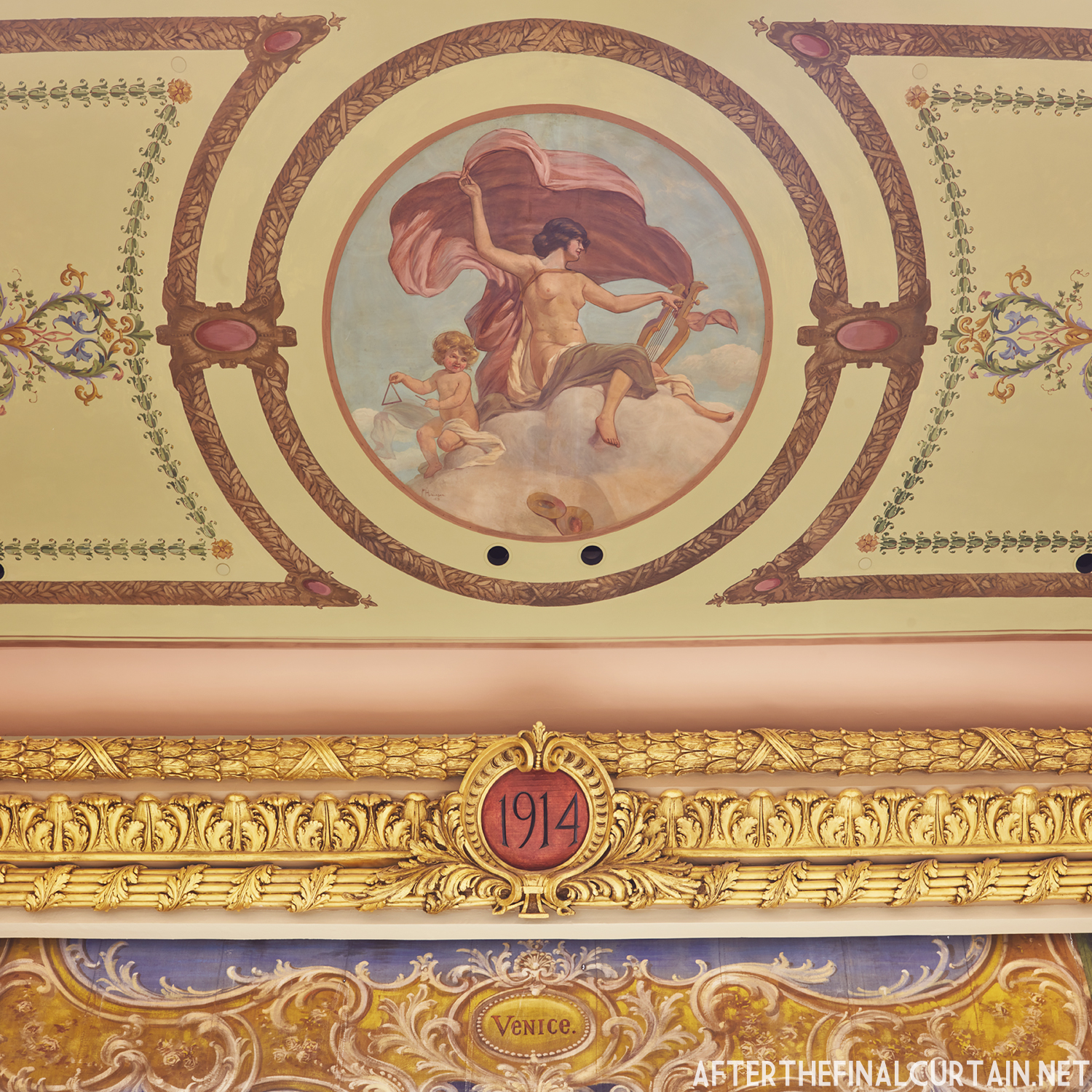
Work began in March 2016, when the partitions divided the auditorium into four screens were removed. Fortunately, those who did this work left much of the original plasterwork intact behind the new walls. Belknap EDC brought in Evergreene Architectural Arts to restore the plasterwork and recreate some of the details that had been destroyed or deteriorated over the years. For example, the original fire curtain remains intact but needs some work before it can be used.
Orchestra Level (with my favorite fire curtain of all time) from early 2019.
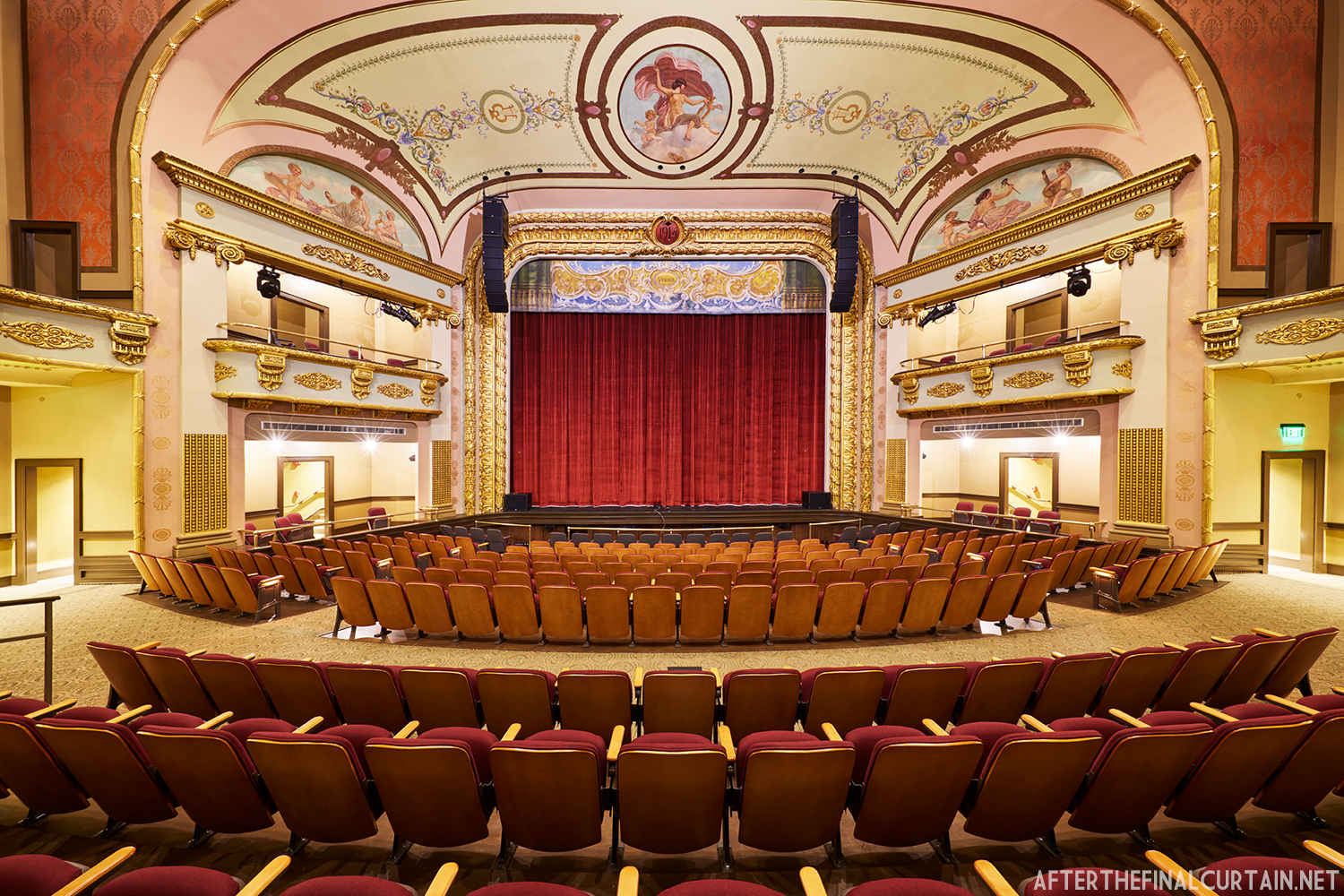
A similar shot of the auditorium from May 2021.
The total restoration cost was $14.4 million, and the finished theater will seat 750 people, with 450 in the orchestra and 300 on the balcony. Spectacle Management of Lexington, Massachusetts, has been contracted to manage the theater. The official grand opening and ribbon cutting took place on August 27, 2021. In addition to bookings from Spectacle, the Colonial will be open to weddings, dance groups, meetings, and community productions.
This post was originally posted on After the Final Curtain’s Patreon in June 2021. For expanded early posts, as well as video walkthroughs and other exclusive content you can become a patron at: https://www.patreon.com/afterthefinalcurtain
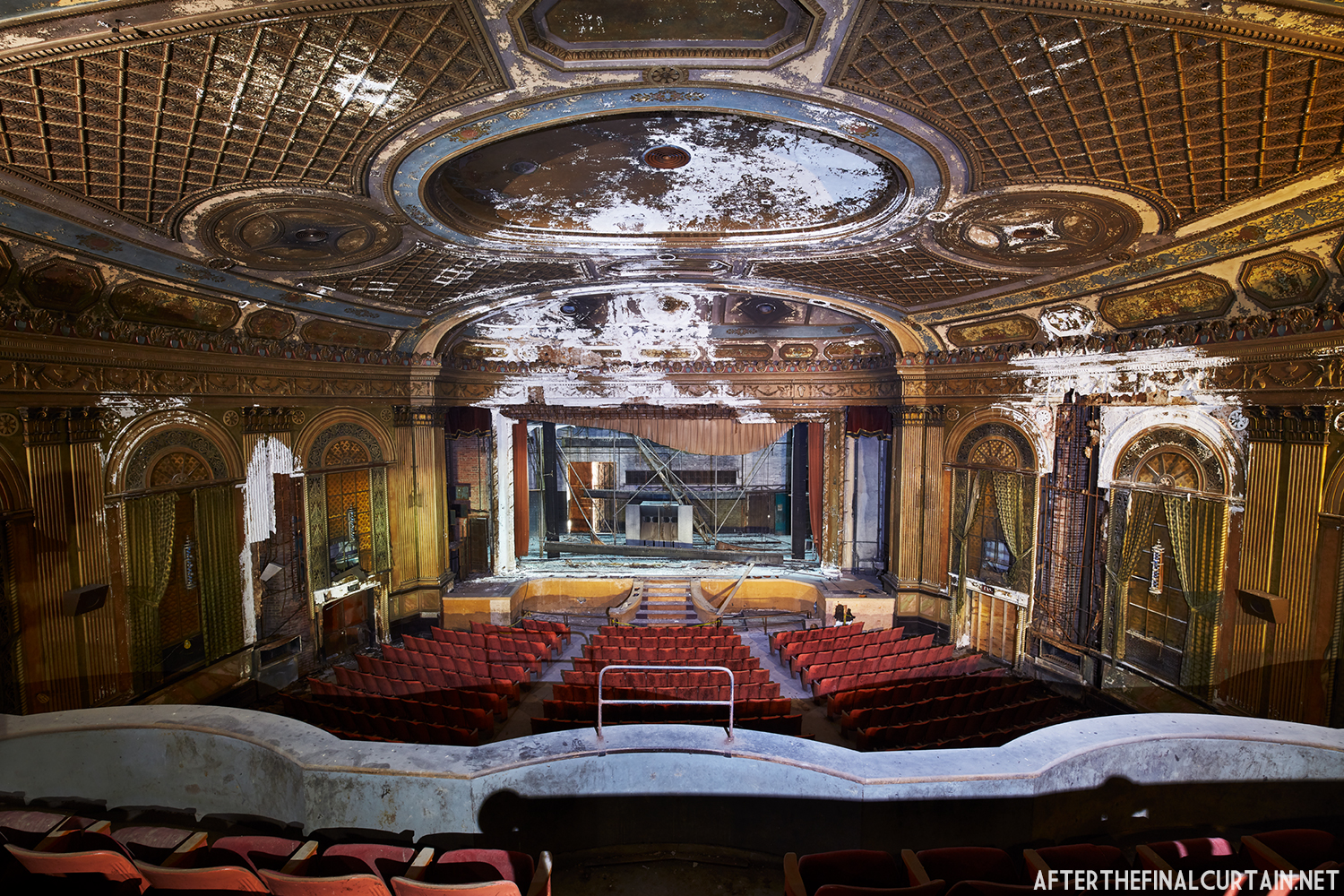
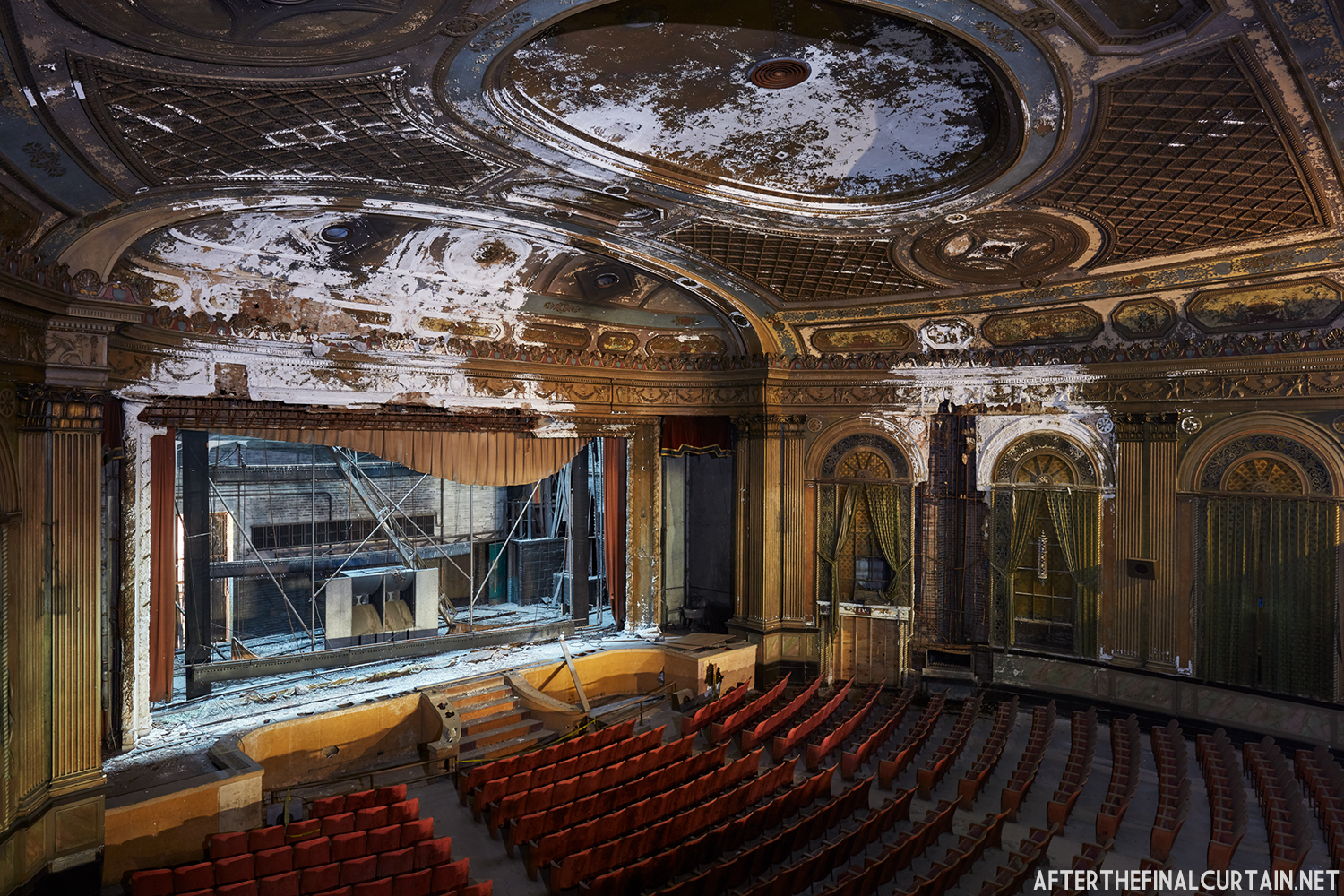
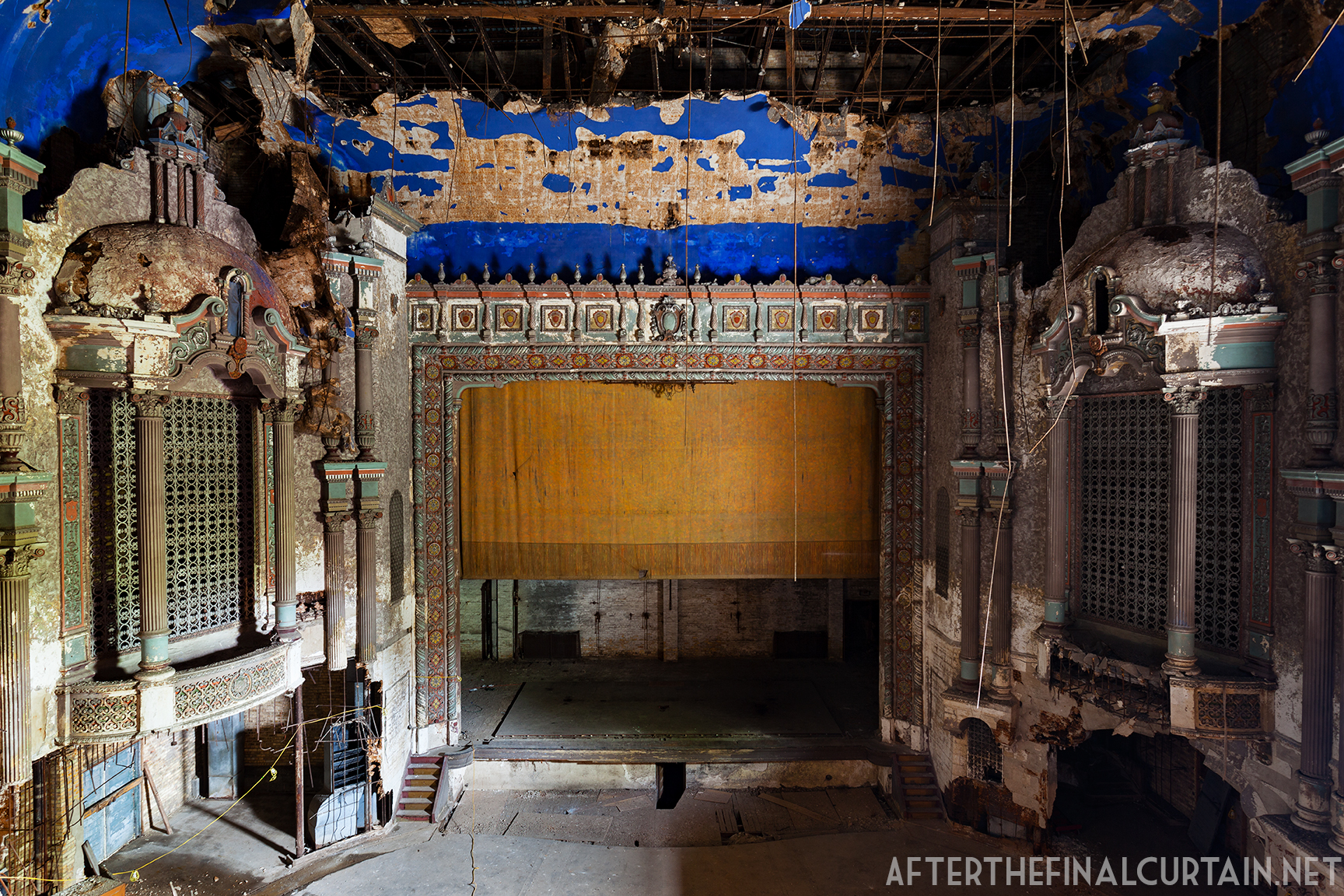
View of the auditorium from the balcony before restoration.
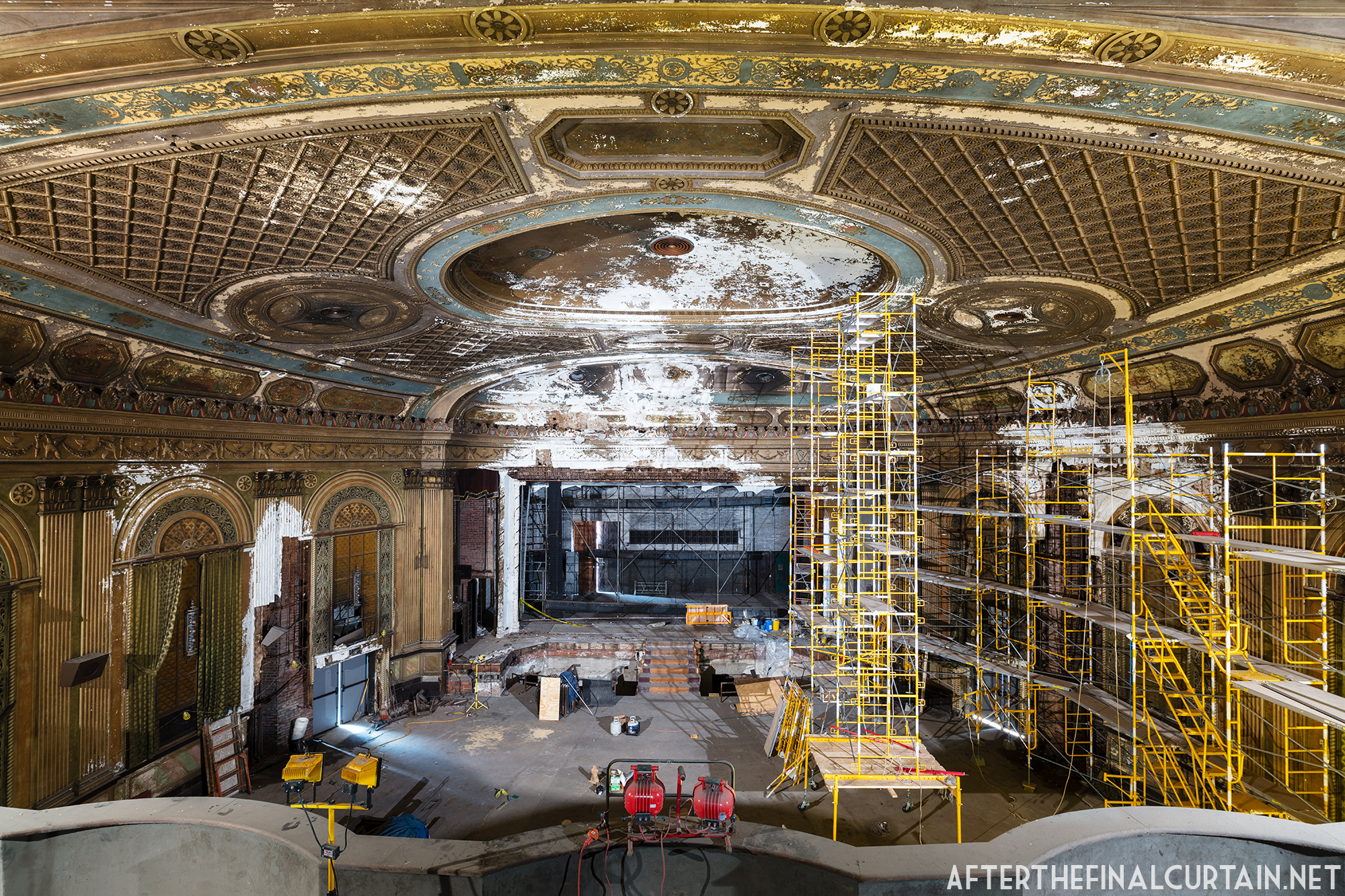
A similar view of the auditorium during the renovation.
The Robins Theatre opened on January 9, 1923, in Warren, Ohio. It was the crown jewel of the Robins Amusement Company (RAC). Architect C. Howard Crane designed the theater in the Adamesque style with an Italian Renaissance exterior. Construction of the 1,500-seat theater was handled by the Charles Shutrump and Sons Company of nearby Youngstown, Ohio; it cost $300,000, equating to $4.5 million when adjusted for inflation.
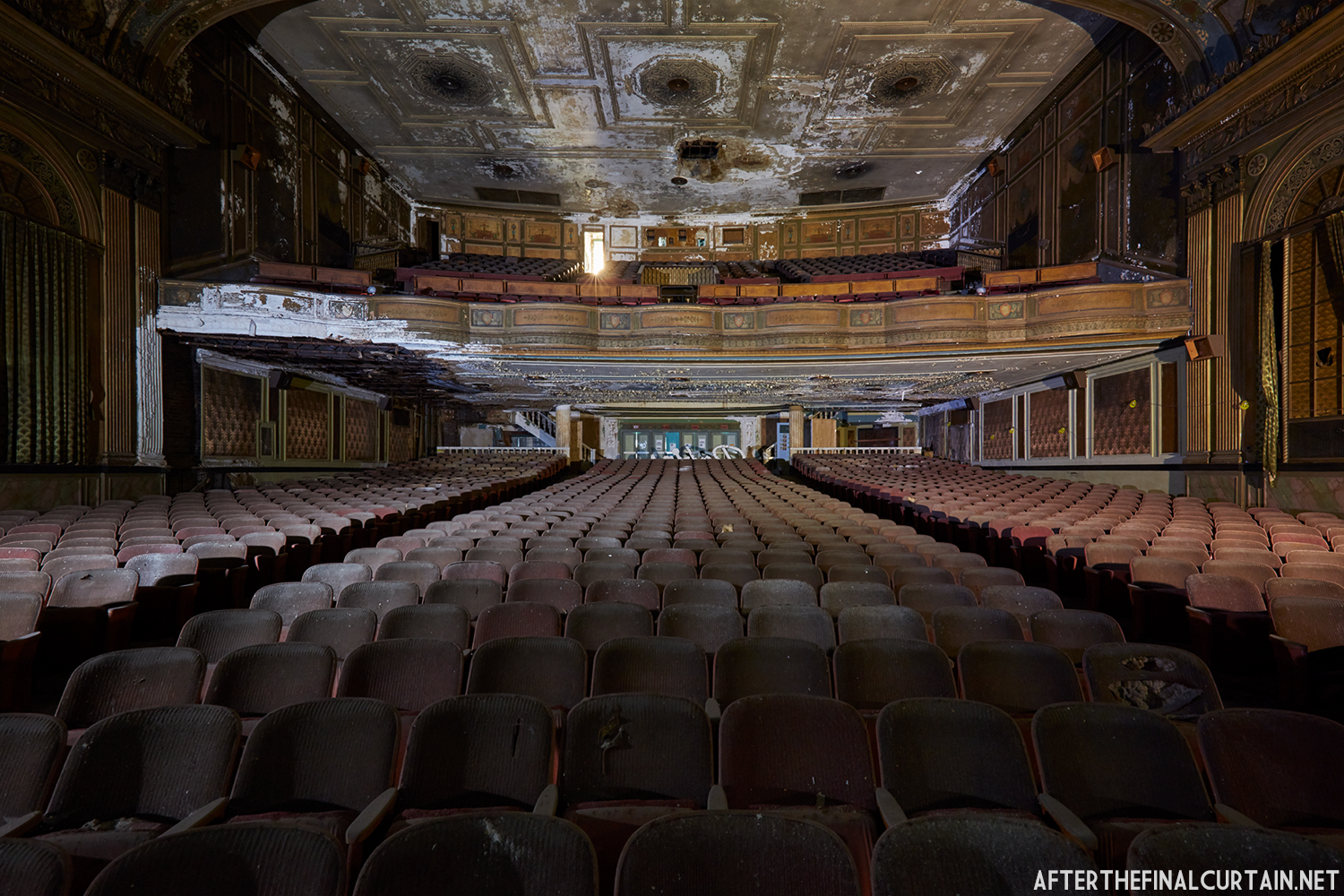
Looking back from the stage pre renovation.
The Robins was designed so that the theater could be converted from a movie theater to a live performance theater in only 24 hours. According to an account in the Warren Tribune, “Workmen could begin building a stage while motion picture performances continued in the theater proper.” Then when the theater closed at 11pm, a temporary intervening wall of lumber could be torn down, the connections to the front of the stage constructed and the stage playhouse ready for opening the following night.” The Robins opened with a silent film double feature — “The Speeder” starring Lloyd Hamilton, and “Quincy Adams Sawyer” starring Jon Bowers — and the Robins Orchestra performed the overture of Oberon by Carl Maria von Weber.
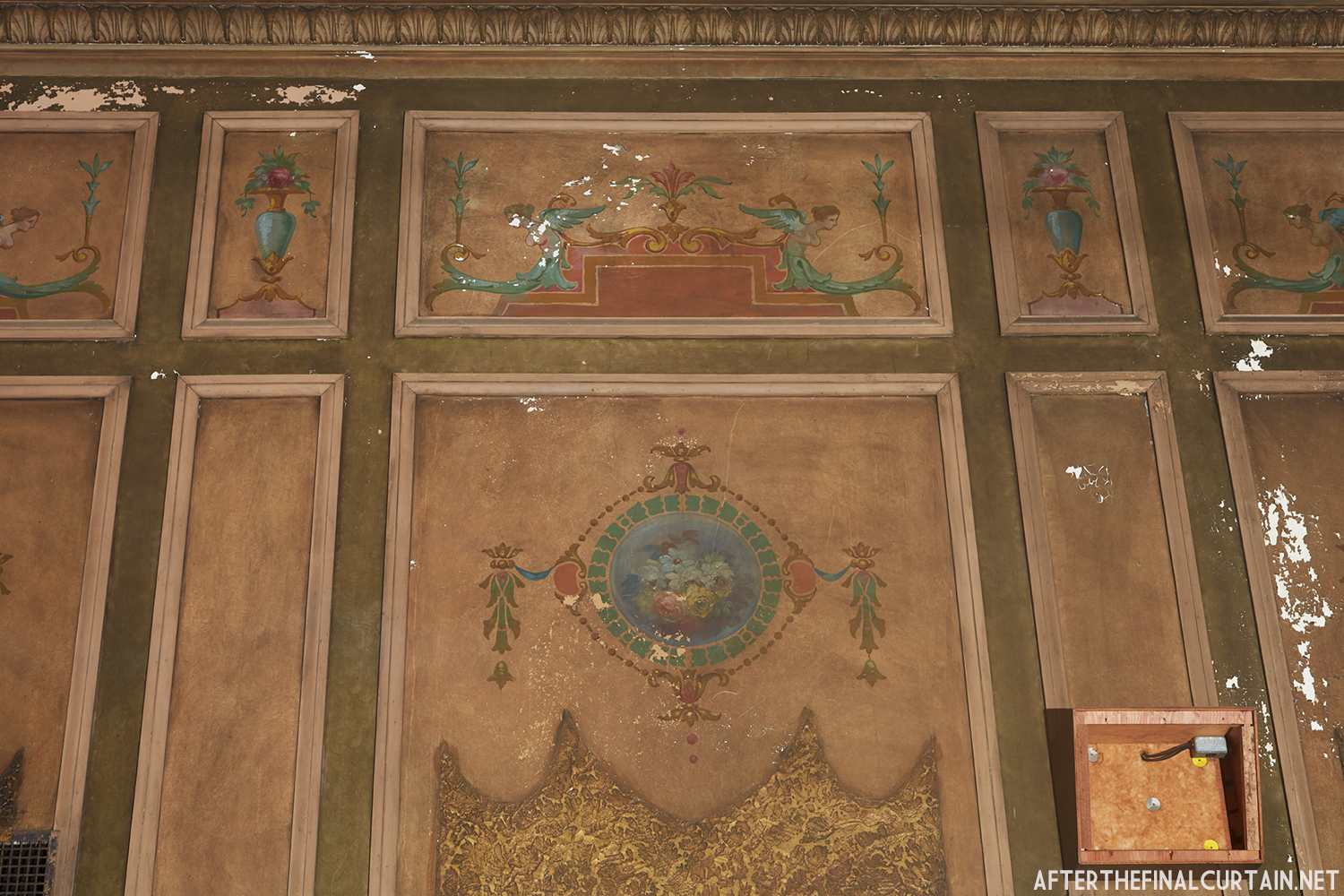
Some of the painted details on the wall in the balcony.
Vitaphone, an early form of talking motion pictures, was installed at the Robins in 1927. The first film shown with Vitaphone was “Don Juan” starring John Barrymore. RAC sold the Robins and the Daniel Theaters to R.M.P Realty Co. in August 1966 for around $500,000 ($3.9 million with inflation). The theater closed in 1974, and various plans were put together over the years to restore and reopen it. A feasibility study was done in 2005 that estimated it would cost $12 million to restore and reopen the theater. However, it wasn’t until it was sold to Downtown Development Group LLC in December 2017 that work would begin. The seats were removed in early March 2018, and the plaster repair began soon after. It reopened as a performing arts center on January 20, 2020.
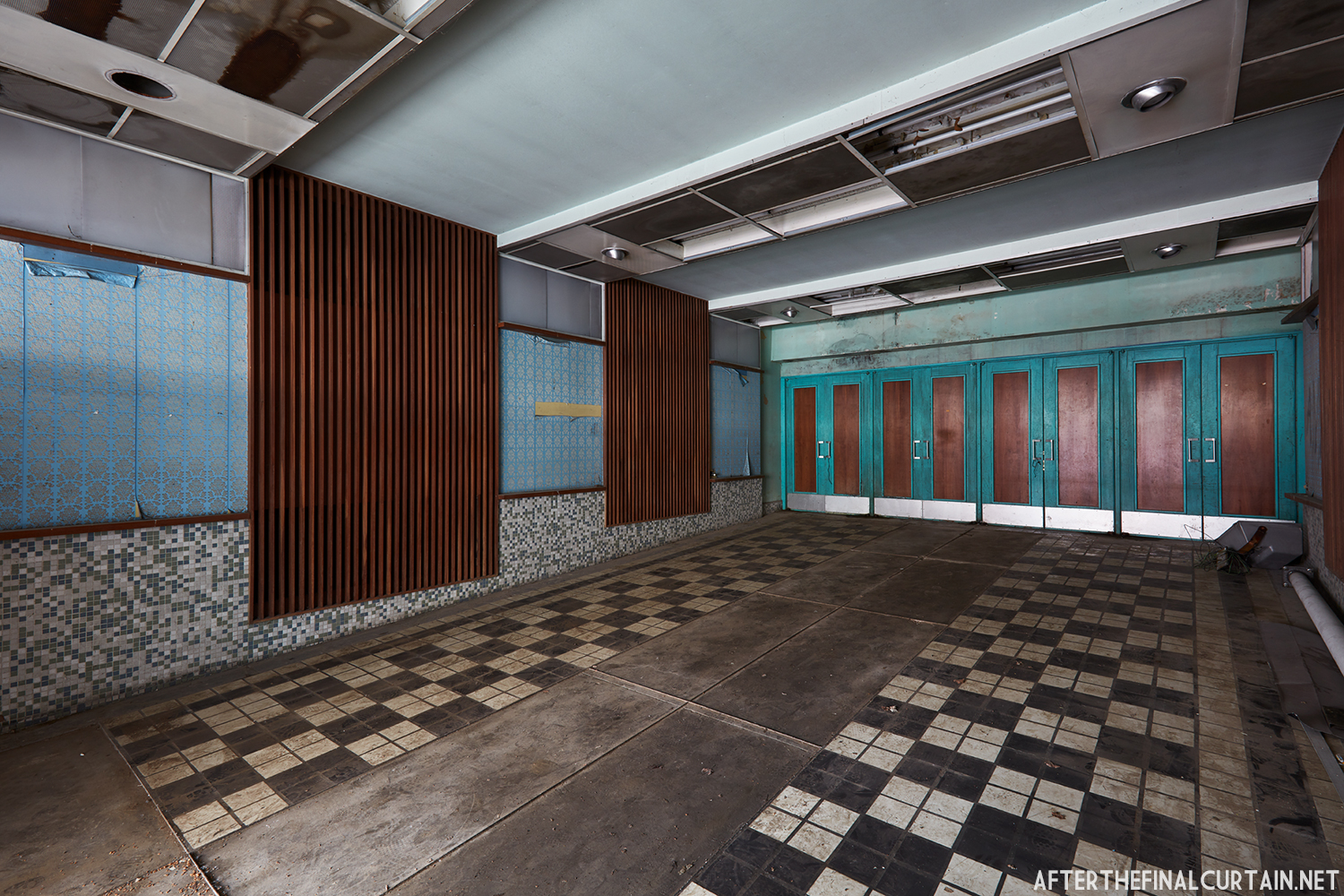
The entryway to the theater was redesigned in the 1960s.
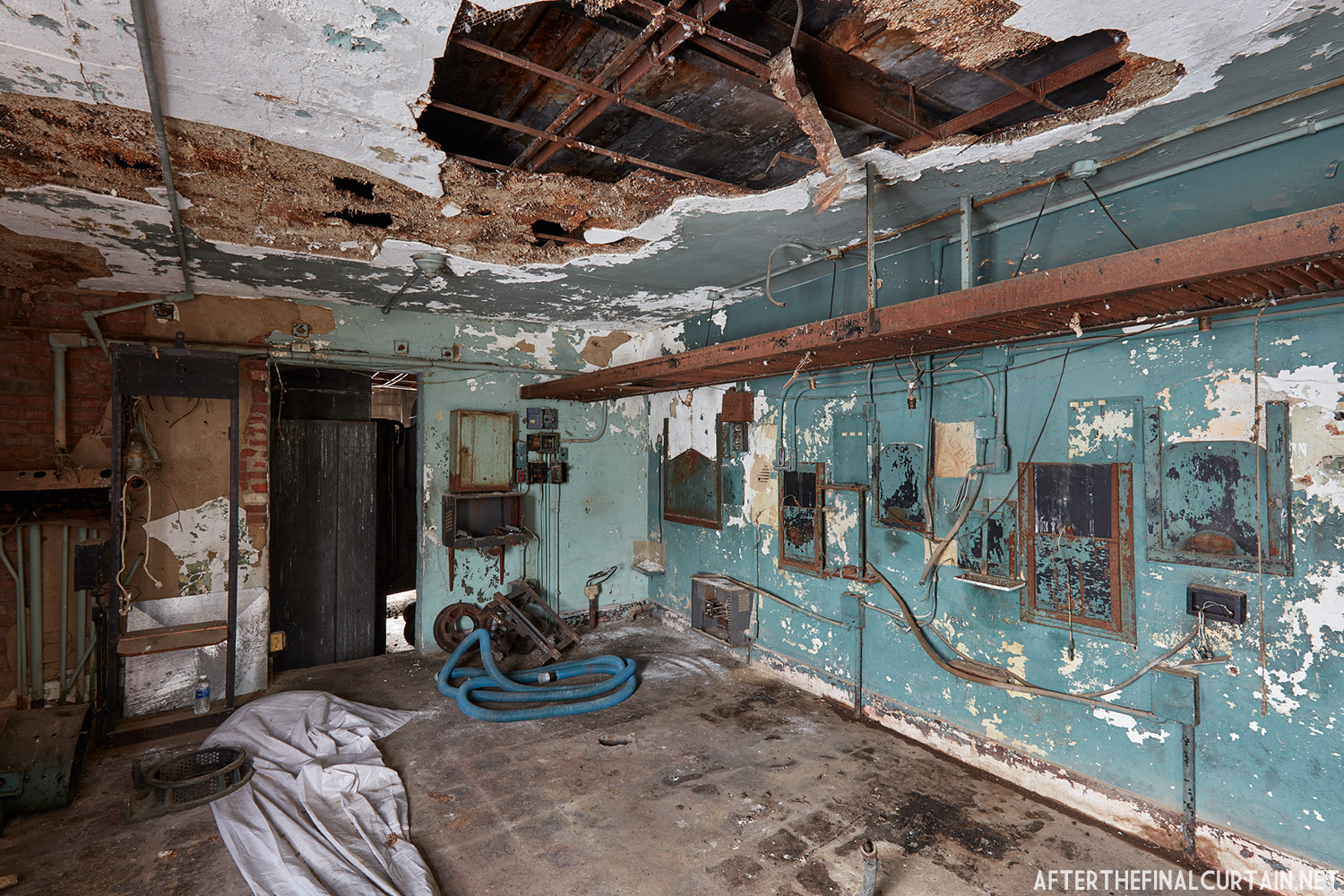
The Projection booth was cleaned out prior to the theater’s restoration in 2018.
Built as part of the Ohio Mechanics Institute, the Emery Theatre in Cincinnati, Ohio opened on January 6, 1912 as the Emery Auditorium. It was funded by an endowment of $656,737 ($17.1 million with inflation) from Mary Emery, whose husband, Thomas J. Emery had planned on building a similar school in the city. Emery stipulated as part of the endowment that the auditorium must be open to the public and have at least 1,800 seats. The 2,200-seat theater was designed by Harvey Hannaford of the architectural firm of Samuel Hannaford & Sons. It was one of four “acoustically perfect” concert halls whose design was inspired by the Auditorium Theatre in Chicago, IL. The other three were the Orchestra Hall, also in Chicago, Carnegie Hall in New York, and the Orchestra Hall in Detroit, MI.
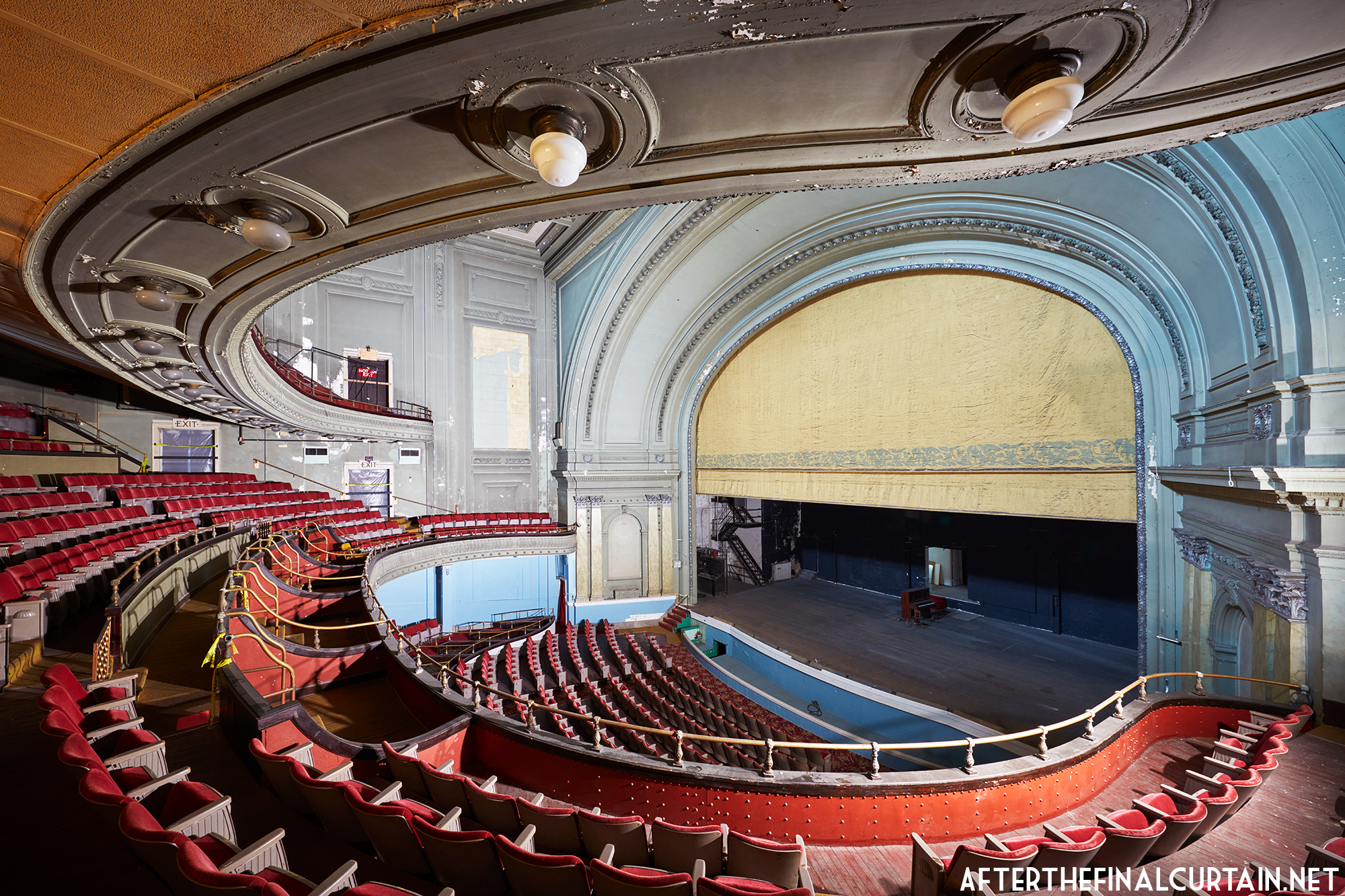
View of the auditorium from the stage.
The Cincinnati Symphony Orchestra held an inaugural concert at the theater on January 6, 1912. In 1924, George Gershwin performed his classic composition Rhapsody in Blue at the theater. On April 25, 1936, the Cincinnati Symphony Orchestra held its final concert at the Emery; it moved to the Cincinnati Music Hall, a space with more seats and more parking. Beginning in 1935 and ending in 1939, the Federal Theatre Project, a program established during the Great Depression as part of the New Deal to fund live entertainment programs, began to use the Emery. From 1938 to 1948, the theater was the home of The Boone County Jamboree, an American Country Radio Program. A 500,000-watt transmitter was used by station WLW so that millions of people around the country could listen to the program.
The Emery has a very small lobby when compared to many other theaters built around the same time.
The Reverend Martin Luther King Jr. spoke at the Emery on June 16, 1959 while he was campaigning for Ted Berry during Berry’s run for Cincinnati City Council. The University of Cincinnati (UC) took ownership of the Emery building in 1969, when the Ohio Mechanics Institute was incorporated into the university. A Wurlitzer Opus 1680 organ moved to the Emery from the nearby Keith’s Theater the same year, but was not completely installed until 1977. That same year, the Ohio Valley Chapter of the American Theater Organ Society began programming shows on the weekends. They held organ concerts, showed silent, talking, and 3D films, and reduced the seating by closing the upper balcony. The final organ concert was held on October 24, 1999, after which the Wurlitzer was removed to be restored. It would never return to the Emery, and was installed in the Cincinnati Music Hall’s ballroom in 2004.
Most of the seats on the upper balcony have been removed.
Beginning in November 2011, the Requiem Project, a non-profit group formed in late 2008 to restore the theater, held concerts, film festivals and recording sessions at the Emery. The National, Dirty Projectors, Carrie Rodriguez, Ralph Stanley and others performed at the theater during this time. The Requiem Project hired John Senhauser Architects and Westlake Reed Leskosky, two architecture firms, to create the restoration plans for the Emery. However, the Emery Center Corporation, who subleased the theater from Emery Center
Apartments Limited Partnership (ECALP), who in turn leased it from UC, shut down all programming in 2013. According to Kathy Schwab, head of the Emery Center Corp in 2013, programming was stopped due to the theater’s dilapidated state and because everything had to be approved by UC. The Requiem Project sued to try to continue their renovation efforts at the theater, but eventually settled in March 2016. On April 23, 2019, the UC board of trustees voted to sell the Emery; according to them, it is beyond repair. It was sold for $8.55 million to local developers who intend to restore the building. The restoration costs are estimated at around $30 million and will take about three years to complete.
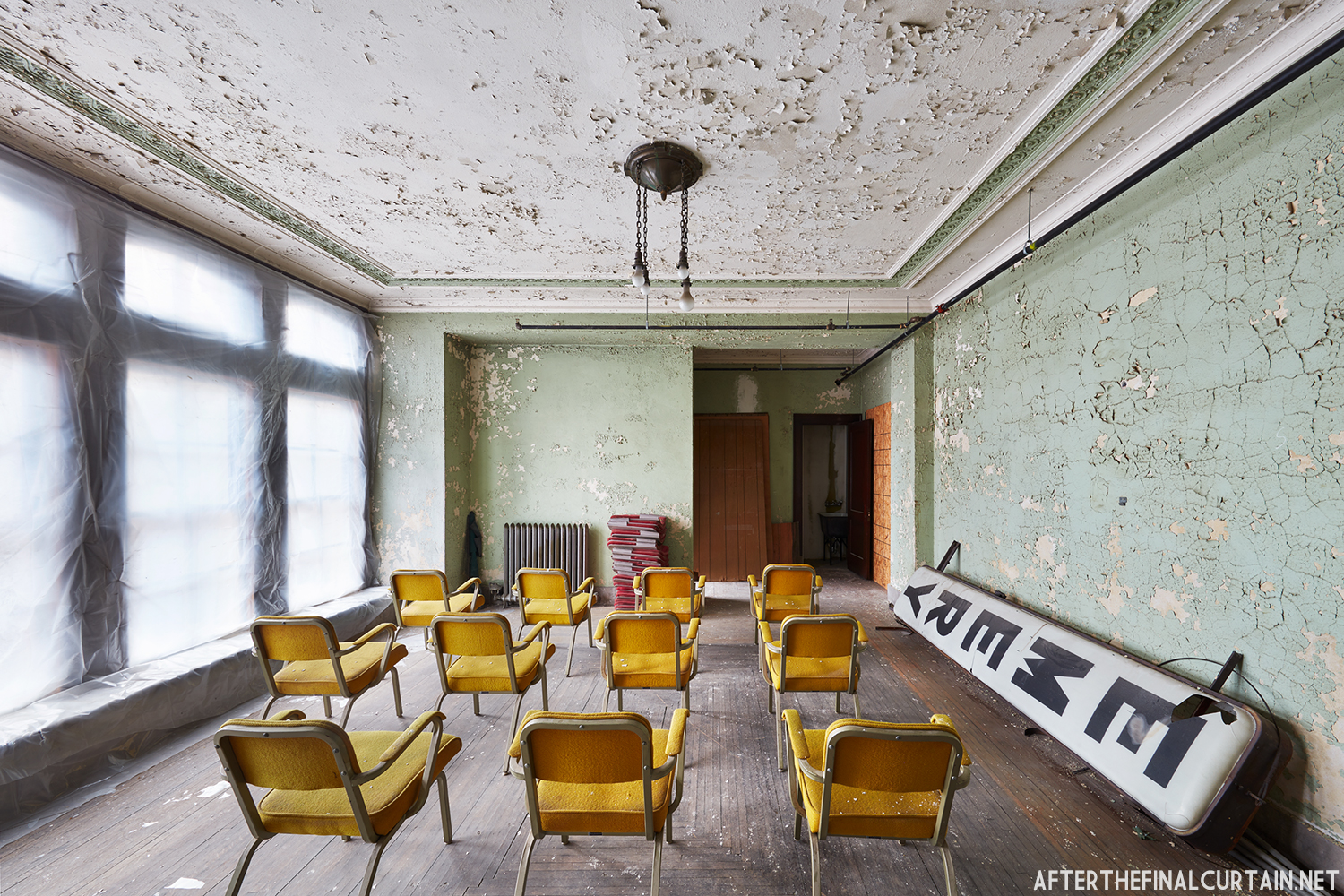
The theater’s vertical sign is stored in one of the former offices in the building.
I’m launching a Patreon page! As an After the Final Curtain Patreon you’ll get early access to image galleries, video walkthroughs, and write-ups before they are released, print giveaways, discounts on workshops, and some exclusive workshop locations (one some of you have been asking me about for years).
I’ve been uploading content to the page for a few months before launch so there’s already a number of things to check out. You can sign up at https://www.patreon.com/afterthefinalcurtain
After the Final Curtain: America’s Abandoned Theatres
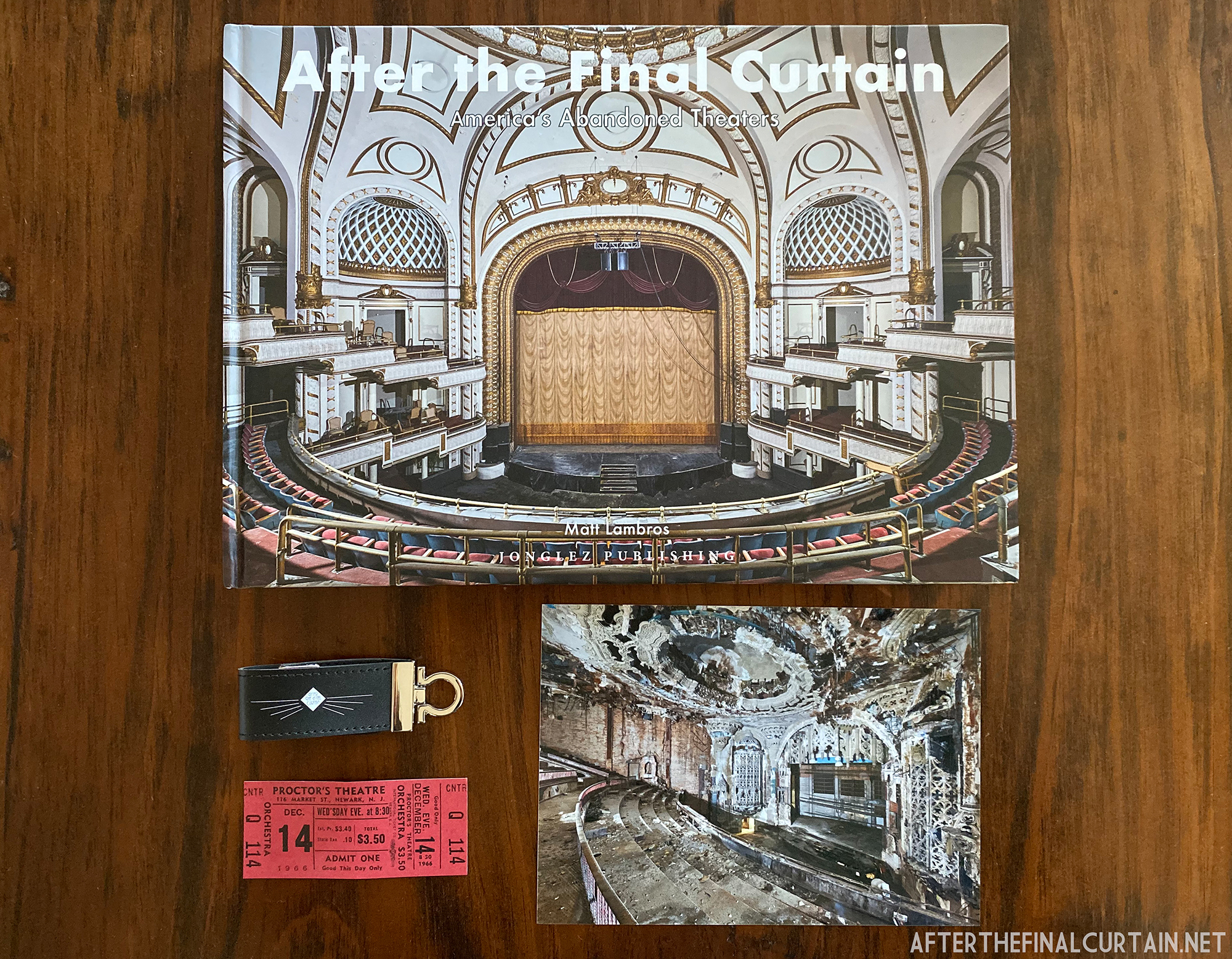
I received my copies of my new book After the Final Curtain: America’s Abandoned Theaters, yesterday and it looks amazing! I’ll be shipping out the pre-orders starting today. Each pre-ordered copy comes with a 5×7 print, ticket from Proctor’s Palace Theatre, and a USB drive with the After the Final Curtain logo courtesy of USB Memory Direct. Here’s some more information from their website:
“USB Memory Direct specializes in custom-printed and custom shape USB flash drives. Being in business for over 15 years, UMD has gained a reputation for being one of the premiere providers of wholesale USB flash drives across the country. With a wide variety of drive styles to choose from, you’ll be sure to find a drive that you can customize to perfectly represent you and your brand. You can also rest assured knowing that they offer a lifetime guarantee on any and all drives you purchase from them. Check them out today and request a quote from one of their friendly and knowledgeable account executives.”
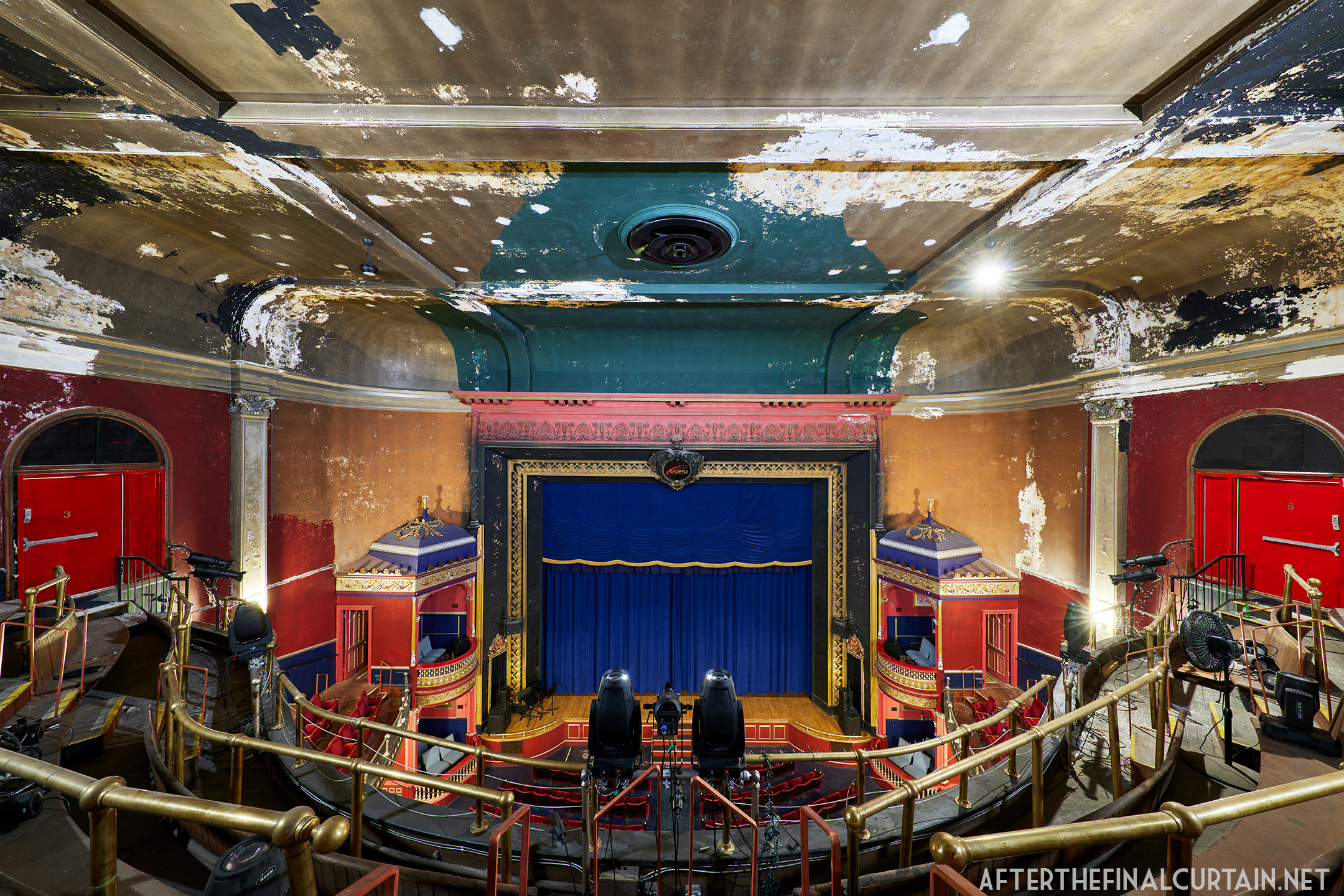
The Sorg Opera House in Middletown, Ohio originally opened on September 12, 1891. Paul J. Sorg, an esteemed entrepreneur and Middletown’s first multi-millionaire, commissioned the opera house as a gift to the city. To bring his vision to life, Sorg engaged the services of Samuel Hannaford, the architect responsible for designing the Cincinnati Music Hall. Hannaford designed a 1,200-seat opera house, characterized by its opulent interior and exquisite details.
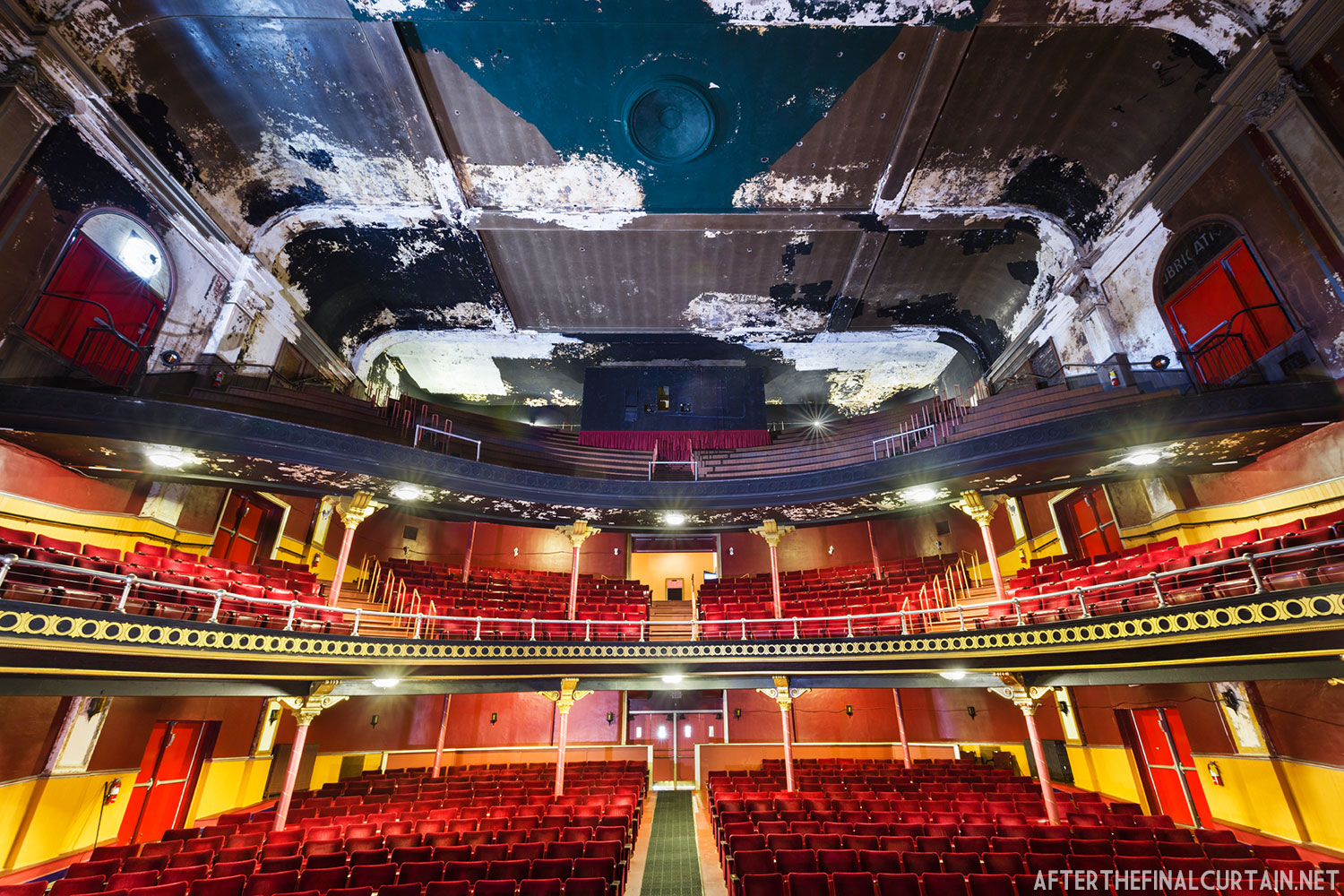
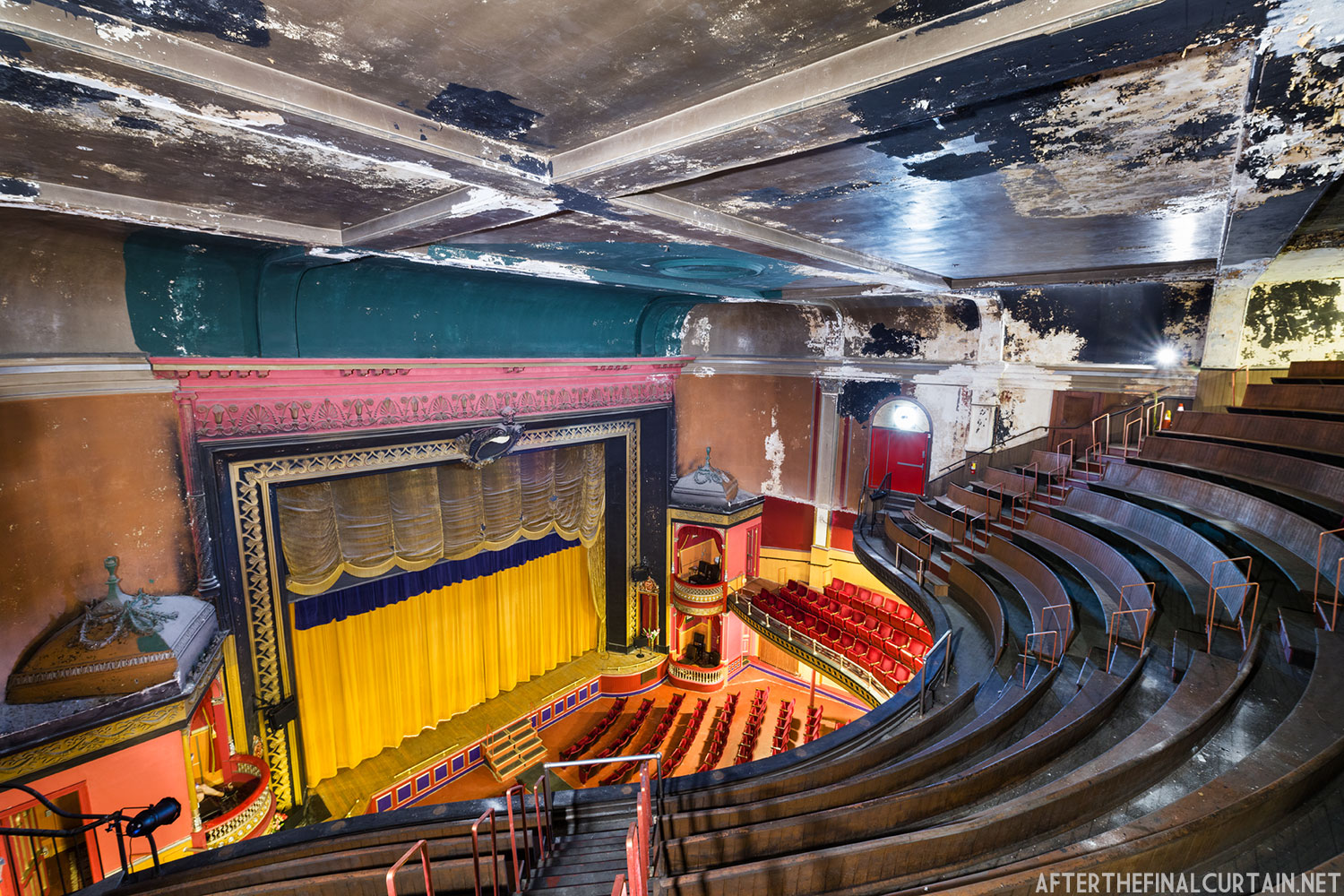
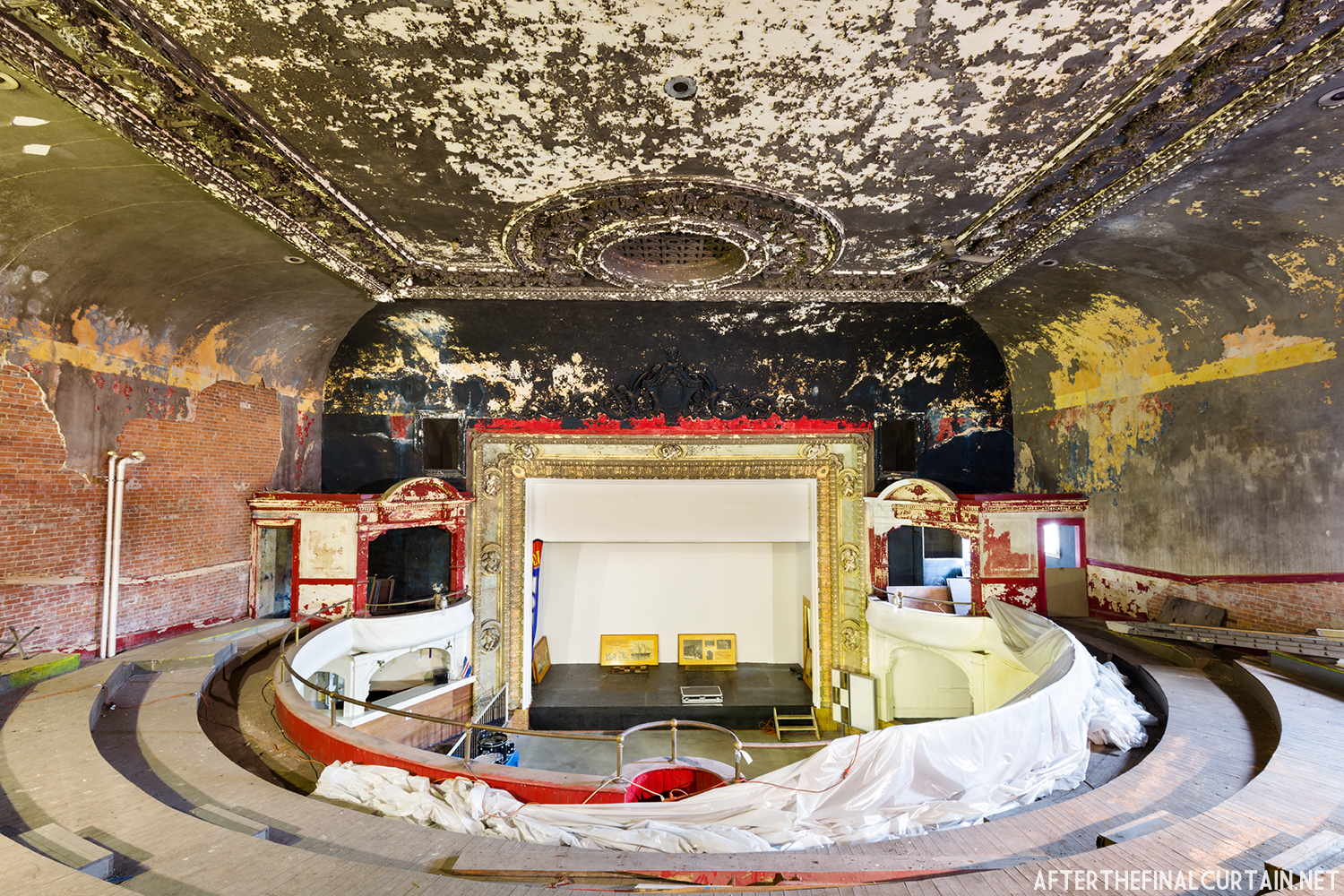
View from the balcony in 2023.
On its opening day, the Sorg Opera House treated attendees to a performance of the opera “The Little Tycoon,” composed by Willard Spenser. The event was made even more memorable by a speech delivered by the Ohio Governor James E. Campbell.
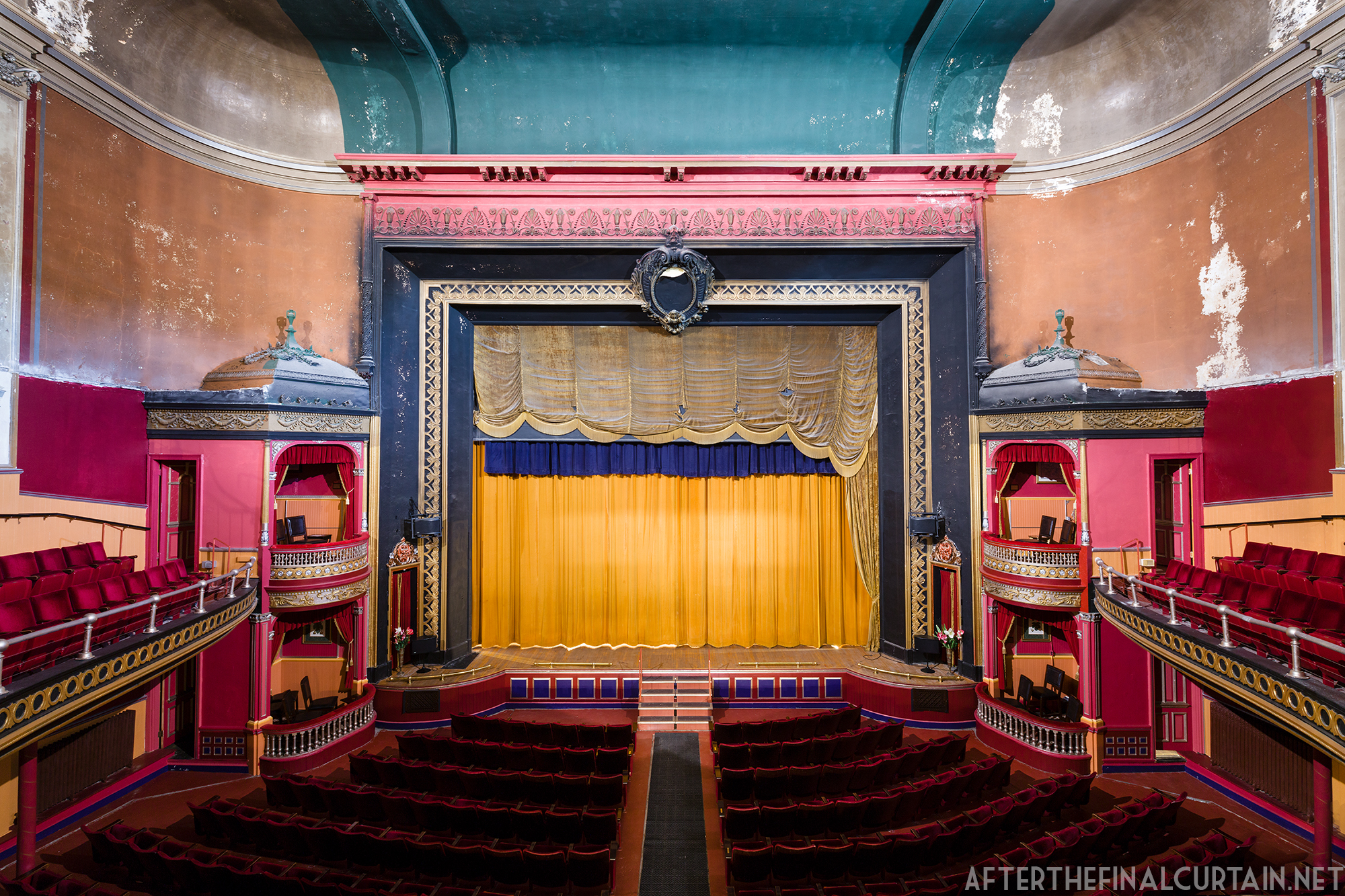
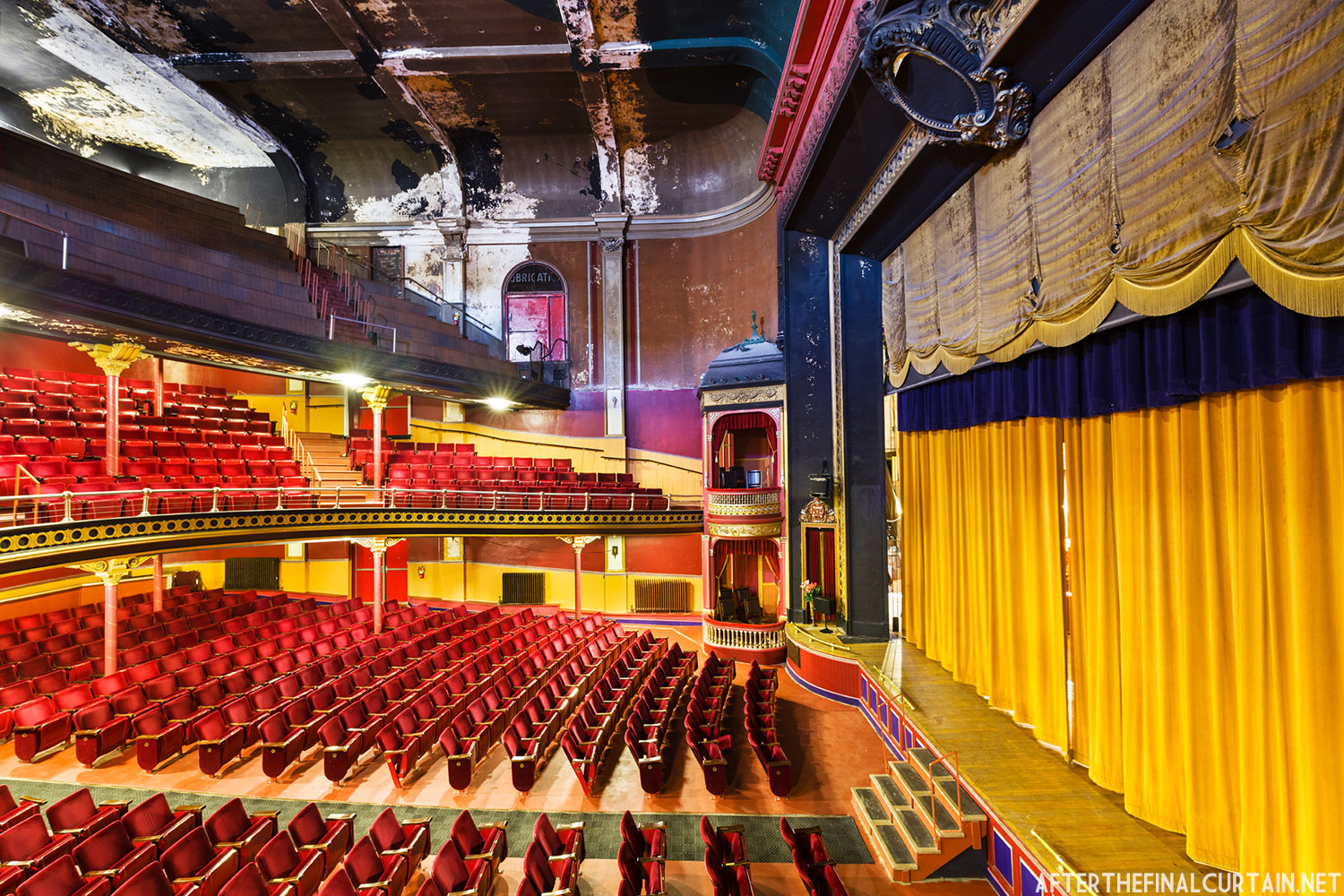
View of the auditorium from the stage.
In 1901, the Sorg Opera House expanded its repertoire to include early forms of motion pictures, such as photo plays, alongside its opera performances. Vaudeville acts also became a regular feature, entertaining the audience before the operas took the stage. Over the years, the opera house hosted numerous talented vaudeville performers who would later achieve fame, including Marie Dressler, Will Rogers, Al Jolson, Bob Hope, and Sophie Tucker.
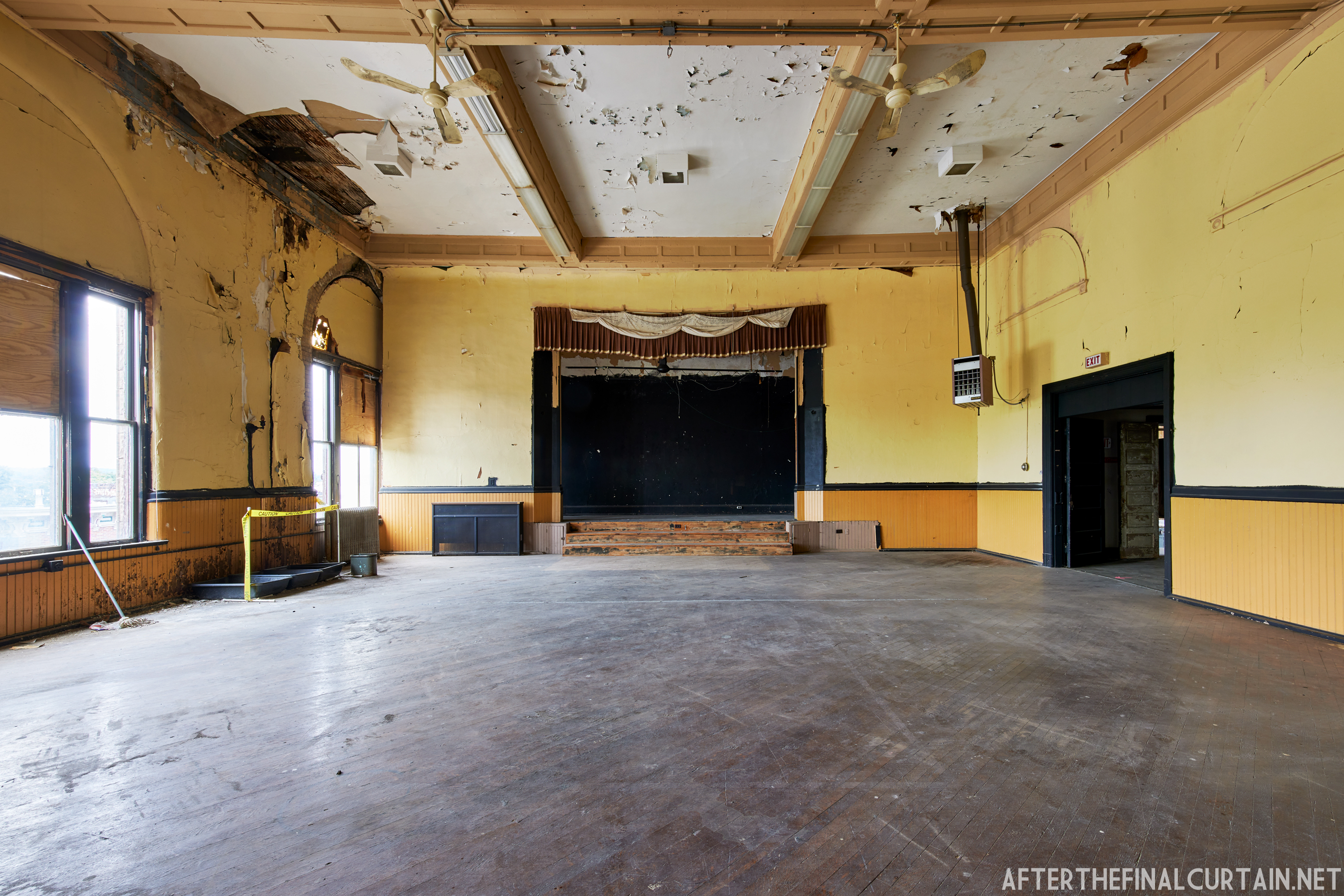
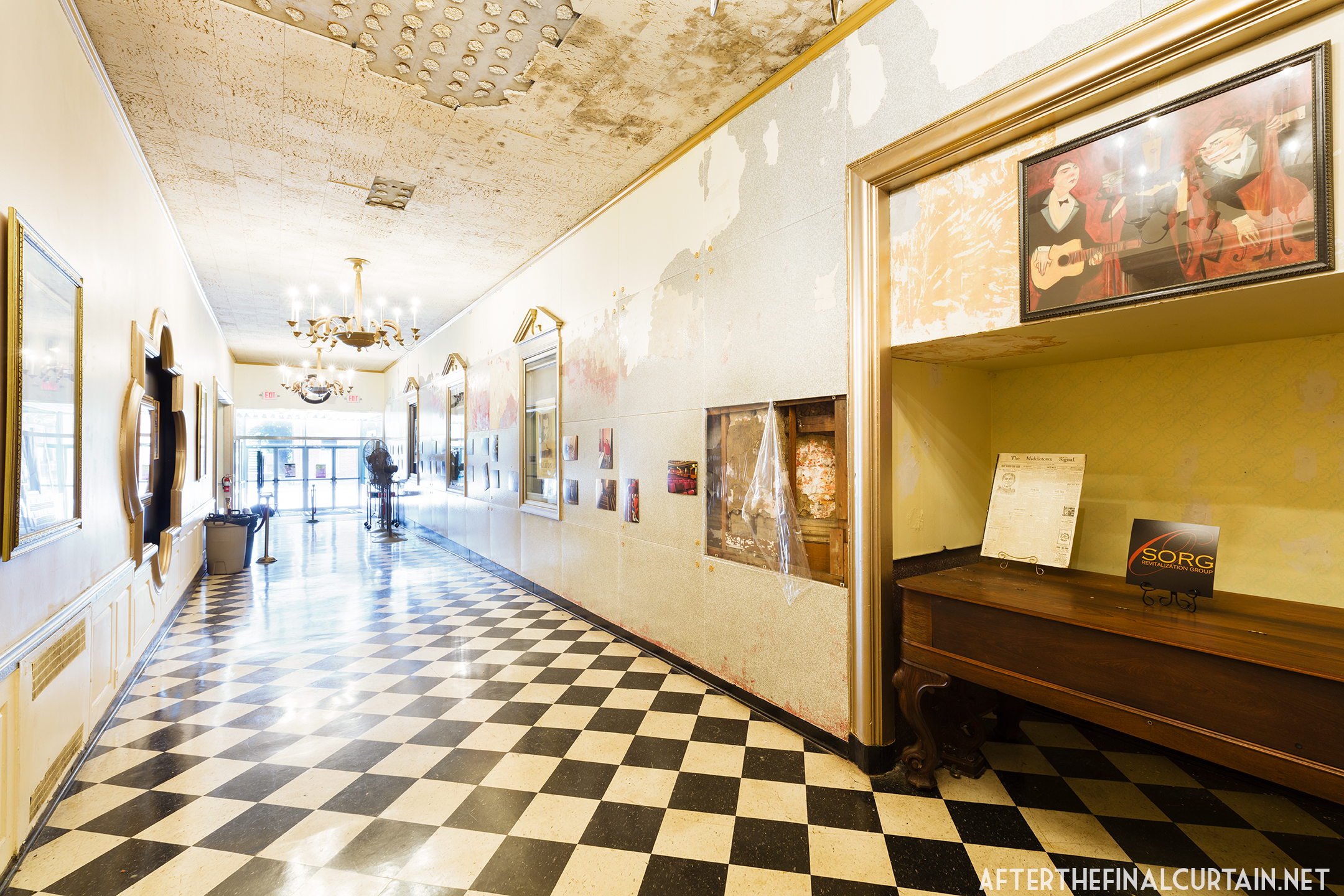
The ballroom in the building next to the Sorg will eventually become an event space for the Opera House.
As time went on, the popularity of live shows began to wane, leading to their discontinuation in the late 1920s. However, recognizing the emerging trend in the film industry, the Sorg Opera House underwent a transformation. In the summer of 1929, a sound system was installed, marking a pivotal turning point as the opera house transitioned into a full-time movie theater. This adaptation allowed the venue to continue entertaining the community while embracing the evolving medium of cinema.
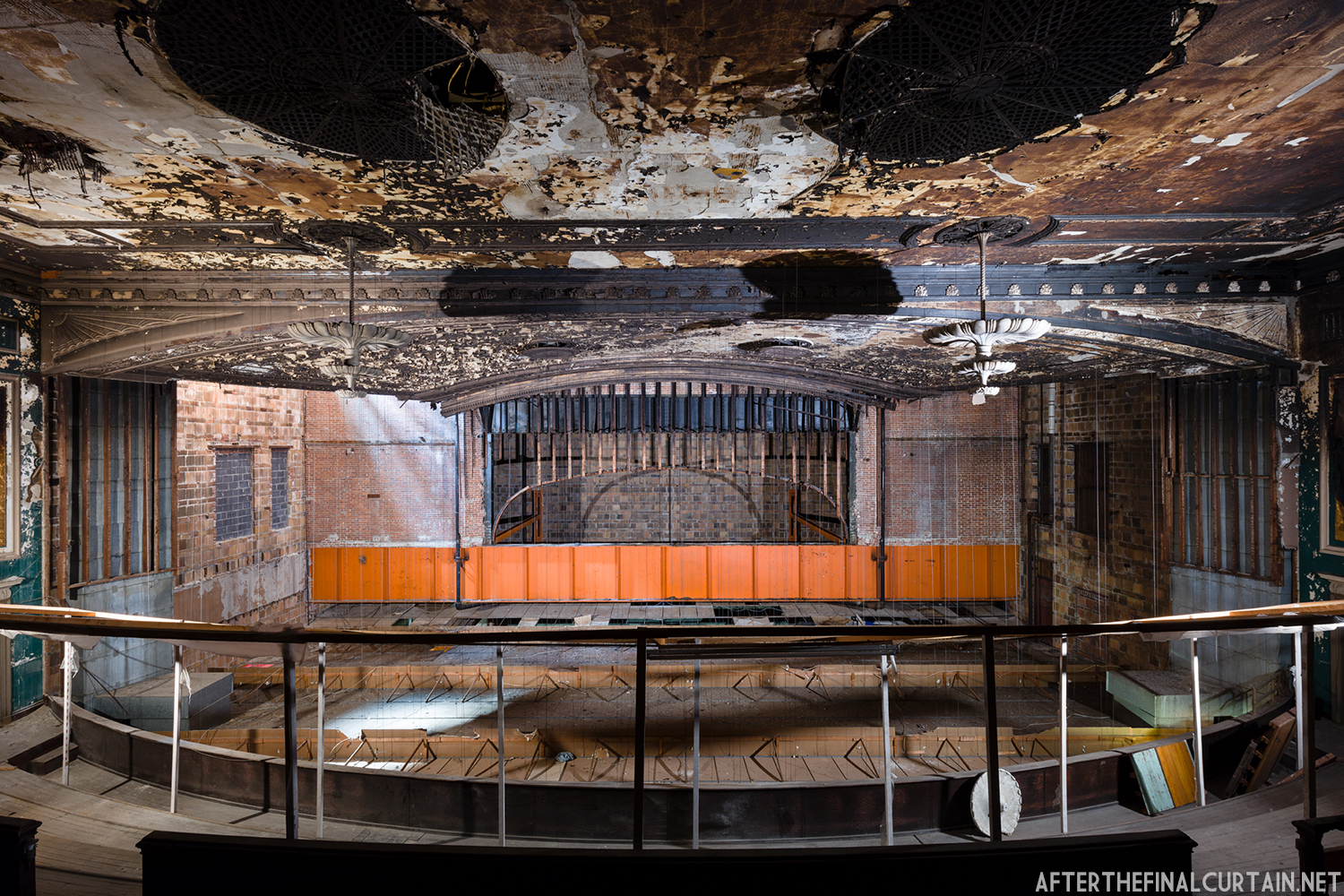
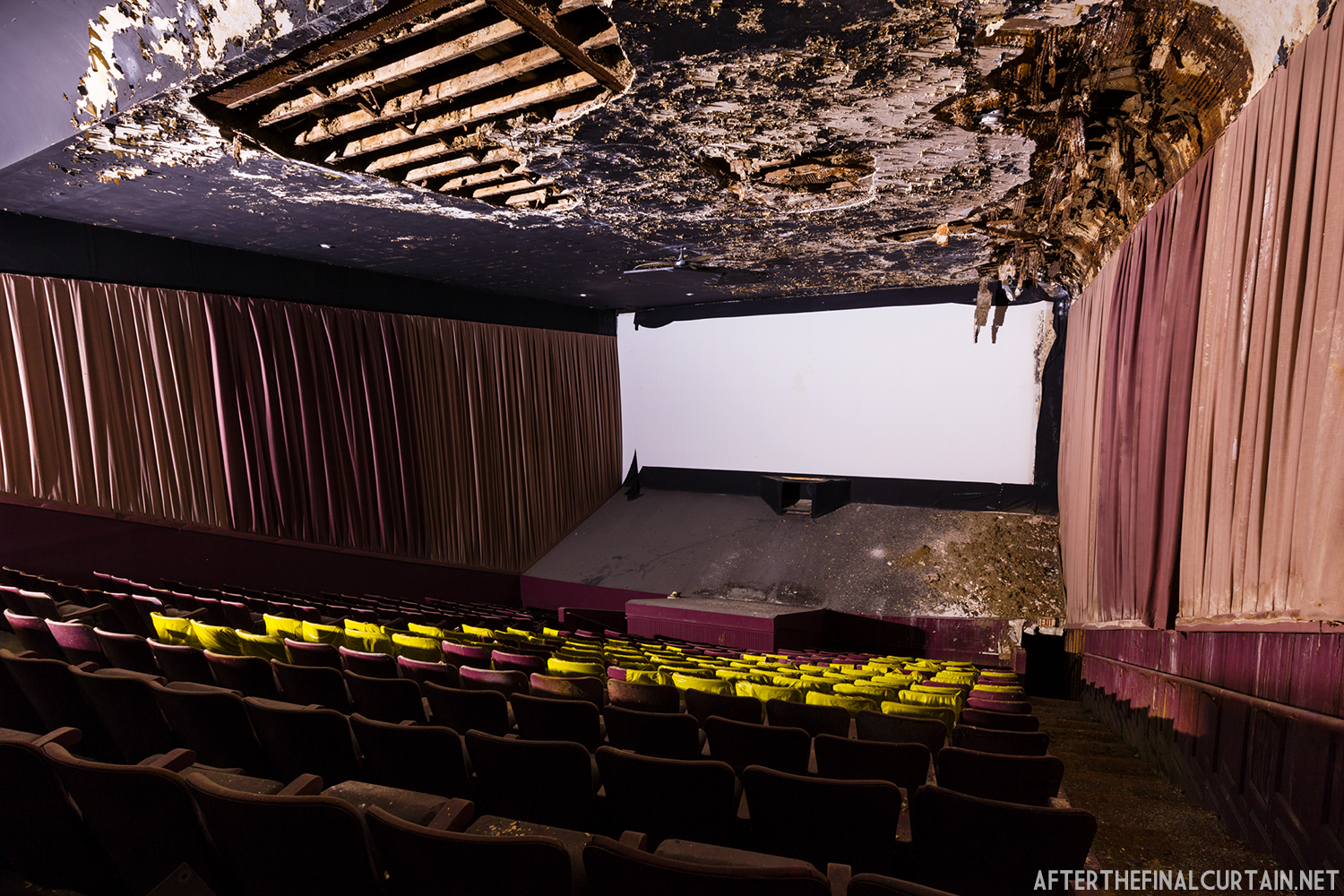
The orchestra and mezzanine levels have been restored, but the upper balcony and ceiling remain in a state of disrepair.
On January 17, 1935, a fire broke out in the backstage area of the Sorg Opera House, resulting in substantial damage amounting to $10,000 at the time (equivalent to approximately $185,298 in today’s currency, adjusted for inflation). The severity of the fire forced the opera house to close its doors for several months. However, in April 1935, the Gordon Theatre Company stepped in and secured a long-term lease on the theater, taking charge of the necessary repairs.
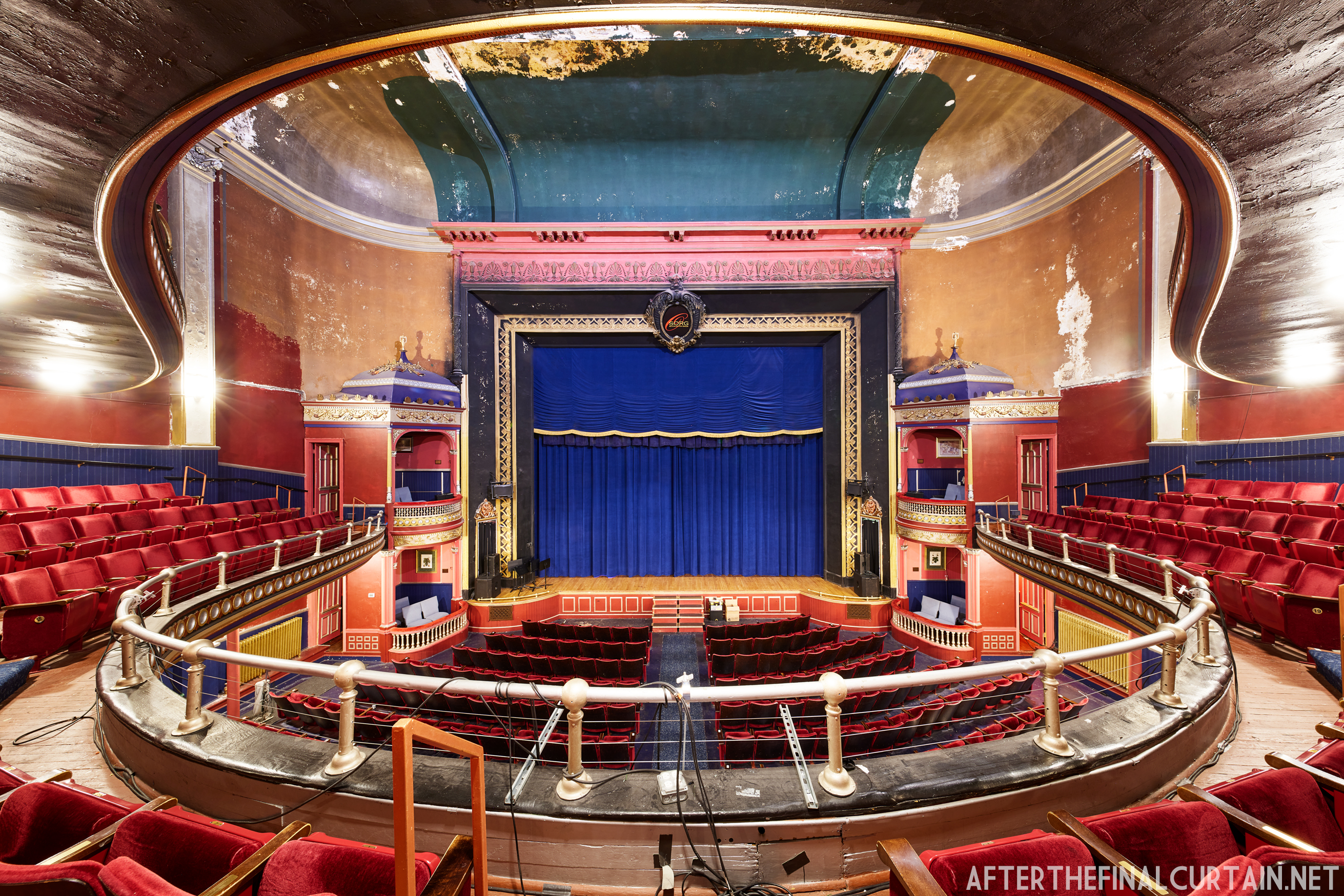
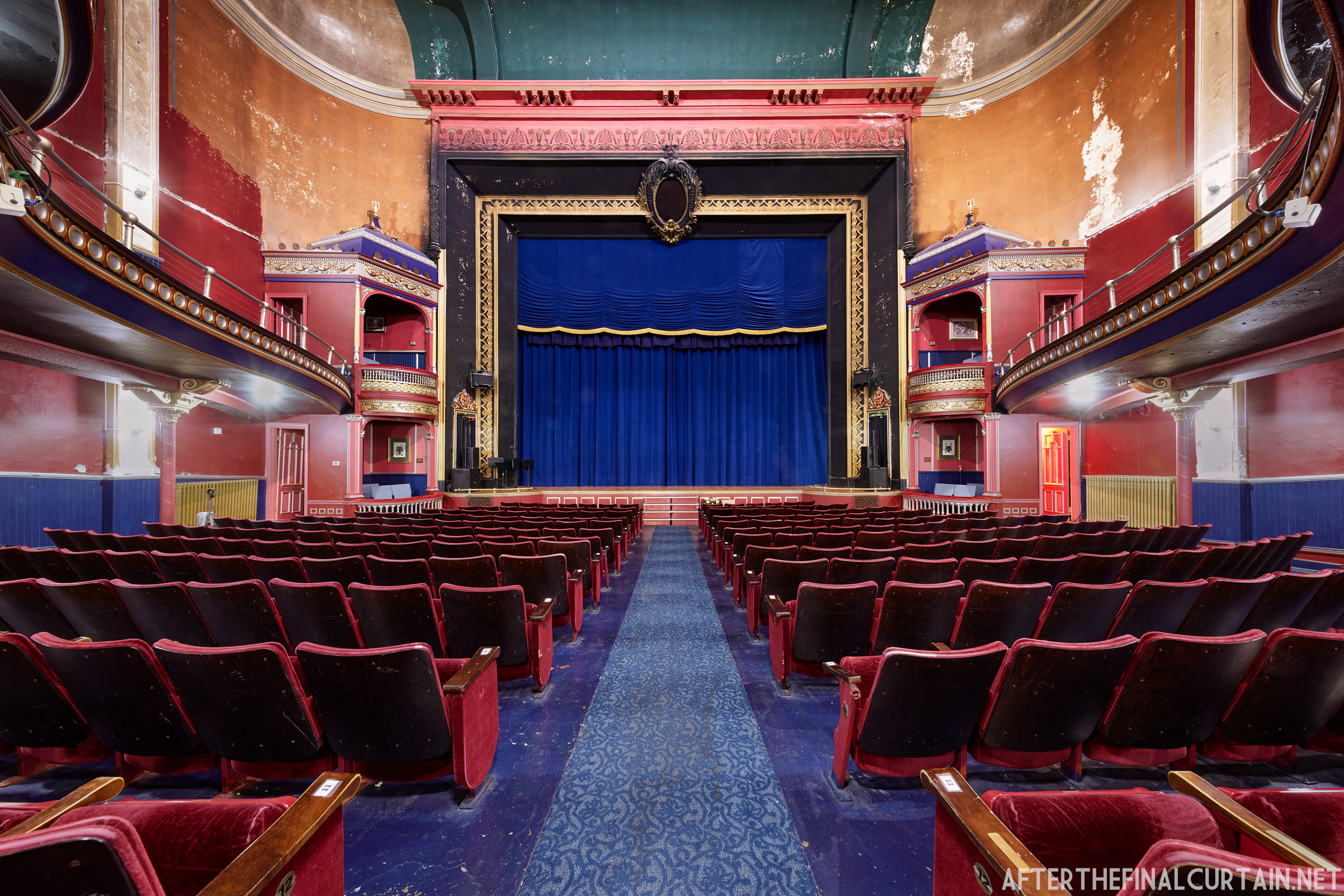
The orchestra level in 2023.
After undergoing extensive renovations, the Sorg Opera House triumphantly reopened its doors on September 22, 1935, showcasing a combination of films and stage shows. In the late 1940s, the Sorg Opera House temporarily closed once again, this time for a remodeling project. One notable change during this period was the addition of a false ceiling, which effectively separated the upper balcony from the rest of the theater. This modification was implemented to enhance the acoustics and improve the overall sound quality, ensuring an enhanced auditory experience for the audience.
The original walls of the lobby were covered up during the remodel in the 1940s.
After operating as a movie theater for several decades, the Sorg Opera House closed in the late 1970s. However, the formation of the Friends of the Sorg group brought new hope and a renewed purpose for the historic venue. Their vision was to reopen the theater as a live performance venue, and their efforts were successful. The Friends of the Sorg ran the theater until 2010 when a water main break forced its closure once again.
In 2012, a new group called the Sorg Opera Revitalization Group (SORG) was established with the goal of purchasing and reopening the building. Their dedication and determination led to the acquisition of the theater in August 2012, with a purchase price of $32,000. Since then, SORG has made significant improvements to the building, gradually restoring its grandeur. Some notable changes include the removal of the partition between the upper balcony and the main auditorium, the replacement of seats with those donated from the Cincinnati Music Hall, repairs to the public restrooms, and the re-hanging of the house curtains.
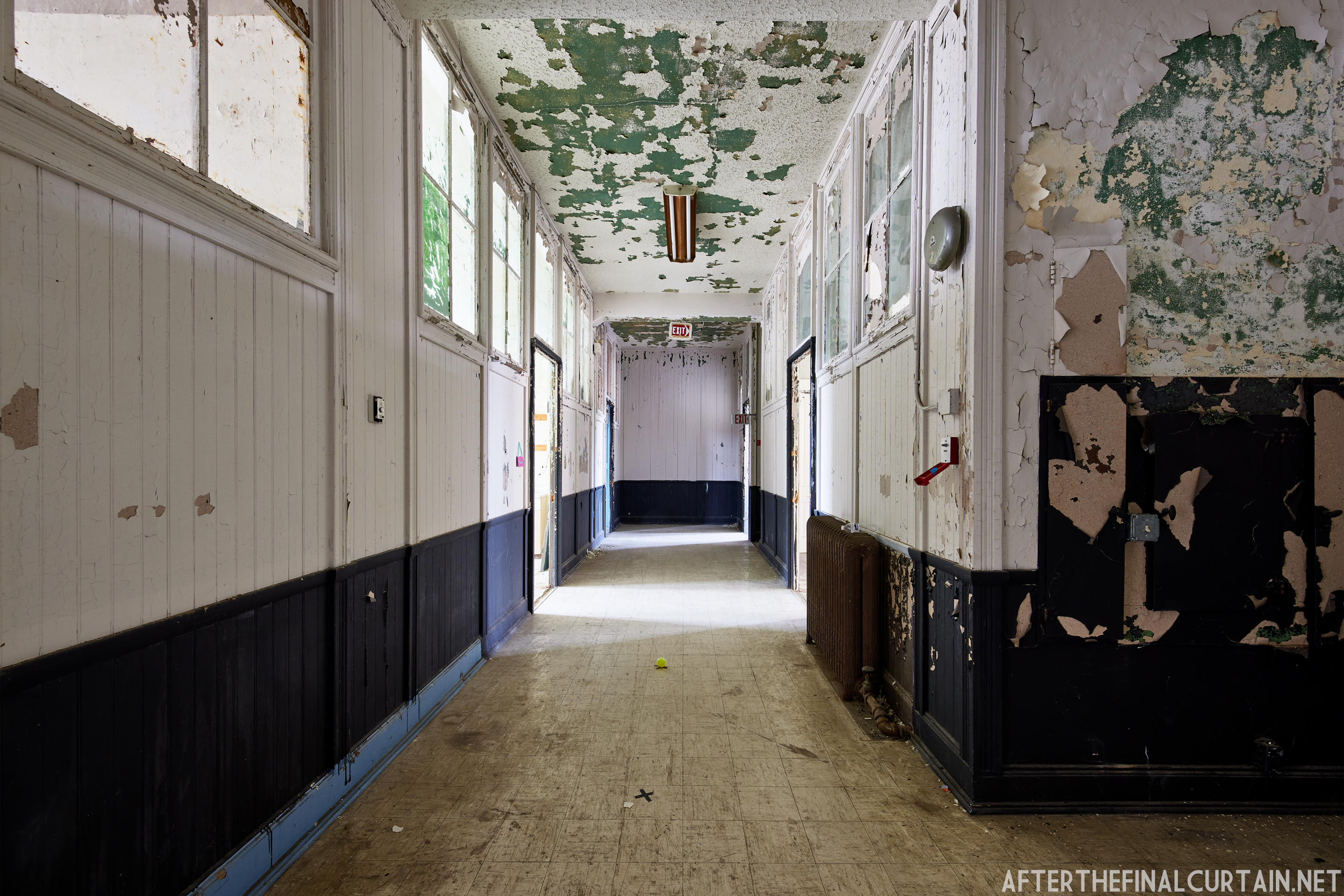
A hallway in the building next to the Sorg, which is planned to become part of the opera house after renovations.
While substantial progress has been made, a full restoration of the Sorg Opera House is estimated to require an investment ranging from $9 million to $11 million. Despite the ongoing restoration efforts, the theater reopened its doors in late 2017 with a special performance titled “Celebrate the Sorg,” featuring the Butler Philharmonic Orchestra. This reopening marked a significant milestone in the theater’s journey toward revival, reaffirming its role as a cultural hub for the community.
Like many theaters at the time, the Sorg was segregated. It had a separate entrance, ticket booth and balcony for its non-white patrons.
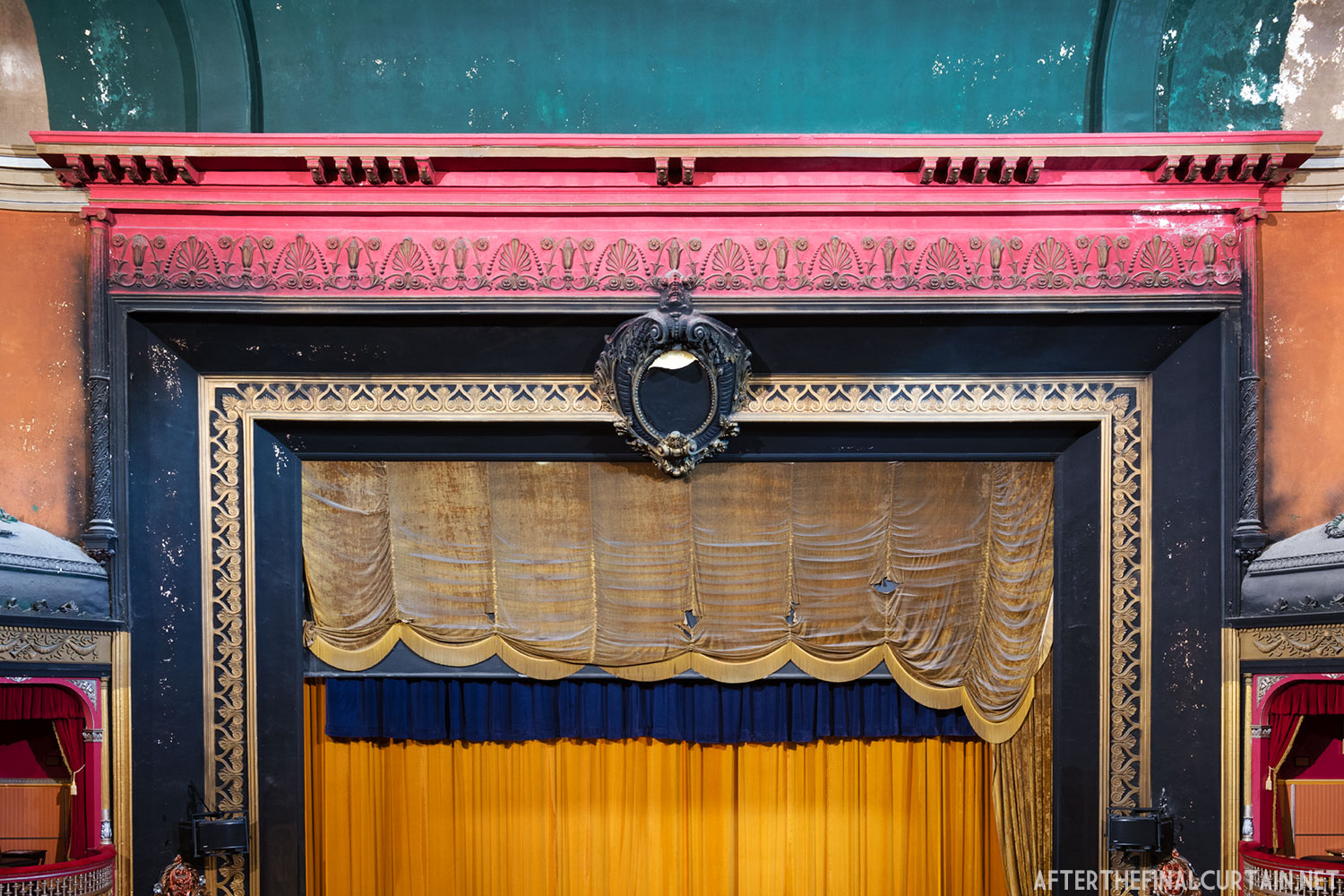
The much of the proscenium arch was covered up during the remodel in the late 1940s.View of the auditorium from the main level.
The Robins Theatre in Warren, Ohio is currently being restored and is scheduled to reopen in 2020. I’ve been documenting the progress and put together a short video tour. Look for an in depth post on the Robins soon!
I’ve been going through some of my older posts and expanding the text as well as re-editing the photos. Check out the second redone post – The Kenosha Theatre in Kenosha, WI.
Yesterday I attended a photography workshop at the Strand Theatre in New Bedford, Massachusetts hosted by Bryan Buckley of Vanishing New England. I love hosting workshops, but it was very nice to be on the other side of one this time. The Strand Theatre originally opened as the Vien Theatre in 1905, and is going to be turned into a community center in the near future.
Capitol Theatre, Fall River, MA.
While I was in the area I also visited the former Capitol Theatre in Fall River, MA. The Capitol originally opened on February 2, 1926. I believe it closed in the 1960s, but haven’t been able to verify that yet. Part of the orchestra level was converted into a bowling alley sometime after it closed. The proscenium and organ chambers were removed so that a large steel support beam could be installed as part of the conversion.
I’ll be posting full write ups on both of these theaters very soon.
During the late 1930’s tickets cost .25 cents, except on Wednesdays when admission only cost .10 cents.
The Fitchburg Theatre in Fitchburg, Massachusetts originally opened on February 7, 1929. It was designed by architect George W. Jacobs for the Maine and New Hampshire Theater Corporation (MNHTC). The construction of the theater displaced two buildings, one of which is now the Masciarelli Funeral Home, a Fitchburg Historic Landmark. MNHTC spared no expense in construction, which included a $15,000 Wurlitzer Style 190 pipe organ, large decorative tapestries for the auditorium, and a Photophone system. The 1,751-seat theater was the second theater in New England to have Photophone, a system of syncing recorded audio with motion picture.
The Wurlitzer organ is long gone. It was removed in the 1960s.
Like many of its contemporaries, the Fitchburg Theatre had a mix of motion pictures and live (often vaudeville) performances. Its opening day program consisted of “In Old Arizona,” starring Warner Baxter, Dorothy Burgess and Edmund Lowe, five vaudeville acts (Miss Raffin’s Marvelous Troupe of Monkeys, Marie DeComa and Company, Don Romaine & Will Castle, Will Ward & Co.). Harry Rodgers played the Wurlitzer organ during the festivities. Tickets to the opening were reserved in advance and the same show was performed on February 8 and 9. Vaudeville performances continued at the theater until 1948, much longer than usual. In 1954, the theater closed for renovations. A concession stand, new marquee and updated seating were added.
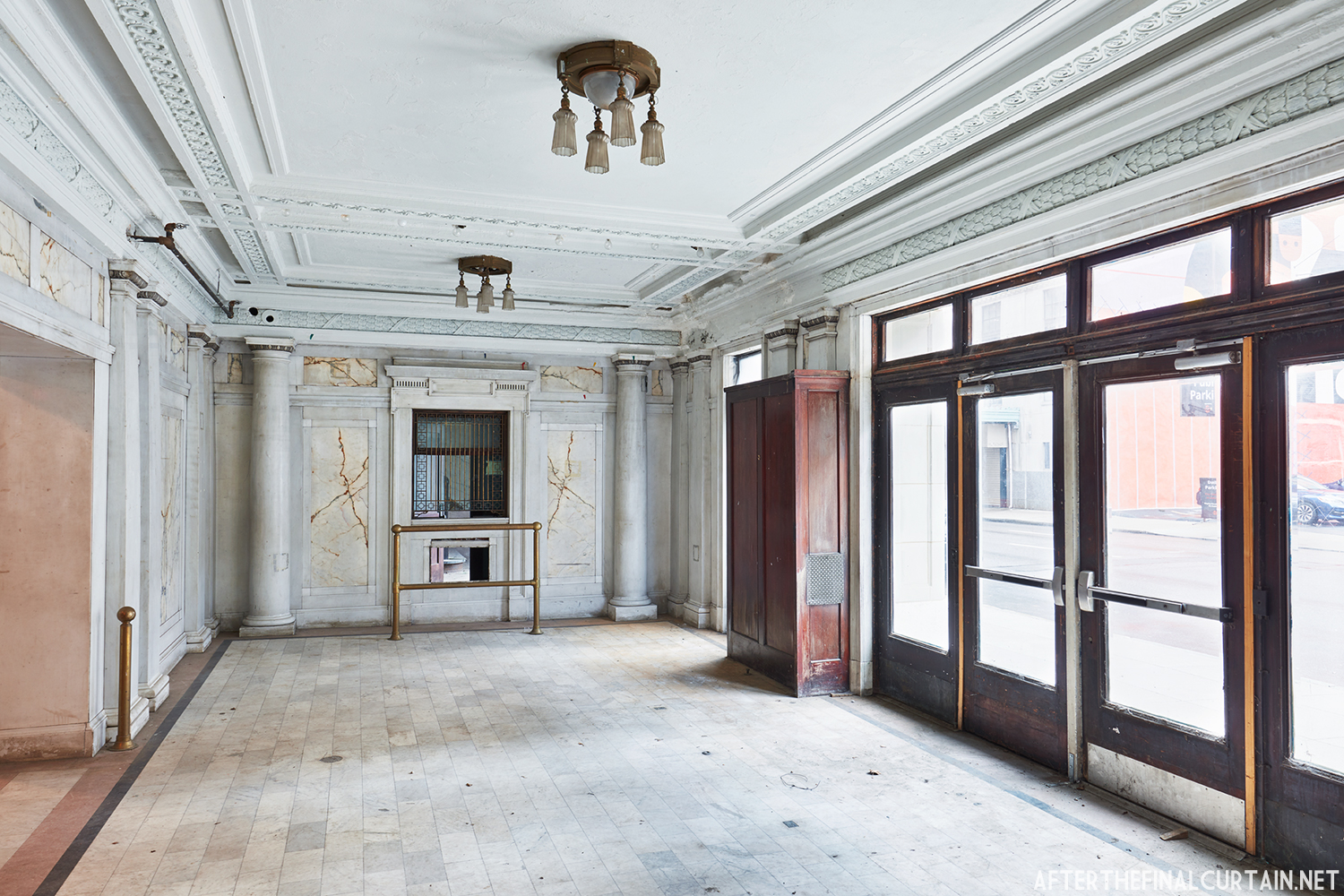
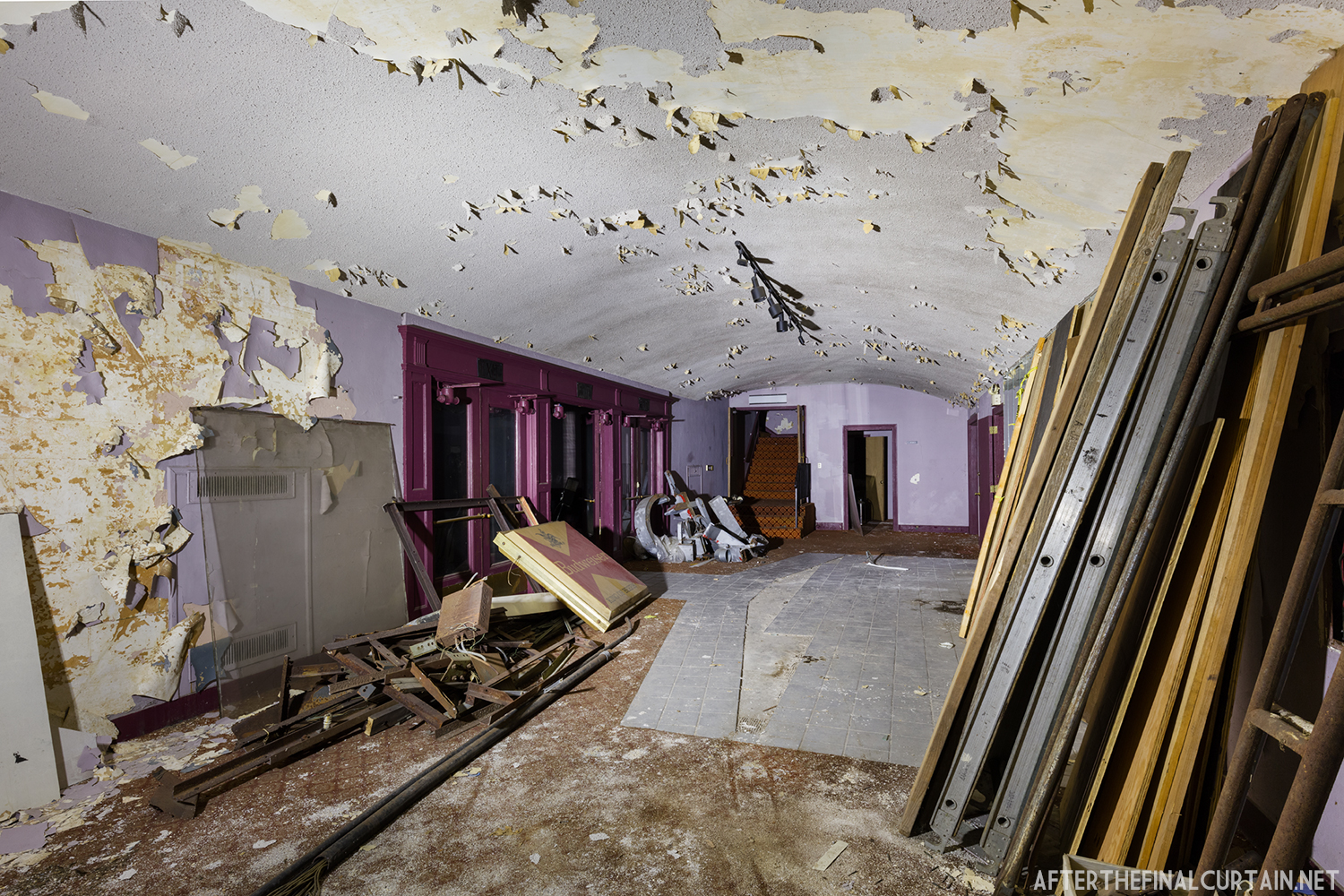
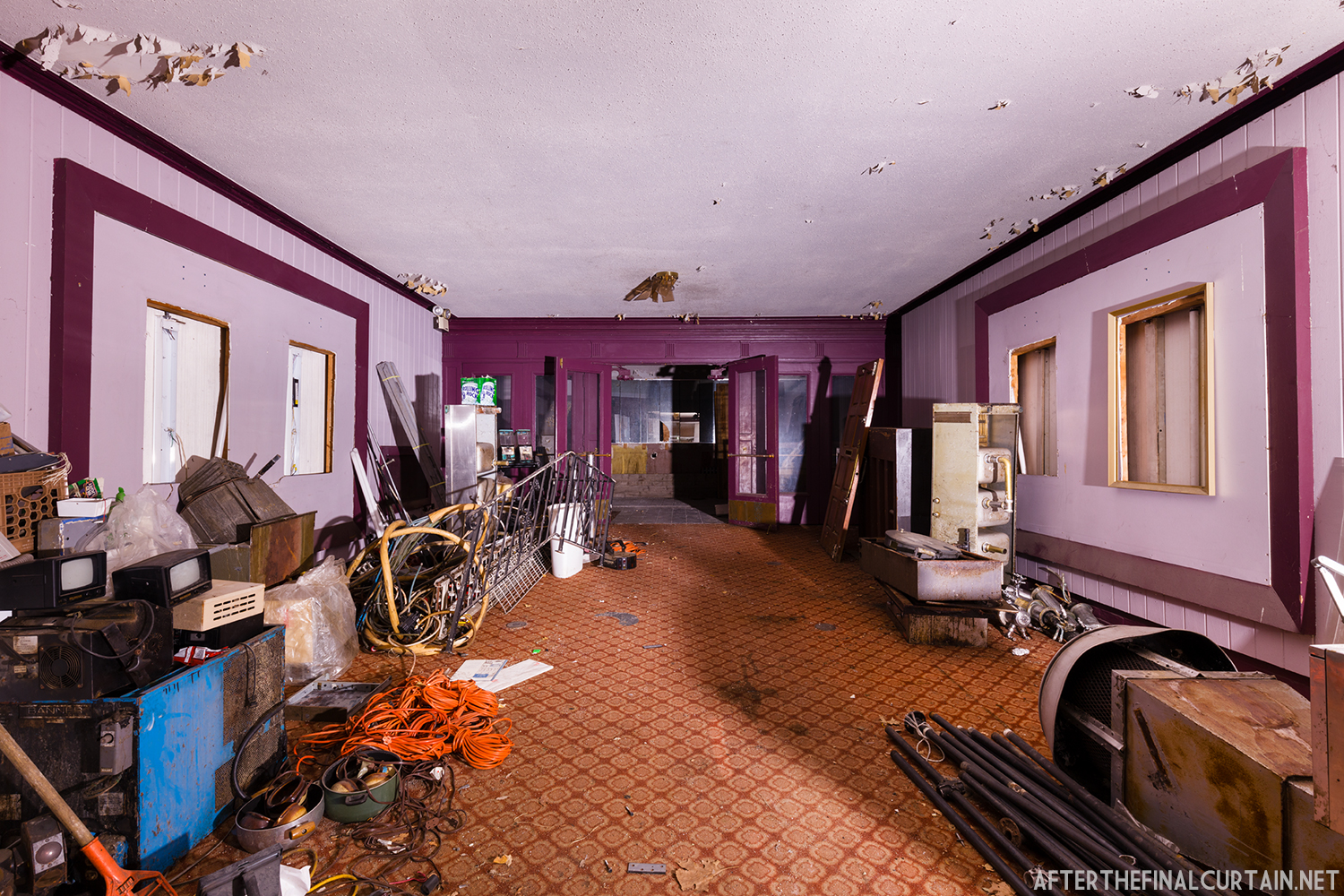
The Lobby is currently full of construction debris.
The Fitchburg Theatre closed in 1970 and reopened the following year as an adult theater. Fitchburg police raided the theater on December 31, 1973 and seized copies of “Deep Throat,” and “The Devil in Miss Jones.” More adult films were seized in subsequent raids on February 11, 1974 and July 5, 1974. The owners were fined $10,000 in August 1974 for violating Massachusetts obscenity laws.
Frank Hollis, of the vaudeville team Kenney and Hollis was the first manager of the theater.
In 1975 the theater was forced to close when the city of Fitchburg refused to renew the theater’s license to show films. It was rumored that it was due to the obscenity law violations, but that was denied by Hedley Brey, the Mayor of Fitchburg at the time. Brey said it was because the owners had not complied with a city ordinance requiring the approval of the Health, Building, Fire and Police departments’ approval to show films to the public. Ben Sack Theatres, Inc. leased the theater later that year, and it reopened as the Family Theatre on July 30, 1975 with a showing of “Doc Savage: Man of Bronze.”
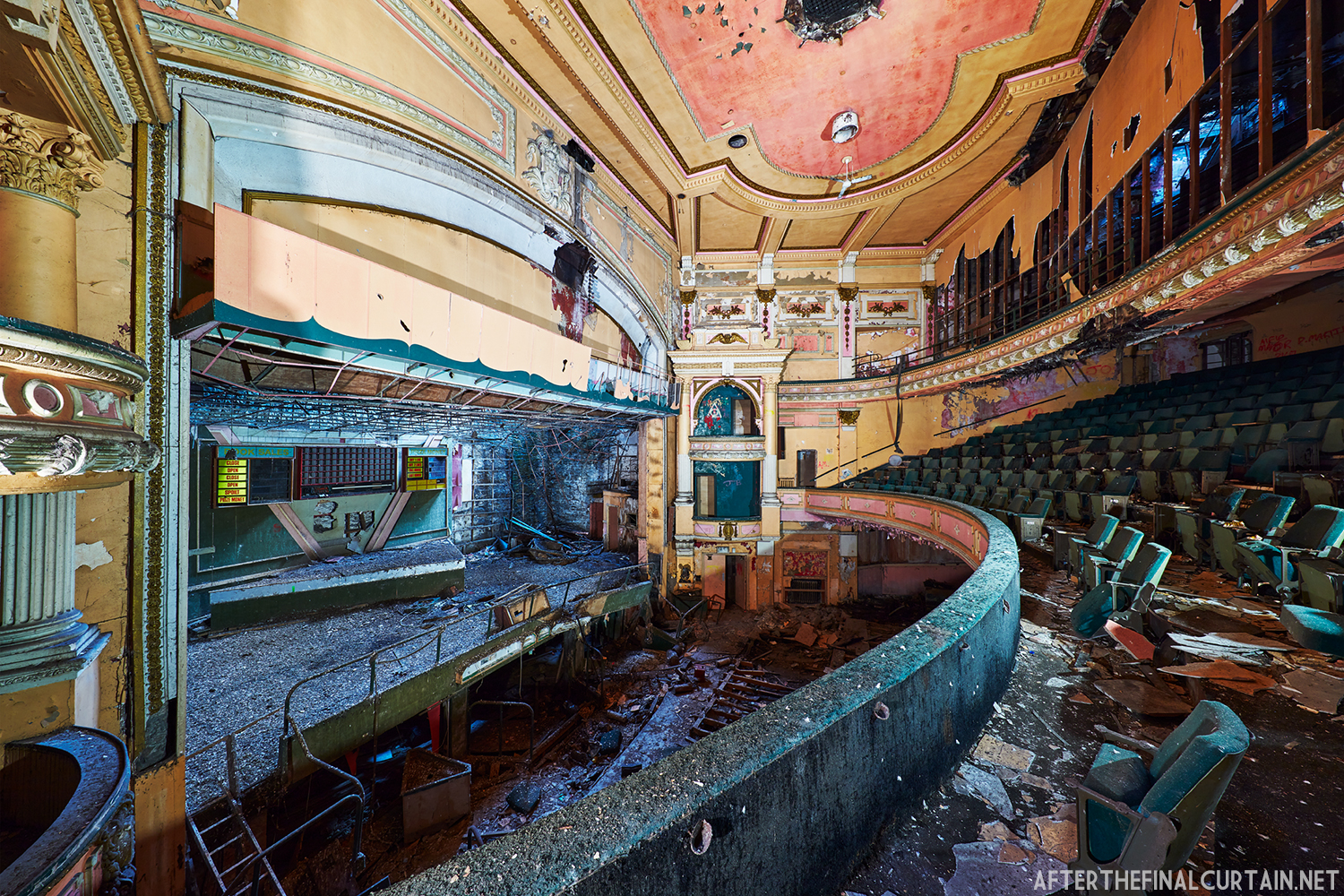
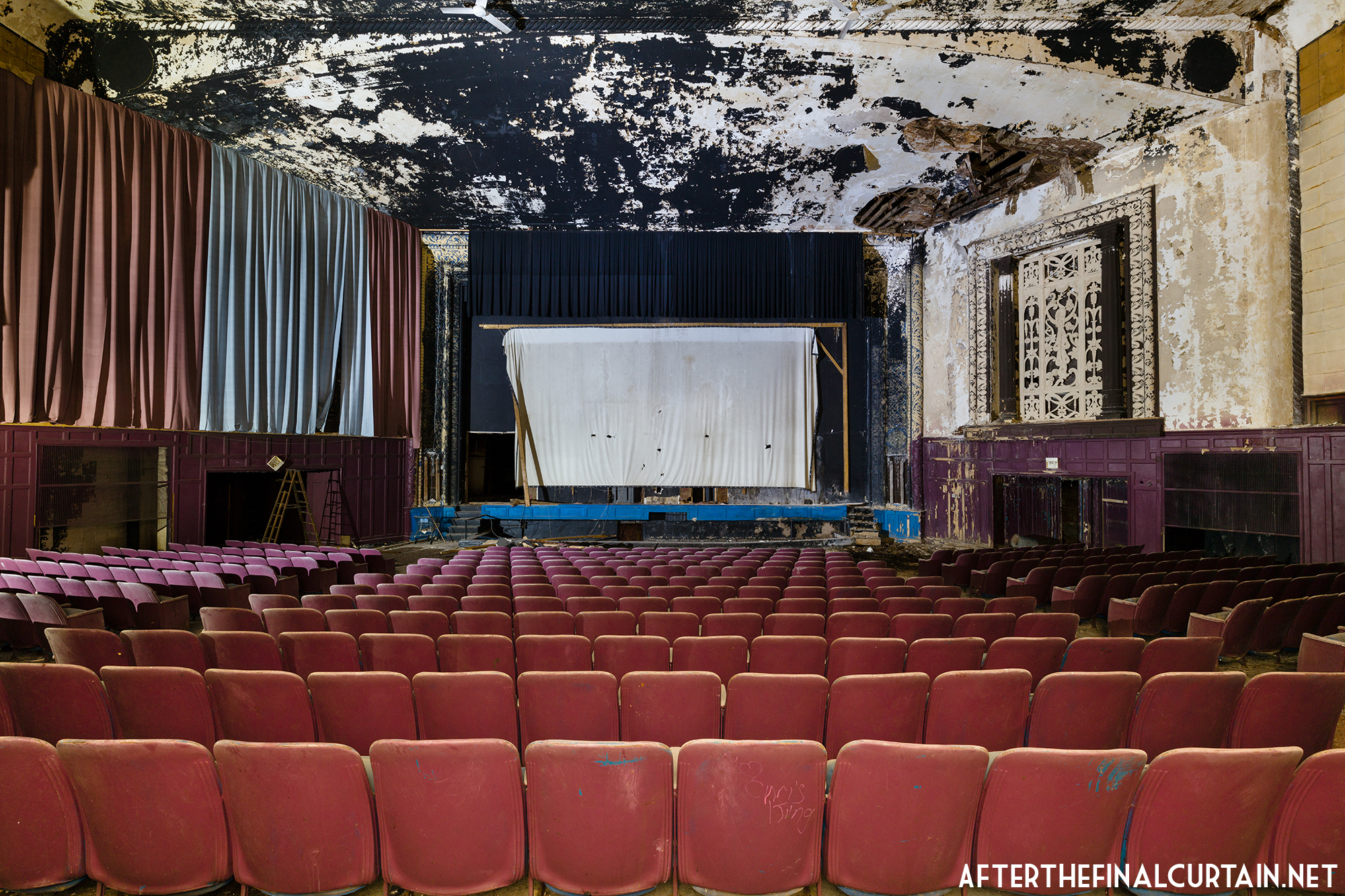
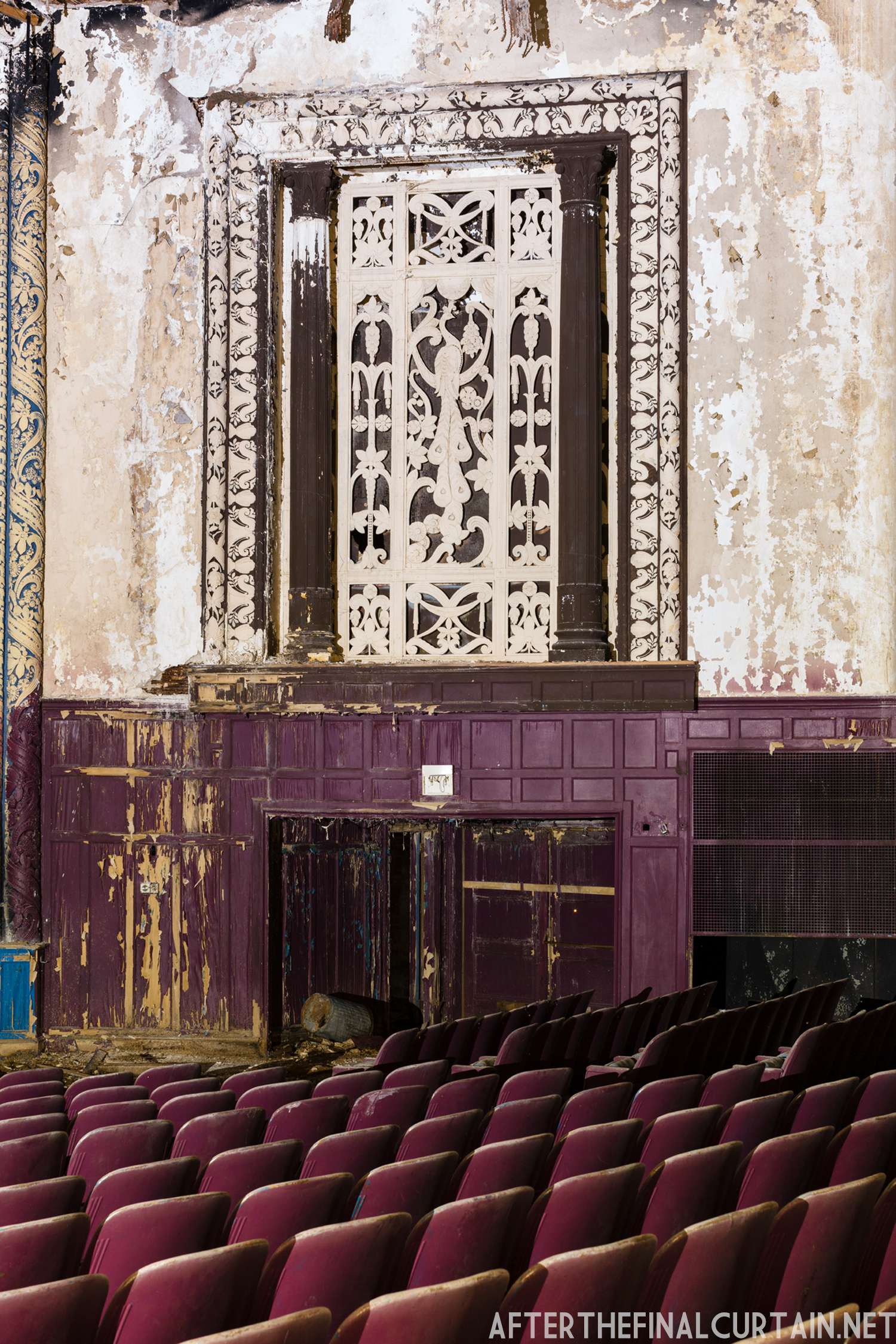
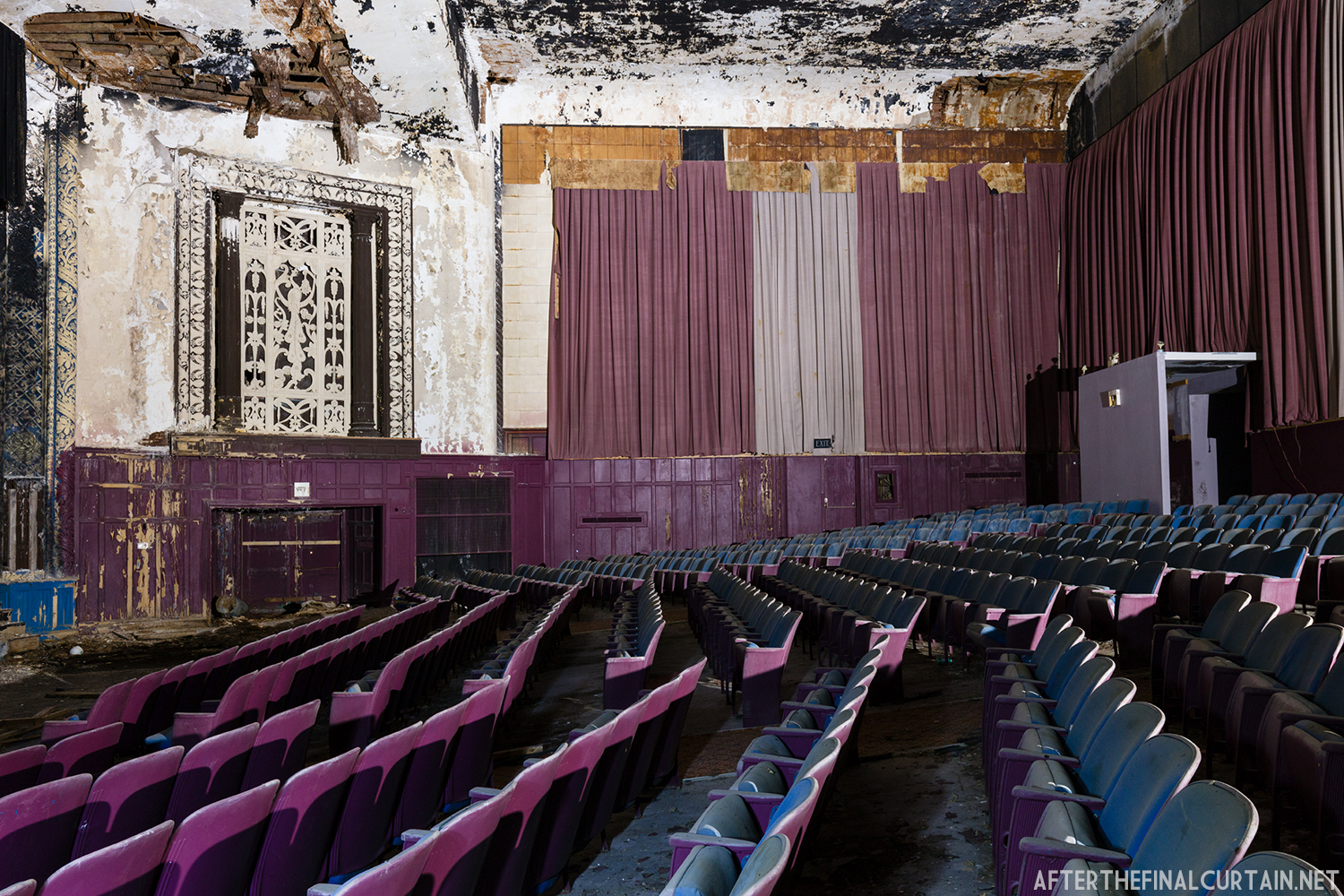
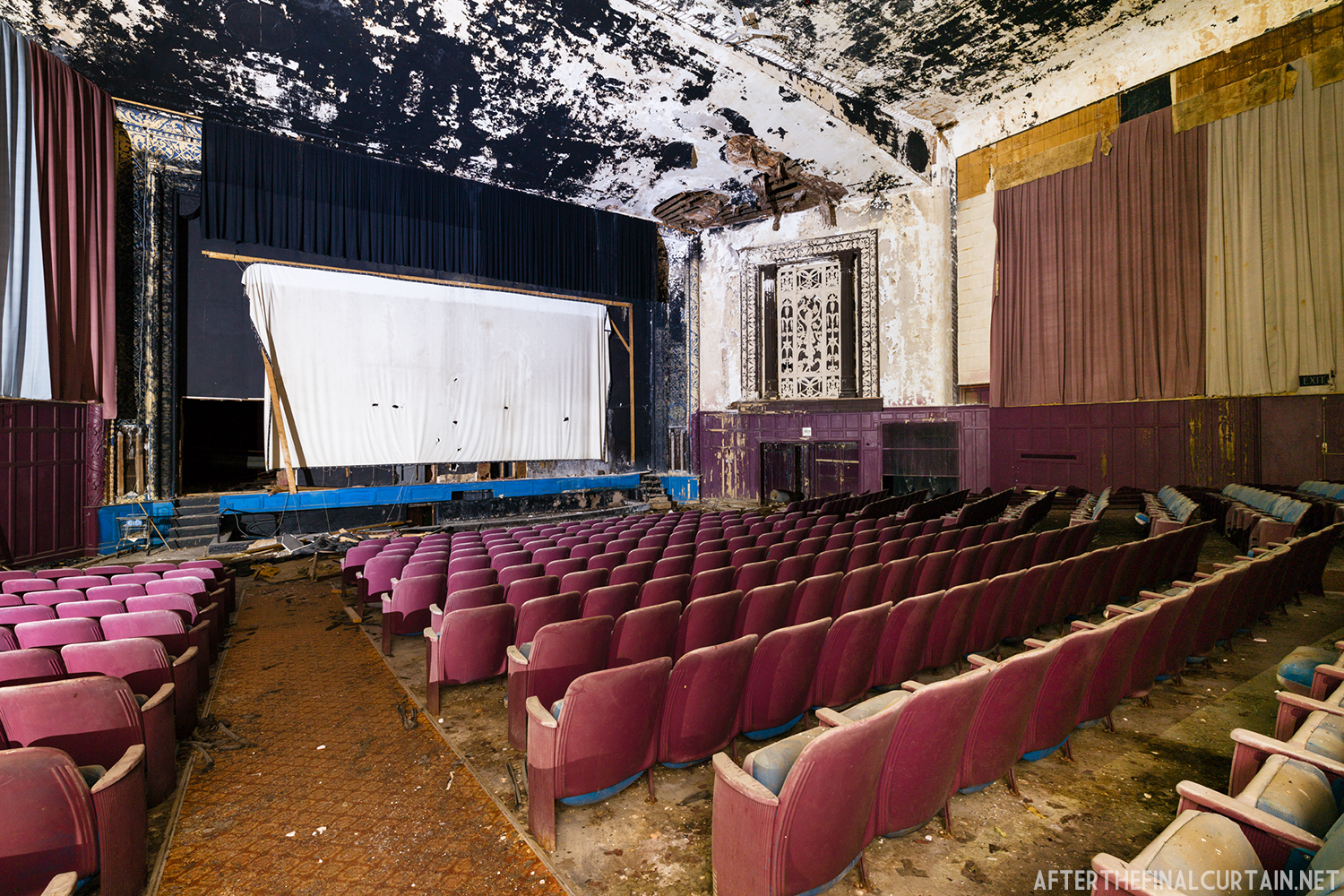
Some of the original plasterwork can be seen again due to the drapes that were put up during the 1980 remodel falling down.
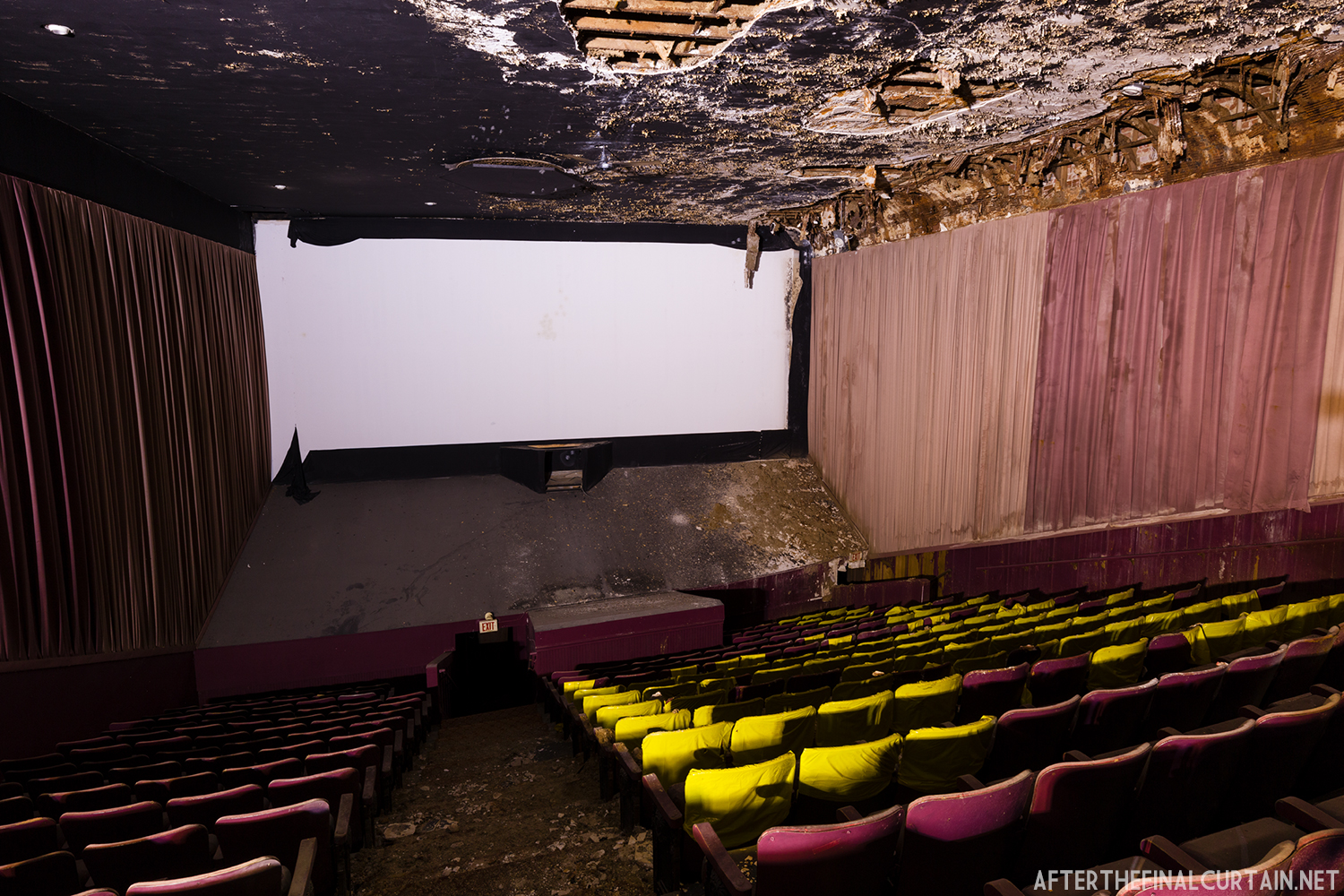
Live performances began again soon after it reopened, and many famous bands performed at the theater during this time, including; Rush, Merle Haggard, Dolly Parton, Loretta Lynn, Hank Snow and Freddy Fender. In 1980, the theater closed for renovations once again. This time it was triplexed with the orchestra level becoming one, and the balcony being divided into two smaller auditoriums. At the same time most of the ornate plasterwork was covered with drapes. Upon reopening the theater was renamed the Cinema-1-2-3. It closed for permanently in 1987 with a showing of “Crocodile Dundee.”
One of the two smaller auditoriums created from the former balcony space.
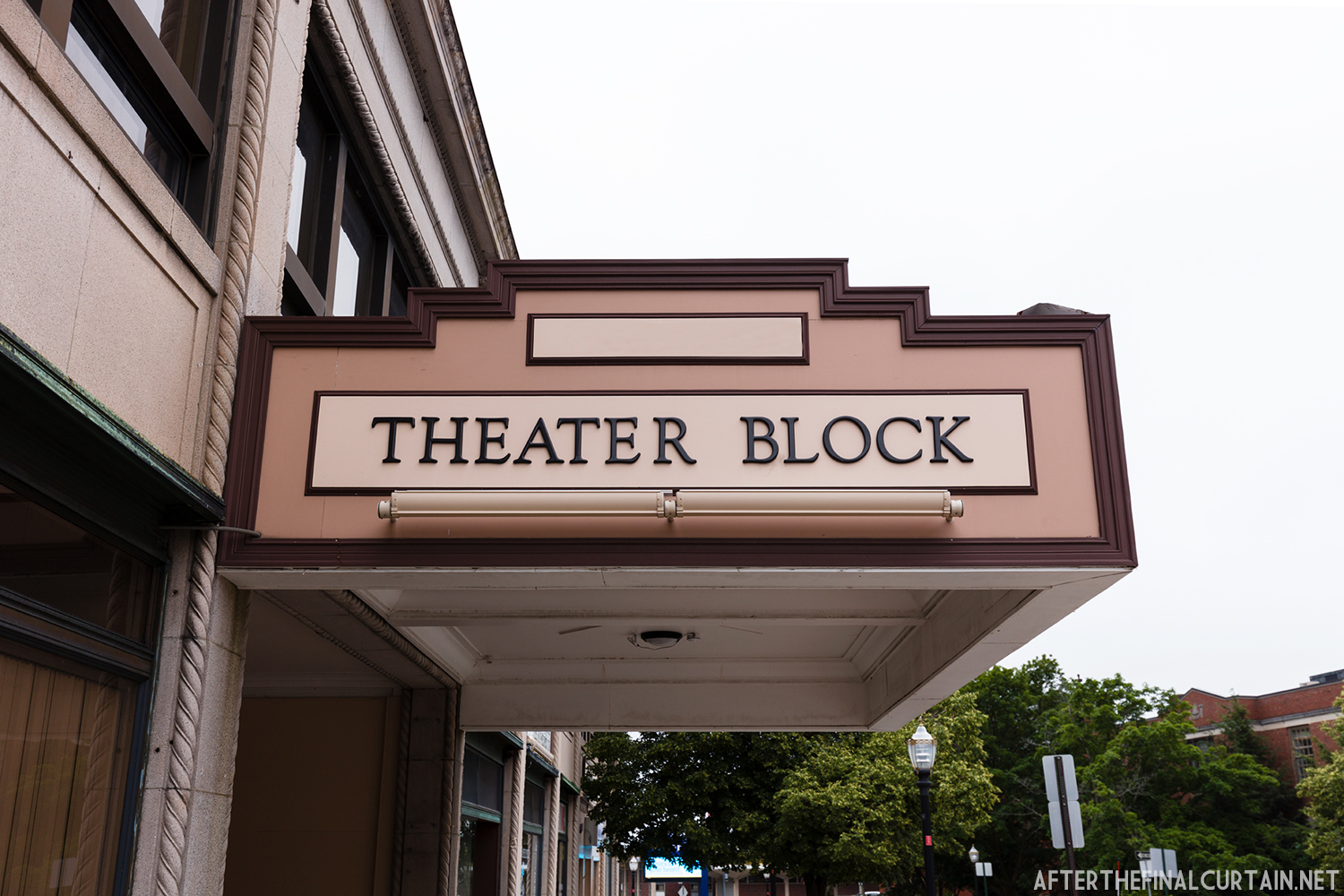
A few plans to reopen the theater were proposed over the next two decades, including reopening it as a movie theater, becoming a “draft house” theater that served alcohol, and gutting the theater and turning it into a rock climbing gym. In November 2016, the main street theater block was purchased by Fitchburg State University (FSU) for $350,000. FSU have a three-phase plan to renovate and reopen the block culminating in the theater becoming a 1,600-seat performing arts space for use by the University’s theater program and community organizations.



 After the Final Curtain