
During the late 1930’s tickets cost .25 cents, except on Wednesdays when admission only cost .10 cents.
The Fitchburg Theatre in Fitchburg, Massachusetts originally opened on February 7, 1929. It was designed by architect George W. Jacobs for the Maine and New Hampshire Theater Corporation (MNHTC). The construction of the theater displaced two buildings, one of which is now the Masciarelli Funeral Home, a Fitchburg Historic Landmark. MNHTC spared no expense in construction, which included a $15,000 Wurlitzer Style 190 pipe organ, large decorative tapestries for the auditorium, and a Photophone system. The 1,751-seat theater was the second theater in New England to have Photophone, a system of syncing recorded audio with motion picture.
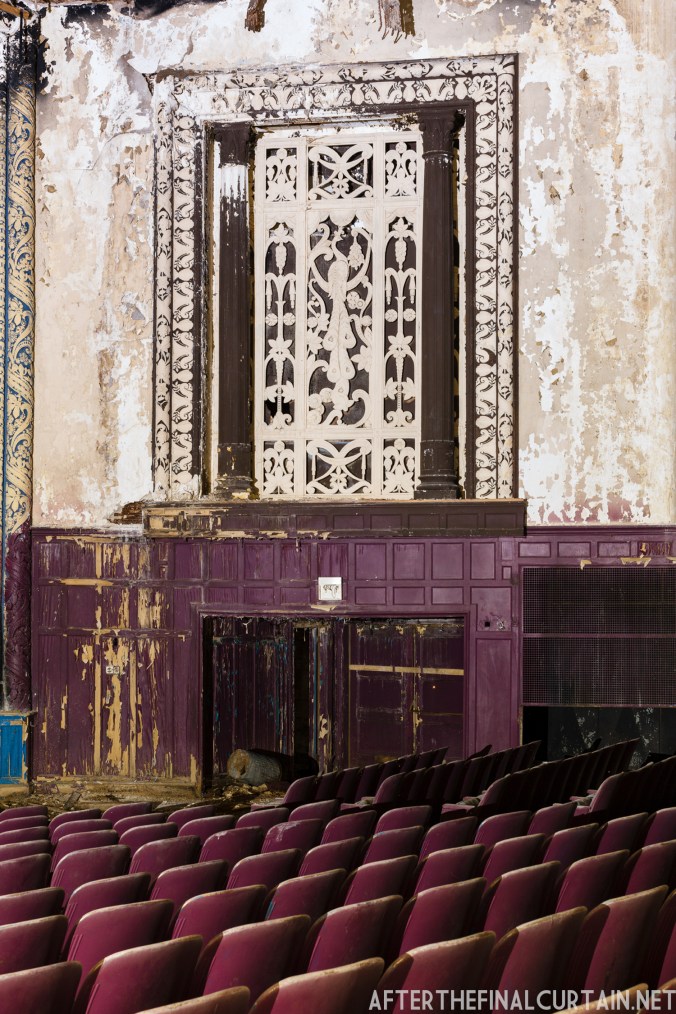
The Wurlitzer organ is long gone. It was removed in the 1960s.
Like many of its contemporaries, the Fitchburg Theatre had a mix of motion pictures and live (often vaudeville) performances. Its opening day program consisted of “In Old Arizona,” starring Warner Baxter, Dorothy Burgess and Edmund Lowe, five vaudeville acts (Miss Raffin’s Marvelous Troupe of Monkeys, Marie DeComa and Company, Don Romaine & Will Castle, Will Ward & Co.). Harry Rodgers played the Wurlitzer organ during the festivities. Tickets to the opening were reserved in advance and the same show was performed on February 8 and 9. Vaudeville performances continued at the theater until 1948, much longer than usual. In 1954, the theater closed for renovations. A concession stand, new marquee and updated seating were added.

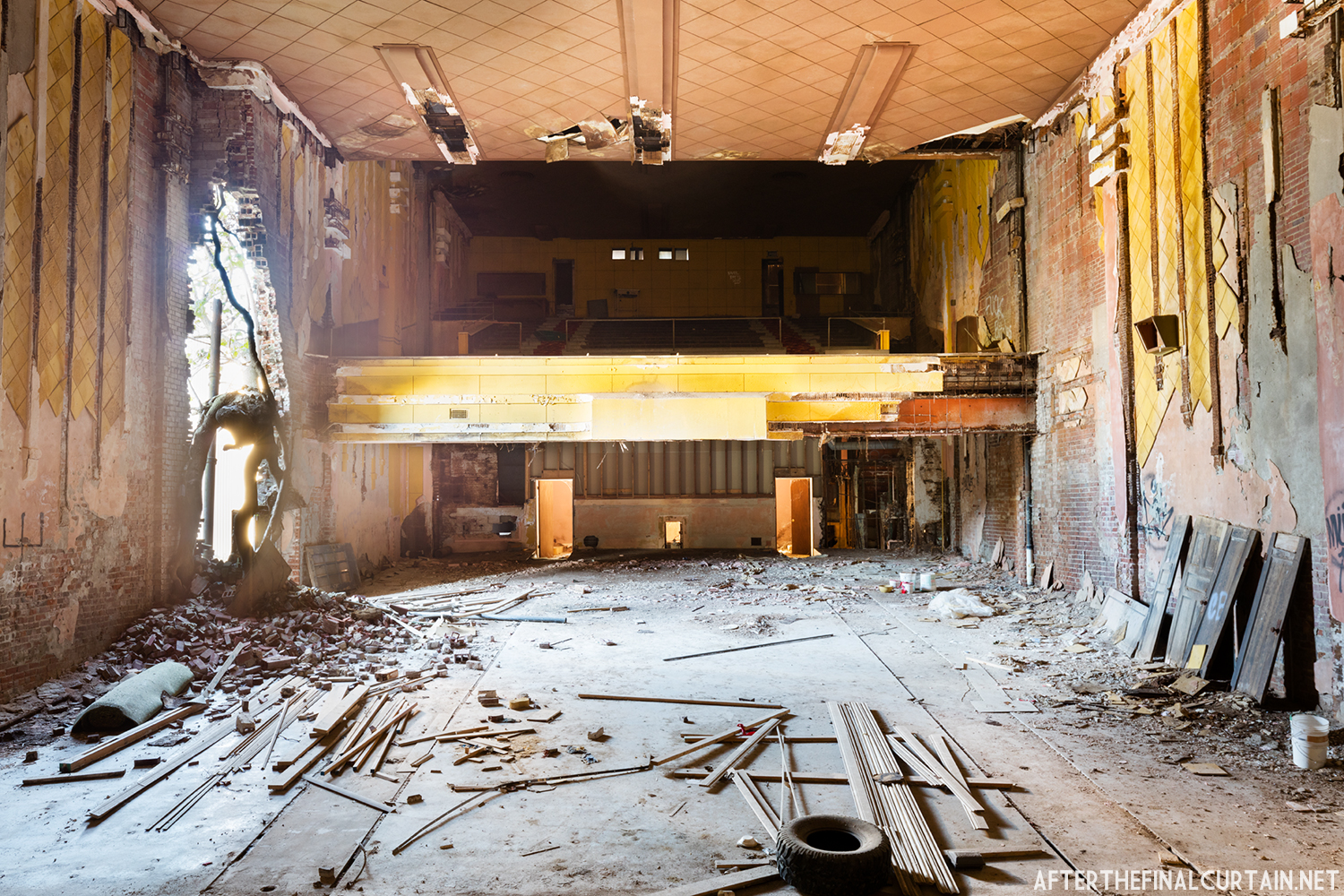
The Lobby is currently full of construction debris.
The Fitchburg Theatre closed in 1970 and reopened the following year as an adult theater. Fitchburg police raided the theater on December 31, 1973 and seized copies of “Deep Throat,” and “The Devil in Miss Jones.” More adult films were seized in subsequent raids on February 11, 1974 and July 5, 1974. The owners were fined $10,000 in August 1974 for violating Massachusetts obscenity laws.

Frank Hollis, of the vaudeville team Kenney and Hollis was the first manager of the theater.
In 1975 the theater was forced to close when the city of Fitchburg refused to renew the theater’s license to show films. It was rumored that it was due to the obscenity law violations, but that was denied by Hedley Brey, the Mayor of Fitchburg at the time. Brey said it was because the owners had not complied with a city ordinance requiring the approval of the Health, Building, Fire and Police departments’ approval to show films to the public. Ben Sack Theatres, Inc. leased the theater later that year, and it reopened as the Family Theatre on July 30, 1975 with a showing of “Doc Savage: Man of Bronze.”

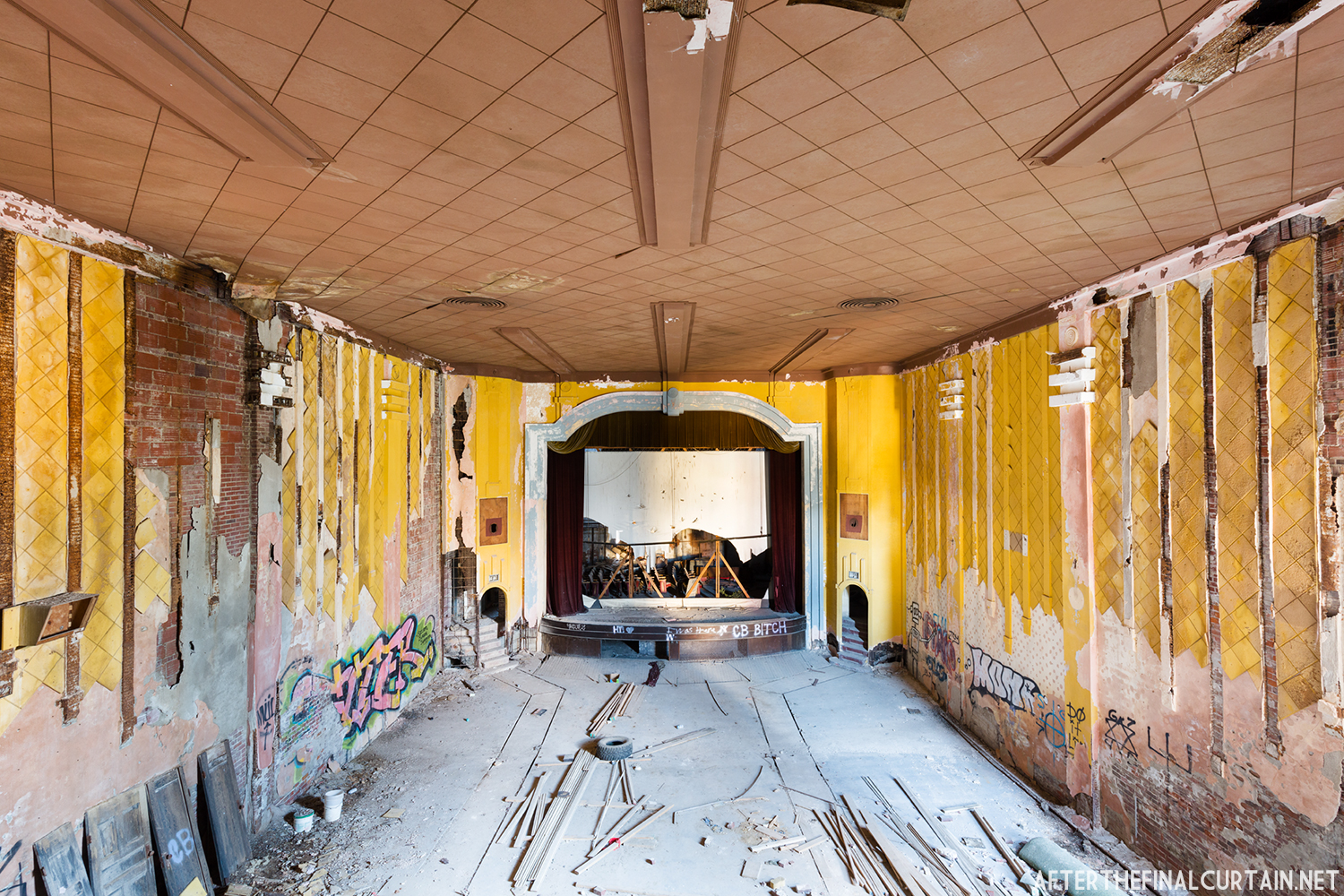
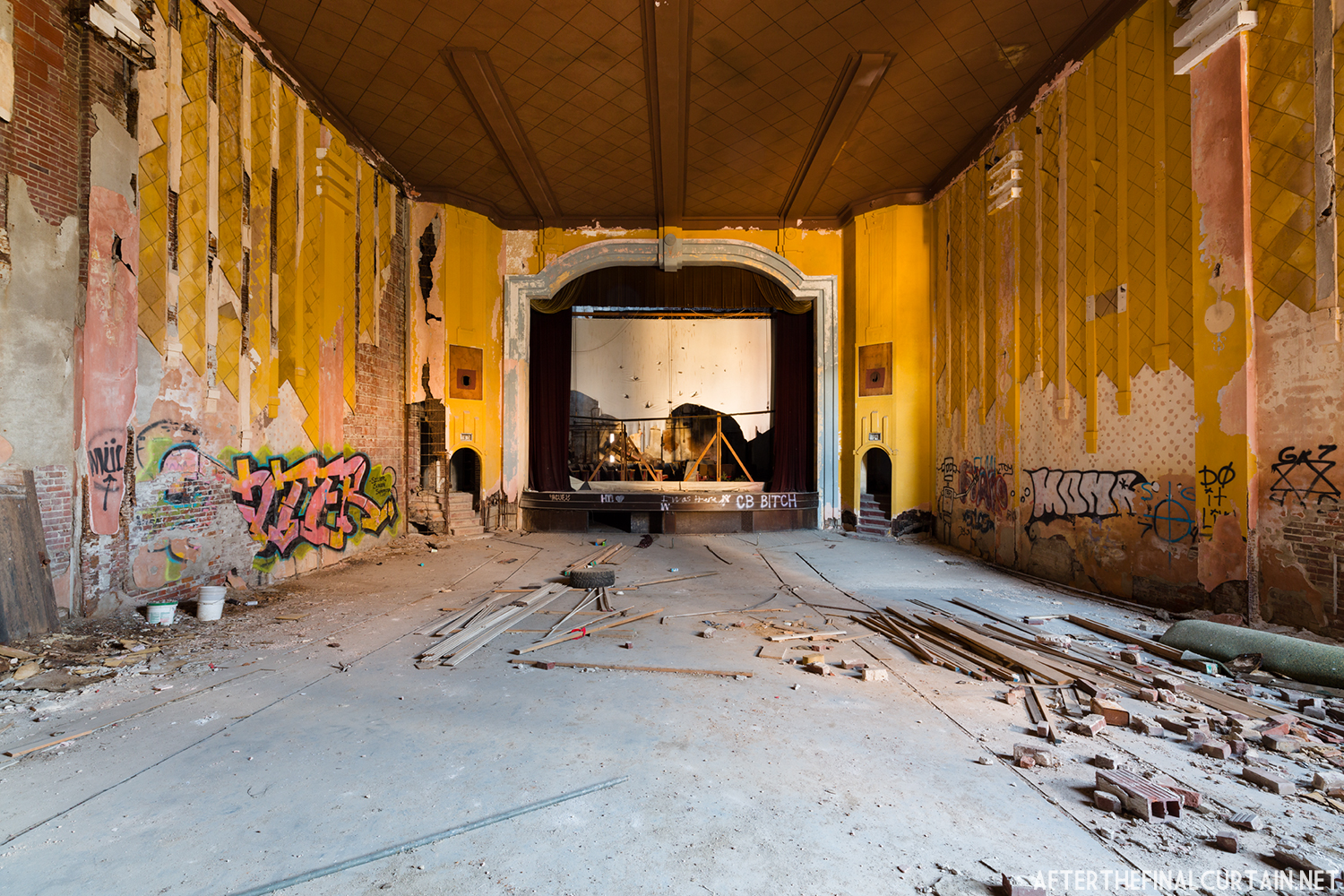
Some of the original plasterwork can be seen again due to the drapes that were put up during the 1980 remodel falling down.
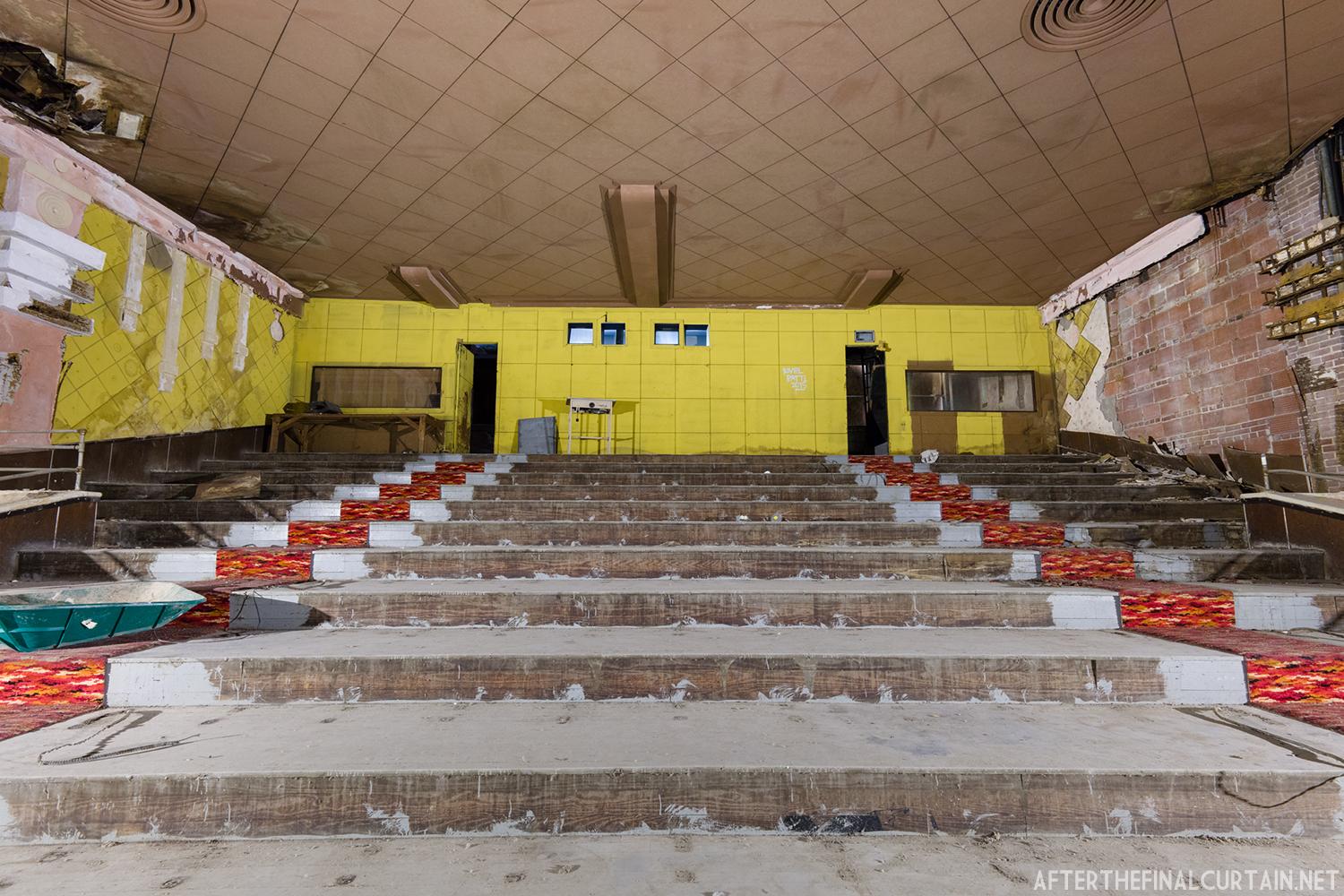
Live performances began again soon after it reopened, and many famous bands performed at the theater during this time, including; Rush, Merle Haggard, Dolly Parton, Loretta Lynn, Hank Snow and Freddy Fender. In 1980, the theater closed for renovations once again. This time it was triplexed with the orchestra level becoming one, and the balcony being divided into two smaller auditoriums. At the same time most of the ornate plasterwork was covered with drapes. Upon reopening the theater was renamed the Cinema-1-2-3. It closed for permanently in 1987 with a showing of “Crocodile Dundee.”
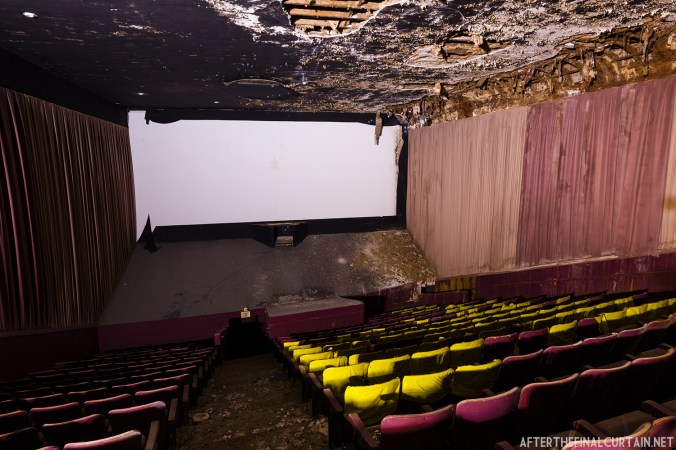
One of the two smaller auditoriums created from the former balcony space.
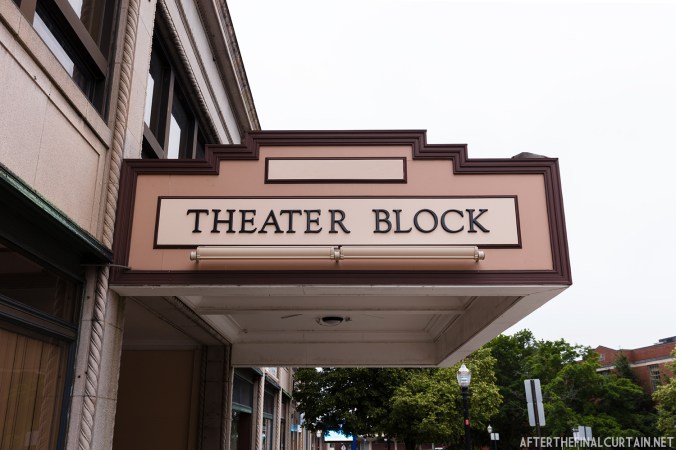
A few plans to reopen the theater were proposed over the next two decades, including reopening it as a movie theater, becoming a “draft house” theater that served alcohol, and gutting the theater and turning it into a rock climbing gym. In November 2016, the main street theater block was purchased by Fitchburg State University (FSU) for $350,000. FSU have a three-phase plan to renovate and reopen the block culminating in the theater becoming a 1,600-seat performing arts space for use by the University’s theater program and community organizations.

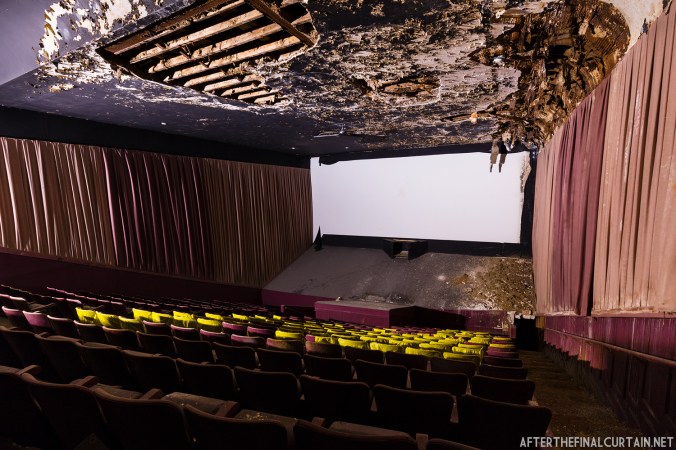
The second of the two balcony auditoriums.
My two books, After the Final Curtain: The Fall of the American Movie Theater, and Kings Theatre; The Rise, Fall and Rebirth of Brooklyn’s Wonder Theatre are available on Amazon and bookstores worldwide. Signed copies can be purchased at my site.

 After the Final Curtain