This was originally posted on After the Final Curtain’s Patreon in January 2025. For expanded early posts, as well as video walkthroughs and other exclusive content, you can become a patron at: https://www.patreon.com/afterthefinalcurtain
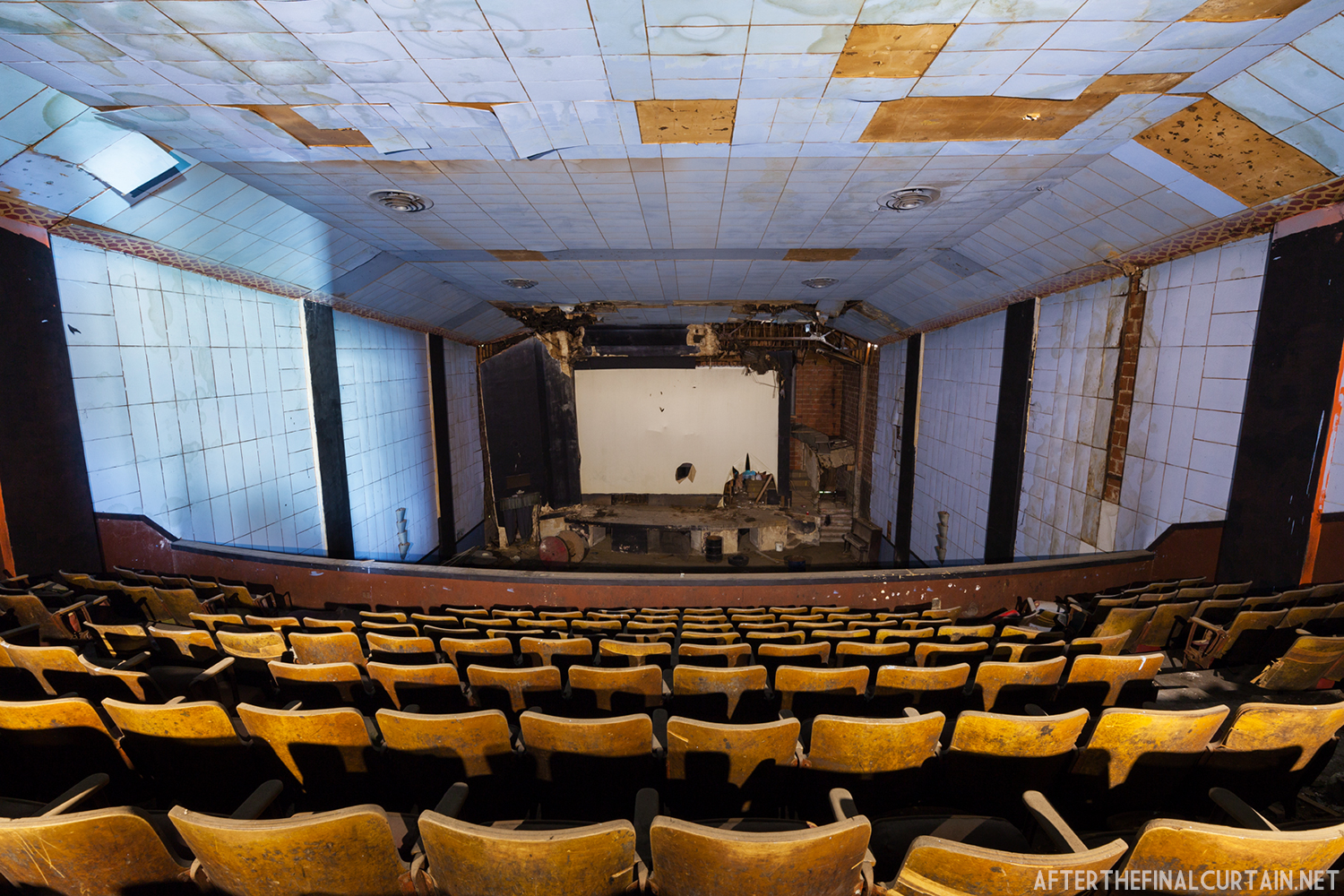
The interior of the auditorium was gutted a few years before the building was demolished.
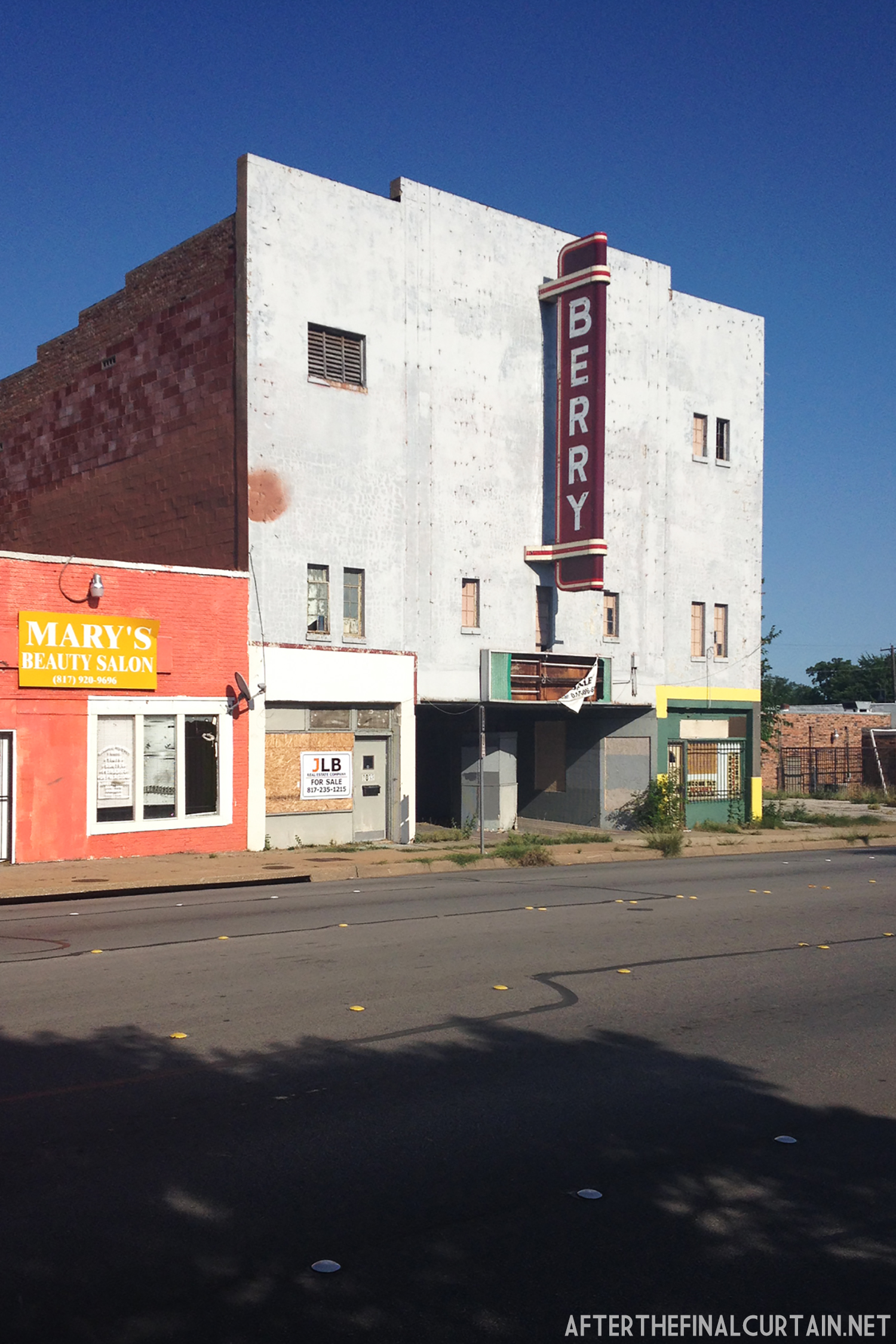
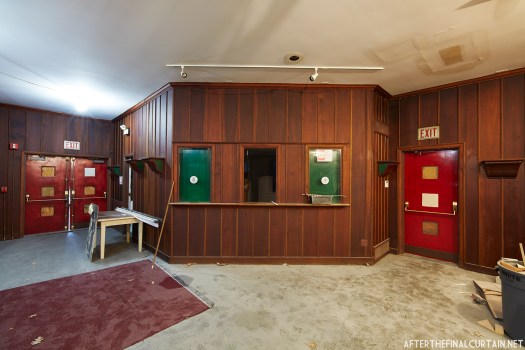
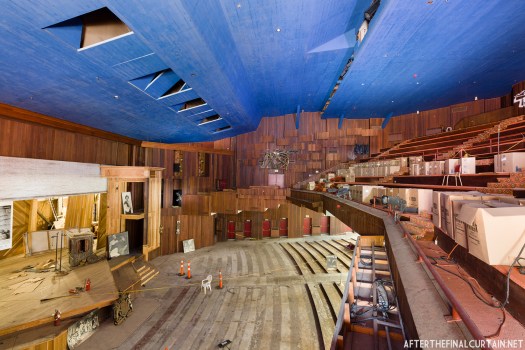
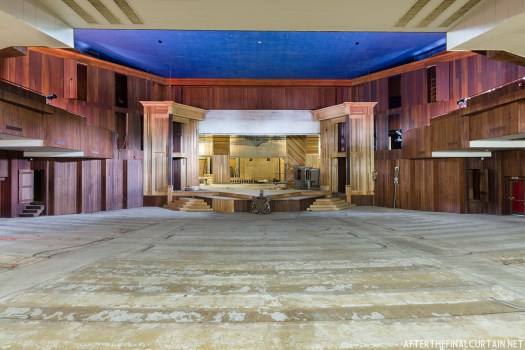
The Berry Theater, originally known as the White Theater after its owner, M.S. White, was located in Fort Worth, Texas at the intersection of W. Berry and Hemphill Streets. The 682 seat theater officially opened its doors on April 3, 1940.
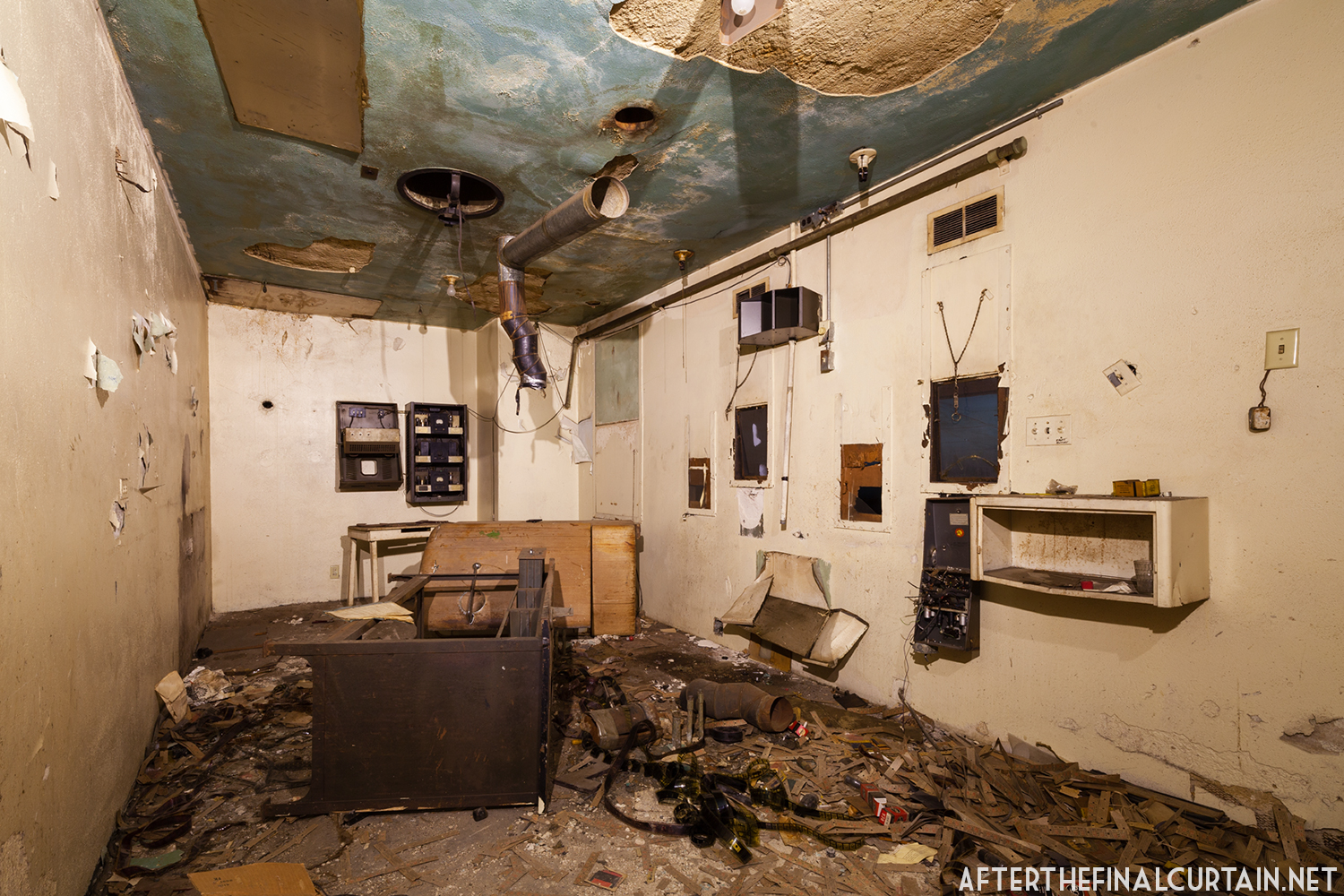
The projection room was largely stripped of equipment.
The building’s design featured a three-story facade that tapered down to a two-story stage house. The theater included a balcony and a distinctive exterior, with the first floor clad in burgundy ceramic tiles and a freestanding box office. The upper levels of the facade were painted stucco, accented with neon lighting that outlined and highlighted its architectural details.
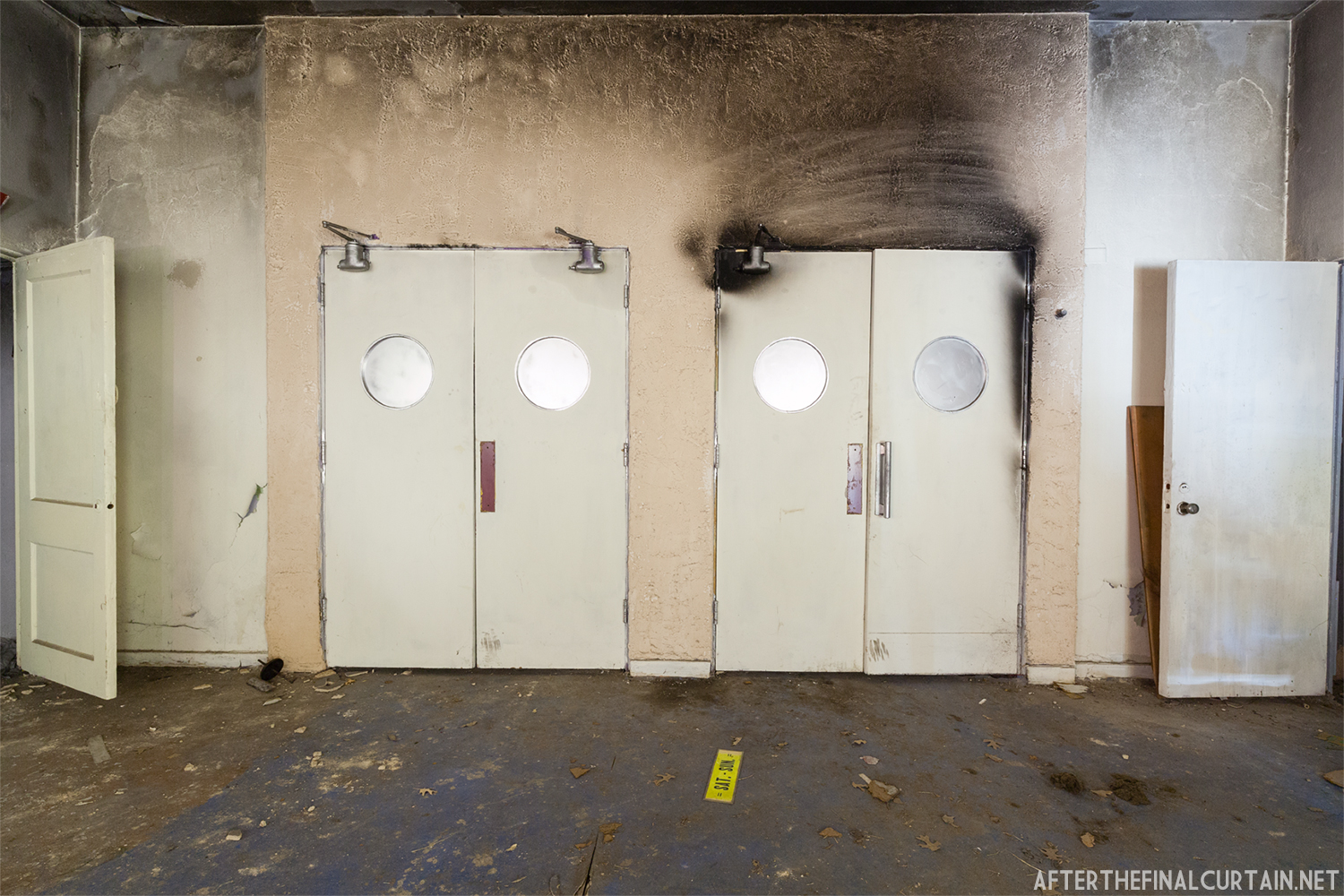
The doors that lead into the auditorium from the lobby.
After decades of vacancy, a commercial demolition permit for the building was issued on July 18, 2023. Demolition began shortly after 9 a.m. on Saturday, July 22, 2023. The site is now a vacant lot.
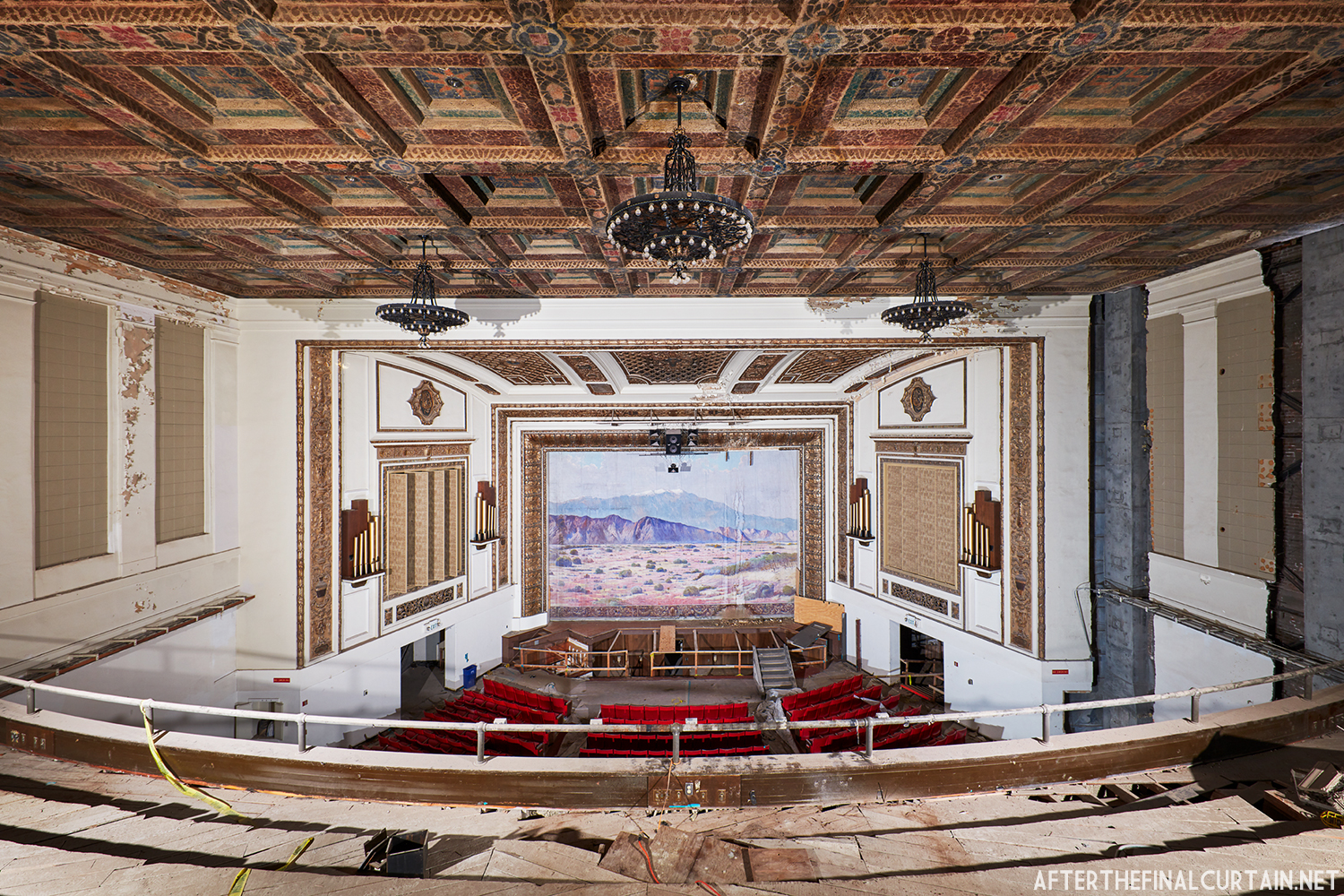
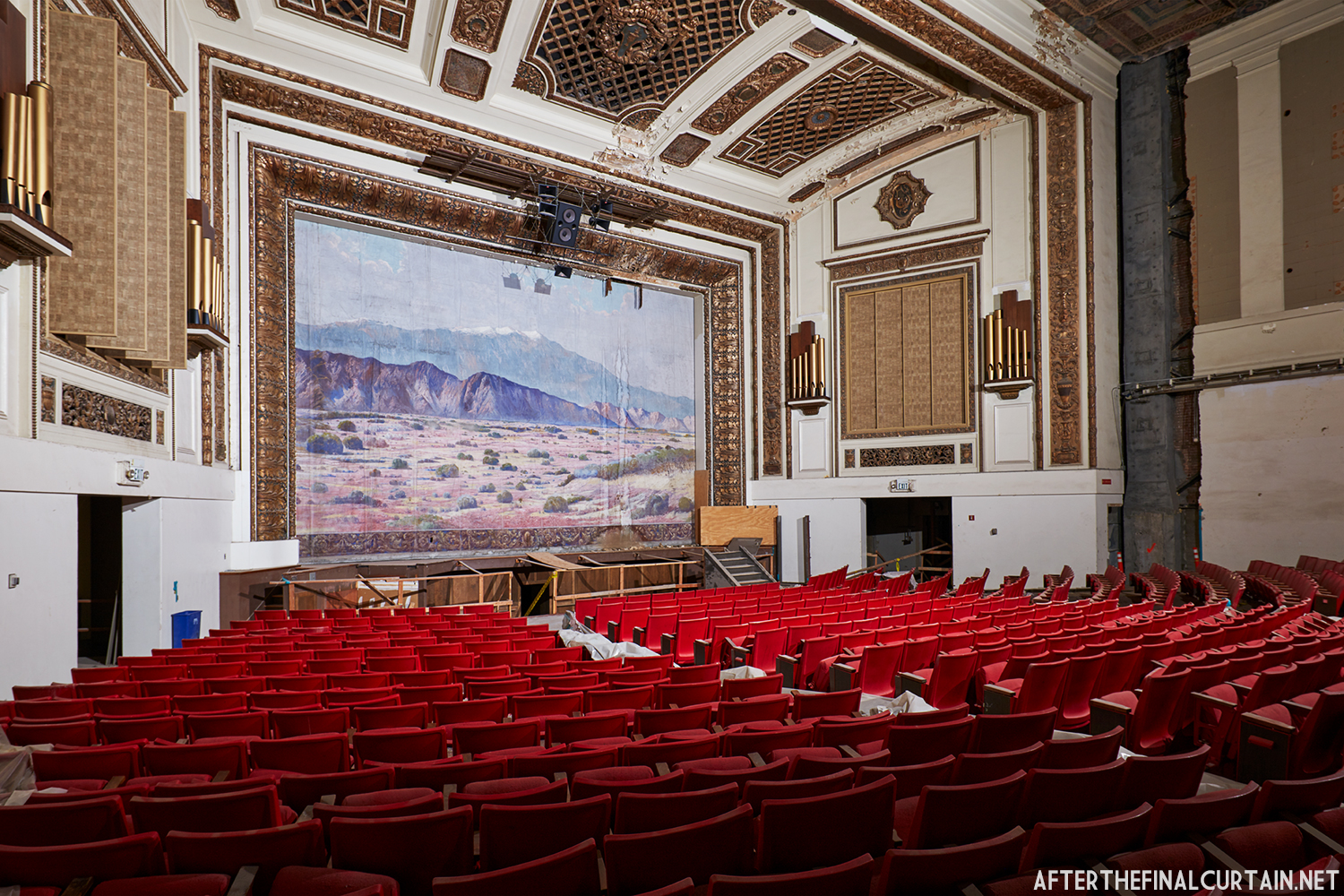
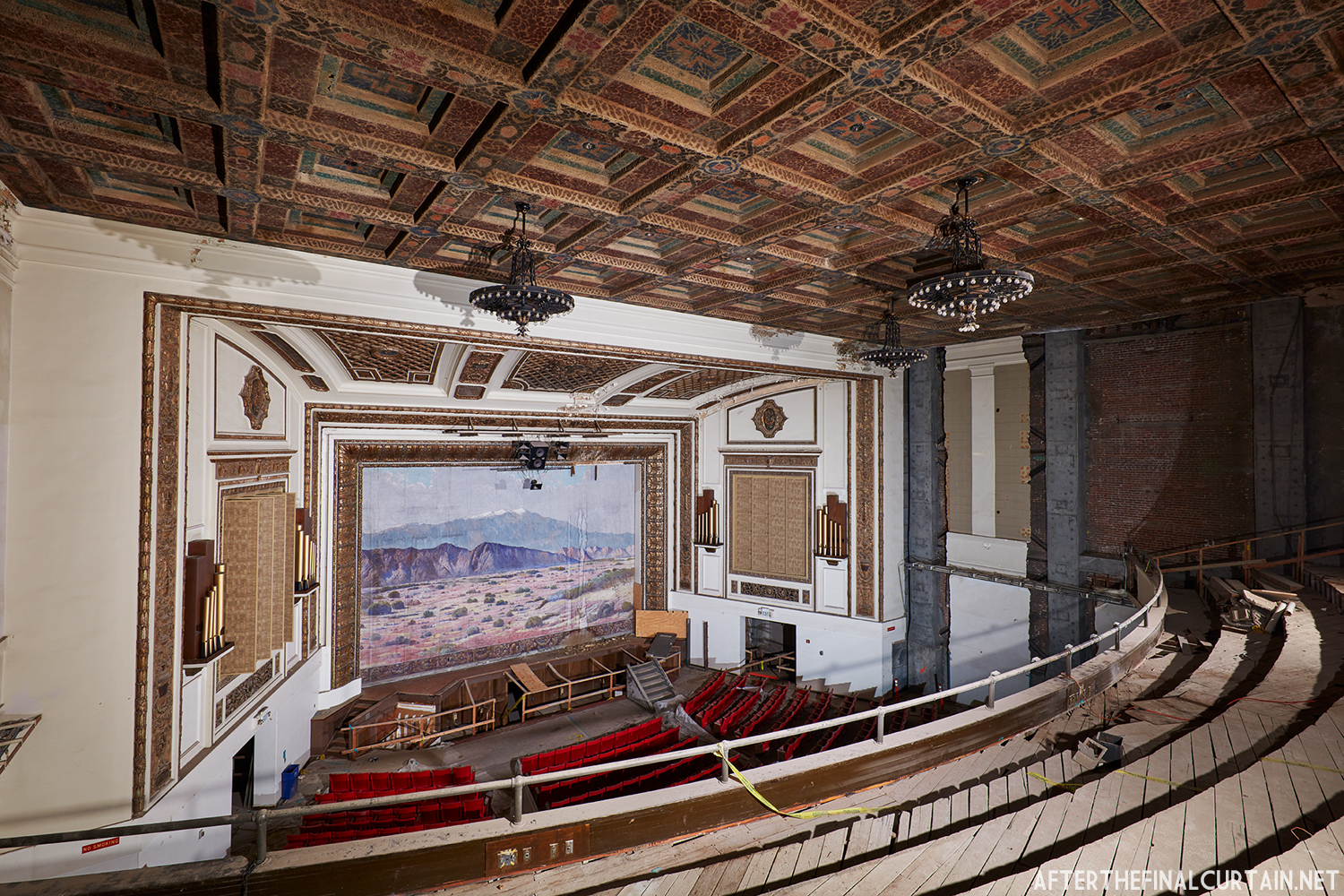
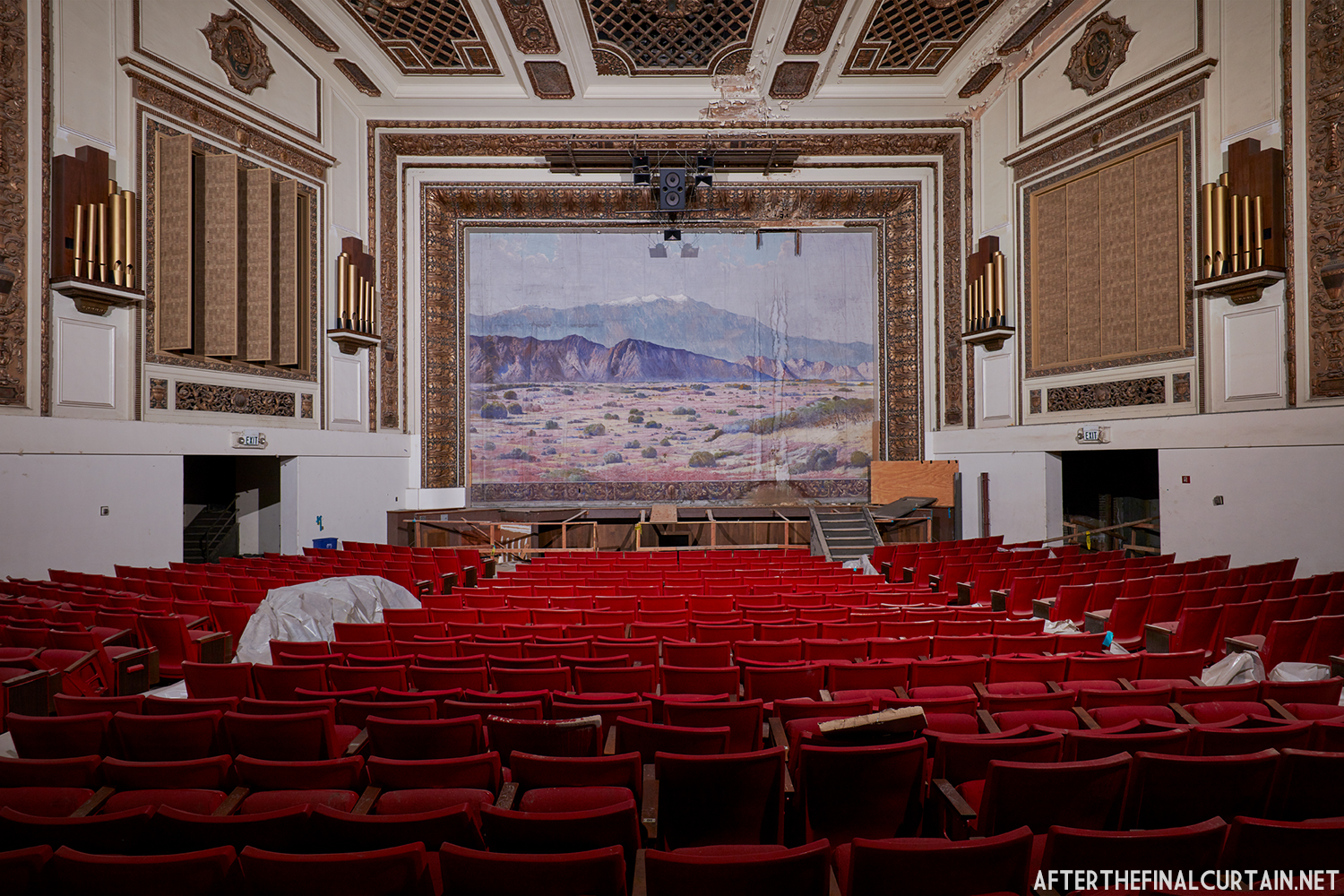
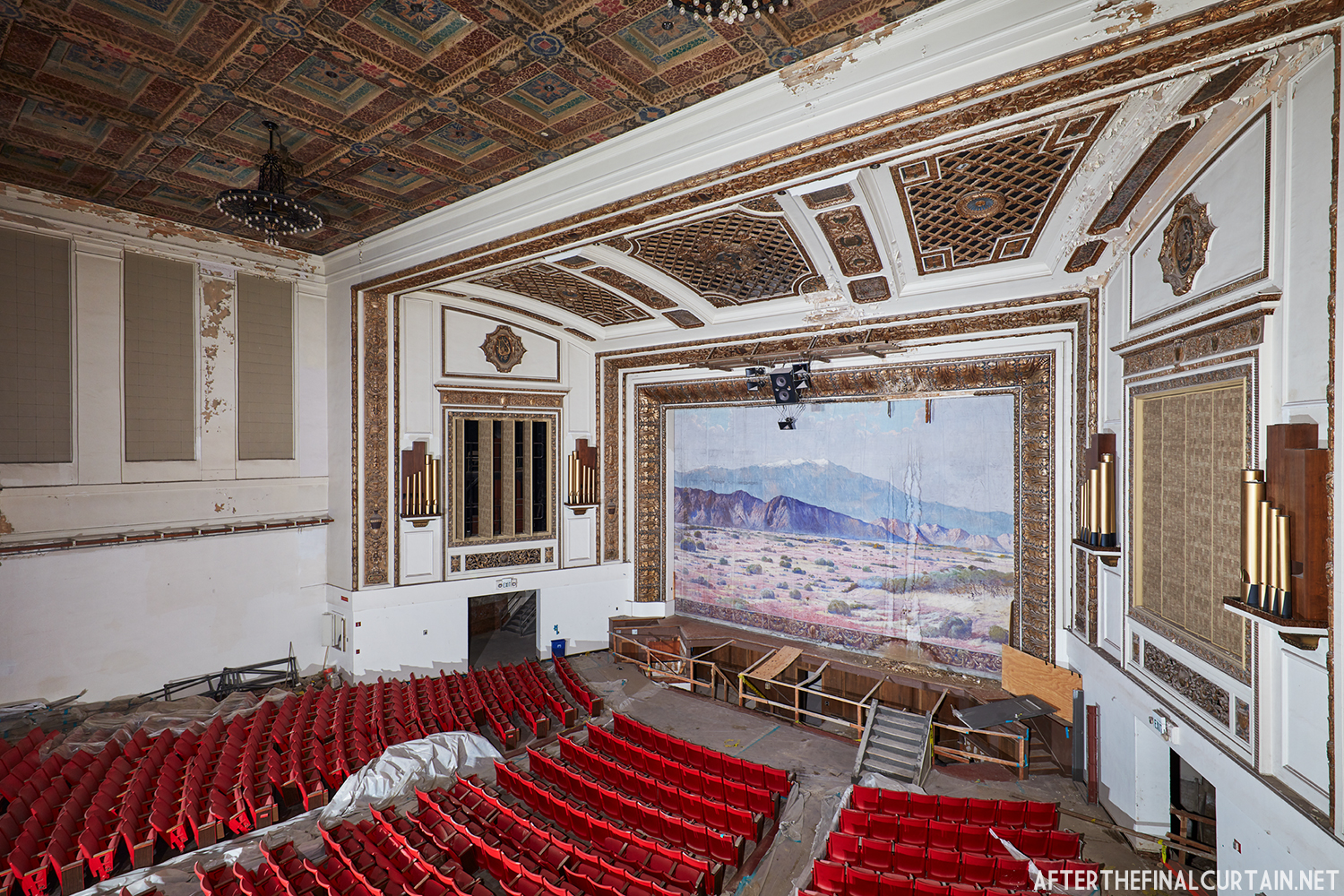
The Grand Theatre at Los Angeles Trade-Technical College opened in 1927 as part of the Los Angeles Polytechnic High School campus. Designed by A.C. Martin & Associates, the 30,000-square-foot auditorium featured a stenciled ceiling, original light fixtures, and a painted fire curtain showing Arrowhead Peak. After the high school relocated, the theater was absorbed into LATTC and used for student productions, lectures, and campus events.
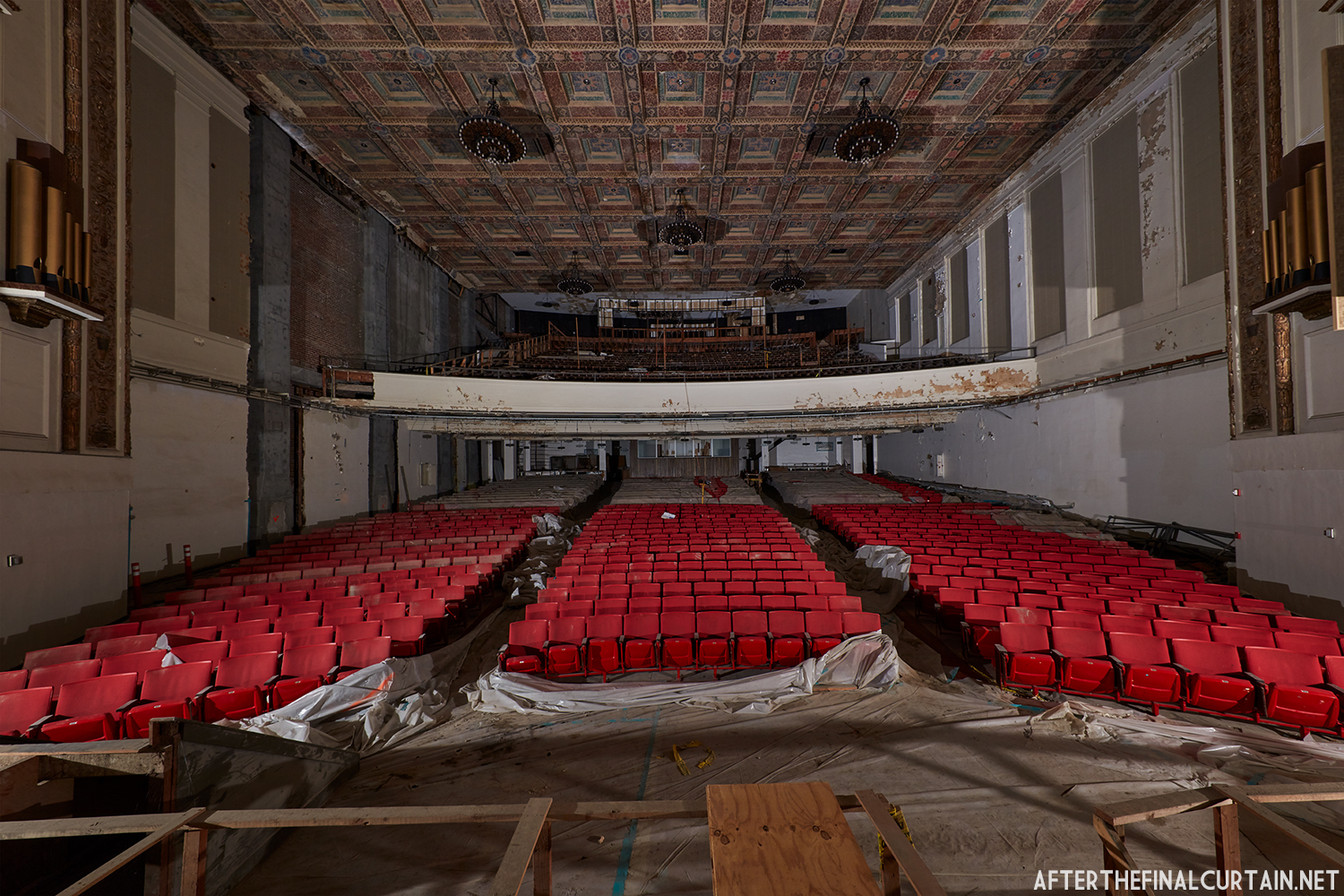
Looking back at the auditorium from the stage.
It shut down in 2009 when seismic retrofit work was abandoned, and it never reopened. Over time, water damage and mold took over. By 2022, the Los Angeles Community College District formally proposed demolition as part of a campus redevelopment plan. While the building was considered potentially historic under CEQA, the official word was that reuse wasn’t feasible or compatible with the college’s long-term goals.
Demolition began earlier this month. As of now, only the facade is still standing — but not for long. It’s all coming down to make room for a new entry plaza along Washington Boulevard, which the college says is needed for pedestrian safety and visibility. There are no immediate plans to build a replacement theater.
A longtime professor in the Humanities and Theatre department put it this way: “While the Grand Theatre was once a magnificent space, it had become infected with mold and had to be demolished for health reasons. It would have been far more expensive to attempt to save it rather than tear it down and build something new… We need a space suitable for large campus events like graduations and a theatre to accommodate our extensive fashion-design program.”
This was originally posted on After the Final Curtain’s Patreon in July 2023. For expanded early posts, as well as video walkthroughs and other exclusive content, you can become a patron at: https://www.patreon.com/afterthefinalcurtain
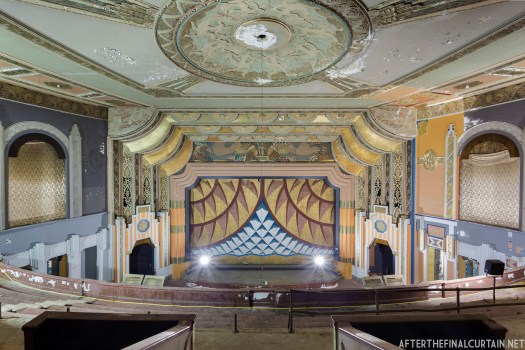
View of the auditorium from the balcony.
Located in the Jackson Heights neighborhood of Queens, NY, the Boulevard Theatre has a rich history that spans nearly a century. It first opened its doors on September 10, 1926, as one of three theaters built in Queens by the Grob & Knobel circuit with Herbert J. Krapp as architect. The other two were the Jackson Theatre and the Sunnyside Theatre. It was the only one of the three that had large enough stage facilities to handle a musical or Broadway style play.
View of the auditorium from the stage during demolition.
The theater, with 1,839 seats, was designed to showcase shows that had recently closed on Broadway or were on trial before their official run. This made it a popular place for theater enthusiasts. In 1928, William Fox acquired the Grob & Knobel theaters, and Louis Werba managed the Boulevard Theatre. But due to the Depression, both Fox and Werba faced bankruptcy. As a result, the Boulevard Theatre became a double-feature movie house under Fox’s successor, Skouras Theatres. Skouras also took control of the Jackson Theatre and Sunnyside Theatre, which were later sold to Century Theatres.
After years as a live theater venue, the Boulevard switched formats and became a movie theater. In the 1960s, it was a first run movie theater. A special screening of “Yours, Mine and Ours” starring Lucille Ball and Henry Fonda was shown at the theater in 1968 before its wide release.
Triplexed in the 1970s, the Boulevard Theatre encountered difficulties because it was located in a residential area on Northern Boulevard, far from the 82nd Street shopping district around Roosevelt Avenue. This, combined with a decline in the neighborhood, led to the theater closing in the 1980s and its owner planned on demolishing it. However, this did not happen partially because of the community’s disapproval of his plan.
Eventually, the Boulevard Theatre was sold and transformed into the successful Natives Restaurant-Theatre, catering to Queens’ Hispanic community. The entrance was converted into a restaurant-bar, and the three auditoriums were used for various events. However, by 2016, it had turned into a restaurant/nightclub, which closed during the Covid-19 Pandemic. In early 2021, it was demolished, putting an end to its rich and storied history.
The remains of one of the stairways leading to the balcony.
This was originally posted on After the Final Curtain’s Patreon. For expanded early posts, as well as video walkthroughs and other exclusive content, you can become a patron at: https://www.patreon.com/afterthefinalcurtain
View of the auditorium post twinning.
On December 1, 1920, the Pantages Theatre opened in Salt Lake City, and was called “Utah’s most ornate theater” in an early advertisement. Designed by Benjamin Marcus Priteca, the official architect of the Pantages circuit, the theater could accommodate 2,300 guests. Priteca had designed more than 20 theaters for the company, making him the preferred architect of Alexander Pantages. The theater cost a staggering $2 million, equivalent to $34 million in present-day terms. Priteca, famous for his work with Pantages, decorated the interior in the Italian Renaissance style, a popular choice in Pantages theaters that became known as “Pantages Greek.”
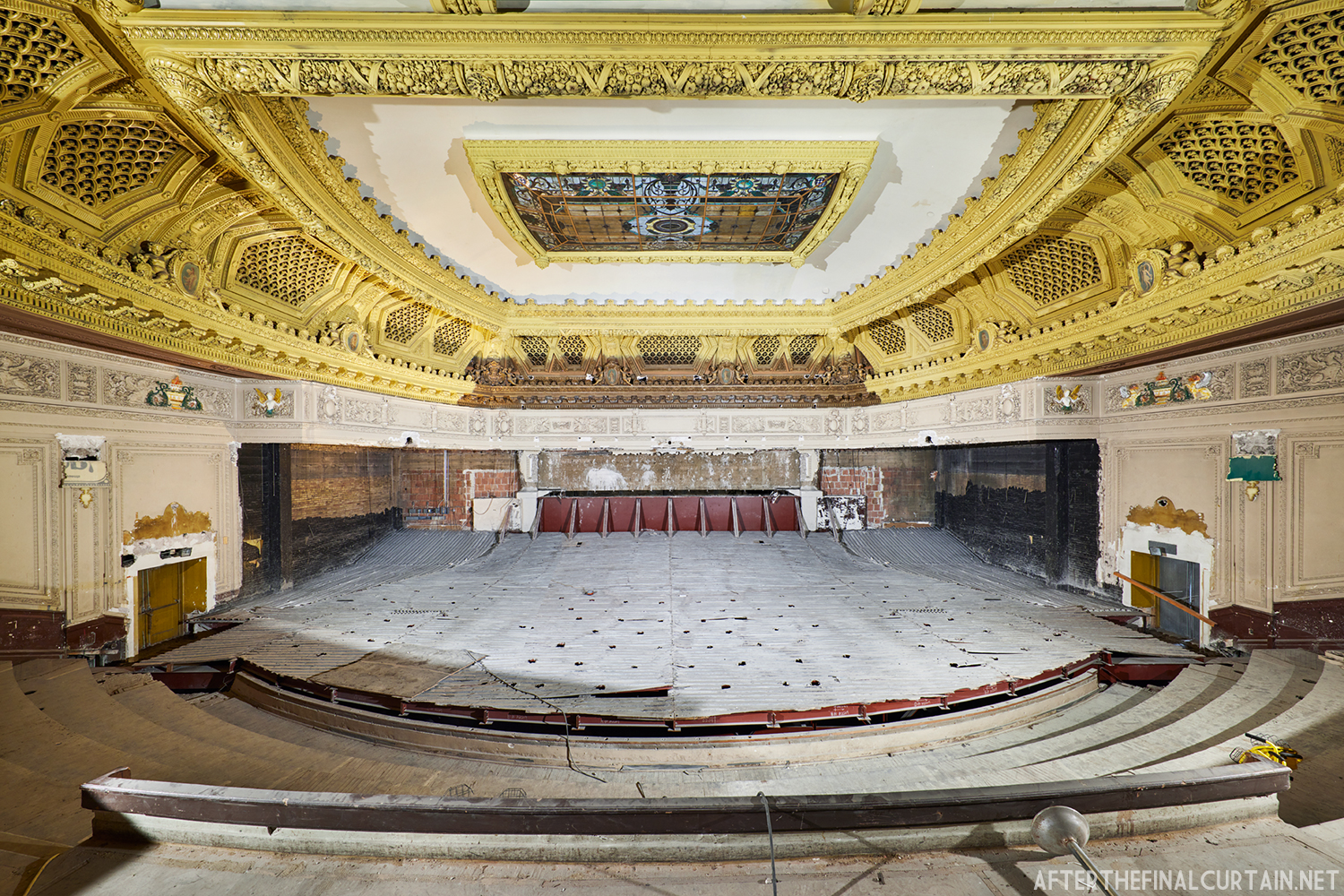
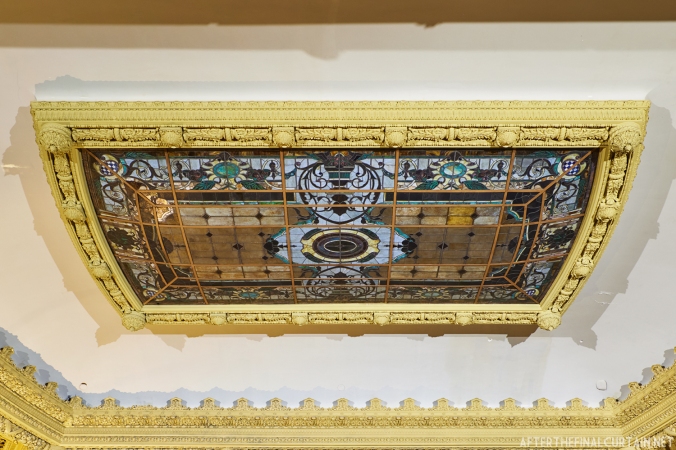
A close up of the tiffany skylight.
The grand opening of the theater featured the silent film “Polyanna,” starring Mary Pickford as well as some vaudeville performances. On September 11, 1929, it was renamed the RKO Orpheum Theatre and renamed again on September 29, 1937, as the Utah Theatre. The Utah Theatre reopened with a stage review and the film “The Girl Said No,” starring Robert Armstrong.
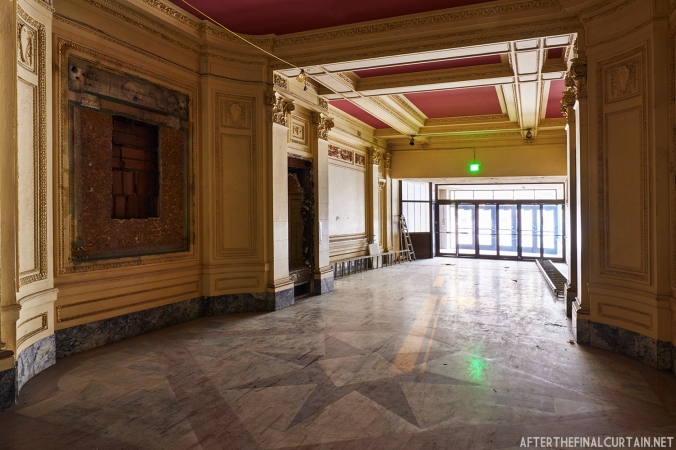
View of the lobby from the mezzanine level.
In 1938, the Utah Pantages Theatre underwent significant changes, which included the removal of its third story and the application of Art Moderne style to its facade. A new marquee was also installed in the same style. Over the years, the theater hosted many famous performances from celebrities such as Babe Ruth, Abbott and Costello, and Will Rogers.
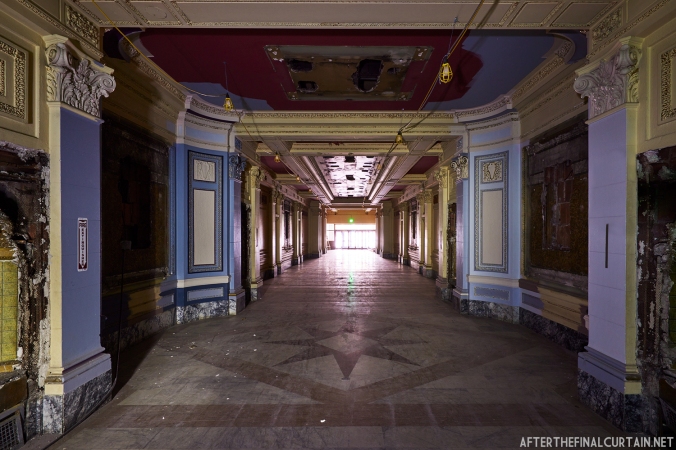
The theater had a long entrance hallway leading to the lobby.
The center section of the facade and marquee were replaced yet again in 1968, this time with a simpler design featuring a smaller projecting roof. The interior also underwent major renovations during this time, resulting in the creation of a twin-plex layout and the removal of original interior finishes in the lower auditorium to accommodate the renovation.
It ceased to operate as a movie theater in 1988 and was later used by a local dance company until 1992, when it was sold to new owners. Following a series of changes in ownership, the vacant building was eventually acquired by the Salt Lake City Redevelopment Agency (RDA) in 2009.
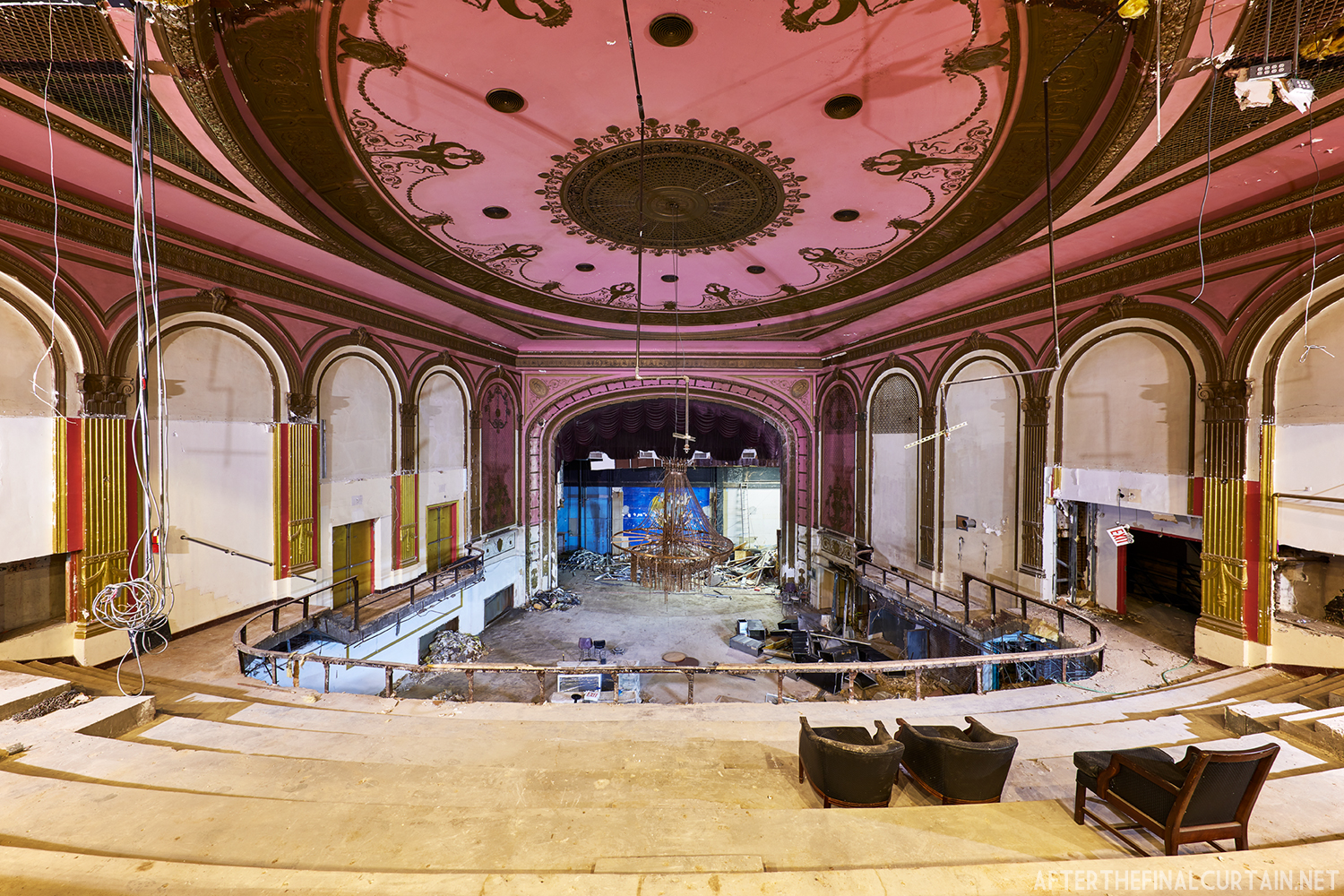
View of the auditorium from the side of the balcony.
Hines, a privately owned real estate development firm, signed an agreement with Salt Lake City in 2019 to purchase the Utah Theatre property. The agreement required the future residential development to include at least 10% of affordable housing units and to maintain a green space with public access. The developers acquired the property for $0 from the RDA under these conditions. However, the proposed 31-story, 400-unit apartment tower at the site, which would involve the demolition of the Utah Theatre, was met with controversy. There have been efforts to save the theatre from demolition as supporters of this initiative dispute the city’s renovation cost estimates of $60-$80 million.
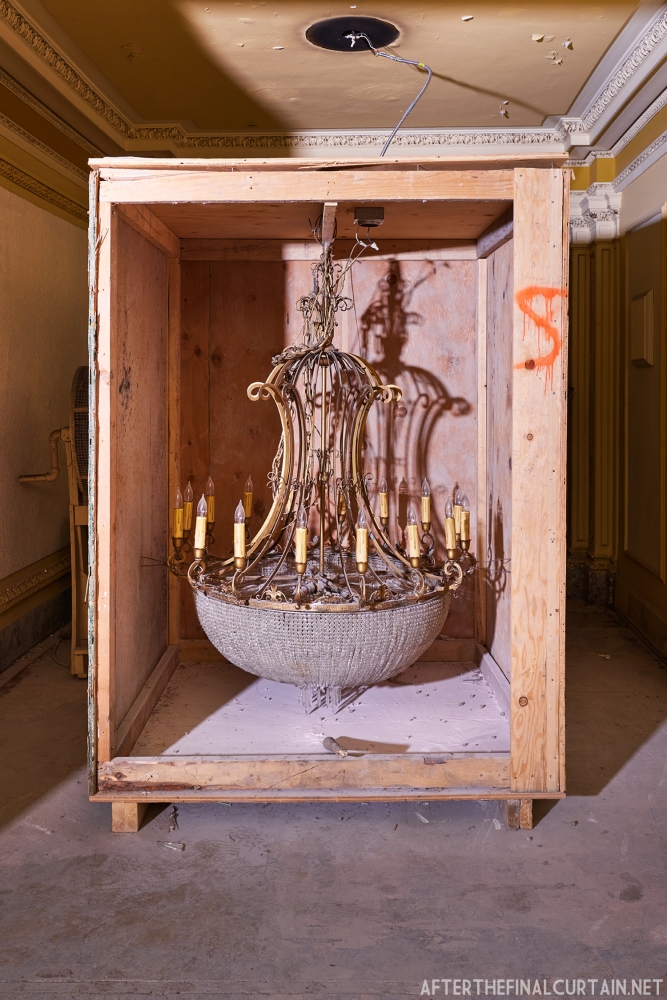
Some of the ornate plasterwork that remained in the theater prior to demolition.
The demolition of the historic theater, despite efforts by preservationists, and concerned citizens, began on April 19, 2022. Michael Valentine, a filmmaker and one of the founders of the group “Save the Historic Utah Pantages Theatre”, watched the demolition from a distance, streaming the event online. He lamented the loss of the beloved theater, describing it as a “hard to watch” and “sad day for Utah,” adding that it was “Utah’s greatest theater.” Multiple legal attempts to save the building proved unsuccessful, while the developers were unyielding in their pursuit of their construction schedule, citing financial losses for any delays.
After the theater’s demolition, Hines requested a one-year extension for finalizing their designs, citing unforeseen challenges discovered through soil samples. However, the loss of a key equity partner due to market changes has created significant financial difficulties for the Texas-based firm, causing them to miss their legal deadline for commencing construction.
The developer, though affirming their commitment to the success of the upscale tower, has not provided any timelines or estimates for when the delays might end. This has left many wondering about the future of the site and its impact on the surrounding community.
This was originally posted on After the Final Curtain’s Patreon in November 2022. For expanded early posts, as well as video walkthroughs and other exclusive content, you can become a patron at: https://www.patreon.com/afterthefinalcurtain
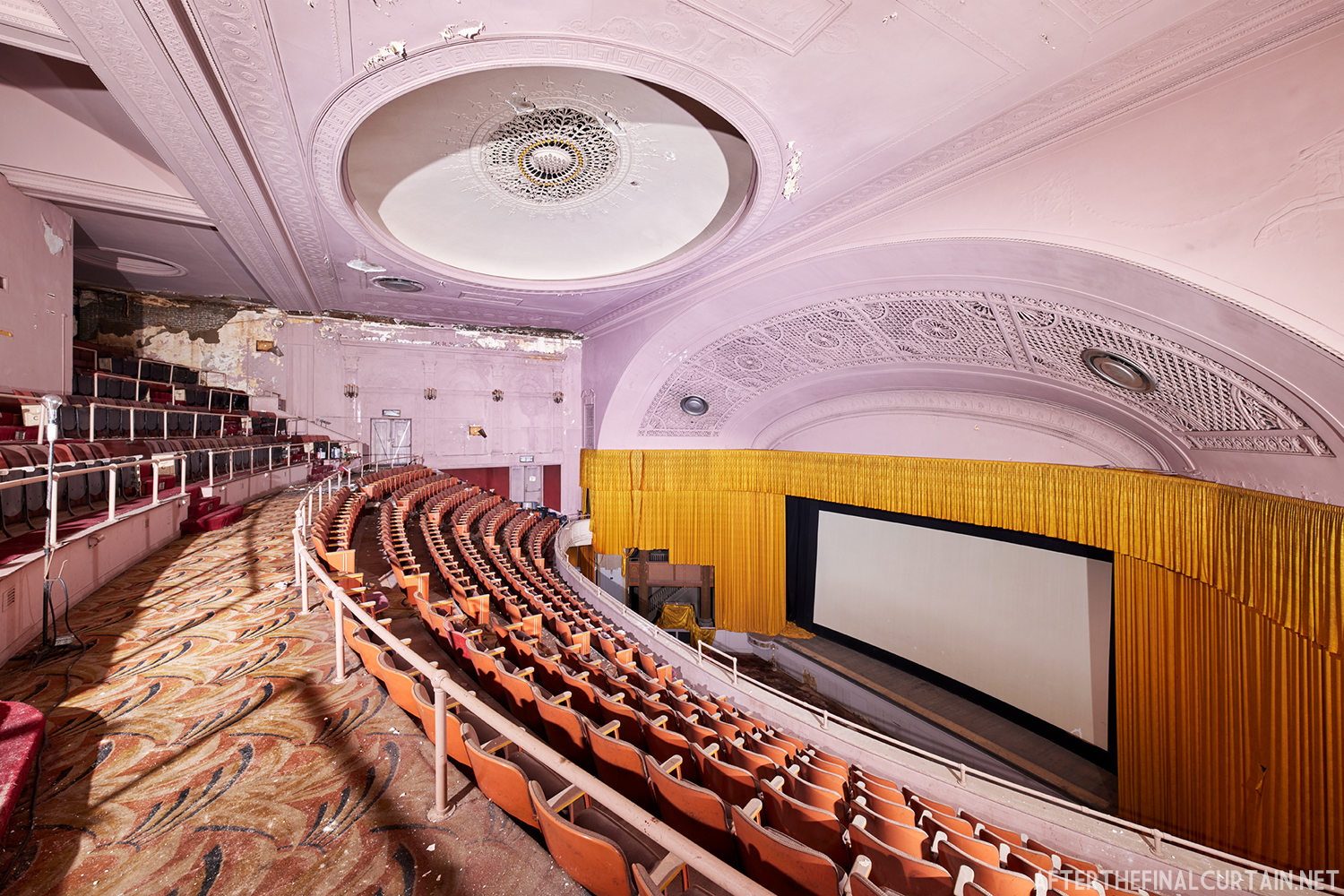
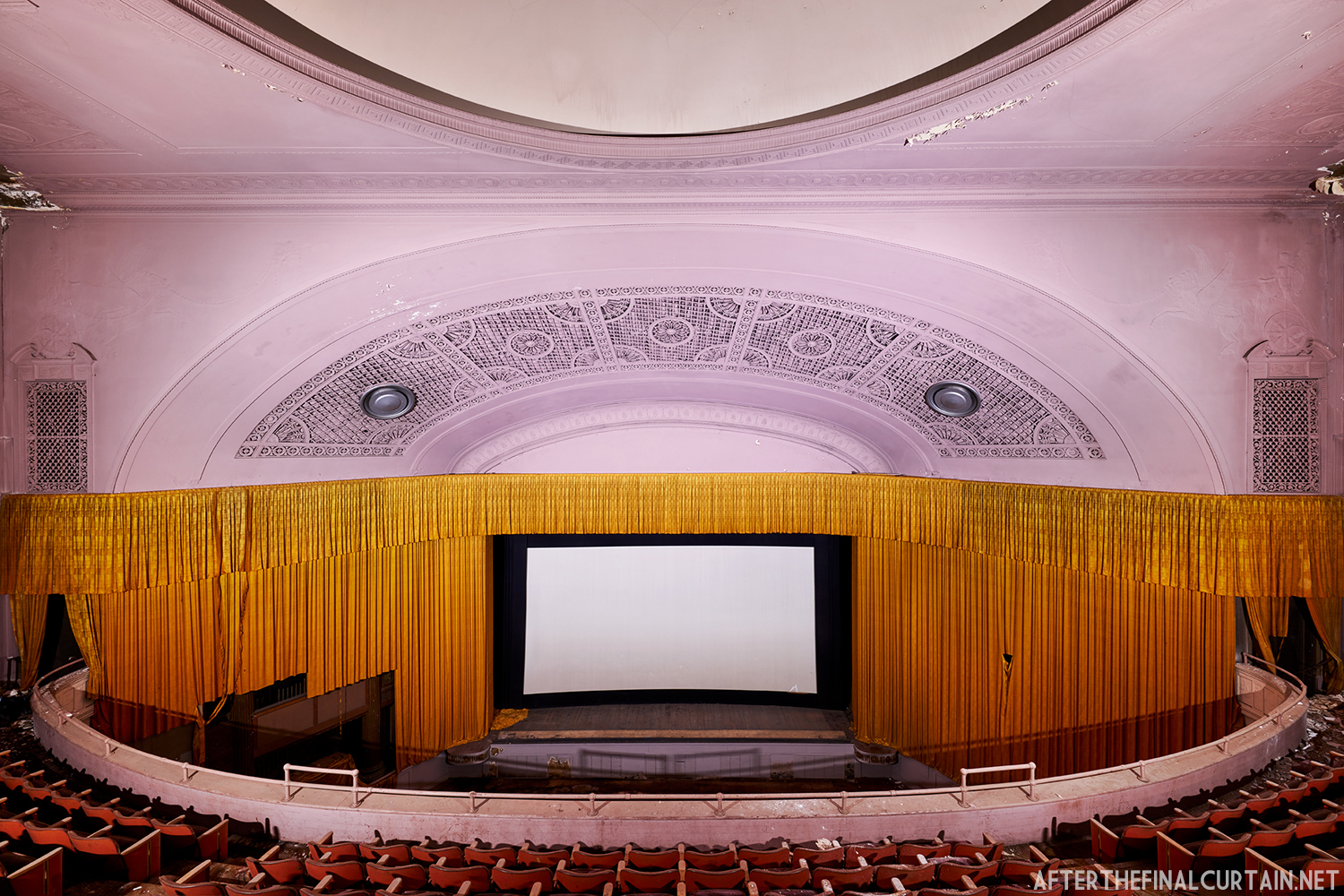
View of the auditorium from the center of the balcony.
Built at a cost of $250,000 ($4.1 million when adjusted for inflation) The Boyd Theatre in Bethlehem, PA originally opened on September 1, 1921 as the Kurtz Theatre. It was designed by E. C Horn Sons of New York City for Charles and John Kurtz, in the streamline moderne architectural style. The 1,626 seat theater originally featured vaudeville and silent films as part of the Shubert Advance Vaudeville circuit.
The original lobby was destroyed by a fire in December 1966.
Opening night featured a performance from a seven-piece orchestra, a minstrel show, two vaudeville acts, the silent film “The Great Moment” starring Gloria Swanson, and the theater organist playing the Estey pipe organ. Less than two months after opening, on October 24, 1921, the theater discontinued vaudeville, and began only showing silent films. The first film shown after this change was “Way Down East” starring Lillian Gish. In October 1922, the Broadway Players, a comedic opera company, began holding performances at the theater. In 1924, E.C. Horn Sons sued the Kurtz Brothers for non-payment of fees for their part in constructing the theater. They were awarded $21,000, or $364,000 with inflation, later that year.
The exterior of the theater was replaced after the fire in 1966.
The Kurtz closed in July 1924 and the following month the building was purchased by the Wilmer & Vincent theater circuit and reopened as the Colonial Theatre. It was named after the Colonial Theatre in Allentown, PA, which they also owned. In 1925, the interior of the theater was remodeled to the plans of William H. Lee, who also designed the Boyd Theatre in Philadelphia, PA and the Drake Theatre in Oil City, PA.
In 1934, the building was purchased by A.R. Boyd Enterprises of Philadelphia, and renamed the Boyd Theatre. A.R. Boyd Enterprises also operated the Boyd Theaters in Philadelphia, Allentown and Easton, PA. On December 27, 1966, a fire broke out at the theater. The fire destroyed much of the Boyd’s lobby and some of the retail spaces in the front of the building. Bethlehem’s building inspector condemned the remains of the lobby, and it had to be completely rebuilt, which kept the theater from reopening until early 1968.
View of the auditorium from the side of the balcony.
The Boyd was sold to a local family in 1970, and they continued to operate it as a single screen theater. However, the balcony was closed more often than not. A new Dolby Digital Surround sound system was installed in 1999 and was used for the first time during a showing of “Star Wars Episode I – The Phantom Menace.”
View of the auditorium from the stage.
The Boyd was damaged by heavy rainstorms in May 2011, and the owners announced it would be closed for the rest of the year while repairs were made. Unfortunately, the theater continued to deteriorate, never reopened, and was eventually sold. In February 2019, it was announced that the Boyd would be demolished and replaced by a 13 story apartment building. The theater was sold again in early 2021 to DLP Real Estate Capital and Monocacy General Contracting, and the replacement building was changed to six stories at a cost of $50 million.
Demolition began in February 2022, and was completed by early May. The “Boyd Theatre” sign was removed prior to the demolition and is planned to be incorporated into one of the new buildings’ courtyards. The new building is scheduled to be completed by 2023.
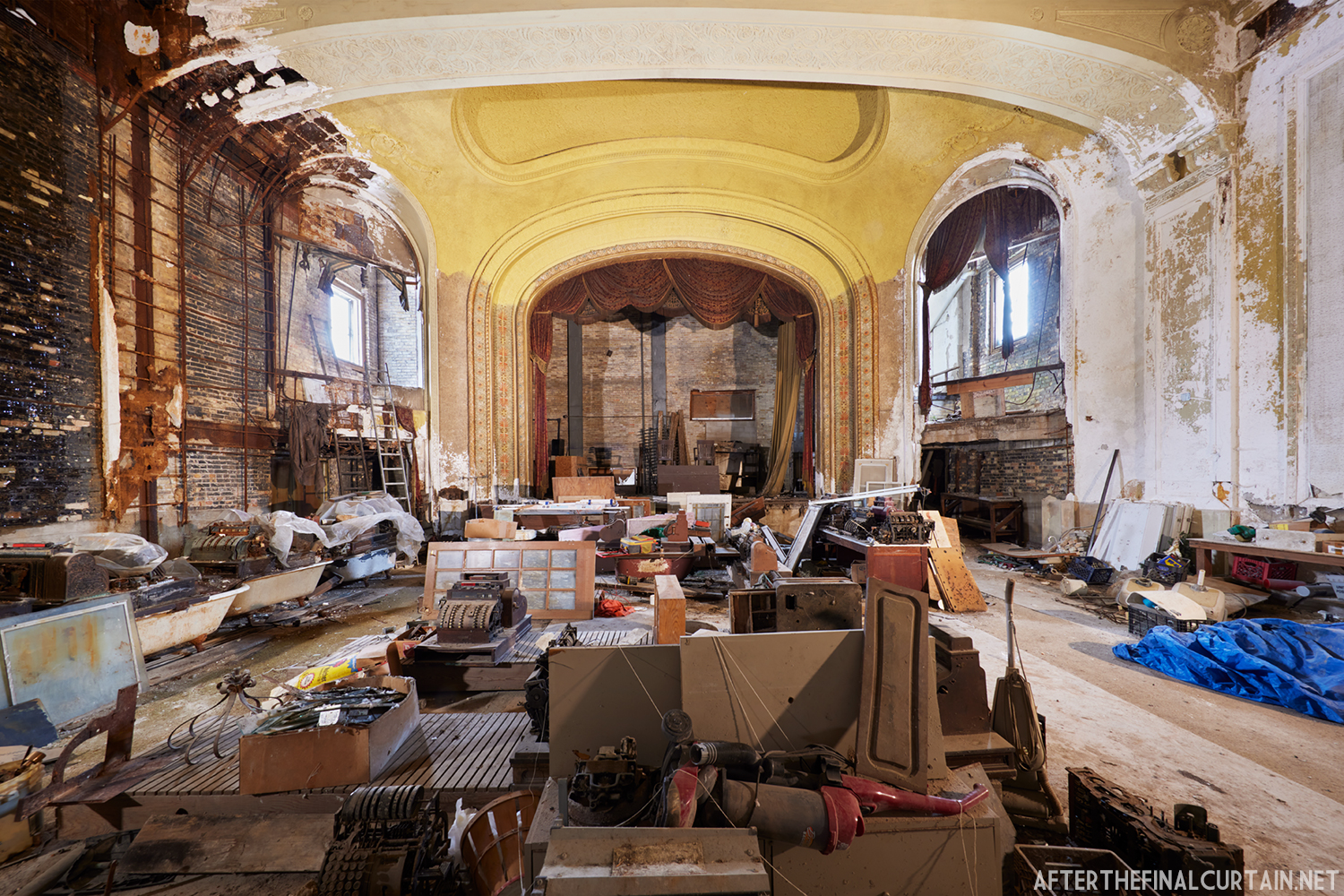
The auditorium was used for storage after the theater closed.
In late December 2020, a representative of the Wisconsin Historical Society contacted me. They asked me if I was familiar with what was happening at the Capitol Theatre (Park) in Racine, Wisconsin. I had heard of it, but I didn’t know anything about its current state.
The Capitol opened on May 30, 1928. It was a typical Vaudeville theater that eventually became a cinema. Les Paul, the famous musician, performed on the stage at the Capitol when he was 14. The theater was twinned in 1976 by splitting the auditorium in two. This change did not touch the front of the auditorium and the stage was closed.
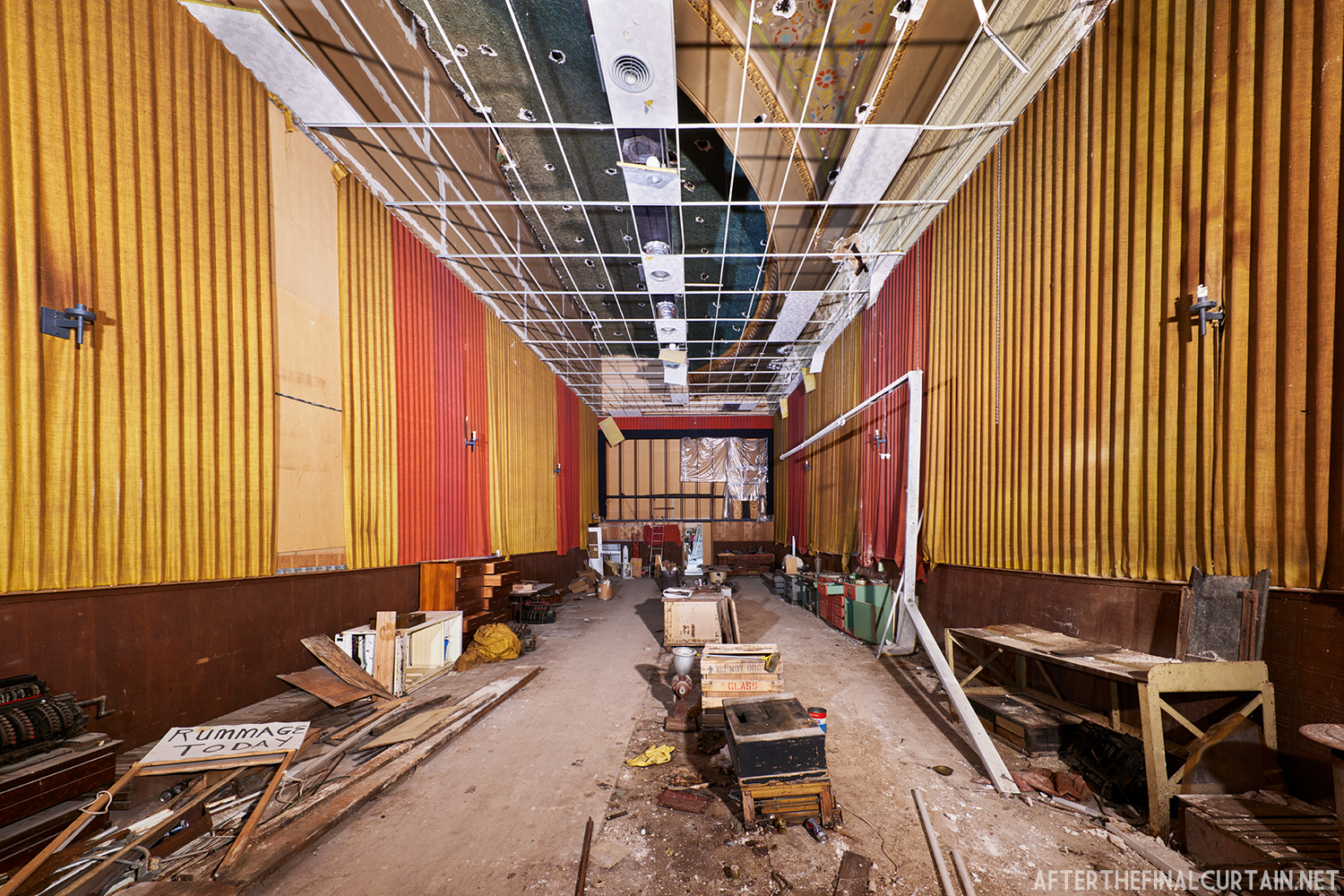
In the photo above, you can see the auditorium dome through the drop ceiling.
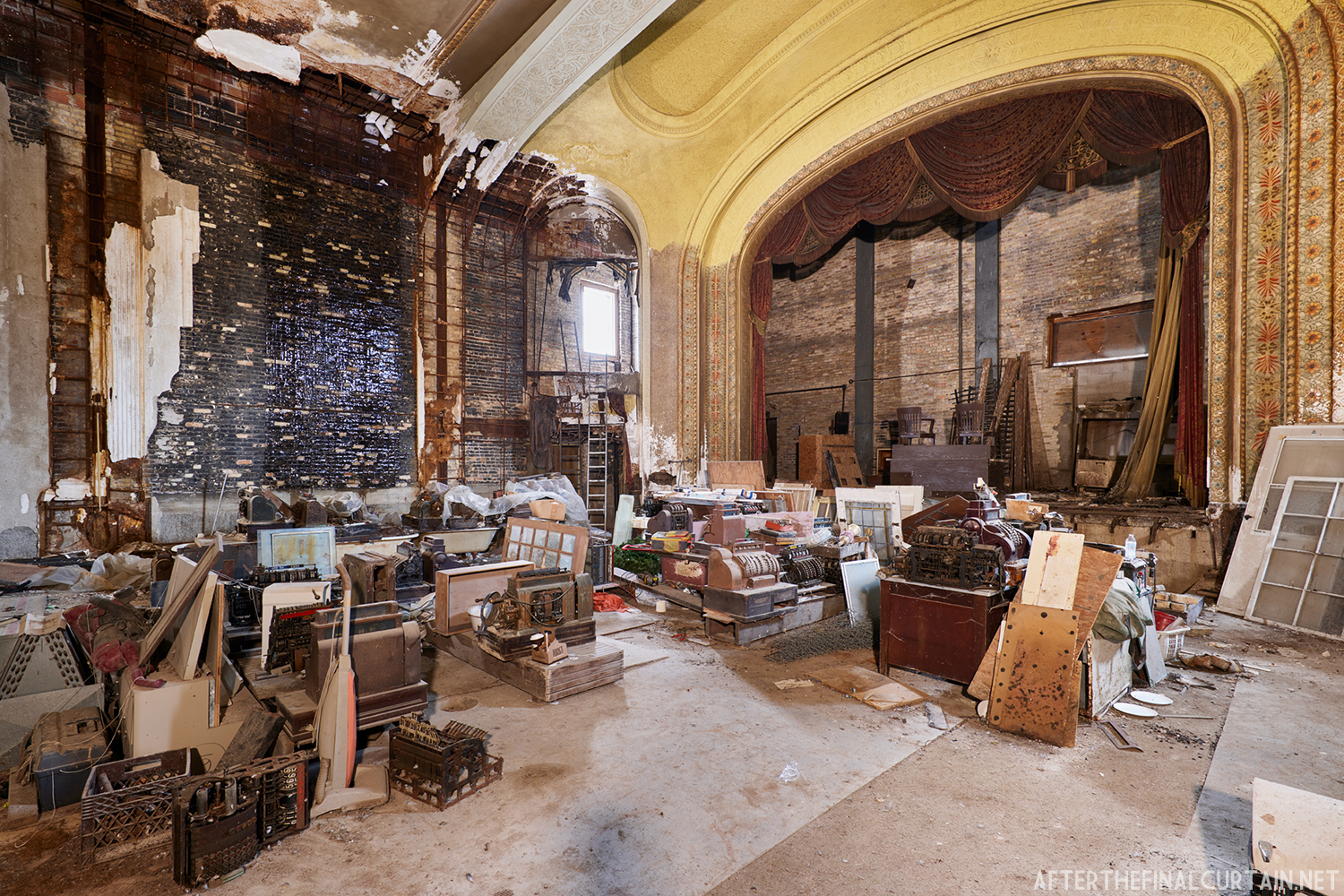
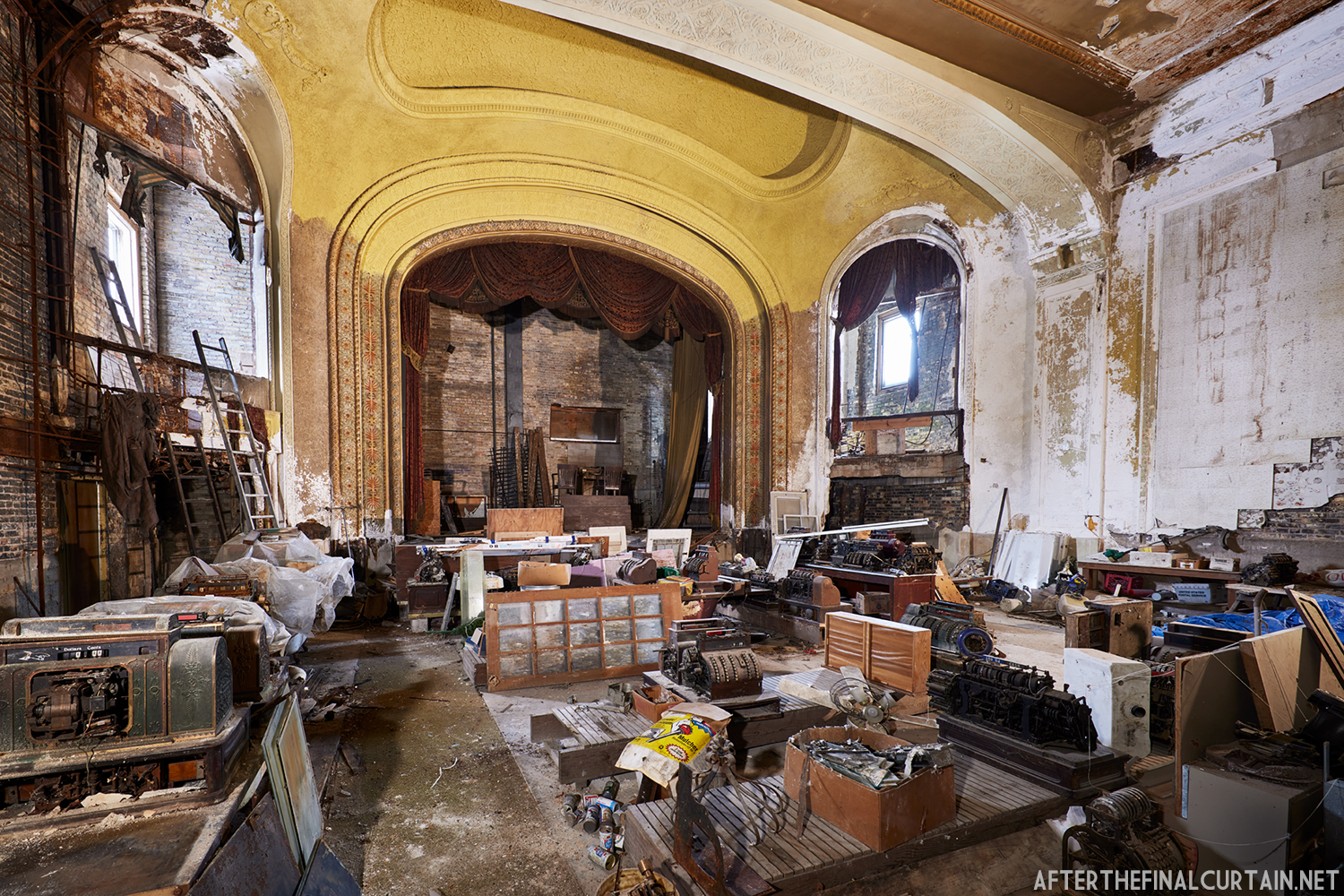
It was renamed Park 1 & 2 in August 1981 and closed on September 1, 1987. The theater was bought by John Apple, who used it as a storage and repair facility for antiques (e.g. cash registers and barber chairs). Over time, the building began to fall into disrepair, and Apple fell a decade behind on his property taxes.
Many things were left behind before the theater was demolished.
However, the demolition order stood. The City Council of Racine voted to change the Historic Landmark Designation process so that they cannot be nominated while under a raze order.
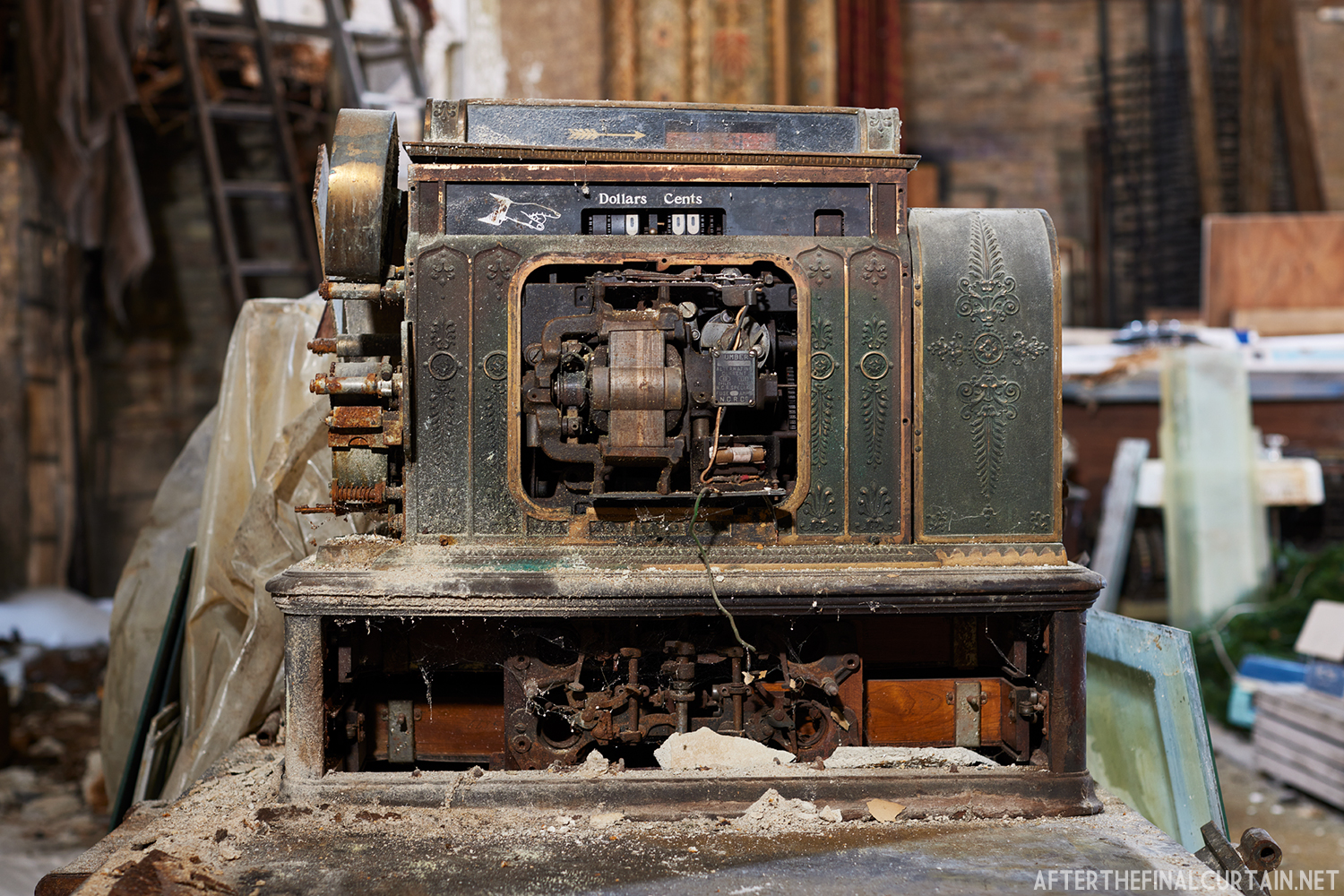
One of the antique cash registers that remained prior to demolition.
Despite the efforts of the Friends of the Capitol Theatre, Racine, WI, who raised enough money to purchase and stabilize the building, demolition began on the morning of February 23, 2021. The walls were destabilized and pushed down into the auditorium. The rubble was removed and dirt was hauled in to fill the space.
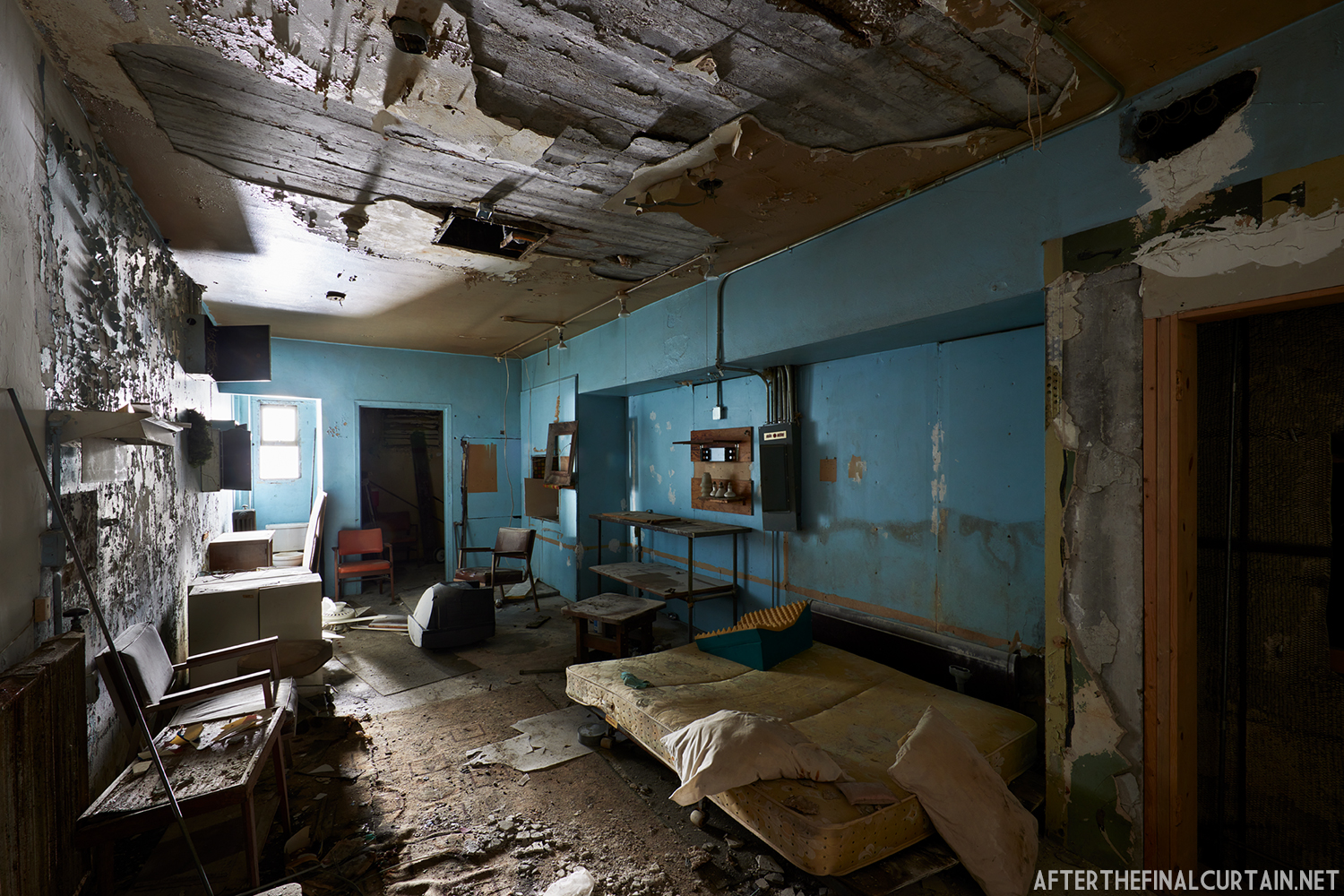
The projection room was used as a makeshift apartment.
I was hoping that the effort to save the building would succeed but I’m glad that I could document it before it was lost. I know that not every that theater I photograph can or will be saved, but this one came close.
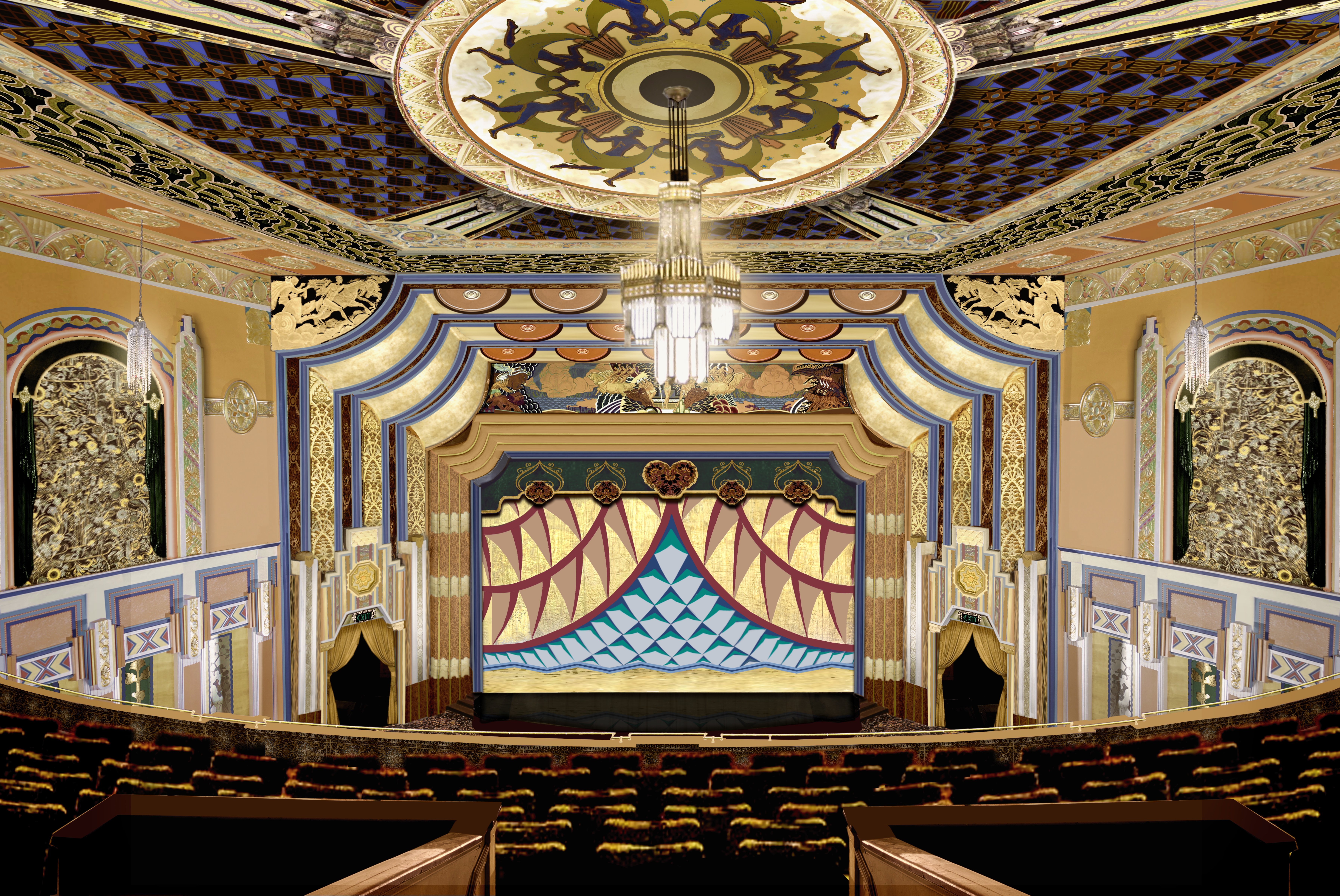
Mark Jabara, an artist from Australia, has been taking some of my theater images and restoring them in Photoshop. The Boyd Theatre, Philadelphia, Pennsylvania’s only art deco movie palace, opened on Christmas day in 1928. It closed in 2002, and the auditorium was demolished in the spring of 2015.
Auditorium of the Boyd Theatre in Philadelphia, PA
Digital Restoration of the Boyd with original colors.
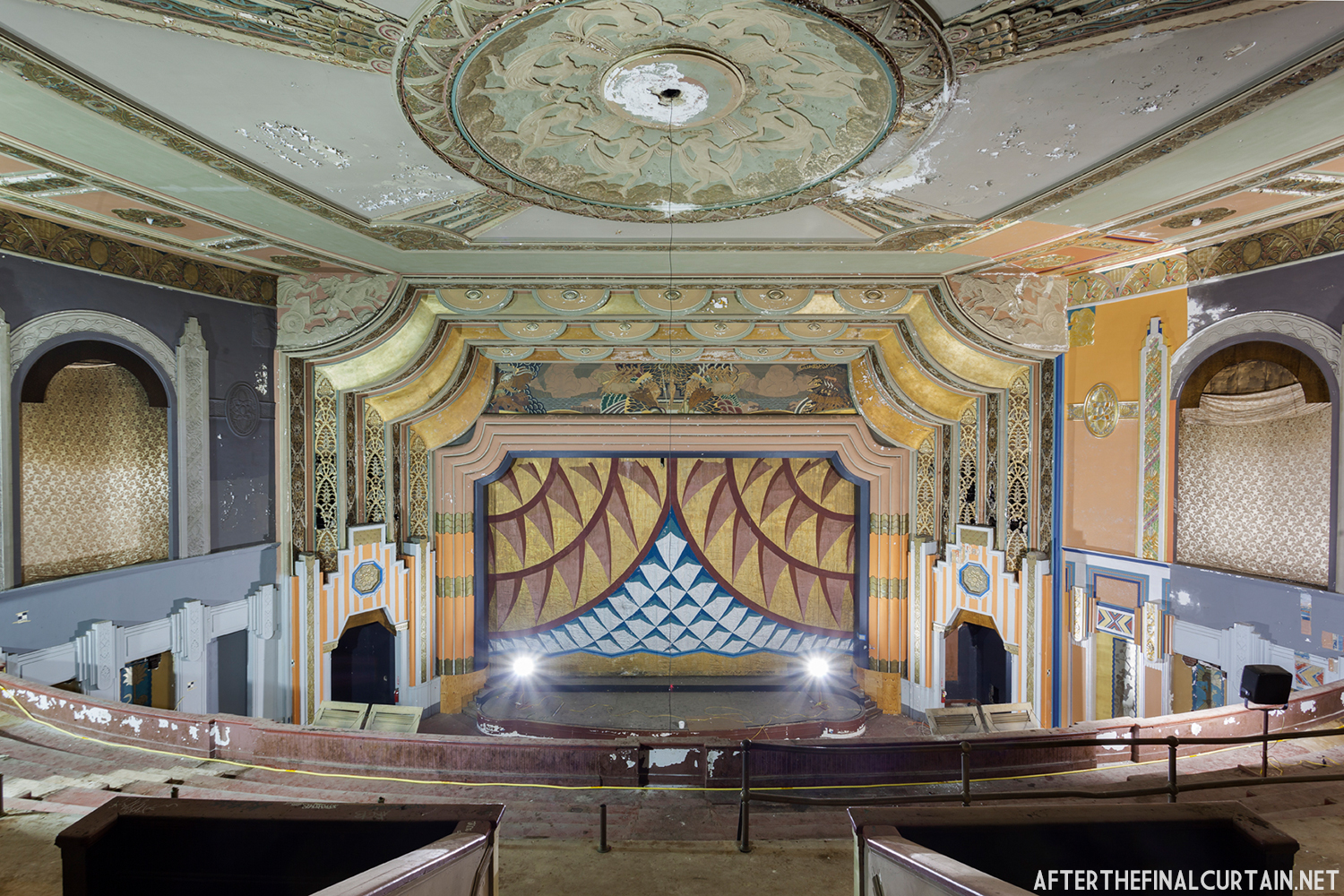
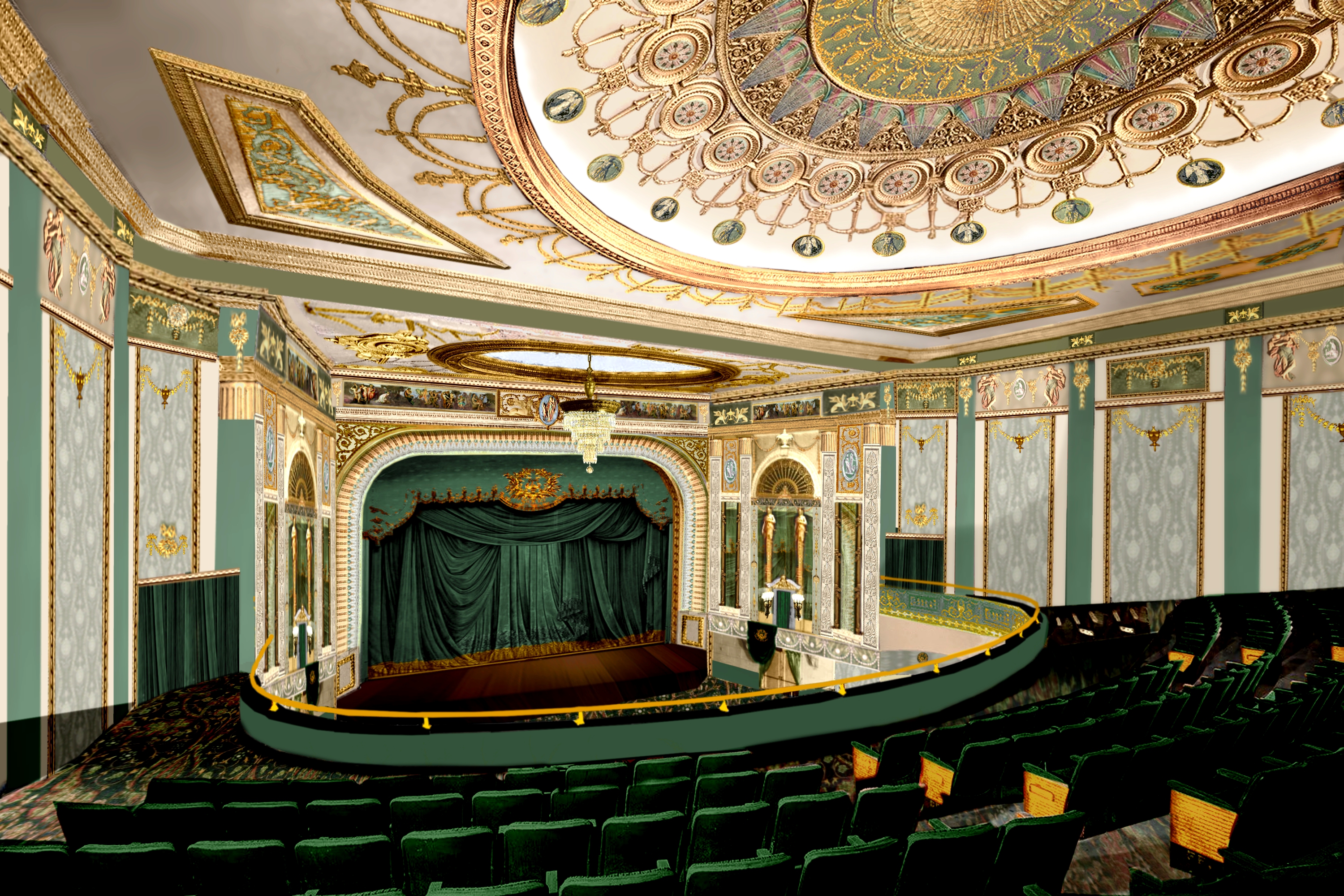
The Madison in Peoria, IL was originally designed in the Adamesque style and was remodeled in 1936 in the simpler art deco style to ease the maintenance of the building. Mark restored some of the lost adamesque details near the stage.
Auditorium, Madison Theatre – Peoria, IL
Digital Restoration of the Madison Theatre with some original details restored.
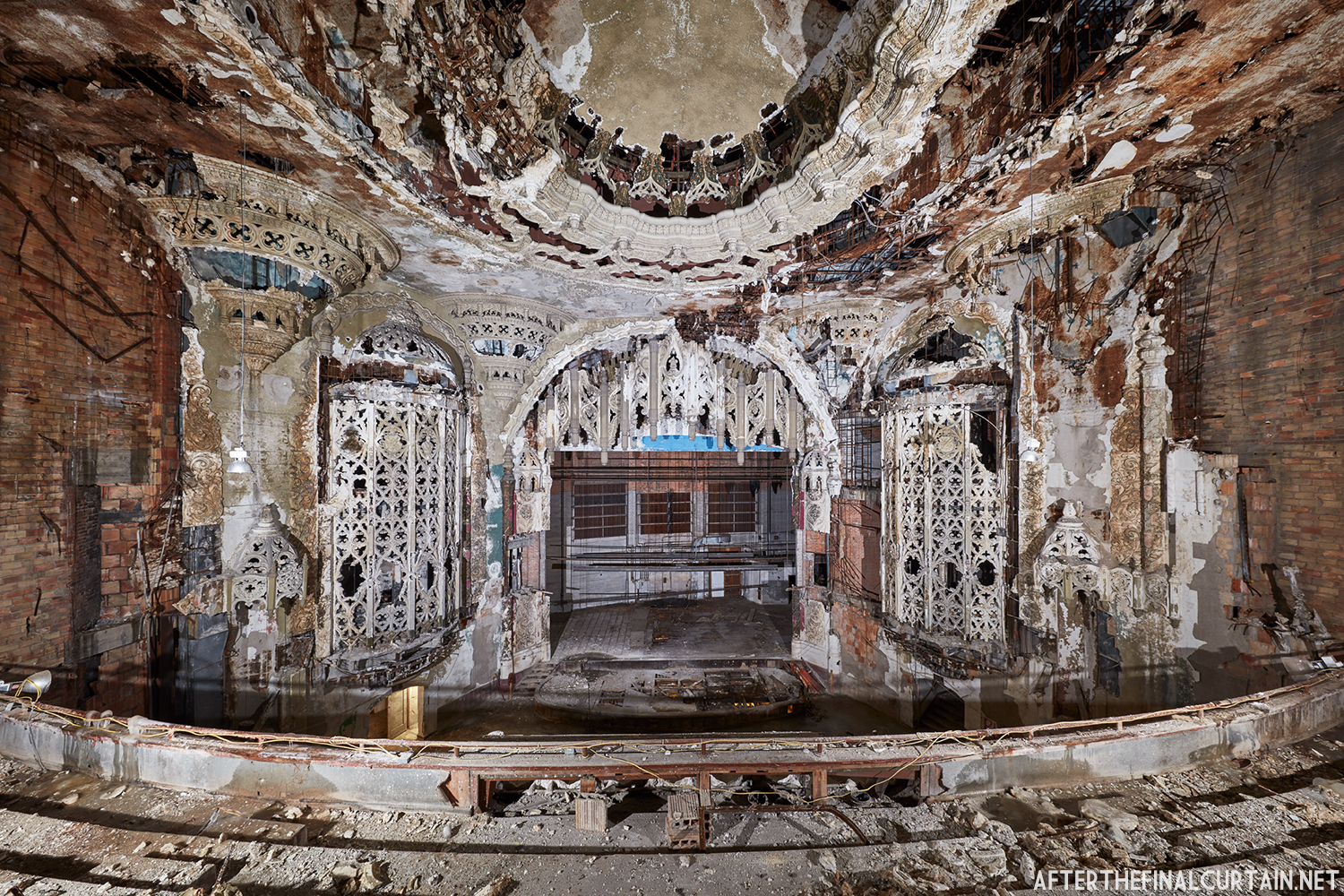
Digital Restoration of the United Artists Theatre with original colors.
The Boyd Theatre is featured in my first book, After the Final Curtain: The Fall of the American Movie Theater. The Madison and United Artists are featured in my latest book, After the Final Curtain: America’s Abandoned Theaters. Both are available on my site, Bookshop.org, and bookstores everywhere.
This theater is a bit different from every other one I’ve posted on AFtC as it was never a movie theater. However, I believe that it is still historically significant due to the people who performed in it. I planned on posting a completely different theater today, but since this one was destroyed last weekend I felt it needed to be bumped up.View of the auditorium from the balcony.
The American Shakespeare Theatre opened on July 12, 1955 in Stratford, CT. Construction of the building began in 1954, and cost $1 million or $9.3 million when adjusted for inflation. It was commissioned by the American Shakespeare Festival Theatre and Academy (ASFTA), which was formed by Lawrence Langner, a co-founder of The Theatre Guild. Langner formed the ASFTA to create American interpretations of William Shakespeare’s plays in Connecticut.
On the bat’s back I do fly After summer merrily. Merrily, merrily, shall I live now Under the blossom that hangs on the bough. (Ariel, Act 5 Scene 1)
The final full season was in 1982, with performances of “King Henry IV,” “Twelfth Night,” and “Hamlet.” In 1983, the theater was bought by the state of Connecticut for $1 million due to the threat of foreclosure. The American Shakespeare Theatre Corp. was given a 20 year, $1 a year lease but financial issues continued and the summer productions were canceled in 1986.
In 1989 the theater was closed. The final production was one-person show of the Tempest. Connecticut turned the property over to the town of Stratford in 2005 after a few failed attempts to develop the property. On January 13, 2019, a fire destroyed the theater. The cause is currently unknown.

















 After the Final Curtain